


29, Apr 2026
Google Global Leadership Team Visits Silverline Prestige School in Ghaziabad
Ghaziabad, Apr 29 (BNP): Silverline Prestige School, a leading private school in Ghaziabad, has hosted the global leadership team of Google, marking a notable milestone in the institution’s engagement with international organisations.
The visit highlights growing collaboration between educational institutions and global technology leaders, with a focus on innovation, digital learning, and future-ready education practices.
According to the school, the interaction provided students and faculty with exposure to global leadership perspectives and emerging trends in technology-driven education.
The engagement is seen as an important step in strengthening industry-academia connections and encouraging the adoption of modern learning tools in schools.
Officials said such initiatives aim to inspire students to develop digital skills and prepare for future opportunities in a technology-driven world.

- 0
- By Neel Achary

29, Apr 2026
Crossword Kids Summer Camp Brings Creative Learning Experiences for Children in Mumbai
Mumbai, April 29: Crossword Bookstores, through its initiative Crossword Kids, in collaboration with Kalendar Experiences, has announced an engaging and creative summer camp for children aged 5 to 12 years in Mumbai. The Crossword Kids Summer Camp 2026 will be held from May 4 to May 10 at Skycity Mall (Borivali) and Krishna Curve.
Designed to blend fun with hands-on learning, the seven-day camp offers a diverse mix of art, craft, and experiential workshops aimed at fostering creativity, exploration, and self-expression among young participants.
The camp will feature a thoughtfully curated line-up of day-wise activities. It begins with “Paint a Pot & Plant a Flower” on May 4, where children will explore basic gardening while expressing their creativity. On May 5, participants will engage in a Block Printing Workshop, learning traditional techniques and experimenting with patterns and colors.
The creative journey continues with a Cake Jar Making Workshop on May 6, followed by Water Marbling on Paper on May 7, offering an immersive artistic experience. On May 8, children will participate in a Tie-Dye Workshop, exploring vibrant color combinations and fabric design. The penultimate day, May 9, introduces Painting with Fluid Art, encouraging abstract expression through flowing colors. The camp concludes on May 10 with a Mini Garden Making session, combining creativity with a deeper appreciation for nature.
The Crossword Kids Summer Camp is designed to go beyond routine activities by offering children a platform to learn, create, and engage in meaningful experiences. Each session is structured to build new skills while keeping the joy of discovery at the core, making it an enriching summer engagement for young minds.
The sessions will be held daily from 11:00 AM to 12:00 PM at both venues. Participants can opt for single-day sessions or enroll in the full seven-day camp.
29, Apr 2026
US Fed Likely to Pause Rate Hikes as Inflation Risks Persist
New Delhi, Apr 29 (BNP): The US Federal Reserve is expected to keep its key interest rates unchanged in its upcoming policy decision, as it continues to assess inflation risks linked to ongoing global tensions and volatile energy prices.
According to market observers, although inflation has moderated in recent months, uncertainties driven by geopolitical developments and fluctuations in crude oil prices remain a concern. This is likely to prompt the central bank to adopt a wait-and-watch approach.
Experts believe that beyond the rate decision, the Federal Reserve’s policy outlook and commentary will be closely watched for signals on future monetary action.
The Fed’s stance is significant for global markets, as it influences capital flows, exchange rates, and overall investor confidence across economies.
A steady policy decision may provide short-term stability, but the central bank is expected to remain cautious as it balances the need to control inflation while supporting economic growth.
29, Apr 2026
Renault India Launches Upgraded Renault Triber 2026 with Enhanced Features and Comfort
Mumbai, April 29: Renault India, the wholly owned subsidiary of Renault, has launched the upgraded Renault Triber 2026, introducing a host of new features and technology upgrades aimed at delivering greater comfort, convenience, and value for Indian families.
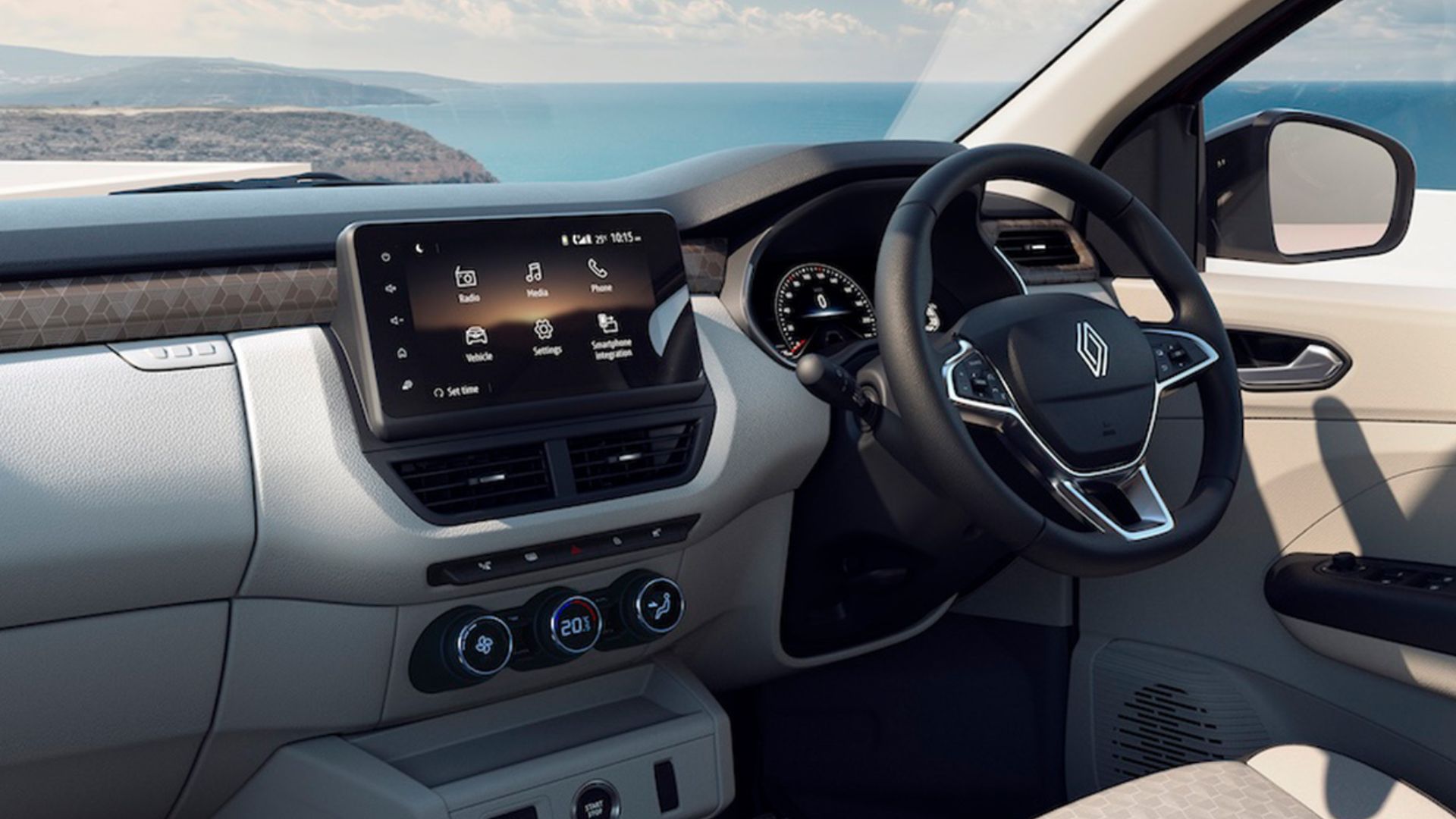
The updated Triber 2026 focuses on enhancing accessibility to premium features across entry and mid variants, reinforcing its position as a value-driven family vehicle in the segment.
Commenting on the launch, Francisco Hidalgo Marques said,
“The second-generation Renault Triber has been celebrated as the ultimate family car in the segment. With this upgrade, we’ve enhanced practicality and comfort through features like automatic air conditioning, full-fold second-row seats, and one-touch tumble function for easy third-row access.”
Key Highlights
Enhanced Comfort & Features
The Triber 2026 introduces automatic climate control (top variant), a modern dual-tone dashboard, and a 20.32 cm floating touchscreen with wireless Android Auto and Apple CarPlay. The second-row seats now fully fold, offering a best-in-class boot space of up to 1065 litres.
Enriched Variants
- Evolution: Steering-mounted controls, adjustable IRVM, rear room lamp
- Techno: Driver armrest, height adjuster, rear defogger, 3rd-row 12V socket, tweeters, foldable ORVMs
- Emotion: Adds automatic climate control for enhanced comfort
Unique Modular Design
The Renault Triber 2026 continues its flexible 5, 6, and 7-seater configurations, making it one of the most versatile MPVs in its segment.
Safety First
The vehicle comes equipped with 21 standard safety features, including 6 airbags, ABS with EBD, electronic stability control, and tyre pressure monitoring system.
Performance & Warranty
Powered by a petrol engine delivering 72 PS and 96 Nm torque, the Triber offers both 5-speed manual and AMT options. It also comes with a 3-year standard warranty, extendable up to 7 years under the Renault Secure program.
With over 2 lakh customers in India and a growing global footprint, the Triber continues to be a key pillar in Renault India’s strategy.
29, Apr 2026
Odisha Launches E Bus Service to Boost Clean Mobility and Urban Connectivity
Bhubaneswar, Apr 29 (BNP): The Government of Odisha has launched a modern electric bus (e-bus) service aimed at transforming urban transportation and promoting environmentally sustainable mobility across the state.
ଅତ୍ୟାଧୁନିକ ଇ-ବସ ଚଳାଚଳ ଭଳି ପଦକ୍ଷେପ ସହରୀ ପରିବହନ ବ୍ୟବସ୍ଥାରେ ଏକ ବୈପ୍ଳବିକ ପରିବର୍ତ୍ତନ ଆଣିବ। ନାରୀ ଶକ୍ତିର ସହଭାଗିତାରେ ଆରମ୍ଭ ହୋଇଥିବା ଏହି ସେବା ଛାତ୍ରଛାତ୍ରୀ ଓ ଶ୍ରମିକମାନଙ୍କ ପାଇଁ ବେଶ୍ ସହାୟକ ହେବ। ପରିବେଶ ଦୃଷ୍ଟିକୋଣରୁ ଏହି ଇ-ବସ୍ ସେବା ବାର୍ଷିକ ପ୍ରାୟ ୩୩୦ ରୁ ୩୯୦ ଟନ୍ କାର୍ବନ ନିର୍ଗମନ ହ୍ରାସ କରିବାରେ ସହାୟକ… pic.twitter.com/VnSLYBSF27
— CMO Odisha (@CMO_Odisha) April 29, 2026
The initiative is expected to significantly improve daily commuting for students, workers, and the general public by offering a cleaner, more efficient, and reliable mode of transport. The programme also highlights the growing role of women in public service delivery, reflecting an inclusive approach to development.
Officials stated that the introduction of e-buses will contribute to reducing pollution levels, with an estimated annual reduction of around 330 to 390 tonnes of carbon emissions. This aligns with the state’s broader focus on green initiatives and sustainable urban planning.
In addition to the transport rollout, several development projects have been inaugurated and new initiatives announced to strengthen infrastructure and support economic growth in the region. These efforts are expected to enhance connectivity, improve public services, and create new opportunities at the district level.
The Chief Minister emphasised that the coming decade will be critical for Odisha’s growth, describing it as a period of commitment towards building a prosperous state by 2036. He noted that districts like Kendujhar will play a vital role in achieving this vision through continued development and infrastructure expansion.
The e-bus initiative is part of a larger strategy to modernise urban infrastructure, reduce environmental impact, and improve the quality of life for citizens.
29, Apr 2026
AI Pressure to Keep IT Services Growth Near 3 pc: Kotak Report
New Delhi, Apr 29 (BNP): India’s IT services sector is likely to witness restrained growth of around 3 per cent as artificial intelligence-led efficiencies continue to put pressure on pricing and margins, according to a Kotak Institutional Equities report.
The report states that while AI adoption is improving productivity and operational efficiency across IT firms, it is also leading to lower billing rates, creating a deflationary impact on overall revenue growth.
Mid-tier IT companies are expected to perform relatively better compared to large players, supported by niche capabilities, agile business models, and faster adaptation to new technologies.
Kotak noted that the global shift toward automation and AI-based solutions is reshaping traditional outsourcing models, making the industry more competitive on pricing.
However, the report added that AI will remain a long-term growth driver, helping companies improve efficiency even as near-term revenue growth stays moderate.
Overall, the IT sector is expected to enter a phase of stable but slower growth, with firms focusing on productivity gains and technology-driven transformation.
29, Apr 2026
Formula 1 driver Romain Grosjean partners with GPEI to ‘finish the race’ against Polio for World Immunisation Week
29, Apr 2026
Indian Golf Legend Vijay Kumar Passes Away at 57
New Delhi, Apr 29 (BNP): Veteran Indian golfer Vijay Kumar, one of the most accomplished figures in the country’s professional golf circuit, passed away in Lucknow following a heart attack. He was 57.
Kumar was widely respected for his consistency and dominance in Indian golf, particularly during the late 1990s and early 2000s. He turned professional in 1988 and went on to build a distinguished career spanning more than a decade at the top level.
Among his notable achievements, he won the Indian Open in 2002 and secured the Order of Merit title four times, making him one of the most successful players in Indian golfing history.
Known for his disciplined approach and competitive spirit, Vijay Kumar played a key role in shaping the growth of professional golf in India and inspired a generation of emerging golfers.
His demise has been widely mourned across the sporting community, with tributes highlighting his contribution to Indian golf and his legacy as a champion athlete.
29, Apr 2026
Diversions Announced to Ensure Security and Smooth Traffic Movement on April 30
Bhubaneswar, Apr 29 (BNP): The Commissionerate Police, Bhubaneswar-Cuttack has issued a traffic advisory imposing restrictions on several key routes in the city on April 30, in view of the one-day special session of the 17th Odisha Legislative Assembly.
The restrictions will be effective from 7 am and are intended to ensure smooth traffic flow and maintain security in and around the Assembly complex and nearby government institutions.
According to the advisory, vehicles moving from Housing Board Square towards Rabindra Mandap will be diverted at Keshari Talkies Square. Traffic from AG Square towards PMG will be rerouted via Jaydev Bhawan and IG Park Road.
Similarly, vehicles from the Master Canteen area heading towards PMG will be diverted through alternative routes near Lower PMG. Traffic from 120 Infantry Battalion Square will not be permitted towards Rabindra Mandap and will instead be redirected towards Power House Square.
Vehicles coming from Lok Bhawan Square towards MLA Colony and Rabindra Mandap will be diverted at 120 Battalion Square towards Sastrinagar Square.
Emergency services such as ambulances, fire services, and police vehicles will be exempted from these restrictions. Vehicles authorised for entry into the State Assembly, Lok Seva Bhawan, and other government offices in the area will also be allowed passage.
The police have requested citizens to cooperate with the traffic arrangements and plan their travel accordingly to avoid inconvenience during the session.
29, Apr 2026
Global Experts Highlight India’s Expanding Role in Technology, Economy and Geopolitics
New Delhi, Apr (BNP): India is increasingly being recognised as an important force in global stability, economic growth and technological development, global experts said during the “Resilient Futures Summit 2026” held in New Delhi.
Experts noted that amid rising geopolitical tensions, trade disruptions and global uncertainty, India is emerging as a key economy contributing to balance, resilience and cooperation in the international system.
Danny Quah, Professor of Economics at the Lee Kuan Yew School of Public Policy, National University of Singapore, said the world is currently facing uncertainty due to shifting trade patterns and weakening global trust. He observed that India is being looked upon as a potential stabilising power in this changing global environment and may play an important role in supporting peace and cooperation.
He added that India’s growing economic and diplomatic presence places it in a position where its decisions could have a meaningful impact on global outcomes.
Ian Blatchford, Director of the Science Museum in London, highlighted India’s forward-looking approach toward emerging technologies, particularly artificial intelligence. He said that while many Western countries remain cautious about AI, India is actively building capacity and investing in AI-driven development.
Blatchford also noted India’s development path, stating that the country is working to balance rapid economic growth with improvements in living standards, even as it manages challenges such as rising energy demand and urban expansion.
Experts at the summit said India’s combination of technological adoption, economic resilience and policy flexibility is strengthening its global standing and positioning it as a key contributor to future global growth.