


29, Apr 2026
Gold Prices Edge Higher in Futures Trade Amid Global Uncertainty
New Delhi, Apr 29 (BNP): Gold prices moved slightly higher in futures trade on Wednesday as investors remained cautious ahead of the US Federal Reserve’s upcoming policy decision.

On the Multi Commodity Exchange, the most-traded June gold contract rose by ₹93, or 0.06%, to ₹1,50,120 per 10 grams, with a trading volume of 9,067 lots.
Market analysts said support came from a weaker US dollar and ongoing geopolitical tensions in West Asia, which continued to encourage safe-haven buying in gold.
However, gains were limited due to higher crude oil prices, which weighed on broader commodity sentiment.
Overall, market participants are awaiting clarity from the US Fed policy outcome, which is expected to guide near-term movement in gold prices.

- 0
- By Neel Achary

29, Apr 2026
Ganga Expressway Set to Drive Growth, Connectivity and Industrial Expansion in Uttar Pradesh
Uttar Pradesh, Apr 29 (BNP): The Ganga Expressway, a major infrastructure project in the state, is expected to significantly improve connectivity while supporting industrial growth, logistics development, agricultural marketing, and regional economic balance.
The 594-km expressway connects western and eastern Uttar Pradesh through a high-speed corridor designed to reduce travel time, improve transport efficiency, and strengthen economic linkages across districts.

Chief Minister Yogi Adityanath said the expressway will play an important role in accelerating development and improving connectivity between rural and urban areas. He described it as a key project that will benefit farmers, youth, and entrepreneurs by improving access and reducing travel distances.
The expressway passes through 12 districts, including Meerut, Hapur, Bulandshahr, Amroha, Sambhal, Badaun, Shahjahanpur, Hardoi, Unnao, Rae Bareli, Pratapgarh, and Prayagraj. It is designed for high-speed travel of up to 120 kmph and is expected to make movement of people and goods faster and safer.
Modern safety and traffic systems have been installed along the corridor, including intelligent traffic management systems, CCTV surveillance, emergency response units, ambulance services, and highway patrol teams.
A 3.2-km airstrip near Shahjahanpur has also been developed for emergency landing of Air Force aircraft, adding strategic importance to the project.
Integrated Manufacturing and Logistics Clusters (IMLCs) are being developed along the expressway to support warehouses, cold storage facilities, and food processing units. These are expected to attract investment and generate employment opportunities.
The expressway is also linked with other major road corridors in the state, creating a wider expressway network that will improve regional connectivity and support economic growth.
Officials said the project will help boost investment, improve agricultural market access, strengthen logistics, and create both direct and indirect employment opportunities across Uttar Pradesh.
29, Apr 2026
Bihar Shocker: Executive Officer Shot Dead, Municipal Chairman Critical in Brazen Bhagalpur Office Attack!
Bhagalpur, Apr 29 (BNP): In a brazen daylight attack, armed assailants stormed the office of the Sultanganj Nagar Parishad in Bihar’s Bhagalpur district on Tuesday, killing Executive Officer Krishna Bhushan Kumar and critically injuring Municipal Chairman Raj Kumar Guddu.
The shocking incident occurred at around 4:00 PM, when both officials were in their respective chambers attending official work. According to eyewitnesses, a group of three to five armed criminals arrived on motorcycles, entered the civic office premises, and opened indiscriminate fire, triggering panic among staff members and visitors.
Eyewitness Ranjit Kumar said several people, including standing committee members, were present inside the office when the attackers barged in and began shooting randomly. Both injured officials were immediately rushed to hospital by staff and locals.
Senior Superintendent of Police Pramod Yadav said Executive Officer Krishna Bhushan Kumar displayed exceptional courage by confronting the attackers and attempting to stop them. CCTV footage reportedly shows him struggling with the assailants before being shot multiple times.
Kumar was hit by three bullets and succumbed to his injuries while being taken to Mayaganj Hospital. Municipal Chairman Raj Kumar Guddu remains in critical condition and is undergoing treatment.
Police suspect the incident may be linked to long-standing personal rivalry within the local municipal administration, though all angles are being investigated.
The SSP confirmed that special teams have been formed to identify and arrest those responsible. CCTV footage has reportedly captured at least two of the attackers.
The incident has sparked sharp political reactions, with Leader of Opposition Tejashwi Yadav criticising the Nitish Kumar government over deteriorating law and order in the state.
Heavy police deployment, barricading, and additional reinforcements have been put in place across Sultanganj to prevent any escalation of tension.
29, Apr 2026
Global Gold Demand Rises 2 pc in Q1, Investment Buying Drives Surge: WGC
Mumbai, Apr 29 (BNP): Global gold demand recorded a modest but steady rise in the January–March quarter, supported primarily by strong investment buying in bars and coins amid persistent geopolitical tensions and elevated price levels, according to the latest World Gold Council (WGC) report released on Wednesday.
Total global gold demand, including over-the-counter (OTC) transactions, increased by 2% year-on-year to 1,231 tonnes in Q1 2026, compared to 1,205 tonnes in the same quarter last year.
The standout driver of growth was investment demand, which surged sharply as investors increased allocations to physical gold. Bar and coin purchases rose 42% year-on-year to 474 tonnes, reflecting growing demand for gold as a safe-haven asset during periods of global uncertainty and financial market volatility.
While overall physical demand growth remained moderate, the value of gold demand witnessed a significant jump. Total demand value soared to a record USD 193 billion, registering a 74% year-on-year increase, driven largely by higher international gold prices.
Analysts suggest that this trend highlights a shift in investor behaviour, with gold increasingly being used as a hedge against inflation, currency fluctuations, and geopolitical risk. Even as jewellery demand remains relatively stable, investment-led demand is playing a more dominant role in shaping overall market dynamics.
The report indicates that gold continues to retain its strategic importance in global portfolios, particularly during uncertain macroeconomic conditions, where investors seek stability and long-term value preservation.
Overall, the Q1 data reflects a resilient gold market, where modest volume growth is being outweighed by strong value expansion, underpinned by robust investment interest.
29, Apr 2026
UP CM Announces 1 Lakh Police Recruitments; Appointment Letters Issued to 936 Candidates
New Delhi, Apr 29: Chief Minister Yogi Adityanath on Tuesday gave a good news to the youth. Encouraging them, he said, “Capable, competent and self-motivated young people want to become part of the UP Police force, and for this the Uttar Pradesh Police Recruitment and Promotion Board will provide good opportunities.”
He added, the board is going to carry out around one lakh new recruitments this year. In the last 3 days, examinations were also conducted for recruitment of 41,000 personnel in UP Home Guards. Recruitment processes for Civil Police, SI, Home Guards and others have gained pace.
Chief Minister distributed appointment letters to 936 Head Operators/Head Operators (Mechanical) selected in the Uttar Pradesh Police Telecommunication Department at Indira Gandhi Pratishthan. A short film based on the Police Telecommunication Department was also screened during the program.
CM told the successful candidates that everyone wanted recruitment to be conducted honestly. The double engine government has created an environment where recruitment has been conducted in a fair and transparent manner. Now it is your responsibility to serve through the UP Police with clean intent, honesty and transparency and fulfil your duties towards the nation.
He continues by saying, when every citizen performs their duties honestly in their respective field, the vision of a developed India by Narendra Modi will be realized. No individual, caste, religion or personal interest can be above the nation.
CM Yogi added by saying, “The fairness with which the police recruitment process has been completed today was not possible nine years ago. Earlier even the process could not be completed smoothly. There used to be transactions and discrimination in recruitment, but now no recommendation or money is required. Recruitment is conducted purely on merit, capability and reservation rules.”
He further added, an environment has been created in the state where no one can stop you from progressing if you have the ability. Now you must also work with integrity. Uttar Pradesh, once considered a BIMARU state, is now contributing to India’s development through collective efforts.
CM said, just recently, passing-out parades of 60,000 police constables were held simultaneously at 112 centres across the state, meaning 60,000 constables have joined the UP Police force and will now serve actively in the field. In the last 9 years, more than 2.20 lakh personnel have been recruited in Uttar Pradesh Police, while many states do not even have such total strength.
He told the newly selected candidates that they have the opportunity to serve a population of 25 crore through the largest civil police force in the country and through the telecommunication branch.
He informed, “Earlier there was a crisis regarding training capacity, but now there is no shortage of space. Before 2017, only 3,000 personnel could be trained at a time, but in 2025, 60,244 constables were trained simultaneously in UP centres. This shows that with clear intent, clear policy and strong will, results can be achieved. After the passing-out parade, constables are being deployed in districts, and now training for you will begin at these centres.”
M also said, UP is the first state to include more than 500 skilled athletes in the police force. As a result, UP Police wins more medals in national and international sports events compared to other states, showcasing its strength.
CM Yogi added, “Infrastructure facilities of the police have been strengthened. In 2017, 10 districts did not even have police lines, and many police stations did not have their own buildings. There was a lack of basic facilities and barracks. Today, in 55 districts, high-rise buildings provide barracks and residential facilities for police personnel. Model police stations and new fire stations are being established. SSF, SDRF and three new women PAC battalions have been formed. Three new laws were implemented in July 2024, but UP had already prepared in advance.”
He added, the state forensic institute is functioning successfully. Twelve A-grade FSL units are operational and six are under construction. Two mobile forensic labs are working in every district, with trained technicians deployed for sample collection.
CM stated, “The police is not only maintaining law and order and making the state free from riots and mafia, but is also indirectly contributing to India’s economic growth. Rule of law is the first guarantee of development. With law and order established, investors from across the country and world are coming to UP, enabling the development of modern infrastructure across the state.”
CM Yogi told the 936 newly selected candidates that they will strengthen the communication unit. Their upcoming 8-month training will be crucial.
He advised them to stay physically fit, as physical fitness ensures mental fitness, enabling honest service to society and the nation.
Chief Minister said, communication is a crucial part of the force. The stronger it is, the more effective the police becomes in taking precise action and providing relief to citizens. UP Police’s telecommunication wing has progressed beyond basic walkie-talkies. During training, candidates will learn modern smart policing systems and later play a key role in implementing them effectively in the field.
The event was attended by Finance Minister Suresh Khanna, Additional Chief Secretary (Home) Sanjay Prasad, Director General of Police Rajeev Krishna, DG (Telecom) Ashutosh Pandey, Chairman of UP Police Recruitment and Promotion Board S B Shirodkar, Additional Director General (Headquarters) Sanjeev Gupta and others.
29, Apr 2026
WhatsApp Bans 9,400 Scam Accounts in Major Crackdown on Digital Arrest Fraud!
New Delhi, Apr 29 (BNP): In a significant move against rising cyber fraud, WhatsApp has banned 9,400 accounts allegedly involved in “digital arrest” scams since January this year, the Central Government informed the Supreme Court.
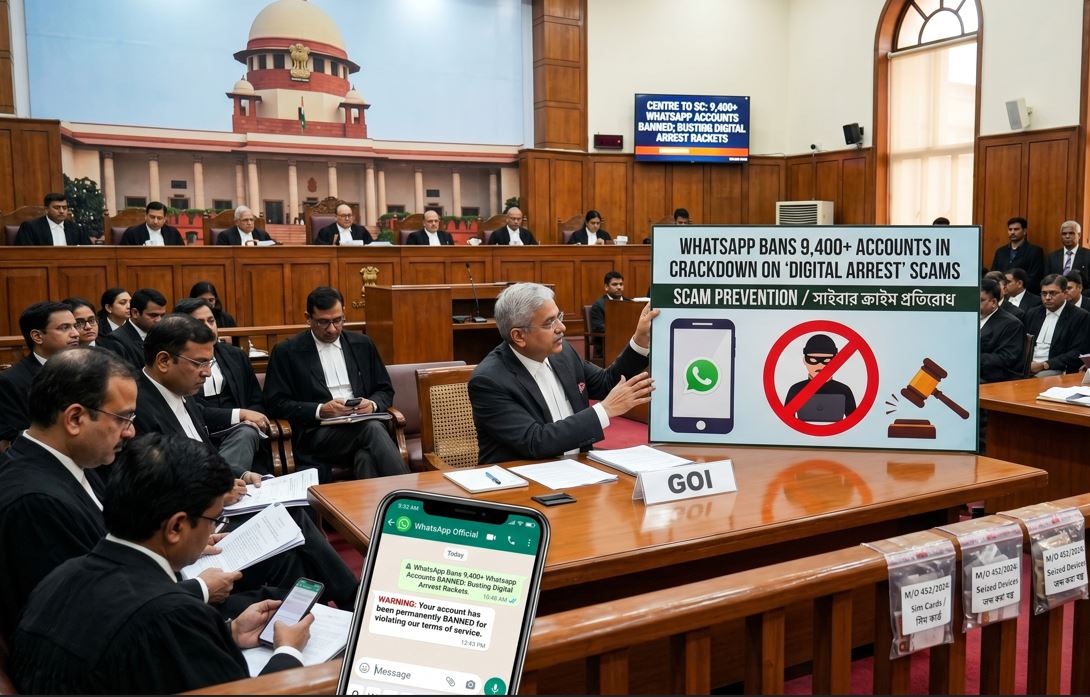
The development was disclosed in a comprehensive status report filed by the Indian Cybercrime Coordination Centre (I4C) under the Ministry of Home Affairs (MHA), in compliance with the apex court’s directions to curb the growing menace of online fraud and digital extortion.
A bench headed by Chief Justice Surya Kant, which had taken suo motu cognisance of digital fraud cases, had earlier directed the Reserve Bank of India (RBI), Department of Telecommunications (DoT), and other agencies to frame a coordinated mechanism for victim compensation and preventive action.
According to the report, WhatsApp launched a structured multi-week investigation in January 2026 following concerns raised by I4C, the Ministry of Electronics and Information Technology (MeitY), and the DoT over scams targeting Indian users.
The investigation reportedly followed a rigorous methodology involving identification of suspicious signals, mapping scam networks, taking action against linked accounts, and deploying automated safeguards to prevent future abuse.
Authorities said the banned accounts were linked to fraudsters impersonating law enforcement agencies such as police, CBI, customs officials, and other government departments. Victims were allegedly threatened through calls and messages, falsely told they were under investigation, and coerced into transferring money to avoid arrest.
The Centre also informed the court that a multi-pronged strategy involving telecom regulators, service providers, banks, tech companies, and investigative agencies such as the CBI is being implemented to tackle such cybercrimes.
Officials urged citizens to remain alert and reminded the public that genuine law enforcement agencies do not demand payments or conduct arrests through messaging apps or video calls.
The crackdown is being seen as a major step in strengthening India’s response to increasingly sophisticated cross-platform cyber fraud operations.
29, Apr 2026
Credit Card Spending Surges 2 pc in March to INR 2.19 Lakh Crore
New Delhi, Apr 29 (BNP): India’s credit card spending recorded a strong month-on-month rise in March, increasing by 24% to ₹2,194 billion (₹2.19 lakh crore), supported by seasonal demand and a lower base effect, according to a recent report released on Tuesday.
The data indicates that while overall spending saw a noticeable jump, the broader consumption pattern is gradually stabilising, suggesting a normalisation in credit-driven expenditure trends.
Analysts noted that the increase in March spending was influenced by seasonal factors, which typically drive higher consumer activity during the period. However, when viewed over a longer period, spending growth appears to be moderating compared to earlier high-growth phases.
The report further highlighted that credit card usage continues to remain an important indicator of urban consumption, reflecting spending behaviour across categories such as retail, travel, and services.
Despite short-term fluctuations, experts suggest that consumer spending remains steady, with credit usage aligning more closely with income growth and broader economic conditions.
Overall, the data points to a healthy but stabilising credit card market, where sharp monthly increases are balanced by a more sustainable long-term growth trend.
29, Apr 2026
LPG Booking Rules, Delivery System and Prices Set for Key Changes from May 1
New Delhi, Apr 29 (BNP): Major changes in LPG booking rules, delivery verification, and pricing are expected to come into effect from May 1, along with a continued push towards cleaner fuel usage, according to recent policy updates.
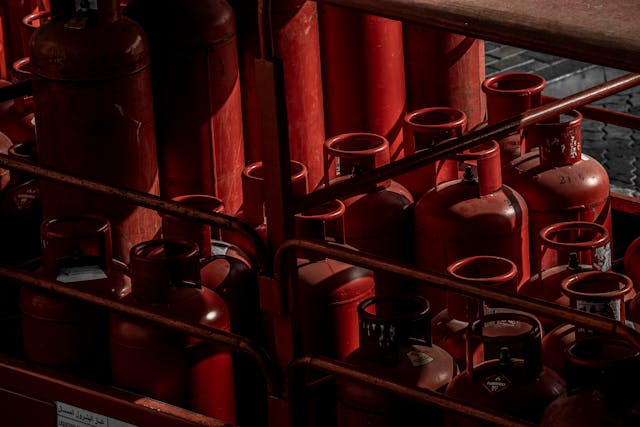
Under the revised system, booking intervals for LPG cylinders will be extended. Urban consumers will need to wait 25 days between bookings, while rural consumers will have a 45-day gap, compared to the earlier shorter cycle. The move is aimed at improving supply management and ensuring smoother distribution.
A key update is the introduction of a mandatory OTP-based delivery verification system. Consumers will now need to confirm LPG deliveries through a one-time password sent to their registered mobile numbers. This digital system is intended to improve transparency and reduce misuse, hoarding, and diversion of subsidised cylinders.
On the pricing front, LPG rates have already seen an increase in recent months, with domestic cylinders rising by about ₹60 in April. Commercial cylinder prices have also increased more sharply, and further revisions may take place depending on global crude oil movements and market conditions.
The government is also continuing its focus on promoting piped natural gas (PNG). In areas where PNG infrastructure is available, households may be encouraged to switch, with phased restrictions on LPG supply for eligible users expected over time.
Despite global uncertainties, officials have said LPG, PNG, and CNG supplies remain stable, with priority being given to essential services. Consumers have been advised to avoid panic buying and complete necessary eKYC updates to ensure uninterrupted service.
Overall, the changes are aimed at improving efficiency, strengthening supply management, and gradually shifting consumers towards cleaner and more sustainable energy options.
29, Apr 2026
India to Receive Fourth S-400 Missile Shield by May, Boosting Air Defence!
New Delhi, Apr 29 (BNP): India is set to receive its fourth Russian-made S-400 Triumf air defence missile system by May 2026, significantly enhancing the country’s air defence preparedness and strengthening strategic coverage across key regions.
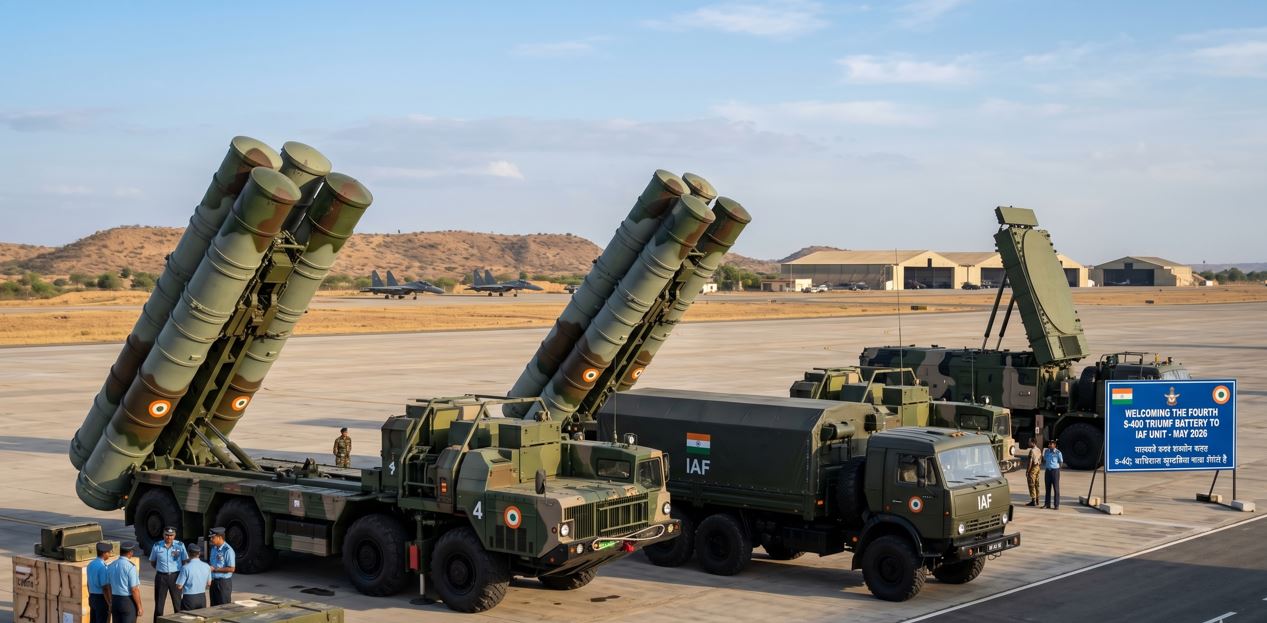
The advanced S-400 system, regarded as one of the world’s most sophisticated long-range air defence platforms, is capable of detecting and engaging multiple aerial threats including fighter aircraft, drones, cruise missiles and ballistic missiles at ranges of up to 400 kilometres.
The upcoming delivery coincides with the anniversary of Operation Sindoor, during which the S-400 reportedly played a crucial role in intercepting hostile aerial threats and safeguarding military installations across northern and western sectors.
India had signed a defence agreement worth nearly ₹40,000 crore with Russia in 2018 for the procurement of five S-400 squadrons. So far, three squadrons have already been delivered and deployed in strategically important locations.
The first unit was deployed near the western border in December 2021, followed by the second near the northern frontier in 2022, while the third was positioned in Rajasthan in January 2023.
Officials said the fourth squadron will help eliminate critical radar blind spots, improve early warning systems, and further strengthen India’s multi-layered air defence shield alongside systems such as Barak-8, Akash, and NASAMS-II.
The fifth and final S-400 unit is expected to be delivered by November 2026, completing India’s full order of five squadrons.
The induction of the fourth S-400 system comes at a time when India continues to modernise its armed forces and bolster national security amid evolving regional security challenges.
29, Apr 2026
NIT Rourkela Climbs to 186th Rank in THE Asia University Rankings 2026
Rourkela, Apr 29 (BNP): The National Institute of Technology Rourkela has secured the 186th position in the Times Higher Education (THE) Asia University Rankings 2026, strengthening its position among leading higher education institutions in Asia.
The latest rankings assessed 929 universities across 36 countries and territories, where NIT Rourkela continued to maintain a strong presence, reflecting its steady academic and research progress.
The improved ranking highlights the institute’s growing focus on academic quality, research output, and institutional development. It also reflects its expanding reputation in engineering education and innovation at both national and regional levels.
According to the ranking framework, universities are evaluated on parameters such as teaching standards, research performance, industry engagement, and international outlook. NIT Rourkela’s position indicates positive progress across these key areas.
Overall, the result reinforces the institute’s standing as one of India’s leading technical education institutions, with ongoing efforts to further enhance academic excellence and global competitiveness.


