


28, Apr 2026
Umiya Buildcon Consolidated Reports Strong Q4 FY26; Products Segment Hits Decade-High Sales, Real Estate Portfolio Gains Traction
Bengaluru, Apr 28: Umiya Buildcon Limited a publicly listed dual-sector enterprise announced its financial results for the fourth quarter ended March 31, 2026, reporting robust growth led by its Products segment, alongside steady execution in Solutions and continued traction in its Real Estate business.
Financial Highlights
Consolidated Performance
- Strong year-on-year growth driven by improved operational performance
- Earnings per share (EPS) recorded significant growth during the financial year
Segment Performance
Products Segment (Strongest Performer)
- Delivered its highest quarterly sales in the last decade
- Achieved strong year-on-year growth, driven by demand for indigenous networking solutions
Solutions Segment
- Maintained stable execution across projects
- Continued contribution to overall business performance
Real Estate Segment
- Recorded strong growth supported by project traction and customer engagement
- Continued expansion across key markets
Leadership Commentary
Aniruddha Mehta, Chairman & Managing Director, said:
“We are extremely pleased with our performance this quarter, with the Products segment delivering its strongest results in the last decade. This reflects our continued focus on indigenous innovation, disciplined execution, and alignment with India’s digital infrastructure priorities. Our real estate business has also gained traction with key developments in Goa and Bengaluru, and we remain focused on scaling this portfolio in a calibrated manner.”
C S Krishnadas, Chief Executive Officer, added:
“Our performance reflects steady progress across all three business segments. The Products business continues to benefit from increasing adoption of our indigenous solutions, while the Solutions segment has maintained consistent execution. The traction in our real estate vertical reinforces our hybrid business model, where technology and infrastructure work together to drive sustainable growth.”
Operational Highlights
Telecom & Networking
The Products segment witnessed strong demand across:
- High-capacity switches
- Data centre networking solutions
- Indigenous networking technologies
The company continues to invest in research and development, including its proprietary Network Operating System (NOS), while maintaining a strong pipeline of government and public sector digital infrastructure projects.
Real Estate
- Umiya Bricklane, Candolim (Goa): Received encouraging customer response and regulatory approvals
- Umiya Prism, Cunningham Road (Bengaluru): Ultra-luxury boutique residential project launched with initial development underway
The company remains focused on expanding its premium real estate portfolio through strategic developments.
Outlook
Umiya Buildcon Limited remains optimistic about its growth trajectory, supported by:
- A resilient hybrid business model
- Strong order pipeline in the Products segment
- Continued investments in innovation and R&D
- Expansion across telecom, networking, and real estate
The company aims to sustain its growth momentum in the coming financial year through disciplined execution and alignment with India’s infrastructure and manufacturing priorities.

- 0
- By Neel Achary

28, Apr 2026
SK Telecom Presents AI Reasoning Model at ICLR 2026 to Identify Customers’ True Preferences
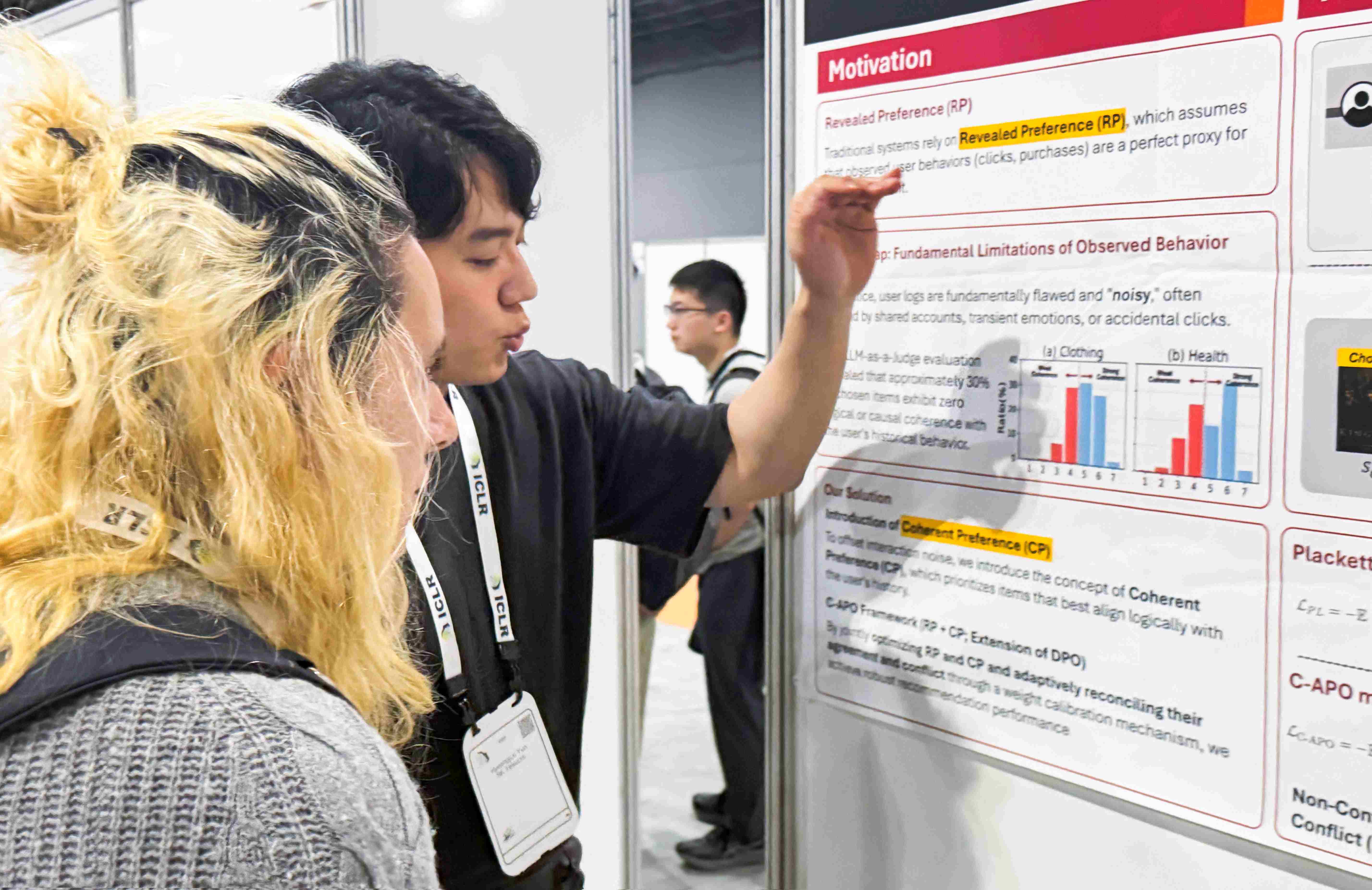
Seoul, Korea, Apr 28 – SK Telecom (NYSE:SKM, hereinafter referred to as “SKT”) announced today that its new AI recommendation model, which more accurately identifies customers’ true preferences, was presented at a leading AI conference, the International Conference on Learning Representations (ICLR) 2026.
ICLR, along with the Conference on Neural Information Processing Systems (NeurIPS) and the International Conference on Machine Learning (ICML), is regarded as one of the world’s top three AI conferences. Technologies presented at these events see industrial application within a few years or become benchmarks for academic research and product development, making them key indicators of the future direction of AI.
The research paper, titled “More Than What Was Chosen: LLM-Based Explainable Recommendation Beyond Noisy User Preferences,” centers on SKT’s proprietary Conflict-Aware Direct Preference Optimization (C-APO) technology. The technology filters out conflicting preference signals, enabling more accurate recommendations of products that customers genuinely desire.
To achieve this, SKT introduced the concept of “coherent preference” — reflecting recurring patterns and contextual coherence across a customer’s overall behavior. Through this approach, the model distinguishes coherent preferences from revealed preferences derived from single actions, such as accidental clicks or one-time, unintentional choices.
This approach increases the learning weight when the two preference signals align, reinforcing the recommendation. When the signals conflict, the model treats the discrepancy as noise and lowers the learning weight, enabling it to identify the most appropriate recommendations.
Conventional AI recommendation systems have struggled to interpret conflicting preference signals — for example, a customer who typically watches romance films may receive only action recommendations after watching even a single action movie based on a friend’s suggestion. SKT’s new recommendation model, however, filters out such inconsistencies to identify the customer’s true preferences.
SKT plans to apply this research to future agent-based customer recommendation systems that integrate AI for interpreting usage context, generating recommendation candidates, and refining results through an orchestration layer. The company aims to deliver more advanced and personalized recommendations tailored to each customer’s needs and behavior.
“The technology lays the foundation for delivering personalized recommendations by better understanding customers’ true preferences,” said Seok Ji-hwan, Head of AI/DT Data Office at SK Telecom. “The presentation at ICLR 2026 marks a milestone in SKT’s AI transformation to enhance customer experience, and we will continue to advance AI technologies that customers can benefit from.”
28, Apr 2026
Vodia Version 70 Features WhatsApp Business Calling and Messaging

BOSTON: Apr 28- Vodia Networks, Inc., a provider of unified cloud communications solutions to enterprises, contact centers, and service providers, is pleased to announce Version 70, the newest version of the industry-standard Vodia PBX, features WhatsApp Business Calling and Messaging, as V70 now integrates with WhatsApp Business Services.
WhatsApp Business Services enable rich, conversational experiences between businesses and WhatsApp users for more personal interactions along each customer’s journey. With V70, WhatsApp can be connected directly to the PBX, allowing businesses to manage messaging and calls from a single platform. Messages can be sent and received, calls can be routed through the PBX, and conversations can be handled alongside existing voice infrastructure.
With the WhatsApp Business Calling API, businesses can manage when and how to connect with customers when voice is required. The API enables both inbound and outbound calls with WhatsApp users via VoIP, using a single verified WhatsApp number for calling and messaging and it even makes it possible to chat while on a call.
V70 supports direct SIP integration with the WhatsApp Business Calling API. WhatsApp users can call your business number, and those calls are routed directly into the PBX to extensions, queues, or IVRs, without requiring middleware or additional gateways, reducing deployment complexity and eliminating the need for external integration layers. This allows businesses to handle WhatsApp voice interactions using the same routing logic and infrastructure as traditional telephony.
V70 integrates with the WhatsApp Business Platform to support both incoming and outgoing messaging via the PBX. Text and image messages are supported, allowing teams to manage customer communication within the same system used for voice.
V70 extends the role of the PBX from a voice system. By integrating channels like WhatsApp directly into the PBX, businesses can manage voice and messaging within a single environment, without adding external layers of complexity.
28, Apr 2026
eHealth Deepens Support for Consumers with End-of-Life Financial Planning Solutions
New Final Expense Life Insurance Plans help people and their families better plan for funeral and burial or cremation expenses
A new eHealth survey found 65% of Americans underestimate the cost of a funeral with viewing and cremation; 35% underestimate the cost of a funeral with cremation
INDIANAPOLIS — Apr 28 –eHealth, Inc. (Nasdaq: EHTH), a leading private online health insurance marketplace, announced it now offers Final Expense life insurance plans, helping Americans and their families plan for funeral and burial or cremation expenses.
The new plans are part of eHealth’s strategy to better meet the coverage and wellness needs of individuals and families, offering an expanded portfolio of plans, services and support to help consumers live healthier, more financially secure lives.
“Honoring loved ones upon passing is an important part of life for many families, yet this is an often-overlooked part of end-of-life planning,” said Derrick Duke, CEO of eHealth. “The cost of a traditional funeral and burial averages over $8,000, so these new plans can help people prepare for this part of life while helping protect their loved ones from the financial burden associated with a funeral and burial or cremation.”
Anew eHealth survey of more than 1,000 Americans aged 65 and older found many people are unprepared to cover the cost of funeral and burial expenses. Key findings:
·65% underestimate the average cost of a funeral with viewing and cremation, while 35% underestimate the average cost of a funeral with cremation.
·47% worry about burdening loved ones with the cost of a funeral and burial or cremation.
·62% plan to be cremated, while 23% prefer to be buried; 15% don’t know or have no preference.
Among survey respondents living on an income of less than $50,000 per year:
·56% worry about burdening their loved ones with the cost of a funeral and burial or cremation.
·33% have no insurance or money set aside to help cover these end-of-life expenses.
eHealth’s Final Expense plans are offered through Mutual of Omaha and available by phone, allowing licensed insurance agents to discuss coverage options as part of a broader, personalized financial protection discussion. The policies can provide tax-free funds for various purposes, including funeral and burial or cremation expenses, outstanding medical bills, travel costs, legal fees, or other related needs.
Two types of Final Expense plans are available:
- Level Benefit Plans, offered to people ages 45 to 85, with coverage amounts ranging from $2,000 to $50,000.
- Graded Benefit Plans, offered to people ages 45 to 80, with coverage amounts ranging from $2,000 to $20,000.
Applicants are not required to undergo a medical exam to qualify for coverage. Instead, eligibility is determined through responses to a limited set of health questions covering a lookback period of approximately two to four years. The plans are designed to be affordable and provide beneficiaries with quick access to guaranteed funds, helping reduce financial stress during a difficult time.
Theaverage cost of a funeral with a viewing and burial exceeds $8,000, while the average cost of a funeral with a viewing and cremation is more than $6,000.
“These new plans allow us to provide people with affordable, easy-to-qualify coverage that helps protect their loved ones from the financial burden associated with end-of-life expenses,” continued Derrick Duke. “It aligns with our commitment to expanding access to products that support financial peace of mind in retirement.”
Specific plan availability may vary by state; some plans may not be available in Arkansas, Montana, New York, and North Carolina. Coverage and premiums may vary based on qualifying factors.
Consult a tax professional for personal tax advice.
27, Apr 2026
IPL 2026: Gujarat Titans Cruise Past CSK; KKR Win Super Over Thriller Against LSG
Chennai & Lucknow, Apr 27: It was a day of high drama and dominant performances in the Indian Premier League as Gujarat Titans registered a commanding win over Chennai Super Kings in Chennai, while Kolkata Knight Riders edged past Lucknow Super Giants in a thrilling Super Over finish in Lucknow.

Gujarat Titans Outclass CSK in Chennai
Gujarat Titans delivered a clinical all-round performance to secure an emphatic eight-wicket victory over Chennai Super Kings at the MA Chidambaram Stadium.
Kagiso Rabada led the bowling attack with a superb spell of 3 for 25, dismantling CSK’s top order and restricting them to 158/7 despite a fighting unbeaten 74 from skipper Ruturaj Gaikwad.
In reply, Gujarat chased down the target comfortably, reaching victory with 20 balls to spare. Sai Sudharsan starred with a composed unbeaten 87 off 46 balls, anchoring the innings with maturity and aggression. He was supported by Shubman Gill (33) in a 58-run opening stand, before combining with Jos Buttler (39*) in an unbeaten 97-run partnership to seal the win.
The result pushed Gujarat Titans up to fifth place, while Chennai Super Kings slipped to sixth in the standings.
KKR Edge LSG in Super Over Thriller in Lucknow
In a dramatic contest at the Ekana Cricket Stadium, Kolkata Knight Riders defeated Lucknow Super Giants in a Super Over after both teams finished tied at 155 runs.
The match reached its peak when late fireworks pushed LSG to level the scores, setting up a tense finish. In the Super Over, Sunil Narine delivered a match-defining spell, conceding just one run and taking two crucial wickets, shifting momentum decisively in KKR’s favor.
Chasing a target of just 2 runs, Rinku Singh finished the game instantly with a boundary off the first ball, sealing a memorable win.
Earlier, KKR posted 155/7, powered by Rinku Singh’s unbeaten 83 off 51 balls. LSG responded with 155/8, driven by late resistance that forced the tie.
The victory lifted Kolkata Knight Riders to eighth place, while Lucknow Super Giants dropped to the bottom of the table.
A Day of Contrasts in IPL 2026
While Gujarat Titans showcased dominance with a controlled chase and disciplined bowling, Kolkata Knight Riders and Lucknow Super Giants delivered one of the most thrilling encounters of the season, highlighting the unpredictable intensity of T20 cricket.
Both matches significantly impacted the standings and reinforced the growing competitiveness of IPL 2026.
27, Apr 2026
South India’s Premier Jewellery Fair Returns with First-Ever Retail Symposium and High-Impact Show Features
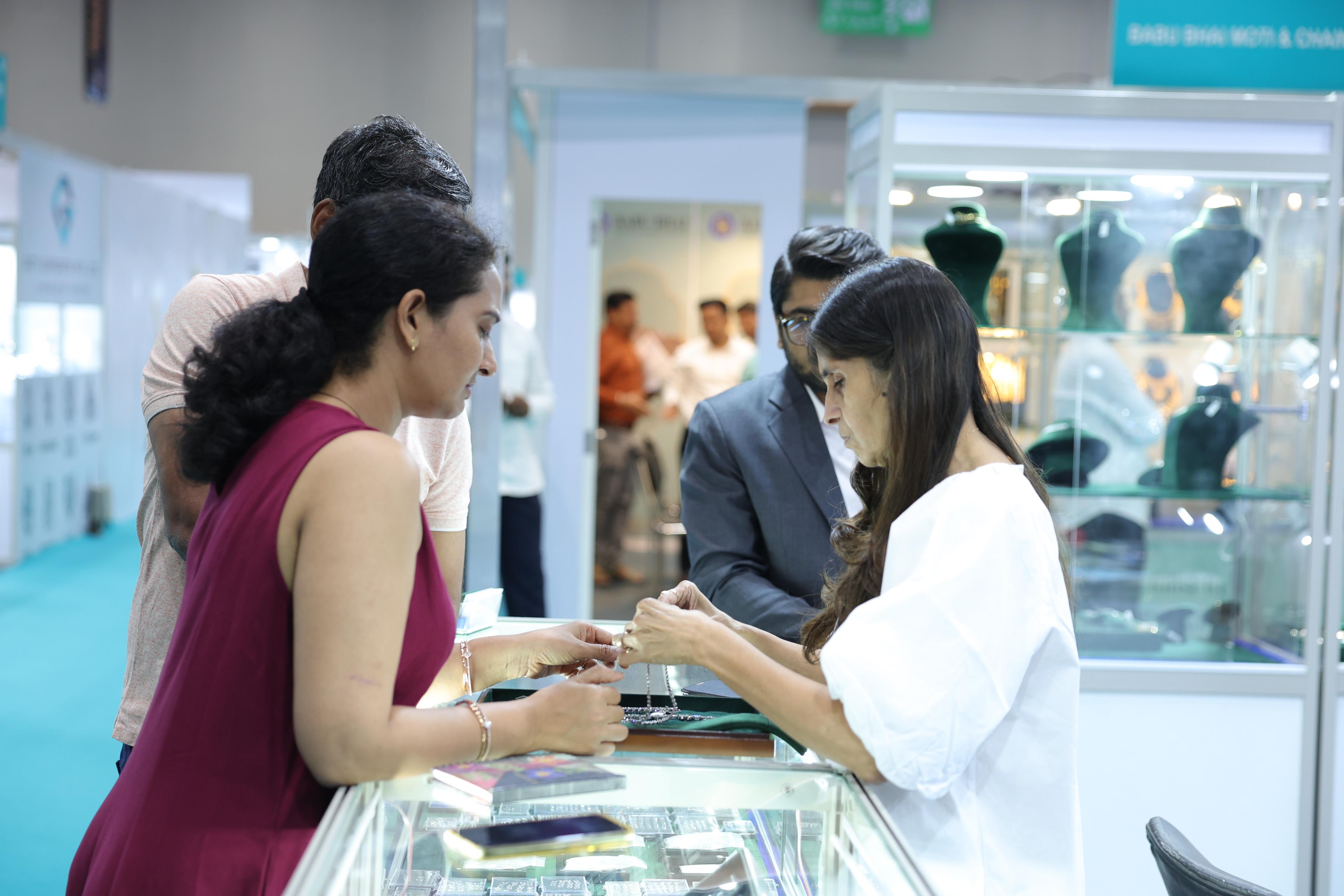
Hyderabad, Apr 27: Informa Markets in India will host the 18th edition of the Hyderabad Jewellery Pearl & Gem Fair (HJF 2026) in association with Hitech City Jewellery Manufacturers Association (HJMA) from May 8–10 at HITEX Exhibition Centre, Hyderabad. Recognised as South India’s leading B2B jewellery sourcing show, this edition introduces new knowledge-led initiatives and curated showcases designed to enhance both business discovery and industry dialogue.
Building on its 18-year legacy, HJF continues to bring together manufacturers, wholesalers, retailers, designers, and technology providers—creating a high-value environment for sourcing, networking, and insights.
What’s New in 2026: Industry-First Highlights
A key highlight this year is the Jewellery Retail Symposium, a first-of-its-kind, large-format conference dedicated to India’s jewellery retail community. Designed as a national thought leadership forum, it will feature 20 leading voices across 4 high impact panel discussions examining evolving consumer demand, retail transformation, and technology-led growth—placing sharper focus on future-ready retail practices. The symposium is supported by the Dubai Business Group for Gold & Jewellery Designers, bringing a global industry perspective to the platform.
Further strengthening the show is the launch of the Zaveri Bazaar Pavilion, bringing leading manufacturers from Mumbai’s iconic Zaveri Bazaar to Hyderabad for the first time—creating direct access for South Indian buyers to some of the country’s most established jewellery producers.
The Silver Pavilion will spotlight a fast-growing segment driven by affordability and design innovation, while the Machinery Pavilion will showcase advanced manufacturing and packaging solutions to improve efficiency and scale.
Enhancing the experience is ‘Samvad with Renu Chaudhary’, an on-site podcast series featuring candid conversations with industry voices on market trends, leadership, and the future of jewellery retail.
Adding further depth to the show experience, the Artisan Zone will spotlight the intricate legacy of silver filigree craftsmanship from Karimnagar, bringing master artisans to the forefront through live demonstrations and finely handcrafted creations that reflect India’s rich heritage. Complementing this is the CAD Design Pavilion, a dedicated showcase of cutting-edge jewellery innovation, where leading designers and technology experts will demonstrate advanced rendering, rapid prototyping, and customization capabilities—bridging traditional artistry with modern, scalable design solutions for today’s evolving market.
A Strategic Platform Ahead of the Festive Season
Timed ahead of the peak wedding and festive buying cycle, HJF 2026 offers retailers a valuable opportunity to source new collections, identify emerging trends, and strengthen supplier networks. Buyers from Telangana, Andhra Pradesh, Tamil Nadu, Karnataka, Kerala, and Maharashtra are expected, ensuring strong regional participation.
The show will feature leading brands such as M Sashi Badalia, Mukti Gold, Anja Jewellers, Shraddha Jewellers, Manepally Jewellers, Devansh Jewellers, Rishabh Jewellers, Ambica Silver and Many more, alongside a diverse mix of exhibitors spanning gold, diamond, silver, gemstones, pearls, and jewellery technology—reflecting the evolving needs of modern jewellery businesses. The expo is also supported by prominent industry associations including Hitech City Jewellery Manufacturers Association (HJMA), Telangana Bullion, Gem & Jewellery Federation, Telangana Pawn Broker Jewellers Association Pot Market Jewellers Association further reinforcing its credibility and reach within the trade ecosystem.
Speaking on the 18 Years of Legacy of HJF that has driven growth through insight, exhibition and Innovation, Mr Yogesh Mudras, Managing Director, Informa Markets in India said, “South India remains one of India’s most influential jewellery markets, contributing nearly 40% of the country’s gold consumption, led by strong wedding demand, cultural affinity, and a rapidly formalising retail landscape. Markets like Telangana, Tamil Nadu, and Karnataka continue to drive both volume and design innovation. As India’s gems and jewellery market moves towards the USD 130 billion mark, the focus is shifting beyond sourcing to smarter retail, stronger networks, and future-ready business models. With curated showcases like the Zaveri Bazaar Pavilion, fast-growing segments such as silver and technology, and the introduction of the Jewellery Retail Symposium to drive focused industry dialogue, HJF 2026 is designed to help businesses stay competitive and capture the next phase of growth.”
With over 18 years of credibility, HJF continues to foster meaningful trade relationships and support sector-wide progress through innovation-led initiatives.
Strengthening India’s Jewellery Ecosystem
India remains one of the world’s largest jewellery markets, shaped by deep cultural roots and a rapidly transforming retail environment. From national chains to independent retailers across tier 2 and tier 3 cities, growth continues to be driven by changing consumer preferences, digital adoption, and design-led innovation.
HJF 2026 aims to contribute to this momentum by connecting heritage craftsmanship with modern design and technology, enabling businesses to adapt, innovate, and scale.
27, Apr 2026
Hyderabad Horse Show 2026 Concludes at Nasr Polo Academy with 140 Riders and Grand Show Jumping Finale
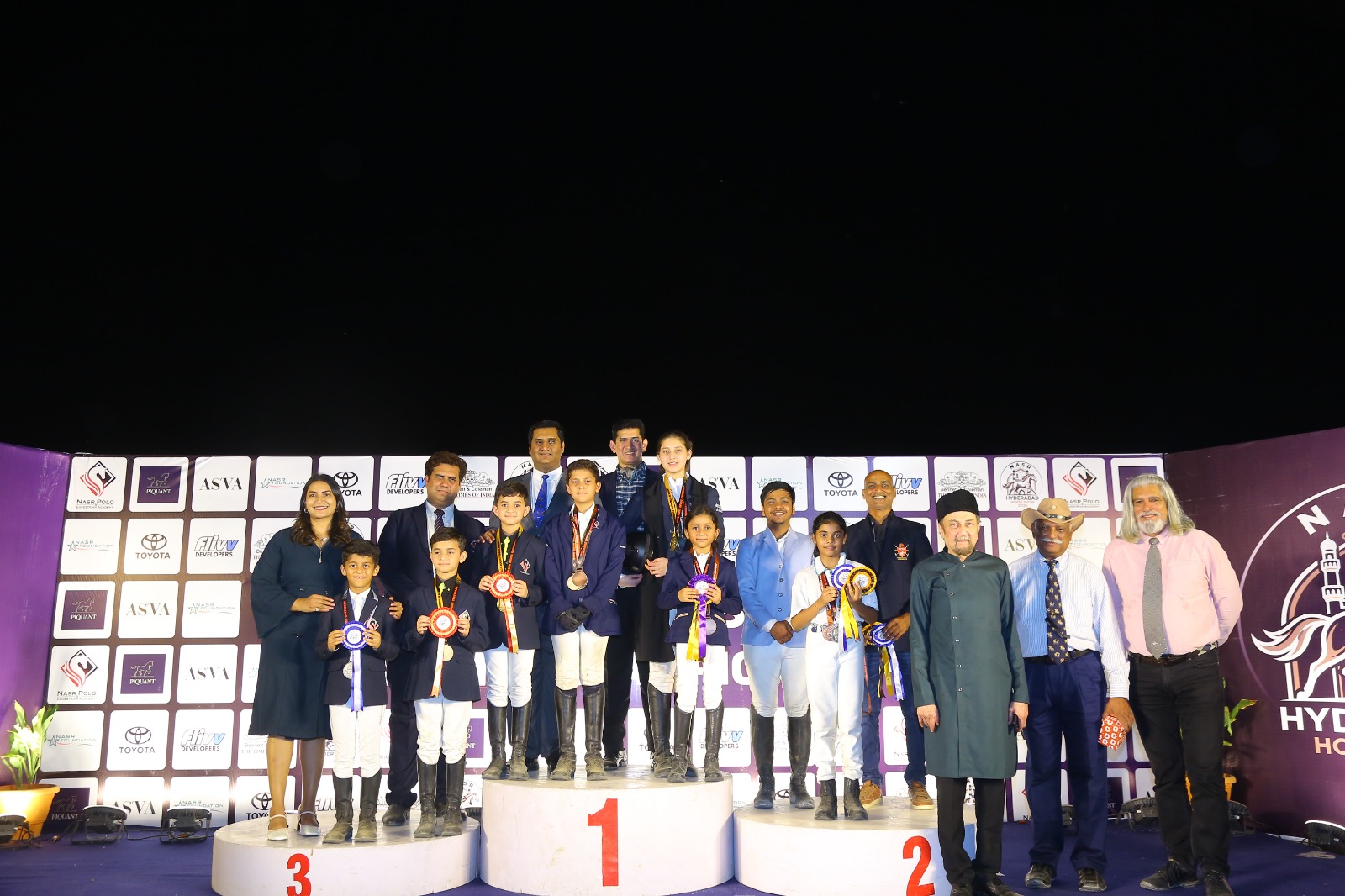
Apr 27: Nasr Polo & Equestrian Academy organised the three-day Hyderabad Horse show 2026 from April 24th to 26th at its sprawling Sports Arena in Shankarpally in the Outskirts of HYDERABAD.
The Horse show came to a fitting finale with the SHOW JUMPING competition with over 140 riders participating in various categories from the age group of 8 to 45, entertaining and entertaining a sizeable audience of over 1000 people witnessing the razzmatazz of the popular sport which brought laurels to INDIA recently in the ASIAN GAMES and at INTERNATIONAL SPORTING ARENAS as well.
Speaking to the Media the Chairman Mr Mir Khutubuddin Khan added that the sport has grown a lot in the City with over 3000 riders actively participating in the sport across the city & was welcoming the participation of many more school and young people to take up the sport for an active life ; similar opinion was vented by Director of Nasr Polo Mir Mohiuddin Mohammed who also mentioned as to how this sport would develop the cognitive skills of the sports aspirants; he also added that Equestrian, Dressage, Polo and Horse Sports be added in the SCHOOL CURRICULUM which would also build the leadership qualities in Children. Telugu Bigg Boss Fame Actress SWETA VARMA who came in a special guest to Grace the Event spoke about her interest in Horse Sports and gave a thorough shout out for the organisers in promoting the sport in a BIG WAY and spoke as to how sport has made her a better and stronger personality and also appealed to the parents to introduce their children to daily sporting activities.

The event was attended by 9th NIZAM of ASIF JAHI DYNASTY HH Raunaq Yar Khan, who was gracious enough to give the winning medals to the over 30 winners, including names like AIZA MIR, KASHIF, ADVIT, AMAIRA, SANVIKA and other winners representing various other EQUESTRIAN ACADEMIES across HYDERABAD.
He also expressed his views on proper GOVT SPORTS POLICY to make HORSE SPORTS an inclusive CURRICULUM along with other OLYMPIC SPORTS and urged the society to make SPORTS in GENERAL and an acceptable career to young people to pursue their dreams.
The Competition was judged by Mr KCS REDDY and COLONEL AHLAWAT, both NATIONAL CHAMPIONS of the sport and they also gave away the winning medallions to all the winners, along with Mir JAMALUDDIN HAMMAD, comptroller of NASR POLO and Mir HAFEZUDDIN AHMED, CEO of NASR POLO, in the grand evening at the sprawling ARENA.
27, Apr 2026
GMR Sports and Rugby India Announce Introduction of Women’s Franchises in Season 2 of the HSBC Rugby Premier League
New Delhi, April 27: GMR Sports, in partnership with Rugby India, has announced the introduction of women’s franchises in Season 2 of the HSBC Rugby Premier League, marking a significant milestone in the growth and inclusivity of rugby in India.
Building on the success of its inaugural 2025 edition, four of the six existing men’s teams—Chennai Bulls, Delhi Redz, Mumbai Dreamers, and Kolkata Banga Tigers—will now also field women’s teams. The Kolkata franchise was previously known as Kalinga Black Tigers and has been relocated from Bhubaneswar to Kolkata.
The addition of women’s teams underscores the league’s commitment to building a more inclusive and sustainable rugby ecosystem while offering female athletes a premier platform to compete at the highest level.
Season 2 of the league is scheduled to take place from June 16–28 at Gachibowli Stadium, further strengthening the league’s presence after a successful debut season in Mumbai.
Commenting on the development, Rahul Bose said,
“It has always been our dream at Rugby India to have an RPL Women edition. This year that dream comes to fruition. Women’s 7s rugby across the world is as exciting as Men’s 7s rugby, and our Indian women are superb.”
Sujoy Ganguly added,
“The inclusion of women’s teams is a natural progression for the league. It reflects our commitment to nurturing talent across genders while elevating the standard and appeal of rugby in India.”
The player draft and auction for both the women’s and men’s teams—including Hyderabad Heroes and Bengaluru Bravehearts—will be held in Hyderabad on April 30.
With this expansion, the HSBC Rugby Premier League is set to further accelerate the growth of rugby in India, inspiring broader participation and strengthening its position as a key platform for the sport’s development.
27, Apr 2026
Deepti Sharma Stars with Bat and Ball as India Register First Win of Series
Johannesburg, Apr 27 (BNP): India’s star all-rounder Deepti Sharma ended her lean run of form in emphatic style with a superb all-round performance in the fourth Women’s T20I against South Africa, guiding India to their first victory of the series.
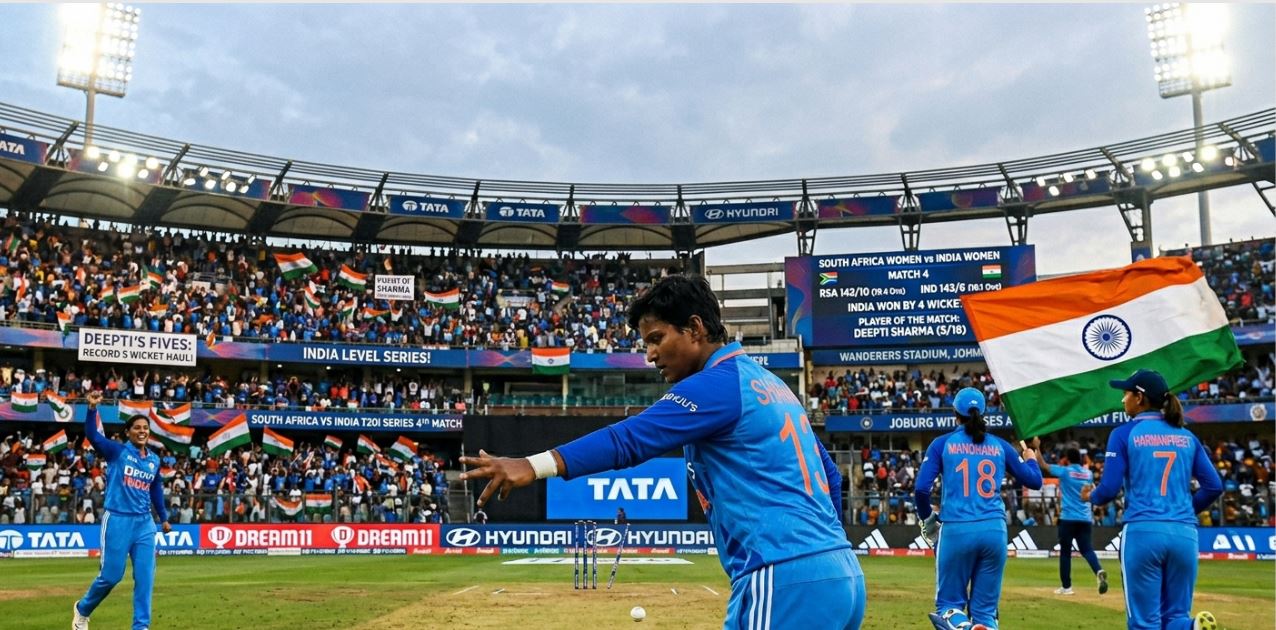
The 28-year-old first played a vital unbeaten knock of 36 runs, anchoring the Indian innings under pressure and helping the team post a competitive total. She then produced a sensational spell with the ball, returning career-best figures of 5 for 19 to dismantle the South African batting line-up.
Deepti’s outstanding effort also marked her maiden five-wicket haul in T20 Internationals, making it a memorable all-round display. Her match-winning contribution earned her the Player of the Match award.
Expressing delight after the game, Deepti said she always backs herself in crucial situations and was grateful to her teammates for their constant support and belief.
India’s convincing win has revived momentum in the series, with Deepti’s return to top form coming as a major boost for the team ahead of the remaining matches.
27, Apr 2026
PM Modi Praises Massive Digitisation Drive, Encourages Public to Explore ‘Abhilekh Patal’
New Delhi, Apr 27 (BNP): Prime Minister Narendra Modi has praised the large-scale digitisation of historical records by the National Archives of India, noting that over 200 million valuable documents have now been preserved in digital format.
In a recent message, the Prime Minister described the effort as a significant step towards safeguarding India’s rich historical legacy and making it more accessible to the public. He encouraged citizens, researchers, and history enthusiasts to explore the ‘Abhilekh Patal’ portal, which provides access to these digitised records.
The initiative aims to modernise archival systems and allow easier access to rare documents, manuscripts, and official records that were previously difficult to obtain.
The National Archives’ digitisation drive is seen as a major move in preserving cultural heritage while leveraging technology to connect people with India’s past.


