


27, Apr 2026
Rupee Falls to 94.27 on Dollar Demand, Oil Spike Weighs
New Delhi, Apr 27 (BNP): The Indian rupee continued to weaken on Monday, slipping 11 paise to 94.27 against the US dollar in early trade, as global headwinds kept pressure on the domestic currency.
The decline marks the fifth straight session of losses, driven by a combination of rising crude oil prices, sustained foreign fund outflows, and heightened geopolitical tensions. These factors have increased demand for the US dollar while dampening sentiment toward emerging market currencies.
A major concern remains the surge in Brent crude, which has crossed the $106-per-barrel mark. Higher oil prices raise India’s import costs, leading to greater dollar demand from oil companies and putting additional strain on the rupee.
Foreign institutional investors have also continued to pare their holdings in Indian equities, reflecting caution in global markets and a tilt toward safer assets. This trend has further weighed on the currency.
Despite the pressure on the rupee, domestic equity markets showed resilience. The BSE Sensex and NSE Nifty 50 both traded higher in early deals, supported by selective buying in heavyweight stocks.
The contrasting movement highlights a divergence between currency and equity markets. While equities are responding to domestic cues and sectoral strength, the rupee remains sensitive to external risks.
Going ahead, the currency’s movement will depend largely on global oil price trends, geopolitical developments, and the direction of foreign capital flows.

- 0
- By Neel Achary

27, Apr 2026
India–New Zealand FTA to Accelerate Leather Sector Growth to Dollar 50 Billion by 2030
New Delhi, Apr 27 (BNP): India’s leather industry is poised for significant expansion, with projections to reach $50 billion by 2030, driven by the recently concluded free trade agreement with New Zealand and a strategic move toward value-added manufacturing.
The Ministry of Commerce and Industry said the agreement will provide a major boost to exports by eliminating tariffs on all Indian goods from the date of implementation. Notably, duties on leather and footwear—earlier pegged at around 5%—will be brought down to zero, enhancing India’s competitiveness in international markets.
Union Commerce and Industry Minister Piyush Goyal and New Zealand’s Trade Minister Todd McClay underscored the strong synergy between the two economies during an industry outreach event in Agra. The partnership is expected to combine New Zealand’s raw material strength with India’s manufacturing scale and expertise.
Agra remains central to this vision, accounting for nearly three-fourths of India’s leather footwear output and holding a Geographical Indication (GI) tag. Policymakers and industry leaders are positioning the city as a global sourcing hub, capable of driving exports and employment generation.
Beyond tariff cuts, the agreement spans a wide range of sectors, including agriculture, pharmaceuticals, medical devices, education, and traditional medicine. Industry participants have welcomed provisions aimed at faster regulatory approvals and reduced compliance burdens, particularly through recognition of global standards.
The pact also places emphasis on talent mobility and deeper people-to-people engagement, opening new opportunities for professionals and students in both countries.
Overall, the India–New Zealand FTA is being viewed as a comprehensive and forward-looking framework that not only strengthens bilateral trade but also supports India’s ambition to move up the global value chain in manufacturing.
27, Apr 2026
Energy Security to Power India’s Capex Cycle: 360 ONE
New Dehi, Apr 27 (BNP): India’s push for energy security is shaping up to be a long-term investment theme, likely to drive a broad-based capital expenditure cycle across the sector, according to 360 ONE Capital Markets.
The brokerage noted that evolving geopolitical risks, particularly in West Asia, are reinforcing the country’s focus on resilience, reliability, and reduced dependence on imports. This shift is expected to accelerate investments across key segments such as power generation, transmission infrastructure, energy storage, and fuel substitution.
Importantly, the policy narrative is undergoing a transition—from prioritising affordability and decarbonisation to ensuring supply security and self-reliance. This realignment is creating fresh opportunities across the entire energy value chain.
Although many energy stocks have already seen strong gains and are trading near their target levels, the brokerage believes the structural story remains intact. It recommends that long-term investors consider building positions selectively during market corrections.
Overall, energy security is increasingly being viewed not just as a policy necessity but as a defining driver of India’s infrastructure and investment growth in the years ahead.
27, Apr 2026
Indian Markets Open Higher Despite Crude Surge and Geopolitical Tensions
New Delhi, Apr 27 (BNP): Indian equity markets opened on a strong note Monday, recovering after three consecutive sessions of losses, even as rising crude prices and ongoing geopolitical tensions weighed on global sentiment.

The BSE Sensex surged by over 500 points in early trade, reaching around 77,200, while the NSE Nifty 50 moved past the psychologically important 24,000 mark, gaining nearly 170 points.
The rebound was largely supported by buying interest in heavyweight stocks, particularly Sun Pharmaceutical Industries, which saw its shares rise sharply. The rally followed the company’s announcement of a major acquisition deal involving US-based Organon & Co.. The transaction, valued at approximately $11.75 billion, is structured as an all-cash deal and is expected to strengthen Sun Pharma’s global presence.
Market sentiment also improved in line with positive cues from international equity markets, where investors showed resilience despite concerns over elevated crude oil prices and geopolitical uncertainties.
Overall, the early gains suggest a cautious return of investor confidence, although volatility may persist given the broader global risk environment.
27, Apr 2026
World IP Day 2026: Blockchain Emerges as a Critical Layer for Digital IP Protection for USD 250‑Billion Digital Economy
Hyderabad, April 27: Observed annually on, World Intellectual Property Day, established in 2000, highlights the role of creativity, innovation, and intellectual property (IP) in driving economic and cultural progress. As digital creation accelerates across artificial intelligence, media, gaming, design, and publishing ecosystems, blockchain technology is increasingly emerging not just as financial infrastructure, but as a critical audit layer for originality, attribution, and long‑term ownership verification.
In today’s digital economy, content creation is expanding at an unprecedented pace. Every minute more than 500 hours of video are uploaded to YouTube, while generative AI platforms are estimated to produce tens of millions of images daily. This rapid scale of content generation has intensified challenges around proving originality, establishing authorship, and resolving ownership disputes, particularly in digital environments where content duplication and redistribution are effortless.
According to the World Intellectual Property Organization (WIPO), annual patent filings worldwide exceed 3.5 million, while trademark filings surpass 15 million each year. Intangible assets such as copyrights, trademarks, brand identity, and proprietary data now account for nearly 90% of the market value of S&P 500 companies, compared to approximately 17% in 1975, showcasing how ownership of ideas increasingly drives enterprise value. At the same time, the global creator economy is valued at around $250 billion today and is projected to exceed $480 billion by 2027, with more than 200 million creators worldwide participating across video, music, publishing, gaming, education, photography, and independent media.
Ownership disputes remain particularly difficult in digital contexts. Digital files can be copied indefinitely, metadata can be altered, and timestamps often vary across platforms, thus, creating ambiguity around first ownership and authenticity. Traditional ownership and verification systems are struggling to keep pace with this growth. Blockchain technology addresses these challenges by providing permanent, tamper‑evident ownership records. Once a digital asset is registered on‑chain, its creation timestamp, attribution, and transfer history become resistant to modification. Public blockchain networks already process millions of transactions daily, with Ethereum alone having processed over 2 billion cumulative transactions, demonstrating the scalability of immutable recordkeeping at a global level.
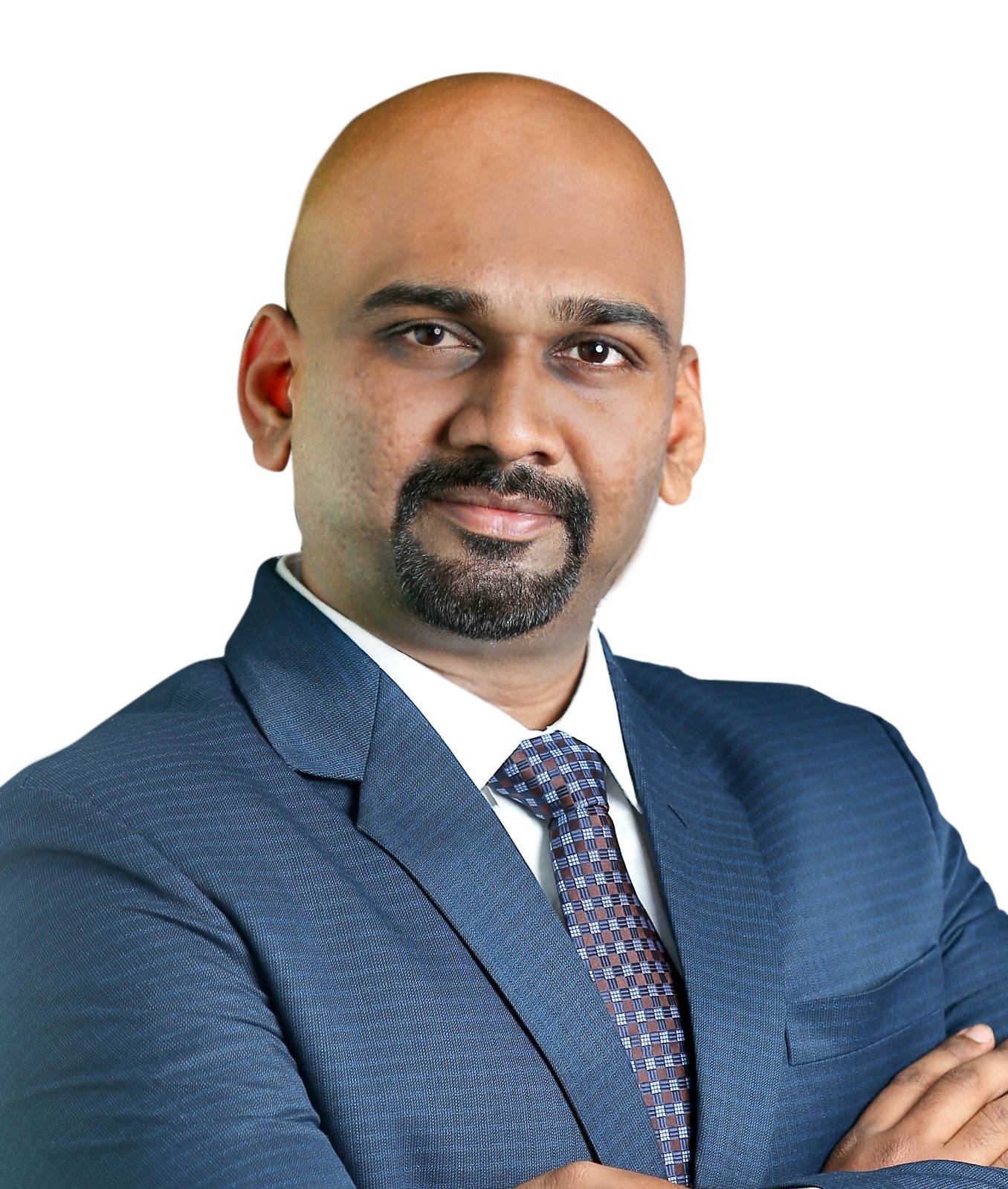
“Digital creation has expanded faster than digital ownership protection. In an environment where AI can replicate content in seconds, creators need proof of originality that exists before disputes arise. Blockchain enables a persistent ownership layer that stays attached to the asset itself and strengthens trust across digital ecosystems,” said Vikram Subburaj, CEO of Giottus.
The importance of provenance is also reshaping digital markets. Music tracks, research papers, illustrations, and digital designs can now carry verifiable ownership trails linked to wallet identities and on‑chain timestamps. Blockchain‑based provenance gained broader visibility during the NFT adoption cycle, where verified ownership markets generated over $24 billion in annual trading volume at peak adoption.
Smart contracts add an additional monetisation layer by automating licensing and royalties. Traditional royalty settlements in industries such as music and publishing can take six to eighteen months, whereas blockchain‑based execution allows payments to be distributed within seconds or minutes, improving transparency and cash flow for creators. Vikram Subburaj added, “Ownership verification is becoming as critical as content creation itself. As digital assets scale across platforms and borders, blockchain provides clarity on authorship, licensing, and monetisation, capabilities that will be essential as creator economies mature globally.”
India presents a particularly strong use case for blockchain‑enabled IP verification. With over 80 million creators spanning influencers, musicians, educators, regional‑language publishers, and independent media professionals, and an influencer marketing industry projected to reach Rs. 3,000 – 3,500 crores by 2026, the demand for transparent ownership tracking and licensing clarity continues to grow.
27, Apr 2026
Estithmar Holding to own 49% stake in Syria’s Shahba Bank through its subsidiary Masaref Holding
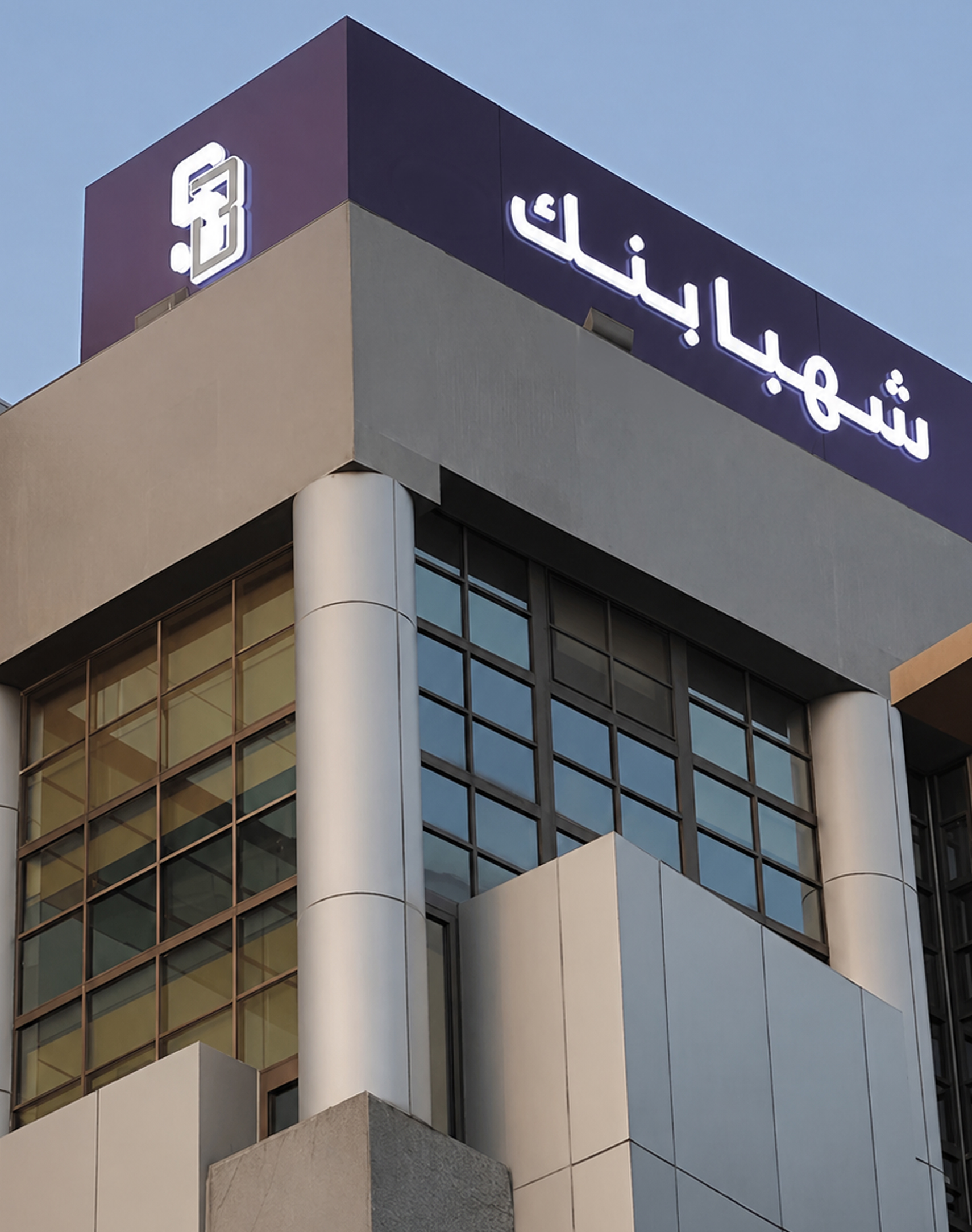
Damascus, Apr 27 — Estithmar Holding Q.P.S.C., listed on the Qatar Stock Exchange, has signed an agreement to invest in Shahba Bank through its subsidiary Estithmar Capital. Under the deal, concluded this morning in Damascus, Masaref Holding, a subsidiary of Estithmar Capital, takes a 49% stake in Shahba Bank, marking a further step in Estithmar Holding’s regional expansion and deepening exposure to the financial services sector.
Masaref Holding LLC signed the agreement with representatives of Bemo Saudi Fransi Bank and Ahli Trust Bank.
The transaction forms part of Estithmar Holding’s strategy to diversify its portfolio and enter high-potential markets through targeted investments that support long-term growth, contribute to economic development in its operating geographies, and deliver sustainable value to shareholders. The move is expected to enable Masaref Holding to capitalize on opportunities in the Syrian market while supporting Shahba Bank’s growth and development plans, enhancing its operational efficiency and competitive positioning.
Commenting on the agreement, Juan Leon, Holding Chief Executive Officer of Estithmar Holding, said: “This transaction marks an important milestone in Estithmar Holding’s journey to expand its presence in the regional financial sector. It also reflects our commitment to contributing to the recovery of the Syrian economy and supporting its path towards renewed prosperity and relevance. Taking a significant stake in Shahba Bank aligns with our strategy to build a diversified investment platform that delivers sustainable growth and creates added value for our shareholders, while supporting economic development across the region.”
The agreement represents a key building block in the rehabilitation of Syria’s banking infrastructure and its reintegration with regional and global markets. This includes attracting foreign investment, modernizing the Syrian banking sector and raising its standards, enabling reconstruction efforts, as well as creating employment opportunities and developing national talent.
Fadi Al Faqih, Chief Executive Officer of Estithmar Capital, added: “This step reflects our investment approach of selectively targeting high-potential opportunities. We see Shahba Bank as a promising platform on which to build, enhancing performance and operational efficiency. We look forward to working closely with the management team to support expansion plans and deliver banking services that meet market expectations, strengthening the bank’s competitiveness and standing.”
Estithmar Holding had previously announced the establishment of its latest group, Estithmar Capital, a dedicated platform focused on financial investment management, strengthening corporate governance, and operating within robust compliance and risk management frameworks, reflecting its emphasis on sustainable, disciplined growth.
Estithmar Holding is a Qatari public shareholding company with a market capitalization exceeding $4.8bn. Its shareholder base comprises 4,509 shareholders, including 14% non-Qataris and 86% Qatari nationals, with 29% institutional and global investment funds and 71% individual investors. The Company operates across several sectors, including healthcare, services, real estate development and tourism investments, as well as specialized contracting and industries, in addition to financial investments. It employs more than 28,000 people from over 100 nationalities and has operations spanning more than 10 countries.
27, Apr 2026
NCVET Grants Recognition to JAIN (Deemed-to-be University) as Awarding Body (AB–Dual)
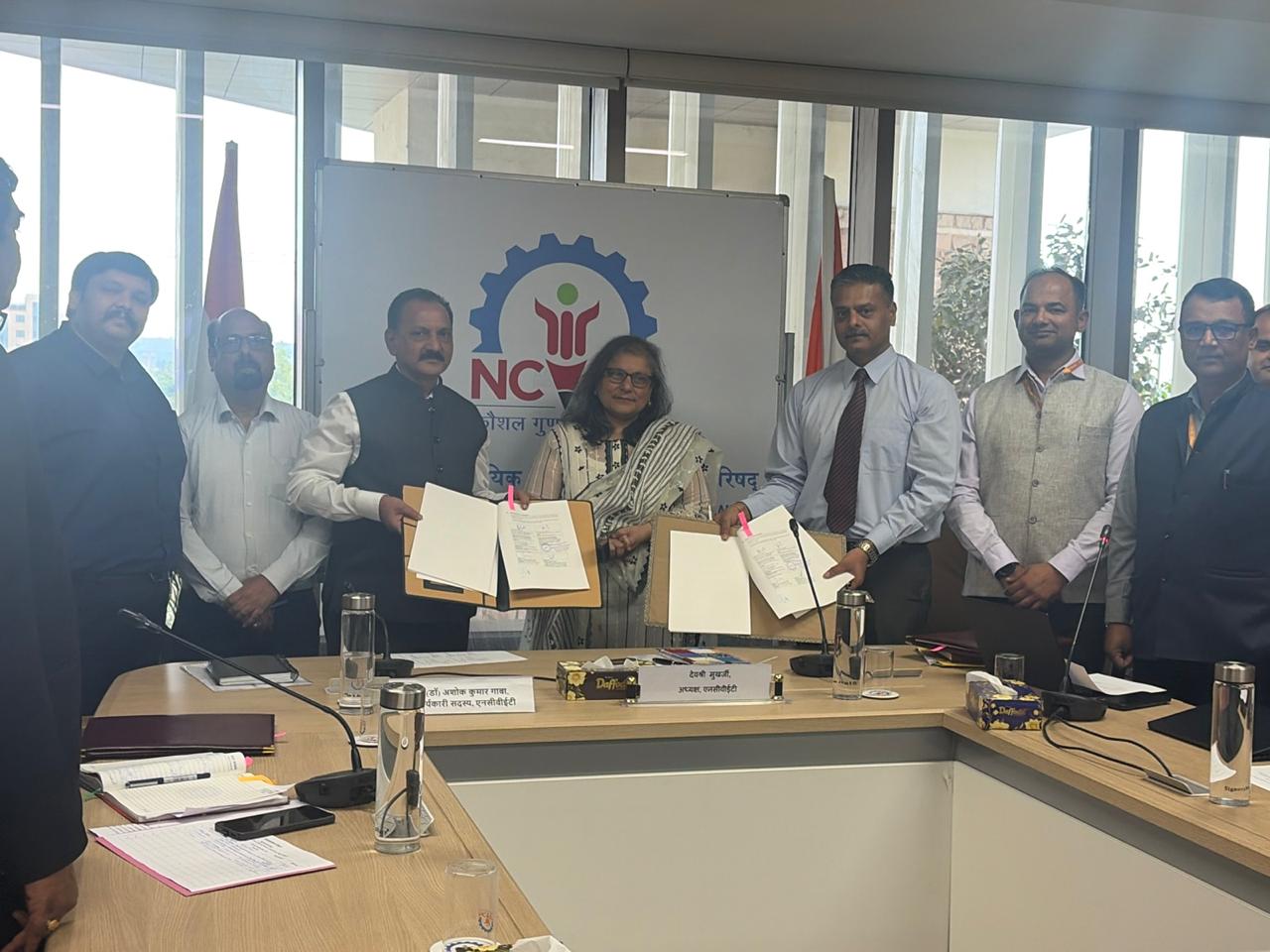
Bengaluru, Apr 27: The National Council for Vocational Education and Training (NCVET) and JAIN (Deemed-to-be University) have signed an agreement on 24-04-2026 for NCVET Recognition as Awarding Body (AB–Dual) to JAIN (Deemed-to-be University). Through this recognition, the University will be eligible to award, assess, and certify learners where training is directly being imparted by the Awarding Body in campuses or training centres owned or fully managed by it for its approved or adopted qualifications.
The agreement signing ceremony was chaired by Smt. Debashree Mukherjee, Secretary, MSDE and Chairperson, NCVET. The ceremony was also attended by Prof. (Dr.) Ashok Kumar Gaba, Executive Member, NCVET, and Lt. Col. Vikram Singh Bhati, Director, Recognition, NCVET.
NCVET has approved the qualification ‘Financial Data Analytics with AI’ submitted by JAIN (Deemed-to-be University). NCVET continues to drive standardization and recognition of future-ready skills. It encourages Awarding Bodies to develop innovative qualifications aligned with higher levels of the National Skills Qualifications Framework (NSQF), strengthening India’s workforce for the digital economy.
JAIN (Deemed-to-be University) is expected to develop more qualifications mapped to the higher levels of NSQF. The University also places a strong emphasis on skill development, ensuring that its programmes are designed and developed to meet the evolving demands of the current industry landscape.
27, Apr 2026
Sinch Mailgun Report: Companies are Leaving Email Performance on the Table
SINGAPORE, Apr 27 - Sinch Mailgun, part of Sinch, has released its Email Impact Report 2026, introducing new industry benchmarks across 10 high-volume sending sectors and revealing a gap between email performance and execution.
Based on insights from more than 400 billion emails sent in 2025 and a global survey of over 1,200 email senders, the report shows that while email remains a critical, high-performing channel, poor deliverability is leaving significant revenue on the table. Nearly 18% of emails fail to reach the inbox, putting up to a fifth of potential return on investment at risk for many organisations.
78% of respondents say email is critical to business success. At the same time, the research highlights a growing disconnect between performance and execution, driven by gaps in measurement, deliverability practices and AI application.
“APAC businesses rely heavily on email to drive sales, loyalty and customer experience but many are not set up to capture its full value,” said Ginger Kidd, Vice President Marketing & Communications APAC at Sinch. “What we see in this data reflects what’s happening locally: brands are investing in email and seeing strong returns, yet there is still a high number of messages that never reach inboxes. For instance, in a market as competitive and cost-conscious as Australia, marketers simply can’t afford for emails to get lost in inboxes. When budgets are under pressure, fixing deliverability is one of the fastest ways to unlock more value from the spend they already have.”
AI adoption is widespread, but its impact remains uneven. Many teams focus on basic use cases such as content generation, while higher-impact applications such as optimisation, segmentation and deliverability remain underutilised. Organisations that use AI more effectively are significantly more likely to report improved email performance.
Ginger Kidd said: “Across the diverse markets of APAC, we’re seeing a common theme: marketers are enthusiastically adopting AI, but the initial focus has primarily been on content creation. The true opportunity now lies in leveraging AI for smarter decision-making. For instance, who to send to, how often, and with what level of risk. This strategic shift is the key to ensuring every campaign improves performance, not just adds volume.
“The most sophisticated teams are already using AI to predict which subscribers are at risk of disengaging, to fine-tune send times and to protect sender reputation. That’s where we’re seeing a real uplift in performance, not just faster content production.”
Key findings of the report include:
-
60% of companies measuring email ROI report returns above $10 for every $1 spent
-
More than 1 in 10 achieve returns as high as 40:1
-
46% say AI improves speed and efficiency
-
41% of teams use AI to generate email content
-
23% say AI has not improved their email programs
-
49% report improved email performance year-over-year
-
79% plan to maintain or increase investment in email
-
Fewer than half of organisations can confidently measure email ROI
27, Apr 2026
SK Group Establishes Foundation for AI Collaboration with Vietnam
Apr 27: SK Group announced it will collaborate with Vietnam to build the country’s artificial intelligence (AI) industry ecosystem and develop core AI infrastructure.
At the Korea–Vietnam Business Forum held in Hanoi on April 23, SK Group signed separate memoranda of understanding (MOUs) with the Nghe An Provincial Government and Vietnam’s National Innovation Center (NIC) to foster AI ecosystem development.
The signing ceremony was held in the presence of Kim Jung-kwan, Minister of Trade, Industry and Resources of Korea, and Ngo Van Tuan, Minister of Finance of Vietnam.
The Memorandum of Understanding (MOU) between the Nghe An Provincial People’s Committee and SK Group was signed by Vo Trong Hai, Chairman of the Nghe An Provincial People’s Committee; Choo Hyeong-wook, President & CEO of SK Innovation; and Jung Jai-hun, President & CEO of SK Telecom.
Another MOU between the National Innovation Center (NIC) and SK Group was signed by Vu Quoc Huy, Director General of NIC; Choo Hyeong-wook, President & CEO of SK Innovation; and Jung Jai-hun, President & CEO of SK Telecom.
Chey Tae-won, Chairman of SK Group and Chairman of the Korea Chamber of Commerce and Industry (KCCI), also attended the ceremony.
Earlier, at the Korea–Vietnam Summit, the two countries agreed to expand cooperation in future growth sectors such as AI, semiconductors, and energy. SK Group’s MOUs with Vietnam represent this bilateral cooperation being put into action by the private sector.
Through these partnerships, SK Group plans to support Vietnam’s growth as a key partner in its national AI strategy. In addition, building on AI data center development and stable power supply, SK Group is expected to lay the groundwork for the first overseas expansion of its “Korean-style AI full-stack” model, linking AI model development and validation with the rollout of industry-specific AI services.
Joint AIDC feasibility study in Nghe An linked to the Quynh Lap LNG Power Project
SK Innovation and SK Telecom signed an MOU with the Nghe An provincial government to jointly explore developing an AIDC and related infrastructure projects in the region. Nghe An is a major economic hub in north-central Vietnam and has emerged as a fast-growing region for manufacturing, energy and advanced industries, supported by its port and logistics infrastructure.
SK Innovation will explore broad cooperation opportunities in energy solutions, including supplying electricity to the data center and building dedicated generation facilities connected to the Quynh Lap LNG Power Project, for which it was recently selected as the developer.
SK Telecom plans to review options for developing, building, and operating the AIDC while also seeking to secure global demand. The Nghe An provincial government agreed to discuss support measures to help advance the partnership, including permits, administrative procedures, inter-ministerial coordination and incentive programs.
In February, SK Innovation was selected as a developer for the Quynh Lap LNG power project in Nghe An Province, together with PV Power, a power generation subsidiary of Vietnam’s state-owned oil and gas group PVN, and local company NASU. The project is a large-scale energy infrastructure initiative that includes the development of a 1,500-MW gas-fired combined cycle power plant, an LNG terminal, and a dedicated port, with construction scheduled to begin in 2027 and completion targeted for 2030. From the proposal stage, SK Innovation also presented a model to foster high value-added industries by integrating SK Group’s AI and semiconductor capabilities in areas near the power plant, thereby laying the foundation for the current partnership.
At the forum, the Nghe An government also presented the SK Innovation consortium with the Investment Registration Certificate (IRC) for the Quynh Lap Power Project, reaffirming its commitment to the development.
“Drawing on SK Group’s experience in operating large-scale power generation and diverse energy solution businesses, we will ensure the successful development of the local power infrastructure,” said Choo Hyeong-wook, President & CEO of SK Innovation, during a presentation titled “Vietnam’s Economic Leap through AI + Energy Innovation.”
Cooperation with NIC to Build Vietnam’s AI Ecosystem
SK Telecom and SK Innovation also signed a comprehensive MOU with Vietnam’s NIC to support the development of the country’s AI ecosystem.
The two sides agreed to cooperate on AIDC development, energy infrastructure development and the establishment of policy and institutional frameworks to foster the AI industry.
Under the agreement, SK Telecom will support AI ecosystem development in Vietnam through technology collaboration and investment promotion, and SK Innovation will provide energy solutions for AIDCs and related industries. The NIC will provide institutional support, such as coordinating with government agencies, improving regulations and developing policy, while also identifying and connecting local partners to facilitate project execution.
Established in 2019 by the Vietnamese government, NIC serves as the country’s national innovation hub, leading initiatives in AI, semiconductors and investment promotion. SK Group has maintained a close partnership with NIC, including a previous $30 million contribution toward its establishment.
Jung Jai-hun, President and CEO of SK Telecom, said, “AI data centers are key infrastructure that underpins the growth of the AI industry. Building on SK Group’s accumulated capabilities in the development, construction, and operation of AI data centers, we will further refine a collaboration model tailored to the Vietnamese market.”
First Overseas Expansion of Chairman Chey Tae-won’s “AI Full-Stack Provider” Vision
This partnership in Vietnam is significant as it could mark SK Group’s first overseas expansion of the “AI full-stack provider” strategy, integrating capabilities in AIDC, power, and energy solutions.
Chairman Chey Tae-won has consistently articulated his vision of transforming SK Group into an “AI full-stack provider.” Leveraging SK Group’s strengths across the AI value chain—including semiconductors, data centers, power and energy solutions, and AI services—the Group aims to build the most efficient AI infrastructure model.
Under this vision, SK Group is advancing the development of the 100-MW hyperscale “SK AI Data Center Ulsan,” targeted for completion in 2027. The Group has also been laying the groundwork for Korea to emerge as an Asia-Pacific AI hub by engaging in discussions with OpenAI on collaboration for AI data center development in Korea.
Ahead of the Korea–Vietnam Business Forum, Chairman Chey Tae-won said at a business roundtable, “AI will play a critical role in Vietnam’s continued growth. SK Group has a portfolio spanning the entire AI ecosystem—from energy and semiconductors to AI models and applications—and we will leverage this to make tangible contributions to the development of Vietnam’s AI industry.”
26, Apr 2026
BMJRFT replaced 129 Dialysis Machines worth ₹12 Crore with donor support and felicitated them for their generosities
Hyderabad, Apr 26: Bhagwan Mahavir Jain Relief Foundation Trust (BMJRFT) has once again set a benchmark in affordable healthcare by replacing 129 dialysis machines worth ₹12 crore through donor support, further strengthening its mission of providing low-cost dialysis services.
BMJRFT has revolutionised access to dialysis by offering treatment at just ₹300 per session, compared to ₹2,500–₹5,000 typically charged in corporate hospitals. This initiative has significantly reduced the financial burden on patients while ensuring quality care.
Typically, dialysis machines have a lifespan of around 20,000 sessions or 5–7 years, depending on safety standards and performance audits. However, through efficient management and maintenance, BMJRFT has extended the life of its machines to 30,000–35,000 sessions. When the Trust decided to replace the machines, it was able to mobilise donor support within a week, reflecting the strong trust and goodwill it enjoys.
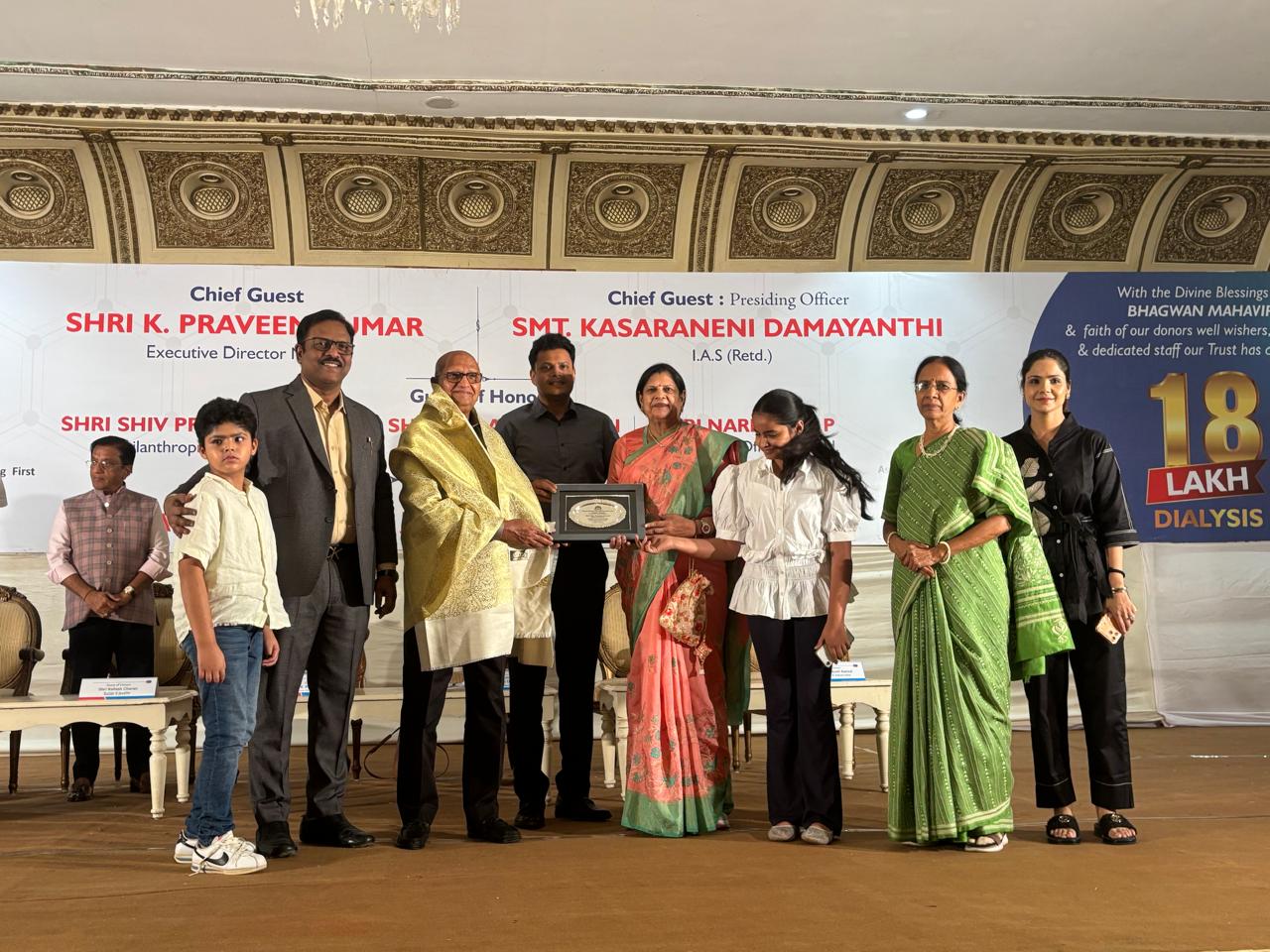
To honour this generosity, the Trust organised a Felicitation Ceremony for Donors of 129 Dialysis Machines on Saturday night at Marvel Imperial Garden, Secunderabad.
Praveen Kumar, Executive Director NMDC LIMITED and SMT KASARANENI DAMAYANTHI I.A.S (Retd.) were the guests at the felicitation
Among the key contributors, NMDC donated 40 machines worth ₹3.5 crore under its CSR initiative. Shivprakash Bansal, philanthropist and industrialist, contributed 16 machines and also pledged an annual donation of ₹50 lakh to support the Trust’s working capital needs.
Some of the big donors, such as Kailash Charan, Builder & Jeweller and the owner of Imperial Garden and P. Narendra, CEO -Pragati Offset Pvt Ltd, were also honoured
Other prominent donors include Pokarna Engineered Stone Ltd and a well-wisher (8 machines each), PL Raju Construction (3 machines), and Sirisha Projects Pvt Ltd (2 machines).
Additional contributions came from Hariom Pipe Industries Limited, Goutam Chand and Santosh Bokadia (Chennai), and several individual donors, including members associated with Swastik Spices, as well as families such as that of Harish Gandhi Linga and Café Niloufer, each contributing one or more machines. In total, these contributions amount to 129 dialysis machines.
Delivering the welcome address, Trust Chairman P. C. Parakh, a former IAS officer, said that the ability to mobilise resources for replacing 129 machines within a short time reflects the confidence people have in BMJRFT’s work. Despite rising inflation and increasing costs of medicines, the Trust continues to provide dialysis at ₹300 per session, saving an estimated ₹200 crore in dialysis costs and an additional ₹100 crore in medicines for patients. He added that upgrading machines is not just a technical improvement but an enhancement of dignity in patient care, and expressed gratitude to NMDC and all donors.
Currently, BMJRFT performs around 600 dialysis sessions per day and approximately 15,000 sessions per month across 11 centres. The Trust has completed over 18 lakh dialysis sessions in 17 years and is expected to reach 20 lakh sessions by April–May next year.


