


23, Apr 2026
AD Ports Group and NYU Abu Dhabi to Build and Pilot a High-Fidelity Intelligence Engine for Smarter Port Operations
Research-focused initiative to leverage stochastic AI models and spatial analytics for integrated vessel arrival prediction, berth allocation, and emissions insights
Abu Dhabi, UAE – 23 April 2026: Powering ahead in its adoption of next-generation digital capabilities, AD Ports Group (ADX: ADPORTS), a leading global enabler of trade, industry and logistics solutions, today announced a strategic partnership and research collaboration agreement with NYU Abu Dhabi.
This multi-year partnership aims to build and pilot a high-fidelity intelligence engine based on stochastic models and spatial intelligence. The engine is designed to serve as a sophisticated decision-support layer for human operators, bringing together vessel arrival time predictions, berth allocation optimisation suggestions, and environmental impact considerations with high precision.
In an industry where global berth waiting times often stretch into multiple days at anchorage, the opportunity to improve planning precision is noteworthy. This high-fidelity intelligence engine aims to further de-risk port call uncertainty and continue port operations fluidity enhancement, resulting in smarter port calls that unlock more capacity without physical expansion.
Furthermore, depending on the vessel type, aligning arrival times with berth allocation can reduce idle time and save fuel burn considerably, minimising environmental harm and facilitating greener port calls.
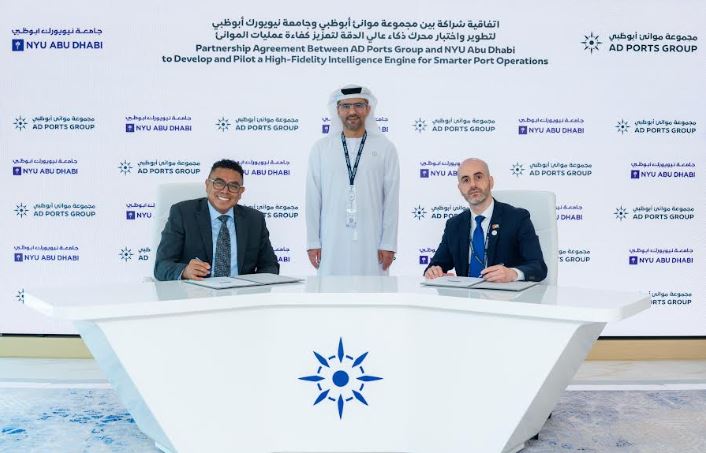
Mohamed Jamal-Eddine, Group Chief Digital & Information Officer – AD Ports Group, said: “As we continue to reimagine logistics ecosystems to advance the frontiers of global trade, pioneering research and strategic partnerships remain key pillars of our digitally-led approach. By integrating our deep expertise in port operations and trade facilitation with advanced predictive arrival intelligence and resilient operational modelling, we are accelerating the pace towards a future of autonomous decision-support. Through strategic partnerships such as this with NYU Abu Dhabi, we are ensuring that our move to predictive precision is both robust and ethically sound, giving our global partners the certainty they need to navigate an increasingly complex trade landscape.”
This jointly-developed initiative aims to turn variability into reliability and significantly advance terminal-focused decarbonisation transparency, serving as an integrated operational and environmental digital decision layer. As part of a long-term commitment to technological evolution, plans are in place to pilot the initiative at select terminals and trade lanes, with the objective of scaling successful outcomes across the Group’s global network.
Arlie Peters, Provost – NYU Abu Dhabi, said: “At NYU Abu Dhabi, we focus on research that addresses real-world challenges. Our collaboration with AD Ports Group brings together academic expertise and practical insight to strengthen the efficiency, resilience, and sustainability of modern logistics. This partnership reflects Abu Dhabi’s broader ambitions and the UAE’s leadership in trade and infrastructure. By connecting research with application, we aim to support the UAE’s continued role as a global hub for logistics. Led by Professor Ali Diabat from Civil and Urban Engineering, this work develops data-driven approaches to support better decision-making and improve long-term performance across port and logistics operations.”
This partnership represents a powerful synergy of specialised expertise and operational reach. NYU Abu Dhabi brings world-class analytical capabilities and advanced research, providing the scientific rigor needed for high-fidelity modelling. In line with internal data governance controls, AD Ports Group will support the initiative by providing secure access to relevant operational information and by facilitating controlled, real-world pilot deployments across selected terminals and trade lanes, helping translate the high-fidelity engine into an executable, field-tested solution.

- 0
- By Neel Achary

23, Apr 2026
Anytime Fitness Expands in Gurgaon with Vision to Transform India’s Gym Culture
Gurgaon, Apr 23: Strengthening its growth momentum in North India, Anytime Fitness, India’s fastest-growing fitness franchise and part of the world’s largest gym chain, has unveiled its newest club in Sec-82A, Gurgaon. The launch underscores the brand’s continued commitment to making premium, world-class fitness more accessible across fast-growing urban communities.

The newly launched club is owned and operated by Ruchi Prashar. Her entry into the fitness entrepreneurship space reflects the growing demand for structured, premium fitness solutions in cities like Gurgaon and the increasing awareness around preventive health and active lifestyles.
The Anytime Fitness Gurgaon club features state-of-the-art cardio and strength equipment, dedicated functional training zones, certified personal trainers, and Anytime Fitness’ signature 24/7 access, offering unmatched convenience and flexibility. Members will also benefit from access to the brand’s global network of clubs and its holistic approach to fitness, which combines personalized coaching, community engagement, and safe workout environments. This launch also features the new design theme, built to deliver a more immersive, modern, and member-first fitness experience.
Speaking on the expansion, Mr. Vikas Jain, Managing Director, Anytime Fitness India, said:
“We are proud to partner with entrepreneurs like Ruchi Prashar, whose entry into the fitness industry reflects how more women are breaking stereotypes and building successful businesses beyond traditional sectors. Their leadership is inspiring stronger, healthier communities through fitness. At Anytime Fitness, we have always believed in supporting passionate entrepreneurs who share our vision for fitness and community wellness. The launch of our Sector 82A Gurgaon club marks another significant milestone in our growth journey in North India, as we continue expanding premium fitness across high-potential markets like Gurgaon.”
Anytime Fitness has built a strong presence across India through its rapidly expanding network, serving a growing community of fitness enthusiasts. Gurgaon remains a strategic focus market for the brand, driven by rising health awareness, rapid urbanisation, and increasing demand for premium fitness experiences.
Since entering India in 2013, Anytime Fitness has grown to 180+ clubs nationwide, redefining fitness with its accessibility, inclusivity, and innovation. Beyond gyms, the brand has fostered community-driven initiatives like FitCraft and Be Fit Fest, bringing together members, trainers, and fitness enthusiasts to celebrate active living.
The new launch aligns with Anytime Fitness India’s vision to strengthen its presence in high-growth markets and contribute to building a healthier, fitter India.
23, Apr 2026
XIM University, Bhubaneswar celebrates its 10th Undergraduate Convocation with elegance and pride!
XIM University, Bhubaneswar marked its Tenth Undergraduate Convocation on 22nd April 2026 with elegance and solemnity, celebrating an important milestone in the academic journeys of its students. During the ceremony, degrees were awarded to 554 undergraduate students across multiple disciplines, recognizing their years of commitment, perseverance, and academic excellence.
The convocation was graced by Mr. Shubhranshu Patnaik, Partner and Industry Leader for Government and Public Services, Deloitte South Asia. Mr. Patnaik, an alumnus from the batch 1994-1996 of Xavier Institute of Management, Bhubaneswar, has more than 25 years of consulting experience in advising Governments and clients in the Energy & Utilities sector. He is the National Leader for Power & Utilities sector and leads the Core Business Operation practice for Deloitte India.
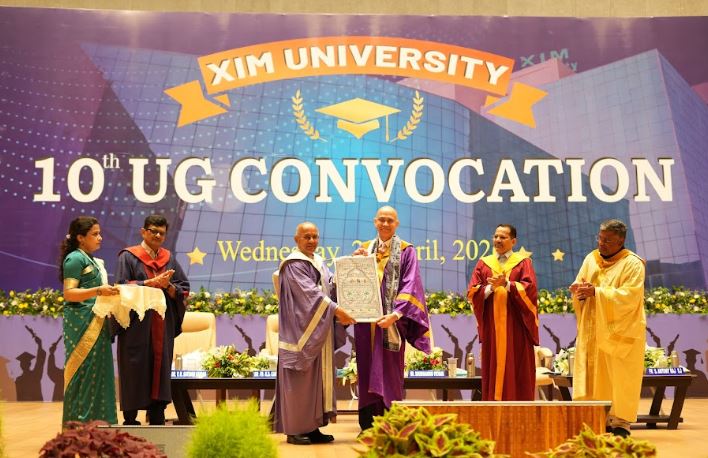
Addressing the gathering, Mr. Patnaik shared the importance of genuine friendships as strong personal and professional support systems. He encouraged continuous learning through curiosity, adaptability and openness to new ideas. Mr. Patnaik also emphasized sincere, ethical work (karma) over chasing immediate rewards. Lastly, he urged an interdisciplinary mindset and responsible use of AI for future leadership.
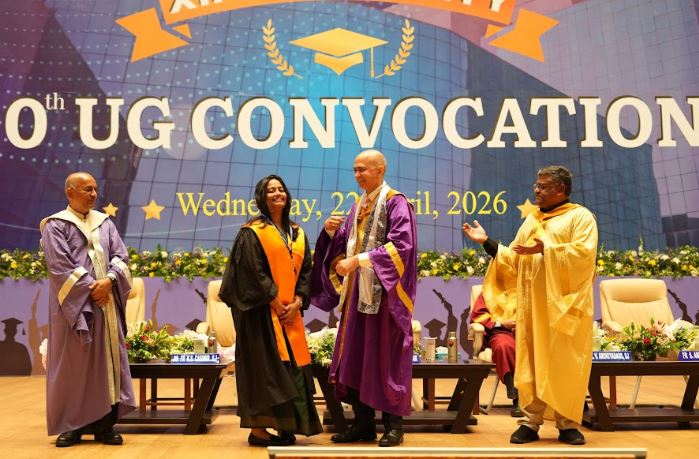
Among the distinguished dignitaries present were Dr. Fr. K.S. Casimir, S.J., Vice Chancellor of XIM University, Fr. S. Antony Raj, S.J., Registrar, Fr. Arokiyadass Vanathaian, S.J., Chief Finance Officer; Prof. V.R Sathish Kumar, Controller of Examination, Deans of various Schools, senior officials, and distinguished members of the Board of Governors.
Prof. Sutapa Pati, Dean, School of Sustainability, extended a warm welcome to the students, parents, dignitaries, and guests, setting the tone for the momentous occasion.
Dr. Fr. K.S. Casimir, S.J., Vice Chancellor, expressed heartfelt gratitude to Shri Shubhranshu Patnaik for his presence at the convocation and for delivering an eloquent and insightful address to the entire XIM University community.
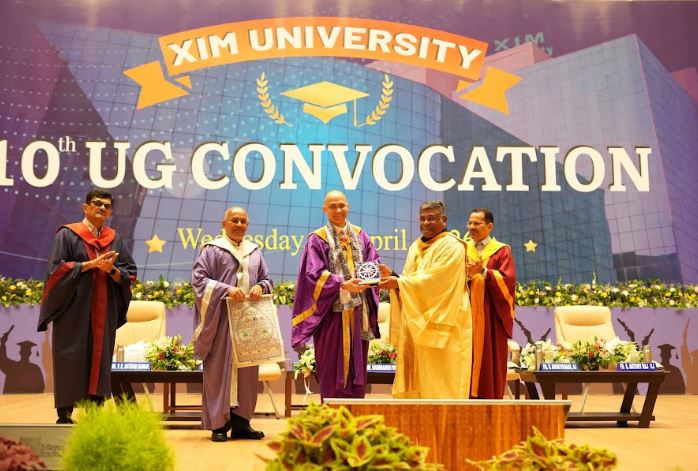
The meritorious students were awarded gold medals for Academic Excellence in various specialisations in their respective schools by the Chief Guest.
Fr. S. Antony Raj, S.J., Registrar of XIM University, delivered the vote of thanks, conveying deep appreciation to all.
XIM University, Bhubaneswar, remains dedicated to nurturing academic excellence, ethical leadership, and a strong sense of social responsibility, preparing the next generation of leaders and change-makers.
23, Apr 2026
Agora and Thymia Partner for Real-Time Voice Safety Intelligence
Bangalore, April 23: Agora, Inc a global leader in real-time engagement and conversational AI, today announced a strategic partnership with thymia, the human state voice intelligence company that has built the first clinically validated infrastructure for reading the complete signal carried in voice – and acting on it in real-time.
The partnership brings together Agora’s global, low-latency real-time conversational AI infrastructure and thymia’s clinically validated voice intelligence layer. Together, they enable a new class of voice applications that understand the human state during live interactions, delivering both safety and commercial value across healthcare, automotive, workplace wellness, education, and other safety-critical environments.
The collaboration is laying the foundation for voice communication systems that don’t just process what is said but understand how it’s said.
From Voice Data to Health Intelligence – In Real-Time
Voice is one of the most widely used interfaces in the world, yet most systems today focus only on transcription, intent, and commands. Signals carried in voice – including engagement, cognitive load, stress, fatigue, emotional state, and physical health – remain invisible to current systems.
thymia’s proprietary AI models analyze just 15 seconds of speech to extract acoustic, linguistic, and temporal biomarkers associated with conditions such as depression, anxiety, stress, burnout, respiratory disease, cardiovascular risk, and metabolic health. Built to clinical-grade standards, these models are already being used by healthcare systems, Fortune 500 companies, and safety-critical industries.
“Voice carries far more information than words alone; it carries signals about our mental and physical health, our emotional state, our cognitive load – the complete picture of our nervous system, of how we actually are. For the first time, that complete signal can be understood and acted on in real-time. Partnering with Agora brings clinically validated human state voice intelligence into real-world interactions at global scale, driving better outcomes, safer systems, and experiences that genuinely understand the human in the conversation,” said Emilia Molimpakis, CEO and Co-founder of thymia.
Agora provides the real-time orchestration layer that makes this intelligence actionable in production. Built on its Software-Defined Real-Time Network (SDRTN®) – processing over 80 billion minutes of engagement monthly – the platform delivers ultra-low latency, continuous audio fidelity, and network resilience required to apply voice intelligence within live interactions, not in post-processing.
Powering a New Health & Safety Infrastructure Layer
By embedding thymia’s voice intelligence directly into Agora-powered voice interactions, platforms can move from passive communication to active, real-time health and safety awareness.
Use cases include:
- Healthcare & Mental Health Platforms: Objective, biomarker-driven insights during and between sessions, supporting faster triage, better clinical decisions, and reduced clinician burnout.
- Automotive & Mobility: Real-time detection of driver fatigue and stress to reduce accidents and enable safer voice-first vehicle experiences.
- Workplace Wellness & Call Centers: Early identification of burnout, stress, and emotional distress, before performance drops or attrition increases.
- Education & Remote Learning: Insight into student and tutor mental states to improve engagement, retention, and learning outcomes.
This integration enables enterprises to deploy safe, production-ready voice AI systems without adding user friction or requiring new infrastructure.
Built for Enterprise Scale and Regulatory Trust
thymia’s technology is built to clinical-grade standards, validated across one of the largest datasets of its kind – including more than 75,000 unique voices – and trusted in healthcare and safety-critical settings for high-stakes decisions. Engineered on consent, transparency, and human oversight, the models ensure compliant and secure AI deployment.
Agora operates 200+ global points of presence, powered by its SDRTN®, and maintains SOC 2, ISO 27001, and HIPAA certifications, ensuring compliant, enterprise-grade infrastructure for deploying health and safety intelligence at scale. With 99.999% uptime, resilience under degraded network conditions, and multi-platform support across edge and enterprise environments, the platform ensures this intelligence is available where and when it matters most, not just in ideal conditions.
“Voice is becoming the primary interface between people and AI, yet the human state behind those words has remained invisible to most systems. Through our partnership with thymia, we’re introducing this critical layer into live interactions – combining real-time, production-grade infrastructure with clinically validated voice intelligence to enable safer, more secure AI experiences at scale,” said Tony Wang, Co-founder and Chief Revenue Officer of Agora.
Shaping the Future of Voice-First AI
As voice becomes the dominant interface for AI agents, vehicles, healthcare platforms, and connected devices, Agora and thymia are defining what comes next: voice systems that are not only intelligent but safe, responsive, empathetic, and human-aware.
The next generation of voice AI will not be measured solely by accuracy or speed, but by its ability to understand the human behind the conversation. The gap between systems that process voice and systems that truly understand it is where safety, trust, and competitive advantage are won or lost.
Together, Agora and thymia enable voice-first experiences that put people at the center of every interaction, driving better outcomes, safer systems, and more responsible AI deployment across industries where the cost of not understanding people is simply too high.
23, Apr 2026
Saviynt Appoints Tim Wedande as Field CTO for Asia Pacific and Japan
, Saviynt.jpg)
Bangalore, April 23: Saviynt, a leading provider of identity security solutions, today announced the appointment of Tim Wedande as Field Chief Technology Officer (CTO) for the Asia Pacific and Japan (APJ) region.
Based in Melbourne, Tim will lead regional technology strategy, support strategic customer engagements, and serve as a trusted advisor to enterprises navigating complex identity security transformations. He will work closely with customers, partners, and internal teams to accelerate adoption of Saviynt’s Identity Cloud and deliver measurable business outcomes across APJ.
With more than 20 years of experience in cybersecurity, Tim brings extensive expertise in security advisory and enterprise digital transformation. He has a strong track record of helping organisations modernise identity investments and align cybersecurity with business growth. In his most recent role as Partner at EY, Tim worked with global organisations across regulated industries to design scalable, resilient identity capabilities.
“APJ is a dynamic and rapidly evolving market where organisations are prioritising identity as their core security control,” said Alex Lei, Senior Vice President, Asia Pacific and Japan (APJ), Saviynt. “Tim’s deep business consulting expertise and customer-first mindset will strengthen our presence in the region and help customers unlock the full value of identity security.”
The Asia Pacific identity and access management market continues to expand rapidly, with regional demand projected to grow significantly over the next decade as organisations modernise security, support hybrid work environments, and adopt cloud-first strategies. Industry research shows the APJ IAM market could more than double in size by 2030, with strong growth driven by digital transformation, compliance requirements, and rising cybersecurity risks.
“Having worked closely with customers and teams across Saviynt, I’ve seen firsthand how central identity has become to business resilience and growth,” said Tim Wedande, Field CTO for Asia Pacific and Japan. “As organisations across APJ accelerate digital and AI-led transformation, there is a clear opportunity to modernise identity as a strategic control plane, enabling stronger security, faster innovation, and measurable business value. Saviynt is well positioned to help enterprises navigate this complexity with clarity and confidence.”
23, Apr 2026
The Backbone of Vehicle Electronics: Exploring the Role of Automotive Microcontrollers in Modern Cars
- Automate complex tasks
- Respond instantly to changing conditions
- Improve fuel efficiency
- Enhance driver and passenger safety
- Enable smart and connected features
- Power windows and seats
- Climate control systems
- Infotainment and touchscreen displays
- Keyless entry and push-button start
23, Apr 2026
The Leela Gandhinagar Elevates Sustainable Luxury with Thoughtful E-Cycle Guest Experiences
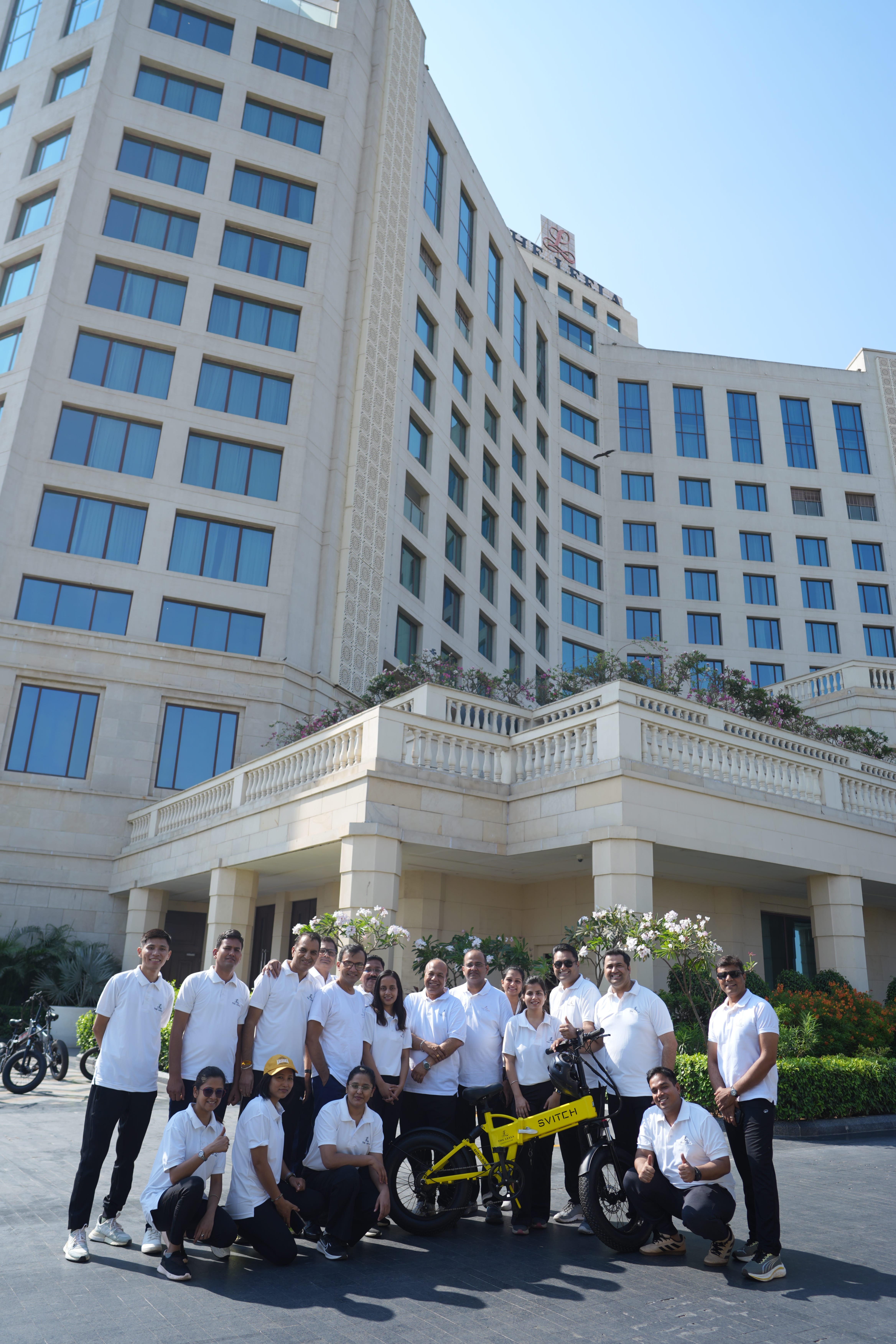
Gandhinagar, Apr 23: On the occasion of Earth Day, The Leela Gandhinagar continues to redefine luxury hospitality by placing sustainability at the heart of the guest journey with the introduction of an immersive e–cycle experience, launched in collaboration with Svitch.
Blending mindful mobility with refined comfort, the thoughtfully curated e–cycle experience invites guests to explore the serene surroundings of Gandhinagar at a gentle, unhurried pace. Designed as a low-impact alternative to conventional transport, the initiative encourages guests to engage more consciously with their environment while supporting efforts to reduce overall carbon impact.
This initiative reflects a broader shift in luxury travel where guests increasingly seek meaningful, environmentally responsible experiences without compromising on comfort or sophistication. At The Leela Gandhinagar, sustainability is not positioned as an add-on, but seamlessly integrated into the overall guest experience, enhancing both wellbeing and awareness.
Commenting on the initiative, Vikas Sood, General Manager, said, “At The Leela Gandhinagar, we are committed to creating experiences that are both enriching and responsible. The introduction of e-cycles is a step towards encouraging mindful exploration, while reinforcing our ongoing efforts to embed sustainability into every aspect of the guest journey.”
The launch was marked by an Earth Day engagement, transforming the experience into a moment of collective reflection and participation. Guests, hotel associates, and members of the local community came together for a cyclethon that celebrated not just movement, but a shared commitment to sustainable living, fostering a deeper connection between people, place, and purpose.
Following the ride, guests were invited to unwind at the hotel’s signature Aujasya breakfast, an experience that complements the sustainability narrative with a focus on wellness and mindful indulgence.
Through initiatives like these, The Leela Gandhinagar continues to evolve the concept of responsible luxury where sustainability enhances the guest journey. By weaving eco-conscious choices into everyday experiences, the hotel is not only advancing its environmental commitments but also inspiring guests to embrace more mindful ways of travel.
23, Apr 2026
There Was No Roadmap for Me. There Still Isn’t One for Her.
By Dr. Stella Vnook
When I started in biotechnology, there was no clear path into leadership. You learned by doing, by watching, and often by making mistakes that could have been avoided if someone had simply explained how the system actually works. What surprises me is how little that has changed.
Today, I work with founders, scientists, and early-career professionals across oncology, regenerative medicine, and complex biologics. The talent is there—exceptional, driven, highly capable. But many of them, especially young women, are still trying to navigate an industry where the path forward is largely invisible. Women make up roughly half of the biopharma workforce and nearly half of bioscience graduates, yet fewer than one in five biotech CEOs are women. Even more striking, less than 3% of venture capital goes to companies led by women. Across STEM fields, women earn a growing share of advanced degrees, but remain significantly underrepresented in leadership roles and continue to earn less than their male counterparts in comparable positions. This is not a talent issue—it’s a visibility and pathway issue. We are training exceptional scientists, but we are not showing them how to become founders, operators, or leaders. The gap became even more visible during COVID, when millions of women left the workforce as childcare systems collapsed. At one point, an estimated 7 million women stepped out of employment due to school and daycare closures.
They don’t always know what roles exist beyond the lab. They don’t understand how a company is actually built. And they’re rarely given insight into how decisions are made at the leadership or board level. So they stay where the path is defined, even if it’s not where they ultimately want to go. We’re not losing talent because it isn’t there. We’re losing it because we’re not showing people the full picture.
One of the biggest gaps I see is the space between good science and a real company.
Most early-career professionals are trained deeply in the science, but almost never exposed to how that science becomes a product, a company, or a funded platform. They don’t see how capital shapes strategy. They don’t see how regulatory decisions drive value. They don’t see how leadership teams think about risk, timelines, or outcomes. And without that visibility, it’s difficult to imagine yourself in those roles. This is where mentorship matters, but not in the way we often talk about it. Mentorship isn’t about encouragement. It’s about context, skills and showing the path.
The most impactful mentorship I’ve been able to provide is not advice—it’s helping people see what’s actually happening behind the scenes. How companies are structured. How decisions get made. Where inflection points occur. What creates value—and what destroys it.
Once someone understands that, their thinking changes.
They start asking different questions.
They start seeing paths that were previously invisible.
There are more opportunities in biotech today than ever before. The industry is broader, more interdisciplinary, and more dynamic than most people realize. There are roles in strategy, development, operations, regulatory, finance, and leadership that extend far beyond traditional scientific tracks. But opportunity alone isn’t enough. If people can’t see the path, they won’t take it.
If we want to bring more women into leadership in biotech, we need to start earlier and we need to be more explicit. We need to show how companies are actually built. We need to expose how capital and strategy shape outcomes. We need to give people visibility into leadership thinking, not just technical execution. And we need to do that before they’ve already chosen a narrower path.
The next generation is ready. The talent is already there. What’s missing is clarity.
And until we make the path visible, we shouldn’t be surprised when people don’t follow it.
23, Apr 2026
Children Who Undervent Liver Transplants Unite at KIMSHEALTH
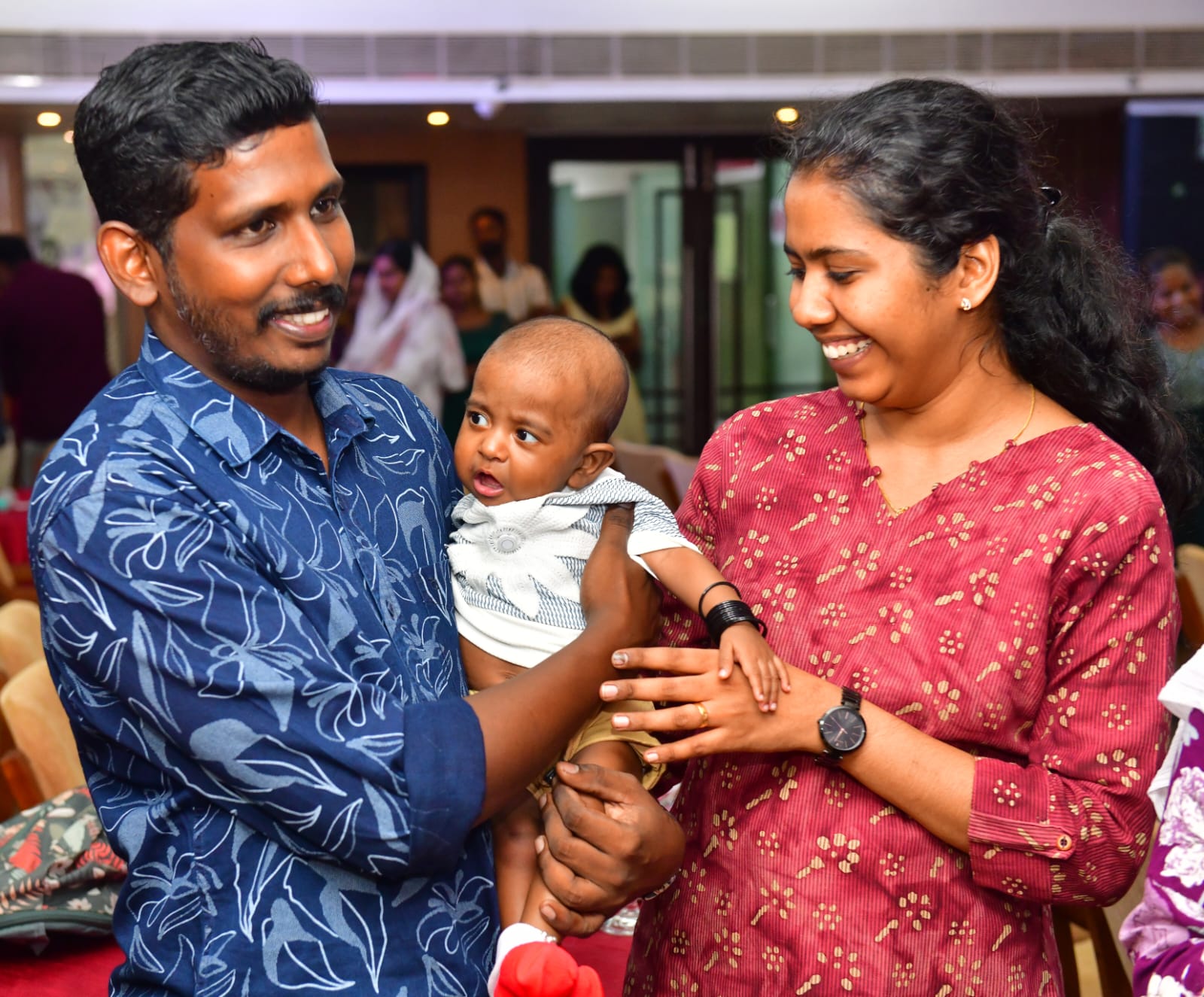
When Alin Sherin Abraham’s parents met eight-month-old Dhriya, the recipient of Alin’s liver, for the first time.
Thiruvananthapuram, Apr 23: In a tribute to the life-saving act of organ donation, KIMSHEALTH, organised a special gathering of organ donors and children who underwent liver transplant. The event also witnessed a deeply emotional moment, as the family of the ten month old donor Alin Sherin Abraham, met Dhriya, the eight month old who received Alin’s liver, for the first time. More than 100 people participated in this special gathering.
Dr. M I Sahadulla, Chairman and Managing Director of KIMSHEALTH, said that organ is the noblest message of love and sacrifice. He emphasized that it not only conveys a powerful message to society, but also plays a vital role in raising awareness about this crucial cause. Dr.Sahadulla, also lauded the tireless efforts of government systems, doctors in the liver transplant department, and other staff members.
Dr.Nobel Gracious, Executive Director, K-SOTTO said that the cooperation of organ donors’ families in Kerala, government systems including the police, public, media and above all, the untiring efforts of the doctors and the medical team performing the transplants is a great model to follow. Being an organ donor is a generous and worthwhile decision that can be a lifesaver, he added.
Dr. P K Jabbar, Principal, Government Medical College Thiruvananthapuram; Dr. Ragi Krishnan, South Zone Nodal Officer K-SOTTO; Dr. Basil, Joint Director, K-SOTTO; Dr. Praveen Muralidharan, Director, Multi Organ Transplant, KIMSHEALTH; Liver Transplant surgeons Dr. Shiraz Ahmad Rather, Dr. Shabeerali T U, and Pediatric Hepatologist Dr. Anu K Vasu where also part of the program.
KIMSHEALTH performed its first liver transplant on July 23, 2013. Since then, nearly 250 liver transplant surgeries have been successfully completed. The hospital has also achieved several significant milestones, including Kerala’s first combined liver and kidney transplant, the state’s first split liver transplant, the successful liver transplant on a lowest weighing baby.
22, Apr 2026
Accenture and WaveMaker Announce Strategic Intent to Help Growth-Focused Organizations Scale with Agentic AI Platform


