


22, Apr 2026
Les Roches Launches SPARK Start-Up Summit to Shape the Future of Hospitality
April 22: Les Roches has unveiled the SPARK Start-Up Summit, a new platform aimed at exploring the evolving dynamics of hospitality, travel, and customer experience. The inaugural edition, held from April 15–17, 2026 at its Crans-Montana campus, brought together startups, industry experts, researchers, and professionals to examine the intersection of technology, human experience, and sustainability in the sector.
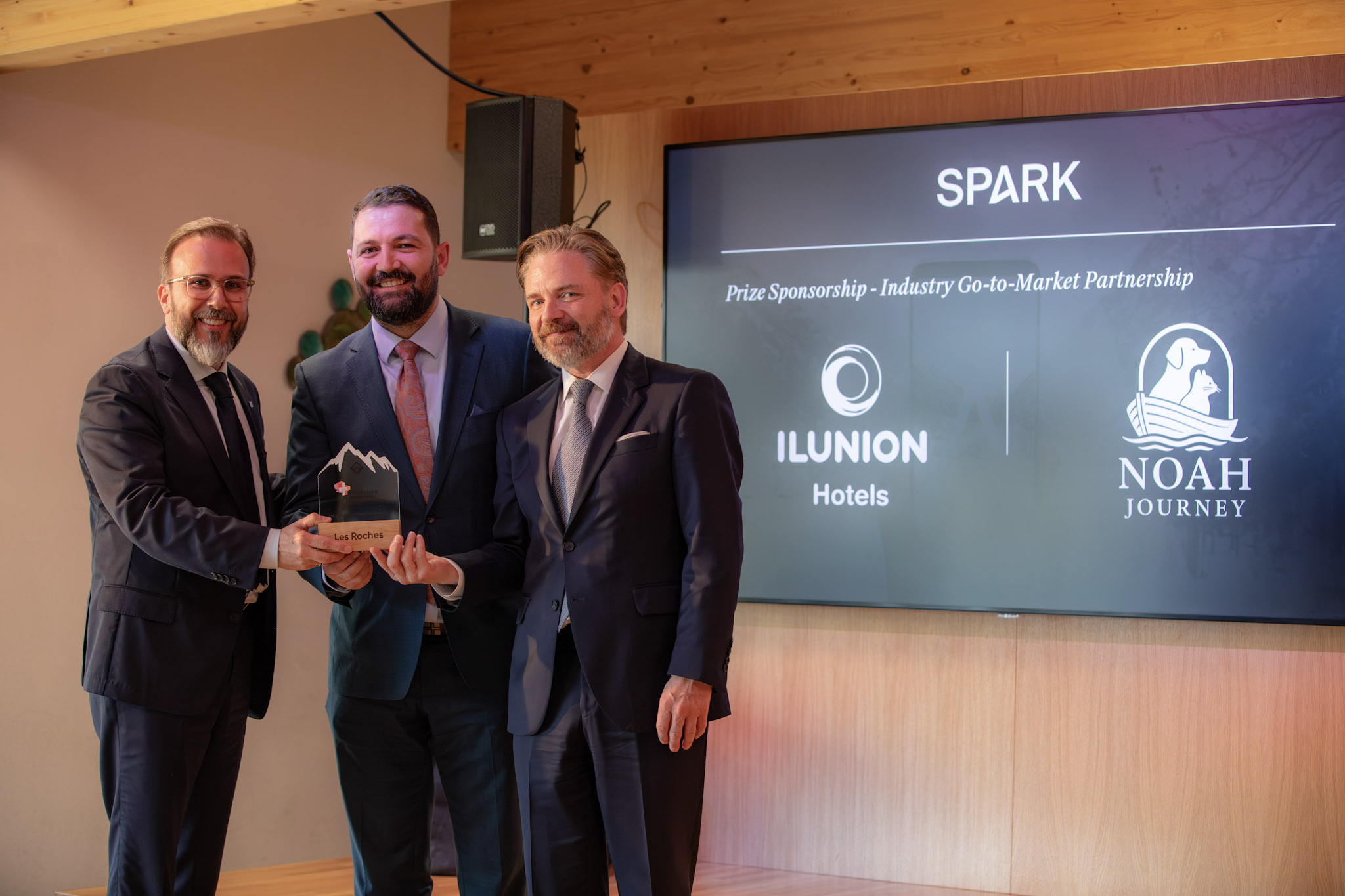
Designed as a forward-looking forum, the three-day summit featured startup pitches, keynote sessions, panel discussions, workshops, and networking opportunities, with a strong focus on applied research and Swiss innovation. The event underscored a shared industry perspective that hospitality is entering a transformative phase driven by artificial intelligence, data, and changing customer expectations.
A key theme across discussions was the role of AI as an enabler rather than a replacement for human interaction. Speakers highlighted that successful implementation of AI in hospitality depends on reliable data, relevant use cases, and a deep understanding of guest expectations. Carlos Díez de la Lastra noted that the initiative aims to balance innovation with the fundamentally human nature of hospitality, while preparing future leaders to navigate this evolving landscape.
The summit also addressed broader industry challenges, including data governance, experiential luxury, and sustainability. Experts emphasized the need for transparent data practices, locally rooted hospitality models, and a shift from minimizing negative impact to creating positive value for communities and ecosystems.
Strengthening ties with Switzerland’s innovation ecosystem was another key highlight, with participation from Switzerland Innovation Park Network West EPFL and IDIAP Research Institute, reinforcing collaboration between hospitality and advanced research networks.
The start-up competition recognized four ventures—Agimus Technologies, Grill, Noah Journey, and GuestPulse—across multiple award categories. These awards provide incubation support, ecosystem access, and go-to-market opportunities, helping accelerate innovation within the hospitality sector.
SPARK is envisioned as a long-term initiative, creating a collaborative platform for experimentation, dialogue, and real-world application of ideas shaping the future of hospitality. A second edition of the summit has already been announced for February 2027.
With this launch, Les Roches positions itself at the forefront of hospitality innovation, fostering a new generation of leaders equipped to integrate technology, sustainability, and human-centric experiences.
- 0
- By Neel Achary

22, Apr 2026
Dr Ishita Joshi Wins ‘NariFirst Jewel of India Season 3’ Award
Apr 22 (BNP): Indore-based gynaecologist Dr Ishita Joshi has been awarded the prestigious NariFirst Jewel of India Season 3 title, recognising her contributions to women’s healthcare and community awareness initiatives.
The award was presented in the presence of Malaika Arora, who felicitated the winners for their achievements and impact across diverse professional fields.
Dr Joshi was selected for her dedication to advancing women’s health services and her efforts in promoting awareness around reproductive health and maternal care. Her work has been acknowledged as a significant contribution to both clinical practice and social outreach.
The NariFirst Jewel of India initiative celebrates women achievers from across India in sectors including healthcare, education, entrepreneurship, and public service. Season 3 of the platform continued its mission of recognising impactful women leaders who are driving change in society.
The recognition underscores the growing importance of women professionals in shaping India’s healthcare landscape and community development efforts.

22, Apr 2026
India Real Estate Hits Record Dollar 5.1 Billion Inflows in Q1
Apr 22 (BNP): India’s real estate sector has achieved a historic milestone, recording approximately $5.1 billion in investment inflows during the first quarter (January–March), marking its strongest quarterly performance to date.
The growth was primarily driven by robust participation from domestic investors and the expanding role of Real Estate Investment Trusts (REITs), which are increasingly channeling capital into income-generating commercial assets.
Investment activity remained concentrated in key urban centres, including Bengaluru, Mumbai, and Delhi-NCR, with strong interest in office spaces, mixed-use developments, and core real estate assets.
The sector continues to demonstrate resilience amid global economic uncertainties, supported by strong domestic demand, institutional confidence, and evolving investment structures.
Experts highlight that the rising dominance of domestic capital reflects a structural transformation in India’s real estate market, moving toward a more stable, transparent, and institutionally driven investment ecosystem.
With REITs gaining further traction and investor appetite remaining strong, India’s real estate sector is expected to maintain steady growth momentum in the coming quarters.
22, Apr 2026
India–Sweden Collaboration Strengthens Industrial Decarbonization Efforts at ISIA Workshop in Hyderabad
Hyderabad, April 22:The India–Sweden Innovations Accelerator (ISIA) successfully hosted its 27th workshop with the Swedish cleantech delegation in Hyderabad bringing together key industry leaders, technology providers, and sustainability experts to accelerate the deployment of innovative clean technologies in India.
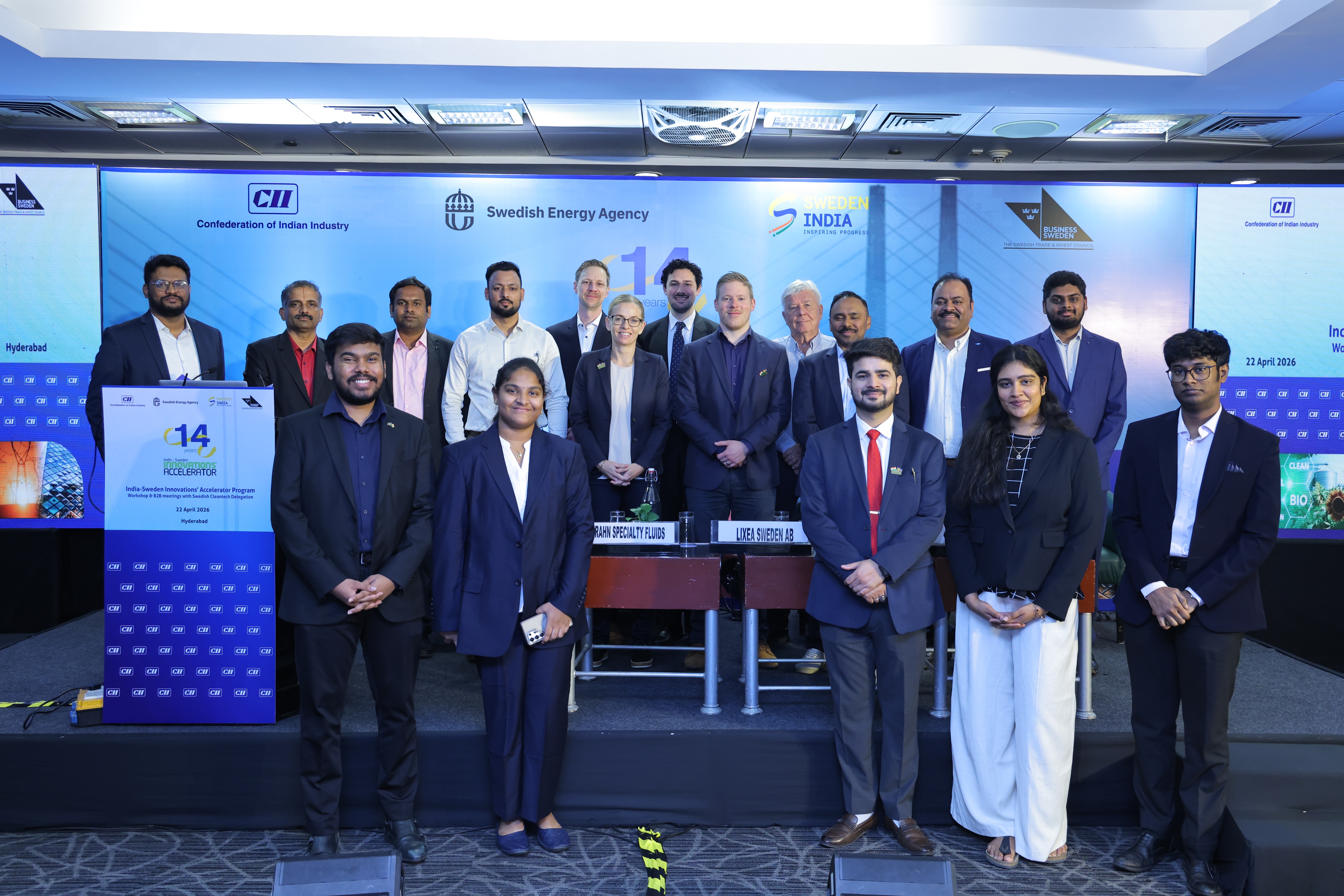
The India–Sweden Innovations Accelerator (ISIA) is Sweden’s flagship bilateral initiative with India to drive cleantech and green energy collaborations. Supported by the Swedish Energy Agency and implemented in partnership with Business Sweden and CII–Sohrabji Godrej Green Business Centre, the program facilitates the entry of Swedish cleantech companies into India while enabling Indian industries to adopt globally proven sustainable technologies and deploy these at scale.
The 27th workshops in Hyderabad was organized by the Confederation of Indian Industry (CII) through the CII–Sohrabji Godrej Green Business Centre (CII-GBC), in collaboration with the Swedish Energy Agency and Business Sweden.
The event witnessed participation from 40 leading Indian companies, along with 7 leading Swedish cleantech companies, showcasing cutting-edge solutions across sectors such as energy efficiency, smart grids, IoT-enabled systems, clean mobility, advanced industrial material, resource optimization and many more.
Since its inception, the ISIA program has emerged as a cornerstone of bilateral cleantech collaboration, having:
- Introduced 80+ advanced clean technologies to the Indian market
- Enabled 250+ pilot and commercial projects across sectors
- Facilitated 50+ industry partnerships
- Supported the establishment of 7 local subsidiaries
- Engaged with over 1,500 Indian stakeholders
The workshop commenced with a welcome address by Mr. Gaurav Maheswari, Vice Chairman, CII Telangana and Managing Director, Signode India Limited, who emphasized that the global sustainability agenda has shifted decisively from commitments to implementation. He highlighted the growing demand within Indian industry for scalable, cost-effective, and deployable solutions to achieve decarbonization goals.
In the theme address, Mr. Pawan Tahlani, Head – New Delhi, Business Sweden, underlined the strong alignment between India’s rapidly growing energy needs and Sweden’s strengths in clean technologies, calling for deeper industry collaboration to accelerate the green transition. Highlighting India and Sweden’s shared vision for a Green Future leading opportunity in India’s energy transition and how this program can serve as a collaboration model for accelerating the transition.
Mr. Edgar Darbinyan, representing the Swedish Energy Agency, reinforced Sweden’s commitment to fostering international partnerships that enable large-scale deployment of sustainable technologies. Emphasised on how Swedish Energy Agency helps in promoting Cleantech Swedish companies and help India in its journey to energy transition through bilateral collaboration programs like ISIA and Lead IT 2.0 program.
In the concluding remarks, Mr. K. Muralikrishnan, Principal Counsellor, CII-Green Business Centre, emphasized that the transition to sustainability now requires execution at scale, supported by proven technologies and strong industry partnerships. He encouraged participants to translate discussions into actionable collaborations and pilot deployments.
The workshop featured a series of technical presentations from companies including Candela, ECAPS, Lixea, Waltero, Plexigrid and Affectus. The event also showcased success cases, including industry collaborations such as Krahn Specialty Fluids & Metalex Cryogenics Limited, followed by interactive sessions and discussions. Swedish companies presented innovative solutions tailored to India’s industrial and energy transition needs.
A key highlight of the event was the focused B2B meetings, enabling direct engagement between Swedish technology providers and Indian industry representatives to explore pilot projects, partnerships, and long-term collaborations. The ISIA platform continues to play a pivotal role in bridging global innovation with India’s industrial ecosystem, reinforcing both nations’ shared commitment to sustainable growth, industrial decarbonization, and a low-carbon future.
22, Apr 2026
Odisha Steps Up Safety Measures for Census 2027 Enumerators Amid Field-Work Risks
Apr 22 (BNP): The Odisha Government’s Revenue and Disaster Management Department has issued a fresh advisory to district collectors and municipal commissioners, stressing enhanced safety protocols for enumerators engaged in the first phase of Census 2027—the houselisting and housing census exercise.
The field operation, which began on April 16, 2026, and will continue till May 15, 2026, involves door-to-door surveys across the state to collect data on housing conditions, household amenities, and assets owned by families.
The advisory comes after reports of multiple incidents during fieldwork in different districts, including a suspected health-related death of an enumerator in Subarnapur, a missing enumerator case in Mayurbhanj, heat-related illness and minor accidents in Balasore, and a road accident in Rourkela.
In view of these concerns, the department has directed local administrations to strengthen on-ground monitoring, ensure real-time tracking of field staff, and take preventive steps to reduce exposure to heat and other operational risks. District authorities have also been asked to identify vulnerable areas and ensure quick medical response wherever required.
Officials have further been instructed to sensitise enumerators on safety guidelines, particularly given the physically demanding nature of door-to-door data collection and prevailing weather conditions.
The advisory underscores the state’s focus on balancing the efficiency of the nationwide census exercise with the safety and well-being of frontline field workers.
22, Apr 2026
Centre Approves New Rail Line to Boost Connectivity in Odisha’s Mining Belt
Apr 22 (BNP): The Central Government has approved a new railway project to strengthen connectivity in Odisha’s mineral-rich Rayagada district. The Cabinet has sanctioned the Gunupur–Therubali new rail line, a 73.62 km route aimed at improving transportation infrastructure in one of the state’s key mining regions.
The project, estimated at a cost of around ₹1,362 crore, is expected to enhance regional mobility and provide more efficient and reliable rail services. It will connect important industrial and mining zones, improving the movement of both passengers and freight.
Officials noted that the new rail corridor will play a significant role in supporting economic activity in southern Odisha by improving access to remote areas and strengthening logistics efficiency for the Indian Railways network.
The development is also expected to contribute to long-term regional growth by enabling smoother transportation of resources, boosting local connectivity, and integrating the region more effectively with broader economic corridors.
22, Apr 2026
FIA President H.E. Mohammed Ben Sulayem hails collaborative effort as Formula One agrees 2026 regulatory refinements
Dubai, UAE, 22nd April 2026: FIA President H.E. Mohammed Ben Sulayem has paid tribute to all parties across the FIA Formula One World Championship for coming together to agree a package of targeted regulatory changes for the 2026 season.
A number of refinements to the current regulations were agreed during an online meeting between the FIA, Team Principals, CEOs of Power Unit Manufacturers and FOM on Monday.
The changes covered qualifying energy management, race safety and power controls, race start-line safety systems, and wet weather visibility and grip improvements.

The final proposals will now be put before a FIA WMSC e-vote with a view to implementation before the Miami Grand Prix on May 3, except for the race starts proposals which will be tested and analysed during that weekend.
H.E. Mohammed Ben Sulayem, FIA President, said: “I would like to praise everyone across the Formula One ecosystem – the FIA staff, teams, drivers and the Power Unit Manufacturers – for the constructive and collaborative work carried out in a very short space of time.
“While we have faced an unexpected gap in the calendar due to circumstances beyond the sport, all parties have remained fully committed to acting in the best interests of Formula One.
“More than ever, the drivers have been at the heart of these discussions, and I would like to thank them for their valuable input throughout this process.
Speaking on the sidelines of the FIA Region I Spring Meeting in Budva, Montenegro today, the FIA President added: “Safety and sporting fairness remain the FIA’s highest priorities. These changes have been introduced to address the issues identified in the opening events and to ensure the continued integrity and quality of the competition.
“We now look forward to the rest of what promises to be an exciting 2026 season.”
Monday’s discussions around potential adjustments were based on data gathered from the first three events of the 2026 season.
The agreed changes include an increase from 8 to 12 in the number of events where alternative lower energy limits may apply, allowing greater adaptation to circuit characteristics.
Other measures are designed to reduce excessive closing speeds while maintaining overtaking opportunities and overall performance characteristics.
Meanwhile, the rear light systems have been simplified, with clearer and more consistent visual cues to improve visibility and reaction time for following drivers in poor conditions.
The FIA Region I Spring Meeting in Budva reaches its conclusion tomorrow after three days of discussions by representatives from 102 FIA Member Clubs in the Middle East, Europe and Africa to advance safe and sustainable mobility for motor sport fans and road users.
22, Apr 2026
PM Modi Urges Civil Servants to Embrace ‘Nagrik Devo Bhava’ in Governance
New Delhi, Apr 22 (BNP): Prime Minister Narendra Modi has called upon India’s civil servants to place the principle of ‘Nagrik Devo Bhava’—the citizen as god—at the core of all governance decisions, emphasizing that public service must remain firmly focused on people-centric delivery and welfare.
In letters addressed to over one crore civil servants ahead of Civil Services Day, the Prime Minister highlighted that governance should be guided by compassion, accountability, and a continuous commitment to learning. He stressed that those entrusted with public responsibility must set an example through dedication and ethical service.
The letters, issued on April 20, were released in 12 languages, including Hindi, English, Marathi, Odia, Gujarati, Bengali, Kannada, Punjabi, Assamese, Malayalam, Telugu, and Tamil. This multilingual outreach was aimed at ensuring wider accessibility across ministries, departments, states, and Union Territories.
The message underscores the government’s focus on strengthening citizen-centric governance and reinforcing the role of civil servants as key drivers of policy implementation and public trust.
22, Apr 2026
Govt to Hold Open House on Steel Import Issues on April 27
Apr 22 (BNP): The Government is set to conduct an Open House session on April 27 to address concerns related to steel imports, bringing together key stakeholders from the industry, trade bodies, and policymakers.
The meeting is expected to focus on rising import pressures, pricing trends, and the impact of global steel supply dynamics on domestic producers. Industry participants are likely to present their views on competitiveness, demand conditions, and possible policy measures to ensure stability in the sector.
The Open House initiative is seen as part of the government’s broader effort to engage directly with industry stakeholders and develop a balanced approach that supports both domestic manufacturing and market requirements.
Steel remains a critical sector for infrastructure, construction, and manufacturing, and any policy discussion around imports is expected to have wide-ranging implications for pricing, supply chains, and industrial growth.
The session is likely to play an important role in shaping future decisions aimed at strengthening India’s steel ecosystem while addressing concerns over import dependency and market fluctuations.
22, Apr 2026
AI Growth Increasingly Constrained by Computing Power, Says Goldman Sachs
Apr 22 (BNP): Global AI development is now being limited less by model capability and more by the availability of computing infrastructure, according to Goldman Sachs.
While AI models continue to improve rapidly in performance and efficiency, the key constraint has shifted toward computing resources required to train and deploy them at scale. This includes access to advanced semiconductors, large-scale data centers, and sufficient energy supply.
The report highlights a widening gap between fast-moving AI innovation and the physical infrastructure needed to support it. Rising demand for computing power is being driven by the expansion of generative AI, large language models, and enterprise-level automation systems.
Experts note that the next phase of AI growth will depend heavily on investments in chip manufacturing, cloud infrastructure, and energy-efficient computing systems. Without corresponding expansion in these areas, the pace of AI adoption could face structural limitations.
The findings underscore a broader shift in the AI ecosystem—from software-led progress to infrastructure-led scaling—where computing capacity is becoming a critical strategic asset in the global technology race.


