


3, Oct 2026
Bhubaneswar-Bangkok Flights Resume After Two-Month Hiatus; Dubai, Singapore Routes May Follow
Bhubaneswar, Oct. 3 (UDN): Direct flight connectivity between Bhubaneswar and Bangkok has resumed after a nearly two-month suspension, bringing back an important international travel option for passengers from Odisha.
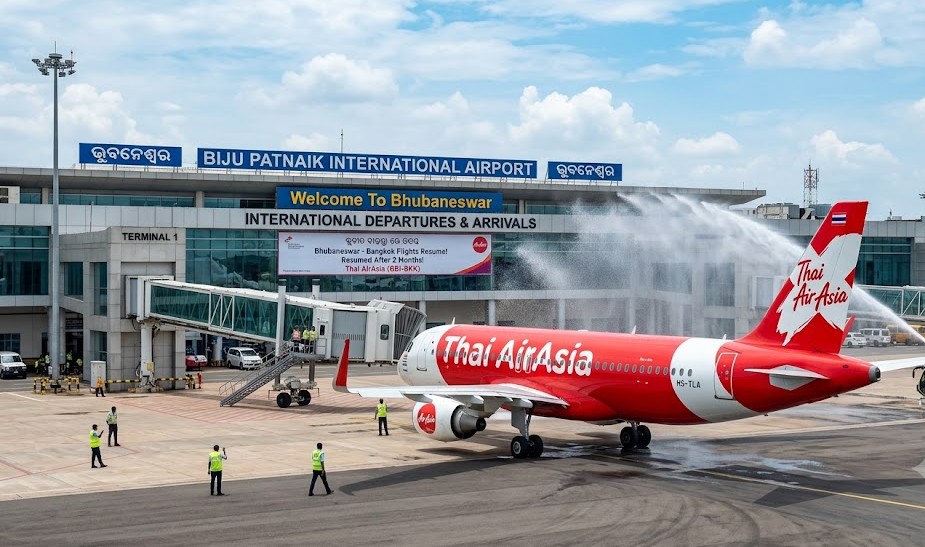
Representational Image
The Bangkok-bound service resumed on Friday night, with flight 1065 reportedly departing from Bhubaneswar at around 11:05 pm. The return flight from Bangkok arrived in Bhubaneswar on Saturday morning at around 5:30 am.
Flights to Operate Twice a Week
Initially, the service will operate twice a week.
The flight will depart from Bhubaneswar on Friday night, with the return service scheduled for Saturday morning. The second weekly service will operate on Monday night, with the return flight from Bangkok scheduled for Tuesday morning.
The resumption of the route is expected to benefit passengers from Bhubaneswar and neighbouring districts who rely on international air connectivity for business, tourism, education and other travel needs.
Daytime Operations From October 25
The flight schedule is set to undergo a change from October 25 with the introduction of the winter schedule.
Instead of operating at night, the service will run during the daytime. Under the revised schedule, the flight is expected to arrive in Bhubaneswar at around 11:00 am and depart for Bangkok at approximately 1:35 pm.
The Bhubaneswar-Bangkok route has reportedly attracted a significant number of passengers, making its resumption a notable development for the city’s international air connectivity.
Dubai and Singapore Connectivity on the Radar
With the Bangkok service back in operation, attention is now turning towards expanding Bhubaneswar’s international network.
Efforts are reportedly underway to introduce a direct Bhubaneswar-Dubai flight in the coming days. A Singapore service is also being considered, subject to sufficient passenger demand.
If these routes materialise, passengers from Odisha could gain more direct international travel options, reducing the need to depend on connecting flights through other major Indian airports.
The developments could further strengthen Biju Patnaik International Airport’s position as an international gateway for Odisha and improve connectivity with key overseas destinations.
- 0
- By Neel Achary

3, Oct 2026
AD Ports Group Successfully Completes Acquisition of Brazil’s CLI Upon Receiving Full Regulatory Approvals
Abu Dhabi, UAE/ São Paulo, Brazil – 03 October 2026: AD Ports Group (ADX: ADPORTS), a leading global enabler of trade, industry, and logistics solutions, today announced the successful completion of the financial closing of its acquisition of Corredor Logística e Infraestrutura (CLI), Brazil’s leading independent agri-bulk port terminal operator from funds managed by Macquarie Asset Management and IG4 Capital.
The transaction, announced on 2 June 2026, was completed following the satisfaction of customary closing conditions, including regulatory and antitrust approvals. AD Ports Group received the necessary approvals from Brazil’s National Waterway Transportation Agency (ANTAQ) and the Administrative Council for Economic Defense (CADE), enabling the transaction to proceed to completion.

The acquisition was conducted at an enterprise value of AED 3.1 billion (USD 835 million), making it the largest acquisition in the Group’s history. With the closing now finalised, CLI has become an operational member of AD Ports Group’s international portfolio and represents the Group’s first strategic entry into South America.
Mohammed Al Tamimi, Chief Executive Officer of Noatum Ports – AD Ports Group, said: “The formal completion of the CLI acquisition marks an important development in AD Ports Group’s international growth and strengthens our presence in one of the world’s most important agricultural export markets. The acquisition gives our Group powerful new global reach and capabilities. AD Ports Group, through its international ports operating arm Noatum Ports, is committed to quickly integrating CLI into our existing global operations, to further expand the range and relevance of our portfolio of global end-to-end trade solutions.”
Fernando Lohmann, Head of Macquarie Asset Management in Brazil, said: “CLI has delivered strong growth and built a highly competitive position in Brazil’s port and logistics market, supported by strategic assets, operational scale and a resilient customer base. With the transaction now completed following all required approvals, AD Ports Group is well positioned to build on that platform, which has clear relevance to Brazil’s trade flows, and support CLI’s next phase of development.”
Paulo Todescan L. Mattos, Co-Founder, Managing Partner, Chair, and Co-CIO of IG4 Capital Group, said: “We are grateful for the constructive engagement of all parties involved in bringing this transaction to its close. CLI has evolved into an important supply chain provider supporting Brazil’s export and import markets with a strong operating platform. We are proud of the progress achieved in transforming CLI and believe AD Ports Group is well placed to support CLI’s continued development and long-term growth.”
CLI operates two strategically important agri-bulk export terminals under long-term concessions. CLI Sul, at the Port of Santos, is a leading sugar export terminal that also handles corn and soybeans, while CLI Norte, at the Port of Itaqui, forms part of Brazil’s “Arc of the North”, an important logistics corridor for agricultural exports. Together, the terminals connect Brazil’s major producing regions with global markets.
The acquisition strengthens AD Ports Group’s growing agrifoods platform and broadens its ability to serve customers across the agricultural supply chain. It also creates opportunities to connect Brazilian export flows with the Group’s wider network across ports, maritime and shipping, logistics, economic cities, and digital trade services, supporting new trade links between South America, the Indian Subcontinent, East Africa, and Southeast Asia.
With the transaction completed, AD Ports Group intends to establish new trade routes directly connecting Brazil with Khalifa Port and Abu Dhabi Food Hub in KEZAD, the region’s largest food hub, supporting the movement of Brazilian agricultural commodities into regional and international markets.
Through CLI, the Group will contribute its global ports and logistics expertise to a major agricultural export market while supporting the continued development of Brazil’s trade infrastructure. The transaction also reinforces AD Ports Group’s commitment to building resilient, connected, and customer-focused supply chains that enable trade across continents.
3, Oct 2026
Goldin Brings Hollywood History to the Auction Block This Fall
Princess Leia’s iconic gown joins memorable pieces from Harry Potter, Rocky, Top Gun, and A Star Is Born
October 3, 2026 – Goldin, an internationally recognized auction house known for rare and record-breaking collectible sales, today opened its Fall Movie Prop & Memorabilia Auction, running through Wednesday, October 28. Celebrating some of film’s most memorable moments, this auction highlights artifacts from stories audiences know and love.
Diving into a galaxy far, far away, Goldin’s Fall Movie Prop & Memorabilia Auction offers an array of costumes and accessories from the legendary world of Star Wars. Led by a “Princess Leia” gown worn during The Star Wars Holiday Special, this white, floor-length garb praises the heroine and the impact she’s had on fans over the decades. When it comes to loyal supporting characters, Chewbacca’s devotion displays faithfulness even in the most challenging moments. Fans of the thick-coated furry character can bid on a piece of his story with a “Chewbacca” Production-Made Signature Bowcaster Prop found in Star Wars Episode VII: The Force Awakens (2015). This signature character prop is one of the only production-made Chewbacca bowcasters to survive and surface from a Star Wars film set and one of the only known bowcasters held in private hands. In addition to heroes within the franchise, Goldin’s auction spotlights the iconic villains who shaped the story. With a First Order “Snowtrooper” Four Piece Ensemble and a 1976-77 Star Wars: A New Hope Original Prototype “Stormtrooper” Helmet, collectors can connect with the unforgettable antagonists who brought conflict and warfare to the Dark Side.
When it comes to fantastical worlds that continue to captivate audiences around the globe, no conversation is complete without the Harry Potter franchise. Fans who wish to wield their own authentic wizarding wands can bid on Emma Watson’s “Hermione Granger” Light Up Effects Wand and Rupert Grint’s “Ron Weasley” Production-Made Broken Wand from Harry Potter and the Chamber of Secrets. Reflecting the damage sustained during Ron and Harry’s adventures in the second film, Ron’s “broken” wand is bent near the tip, with colorless tape holding the pieces together. Also available from the franchise is the Production-Used Hedwig Prop Cage. Known for housing Harry’s loyal snowy owl, gifted by Rubeus Hagrid, this piece celebrates the little details that shape the franchise’s storytelling.
On the action side of the house, Goldin’s Fall Movie Prop & Memorabilia Auction showcases pieces connected to Rocky Balboa, Top Gun, and Peaky Blinders. Rocky’s stories of victory and determination could not be completed without the opposing characters who faced him in the ring. In this auction, the Philadelphia titan’s opponent, Clubber Lang, is represented with a Mr. T “Clubber Lang” Production-Made Costume from Rocky III. Consisting of a boxing robe and shorts created for the “South Side Slugger” in the third film of the franchise, this production-made piece signifies the challenges Rocky had to overcome to achieve his much-deserved success. Further, fans can take flight by bidding on a Top Gun production-made flight helmet set, complete with an oxygen mask, hose connector, and high-g suit pants, worn by the late Val Kilmer in the hit 1986 film. This performance earned the actor high praise and made the role one of cinema’s most iconic characters to this day. Also not to be missed in this auction is a Cillian Murphy “Tommy Shelby” Screen-Used Peaky Blinders Suit, worn by the infamous protagonist during the show’s 9-year run on Netflix from 2013 – 2022.
Goldin’s Fall Movie Prop and Memorabilia offers tangible connections to movie soundtracks as well. From the 2018 rendition of A Star Is Born, is the Lady Gaga Screen-Used Piano from the singer’s time on set. Having earned eight Academy Award nominations and winning Best Original Song for “Shallow,” this piano highlights the music that touched fans’ hearts near and far. Also up for grabs is an Eminem Screen-Worn Costume Ensemble from the film 8 Mile. Worn by Eminem during his performance as Jimmy Smith Jr., also known as B-Rabbit, the rapper’s performance helped bring the film critical and commercial success and turned Eminem’s “Lose Yourself” into the first hip-hop song to win an Academy Award for Best Original Song.
Viewers of the celebrated 1990 film Gremlins can now take home a Gizmo Mogwai Original Production-Used Puppet from the film Gremlins 2: The New Batch (1990). With the iconic character returning in the second film to play a pivotal role in controlling the chaos, this prop remains renowned within the franchise decades after the film’s release. For fans of the Marvel Cinematic Universe, Baby Groot’s moments of humor and joy remain a light within the franchise’s high-intensity plot points. Now the character’s electric energy is captured not only on screen but also at auction with a Screen-Used Baby Groot Maquette from Guardians of the Galaxy Vol. 2 (2017).
Fans worldwide continue to celebrate the horror genre, with one of its most memorable villains to this day, Freddy Krueger. Originally introduced in A Nightmare on Elm Street and the Friday the 13th franchises, this auction brings the character back to the public right in time for Halloween with a Freddy vs. Jason (2003) Production-Made “Freddy Krueger” Glove. Items from the Scott Spiegel Collection and Estate include a Scott Spiegel personally owned Evil Dead II: Dead by Dawn Production Bible and a 1960s-70s original Don Post Studios, “The Wolfman” Deluxe Mask.
Goldin’s Fall Movie Prop & Memorabilia Auction is open for regular bidding through Wednesday, October 28, at Goldin.com. Extended bidding begins at 10 PM ET.
Additional ongoing auctions include the 2026 Fall Vintage Elite Auction open until October 10, the 2026 Fall Music Memorabilia Auction open until October 14, and the 2026 Fall Coin Auction open until October 21. Goldin is set to open its 30th Anniversary Pokemon Auction on October 5, and its 2026 Fall Game Used Auction on October 9.
2, Oct 2026
‘DEAL OF THE CENTURY’ PAYING DIVIDENDS FOR FIA WORLD RALLY CHAMPIONSHIP AS FORD RACING CONFIRMS ITS RETURN FROM 2028
Dubai, UAE, 2ndOctober, 2026: The Fédération Internationale de l’Automobile (FIA) has welcomed Ford’s announcement that it will return to the FIA World Rally Championship with a full factory programme from 2028 and develop an all-new Rally1 car under the FIA’s WRC27 technical regulations for 2029.
Ford’s return to the championship will mark its first full works programme in the FIA WRC since 2012 and comes at a significant moment in the championship’s development.
With new technical regulations arriving in 2027, increased investment under new ownership and plans to expand the WRC’s presence in key markets including the United Kingdom and United States, the series is entering a new period of sporting and commercial growth.
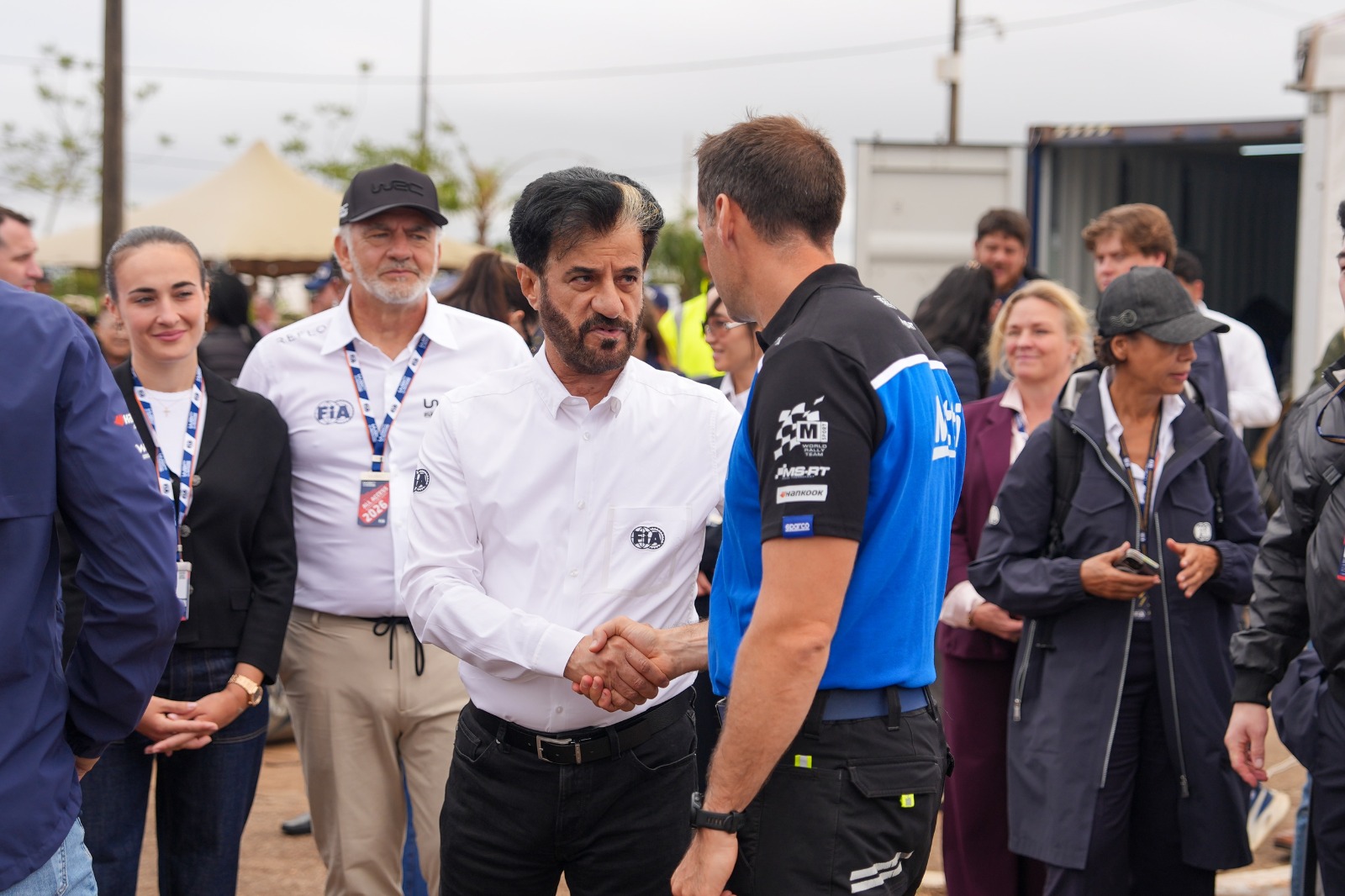
The announcement makes Ford the fourth constructor to commit to developing a car under the FIA’s new WRC27 technical regulations. Designed around safety, affordability, flexibility and accessibility, the regulations will reduce the cost of competing at the highest level of rallying, with the price of a ready-to-compete car capped at €345,000 in asphalt specification.
From 2028, Ford Racing will become directly involved in its FIA WRC programme alongside long-standing partner M-Sport, before introducing an all-new Rally1 car developed to the WRC27 technical regulations in 2029.
The commitment reflects the growing attractiveness of the FIA World Rally Championship to global automotive manufacturers and reinforces the role of FIA World Championships as genuine laboratories for the development, testing and demonstration of future technologies.
Ford’s commitment follows growing interest in the new regulations from both global automotive manufacturers and independent constructors and comes as the championship has recently secured the ‘Deal of the Century’ and enters a new period of commercial development under its recently appointed promoter team.
The growing manufacturer interest also underlines the wider role of the FIA’s World Championships as global platforms for automotive manufacturers to develop and demonstrate new technologies, test solutions in demanding competition environments and transfer knowledge between motor sport and road-going vehicles.
Ford’s return to the WRC also forms part of an expanding global motor sport programme. The Blue Oval returned to the FIA Formula One World Championship in 2026, competes in the FIA World Rally-Raid Championship and is preparing to return to the top category of the FIA World Endurance Championship in 2027, having already launched its LMGT3 programme. Its WRC programme will give Ford a presence across four FIA World Championships from 2028.
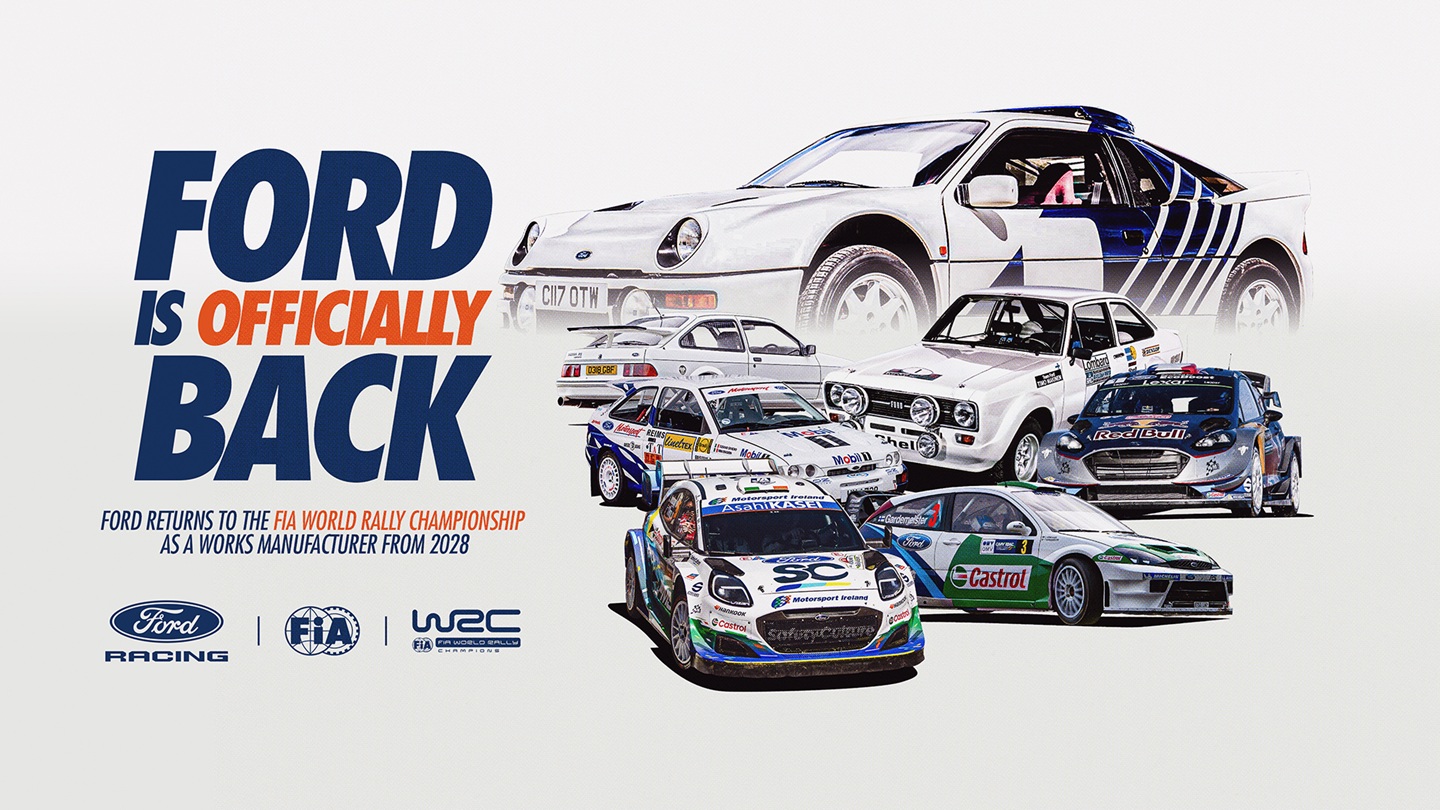
Ford has played a major role in the history of the FIA World Rally Championship, with cars including the Escort, Sierra, Focus, Fiesta and Puma competing across more than five decades of international rallying.
FIA President Mohammed Ben Sulayem, said: “Today’s announcement represents another significant moment for the FIA World Rally Championship. With a new promoter in place, three constructors already committed to the new technical regulations, and now Ford confirming its return as a full works manufacturer, there is real momentum behind the championship’s next era.
“Ford is one of the great names in motorsport and its commitment to FIA World Championships continues to grow. The manufacturer returned to Formula 1 this year, is competing at the highest level of the FIA World Rally-Raid Championship, will return to the top category of the FIA World Endurance Championship in 2027, and from 2028 will once again compete as a works manufacturer in the WRC.
“That will give Ford a presence across four FIA World Championships and demonstrates the importance it places on motor sport as a global platform, and laboratory, for its brand, products and technologies.
“I had the privilege of driving for Ford during my own career, so welcoming them back is a particularly special moment for me. The WRC continues to grow, and this long-term commitment from such an iconic manufacturer is a testament to the strength of the championship.”
Jim Baumbick, President of Ford Europe, said: “Rallying is where Ford’s character faces its toughest test, and where generations of fans come to share the thrill of seeing a car take on the impossible. We want our next generation of European vehicles to carry that same unapologetic spirit. Responsive, confidence-inspiring, and rewarding to drive on the roads people use every day.”
Mark Rushbrook, Global Director, Ford Racing, said: “As we celebrate 125 years of Ford Racing, our 50-year legacy in the WRC stands out as one of our proudest because of its direct connection to the fun and exciting cars that came from that. We can’t wait to compete again in rally racing in 2028 and beyond.”
Eric Boullier, CEO of WRC Promoter, said: “Ford’s decision to return to the FIA World Rally Championship as a full factory team is fantastic news. The brand has an extraordinary history in rallying and has been part of some of the sport’s most memorable moments.
“More importantly, this renewed commitment to WRC, as part of its extensive global motorsport programme, is a strong statement about the relevance of rallying to one of the world’s leading automotive brands.
“Seeing WRC support both its racing ambitions and the development of future road cars is particularly exciting. We are delighted to welcome Ford back as a full factory team and look forward to this new chapter together.”
2, Oct 2026
FPT Lands At The Genoa International Boat Show With As Labruna, Bimotor, And Naval Motor Botti
Oct 02: FPT, the Iveco Group company dedicated to the design, production, and sale of powertrains and solutions for on- and off-road vehicles, as well as marine and power generation applications, will be exhibiting at the 66th edition of the Genoa International Boat Show, scheduled for October 1 to 6, 2026, one of the world’s premier yachting events and a true showcase for Italian excellence.
To highlight the importance that this event and the recreational segment of marine engines hold for the Brand, FPT will be participating alongside all its Italian distributors for the segment: AS Labruna, Bimotor, and Naval Motor Botti.
FPT’s growth strategy in the recreational segment is built on six decades of experience and a well-established reputation in the commercial marine sector. Today, the Brand engines power a wide range of vessels: patrol boats, passenger ferries, workboats, and charter boats, serving customers all around the world. The Brand is also a trusted partner of institutional operators responsible for safety and security at sea, including coast guards, customs and law enforcement authorities, and fire and rescue services. The demanding requirements of these specific applications have contributed to shaping the core strengths that distinguish the marine offering: proven reliability, long-lasting durability, high performance, and operational efficiency.
Building on this solid foundation, FPT is further strengthening its presence in the recreational market, bringing the same engineering excellence and proven technologies that have earned the trust of commercial operators and leading shipyards worldwide.
This commitment is also reflected in FPT’s recent entry into Confindustria Nautica, the Italian Marine Industry Association, and in its growing focus on collaborations with new shipyards, as part of a broader strategy aimed at fostering long-term partnerships across the marine industry and supporting the continued growth of the recreational boating segment.
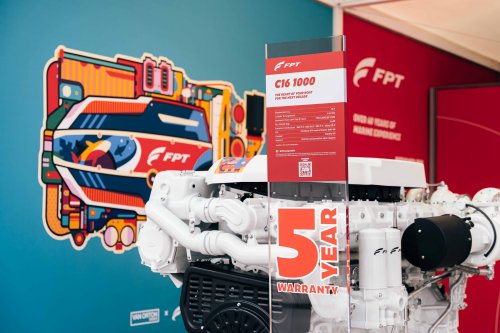
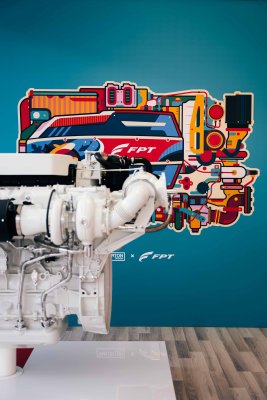
Visitors to the stand YP65 will be greeted by a remarkable innovation: the C16 1000 presented for the first time with the exclusive top cover by Van Orton, the renowned Italian creative duo whose vibrant, impactful pop style is globally recognized. Launched at Agritechnica 2025, the partnership between FPT and Van Orton is thus now expanding to marine engines as well.
Operating in the marine propulsion sector since 1965, FPT offers a comprehensive range of best-in-class engines spanning 3 to 15.9 liters in displacement, with power outputs from 85 to 1,000 hp. Built to power 25-to-80 ft vessels, FPT’s marine portfolio caters to a wide range of applications, from pleasure craft to light-, medium-, and heavy-duty commercial boats.
Every day in Italy, two new boats powered by FPT marine engines are launched. FPT supports its customers worldwide through a network of 375 marine service points, more than 200 of which are located in the Mediterranean region and over 80 in North America, with the remaining sites covering key marine markets across the rest of the world. This extensive service footprint ensures prompt response times, minimizes downtime and provides customers with continuous, reliable support wherever they operate.
Last but not least, starting from the Genoa International Boat Show 2026, FPT makes available a free-of-charge five-year warranty for its marine engines dedicated to pure recreational applications. The warranty extension is a great example of the trust that the Brand places in its engines and the respect it has for its customers. The warranty is available for customers across the EMEA region and provides global coverage.
CURSOR 16 1000 – The record-breaking engine delivering top reliability and durability
Winner of the world water speed record for a diesel-powered vessel, a record that remains unbeaten to this day, the CURSOR 16 continues its strong momentum across global markets. Marine professionals rely on this engine for its straightforward maintenance and exceptional efficiency, which translate into highly competitive operating costs. Delivering power outputs from 815 to 1,000 hp, it guarantees smooth installation, outstanding performance, quiet operation, and best-in-class, long-term reliability. These qualities have made the CURSOR 16 the ideal choice to power planing motor yachts and sport-fishing vessels up to 70 feet for almost 10 years.
C16 1000 – Van Orton cover limited edition
The new fruit of FPT’s collaboration with Van Orton is a striking engine cover, made by employing their peculiar, kaleidoscopic perspective to create a unique visual narrative, inspired by the groundbreaking Pop Art movement of artists such as Andy Warhol and Roy Lichtenstein. The result masterfully blends precision engineering with artistic vision, giving the usually “undercover” FPT engines one more reason to be admired.
CURSOR 16 1000 – Technical Specifications
Cylinder layout: 6L
Turbocharger: TCA
Displacement [liters]: 15.9
Injection system: Common Rail
Max power [hp @ rpm]: 1000 @ 2300
Dry weight [kg]: 1640
Full specifications are available on the FPT website.
N67 570 EVO – Best-in-class performance
With its 6.7-liter displacement, the N67 570 EVO marine engine generates up to 570 hp, delivering maximum torque at low RPMs and rapid load response to lead performance benchmarks in its category. Purpose-built for marine applications, its architecture features engine and turbocharging cooling systems tailored specifically for maritime operations. To simplify installation, key components – including the oil cooler, oil pump, water pump, and blow-by system – are fully integrated into the engine design. Maintenance is made straightforward via advanced diagnostics, while extended oil and filter service intervals of up to 300 hours significantly reduce downtime.
N67 570 EVO – Technical Specifications
Cylinder layout: 6L
Turbocharger: TCA
Displacement [liters]: 6.7
Injection system: Common Rail
Max power [hp @ rpm]: 570 @ 3000
Dry weight [kg]: 721
2, Oct 2026
Nritya Mallika Dance Academy Presents AGOMONI NRITYA MAHOTSAV 2026
Celebrating the Divine Arrival of Maa Durga through Dance, Music & Culture
7 October 2026 — Dinabandhu Mancha, Siliguri
8 October 2026 — Rabindra Mancha, Shaktigarh, Siliguri
Time: 5:00 PM onwards on both days
Siliguri: Nritya Mallika Dance Academy, Siliguri, is all set to present its annual cultural celebration, “Agomoni Nritya Mahotsav 2026,” on the occasion of the auspicious arrival of Maa Durga and the festive season of Mahalaya.
Established in 2009, Nritya Mallika Dance Academy has been dedicated to the practice, preservation and promotion of Indian dance, art and culture. One of its foremost objectives is to preserve India’s rich cultural heritage and pass it on to the younger generation through the graceful and expressive language of dance.

This year’s Agomoni Nritya Mahotsav will bring together a large community of young dancers and established artistes in a celebration dedicated to Maa Durga. Nearly 200 students of Nritya Mallika Dance Academy will participate in the two-day cultural festival.
The central theme of the festival is a heartfelt tribute to Goddess Durga, celebrating her divine arrival, magnificence and her eternal form as the destroyer of evil and the embodiment of Shakti.
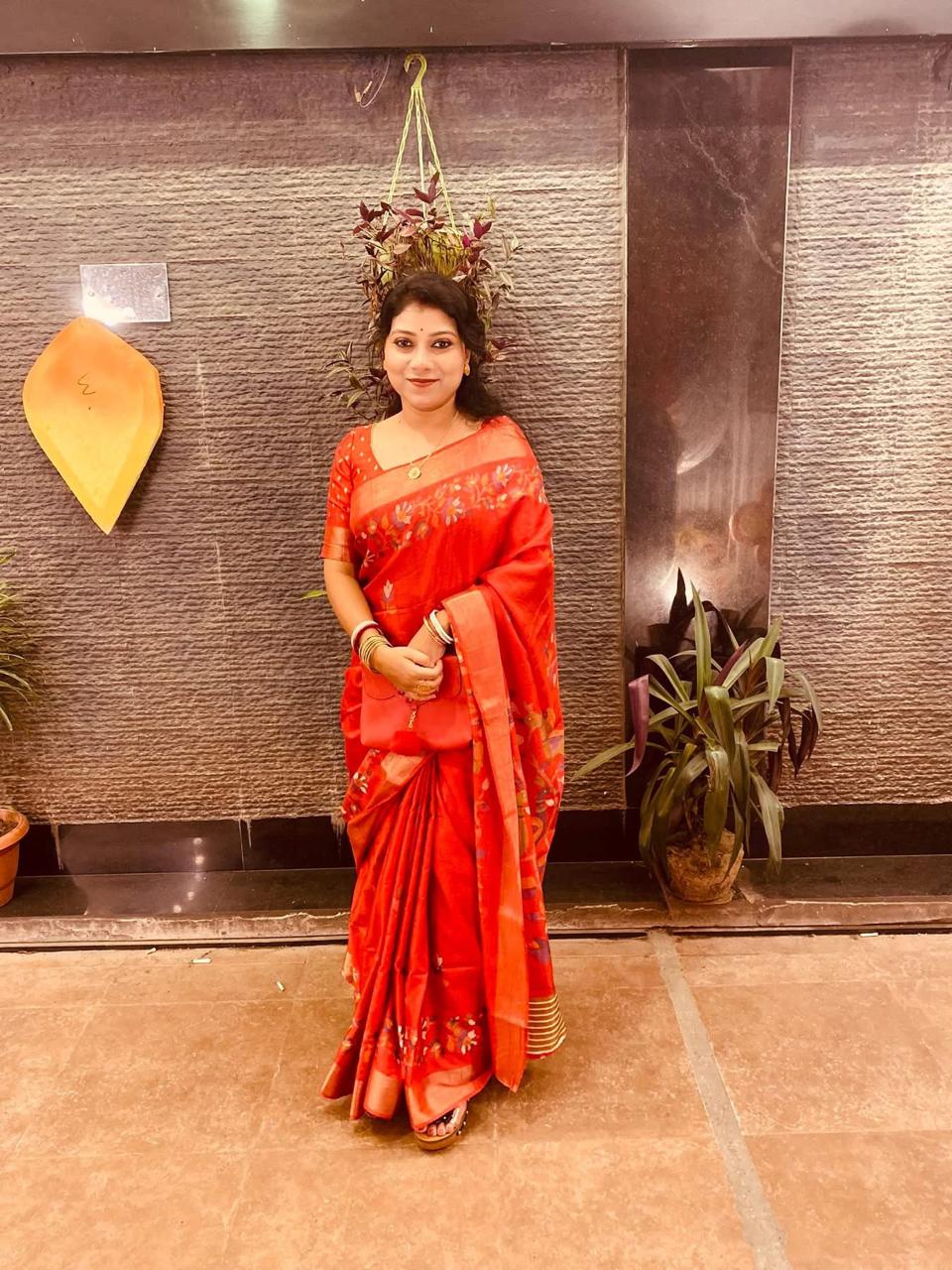
Guru Smt. Rimpi Saha Banik
The programme on 7 October at Dinabandhu Mancha will begin with a sacred invocation to Maa Durga, welcoming the Divine Mother through music, dance and devotion. The audience will witness traditional Agomoni presentations and Devi Vandana, followed by special dance productions including:
“Dus Dike Durga”
“Mahishasuramardini”
Dus Dike Durga — Ten Dimensions of Maa Durga
The special production “Dus Dike Durga” explores ten multidimensional aspects of the omnipotent Goddess Durga through the medium of dance.
For Bengal, the arrival of Maa Durga is not merely the celebration of a powerful Goddess. It is also an emotional homecoming — the return of a daughter to her maternal home. The anticipation of her arrival is deeply woven into Bengal’s cultural consciousness, music, literature and devotional traditions.
Through “Dus Dike Durga,” Nritya Mallika Dance Academy seeks to portray different manifestations and qualities of the Divine Mother, bringing together spirituality, storytelling, music and dance in a vibrant theatrical presentation.
The evening will also feature Durga Puja songs and a specially choreographed presentation of the timeless Mahishasuramardini, celebrating the triumph of good over evil.
Nritya Mahotsav — 8 October
The second day, 8 October at Rabindra Mancha, Shaktigarh, Siliguri, will be dedicated to a grand Nritya Mahotsav, bringing together dancers and artistes from different regions of Eastern and North-Eastern India.
One of the special highlights of the festival will be the coming together of talented dancers from diverse regions on one stage, presenting the richness and variety of India’s traditional and classical dance heritage.
More than 45 talented artistes from Assam are expected to participate. Along with them, dancers and artistes from Alipurduar, Dinhata, Sikkim, Darjeeling and other regions will join the celebration.
Altogether, around 150 dancers will come together on one magnificent stage to showcase their diverse dance traditions, creativity, talent and cultural heritage.
The festival thus aims not only to celebrate Maa Durga but also to create a cultural bridge among different regions of India, demonstrating the country’s extraordinary diversity through the universal language of dance.
Distinguished Guests
The festival will be graced by eminent personalities and distinguished guests, including:
- Guru Dr. Shobha Koser
- Vidushi Dr. Samita Koser
- Shri Sajal Koser
- Dr. Upendra Sharma
- Shri Ravindra Jain
- Shri Om Prakash Bharti
- Vidushi Sangita Chaki
- Shri Raju Bista, Hon’ble Member of Parliament, Lok Sabha
- Dr. Shankar Ghosh, Hon’ble MLA
Guest Artistes
Shri Subrata De — Sitar
Swaranjali Delhi
Pandit Subir Adhikary — Tabla
The participation of renowned artistes will add a special musical dimension to the festival, complementing the visual beauty and expressive power of the dance presentations.
A Celebration of Shakti, Culture and Unity
Agomoni Nritya Mahotsav 2026 is envisioned as more than a dance festival. It is an offering of devotion to Maa Durga, a celebration of India’s cultural diversity and an opportunity for young artists to connect with their roots.
Through dance, music and collective participation, Nritya Mallika Dance Academy hopes to create an atmosphere where tradition meets the creative energy of the younger generation.
“In the rhythm of dance, in the bond of culture, we welcome the Divine Mother with devotion.”
Nritya Mallika Dance Academy, Siliguri warmly invites art lovers, cultural enthusiasts, dancers, musicians and the people of Siliguri to join this grand celebration of Maa Durga, Dance and India’s Living Cultural Heritage.
2, Oct 2026
Use.ai reaches 1 million monthly active users less than a year after launch
The all-in-one AI workspace gives consumers access to more than 10 major AI models, including GPT, Claude, Gemini, Grok and DeepSeek, through a single subscription and interface.
San Francisco, CA – Oct 02; Every new AI model creates another reason to switch. For users who have already built up months or years of conversations, preferences, files and personal context inside one platform, moving to a better model can also mean starting again.
Use.ai was built around the idea that people should be able to switch between the intelligence they use without changing the interface or losing their context. Less than a year after launch, the all-in-one AI workspace has reached one million monthly active users, giving consumers access to more than 10 leading AI models, including GPT, Claude, Gemini, Grok and DeepSeek, all within a single conversation.
The origin
Use.ai grew out of Co-Founder Ihor Herasymov’s own frustration with jumping between AI platforms. A former M&A and tech investment banker, Herasymov went on to launch seven businesses before building a tech company to 100+ employees and $3 million in annual revenue within two years. After ChatGPT was released, AI quickly became central to how he researched, analyzed and made decisions. He began testing models obsessively and quickly found that each built up context he didn’t want to lose.
“I pay around $1,000 a month for premium subscriptions because those accounts hold years of my history. My preferences, my work, my life. I don’t want to lose that context whenever a better model appears,” said Ihor Herasymov, Co-Founder of Use.ai. “That’s where Use.ai began: one account, leading AI models, and context that stays with you.”
The core offering
Use.ai turns a fragmented AI landscape into one workspace. Instead of juggling separate subscriptions, users can access all of them in a single consumer workspace and switch between them mid-conversation. Research, writing, planning and creation all happen in the same thread, with users able to pull in different models as the task evolves.
At the heart of Use.ai’s offering is its free Answer Engine, built on open-weights models that the company configures and optimizes. More advanced frontier models are available under a paid subscription when a task calls for deeper reasoning or more advanced capabilities.
The bigger ambition is to make choosing a model disappear entirely. Use.ai is building automatic orchestration that can route each task to the most suitable intelligence, alongside tools that allow the platform to understand more of a user’s world over time. Instead of asking people to follow model launches, study benchmarks or decide which AI belongs to which task, Use.ai wants them to focus on one thing: what they want to get done.
“We build for consumers, not developers”, said Herasymov. “Our users shouldn’t need to follow model releases, compare benchmarks or decide which model is best for every task. That’s our job.”
Why model choice matters
As people use AI more, the context trapped inside each platform becomes more valuable and harder to leave behind. Use.ai’s research suggests users already want the freedom to move between models: in a survey of more than 5,000 users, 42% said they switch for better quality or deeper reasoning, while 36.5% switch depending on the task. One user even compared the same investment question across four models, using where they agreed and disagreed to decide what needed more research.
Use.ai is betting that the biggest opportunity is still ahead. In a separate survey of more than 30,000 users, 54% said they were either using AI for the first time or had only tried it a few times. With the company estimating that roughly four billion more people could become regular AI users over the next decade, its aim is to become the place where those users build their AI context from day one.
Looking ahead
Use.ai’s next phase is about moving from answers to action. The goal is a personal assistant that understands a user’s preferences, routines, schedule and context, then coordinates models and connected apps to get things done.
That could be as simple as saying, “Book me a haircut next week.” With permission to access the user’s calendar, the assistant could know their usual salon, check available appointments against their schedule, make the booking, add it to the calendar and set a reminder.
The same approach could apply to shopping. A user looking for new running shoes could ask Use.ai to research suitable models based on their preferences and training habits, compare prices and availability across retailers and, eventually, complete the purchase once the user confirms.
Over time, that could mean finding and booking appointments, researching products, comparing prices and availability, and completing purchases with confirmation. The underlying idea is that users should be able to describe an objective while Use.ai handles more of the research, coordination and model selection required to complete it.
“Our goal is to minimize the effort between ‘I need something done’ and ‘it’s done,’” said Herasymov. “We want Use.ai to be where your AI relationship begins and where it stays, regardless of which model wins next.”
2, Oct 2026
Canara Bank Kolkata Circle Organises “Swachhata Hi Seva” Campaign
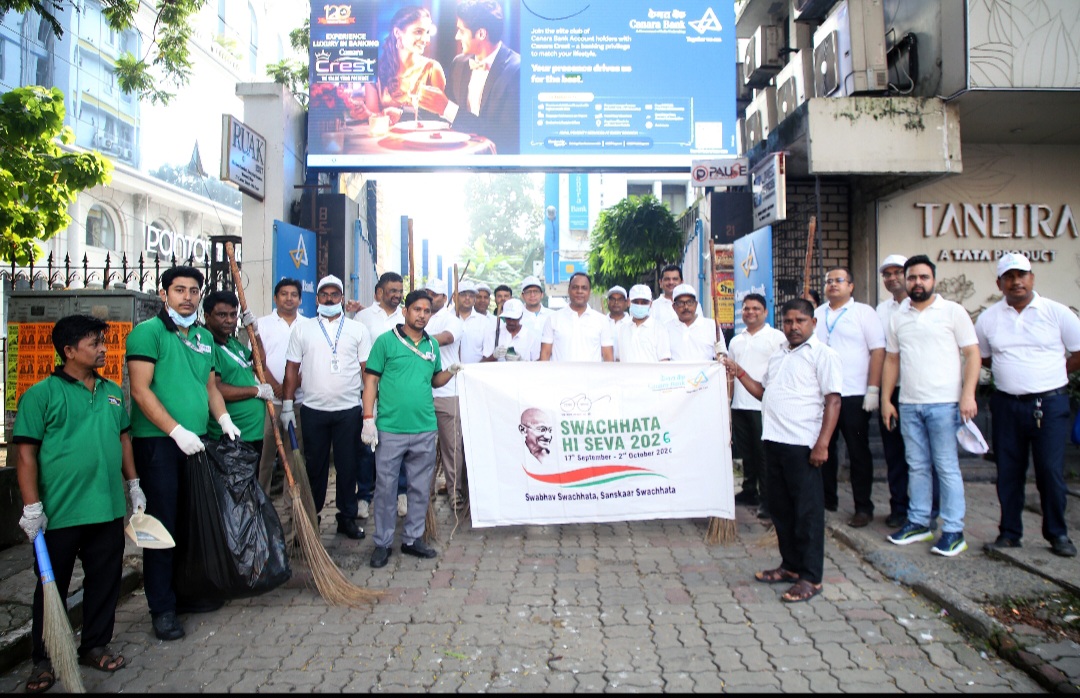
Kolkata | Oct 02: Canara Bank, Kolkata Circle, organised a “Swachhata Hi Seva” Campaign on 1st October 2026 at its Circle Office premises in Kolkata, reaffirming the Bank’s commitment towards cleanliness, sanitation and responsible citizenship.
The cleanliness drive was conducted in the presence of Shri Manoj Kumar Meena, General Manager & Circle Head, Canara Bank, Kolkata Circle, along with Deputy General Managers, other executives and staff members of the Circle Office. Officials and employees actively participated in cleaning the office premises as well as the adjoining areas, spreading the message that cleanliness is a shared civic responsibility.
Addressing the gathering, Shri Manoj Kumar Meena highlighted the significance of the Swachhata Hi Seva initiative and emphasised the important role of every citizen in maintaining cleanliness and hygiene in workplaces, neighbourhoods and public spaces. He encouraged employees to make cleanliness a part of everyday life and contribute actively to the larger national cleanliness movement.
As part of the programme, sanitation equipment was distributed among the cleaning staff to support their day-to-day work. In recognition of their invaluable contribution towards maintaining a clean and hygienic workplace, thank-you gift hampers were also presented to the cleaning staff as a gesture of appreciation.
The programme concluded with a collective commitment by the officials and staff of Canara Bank, Kolkata Circle, to uphold the spirit of “Swachhata Hi Seva” and contribute towards a cleaner, healthier and more responsible society.
2, Oct 2026
Survey: CHRO Confidence Remains in Positive Territory, But Continues to Inch Down
AI Is Changing Workforce Planning, Yet Few Organizations Feel Fully Prepared
New York, October 2, 2026—CHRO confidence remained positive in Q3, but continued to edge down from its record high earlier this year. That’s according to the latest survey of US chief human resource officers (CHROs) from The Conference Board.
The CHRO Confidence Index declined to 56 in Q3 from 58 in Q2. A reading above 50 reflects more positive than negative responses. The hiring component of the Index rose slightly, while the retention and engagement components declined.
The survey also reveals that AI is already changing workforce planning, even as many organizations remain early in preparing for its impact. More than 8 in 10 CHROs (82%) say their organization has changed its workforce-planning process because of AI, although half describe the change as only slight. Just 19% say anticipated AI effects have been incorporated into workforce and financial planning across the enterprise.
And while 55% of CHROs consider their organizations at least somewhat prepared to manage AI-driven workforce change over the next two years, only 4% say they are very prepared. The biggest barriers are difficulty predicting AI’s workforce impact (41%), limited AI skills (39%), and an unclear AI strategy (31%).
“CHROs are still planning to hire, but the broader workforce picture is becoming more cautious,” said Diana Scott, US Human Capital Center Leader, The Conference Board. “Organizations are balancing the need for talent with slower workforce growth and mounting concerns about engagement and retention. At the same time, AI is forcing leaders to rethink what skills they will need in the future and how they plan their workforces.”
Hiring: Do HR leaders expect to hire more employees in the next six months?
The CHRO Confidence Index: Hiring component was 61 in Q3, up from 59 in Q2.
Hiring expectations remain positive.
- 53% expect hiring to increase over the next six months, compared with 17% who expect it to decrease.
- Those expectations were relatively stable from Q2, when 54% expected an increase and 17% expected a decrease.
Expectations for overall workforce size have cooled.
- 49% expect total workforce size to increase over the next six months, down from 55% in Q2.
- 28% expect workforce size to remain unchanged, up from 23%.
- 23% expect their workforce to decrease, essentially unchanged from 22% in Q2.
Retention: Do HR leaders expect employees to stay over the next six months?
The CHRO Confidence Index: Retention component declined slightly to 54 in Q3 from 55 in Q2.
Retention expectations softened.
- 33% of CHROs expect employee retention to increase, down from 36% in Q2.
- 22% expect retention to decrease, up from 19%.
- The gap between those expecting improvement and deterioration narrowed to 11 percentage points from 17 points in Q2.
Engagement: Were employees committed, motivated, and connected to their work and the organization over the past six months?
The CHRO Confidence Index: Engagement component fell to 55 in Q3 from 59 in Q2.
Employee engagement emerged as the clearest source of weakness this quarter.
- 44% report increased engagement, down slightly from 46% in Q2.
- 24% report decreased engagement, up notably from 16% in Q2.
AI and Workforce Planning: How is AI changing organizations’ workforce planning?
Most are changing workforce planning because of AI, but for many, the changes remain limited.
- 50% of CHROs say their organization has made only a slight change to workforce planning.
- 25% report a moderate change, while only 7% report a significant change.
Organizations are analyzing AI’s impact more often than changing how frequently they plan.
Among organizations that have changed their workforce planning process:
- 67% have analyzed AI’s potential impact on jobs, tasks, or workforce demand.
- 67% have brought AI technologies or AI leaders into workforce planning discussions.
- 45% have incorporated new AI-related workforce, skills, or labor-market data.
- Just 21% have changed workforce planning schedules; 20% have increased the frequency of planning.
Enterprise-wide integration of AI into workforce planning remains limited.
- Enterprise-wide incorporation is 19% for both global and non-global organizations.
- Among global organizations, 32% have incorporated anticipated AI effects into workforce and financial planning for selected functions, roles, business units, or geographies.
- Among non-global organizations, 30% have done the same.
The biggest barriers to successful AI workforce planning are:
- 41%: Difficulty predicting AI’s workforce impact.
- 39%: Limited AI skills among the current workforce.
- 31%: An unclear AI strategy.
- Financial resources, executive alignment, and workforce data are cited much less frequently as barriers.
Few organizations feel very prepared for AI-driven workforce change.
- 55% describe their organization as prepared to manage AI-driven workforce change over the next two years, but only 4% say they are very prepared.
- 27% say their organization is unprepared.
“AI is clearly becoming part of workforce planning, but most organizations are still working through what it means in practice,” said Robin Erickson, PhD, Head of Human Capital Research, The Conference Board. “The biggest obstacles aren’t simply budget or data. Organizations are uncertain about how AI will change work, the potential gaps in workforce skills, and, thus, the lack of a clear AI strategy. CHROs will need to connect the HR technology strategy much more closely with workforce and skills planning.”
2, Oct 2026
SimonMed Brings Arizona’s First AI-Powered Pristina Recon DL Mammography Technology to Scottsdale
Advanced AI-powered software enhances 3D mammography image clarity to support early breast cancer detection at no additional cost to patients
SCOTTSDALE, Ariz., October 2, 2026 – SimonMed, a leading company in radiology, imaging and longevity technology, on Thursday announced that it will become the first imaging provider in Arizona to introduce Pristina Recon DL, GE HealthCare’s advanced AI-powered mammography image reconstruction technology.
The software will be integrated into GE HealthCare’s Senographe Pristina mammography system at SimonMed’s Scottsdale Mountain View location, with the first patient examinations anticipated in early October, coinciding with Breast Cancer Awareness Month.
Pristina Recon DL uses two deep learning models to enhance image quality and improve the visualization of subtle details that may be important in identifying breast cancer. The technology delivers sharp, clear 3D mammography images without increasing radiation dose or changing the patient exam experience.
For patients, this means access to advanced imaging technology designed to provide greater diagnostic clarity while maintaining a comfortable, efficient screening experience. Regular screening lowers a woman’s risk of dying from breast cancer by 26%, and when breast cancer is caught while still localized, the five-year survival rate climbs to 99%* — underscoring why sharp, clear imaging at the point of screening matters so much.
“Early detection saves lives, and our mission at SimonMed is to bring the most advanced, life-saving technology to the communities we serve without creating additional financial barriers for patients,” said John Simon, MD, Founder and Chief Executive Officer of SimonMed. “By bringing this technology to Arizona first, we’re giving our radiologists even clearer images to help identify subtle signs of breast cancer and providing referring physicians with the advanced imaging they rely on to care for their patients. And we’re making these advances available at no additional cost. That’s what innovation should look like in healthcare.”
In a GE HealthCare preference study, radiologists preferred the overall image quality of Pristina Recon DL in 99.11% of image evaluations compared to previous digital breast tomosynthesis (DBT) reconstruction. Pristina Recon DL shows superior performance in the detection of microcalcification clusters and masses in a trial with modeled clinical data.
For referring providers, the technology represents another advancement in the imaging and diagnostic expertise available to their patients. By providing radiologists with sharp, clear 3D mammography images, SimonMed aims to support the identification and evaluation of subtle findings, helping physicians make informed decisions about patient care and recommended next steps.
“At GE HealthCare, we’re focused on developing innovations that give clinicians the clarity and confidence they need to deliver exceptional patient care,” said Victoria Daly, VP, Women’s Health, US and Canada, GE HealthCare. “By implementing Pristina Recon DL, SimonMed is bringing advancements in deep learning image reconstruction to women in Arizona, combining exceptional image quality with an efficient, patient-centered mammography experience. Together, we’re helping expand access to innovative solutions that can help support early detection of breast cancer.”


