


18, Apr 2026
India’s Startup Boom Accelerates with 55,000 New Recognitions
New Delhi, Apr 18 (BNP): The Government of India has announced that more than 55,200 startups were recognised in FY2025–26, marking the highest annual figure since the launch of the Startup India initiative in 2016.
Launched on 16 January 2016, the Startup India programme was designed to build a strong ecosystem for innovation, encourage private investment, and support entrepreneurs through targeted policy measures and financial incentives.
Strong expansion in jobs and ecosystem growth
Since its inception, the initiative has supported the creation of over 2.23 lakh recognised startups as of March 2026, which together have generated more than 23.36 lakh direct jobs across the country.
The latest data shows a sharp year-on-year rise, with startup recognitions increasing by 51.6% compared to FY2024–25. During the same period, direct employment generated by startups rose by 36.1%, reflecting their growing contribution to India’s job market.
Startups are now present across all States and Union Territories, with major hubs including Maharashtra, Karnataka, Uttar Pradesh, Delhi, and Gujarat leading in both startup numbers and employment generation.
Women-led participation and inclusivity
The ecosystem has also become more inclusive, with over 1.07 lakh startups having at least one woman director or partner, accounting for nearly 48% of all recognised startups, highlighting increasing participation of women in entrepreneurship.
State-wise startup distribution highlights
Leading states continue to dominate the startup landscape:
- Maharashtra leads with over 38,000 startups
- Karnataka and Uttar Pradesh each have over 21,000 startups
- Delhi and Gujarat also remain key innovation hubs
These states also account for a large share of employment generated by startups, reinforcing regional centres of innovation.
Government support and funding push
The government continues to strengthen the ecosystem through flagship schemes such as:
- Fund of Funds for Startups (FFS)
- Startup India Seed Fund Scheme (SISFS)
- Credit Guarantee Scheme for Startups (CGSS)
Under FFS, over ₹7,000 crore has been disbursed to Alternative Investment Funds, which have further invested in more than 1,420 startups. A new expanded fund with a corpus of ₹10,000 crore has also been introduced to sustain long-term startup financing.
Under SISFS, over ₹605 crore has been approved for more than 3,400 startups, while CGSS has facilitated loans worth over ₹1,250 crore to improve access to credit for emerging businesses.
Innovation and intellectual property growth
Startup-led innovation has also accelerated significantly, with more than 19,400 patent applications filed. Patent filings have seen strong growth, rising sharply in FY2025–26 compared to the previous year, reflecting increasing focus on technology and intellectual property creation.
Outlook
The rapid expansion of India’s startup ecosystem underscores its growing role as a key driver of economic growth, innovation, and employment generation. With continued policy support and rising entrepreneurial activity, startups are increasingly shaping India’s transition toward a knowledge-driven and innovation-led economy.

- 0
- By Neel Achary

18, Apr 2026
Indian Premier League 2026: Gujarat Titans Clinch Thrilling Win Over Kolkata Knight Riders; Shubman Gill Shines with Match-Winning Knock
Ahmedabad, April 18 (BNP): The Gujarat Titans registered a thrilling five-wicket victory over the Kolkata Knight Riders in a gripping encounter in the ongoing Indian Premier League 2026 at the Narendra Modi Stadium, Ahmedabad.
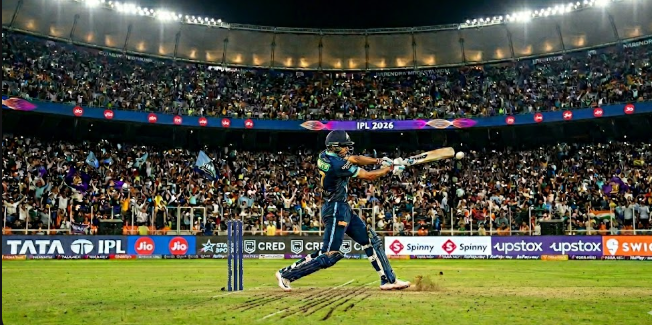
Chasing a target of 181, Gujarat Titans displayed composure under pressure, successfully reaching 181/5 in 19.4 overs. Skipper Shubman Gill led from the front with a masterful 86 off 50 balls, anchoring the innings and guiding his team to victory with just two balls to spare. His outstanding performance also saw him reclaim the Orange Cap and earn the Player of the Match award.
Earlier in the match, Kolkata Knight Riders posted a competitive total of 180/8 after being put in to bat. Cameron Green top-scored with a resilient 79 off 55 balls, stabilizing the innings after an inconsistent start. He was well supported by Rovman Powell, who contributed 27 off 20 deliveries.
Gujarat Titans’ bowling unit delivered a disciplined performance, with Kagiso Rabada leading the attack with figures of 3/29, while Mohammed Siraj chipped in with 2/23 to restrict KKR from posting a bigger total.
In response, Gujarat Titans got off to a brisk start during the Powerplay. Despite losing Sai Sudharsan early, Gill steadied the chase with crucial partnerships alongside Jos Buttler and Washington Sundar, ensuring the momentum stayed with the home side.
Although Kolkata Knight Riders managed to pick up wickets in the middle overs, the Titans maintained their composure and executed a calculated chase to seal the win in the final over.
This victory propels Gujarat Titans into the top four of the IPL 2026 points table, strengthening their campaign, while Kolkata Knight Riders will look to regroup after another hard-fought contest.
18, Apr 2026
India’s Gold Market Shows Resilience Ahead of Akshaya Tritiya, Investment Demand Rises
New Delhi, Apr 18 (BNP): Gold demand in India is expected to remain resilient ahead of Akshaya Tritiya, supported by cultural traditions, shifting consumer preferences, and continued interest in precious metals as a safe-haven asset amid global uncertainty.

The outlook comes as gold prices have risen significantly over the past year, with industry estimates indicating an increase of around 14–16% year-to-date and a much sharper rise compared to the same festive period last year. Despite higher prices, demand has not weakened, but has instead adjusted in form and buying patterns.
Market participants note that Akshaya Tritiya continues to be one of the most important gold-buying occasions in India, symbolising prosperity and long-term value creation. While volatility in global markets has influenced short-term sentiment, periods of price stability and mild corrections are encouraging steady retail participation.
Industry voices highlight a clear shift in consumer behaviour. Traditional jewellery demand remains strong, but buyers are increasingly opting for lightweight jewellery, coins, and bars, where value is closely tied to purity and metal content. Investment demand is also expanding, with growing interest in digital gold and gold exchange-traded funds (ETFs), reflecting a more structured approach to wealth creation.
Silver is also gaining attention, supported not only by investment demand but also by industrial usage in sectors such as renewable energy and electronics, adding a new layer of long-term demand strength.
Platforms are also leveraging festive sentiment to engage consumers. Financial services companies such as BharatPe have introduced campaign-based initiatives like the ‘Akshaya Tritiya Gold Mahotsav’, offering rewards and incentives on digital gold purchases, reflecting the increasing digitisation of gold investment.
Experts expect near-term price fluctuations to continue, influenced by global macroeconomic conditions, currency movements, and geopolitical developments. However, the broader outlook for precious metals remains supported by sustained central bank buying, portfolio diversification trends, and gold’s continued role as a hedge against uncertainty.
Overall, the market outlook suggests that while buying patterns are evolving, gold and silver continue to hold a strong position in both cultural and investment portfolios across India.
18, Apr 2026
India’s Power Demand Recovery to Fuel Renewable Energy Expansion
New Delhi, Apr 18 (BNP): Jefferies has projected a significant expansion in India’s renewable energy capacity, estimating it could reach around 359 GW between FY25 and FY30. The outlook reflects a growing emphasis on energy security, evolving demand patterns, and continued policy support for clean energy development.
According to the report, India’s power demand is expected to recover strongly, with growth potentially reaching around 6% by FY27, supported by improving industrial activity and broader economic normalization. Seasonal and climatic factors are also expected to influence consumption trends in the coming years.
Weather conditions linked to a likely El Niño phase during the upcoming monsoon season could further impact electricity usage. Lower rainfall typically increases demand from households and agriculture, where electricity is widely used for cooling, irrigation, and pumping activities.
While renewable energy remains a central pillar of India’s long-term energy strategy, the country continues to expand thermal capacity to ensure grid stability and meet rising demand. Additional thermal power projects are planned over the next decade to support a balanced and reliable energy mix.
The report also highlights strong momentum in domestic solar manufacturing, supported by government-led initiatives such as rooftop solar programs and agricultural solar pump schemes. These initiatives are increasing installed capacity while encouraging greater use of locally manufactured components.
Policy measures aimed at strengthening domestic production of key solar materials, including ingots and wafers, are expected to further deepen backward integration in the renewable energy supply chain. However, the capital-intensive nature of these investments may favour companies with strong financial capacity.
Overall, the report suggests that India’s energy transition will be shaped by a combination of rising demand, policy support, manufacturing growth, and the need to maintain energy security in a changing global environment.
18, Apr 2026
India, Austria launch fast-track system to boost investment ties
New Delhi, Apr 18 (BNP): India and Austria have jointly introduced a bilateral fast-track mechanism aimed at improving investment flows and strengthening economic cooperation between the two countries.
The newly launched system is designed to support businesses and investors by providing a structured platform to address challenges, streamline processes, and enhance the overall ease of doing business. It will enable companies from both countries to raise concerns, seek quicker resolutions, and engage directly with relevant authorities.
The mechanism is expected to reduce procedural delays and create a more efficient and predictable investment environment. It also encourages the exchange of suggestions between the two sides to further improve regulatory frameworks and business conditions.
A fast-track mechanism refers to a dedicated system that accelerates approvals and resolves issues faced by investors in a timely manner. By simplifying procedures and improving coordination, it helps businesses operate more smoothly and with greater confidence.
This initiative marks a significant step toward deepening bilateral economic ties and fostering greater collaboration between businesses in India and Austria.
18, Apr 2026
Oil prices drop, global markets rally on easing US-Iran tensions
Apr 18 (BNP): Global financial markets saw a strong upswing after tensions between the United States and Iran showed signs of easing, lifting investor confidence across regions.
Oil prices declined sharply as fears of supply disruptions eased, particularly around the Strait of Hormuz, a critical route for global crude shipments. The earlier spike in prices, driven by geopolitical uncertainty, began to reverse as stability returned to the region.
Equity markets responded positively to the development. Major indices in the United States recorded notable gains, with technology and consumer sectors leading the rally. Lower oil prices also raised expectations of reduced inflationary pressure, further supporting market sentiment.
European and Asian markets followed the upward trend, reflecting a broader sense of relief among investors. Sectors sensitive to fuel costs, such as aviation and logistics, performed well, while energy stocks came under pressure due to falling crude prices.
Despite the optimism, market participants remain watchful. The sustainability of the current rally depends on how long the geopolitical calm holds, as any renewed tensions could quickly impact oil prices and global equities.
18, Apr 2026
India Needs Fewer, Better Destinations to Drive Tourism Growth: NITI Aayog
Apr 18 (BNP): NITI Aayog Vice Chairman Suman Bery has highlighted the need for Indian states to develop at least one world-class tourist destination to strengthen the country’s tourism sector.
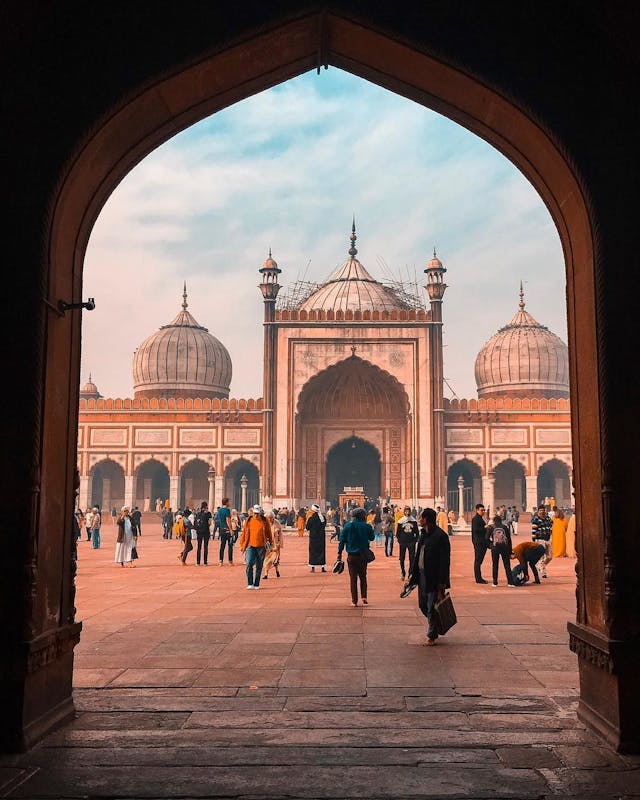
Pic Credit: Pexel
The recommendation comes with a focus on improving infrastructure, visitor experience, and overall destination management so that tourists are encouraged to stay longer. Greater emphasis is being placed on domestic and religious tourism, which continue to draw large numbers of travelers across the country.
The suggestion was made during the release of the report “Divya Bharat: A Window to the Soul of India,” which outlines strategies to unlock tourism’s potential as a key driver of economic growth.
The broader approach aims to move beyond short visits and promote more immersive travel experiences, helping boost local economies and create sustainable tourism opportunities.
18, Apr 2026
Vyapar Delhi 2026 Concludes in New Delhi; Auto Retail, Government & OEM Leaders Chart the Roadmap for a Greener, Inclusive Mobility Transition
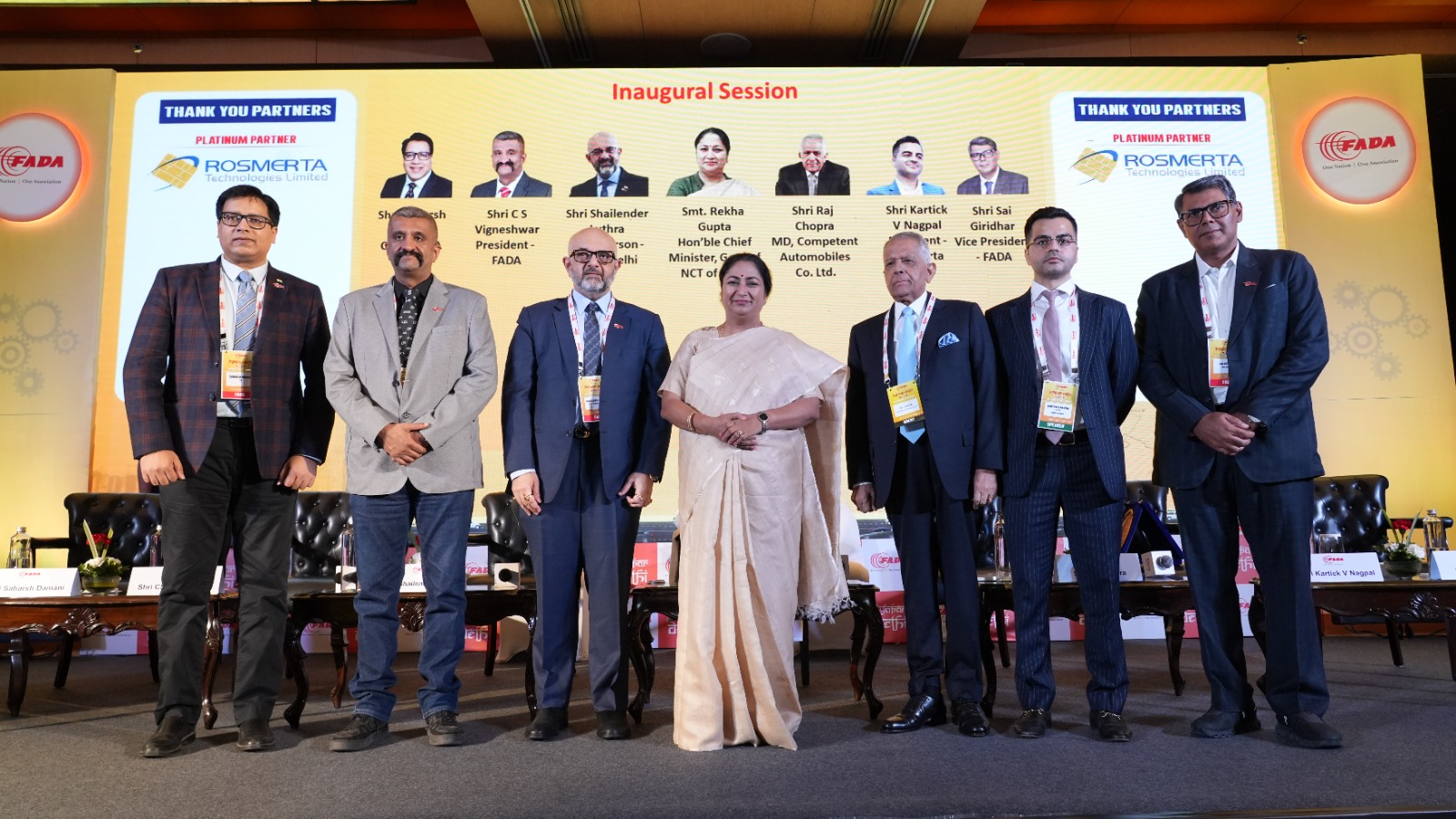
Mumbai / New Delhi Apr 18: The Federation of Automobile Dealers Associations (FADA) today successfully concluded the 3rd Edition of Vyapar Delhi and 22nd Vyapar conclave nationally at Le Méridien, New Delhi. Held under the theme “Vyapar Delhi – Badalti Dilli”, the high-level industry forum brought together over 200 automobile dealers, senior policymakers, OEM leaders, financial institutions and domain experts to deliberate on the future of automotive retail and mobility in the National Capital Region.
The conclave was graced by Smt. Rekha Gupta, Hon’ble Chief Minister, Government of NCT of Delhi, as the Chief Guest, highlighting the critical role of the automobile retail sector in Delhi’s economic growth, employment generation, road safety and environmental transition.
Focused Dialogue on Policy, Compliance and Ease of Doing Business
Vyapar Delhi 2026 featured policy-centric discussions and fireside chats addressing some of the most pressing challenges facing automobile dealers in the capital, including:
- Draft Delhi Electric Vehicle Policy,
- Vehicle Scrappage Policy,
- MCD classification of workshops – industrial vs commercial, and
- the long-pending Compensation Cess issue.
A dedicated technical session on Compensation Cess provided legal clarity and the road ahead for protecting dealers’ legitimate financial credits.
‘Badalti Dilli’: Reimagining Passenger Mobility
A key highlight of the conclave was the panel discussion titled “Badalti Dilli: Reimagining Passenger Mobility in India’s Capital”, featuring senior leadership from leading automobile manufacturers, including JSW Motors, Volvo Car India, Honda Cars India, BYD India and Nissan Motor India.
The discussion explored changing consumer expectations, electrification pathways, product strategy and the role of dealers as critical enablers of India’s mobility transition.
Smt. Rekha Gupta, Hon’ble Chief Minister, Govt of NCT of Delhi said- “We are committed to the mission of a ‘Clean Delhi, Green Delhi, and Smart Delhi.’ Our government has introduced the country’s most comprehensive EV Policy, allocating ₹4,000 crore over the next four years to provide subsidies, tax waivers, and scrapping incentives that drive us toward green mobility. To tackle pollution at its source, we are revolutionizing our transportation sector through massive investments, for the Metro and the establishment of automated fitness centers to ensure every vehicle on our roads is fit and emission-free. A ‘Viksit Bharat’ by 2047 is only possible with a ‘Viksit Delhi.’ I call upon our automobile dealers to act as the government‘s ‘working hands’ in motivating citizens to shift to clean energy. We are streamlining our policies to make registration easier and more efficient, ensuring that the people of Delhi have a world-class, environment-friendly experience right here in the capital. Together, we will transform Delhi into a city that defines the future of sustainable urban living.”
Mr. C. S. Vigneshwar, President, FADA, stressed the need for a balanced and inclusive approach to Delhi’s transformation: “Delhi is in motion, not just on its roads, but in its ambition, and at FADA, we believe automobile dealers must be full partners in this transformation. While we fully support the city’s commitment to a greener future and the Draft EV Policy, it is vital that this transition includes the 17,500 trained professionals whose livelihoods are woven into Delhi’s automotive ecosystem. Our vision of ‘Badalti Dilli’ is one where enablement moves faster than enforcement, where economic growth, road safety initiatives like CPR training and our ‘Buckle Up’ campaign, and environmental responsibility progress together without leaving anyone behind.”
He reiterated FADA’s continued engagement with policymakers, leadership development through FADA Academy, GenX and Women in FADA, as well as sustained legal efforts on the Compensation Cess matter.
Technology, Safety and Future Readiness
The conclave also featured sessions on AI-led dealership transformation, future-ready retail practices, and presentations by leading finance and technology partners.
Road safety remained a strong undercurrent throughout the day, with FADA reaffirming its commitment to helmet and seatbelt awareness, responsible driving behaviour, and CPR and first-response training at dealership levels.
Shri Shailender Luthra, Chairperson, FADA Delhi, said “Today’s gathering reflects a changing Delhi and an evolving auto retail trade. The sector today is vastly different from what it was five years ago, and we are witnessing a significant shift driven by rising consumer confidence and aspiration, with Delhi recording a 17% growth in vehicle sales as of March 2026. Annual new vehicle registrations stood at nearly 8 lakh units. Our industry remains a vital pillar of the city’s economy, with 550 dealership outlets providing employment to over 55,000 individuals and contributing approximately ₹7,150 crore to Delhi’s revenues through motor vehicle taxes and GST—₹2,650 crore annually in motor vehicle tax and ₹4,500 crore as GST contribution from the auto sector. The data clearly shows that India is no longer debating electric vehicle adoption; it is actively embracing it. Delhi has witnessed a sharp increase in electric commercial vehicles and a 62% rise in electric two-wheeler adoption. To support and lead this transition, FADA has proposed to the Delhi Government the installation of 150 public charging stations at our own cost. In parallel, we are committed to strengthening local employment through skill development centres at ITIs and have also proposed the establishment of a vehicle scrappage centre to further support the government’s environmental objectives. At FADA, we believe we are doing far more than selling vehicles—we are shaping the future of mobility. As Delhi and its businesses evolve, I am confident that our dealers will not only keep pace with change but will lead this vital transformation towards a sustainable future.”
Vyapar Delhi 2026 reaffirmed FADA’s role as a constructive stakeholder in shaping policy, supporting environmental goals, strengthening road safety outcomes and safeguarding livelihoods ensuring that as Delhi evolves, its mobility ecosystem evolves responsibly and inclusively.
18, Apr 2026
FLO Hyderabad presents “Unscripted: Life, Legacy & Reinvention” Featuring Neena Gupta and Masaba Gupta
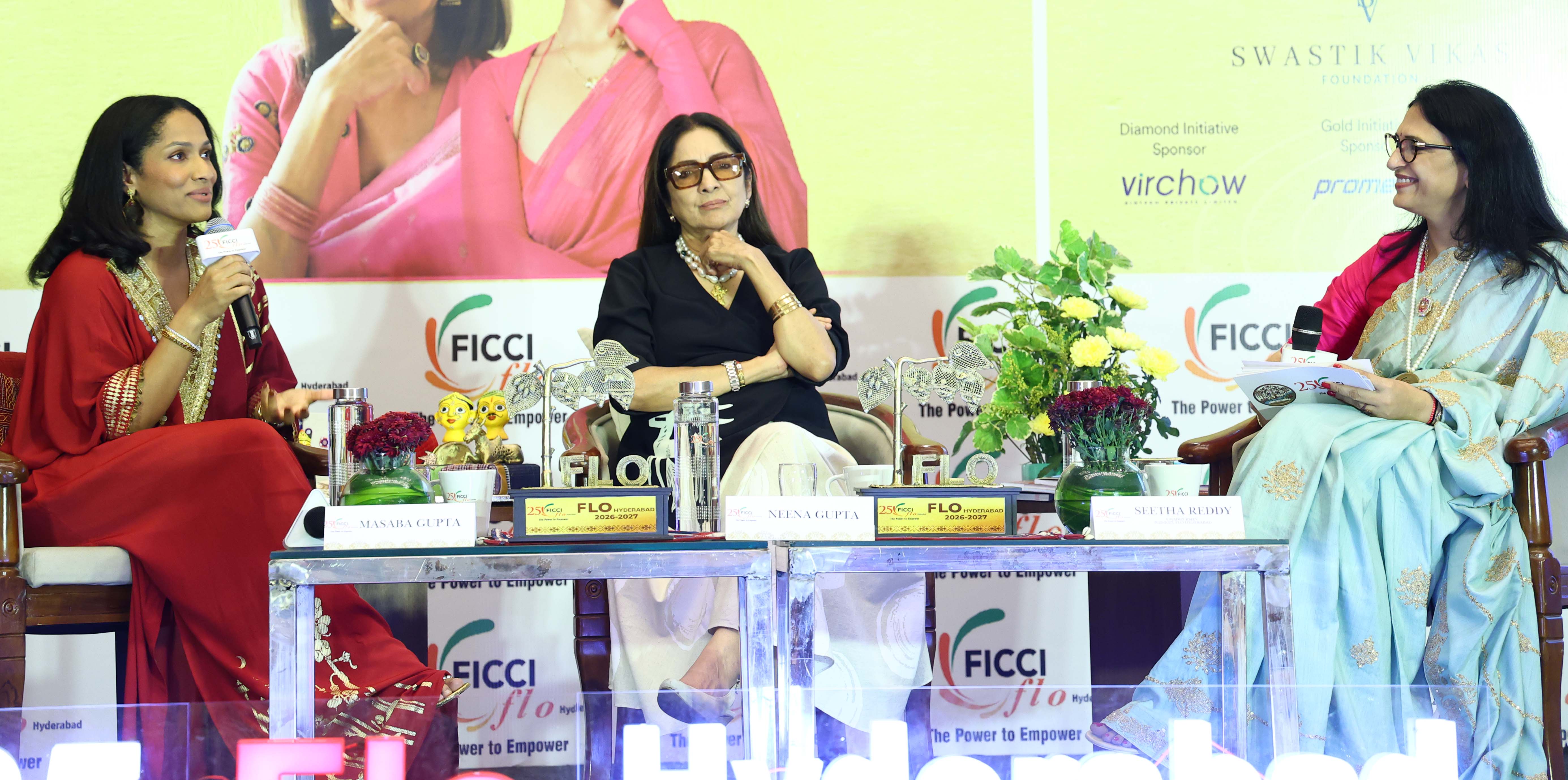
Women’s Reservation Bill Marks a Defining Moment—Leadership Begins Here. The Next MP or MLA could already be in this room” — Seetha Reddy, Chairperson, FLO
Hyderabad | Apr 18: FICCI Ladies Organisation (FLO) Hyderabad, under the leadership of Chairperson Seetha Reddy, hosted “Unscripted: Life, Legacy & Reinvention” at ITC Kohenur on Friday evening, bringing together acclaimed actor Neena Gupta and celebrated designer-entrepreneur Masaba Gupta for an engaging and candid conversation on resilience, reinvention, and individuality.
Delivering her welcome address, Seetha Reddy said: “As we step into this milestone 25th year of FLO Hyderabad, it is a moment of both reflection and renewed purpose. ‘Unscripted’ is not just a conversation—it is a reminder that every woman’s journey is unique, evolving, and powerful. Through platforms like these, we hope to inspire women to embrace their own narratives with confidence, to step forward, be heard, and lead. Because real change happens when every voice matters—and when every voice rises together.”
She further added, “This is truly a defining moment for all of us as women. I would also like to acknowledge the importance of the Women’s Reservation Bill. If the bill passed, it is only a matter of time before we see familiar FLO faces stepping into leadership roles—perhaps the next MP or MLA is already in this room.”
The mother-daughter duo was in conversation with Seetha Reddy. Opening the session, Masaba Gupta reflected on carving her own path, saying that while being the daughter of accomplished parents could have been pressurising in fields like sports or acting, she never felt that burden in fashion. “I experienced it as a positive pressure,” she noted.
Neena Gupta, in her candid and characteristic style, shared her life philosophy: “Kaam maangne mein sharam nahi honi chahiye (one should never hesitate to seek work), but paise maangne mein sharam honi chahiye (one must be mindful when asking for money). Work is worship. If you work hard, there is no time for depression. No work is small. If you are educated and willing to work, you will never go hungry.”
She further added, “There is no point in being shy. Sell your expertise. Be honest with yourself, but you don’t need to display everything outwardly. Make the most of what you have.”
Reflecting on her career, Neena Gupta shared that she experienced true success at the age of 60 with her role in Badhaai Ho. “That film brought me recognition and renewed appreciation. Suddenly, I was seen differently. Success changes perceptions,” she said with her trademark humour, adding that she became more selective with roles after that phase.
Masaba Gupta, speaking about entrepreneurship, highlighted the importance of instinct and decision-making. “If I had learned to say ‘no’ earlier, I might have been a better entrepreneur. It’s difficult, but necessary. I am not driven by trends or the market—I follow my gut and aim to set trends,” she said.
She also shared a lighter personal note: “For my mother and me, jewellery shopping is therapeutic—it’s a joyful space.” She added that both jewellery and beauty ventures are extensions of her creative expression.
Addressing the realities of entrepreneurship, Masaba noted, “The founder’s journey is inherently lonely. Decision-making is often solitary. But success or failure is never final—what matters is to keep going and not give up.”
On financial prudence, Neena Gupta remarked, “I am an FD (Fixed Deposit) person. I have always taken a cautious approach to money. Whether in failure or success, I never had the luxury of dwelling in depression.”
In her closing message, Neena encouraged the audience to pursue passion: “Have a shauk (deep desire), and you can achieve anything.”
Masaba concluded with a practical insight: “In life, you don’t always get what you deserve—you get what you negotiate.”
The session, part of FLO Hyderabad’s landmark 25th-year celebrations, explored personal journeys shaped by courage, authenticity, and reinvention across life stages. The conversation offered valuable insights into navigating challenges, embracing change, and building meaningful legacies.
The event also set the tone for FLO Hyderabad’s Silver Jubilee year, reflecting on 25 years of empowering women through leadership, entrepreneurship, and social impact. Over the years, the chapter has driven significant transformation—supporting women-led enterprises, enabling artisanal clusters to generate over INR 1 crore in sales, impacting more than 600 weavers and artisans, and nurturing over 900 women entrepreneurs.
Seetha Reddy further emphasised that FLO Hyderabad’s journey has been built on vision and collective effort. Key initiatives include the FLO Industrial Park spanning over 50 acres, generating more than 1,500 jobs and attracting investments exceeding INR 250 crore; digital skilling and financial literacy programs reaching over 50,000 women; and sustained artisan support impacting thousands across urban and rural communities.
In its 25th year, FLO Hyderabad will focus on promoting Banjara needlecraft, supporting its evolution through design innovation and enhanced market access.
The event also marked the launch of an exciting annual calendar, including entrepreneurship bootcamps, youth engagement initiatives, financial literacy programs, and flagship platforms such as StyleTatva, which celebrates women-led businesses and creative enterprises.
With “Unscripted,” FLO Hyderabad reaffirmed its commitment to creating platforms where stories are shared, voices amplified, and women empowered to lead with purpose.
—
18, Apr 2026
Vuse Launches Original Content Series Charting the Evolution of Electronic Music and the Rise of Remote Raving
Kickstarting with DJ Charlie Tee in the French Alps, the campaign, titled Remote Raving Scenes, explores the power of electronic music to escape, unwind and intentionally reset
BONCOURT, Switzerland, April 18, 2026 — On Friday, Vuse announces the launch of its new content series Remote Raving Scenes which explores the trend of remote raving, looking at how culture is shifting from passive entertainment to intentional participation and connection, allowing you to truly immerse in the moment.

The first in the series, Unwind In the Mountains, in partnership with acclaimed DJ Charlie Tee, transports audiences to the breathtaking mountain location of Alpe D’huez in France during Tomorrowland Winter, providing a fresh perspective on how electronic music is adapting and thriving in new forms. Watch here.
From the anticipation and the instant community to, at times, the digital distance, remote raving creates a profound connection between music, nature, and personal freedom. The first of these short films from Vuse and Charlie explores how intentional travel, music and environment combine to create an epic moment of collective release. With content that covers her arrival in the Alps, her magnetic sets, and an exploration of why people travel to remote and unique places for music, Charlie brings to life why some events and DJ sets resonate more than others.
DJ Charlie Tee says “My journey to the Alps wasn’t just about playing music; it was about discovering how travel and the right music can combine to create a set of truly exceptional moments where you can escape the everyday. It’s these moments that help you reconnect, intentionally ‘switch in’ for yourself and immerse in a collective experience with like-minded people.”
A recent report which explores the cultural evolution of how audiences are engaging with electronic music highlighted that whilst there has been a 36 per cent decline in UK nightclubs since March 2020, overall event programming has expanded by 10.5 per cent year-on-year. There has also been an 82 per cent growth in daytime events since 2022, expanding nearly three times faster than nighttime programming**. These statistics show a clear shift in the clubbing scene moving beyond traditional venues to embrace diverse, often more accessible, and unique experiences, with communities reclaiming their own version of how they escape whilst enjoying electronic music.
Immersive and different clubbing locations is not only of value to the audience, but also the DJs themselves. Speaking to a few up-and-coming DJs across Europe, Vuse found that the best off-grid settings are the ones you wouldn’t usually associate with nightlife. One DJ from Austria said: “It’s less about the crowd and more about the energy – that feeling when music takes over and transforms any space into something unforgettable.”
From small gatherings in the mountains, to small sunset sessions by the sea, it’s clear that the most incredible remote raving moments happen in the simplest, most unexpected places.
Creator and DJ Zoe London, commented: “I’ve been fortunate to play in some incredibly unique spaces – from DJing up a mountain in the highest club in Europe, in Val Thorens, to the unique environment of a disused station that used to be an underground skatepark in London. I love the idea of performing in an old school factory which still has its artefacts, centring the DJ set within it to create a truly unique moment.”
Tomorrowland, one of the world’s most iconic electronic music festivals, highlights the power of location in creating unforgettable moments.
The Vuse Remote Raving Scenes series features exclusive sets from a varied line up of globally renowned DJs exploring different remote raving locations, kicking off with DJ Charlie Tee. The first episode will launch on 17th April 2026 with the others rolling out over 2026.


