


17, Apr 2026
Sony Electronics to Showcase Technologies to Transform Media and Entertainment at NAB Show 2026
LAS VEGAS, Apr 17 – Sony Electronics will return to NAB (National Association of Broadcasters) Show 2026, a leading event for the media and entertainment industry. From April 19-22, the company will be in booth #C8401 in Las Vegas focusing on live production, news production, imaging, and virtual production, demonstrating the latest technologies designed to address emerging challenges and needs in broadcast and production.
“At this year’s NAB Show, Sony’s theme is ‘The Power Behind Your Story’ which demonstrates how our technologies are the driving force behind various forms of storytelling,” said Anthony Kable, CCS Group Manager, Sony Australia. “From products to workflows, and acquisition to delivery, Sony has the right people, tools and expertise to enable creators to capture their vision and communicate their truth with quality and authenticity.”
The media and entertainment landscape is changing, and Sony is debuting solutions through the entire production workflow that provide authenticity and provenance, create more personalized and emotional viewing experiences, and support XR and spatial content creation.
At the Sony booth, visitors will experience live production solutions including the evolution of Sony’s “Networked Live” ecosystem, as well as new system cameras offering exceptional image quality and system scalability, enhanced workflows for news production that enable fast and highly reliable reporting, the latest in Virtual Production tools and processes, and a comprehensive lineup of imaging solutions. The company will also showcase XYN™ (/Zin/)’s “spatial capture solution.”
Additionally, Sony will host many engaging presentations and talks on trending topics throughout the show featuring notable industry voices. For more details about the company’s presence, please visit Sony’s NAB Show website.
Key Exhibits and Technology Highlights
Scalable, Flexible, and Simplified Live Production
Sony will present its new “R Series” system camera lineup, which builds on the strengths of the existing HDC-5000 and HDC-3000 series while significantly enhancing image performance, system expandability through additional transmission pathways and infrastructure options, and usability that enables consistent color matching across models. Additionally, the new series will address challenging lighting conditions by offering an expanded dynamic range for enhanced details, and operation modes to address different lighting environments. Models include HDC-5500R, HDC-5500RV, HDC-3500R, HDC-3500RV, and HDC-3200R, along with related products such as the HDCU-3500R Camera Control Unit and the HKCU-LUT35 3D LUT option board. The models are planned to be available in mid-2026.
Sony will also demonstrate newly released firmware updates for the PTZ auto-framing cameras BRC-AM7 (Ver. 3.0), SRG-A40, and SRG-A12 (Ver. 4.0). Leveraging Sony’s latest AI technologies, these updates expand functionality to support increasingly diverse production needs, including sports broadcasting, education, and corporate content creation.
Sony will exhibit MOXELA, a new software-based media processing platform running on COTS (commercial off the shelf) servers or in the cloud, designed to transform how broadcasters, production companies, and media organizations transport, process, and monitor live video, audio, and data.
Additionally, attendees will see demonstrations of new features for the MLS-X1 multi-format switcher, enabling efficient production by sharing input and output signals across multiple studios. Sony will also debut the ICP-X7000A, a control panel featuring a newly developed XPT operation panel that significantly improves visibility and operability and is planned to be available in late 2026.
Smarter, Faster, and More Secure News Production Workflows
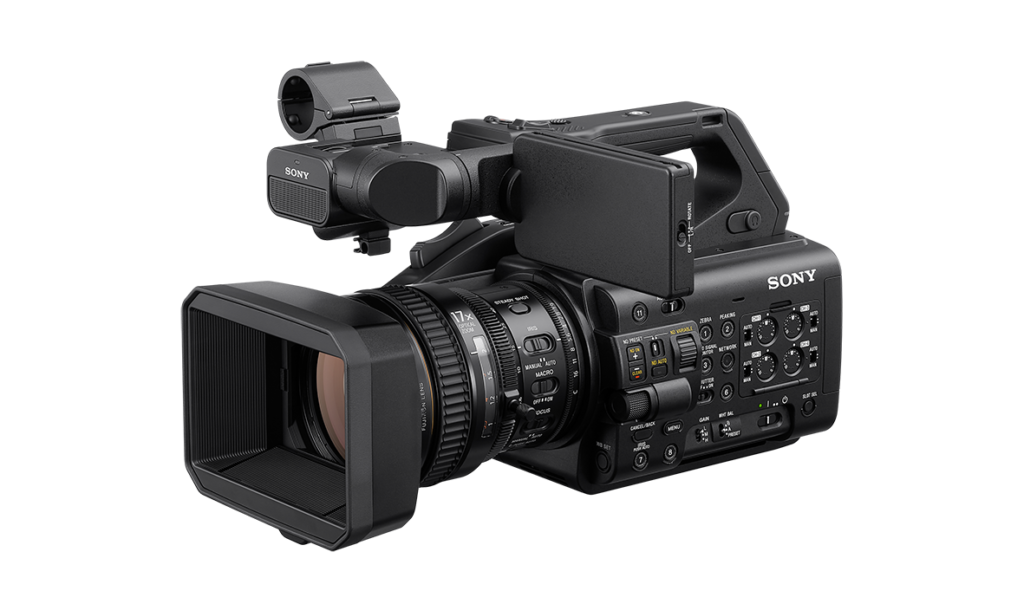
For the first time at NAB Show, Sony’s recently launched PXW-Z300 XDCAM handheld AI-powered camcorder – the world’s first[1]to support the C2PA[2] standard for video authenticity[3] – will demonstrate the growing demand for trustworthy news reporting through authenticity and provenance.
Sony continues to propose a range of workflows through partner collaboration. At NAB Show, the company will present an end-to-end workflow that leverages camera-originated authenticity files and metadata from the field through immediate production and editing. This workflow is achieved with the LiveU TX1, a compact IP bonding-capable data transmitter (announced in September 2025), the PDT-FP1 portable data transmitter, and the newly announced PWA-RXS Network RX Station.
In addition, LiveU has announced a further expansion of its integration with Sony’s PWA-RXS through an optional license. A reference demo will showcase a new workflow powered by Sony’s cellular connectivity management system, featuring real-time carrier optimization and seamless global connectivity for creators.
Imaging Innovations without Limits
Sony’s comprehensive lineup of Alpha™ cameras and lenses continues to expand, empowering creators at every level of production. Launched in late 2025, the Alpha 7 V capable of 4K 60p capture without crop[4] will be making its first appearance at NAB Show. The 33 MP (approx.) full-frame hybrid model incorporates a BIONZ XR2TM processor with an integrated AI processing engine to facilitate subject recognition and Auto Framing. Additionally, the latest version (Ver. 2.6) of the Monitor & Control app, which enables video monitoring and remote control from smartphones, tablets, and Macs, will be showcased.
Sony’s diverse Cinema Line cameras will enhance their functionality. The FR7 cinematic PTZ camera recently added AI-based Auto Framing and support for OpenTrackIO protocol through a Ver. 4.0 firmware update, while the FX6 full-frame Cinema Line camera rolled out BIG 6 home screen display support for easy access to top functions.
Additionally, experience spatial content creation brought to life through the VENICE Extension System Mini (Rialto) combined with the glasses-free 3D Spatial Reality Display.
The Growth of Virtual Production and Spatial Content Creation
As a technology manufacturer, Sony offers a robust and inclusive ecosystem of Virtual Production solutions, from cameras and camera tracking to LED walls and purpose-built software that support creativity and streamline production processes. Firmware updates and the addition of new tools and enhancements, such as Sony’s Virtual Production Tool Set Ver. 3.0, continue to elevate visual storytelling capabilities.
Sony will launch the XYN Spatial Capture Solution, which generates photorealistic 3DCG (3D Computer Graphics) assets from photographs taken with mirrorless cameras. This professional solution, which will be shown at NAB Show and is expected to be available mid-2026, is comprised of three tools designed for use across virtual production and a wide range of 3DCG content creation workflows. XYN Spatial Scan Navi is a smartphone app[5] that guides efficient image capture. XYN Spatial Scan is a web application that delivers studio-grade generation quality. Finally, the XYN Renderer Plugin, enables highly realistic rendering for virtual production studios.

- 0
- By Neel Achary

17, Apr 2026
PM Modi Urges MPs to Support Women’s Reservation Bill, Calls for Consensus
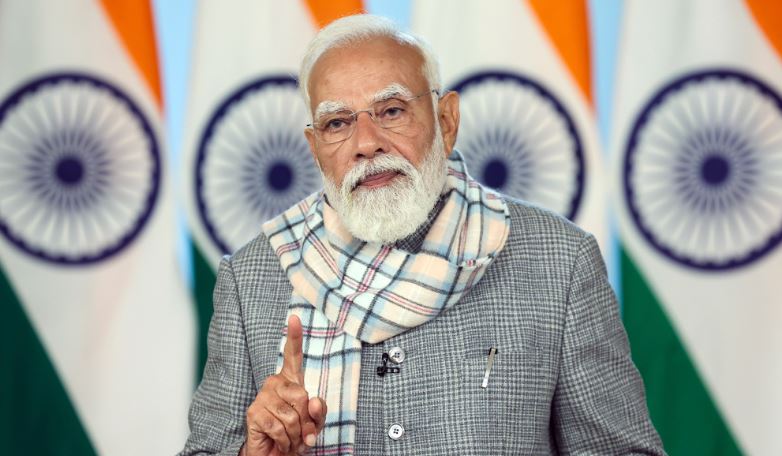
Apr 17 (BNP): Prime Minister Narendra Modi has appealed to Members of Parliament to support the Women’s Reservation Bill, calling for collective agreement on the legislation.
He urged all political parties to work together to ensure smooth passage of the bill, which seeks to increase women’s representation in Parliament and state legislatures.
The proposal is viewed as a significant step toward improving gender balance in political decision-making.
The government is also engaging with stakeholders to build wider political consensus on the bill ahead of its implementation process.
The initiative is part of broader efforts to strengthen democratic participation and enhance inclusivity in governance.
17, Apr 2026
LPG Demand Moderates, Supply Chain Remains Stable
Apr 17 (BNP): LPG demand has shown signs of moderation, with daily bookings falling to around 46–50 lakh, while supply conditions remain normal, according to the government.
Officials said the decline in bookings reflects temporary fluctuations in consumption patterns, but there is no disruption in availability or distribution across the country.
The government clarified that LPG supply continues to be stable and adequately meets domestic demand, ensuring uninterrupted access for consumers.
Authorities added that the supply chain remains well-managed, and there is no cause for concern regarding shortages or logistical issues.
Overall, the situation indicates a mild softening in demand, while the LPG distribution system continues to function smoothly nationwide.
17, Apr 2026
Walk Through Time in India’s Most Remarkable Heritage Cities on World Heritage Day
As travel continues to become more intentional and experience-led, travelers are moving beyond conventional sightseeing in favor of journeys that feel slower, richer, and more immersive. This World Heritage Day, heritage destinations in India are finding renewed relevance among travelers who want to engage more deeply with culture, architecture, and history, while also enjoying the comfort and convenience of well-located stays that make exploration effortless. From the poetic symmetry of Mughal architecture to the intricate artistry of ancient cave temples and the grandeur of Rajasthan’s royal facades, India offers a heritage circuit where every destination tells a story worth lingering over.
Agra: A Timeless Ode to Love at the Taj Mahal
No exploration of India’s heritage is complete without witnessing the ethereal beauty of the Taj Mahal. Built in white marble and celebrated for its intricate craftsmanship, this monument continues to captivate travelers from around the world. Agra’s charm extends beyond the Taj, with its rich Mughal legacy reflected across forts, gardens, and local artistry.
For those planning a cultural getaway, a stay at Holiday Inn Agra MG Road offers a convenient base in the heart of the city, allowing easy access to iconic landmarks while providing a comfortable and contemporary retreat.
Delhi: Layers of History at Qutub Minar and Humayun’s Tomb
Delhi stands as a living archive of India’s past, where centuries of history coexist with a vibrant, modern energy. The towering presence of the Qutub Minar and the serene symmetry of Humayun’s Tomb offer a glimpse into the architectural evolution of the capital. Located in South Delhi, Crowne Plaza New Delhi Okhla provides a convenient base for travelers looking to explore the capital’s historic landmarks with ease.
Rajasthan: Living Royalty at Fort Barwara and Ranthambore Fort
Rajasthan offers a deeply immersive journey into India’s regal past, where grand forts and timeless traditions continue to shape its cultural identity. The historic Ranthambore Fort stands as a testament to the region’s layered history, offering panoramic views and a glimpse into its storied legacy. For those seeking to go beyond sightseeing, Six Senses Fort Barwara presents a unique opportunity to experience heritage from within. Thoughtfully restored, the property brings together architectural grandeur, cultural richness, and a slower, more mindful pace of travel, allowing guests to engage with Rajasthan’s past not just as observers, but as part of a living, evolving narrative.
Maharashtra: From Ancient Rock Cut Marvels to Coastal Icons
Maharashtra presents a diverse heritage narrative, from the intricate rock-cut brilliance of the Ajanta Caves and Ellora Caves to the colonial-era prominence of the Gateway of India. While the caves reflect centuries-old artistic and spiritual traditions, Mumbai offers a contemporary cultural lens shaped by history and urban evolution.
When in Mumbai, a stay at InterContinental Marine Drive Mumbai places travelers along the iconic coastline, close to key landmarks, blending heritage exploration with scenic indulgence.
Jaipur: Royal Grandeur at the Hawa Mahal
Jaipur’s Pink City continues to enchant with its regal architecture and vibrant cultural fabric. The Hawa Mahal, with its distinctive façade and historical significance, stands as a testament to Rajasthan’s royal past and architectural ingenuity.
Enhancing this experience, a stay at InterContinental Jaipur Tonk Road reflects the city’s character, where modern comforts are seamlessly woven with local design sensibilities, allowing travellers to immerse themselves in Jaipur’s rich heritage.
Jim Corbett: A Living Legacy of India’s Natural Heritage
Not all heritage is carved in stone- some of it lives and breathes in the wild. Jim Corbett National Park offers a unique perspective on India’s heritage, where conservation and wilderness take center stage, shaping a legacy that continues to evolve. Established as India’s first national park, it reflects the country’s early conservation efforts, with its dense forests, riverine landscapes, and rich biodiversity inviting travellers to experience nature in its most immersive form.
Enhancing this experience, a stay at Jim Corbett Marriott Resort & Spa offers a tranquil base amidst the wilderness, where comfort blends seamlessly with the surrounding landscape, allowing us to engage with this natural heritage at a slower, more mindful pace.
17, Apr 2026
UP Hockey’s Grassroots System Delivers 21 Medal Boost
Apr 17 (BNP): Uttar Pradesh’s hockey programme has recorded a notable rise in performance, winning 21 medals in recent competitions and highlighting the growing strength of grassroots development in the sport.
The steady improvement reflects better training infrastructure, talent identification, and increased focus on nurturing young players at the state level.
Officials and coaches said the progress demonstrates how structured development programs are helping smaller centres emerge as key contributors to India’s hockey talent pool.
The results are also seen as a positive sign for Indian hockey’s long-term future, as more states invest in grassroots coaching and competitive exposure for young athletes.
17, Apr 2026
Rupee Strengthens to 92.95; Commodities Trade Mixed
Apr 17 (BNP): The Indian rupee rose by 25 paise to 92.95 against the US dollar in early trade on Friday, supported by improved domestic market sentiment and easing pressure on the currency.
The rupee opened stronger compared to its previous close of 93.20, aided by positive cues from equity markets and expectations of easing geopolitical tensions. Reports suggesting that the Reserve Bank of India may have advised state-run oil refiners to use a special credit line instead of dollar purchases also supported sentiment.
However, gains were limited due to continued strength in the US dollar in global markets.
In commodities, gold futures traded in a narrow range, while silver edged higher during the session before cooling off from intraday highs. Analysts said the overall trend remains cautiously positive, but needs stronger momentum for a sustained move.
Crude oil prices also slipped in global trade, with Brent and US WTI both declining amid easing geopolitical concerns and shifting supply outlook expectations.
Overall, markets remained driven by global cues, dollar movement, and geopolitical developments.
17, Apr 2026
Silver Gains on Global Cues, Hits INR 2.51 Lakh/kg
Apr 17 (BNP): Silver prices rose sharply in futures trade on Friday, tracking positive global cues and improved investor sentiment.
On the Multi Commodity Exchange, silver for May delivery climbed ₹3,371, or 1.36 per cent, to ₹2,51,999 per kilogram.
The rise in prices was supported by a weaker US dollar and easing geopolitical tensions in West Asia, which boosted demand for safe-haven assets in global markets.
Analysts said the metal also gained strength from supportive international trends, as investors reacted to a softer dollar and improving risk sentiment across commodities.
17, Apr 2026
Crisil Sees India’s CAD Rising to 2 pc of GDP in FY27
Apr 17 (BNP): India’s current account deficit (CAD) is expected to widen to around 2 per cent of GDP in FY27, even if crude oil prices remain in the range of USD 82–87 per barrel, according to a report by Crisil.
The report noted that external pressures on the trade balance are likely to persist, driven by steady import demand and global economic factors. While stable oil prices may offer some relief, they are unlikely to fully offset the broader structural challenges impacting the current account.
Crisil said that rising domestic demand and continued dependence on imports, particularly in energy, could contribute to the widening deficit.
However, the report also indicated that strong services exports and remittance inflows are expected to provide some cushion, helping manage the overall impact on the external sector.
Overall, India’s external position is expected to remain manageable, though the widening deficit highlights the need for continued focus on export growth and reducing import dependence over the medium term.
17, Apr 2026
India Replaces China in US Smartphone Supply
Apr 17 (BNP): India has significantly strengthened its position in the US smartphone supply chain, capturing around 40 per cent share and emerging as a major manufacturing hub, according to a recent report.
The shift reflects a broader realignment in global supply chains, with companies diversifying production away from China and increasingly turning to India for manufacturing and exports.
The report highlighted that India’s growing role is supported by government initiatives, improved infrastructure, and rising investments in electronics manufacturing.
This transition marks a notable change in global sourcing strategies, as companies seek more resilient and diversified supply chains amid geopolitical and economic considerations.
Industry experts believe that India’s expanding manufacturing ecosystem and policy support will continue to drive its growth as a preferred destination for smartphone production and exports.
17, Apr 2026
Markets End Higher; Sensex Jumps 504 Points, Nifty Gains 156, FMCG Leads Rally
Apr 17 (BNP): Indian equity markets closed on a strong note on Friday, with benchmark indices posting solid gains, supported by buying across key sectors.
The BSE Sensex surged 504 points, while the NSE Nifty advanced 156 points, reflecting positive investor sentiment through the trading session.
Gains were led by the FMCG sector, which rose around 2.65 per cent, emerging as the top performer. The rally was driven by strong buying interest in consumer-focused stocks, as investors showed confidence in demand-driven sectors.
Market participants also remained encouraged by improving global cues and steady foreign fund inflows, which helped sustain the upward momentum.
Overall, the session reflected broad-based buying, with multiple sectors contributing to the market’s positive close.


