


17, Apr 2026
India’s Sugar Output Expected to Rise 8 pc to 274.8 Lakh Tonnes in 2025-26: ISMA
Apr 17 (BNP): sugar production is projected to increase by around 8 per cent to 274.8 lakh tonnes in the 2025-26 season, according to the Indian Sugar & Bio-energy Manufacturers Association (ISMA).
The industry body attributed the expected rise to improved production prospects compared to the previous season, supported by stable sugarcane availability across major producing states.
ISMA said the overall outlook for the sector remains steady, with sufficient output expected to meet domestic demand and maintain balanced supply conditions in the market.
It also noted that factors such as rainfall patterns, cane yield, and diversion of sugar towards ethanol production will continue to play a key role in shaping the final production numbers during the season.

- 0
- By Neel Achary

17, Apr 2026
Oil Prices Drop as Trump Signals Possible Iran Agreement
Apr 17 (BNP): Crude oil prices fell more than 2 per cent in futures trade on Friday, as easing geopolitical tensions and expectations of a possible US-Iran agreement reduced concerns over global supply disruptions.
On the Multi Commodity Exchange, crude oil futures for May delivery declined by ₹180, or 2.1 per cent, to ₹8,396 per barrel.
Market sentiment turned weaker following indications of progress toward a potential diplomatic understanding between the United States and Iran. This eased worries over extended supply disruptions in global crude markets.
Analysts said the development led traders to reassess the geopolitical risk premium that had recently supported oil prices, resulting in downward pressure on futures.
17, Apr 2026
BULLET microdrama app crosses 10 million downloads on Google PlayStore
Apr 17: BULLET microdrama app has crossed 10 million downloads on the Google Play Store, marking a key moment in its growth as the platform continues to see rising user adoption. The milestone reflects BULLET’s expanding presence in India’s digital entertainment space, supported by its focus on short-form, engaging content.
Driven by its focus on snackable, high-impact storytelling, BULLET microdrama app has been steadily building strong connections with audiences across markets. This approach is reflected in the performance of its shows, with several titles garnering strong viewership. Among the most watched titles, Rickshaw Romeo leads with 9.1 million views, followed by Auto Raja (3.4 million), Laxmi Raj (2.6 million), Lady Boss, With Love (2.2 million) and Dear Didimoni (1.9 million).
Extending its footprint beyond the app, BULLET microdrama app has also crossed 100,000 followers on Instagram, pointing to a rapidly growing and engaged digital community.
Commenting on the milestone, Azim Lalani, Co‑Founder & Chief Business Officer, Bullet, said:
“Crossing 10 million downloads is a strong indicator of the resonance we are building with audiences across markets. Our focus has been on creating stories that feel engaging, relatable, and rooted in everyday experiences. It’s encouraging to see this reflected not just in downloads, but in the growing engagement across our shows and social platforms.”
Bullet stands out with micro-drama content across 7 Indian languages; one of the widest offerings in the category. The platform is strengthening its scale while building strong audience affinity in the short-form entertainment space.
17, Apr 2026
ABHFL Secures INR 2,750 Crore Investment from Indriya in Stake Deal
Apr 17 (BNP): Aditya Birla Capital has announced that its housing finance subsidiary, Aditya Birla Housing Finance Ltd (ABHFL), has raised ₹2,750 crore through the sale of a 14.29 per cent stake to Indriya Ltd, an entity associated with private equity firm Advent International.
In a regulatory filing, the company said that following the transaction, ABHFL is no longer a wholly owned subsidiary of Aditya Birla Capital. The parent company now holds an 85.505 per cent stake in the housing finance arm.
The board of ABHFL approved the allotment of 12.32 crore equity shares at a price of ₹223.12 per share to Indriya Ltd as part of the deal.
The transaction marks a strategic capital infusion aimed at strengthening the housing finance subsidiary’s balance sheet and supporting its future growth plans.
17, Apr 2026
10 Indian AI Startups Chosen for IndiaAI Global Expansion Initiative
Apr 17 (BNP): The IndiaAI Mission under the Ministry of Electronics and Information Technology (MeitY) has selected 10 Indian artificial intelligence startups for the second cohort of its global acceleration programme. The initiative is designed to support Indian AI companies in scaling their operations internationally and strengthening their presence in global technology markets.
The programme is being implemented in partnership with Station F in Paris and HEC Paris as part of a broader government strategy to boost innovation, international collaboration, and market access for Indian startups in the artificial intelligence sector.
Selected startups will receive structured support including mentorship, access to global industry networks, and exposure to international innovation ecosystems. Each cohort consists of 10 startups chosen through a multi-stage evaluation process focused on innovation potential and scalability.
The startups selected in the second cohort include AI Health Highway, Awiros, Cognecto, Flaunt, GreenFi.ai, Climateforce Technologies, Infiheal Healthtech, InLustro Learning, PredCo, SkyServe (Hyspace Technologies), and TestAIng Solutions.
The programme will begin with a three-week online preparatory phase, followed by a three-month residency in Paris. During this period, participants will engage with global experts, industry leaders, and venture ecosystem stakeholders to support their international expansion plans.
The initiative aligns with India’s National AI Strategy, which emphasizes building global partnerships, enhancing research and development capacity, and integrating Indian startups into leading technology ecosystems worldwide.
Officials also noted that under the wider IndiaAI Mission, significant computing infrastructure has been developed, including large-scale GPU deployment and approval of multiple AI projects, while parallel semiconductor initiatives continue under the Semicon India Programme to strengthen domestic chip manufacturing capabilities.
17, Apr 2026
Tragic Crash in Andhra Pradesh: 8 Karnataka Devotees Killed in Bolero–Lorry Collision
Kurnool, April 16(BNP): In a tragic road accident, eight people from Karnataka lost their lives in Andhra Pradesh’s Kurnool district on Thursday.
The incident occurred near Chilakaladona village under Mantralayam mandal when a Bolero vehicle, carrying devotees en route to the Guru Raghavendra Swamy Temple in Mantralayam, collided with a ready-mix tanker lorry.
According to reports, five persons died on the spot due to the impact of the collision, while three others succumbed to their injuries during treatment.
Around ten passengers were reportedly injured in the accident and were immediately shifted to the Government Hospital in Yemmiganur for medical care.
Police and emergency teams rushed to the spot and initiated rescue operations. An investigation has been launched to ascertain the exact cause of the accident.
The incident has cast a pall of gloom among the victims’ families and raised concerns over road safety.
17, Apr 2026
Asit Tripathy Elected First President of Odisha Steel Producers’ Association
Bhubaneswar, Apr 17 (BNP): Former Odisha Chief Secretary Asit Tripathy has been elected as the first president of the newly formed Odisha Steel Producers’ Association (OSPA), which brings together leading steel companies operating in the state.
Tripathy, currently serving as an advisor at Jindal Steel, brings extensive experience in governance, public policy, and industrial development to the role. His appointment is seen as an effort to strengthen coordination between the steel industry and the state government.
The formation of OSPA is aimed at enhancing collaboration among steel producers and supporting Odisha’s position as one of India’s key steel manufacturing hubs.
Industry stakeholders believe the leadership move will help streamline engagement on policy, investment, and sectoral growth in the state.
17, Apr 2026
Faith Peaks in Prayagraj as Devotees Perform Ritual Bath on Vaishakh Amavasya
Apr 17 (BNP): Thousands of devotees gathered in Prayagraj, Uttar Pradesh, on the occasion of Vaishakh Amavasya on Friday, performing ritual bathing at the sacred Triveni Sangam.
From early morning hours during Brahma Muhurat, pilgrims arrived at the riverbanks to take a holy dip, which is considered highly auspicious in Hindu tradition. The atmosphere across the city remained deeply devotional, with chants, prayers, and ritual practices marking the occasion.

Pic Credit: Pexel
Along with the holy dip, devotees participated in charitable activities, including distribution of food and offerings to the needy. Many also performed prayers seeking peace for their ancestors and well-being for their families.
Vaishakh Amavasya is regarded as an important day in the Hindu calendar. Religious beliefs hold that bathing in sacred rivers and performing charity on this day brings spiritual merit and blessings.
Scriptural references describe the month of Vaishakh as highly sacred, with traditions stating that virtuous acts performed during this period carry amplified spiritual significance.
The Amavasya Tithi began on the evening of April 16 at 8:14 pm, with rituals continuing into the following day.
The event once again highlighted Prayagraj’s importance as a major center of pilgrimage and spiritual observance in India.
17, Apr 2026
India’s logistics sector poised for rapid expansion on the back of infrastructure and digital reforms
Apr 17 (BNP): India’s logistics industry is expected to witness strong, sustained growth over the coming decade, with estimates placing its value at around $800 billion by 2030 and close to ₹120 trillion by 2035. The expansion is being driven by large-scale infrastructure development, policy reforms, and increasing digital adoption across supply chains.
A key factor behind this growth is the ongoing capital investment push in transport infrastructure, including highways, rail networks, and dedicated freight corridors. These projects are designed to improve connectivity, reduce transit time, and lower overall logistics costs across regions.
Government initiatives such as the National Logistics Policy (NLP) and PM Gati Shakti programme are also reshaping the sector by improving coordination between departments and streamlining freight movement. India’s logistics cost, currently estimated at 13–14% of GDP, is targeted to gradually decline toward around 8%, enhancing global competitiveness.
At the same time, digital transformation is accelerating efficiency and transparency in supply chains. Platforms like the Unified Logistics Interface Platform (ULIP), e-way bill systems, and RFID-enabled tracking are helping improve real-time visibility, reduce delays, and formalize operations. Industry expectations suggest that up to 60% of the sector could become formalized by 2035.
Demand-side growth is also strengthening the sector, supported by the rise of e-commerce, manufacturing expansion under “Make in India,” and the development of export logistics hubs. These trends are increasing the need for modern warehousing, cold chain networks, and efficient last-mile delivery systems.
With India’s economy projected to expand from around $4.2 trillion in 2025 to nearly $10 trillion by 2035, the logistics sector is expected to play a central role in enabling trade, industrial growth, and consumption across the country.
17, Apr 2026
In Her Footsteps: Spotlight on the Great Women in the Himalayas
Global cultural initiative honours Alexandra David-Neel while re-framing history through the voices of women across the Himalayan region
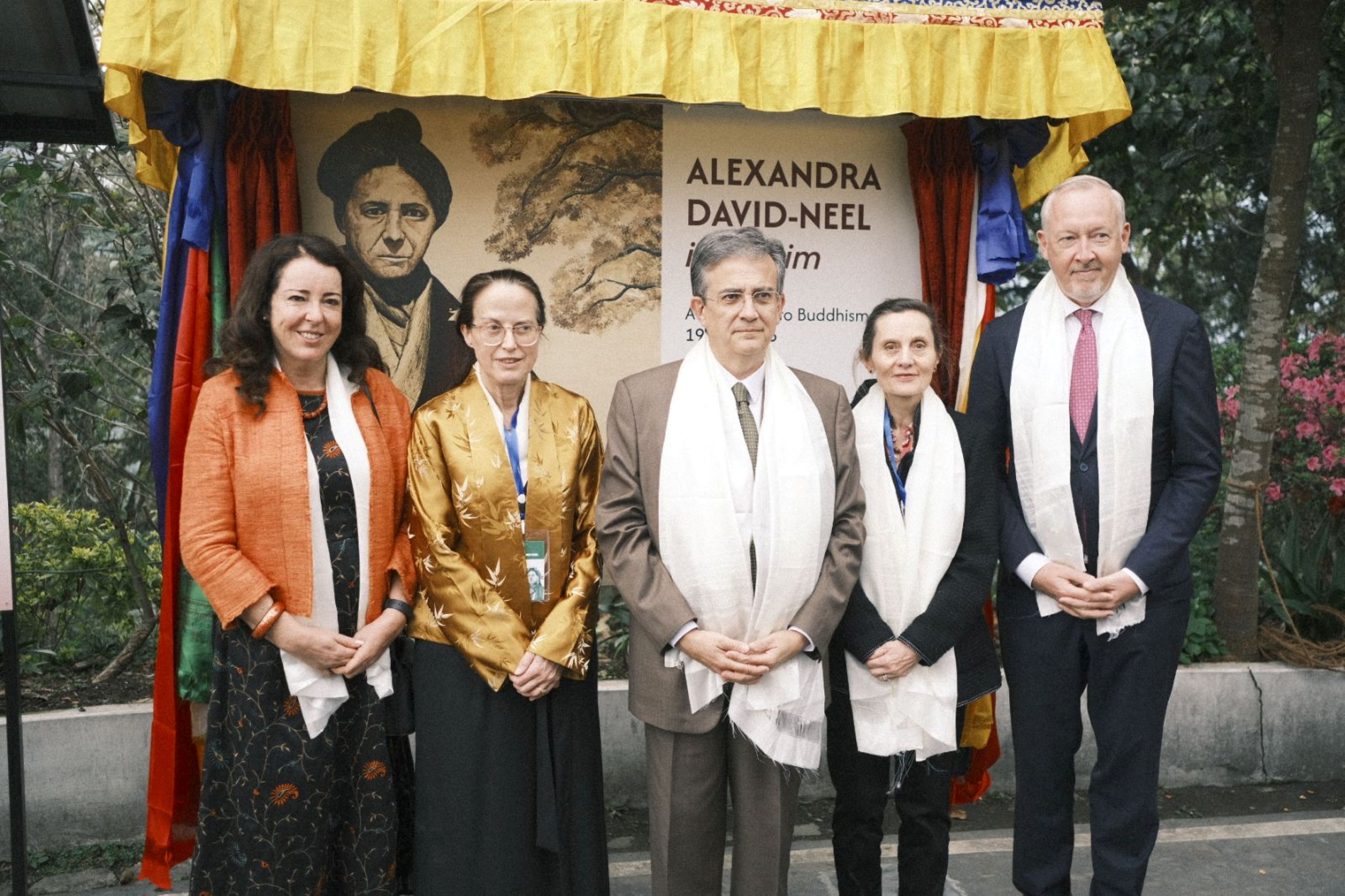
India, Apr 17: The Embassy of France in India and the French Institute in India, in collaboration with the Namgyal Institute of Tibetology, Gangtok, organised a landmark cultural initiative presenting an exhibition titled “Alexandra David-Neel in Sikkim: A Journey into Buddhism (1912–1916)”, alongside an international symposium in honour of Alexandra David-Neel, “In Her Footsteps: Great Women in the Himalayas.”
Bringing together scholars, institutions, and international partners, this ambitious project curated by anthropologist Dr Anna Balikci invited audiences to rediscover the legacy of Franco-Belgian explorer Alexandra David-Neel, while shining new light on the often-overlooked trajectories of remarkable women across the Himalayan region.
Across the Himalayas, extraordinary women have made lasting contributions to culture, education, religion, and social transformation—yet many of these narratives remain underrepresented. This initiative sought to foreground these voices, situating Alexandra David-Neel’s journey within a broader continuum of women who shaped the region as explorers, thinkers, spiritual practitioners, and cultural transmitters.
The exhibition opened at the Namgyal Institute of Tibetology in the presence of distinguished guests, including H.E. Mr Om Prakash Mathur, Hon’ble Governor of Sikkim; H.E. Dr Thierry Mathou, Ambassador of France to India; H.E. Mr Didier Vanderhasselt, Ambassador of Belgium to India and H.E. Ms Maya Tissafi, Ambassador of Switzerland to India, whose respective embassies supported this project, likewise graced the opening with their presence.
A rich, immersive project, the exhibition wove together archival materials from the Maison Alexandra David-Neel museum in Digne-les-Bains, visual narratives, and historical research to retrace David-Neel’s transformative years in Sikkim—years that played a defining role in shaping her engagement with Buddhist philosophy and Himalayan cultures.
The international symposium brought together leading researchers from Europe and South Asia to explore the lives and legacies of Himalayan women who had distinguished themselves as figures of transmission, resistance, and innovation across cultural, spiritual, and social spheres.
During his address, Ambassador Thierry Mathou highlighted: “Alexandra David-Neel’s influence on young women in France has been significant. Her legacy could be understood in several ways: as a symbol of intellectual independence, a model for female explorers, and an early bridge between Europe and Asian spiritual traditions. (…) Her years in Sikkim created enduring intellectual and cultural ties between our two regions stretching back to over a century, and through her writings she brought the spiritual and cultural richness of the Himalayas to Europe. This initiative honoured not only Alexandra David-Neel, but all the women whose contributions continue to inspire us.”


