


17, Apr 2026
RealSense Demonstrates Industry’s Most Comprehensive GMSL Depth Camera Portfolio at Hannover Messe 2026
SAN FRANCISCO- RealSense today announced expanded support for Gigabit Multimedia Serial Link (GMSL) across its depth camera portfolio, delivering a scalable, production-ready perception platform for robotics and industrial automation. The company will showcase its new GMSL-enabled lineup at Hannover Messe 2026, Hall 26, Stand D29.
Robots and industrial automation require high-precision, robust and reliable perception systems to ensure they navigate safely and operate predictably across a variety of conditions. GMSL is rapidly emerging as the preferred standard for robotic industrial vision systems, overcoming the limitations of USB with improved synchronization, longer cable reach and greater dependability in demanding environments.
By enabling rugged, scalable multi-camera perception through a single cable infrastructure, GMSL supports the next generation of autonomous machines operating in factories, warehouses and logistics environments.
Expanding the GMSL Portfolio
RealSense is introducing GMSL support across three of its most widely used depth cameras:
- D401: Sub-millimeter precision in a compact form factor, ideal for robotic arms and humanoids, with a tiny GMSL package that enables near-invisible integration into manipulators
- D430: High-accuracy, mid-range 3D depth sensing, deployed extensively across robotics systems worldwide
- D415: Precision mid-range scanning and spatial intelligence in factories and warehouses
These join the existing D457, creating the industry’s most comprehensive lineup of industrial-ready GMSL depth cameras.
The cameras are powered by the RealSense SDK 2.0, featuring native ROS 2 support for seamless integration into modern robotics stacks. The RealSense D457 also includes native models in Isaac Sim, accelerating development and significantly reducing sim-to-real deployment time. Crucially, all RealSense cameras perform depth processing directly on-device via the company’s AI Vision ASIC, eliminating the need for external compute while delivering low-latency, reliable performance at the edge.
Built for Industrial Scale
USB-based systems often require complex synchronization and can suffer from instability in harsh environments. GMSL enables:
- Consistent, predictable performance with reduced calibration needs
- Native multi-camera synchronization with up to 8 cameras per system
- Long-reach, secure industrial cabling via FAKRA connectors
- Reduced system complexity and cost with up to four cameras per deserializer
These capabilities allow OEMs and system integrators to deploy scalable, multi-camera perception systems with greater reliability and lower total cost of ownership.
From Cameras to a “Visual Cortex”
The launch marks a shift from standalone sensors to an integrated perception platform, designed for industrial-scale deployment and multi-camera autonomy. This innovation reinforces RealSense as the visual cortex of Physical AI, delivering the perception layer that enables machines to see, understand and act in the physical world.
“Industrial autonomy depends on perception that works in the real world, not just in the lab,” said Nadav Orbach, CEO of RealSense. “With our GMSL portfolio, we enable scalable multi-camera vision with the reliability, reach and integration simplicity required for production deployment. Together with partners like AVerMedia, we are making it easier to build and deploy complete perception systems, faster and at scale.”
Partner Ecosystem and Live Demonstrations
At Hannover Messe, RealSense and its partners will demonstrate real-world applications of scalable perception:
- AVerMedia Demo (Multi-Camera Scaling): Built on a compact indoor AMR, the AVerMedia SenseEdge Development Kit demonstrates real-time 3D perception for navigation through synchronized multimodal sensing and on-device inference. Powered by RealSense GMSL cameras and the RealSense Visual Cortex, the system supports up to 4 cameras per interface and scales to 8 cameras out of the box.
- Inbolt Demo (Real-Time Control): Inbolt will demonstrate real-time part tracking and robot control using AI-driven software and a RealSense D435 depth camera integrated into a robot-mounted system. The demo highlights continuous localization and closed-loop trajectory control, showing how perception translates directly into precise robotic action in production environments.
“RealSense’s new GMSL cameras significantly advance 3D perception capabilities, and our expanded SenseEdge Development Kit provides a validated, production-ready platform to deploy them at scale,” said Alex Liu, Vice President, Industrial Product Division at AVerMedia. “By enabling the full RealSense GMSL lineup across both AGX Orin and NVIDIA Jetson AGX Thor editions, we’re helping customers accelerate from development to real-world deployment in robotics and industrial environments.”
Thought Leadership and Sessions
RealSense executives will also lead key sessions at Hannover Messe, including:
- Panel Discussion: Led by Mike Nielsen, RealSense CMO, “The Visual Cortex for Industrial Robots: From Perception to Predictable Autonomy,” will be held April 21 at 10:25 CEST in Hall 26, Solution Lab (E43), Expert Stage 2
- Demo Talk: Chris Matthieu, RealSense VP Developer Ecosystem, will explore human-robot interaction and identity recognition in his presentation, “When Robots Recognize You,” on April 24 at 10:20 CEST in Hall 26, Solution Lab, Spotlight Stage
For more information, contact Penny Malsch, RealSense Global Senior Marketing Strategist, at penny.malsch@realsenseai.com

- 0
- By Neel Achary

16, Apr 2026
AD Ports Group Leverages Integrated Logistics Network to Ensure Trade Resilience and Strengthen Regional Supply Chains
Abu Dhabi, UAE – 16 April 2026: AD Ports Group (ADX: ADPORTS), a leading global enabler of trade, industry, and logistics solutions, has successfully drawn on its diversified logistics capabilities to strengthen local and regional supply chains in the Gulf region, ensuring continued resilience.
Since the onset of the recent regional developments at the end of February, the Group has continued to operate as normal, serving the needs of its global clients by establishing alternative routes and rerouting cargo across land, rail, sea, and air to mitigate supply chain disruptions affecting Arabian Gulf ports, in light of the traffic conditions through the Strait of Hormuz.

To date, AD Ports Group handled over 54,000 TEUs at Fujairah Terminals and Khor Fakkan Port, and successfully transported over 22,000 containers through its land logistics services, alongside 18,000 TEUs across its maritime network, supported by a dedicated fleet of 24 vessels operating 8 feeder services. In addition, the Group has transported more than 8,000 tonnes of cargo through its air logistics services, enabled by more than 100 chartered flights.
Captain Mohamed Juma Al Shamisi, Managing Director and Group CEO of AD Ports Group, said: “Our long-term investments in a diversified and comprehensive network of logistics and trade infrastructure have enabled one of the UAE’s largest-ever logistics redeployments to be executed with speed, agility and efficiency. Under the guidance of our wise leadership in the UAE, AD Ports Group will continue to guarantee the flow of goods across local and regional markets, particularly essential commodities such as food, medicines, strategic reserves, and other critical inputs. Our commitment towards serving our partners and customers remains firm, while safeguarding the safety of our workforce and strengthening the resilience of local and regional supply chains.”
To ensure continuity of regular shipping services to Khalifa Port, and across three key trade corridors linking the UAE’s eastern ports with ports in the Arabian Sea and the Red Sea, the Group has launched new regional feeder shipping services to maintain supply chain integrity, which redeployed and scaled up its dedicated vessel fleet to 24 container and bulk cargo vessels, with plans to increase fleet capacity.
Feeder shipping services operated by the Group’s SAFEEN Feeders and Global Feeder Shipping (GFS) have been rerouted via Fujairah Terminals and Khor Fakkan Port, both located on the Gulf of Oman, providing alternative gateways to the UAE and the wider GCC region.
New container feeder shipping services have been established connecting ports in India, Pakistan and Oman, as well as Red Sea ports, and ports along the Upper Arabian Gulf region.
By leveraging its logistics assets and extensive strategic and commercial networks, the Group has established an air bridge comprising three chartered aircraft, to transport vital goods, with plans to further increase capacity.
The Group has also established a land bridge to transport cargo from Fujairah and Khor Fakkan through bonded customs corridors in the UAE to Khalifa Port, Jebel Ali Port, and Sharjah, using 800 trucks and four new daily rail service trips by Etihad Rail. These efforts are supported by the Group’s expanded warehousing and storage capacity for essential goods, currently exceeding 76,000 sqm, with plans to more than double to 188,000 sqm.
Leveraging its award-winning digital trade infrastructure, the Group has launched new freight management platforms that deliver visibility and resilience, enabling the efficient management of trade flows. By unifying and processing data across the Group’s global operations, these platforms have enabled the Group to leverage real-time trade lane intelligence to strengthen supply chain integrity, while repurposing empty import containers for export along alternative high-volume corridors– enhancing resilience and reducing time and cost for customers.
Working closely with UAE authorities and industry partners, AD Ports Group continues to safeguard its workforce, partners and stakeholders, while ensuring uninterrupted services to customers.
16, Apr 2026
DuploCloud Strengthens Enterprise Trust Position with SOC 2 Type II and ISO/IEC 42001 Milestones
Certifications reinforce the company’s commitment to secure cloud operations and responsible AI management
SAN JOSE, Calif. – April 16, 2026 – DuploCloud, the industry pioneer for DevOps automation and built-in compliance, today announced that it has successfully completed its SOC 2 Type II compliance in accordance with American Institute of Certified Public Accountants (AICPA) standards for SOC for Service Organizations, also known as SSAE 18, and achieved ISO/IEC 42001 certification. These attributions will further strengthen the company’s foundation for enterprise security, governance, and responsible AI management.
These milestones reflect DuploCloud’s continued investment in the controls, processes, and management systems that enterprise customers increasingly expect as they evaluate cloud infrastructure platforms and AI-enabled operational technologies.
“Enterprises are moving quickly to modernize infrastructure and adopt AI, but they also need confidence that these systems are being built and managed responsibly,” said Venkat Thiruvengadam, Founder and CEO of DuploCloud. “Completing our SOC 2 Type II examination and achieving ISO/IEC 42001 certification are important milestones for DuploCloud and for the customers who rely on us to help them operate securely, stay compliant, and scale with confidence.”
A SOC 2 Type II examination evaluates the design and operating effectiveness of controls relevant to security and other Trust Services Criteria over a defined period. ISO/IEC 42001 is an international standard for AI management systems that helps organizations establish a structured approach to governing AI responsibly.
Together, these milestones support DuploCloud’s broader mission to help organizations streamline cloud operations while maintaining strong security, compliance, and governance standards. They also reinforce the company’s position as enterprises increasingly look for partners that can support both infrastructure automation and responsible AI adoption.
DuploCloud’s platform helps teams automate cloud operations, accelerate deployment, and manage compliance across complex environments. The company’s growing AI capabilities are designed to help engineering and operations teams move faster while maintaining visibility, control, and accountability.
16, Apr 2026
Odisha Signs MoU for Marine Spatial Plan to Boost Coastal Development
Bhubaneswar, Apr 16 (BNP): The Odisha government has signed a Memorandum of Understanding (MoU) to implement a Marine Spatial Plan (MSP) aimed at balancing coastal economic growth with marine ecosystem protection.
ମେରାଇନ୍ ସ୍ପାସିଆଲ୍ ପ୍ଲାନ୍ ବା MSP କାର୍ଯ୍ୟକାରୀ ହେବାଦ୍ବାରା ରାଜ୍ୟର ବ୍ଲୁ- ଇକୋନୋମିର ଉନ୍ନତି ହେବା ସହିତ ସାମୁଦ୍ରିକ ପରିବେଶର ସୁରକ୍ଷା ମଧ୍ୟ ହୋଇପାରିବ। ସ୍ଥାନୀୟ ଉପକୂଳ ଅର୍ଥନୀତିର ଉନ୍ନତି ସହିତ ସାମୁଦ୍ରିକ ଜୀବଜଗତ ସୁରକ୍ଷିତ ରହିବ। ସମନ୍ବିତ ଉପକୂଳ ଓ ସାମୁଦ୍ରିକ ଯୋଜନା କାର୍ଯ୍ୟକାରୀ କରିବାରେ ଏହି MSP ଏକ ନୂଆ ବେଞ୍ଚମାର୍କ… pic.twitter.com/0kCz4Zoz08
— CMO Odisha (@CMO_Odisha) April 16, 2026
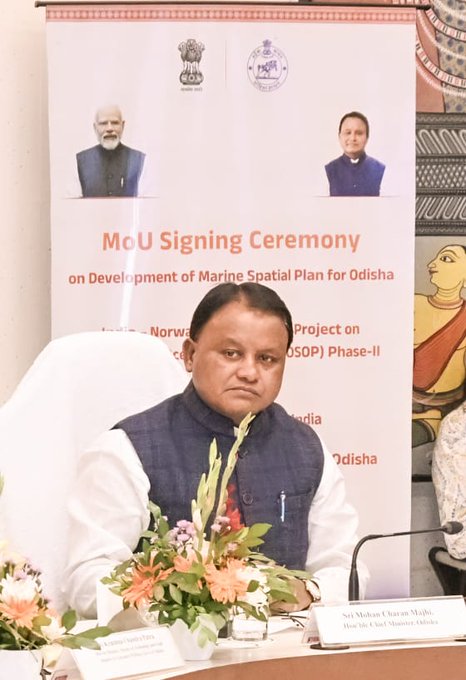
Pic Credit: https://x.com/CMO_Odisha
The agreement was signed at Lok Seva Bhavan between the state’s Department of Science & Technology and the National Centre for Coastal Research under the Ministry of Earth Sciences. Chief Minister Mohan Charan Majhi was present during the signing.
The MoU was formalised by senior officials from both organisations to strengthen coordinated planning and scientific management of Odisha’s coastal and marine resources.
The MSP initiative is designed to support the blue economy while ensuring conservation of marine biodiversity. It will help streamline activities across sectors such as fisheries, tourism, ports, and ocean energy, while reducing environmental pressure on coastal ecosystems.
Officials said the plan will introduce a structured and science-based approach to marine resource management, helping balance development needs with ecological protection.
Odisha has been selected as part of the second phase of India’s Sustainable Ocean Planning programme, making it the first state in this phase to implement the initiative.
The government said the project aligns with long-term development goals for a sustainable and economically strong coastal region while safeguarding natural marine resources for future generations.
16, Apr 2026
Govt Launches Smart Dashboard to Monitor Infrastructure Performance
Apr 16 (BNP): The government has introduced a new smart digital dashboard aimed at monitoring and evaluating the performance of key infrastructure sectors in real time.
The platform is designed to bring greater transparency and efficiency by tracking project progress, sectoral performance, and implementation status across various infrastructure areas.
Officials said the dashboard will help improve decision-making by providing data-driven insights, enabling faster identification of delays and bottlenecks in ongoing projects.
The initiative is expected to strengthen infrastructure planning and execution by offering a unified view of performance across sectors, supporting better coordination between departments and agencies.
Overall, the move reflects a push toward technology-driven governance and improved monitoring of large-scale infrastructure development in the country.
16, Apr 2026
Chef Vikas Khanna Named in TIME 100 Most Influential People List
New Delhi, Apr 16 (BNP): Celebrity chef Vikas Khanna, popularly known as “Curry boy,” has been featured in the TIME 100 list of the world’s most influential people, marking a proud moment in his culinary journey.
Khanna said the recognition is significant for India and reflects how perceptions around Indian cuisine and culture have evolved globally. He noted that a term once used in a dismissive way has now become a symbol of pride for him.
Based in New York, Khanna runs the restaurant Bungalow, which presents Indian cuisine with a modern twist and has gained international attention.
He joins a diverse group on the TIME 100 list, which includes actor Ranbir Kapoor, Google CEO Sundar Pichai, YouTube CEO Neal Mohan, and several global leaders and cultural figures.
16, Apr 2026
Capgemini Marks World Earth Day 2026 with Progress on Net-Zero Transformation
Mumbai, Apr 16: On the occasion of World Earth Day, themed ‘Our Power, Our Planet’, Capgemini reaffirms its commitment to embedding sustainability into the very fabric of its business, demonstrating that
As part of its bold ambition to become a net–zero business by 2040, Capgemini has made significant progress over the past five years by integrating sustainability into its operations, services, and organizational culture, reinforcing that it is shaped by people’s actions every day.
Key Progress Highlights:
· Achieved 100% renewable electricity, up from 28% in 2019
· Reduced travel emissions by 70% compared to 2019 levels
· Delivered a 94% reduction in Scope 1 and 2 emissions versus the 2019 baseline
This transformation has been driven by a structured approach across five key pillars:
· Decarbonizing operations and supply chain
· Driving employee engagement and sustainable behaviors
· Advocating for broader ecosystem change
· Embedding circularity, water conservation, and biodiversity protection
· Enabling clients to become more resilient and sustainable
India-Focused Sustainability Initiatives:
· Capgemini’s Energy Command Centre (ECC), a centralized and scalable model, is optimizing energy efficiency across its India operations
· Since its launch in April 2022, the ECC has enabled a 29% annual reduction in energy usage, equivalent to ~25 GWh
· Solar parks contribute 26% of total energy consumption across 8 campuses in India
· Capgemini has transitioned its cafeteria kitchens across offices in India from Liquefied Petroleum Gas (LPG) to nature-based Bio-CNG (biogas), as part of an initiative implemented in 2024 to advance sustainable operations
Global Sustainability Impact:
· 76% of Capgemini’s fleet comprises electric and hybrid vehicles
· 18 million trees planted globally as part of investments in nature and climate solutions
· Delivered 5,000 sustainability-focused client projects in 2025
· Achieved 96% employee participation in sustainability training programs
Capgemini’s five-year net–zero review underlines progress as well as the complexities of driving enterprise-wide transformation, offering insights into lessons learned, collaboration models, and the path ahead.
This World Earth Day, Capgemini continues to focus on translating bold ambition into measurable impact.
16, Apr 2026
Pakistan Army Chief Visits Iran as Peace Efforts Intensify in Middle East
Tehran, April 16(BNP): In a crucial diplomatic move aimed at stabilising the Middle East, Pakistan’s Chief of Army Staff (COAS), Field Marshal Asim Munir, arrived in Tehran on Wednesday, leading a high-level political and security delegation.
The visit comes at a critical juncture as Pakistan steps up its role as a key mediator between the United States and Iran, with efforts underway to sustain a fragile ceasefire and revive stalled negotiations.
Field Marshal Munir, accompanied by Pakistan’s Interior Minister Mohsin Naqvi and senior officials, was received by Iranian Foreign Minister Abbas Araghchi. The delegation is expected to engage in high-level discussions focused on de-escalation and diplomatic coordination.
According to sources, the primary objectives of the visit include conveying a fresh framework from Washington aimed at breaking the deadlock following the recent Islamabad talks held on April 11–12. Another key focus is to ensure the continuation of the two-week ceasefire brokered on April 8, which is set to expire on April 22.
The visit also aims to lay the groundwork for a second round of high-level negotiations, which are likely to be hosted in Islamabad in the coming days.
The renewed diplomatic push follows weeks of heightened tensions in the region since late February. While earlier direct talks between US and Iranian officials extended over several hours, key issues—particularly Iran’s nuclear programme and the strategic Strait of Hormuz—remain unresolved.
Pakistan’s mediation efforts are being closely watched as regional and global stakeholders seek to prevent further escalation and work towards a sustainable peace framework.
16, Apr 2026
Pinky Promise Opens First Physical Clinic in Mumbai, Expands Hybrid Women’s Healthcare Model
Mumbai, Apr 16(BNP): Pinky Promise, an AI-enabled women’s healthcare platform, has launched its first physical clinic in Mumbai, expanding its digital-first model into in-person care.
The company, which has served over 4 lakh women across India through its mobile platform, aims to combine online consultations with physical healthcare services for a more seamless experience.
The clinic has been designed as a women-focused, empathetic care space, prioritising comfort, privacy, and a non-intimidating environment.
The company said the initiative reflects its goal of making women’s healthcare more accessible, supportive, and patient-friendly across both digital and physical channels.
16, Apr 2026
Indian Railways Records Sharp Safety Gains, Accidents Fall 89 pc in 10 Years
Apr 16 (BNP): Prime Minister Narendra Modi on Thursday highlighted the significant transformation of Indian Railways, noting that sustained reforms and technology-led upgrades have strengthened the system and improved safety standards.
Sharing an article by Railway Minister Ashwini Vaishnaw, the Prime Minister emphasized that safety has remained a core priority, supported by policy changes, modern technology adoption, and consistent funding over the past decade.
According to the article, Indian Railways has undergone a major safety overhaul since 2014–15. Train accidents have declined from 135 incidents in 2014–15 to 16 in 2025–26, marking an 89% reduction, even as passenger traffic and train operations have increased significantly.
The consequential accident index, which measures accidents per unit of train running distance, has also improved sharply—from 0.11 to 0.01—reflecting a much safer operational system.
Fatalities have similarly reduced over the period, with rail accident-related deaths falling from 292 in 2014–15 to 16 in 2025–26.
The government said the improvements reflect a broader shift toward a technology-driven safety ecosystem aimed at enhancing reliability and public trust in one of the world’s largest railway networks.


