


14, Apr 2026
Rising Heat in Kerala Triggers Government Advisory
Apr 14 (BNP): Kerala has issued a heat alert as temperatures are expected to rise sharply in the coming days across several districts.
Chief Minister Pinarayi Vijayan warned that Palakkad may record temperatures close to 40°C, while Kollam could reach around 39°C. Most other regions are likely to experience temperatures between 36°C and 37°C.
The State Disaster Management Authority has advised residents to take precautions, especially during peak afternoon hours. People have been urged to avoid direct sunlight between 10 am and 3 pm, stay hydrated, and take necessary steps to prevent heat-related illnesses such as sunstroke.
Authorities have also asked vulnerable groups, including children, elderly citizens, and outdoor workers, to remain cautious during the intense heat conditions.
The advisory comes amid a steady rise in summer temperatures across the state, signalling a continuing heatwave-like situation in several parts of Kerala.

- 0
- By Neel Achary

14, Apr 2026
Asian Lawn Bowls: Navneet Leads India to Men’s Pairs and Fours Golds
New Delhi, Apr 14 ( BNP):India delivered a standout performance at the Asian Lawn Bowls Championships, securing a remarkable double gold in the men’s pairs and men’s fours events.
At the heart of this success was Navneet, whose steady composure and precise execution played a decisive role in India’s dominance across both categories.
In the men’s pairs event, the Indian duo showcased excellent coordination and tactical awareness, maintaining control in key moments to outclass their opponents. The momentum carried forward into the men’s fours, where a well-balanced team effort ensured another confident victory.
Navneet’s ability to stay calm under pressure and deliver accurate shots at crucial stages stood out throughout the tournament, making him one of the key contributors to India’s success.
The double gold marks an important milestone for India in lawn bowls, a sport steadily gaining recognition on the international stage. The performance also reflects the growing depth and competitiveness of Indian athletes in emerging global sporting disciplines.
This victory is expected to further boost confidence within the squad as they prepare for future international competitions.
14, Apr 2026
IMD Forecast Indicates Likelihood of Below-Normal Southwest Monsoon in 2026; El Niño Emergence Raises Concern
New Delhi / Kolkata, April 14 (BNP): The India Meteorological Department (IMD), in its first long-range forecast issued on April 13, 2026, has indicated that India’s primary rainfall season—the South West Monsoon (SWM)—is likely to be below normal or deficient in 2026.
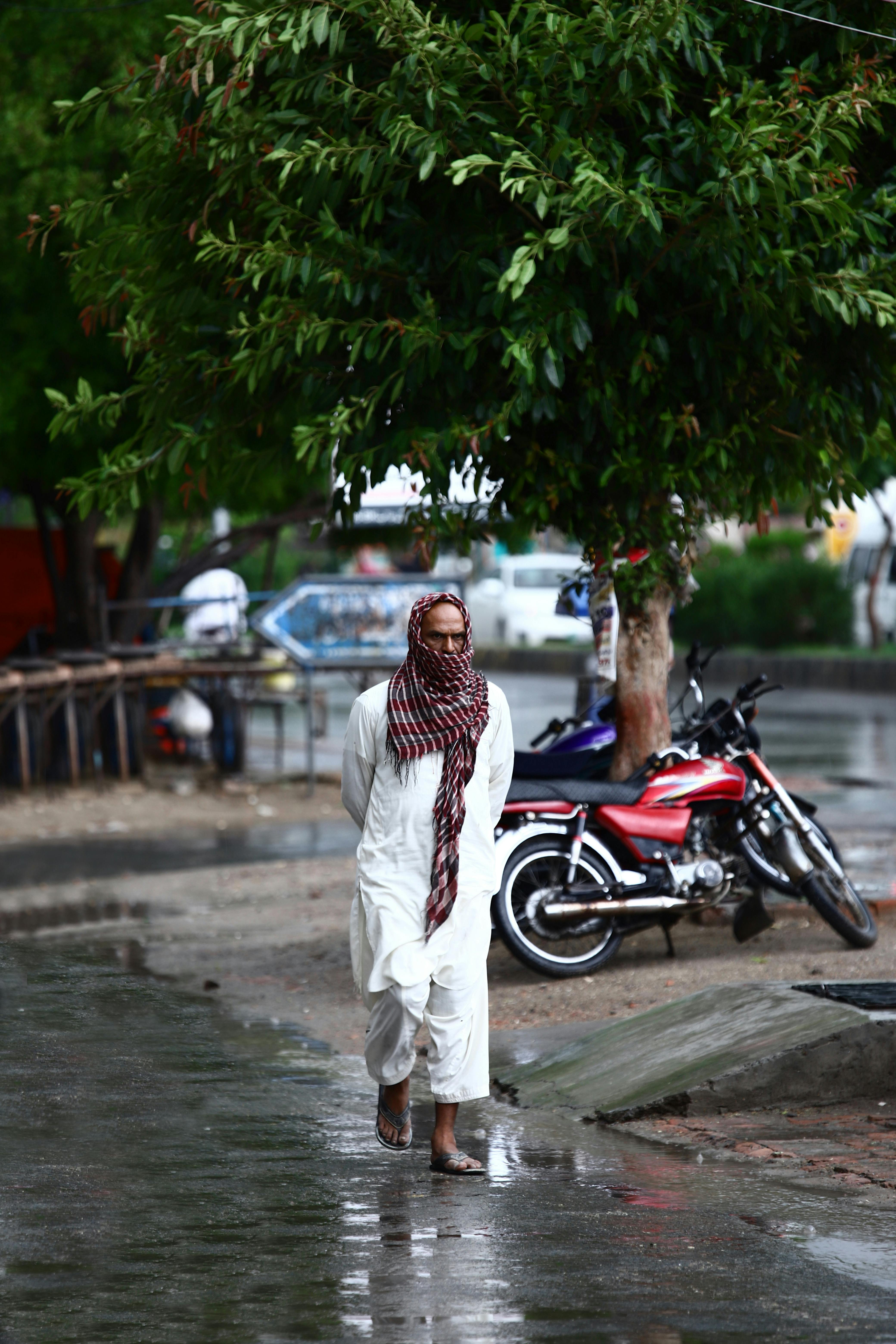
According to IMD, the seasonal rainfall over the country as a whole is expected to be around 92% of the Long Period Average (LPA), which translates to approximately 800 mm, with a model error margin of ±5%. The LPA is based on rainfall data from 1971–2020, averaging about 868.6 mm.
Key Probabilistic Outlook
The IMD has also outlined the distribution of probabilities for the 2026 monsoon season:
35% chance of deficient rainfall (below 90% of LPA) — significantly higher than the climatological probability of 16%
31% chance of below-normal rainfall (90–95% of LPA)
27% chance of normal rainfall (96–104% of LPA)
6% chance of above-normal rainfall
1% chance of excess rainfall
Based on these projections, the likelihood of below-normal or deficient rainfall conditions is notably higher than the long-term average, signaling a potential stress year for monsoon-dependent sectors.
Climatic Drivers Behind the Forecast
The IMD has identified key large-scale climate drivers influencing the 2026 monsoon outlook, including:
El Niño–Southern Oscillation (ENSO)
Indian Ocean Dipole (IOD)
Eurasian snow cover extent
Currently, weak La Niña conditions are prevailing over the Equatorial Pacific. However, IMD expects a transition to ENSO-neutral conditions between April and June, followed by the possible development of El Niño conditions during the monsoon season.
El Niño conditions are generally associated with weakened monsoon circulation and reduced rainfall over the Indian subcontinent, although historical records indicate that outcomes can vary depending on the interaction of other ocean-atmospheric factors.
Impact Concerns
The forecast has raised concern for India’s agriculture sector, particularly as nearly 60% of farmers depend directly on monsoon rainfall for Kharif cultivation.
A weak monsoon, if realized, could:
Disrupt Kharif sowing and yield prospects
Impact rural incomes and agricultural productivity
Increase dependence on irrigation and groundwater resources
Add pressure on food prices and supply chains
This outlook comes at a challenging time, following reported crop losses in several regions due to hailstorms and flooding during the 2026 pre-monsoon season, compounding risks for the agricultural economy.
Advisory and Preparedness
The IMD has urged stakeholders, including central and state governments, to strengthen preparedness measures, including:
Efficient water resource management
Crop contingency planning
Strengthening irrigation support systems
Monitoring of evolving ENSO and IOD conditions throughout the season
The IMD emphasized that while long-range forecasts provide early guidance, monsoon variability remains dynamic and subject to intra-seasonal changes.
14, Apr 2026
The Wealth Company Mutual Fund Launches their Specialized Investment Fund ‘WSIF’
Mumbai, April 14: The Wealth Company Mutual Fund, part of Pantomath Group announced the NFO launch of its SIF – ‘WSIF’ with two differentiated investment strategies, WSIF Equity Long-Short Fund and WSIF Equity Ex-Top 100 Long-Short Fund, marking its entry into a new and evolving category within the investment landscape.
The WSIF introduces investment strategies that combines long-term equity investing with tactical short exposure, with an aim to help investors to participate in market upside while actively managing downside risks.
The WSIF Equity Long-Short Fund aims to generate long-term capital appreciation through a diversified portfolio of equities complemented by selective short positions. The investment strategy maintains a
predominant allocation to equities (80–100%) with flexibility to take up to 25% unhedged short exposure via derivatives, along with tactical allocation to debt and money market instruments for liquidity.
The WSIF Equity Ex-Top 100 Long-Short Fund focuses on opportunities beyond the top 100 companies by market capitalization. With a minimum of 65% allocation to mid and small cap stocks, complemented by limited long-short flexibility, the strategy seeks to capitalize on inefficiencies in broader markets while maintaining risk controls.
Both strategies are designed with a dynamic portfolio construction approach, combining fundamental research-driven stock selection with derivative overlays with an aim to deliver consistent, risk-adjusted outcomes across market cycles.
Specialized Investment Funds (SIFs) represent a structural shift in the Indian mutual fund industry.
From an investor standpoint, SIFs bring greater sophistication into regulated mutual fund structures by enabling tools such as short selling, dynamic hedging, and flexible asset allocation. These features allow portfolios to better navigate volatility, seek to reduce drawdowns, and aim to generate more consistent outcomes across market cycles.
Elaborating on the launch of investment strategies Ms. Madhu Lunawat, Founder, MD & CEO, The Wealth Company Mutual Fund, said,
“The launch of our SIFs reflects our commitment to bringing more evolved and institutional-grade investment strategies to investors. Given that this is a new category, it also creates a unique opportunity for distributors to engage with clients on differentiated strategies without legacy biases, enabling more meaningful portfolio construction.”
Adding to it Mr. Chinmay Sathe, CIO – SIF, The Wealth Company Mutual Fund, said,
“Our long-short strategies are built for adaptability across market cycles. By combining high-conviction long ideas with tactical short exposures, we aim to deliver more consistent performance while actively managing downside risks. The flexibility within the strategy allows us to dynamically hedge or take directional calls, and in the Ex-Top 100 strategy, we see a strong opportunity set in the broader market where inefficiencies may be more pronounced.”
With this launch, The Wealth Company Mutual Fund strengthens its commitment to innovation-led investing by introducing strategies that go beyond conventional frameworks. While traditional mutual funds remain the foundation of long-term wealth creation, SIFs add a powerful satellite layer that may enhance portfolio outcomes and equips investors to navigate increasingly complex market environments.
14, Apr 2026
Patna’s Landmark Ekta Bhawan Pulled Down for Urban Project
Patna, Apr 14 ( BNP): One of the city’s most distinctive modern-era structures, Ekta Bhawan, has been demolished, bringing an end to a landmark that stood for nearly four decades.
Known for its unusual and eye-catching design, the building had become a familiar sight near the banks of the Ganga, close to Gandhi Maidan. Its unique appearance even earned it the nickname of a “satellite building” among locals.
The structure was recently pulled down to clear space for the upcoming Patna Haat project, part of efforts to develop new urban infrastructure in the area.
However, the demolition has triggered concern among conservation architects and sections of the public. Many believe the building, despite not being very old, held architectural and cultural value and could have been preserved or integrated into the new development.
Critics argue that removing such distinctive structures erases elements of the city’s evolving identity, while others see the move as part of necessary urban transformation.
The debate highlights a broader challenge faced by growing cities—how to balance development with the preservation of unique architectural heritage.
14, Apr 2026
MP Awards INR 5.14 Cr Narmada Survey Project to Matrix Geo
Bhopal, Apr 14 (BNP): Technology firm Matrix Geo Solutions has secured a major contract from the Madhya Pradesh government to carry out an advanced aerial survey of the Narmada Parikrama route.
The company has received a formal letter of acceptance for the project, which is valued at over ₹5.14 crore and is expected to be completed within six months.
As part of the assignment, Matrix Geo Solutions will use a combination of drones, aircraft, and helicopters, along with advanced LiDAR technology, to capture high-resolution geospatial data across the survey area.
The project is aimed at supporting various state government initiatives by providing accurate mapping and data insights, which can be used for planning, infrastructure development, and environmental monitoring.
The use of modern aerial surveying techniques is expected to improve efficiency, precision, and coverage compared to traditional methods, marking a significant step in the adoption of advanced geospatial technologies for public projects.
14, Apr 2026
Kharif Season Under Pressure Amid Climate and Oil Risks
New Delhi, Apr 14 (BNP): India’s upcoming kharif cropping season is facing a period of uncertainty, with experts pointing to a combination of climate risks and global geopolitical pressures.
A potential El Niño event could disrupt the monsoon, raising concerns about below-normal rainfall during a critical sowing period. Since kharif crops depend heavily on timely and adequate rains, any deviation in weather patterns may affect both planting and yields.
At the same time, ongoing tensions in West Asia are adding another layer of concern. Rising global energy prices could increase the cost of fuel and fertilisers, placing additional financial strain on farmers already dealing with uncertain weather conditions.
Experts believe that this combination of climatic and external economic pressures could influence farm output, rural incomes, and even food price trends in the months ahead.
While the full impact will depend on how both the monsoon and global situation evolve, stakeholders are keeping a close watch, as the kharif season remains crucial for India’s agricultural stability and food security.
14, Apr 2026
UPI Powers India’s Rise as Micro Payments Economy
Apr 14 (BNP): India is fast emerging as a global hub for digital micro-payments, with UPI transactions reaching 228 billion in 2025, according to a report by Worldline.
The surge reflects the growing shift toward cashless transactions, especially for small, everyday payments. From local shops to street vendors, UPI has become a preferred mode of payment due to its speed and ease of use.
The report highlights that India’s digital ecosystem is increasingly driven by high-volume, low-value transactions, strengthening financial inclusion and expanding access to formal banking systems.
With rising smartphone usage and improved digital infrastructure, India’s micro-payments economy is expected to grow further in the coming years.
14, Apr 2026
New AI Approach Reveals Ocean Currents in Unprecedented Detail
Scientists have developed a new method to measure ocean surface currents over large areas in greater detail than ever before. Called GOFLOW (Geostationary Ocean Flow), the approach applies deep learning to thermal images from weather satellites already in orbit, requiring no new hardware to achieve what the researchers describe as a major advancement in ocean observation.
The study, co-led by Luc Lenain, an oceanographer at UC San Diego’s Scripps Institution of Oceanography, and Kaushik Srinivasan, a Scripps alumnus now at UCLA, was published today in the journal Nature Geoscience. The study’s two other co-authors, Roy Barkan of Tel Aviv University and Nick Pizzo of the University of Rhode Island, are also Scripps alumni. The project was supported by grants from the Office of Naval Research, NASA and the European Research Council.
Ocean currents play a huge role in shaping Earth’s weather and climate, transporting heat around the globe, moving carbon between the atmosphere and ocean interior, and redistributing nutrients that sustain life in the sea. Understanding ocean currents are also vital for search-and-rescue operations and tracking the movement of oil spills. Yet measuring currents over large areas of the ocean has remained extremely challenging. Some satellites estimate currents indirectly by measuring variations in sea-surface height, but they typically image the same location only every 10 days or so — too infrequently to track currents that can appear and disappear within hours. Ship-based measurements and coastal radar systems can capture rapid changes but only for limited areas.
This has left a persistent gap in observations at the scales where most of the ocean’s vertical mixing occurs — when shallower waters are mixed deeper or vice versa. The phenomena that drive vertical mixing can be less than 10 kilometers (six miles) wide and transform in hours. Understanding vertical mixing matters because it powers key processes such as bringing nutrients up from depth to sustain marine ecosystems and pumping carbon dioxide from the surface to deeper waters where it can be stored long-term.
In 2023, Lenain was examining thermal imagery of the North Atlantic Ocean from the geostationary satellite GOES-East, which is primarily used for observing weather. The images, produced as frequently as every five minutes, showed passing clouds and swirls of warm and cool water evolving on the sea surface. As he looked, Lenain could see the imprint of major currents such as the Gulf Stream in the temperature patterns and began exploring how to convert what his eye could see in those images into a new way to measure ocean currents.
To accomplish this, the team trained a neural network to recognize how ocean surface temperature patterns shift and deform when pushed by underlying currents. The network learned from a high-resolution computer simulation of ocean circulation, which provided examples of temperature patterns and the water velocities that created them. By tracking how complex temperature patterns moved across consecutive images taken by the GOES-East satellite, the trained network could infer the currents responsible for those changes.
“Weather satellites have been observing the ocean surface for years,” said Lenain. “The breakthrough was learning how to turn that time-lapse into hourly maps of currents by tracking how temperature patterns bend, stretch and move from one hour to the next.”
The researchers tested GOFLOW’s accuracy by comparing its output to velocities recorded by shipboard instruments in the Gulf Stream region in 2023, as well as standard satellite methods using ocean topography. GOFLOW’s measurements agreed with the data collected with ships and traditional satellite techniques, and revealed much greater detail for smaller, faster-moving eddies and boundary layers where existing methods showed only blurred averages. This newfound detail allowed the researchers to measure for the first time key statistical signatures of small, intense currents that drive vertical mixing in the ocean that previously had been documented only in computer simulations.
“This opens a range of exciting possibilities in physical oceanography that, until now, were largely accessible only through simulations,” said Lenain. “Using GOFLOW, we can now measure key signatures of these small, intense currents using real observations rather than relying almost entirely on simulations. This opens the door to testing long-standing ideas about how the ocean takes up heat and carbon.”
Because the method works with existing geostationary satellites it does not require new instruments to be launched into space. Over time, GOFLOW could be incorporated directly into weather forecasts and climate models, and may ultimately help improve forecasts by resolving rapidly evolving currents that influence air–sea exchange, marine debris transport and ocean ecosystems.
The researchers note that cloud cover remains a limitation, since clouds block the thermal imagery GOFLOW relies on. Future work will incorporate other types of satellite data to fill in the gaps when clouds block satellites’ views and achieve continuous coverage. The team is currently working to extend the method globally. The study’s data products and computer code are being made publicly available to support further research and applications.
14, Apr 2026
Sanju Samson Recognised for Match Winning Role in T20 World Cup Campaign
Dubai, Apr 14 ( BNP): India’s Sanju Samson has been named the ICC Men’s Player of the Month for March, in recognition of his impactful performances during the T20 World Cup campaign.
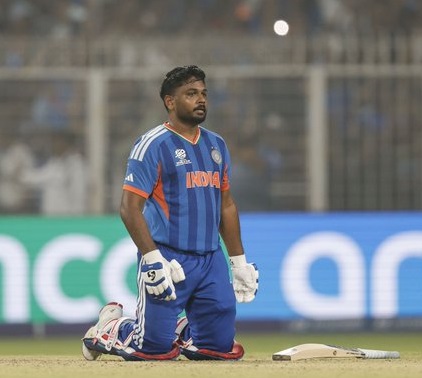
The India batter played a crucial role in the latter stages of the tournament, delivering strong performances in key matches that helped strengthen India’s batting lineup during important moments.
Although he did not feature consistently in the early matches, Samson stepped up when it mattered most, contributing significantly in high-pressure situations as India went on to secure the title.
The award highlights his growing importance in the national setup and his ability to perform on big occasions at the international level.
The ICC monthly honour has seen a variety of winners in recent months, reflecting strong performances across global cricket. Previous recipients include South Africa’s Simon Harmer, Australia’s Mitchell Starc, New Zealand’s Daryl Mitchell, and Pakistan’s Sahibzada Farhan.
Samson’s recognition adds another milestone to his international career and underscores his rising consistency in white-ball cricket.


