


14, Apr 2026
Auto Market in India Expands to Historic High in FY26
New Delhi, Apr 14 (BNP): India’s automobile industry has recorded its highest-ever annual sales, with total wholesales reaching about 2.83 crore units in the financial year 2025–26, according to the Society of Indian Automobile Manufacturers (Society of Indian Automobile Manufacturers).

The industry grew by around 10.4% compared to the previous year, when total sales stood at approximately 2.56 crore units. All major vehicle categories—including passenger vehicles, commercial vehicles, two-wheelers, and three-wheelers—reported record performances during the fiscal year.
SIAM noted that strong domestic demand, stable economic conditions, and policy support helped drive the overall growth in the automobile sector. Improved consumer confidence and better availability of financing also contributed to higher vehicle purchases across segments.
Passenger vehicles maintained steady momentum throughout the year, while two-wheelers and commercial vehicles saw broad-based demand, reflecting stronger mobility needs and economic activity across regions.
However, the industry body also flagged external risks, stating that prolonged geopolitical tensions in West Asia could affect crude oil prices, disrupt supply chains, and influence production costs in the coming months.
Despite global uncertainties, the overall outlook for India’s automobile sector remains positive, supported by rising incomes, urban expansion, and continued infrastructure development.

- 0
- By Neel Achary

14, Apr 2026
PM Modi Launches Key Delhi Dehradun Economic Corridor in Uttarakhand
Uttarakhand, Apr 14 (BNP): Prime Minister Narendra Modi on Monday inaugurated the Delhi–Dehradun Economic Corridor, a major infrastructure project developed at an estimated cost of around ₹12,000 crore.
The corridor is aimed at transforming regional connectivity by significantly reducing travel time between Delhi and Dehradun while improving road safety and traffic efficiency along the route.
Built as a high-capacity expressway corridor, the project is expected to ease congestion on existing highways and provide smoother movement for both passenger and freight traffic.
Officials said the corridor has been developed with modern engineering standards, including upgraded road design and safety features intended to improve driving conditions and reduce bottlenecks.
Beyond connectivity, the project is expected to give a strong boost to economic activity in Uttarakhand by improving access to tourism hubs, trade centres, and emerging investment zones.
It is also likely to enhance regional logistics efficiency, supporting faster movement of goods between the national capital region and northern hill states.
With this inauguration, the government has further strengthened its focus on expanding high-speed road infrastructure to improve intercity connectivity and support long-term economic growth.
14, Apr 2026
India Emerging as Second Largest Solar Market by 2026
New Delhi, Apr 14 (BNP): India is expected to become the world’s second-largest solar market in terms of annual installations by 2026, according to the National Solar Energy Federation of India (National Solar Energy Federation of India).
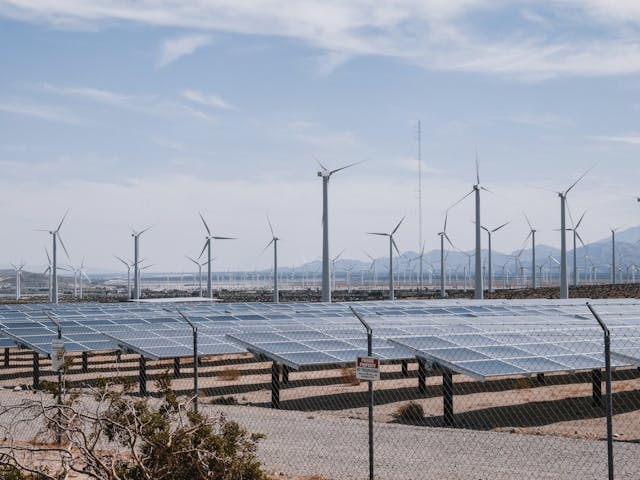
The industry body said India has witnessed its fastest-ever expansion in solar capacity, adding around 50 GW in just 14 months and taking total installed solar capacity to about 150 GW.
This sharp rise highlights a significant acceleration in the country’s renewable energy journey compared to earlier years, when capacity additions were much slower.
NSEFI attributed the strong growth to supportive policy measures, rising investment activity, and wider adoption of solar energy across both large-scale projects and distributed installations.
The trend places India among the fastest-growing solar markets globally and reflects its increasing role in the global clean energy transition.
Officials added that the continued expansion of solar power is expected to improve energy security, reduce dependence on conventional fuels, and support long-term sustainability goals.
14, Apr 2026
Ashoka University’s Economics Professor Kanika Mahajan Receives Prestigious Elizabeth Adiseshiah Award 2026
New Delhi, April 14: Ashoka University, Delhi-NCR, India’s premier institution for interdisciplinary higher education and research, is delighted to share that Kanika Mahajan, Associate Professor of Economics, has been selected for the prestigious Elizabeth Adiseshiah Award 2026 by the Malcolm & Elizabeth Adiseshiah Trust, in recognition of her impactful contributions to development studies. This recognition comes at a significant moment for the Department of Economics at Ashoka University, which has recently been ranked #1 in India by the Research Papers in Economics (RePEc) rankings, reflecting the strength and depth of its research output.

The Elizabeth Adiseshiah Award is conferred annually to a young scholar below the age of 45 for outstanding contributions to development studies. The award carries a citation and a cash prize of INR 1 lakh and is widely regarded as a recognition of impactful research shaping policy and discourse in India’s development landscape. The awardees are selected by a jury of eminent scholars, with the final decision reflecting excellence in research and its contribution to development studies. As part of the honour, Kanika Mahajan will deliver the Elizabeth Adiseshiah Memorial Lecture at the award ceremony scheduled for August 2026.
Kanika Mahajan’s research lies at the intersection of labour economics, firms, and gender, with a strong focus on understanding the structural constraints shaping women’s economic participation in India, as well as firm growth and adaptation in the country. Her widely cited work has examined issues such as declining female labour force participation, wage inequality, and firm adaptation in the face of economic shocks. Her research has been published in leading international journals and has contributed significantly to policy conversations around inclusive growth.
“It is an honour to receive the Elizabeth Adiseshiah Award. It is particularly meaningful given the award’s emphasis on research that engages directly with policy and development challenges. Much of my work has focused on understanding the persistent gaps in women’s participation in India’s labour markets, as well as the factors that can sustain employment growth in the country, issues shaped by both structural constraints and evolving economic opportunities. There is still much to uncover, and I hope this recognition draws greater attention to the need for sustained research in these areas, while also encouraging more women to contribute to the field.”, said Kanika Mahajan, Associate Professor of Economics, Ashoka University, Delhi-NCR.
The Department of Economics at Ashoka University has further institutionalised its commitment to data-driven research and public engagement through the Centre for Economic Data and Analysis (CEDA). CEDA serves as a key platform for enabling informed debate on India’s economic and social landscape by making high-quality data accessible to researchers, policymakers, and the public. Its work spans critical themes such as work and wages, agrarian economy, household economics, and human development, alongside the development of tools like the Economic Enterprise Tracker, which provides integrated insights into India’s formal and informal economy, and publishing of the monthly newsletter, Women and Work, which examines the structures shaping women’s economic realities, mapping women’s participation in the workforce and persistent gaps.
Commenting on the recognition, Ashwini Deshpande, Head of the Department of Economics and Founding Director, Centre for Economic Data and Analysis (CEDA), Ashoka University, Delhi-NCR said,
‘Kanika’s recognition is well-deserved and a source of genuine pride for the Economics Department at Ashoka. Her work exemplifies the kind of rigorous, policy-relevant research that we have always believed economics must aspire to. This award is not just a personal milestone — it reflects the intellectual environment we have collectively worked to build, one that takes empirical questions seriously and engages with the world beyond the seminar room.’
“Ashoka University has been building a culture of rigorous, inquiry-driven research that engages meaningfully with real-world challenges. We place a strong emphasis on academic excellence that is both interdisciplinary and socially relevant. The Economics Department exemplifies this approach through its growing body of high-quality, policy-relevant research and its commitment to advancing data-driven public discourse. Kanika Mahajan’s recognition is a testament to this ethos and this honour is both well deserved and deeply encouraging for the wider academic community” stated Somak Raychaudhury, Vice-Chancellor, Ashoka University, Delhi-NCR.
Together, these developments mark a forward looking moment as Ashoka University continues to expand its academic and research pursuits in the years ahead.
14, Apr 2026
Oil Price Spike Has Limited Effect on India Inflation: Crisil
New Delhi, Apr 14 (BNP): Despite a sharp rise in global energy prices driven by the ongoing West Asia conflict, India’s retail inflation has so far remained largely stable, according to Crisil Intelligence.
The report noted that even a month after the escalation in tensions, the transmission of higher global fuel costs into domestic retail inflation has been limited.
It pointed out that Brent crude prices jumped around 45 per cent in March, while international natural gas prices surged nearly 69 per cent compared to the previous month. However, this steep increase in global energy markets has not yet significantly affected consumer prices in India.
Crisil said the muted impact so far reflects limited pass-through of global energy shocks into domestic inflation in the short term.
However, it warned that inflationary pressures could increase if geopolitical tensions persist and energy prices remain elevated for a longer period, potentially affecting price stability in the coming months.
14, Apr 2026
India Extends Health Support to Afghanistan with BCG Vaccine Shipment
Apr 14 (BNP): India has sent a large consignment of BCG vaccines to Afghanistan, reinforcing its support for public health and child immunisation programmes in the neighbouring country.
The shipment, weighing around 13 tonnes, is aimed at strengthening vaccination coverage for children and supporting efforts to prevent tuberculosis-related health risks in early childhood.
The initiative reflects India’s continued humanitarian assistance to Afghanistan, particularly in the healthcare sector, where vaccine access and child immunisation remain critical challenges.
BCG vaccines are widely used as part of national immunisation programmes to protect infants and young children against tuberculosis, a disease that continues to pose public health concerns in several regions.
The latest supply is expected to help Afghan health authorities expand immunisation outreach and improve vaccine availability in vulnerable communities.
The move further underscores India’s role in providing medical support and essential supplies to countries in need, especially in the broader South Asian region.
14, Apr 2026
hubergroup launches LED ink for food packaging at METPACK

hubergroup Print Solutions will showcase its extensive portfolio for metal decoration at METPACK.
At this year’s METPACK, hubergroup Print Solutions presents its comprehensive portfolio for metal decoration at hall 1, booth 1B11, underlining its position as a one-stop partner for metal packaging printers worldwide. With a strong focus on innovation, compliance, and performance, the company showcases solutions tailored to the evolving demands of the industry. Highlights include two series for food packaging: the conventional offset series TINKREDIBLE MGA, which was recently launched globally, and the NewV tin LED MGA series, which will make its official debut at the exhibition.
At the core of hubergroup’s METPACK showcase is its broad offering for metal decoration – including its conventional series TINKREDIBLE and its UV series NewV with LED and mercury-vapour curing systems. The portfolio covers a wide range of applications such as food cans, aerosols, closures, crown caps, and chemical‑technical packaging, and is known for high colour brilliance, strong scratch resistance, and environmentally conscious formulation.
Driving the shift to LED-UV in food packaging
A key highlight at METPACK 2026 is the introduction of NewV tin LED MGA, a LED-curing ink series for food packaging designed for three-piece can applications. This innovation responds directly to the growing industry shift toward LED-UV curing technologies, particularly in sensitive food applications where safety, efficiency, and sustainability are critical. The series complies with the requirements of the German Ink Ordinance (GIO), the Swiss Ordinance, and the guidelines of renowned brand manufacturers.
“With NewV tin LED MGA, we are giving metal decorators a reliable, future‑proof LED solution that meets the stringent safety requirements of food packaging while delivering excellent printing performance,” says Jan Museler, Product Manager Metal Decoration at hubergroup. “It’s an important step in supporting the industry’s transition to LED‑UV technologies.”
A fully integrated system for metal decoration
Complementing the TINKREDIBLE and NewV ink systems, hubergroup provides a full suite of varnishes and fountain solution additives, all engineered to work seamlessly together. This integrated approach ensures consistent performance, high efficiency in the pressroom, and reliable end-product quality – delivering a complete system from a single source.
Equally important is the company’s strong focus on service. hubergroup provides local technical support and expert consultation, ensuring customers receive tailored guidance for their specific pressroom requirements. This hands-on approach helps metal decorators optimise processes, improve efficiency, and achieve consistent results.
“METPACK is the ideal platform to demonstrate how our fully integrated pressroom solutions support metal decorators in meeting evolving market demands”, says Patrick Hübel, Director Product Management and Technical Marketing Offset at hubergroup. “By combining high-performance products with strong technical service, we enable our customers to achieve consistent quality, greater efficiency, and a smoother transition to future-ready technologies.”
Visitors to METPACK are invited to explore hubergroup’s full metal decoration portfolio and discover how integrated solutions can unlock new potential in metal packaging production.
14, Apr 2026
Strong March for Auto Sector as PV and Two Wheeler Sales Rise
New Delhi, Apr 14 (BNP): Domestic automobile dispatches posted strong growth in March, reflecting sustained demand momentum across both passenger vehicles and two-wheelers, according to industry data released by the Society of Indian Automobile Manufacturers (SIAM).
Passenger vehicle dispatches from companies to dealers rose 16 per cent year-on-year to 4,42,460 units in March, compared to 3,81,358 units in the same month last year.
The two-wheeler segment also recorded robust growth, increasing 19.3 per cent to 19,76,128 units in March, up from 16,56,939 units a year earlier.
The strong performance across segments indicates improving consumer sentiment and steady demand in the domestic automobile market, which is a key driver of industrial activity and employment.
Industry experts note that higher vehicle sales typically boost manufacturing output, supply chain activity, and dealership revenues, while also contributing significantly to government tax collections through GST, road tax, and registration fees.
The automobile sector, one of India’s largest employment generators, also supports a wide ecosystem of component makers, logistics providers, and financial services linked to vehicle financing.
14, Apr 2026
Iranian Crude Returns to India After 7 Years; Tanker Docks at Paradip
Paradip/New Delhi, Apr 14 (BNP): In a significant development for India’s energy sector, Iranian crude oil has resumed flows to the country after a gap of nearly seven years, amid temporary easing of US sanctions and tightening global supply conditions.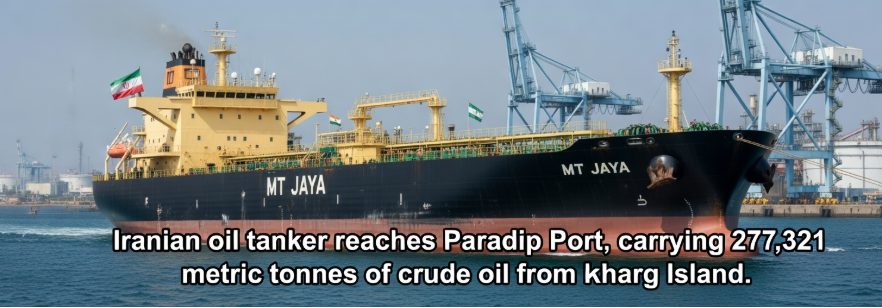
A very large crude carrier (VLCC), MT JAYA, carrying around 2 million barrels of crude from Kharg Island, docked at Paradip Port on April 9, marking the first such delivery since 2019 when sanctions halted trade.
According to port authorities, the vessel delivered approximately 277,321 metric tonnes of crude oil to the Indian Oil Corporation (IOCL) refinery at Paradip. Officials described the arrival as a step that further strengthens the port’s role as a key gateway for India’s energy imports.
Adding to the development, another VLCC, Felicity, also carrying nearly 2 million barrels of Iranian crude, is currently anchored near Sikka, taking the total recent inflow to about 4 million barrels.
While it remains unclear which refiners have procured the cargoes, industry sources note that IOCL operates the Paradip refinery, while Reliance Industries Limited and Bharat Petroleum Corporation Limited receive crude at Sikka.
The resumption of Iranian oil supplies comes at a time of heightened global energy volatility and reflects shifting trade dynamics, as countries seek to secure stable crude sources amid geopolitical uncertainties.
14, Apr 2026
Keonjhar Gets INR 1,900 Crore Infrastructure Boost from CM Majhi
Keonjhar, Apr 14 (BNP): Chief Minister Mohan Charan Majhi on Monday laid the foundation stone for infrastructure projects worth around ₹1,900 crore in Keonjhar district, including the long-awaited Barbil Bypass-cum-Ring Road project aimed at easing heavy traffic congestion in the mining belt.
The ₹1,581.21 crore bypass project is expected to significantly improve connectivity in the mineral-rich Barbil region, one of Odisha’s busiest freight corridors.
During his visit, the Chief Minister also inaugurated 24 completed projects worth ₹29.41 crore and laid the foundation for 51 new projects valued at ₹326.43 crore.
The proposed 18.3-km bypass-cum-ring road will have the capacity to handle around 40,000 passenger car units (PCUs) daily, compared to the current traffic volume of nearly 15,375 vehicles per day.
Officials said the project is designed to reduce congestion caused by heavy mining vehicles, cut travel time, lower transportation costs, and improve overall logistics efficiency in the region.
Majhi said the upgraded road network would help resolve long-standing traffic bottlenecks and support economic growth in Keonjhar and surrounding areas.


