


9, Apr 2026
Aviation Safety Concerns Slow 5G Deployment Near Indian Airports
New Delhi, Apr 9 (BNP): The deployment of 5G networks in India is encountering challenges due to potential interference with older aircraft radio altimeters, which are critical for safe landings. Some legacy altimeters are not compatible with 5G signals and could also face issues with future 6G networks operating in the upper C-band (4.4–4.8 GHz).
Bharat Bhatia, president of the ITU-APT Foundation of India, which collaborates with the government and industry on telecom policies, said that replacing these older altimeters is the only long-term solution. However, the process could take time due to similar replacement demands in other developing countries.
Currently, regulatory rules in India restrict 5G operations near airports: within 2.1 km of runway ends and 910 metres of the runway centerline, covering the terminal areas of most Indian airports. These measures aim to prevent interference and ensure aviation safety while 5G networks continue to expand.
Officials emphasized that coordinated efforts between telecom providers and aviation authorities are essential to maintain both technological growth and flight safety. Upgrading aircraft altimeters will be a gradual process, balancing the country’s push for faster networks with aviation requirements.

- 0
- By Neel Achary

9, Apr 2026
QNu Labs Validates Real-World Performance of ARMOS QKD in Independent Global Study with VIAVI
Delhi, April 09: QNu Labs a global leader in end-to-end hybrid quantum cybersecurity solutions, has announced the findings of a research study conducted in association with VIAVI Solutions, a global leader in network test and measurement. The study leverages VIAVI’s industry-recognised MAP-300 platform to assess the real-world performance and deployment readiness of QNu Labs’ patented, certified and globally deployed Quantum Key Distribution platform, ARMOS.

The study establishes ARMOS as a robust, field-ready solution capable of enabling quantum-safe communication across enterprise and critical infrastructure networks. Evaluated under controlled conditions using VIAVI’s advanced test environment, the system demonstrated secure key generation over distances of up to 200 KM of standard telecom fibre (40 dB loss) without signal amplification, while consistently maintaining Quantum Bit Error Rates below 4 percent, well within safe operating thresholds.
At typical metro distances (~50 km), ARMOS achieved secure key generation rates of up to 8,000 secure bits per second, enabling real-time encryption for high-value data flows. Even at extended ranges of 200 KM, the system sustained performance at approximately 200 secure bits per second, reinforcing its ability to operate reliably across varying network conditions.
A key highlight of the study is ARMOS’ ability to operate seamlessly alongside 10 Gbps classical data traffic on the same fibre, with no measurable degradation to the quantum channel, effectively addressing a major barrier to QKD adoption by enabling integration without network redesign.
The platform also demonstrated strong operational resilience, autonomously detecting and recovering from simulated fibre cuts within minutes, while maintaining stable performance (i.e. self-restored secure key generation) without any manual intervention under real-world conditions such as attenuation and polarisation fluctuations, reinforcing its readiness for large-scale deployment.
Central to this performance is QNu Labs’ proprietary decoy-state Differential Phase Shift (DPS) protocol, which extends operational tolerance to up to 40 dB of channel loss, effectively doubling the transmission range compared to conventional QKD systems without compromising security.
Commenting on the milestone, Mr. Sunil Gupta, Co-founder and Chief Executive Officer, QNu Labs, said,
“As the industry moves closer to a quantum-driven reality, the need for proven, deployment-ready security solutions becomes critical. This validation reflects the depth of engineering and real-world readiness we have built at QNu Labs, with VIAVI’s globally recognised testing environment further reinforcing the robustness of our approach. It demonstrates that quantum-safe communication can be implemented at scale, without compromising on performance or disrupting the existing network architectures.”
Adding to this, Sameh Yamany, Chief Technology Officer, VIAVI Solutions, said,
“VIAVI brings deep expertise in optical, photonics, security, and critical systems testing to accelerate quantum-safe communications into real-world networks. We deliver independent validation with uncompromising rigor so these technologies perform at scale under real telecom conditions. We’re proud to partner with Qnu Labs to validate the ARMOS QKD platform, a key step toward operational, quantum-resilient infrastructure.”
“Quantum security is at an inflection point where intent needs to translate into informed adoption. What this study enables is a shift from abstract promise to demonstrable capability, giving stakeholders the confidence to engage with quantum-safe technologies more decisively. For us, it is equally about shaping how these conversations evolve globally, positioning India-built sovereign indigenous innovation like QNu’s at the forefront of credible, scalable cybersecurity solutions”, said Ms.Sudiptaa Paul Choudhury, Chief Marketing Officer, QNu Labs.
The report also outlines the next phase of research, including testing under higher classical data loads, extended link performance beyond current benchmarks and deeper modelling of hybrid quantum-classical networks. These efforts are expected to support further the development of scalable and deployable quantum-secure communication frameworks.
Developed in India, ARMOS reflects QNu Labs’ continued focus on advancing quantum-safe technologies aligned with both national priorities and global security requirements. The findings from this study mark a significant step in enabling organisations to transition toward quantum-resilient infrastructure with greater confidence.
9, Apr 2026
AVer UE1 & HUB30 Now Compatible with Barco ClickShare for BYOM Meeting Rooms
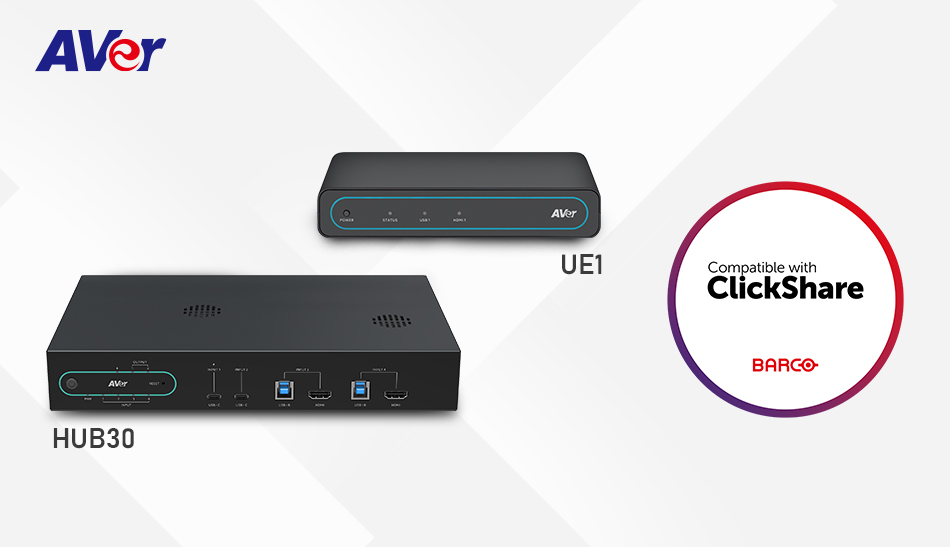
Taipei, Taiwan – Apr 09: AVer Information Inc., an award-winning provider of AI audio-video solutions, today announces that the UE1 USB Extender and the HUB30 4K BYOM Matrix Switcher have officially joined the Barco ClickShare Alliance as Compatible peripherals, providing users with a simple, reliable BYOM meeting room solution. Listed under Barco’s “USB-Hub/Switch/Extender” category, these solutions are now validated to provide a stable hardware foundation for Barco’s “Bring Your Own Meeting” (BYOM) wireless ecosystem, helping cameras and peripherals connect instantly when users launch their meetings from their laptop.
Validated Stability for Pro AV Infrastructure In complex meeting environments, the distance between the camera and the ClickShare Base Unit often exceeds standard cable limits, which can lead to meeting delays and the need for additional technical support. By achieving official compatibility, AVer ensures that its connectivity infrastructure maintains the signal integrity and power delivery required for enterprise grade video conferencing, so rooms stay reliable even when devices are spread across large spaces.
- UE1 (Pro AV Camera Extender): As a high-performance USB extender, the UE1 is specifically designed for AVer’s Pro AV and PTZ cameras. It allows integrators to overcome the 5-meter USB cable limit, enabling integrators to place cameras where they capture the best view of participants. This compatibility guarantees that when a user clicks the ClickShare Button, the Pro AV camera at the far end of the room is instantly recognized without latency or signal loss, so meetings begin smoothly without last‑minute troubleshooting.
- HUB30 (BYOM Switcher): The HUB30 acts as a 4×2 Matrix Switcher and the central “brain” of a professional meeting room. It enables intelligent switching between multiple cameras and sources while providing 100W USB-C PD charging to the host laptop. Additionally, its compatibility with ClickShare CX-series units ensures that the complex switching of Pro AV peripherals happens seamlessly in the background.
“While many partners focus solely on the camera, AVer recognizes that the success of a wireless meeting depends on the reliability of the infrastructure behind it,” said David Kuo, President at AVer. “By bringing the UE1 and HUB30 into the Barco ClickShare Alliance program, we are providing IT managers with a validated blueprint for extending Pro AV capabilities into the wireless BYOM era.”
Why Official ClickShare Compatibility Matters for Meeting Rooms
- Validated Interoperability: Rigorous testing ensures that AVer’s extension and switching logic work in harmony with ClickShare’s wireless handshake, so devices show up reliably and meetings start on time.
- Pro AV Scalability: The UE1 allows for large-room deployments where the ClickShare unit and PTZ cameras cannot be co-located, simplifying upgrades to bigger spaces without having to redesign cabling from scratch.
- Intelligent Power Delivery: The HUB30 maintains a “one-cable” experience for the user by managing laptop charging alongside the wireless ClickShare workflow, reducing cable clutter.
Experience the AVer x Barco Integration
Ready to simplify your professional meeting space? Explore how AVer and Barco ClickShare work together to deliver a frictionless BYOM experience, and view our officially compatible USB hubs, switches, and extenders on the Barco ClickShare Alliance Page.
9, Apr 2026
FSSAI Steps Up Food Safety, States Strengthen Inspections
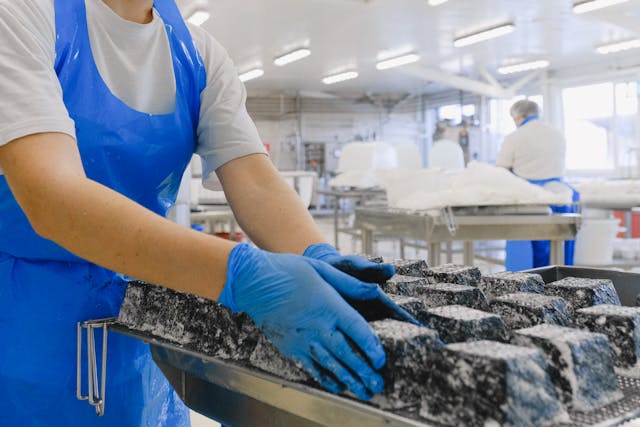
New Delhi, Apr 9 (BNP): The Food Safety and Standards Authority of India (FSSAI) intensified its monitoring efforts in 2025-26, conducting nearly 3.97 lakh inspections across food businesses nationwide.
Pic Credit: Pexel
In partnership with state authorities, the agency tested 1,65,747 food samples up to the third quarter, finding 17.16% of them non-compliant with safety standards. These violations triggered swift regulatory and legal action to protect consumers.
State governments are actively supporting the enforcement drive, stepping up inspections, awareness campaigns, and guidance for food producers and retailers. Officials said the combined efforts aim to ensure safer food practices, improve compliance, and build public trust in food quality.
FSSAI’s strengthened approach highlights the government’s commitment to public health, encouraging businesses to prioritize hygiene and quality while maintaining accountability across the food supply chain.
9, Apr 2026
Africa Rising Music Conference announces Australia focus and PRS Foundation backing for its most internationally connected edition yet
Tickets
Location: Johannesburg, South Africa
Dates: 22nd – 23rd May, 2026
Uganda joins as second focus country as ARMC 2026 draws delegations from the UK, US, Germany, Sweden and Australia ahead of its Johannesburg return this May

Africa Rising Music Conference (ARMC) returns to Johannesburg on 22nd & 23rd May 2026 for its sixth edition, now backed by the PRS Foundation for the third time and welcoming Australia and Uganda as official focus countries for the first time. Bringing together artists, executives and cultural leaders from across Africa, Europe, the Americas and beyond, ARMC has established itself as the continent’s leading platform for cross-continental music industry dialogue.
A major focus for 2026 is the introduction of Australia and Uganda as official focus countries and bringing curated delegations of artists, executives and cultural leaders into the programme. The Ugandan delegation, led by Amplify Ugandan Music Expo (AUMEX), builds on connections formed at previous editions, while Australia’s inclusion signals ARMC’s growing ties beyond the African continent. Additional delegates from the UK are supported by the PRS Foundation while more from Germany, the United States and Sweden further strengthen the conference’s global reach.
With a growing network of international partners, delegates and speakers, ARMC 2026 is a key platform for cross-continental collaboration that spotlights emerging scenes while connecting them to established global markets. This year sees new strategic partnerships including with the Southern African Music Rights Organisation (SAMRO) alongside expanded international participation.
The speaker programme reflects this international outlook, with newly announced headline names including Grammy‑Recording Academy‑inducted producer and award‑winning artist TRESOR, alongside Janesh, Hitboss SA and Brenda Mtambo. Together, they represent a cross-section of artists and industry leaders shaping contemporary African music while engaging with global audiences through songwriting, production and cultural exchange.
Alongside its core programme, ARMC has introduced a Community Access Pledge in partnership with Bridges for Music, shesaid.so South Africa, The Cradle Crew and BTCH$ LUV – enabling brands and organisations to donate tickets distributed to aspiring artists and entrepreneurs who would otherwise be unable to attend.
As African music continues to gain global prominence, ARMC positions itself at the centre of that momentum by bridging scenes, industries and cultures through dialogue, collaboration and live experience. Further speaker and programme announcements are expected in the coming weeks. Phase 2 tickets are on sale now via Quicket.
9, Apr 2026
Government Considers Relief for MSMEs Affected by West Asia Crisis
Apr 9: The government is planning relief measures to help micro, small, and medium enterprises (MSMEs) facing financial stress due to the West Asia conflict.
Authorities may ask the Reserve Bank of India to extend timelines for classifying loans as Non-Performing Assets (NPAs) and Special Mention Accounts (SMAs). This would give businesses more time before their loans are marked as stressed or bad.

Pic Credit: Pexel
During the COVID-19 pandemic, a similar step was taken, extending the NPA period from 90 days to 180 days. The government is considering doing something similar now to support MSMEs.
MSMEs are an important part of India’s economy, contributing about 30% to the GDP, 35% of manufacturing output, and nearly 45% of merchandise exports. Many MSME borrowers have approached banks seeking relief, and officials say timely action is needed to prevent short-term problems from becoming long-term challenges.
The plan is part of a larger ₹2.5 trillion relief package, including credit guarantees, to help MSMEs stay strong during global uncertainties.
9, Apr 2026
PM Modi Calls for Women’s Reservation to Empower Nari Shakti
Apr 9: Prime Minister Narendra Modi has called for increased women’s representation in legislative bodies, describing it as a key step to strengthen constitutional values and empower India’s Nari Shakti.
Let us move forward together and strengthen Constitutional values and empower our Nari Shakti for national progress. pic.twitter.com/pagvYa3Zad
— PMO India (@PMOIndia) April 9, 2026
In a recent op-ed, he emphasized that reserving seats for women is not just a legislative formality but a reflection of the aspirations of women across the country. The Prime Minister highlighted that inclusive governance, with active participation from women, is essential for fostering equitable development and driving national progress.
PM Modi noted that political empowerment of women creates a ripple effect, benefiting social welfare, education, and economic growth. He urged citizens, policymakers, and institutions to work together to ensure women have greater opportunities to shape decision-making and governance in India.
The article comes amid ongoing discussions in Parliament about implementing measures for women’s reservation in legislative bodies, underlining the government’s commitment to gender equality and inclusive leadership.
By advocating for women’s representation, the Prime Minister reinforced the vision of a future where India’s growth is powered by the full potential of its women leaders.
9, Apr 2026
Indium launches The Lifter to ease Tech Debt
India, Chennai, Apr 09: Indium, an AI services company, today announced the launch of The Lifter, an agentic AI platform designed to address the substantial “Reverse Engineering Tax” that currently constrains innovation within enterprises. The Lifter enables organizations to automate the understanding of legacy systems with its’ “Archaeology before Architecture” methodology, that compresses months of manual discovery into mere weeks.
An Invisible Tax
In the world of modern software engineering, two things are certain: debt and taxes. For the average US enterprise, 40% of the IT balance sheet is consumed by technical debt. This “Reverse Engineering Tax” forces developers to spend 58–70% of their time simply trying to understand their own existing code rather than writing new features.
Archaeology Before Architecture – using Agentic AI to read code and documentation
The Lifter is a fundamental shift in how modernization is viewed. It rejects the industry norm of “modernize now, pay taxes later” in favor of automated system archaeology with ‘Engineers in the loop’. The platform uses Agentic AI to build a complete, deep-layer understanding of an enterprise’s entire estate—including applications, data, and testing—before a single line of code is moved or refactored.
“For 20 years, modernizing legacy systems has been a high-risk guessing game that impacts productivity. We built The Lifter to change that with a ‘read before you write’ philosophy—understanding what you have before you try to change it,” said Ram Khizamboor, COO at Indium. “The platform is built with Claude as its primary foundation, yet it is architected to be LLM-agnostic, ensuring it can seamlessly integrate with any large language model an enterprise prefers”.
“In industries such as Insurance, Financial Services, Technology, and Healthcare, companies that have been burdened by technical debt are finally achieving value realization and unlocking the full potential of their systems,” said Ritesh Khanna, CRO at Indium. “Our platform is already seeing remarkable results from our first few global implementations across North America and Europe. The Lifter is helping these organizations transform their technical debt into a foundation for rapid, modern innovation”.
The Three Pillars of Modernization
The Lifter provides a unified intelligence layer across three critical surfaces of the enterprise:
- Legacy Lifter: Automates code archaeology across undocumented codebases, mapping dependencies and extracting embedded business logic. It reduces assessment cycles from months to weeks and improves engineering productivity by up to 5x.
- Data Lifter: Analyzes legacy schemas and hidden data dependencies to ensure semantic integrity during migrations. This allows teams to migrate faster by up to 5x while ensuring the “meaning” of data survives the journey.
- Test Lifter: Replaces “deploy with hope” with evidence through AI-driven test generation and impact-based regression. Teams can cut test cycles by up to 70% while ensuring that changes hold up under real-world production stresses.
Enterprise-Fit: Secure & Auditable
Designed for highly regulated industries such as Financial Services and Healthcare, The Lifter is built with an “Engineer-in-the-Loop” governance model. It can run entirely on-premises with private and open-source LLMs, ensuring that sensitive codebases and data never leave the client’s control. Every AI-generated insight is inspectable and reviewable by human engineers, providing full auditability and traceability.
9, Apr 2026
‘Poshan Pakhwada 2026’ to Boost Early Childhood Brain Development
New Delhi, Apr 9 (BNP): The government has announced that the 2026 edition of Poshan Pakhwada will focus on enhancing brain development in children during the crucial first six years of life.
This initiative aims to raise awareness about nutrition, cognitive stimulation, and overall early childhood development, recognizing that the initial years are critical for lifelong learning, health, and productivity. By emphasizing proper nutrition, responsive caregiving, and early learning, the program seeks to ensure that children reach their full developmental potential.
Officials highlighted that Poshan Pakhwada will involve community outreach, awareness campaigns, and collaboration with health workers, schools, and local organizations to educate parents and caregivers on practices that promote brain growth. Special attention will be given to preventing malnutrition, micronutrient deficiencies, and other factors that can hinder cognitive development.
Experts note that investing in the first six years of life not only strengthens individual outcomes but also contributes to broader societal benefits, including improved education, health, and economic productivity. The initiative is part of India’s ongoing efforts to create a healthier, smarter, and more resilient generation.
9, Apr 2026
India Now 3rd in Renewable Energy, Eyes 500 GW by 2030
New Delhi, Apr 9 (BNP): India has secured its position as the world’s third-largest country in renewable energy capacity, marking a major milestone in its journey toward sustainable power, said R.K. Singh.
The government has set an ambitious target of achieving 500 gigawatts (GW) of renewable energy by 2030, driven by solar, wind, and emerging green technologies. This move reflects India’s commitment to cleaner energy, reducing carbon emissions, and meeting the country’s growing electricity demand sustainably.

Minister R.K. Singh emphasized that renewable energy is not only an environmental necessity but also a key catalyst for economic growth and employment. The expansion of clean energy infrastructure is creating opportunities for local communities, fostering innovation, and strengthening India’s energy security.
India’s rapid progress in renewables is supported by strong policies, investment incentives, and public-private partnerships. Large-scale solar parks, wind farms, and hybrid energy projects are already under development, helping the country move steadily toward its 2030 goal.
Achieving 500 GW by 2030 would cement India’s leadership in the global green energy transition, providing both environmental benefits and sustainable economic growth for millions of citizens across the nation.


