


9, Apr 2026
India’s Robust Growth Cushions South Asia Against Economic Headwinds
Apr 9: India’s strong economic momentum is helping stabilize the broader South Asian region at a time when several neighboring economies are facing slower growth, according to a recent assessment by the World Bank.
The report highlights that India is expected to grow at around 7.6 percent, making it the fastest-growing major economy in the region. This robust performance is playing a critical role in offsetting weaker economic conditions in other South Asian countries, where challenges such as inflation, fiscal pressures, and external debt have weighed on growth.
India’s expansion is being driven by a combination of factors, including strong domestic demand, increased public investment in infrastructure, and resilience in key sectors such as services and manufacturing. These strengths have helped maintain economic stability even amid global uncertainties.
In contrast, several neighboring economies are experiencing slower recovery due to tighter financial conditions and structural constraints. As a result, the region’s overall growth outlook would be significantly weaker without India’s contribution.
The World Bank notes that while South Asia continues to face risks from global economic volatility, India’s sustained growth provides an important buffer. It not only supports regional economic activity but also strengthens investor confidence across the subcontinent.
However, the report also emphasizes the need for continued reforms across the region to ensure long-term, inclusive growth. Strengthening fiscal management, boosting private sector investment, and enhancing resilience to external shocks remain key priorities.
In summary, India’s solid growth trajectory is acting as a stabilizing force for South Asia, helping to cushion the impact of slower growth in neighboring economies while reinforcing the region’s overall economic outlook.

- 0
- By Neel Achary

9, Apr 2026
Alfa Laval sharpens focus on serving pharmaceutical production with new Food & Pharma Division
Copenhagen, Denmark, April 9: With its deep expertise in separation, heat transfer and fluid handling, Alfa Laval is ideally placed to partner with pharmaceutical production pace-setters to improve profitability, accessibility and competitiveness, promote social responsibility and reduce environmental impact. Its global presence enables Alfa Laval to assist pharmaceutical producers in their efforts to optimize their global supply chains.
As part of this strategic direction, Alfa Laval has implemented a transformation of its organization to establish the Food & Pharma Division and pioneer positive impact in life-essential industries. Set on helping billions of people get the safe medicine they deserve, Alfa Laval is substantially reinforcing its pharma workforce and committing a significant additional investment into R&D and operations over the next four years.

“Secure supplies of safe and affordable medicine are needed now more than ever before. At Alfa Laval, we are committed to pioneering and empowering the pharmaceutical industry to push the boundaries of speed and scalability,” says Sammy Hulpiau, President Alfa Laval Food & Pharma Division.
The new structure has been designed to support pharmaceutical operators in tackling a range of challenges: optimizing the production of the rapidly increasing generic and biosimilar medicines while maximizing the patent window of patented medicines when a company benefits from a price premium. This comes on top of a pressing requirement to optimize productivity, sharpen competitiveness, secure compliance, mitigate risks, and build supply chain resilience.
“With our embedded expertise and industry-leading pharmaceutical manufacturing solutions, we will support customers to innovate and produce the medicine of tomorrow, improving health, resilience, longevity and accessibility for a growing and ageing global population,” says Sammy Hulpiau.
Delivering in a world of disruption
Against a backdrop of fierce competition, erratic climate change, and geopolitical turbulence, the pharmaceutical industry is continuously adapting to disruption in markets, supply chains, demographics, regulations, and the environment. It is in these hectic conditions that Alfa Laval thrives, with a proven 140-year reputation for leading the way, through world-class knowledge and experience.
“With class leading technologies and the expertise to apply these solutions to pharmaceutical production, we empower our customers to continuously optimize their processes and achieve a superior TCO and ROI,” says Doug Osman, Strategic Business Developer, Alfa Laval Pharma. “We also have the capacity and commitment for collaborative development to scale up innovations to industrial production quickly, while increasing patent windows and supporting swift regulatory approvals.”
Minimized environmental impact
Alfa Laval has a strong drive to minimize environmental impacts across all the industries in which it operates and leverages its multi-discipline expertise to ensure customers maximize resources and lessen the impact to the environment and local communities. Water efficiency is a practice that has taken up a particularly prominent space in the new Food & Pharma Division, as it is a key focal point in both industries.
“Pharmaceutical production is typically extremely water intensive and is also subject to a number of growing regulations worldwide, driving it to reduce the release of pharmaceutical residues in its wastewater to zero. Thanks to Alfa Laval’s long engagement and expertise in the water sector, we continuously help pharmaceutical producers to enhance water reuse to safeguard water security and comply with regulations for industrial outlet,” says Eline Suijlen, Water Industry & Strategic Partnership Manager at Alfa Laval.
Inflection point
The Covid pandemic proved an inflection point for the pharma industry and also for Alfa Laval in the joint effort to seemingly achieve the impossible and develop new medicine at an unprecedented pace – all in the name of saving lives.
“In this demanding development environment, we – like many others – were forced to employ new methods to achieve the results desperately needed. It changed our approach to single-use equipment, for example, and how this may be applied to drastically speed up R&D, because of the inherent flexibility and rapid prototyping of single-use systems. We now enjoy the benefits of these learnings as a more capable organization as we face up to new challenges with respect to demographics, geopolitics and climate change ,” says Doug Osman.
Following the Covid pandemic, the UN adjusted its assessment of global demographics in 2024, recording that the population is projected to grow to more than 10 billion people by 2060, with the share of people aged 65 or older expected to double to 20% in that time, while a growing middle class boosting the demand for new, affordable and specialized medicines (UN, 2024).
For pharmaceutical companies this brings a number of challenges demanding reliability, agility and resilience, with increased investment in R&D putting pressure on profitability, global supply chains facing more stress-testing from geopolitical tensions, and regulatory and environmental regulations becoming ever stricter.
Doug Osman says: “We are acutely aware of the challenges that the industry faces. At Alfa Laval we have the experience, expertise, and with our new Food & Pharma Divisional structure, we are well equipped to support customers and take on these challenges successfully.”
9, Apr 2026
Scoot Expands Network in Indonesia with New Flights to Belitung and Pontianak
Singapore, Apr 09: Scoot, the low-cost subsidiary of Singapore Airlines (SIA), today announced the launch of new flight services to Belitung and Pontianak in Indonesia. Operated by the Embraer E190-E2 aircraft, these flights will commence in May and June 2026 respectively, offering travellers greater accessibility and more options for travel.
Belitung is a tropical gem tucked away in the eastern coast of Sumatra, and known for its unique geological formations, rich biodiversity, and pristine coastlines. The island is also home to the Belitung Tarsier, a nocturnal primate subspecies unique to the island. From 3 May 2026, Scoot will launch two times weekly flights to Belitung.
Pontianak, the capital of West Kalimantan, sits directly on the equator and is home to the Equator Monument, where visitors can stand between the northern and southern hemispheres. This culturally rich riverside city, set along Indonesia’s longest river, the Kapuas River, also enjoys a reputation as a food haven with its wide variety of local specialities. From 29 June 2026, Scoot will operate three times weekly flights to Pontianak.
With the launch of services to Belitung and Pontianak, Scoot’s network will increase to 85 destinations across 18 countries and territories.
In addition to the new destinations, Scoot will also be increasing flight frequencies within its network to support the demand for air travel, especially during the upcoming school holiday season.
From April 2026, flights to Phuket will increase from 17 to 21 times weekly and flights to Sibu will increase from three to four times weekly. From June 2026, flights to Bali and Jakarta will increase from 28 to 35 times weekly. In the same month, services to Labuan Bajo will increase from two to three times weekly, services to Lombok will increase from four to 10 times weekly and services to Manado will increase from six times weekly to daily flights.
In North Asia, frequencies to Okinawa will increase from three to four times weekly from April 2026. Similarly, frequencies to Changsha will increase from four to five times weekly. In Europe, frequencies to Vienna will increase from three to four times weekly from June 2026.
Mr Leslie Thng, Chief Executive Officer of Scoot, said, “The addition of new routes to Belitung and Pontianak not only enhances Scoot’s footprint in Indonesia, but also strengthens the SIA Group’s network connectivity through Singapore. The increase in flight frequencies to many popular destinations will also support demand for travel as we head into the school holiday season. We remain committed to providing our customers with more travel options and enjoyable journeys with Scoot.”
Flight schedules are subject to government and regulatory approvals or changes. For more information on flight schedules.
9, Apr 2026
AAEON’s BOXER-6845-BTL Blends Bartlett Lake Processing with Workstation-Class GPU Support
High-performance GPU support, Intel Core Series 2 processing, and a compact design see AAEON’s BOXER-6845-BTL positioned as a solution for AI inference server, workstation, and robotics applications.

(Taipei, Taiwan – Apr 09) Leading provider of industrial PC solutions AAEON announced the BOXER-6845-BTL, an Expansion Box PC powered by up to 65W CPUs from the new Intel Core Processor Series 2 range (formerly Bartlett Lake), including SKUs with dedicated performance-core architecture.
While the selection of supported processors represents a substantial improvement on previous offerings from AAEON’s Expansion Box PC series, the most noticeable advances can be seen in the BOXER-6845-BTL’s expansion options and compact size. At 150mm x 270mm x 225mm, the BOXER-6845-BTL is 43% smaller than its predecessor, which AAEON has indicated is in response to increasing demand for platforms that can offer high-performance computing while still being suitable for deployment in tight spaces, such as cabinets and mobile robotic units.

The BOXER-6845-BTL is available in two system SKUs, each equipped with a riser card offering either a PCIe x16 + PCIe x4 configuration (A1 SKU) or a PCIe x4 + PCI slot configuration (A2 SKU). As such, the BOXER-6845-BTL’s A1 model is built to host exceptionally powerful GPUs, such as the NVIDIA RTX PRO 4000 Blackwell SFF Edition, for heavy edge AI inference workloads. Meanwhile, its A2 SKU offers support for legacy PCI cards like motion controllers, frame grabbers, and industrial communication cards.
Additional expansion for Wi-Fi and 5G is available through an M.2 E-Key slot and two M.2 B-Key slots, one of which also offers a front-access Nano SIM slot. For storage, the system is equipped with two 2.5” SATA drive bays with RAID support alongside two M.2 2280 M-Key slots for NVMe. As such, the system is designed to handle both the heavy real-time processing and long-term data retention required by industrial robotics and machine vision applications.
The BOXER-6845-BTL’s I/O features three lockable RJ-45 LAN ports, two USB 3.2 (10 Gbps) ports, two DB-9 ports for RS-232/422/485, as well as a DB-15 port for 8-bit digital I/O. For operating system support, the system is compatible with Windows 10 IoT 2021 LTSC, Windows 11 IoT LTSC, and Ubuntu 24.04.
9, Apr 2026
PFRDA and Industry Partners Introduce “NPS Swasthya” to Integrate Retirement Savings and Healthcare Accessibility
Bengaluru, India Apr 09: The Pension Fund Regulatory and Development Authority (PFRDA) launched the second POC(under regulatory sandbox) of NPS Swasthya, an initiative intended to provide for healthcare funding alongwith retirement planning. NPS Swasthya is a multi-partner initiative structured to provide comprehensive financial and health security. The Pension Fund Regulatory and Development Authority (PFRDA) serves as the regulatory authority. Medi Assist Healthcare Services acts as the core technology partner, providing digital infrastructure. CAMS KRA supports subscriber onboarding and KYC enablement. Tata Pension Fund and Axis Pension Fund serve as the designated pension fund managers. Aditya Birla Health Insurance provides the integrated top-up insurance cover, and Medi Assist TPA manages claims administration.
The initiative addresses a growing gap in India’s retirement landscape, where healthcare costs are projected to rise by 11.5%–14% in 2026, significantly outpacing inflation and putting long-term financial security under pressure for millions. This comes at a time when the pension ecosystem is rapidly scaling, with National Pension System (NPS) and Atal Pension Yojana (APY) having a cumulative subscriber base of 9.64 crore and combined assets under management pegged at INR 16,55,655 crore (as of 29 March 2026).
National Pension System (NPS) funds have traditionally remained locked until the subscriber reaches retirement age. NPS Swasthya is designed to provide subscribers access to a “Net Eligible Balance” up to 25% of their contributions. Subscribers can access these retirement units for immediate medical expenses through the MAven App, developed by Medi Assist Healthcare Services, which features direct integration with the CAMS Central Recordkeeping Agency (CRA) API.
Key Highlights
● NPS Swasthya funds managed by Tata Pension Fund and Axis Pension Fund. NPS Swasthya is being launched under the Multiple Scheme Framework (MSF) of the National Pension System, which enables subscribers to allocate their investments across multiple schemes offered by different pension fund managers. This framework enhances flexibility and choice, allowing investors to tailor their retirement portfolio to their evolving needs while seamlessly integrating features such as healthcare preparedness within the broader NPS structure.
● Health Coverage Integration: The program combines NPS savings, standard health benefits, and a Group Health Super Top-Up insurance plan from Aditya Birla Health Insurance.
● Integrated Technology Platform: The technology architecture powering NPS Swasthya combines the strengths of CAMS and Medi Assist to deliver a seamless subscriber experience. The CAMS platform will enable subscribers to easily select suitable schemes, complete enrolment, and make informed decisions on the level of health coverage and sum insured required, including options for top-up policies. Complementing this, the Maven platform by Medi Assist Healthcare Services will facilitate instant verification through CRA-authenticated secure OTPs and enable fully digital withdrawals for healthcare expenses. The platform will also enable automatic registration and processing of claims in the top-up policies.
● Network Access: Medi Assist offers access to a network of more than 15,500 hospitals across 1,264 cities to process cashless payments for inpatient (IPD) and facilitates outpatient (OPD) services as a technology aggregator.
● Investment Continuity: Unused contributions continue to accumulate market-linked returns while remaining accessible for medical emergencies.
Speaking at the occasion, here’s what the leaders had to add : “Currently 10% of Indian Population falls in the category of senior citizens and this demographic is expected to climb to over 20% by the year 2045-50. The fact of the matter is that several elderly remain outside the medical insurance net, making them extremely vulnerable to expenses beyond their reach. The idea of retiring with dignity cannot be alienated from a strong sense of medical security for the elderly. It is not often that we find two regulatory systems coming together to create something for the customers’ benefit. The entire premise of NPS Swasthya Pension Scheme rests on the feasibility of integrating health-related benefit mechanisms with the existing NPS architecture and to assess the associated operational, technological and regulatory aspects. While the first proof of concept launched in January 2026 was for outpatient services, the second proof of concept launched today is about inpatient and hospitalization bills. When put together, we can actually appreciate the consolidated service from the Swasthya Account. NPS Swasthya Pension Scheme not only grows the subscriber’s corpus at a rate that is comparable to other popular instruments available in the market, but also provides financial support for out-patient and inpatient medical expenses in case of medical emergencies. – Shri Sivasubramanian Ramann, Chairperson, Pension Fund Regulatory and Development Authority It is gratifying to see the potential fusion between a pension account and the concept of a top-up medical insurance clubbed for the larger good of the elderly who otherwise remained outside the ambit of medical insurance in the sunset phase of their life.””NPS Swasthya reflects our commitment to evolving retirement solutions that address the realities of longer life and rising healthcare costs. It enables investors to build a robust retirement corpus while staying financially prepared for medical needs, bringing greater balance and resilience to long-term financial planning.”
– Kurian Jose, CEO, Tata Pension Fund Management.
Subrat Mohanty, Executive Director, Axis Bank, said: “India is witnessing a steady rise in awareness around healthcare and financial planning. As awareness and long‑ term financial planning continue to grow, customers are increasingly looking for solutions that deliver flexibility alongside protection. Axis NPS Swasthya Top Up Plus Fund addresses this need by seamlessly integrating healthcare coverage with retirement planning, ensuring investments remain market‑ linked and continue to generate returns if not utilised for medical expenses without compromising long‑ term retirement goals.”
Sumit Shukla, MD & CEO, Axis Pension Fund, said: “NPS Swasthya is unique since it offers a very different health and hospital proposition. A hospitalisation cover of up to ₹30 lakh at a cost of under ₹10 per day, making healthcare preparedness more accessible within the NPS framework. With this launch, we are strengthening the relevance and adaptability of long-term savings and appreciate PFRDA’s progressive approach in enabling health-linked solutions with NPS.”
Satish Gidugu, CEO, Medi Assist Healthcare Services, said, “At Medi Assist, we believe that technology is the ultimate equaliser in healthcare. By powering the NPS Swasthya ecosystem through our MAven platform, we are transforming a long-term retirement asset into a real-time health resource. We are proud to work alongside PFRDA to ensure that as India’s pension assets grow, so does the health security of every individual contributing to that growth.”
The NPS Swasthya Scheme is available to Indian citizens aged 18–85. Enrollment is subject to a “Good Health Declaration,” ensuring a streamlined onboarding process for members without major pre-existing conditions like heart disease or diabetes.
Through this partnership, PFRDA and industry partners are setting a new standard for social security in India – where technology enables not just a healthier, more secure retirement, but also advances the vision of Viksit Bharat 2047 and health insurance for all.
9, Apr 2026
Haworth Strengthens Distribution and Market Presence to Capitalise on Rising Demand for Workspaces in India
Haworth, a leading provider of design-led workplace solutions, is strengthening its growth strategy with a focus on expanding its distribution network and strengthening local supply chain capabilities, as demand for high-performance workplaces continues to rise across India.
The company has built a strong presence through its experience and design centres in Bengaluru, Mumbai, Delhi/NCR, Chennai and Hyderabad, supported by a robust manufacturing facility in Chennai. This setup enables faster delivery, greater customization, and improved responsiveness to client requirements. India’s importance in Haworth’s global strategy is reinforced by the expansion of Global Capability Centres and multinational operations, which are driving demand for sophisticated, experience-led work environments aligned with global standards.
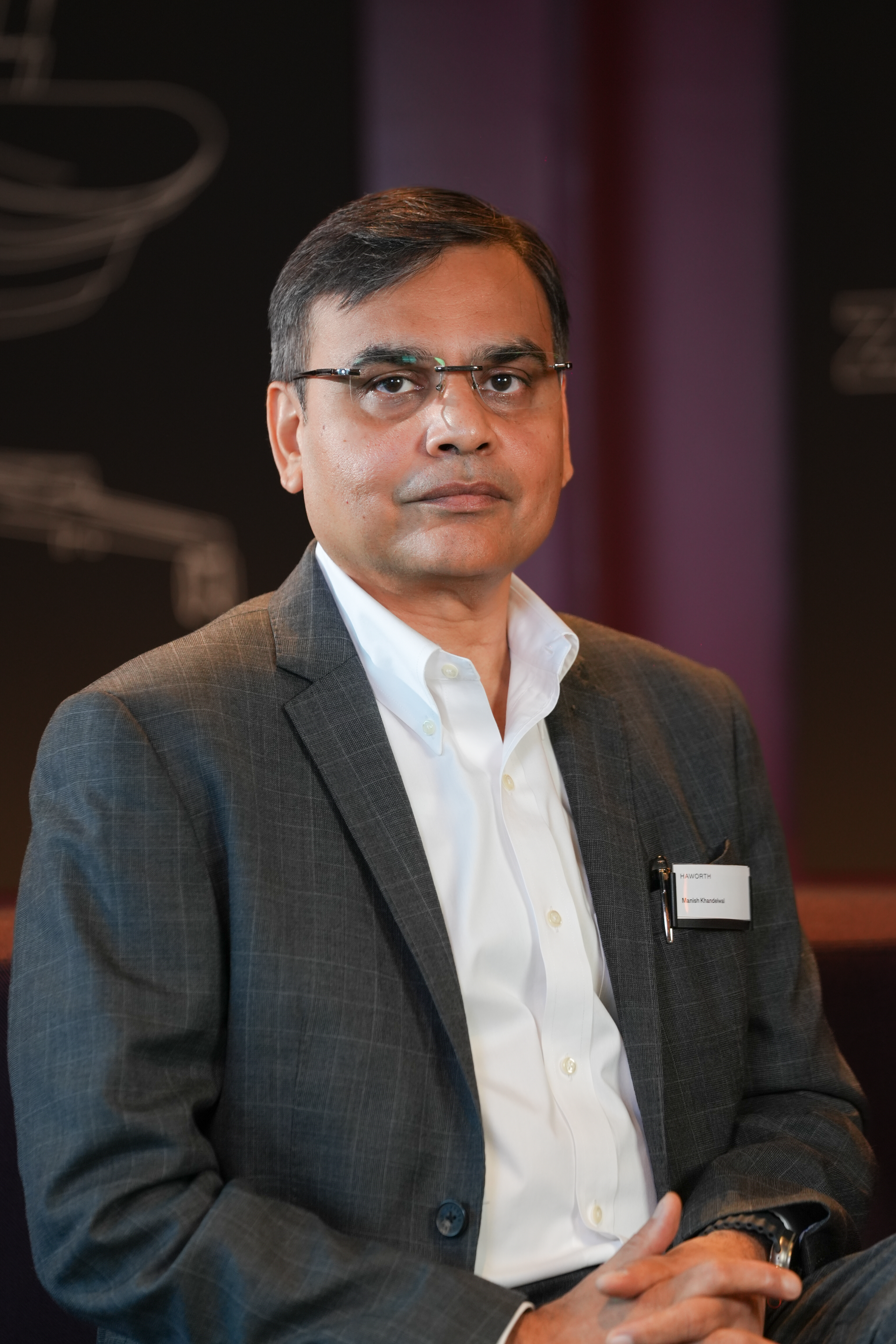
“India is no longer an emerging market for us; it is a strategic growth engine. The scale of opportunity, combined with evolving workplace expectations, is reshaping how organisations design and use office spaces. Our focus is on building local capabilities, expanding our reach, and partnering with clients to deliver integrated workplace solutions that enhance productivity, collaboration, and employee well-being. For Haworth, India also plays a dual role by driving Asia Pacific growth while supporting global accounts with consistency, scale, and innovation. It is a market where we are not just participating, but actively shaping the future of work,” said Manish Khandelwal, Managing Director, Haworth India.
As part of its next phase of growth, Haworth is expanding into emerging cities through a stronger dealership network, improving access to emerging business hubs. At the same time, Haworth continues to strengthen its local operating model, improving agility, delivery timelines, and the ability to deliver customised solutions across markets. Government initiatives such as ‘Make in India’ and ongoing infrastructure expansion are further strengthening the manufacturing ecosystem, improving ease of doing business and enabling greater localisation. This is helping companies like Haworth align more closely with customer expectations for faster delivery and local sourcing, while also supporting expansion into new and emerging business hubs.
This expansion comes at a time when the office furniture market in India is witnessing steady growth, driven by sectors such as IT and ITES, BFSI, consulting, multinational corporations, and the expanding Global Capability Centre (GCC) ecosystem, with education and large Indian enterprises emerging as longer-term opportunities.
Hybrid work is accelerating the shift toward collaborative, flexible, and ergonomic workplaces, increasing demand for integrated, design-led solutions. At the same time, organisations are placing greater emphasis on sustainability, material innovation, and long-term space efficiency, prompting solution providers to rethink design, sourcing, and lifecycle management across workplace environments.
Haworth is responding to this shift through a solution-led approach that combines global design expertise with insights into workplace behaviour. This reflects Haworth’s solution led approach, where design, research, and behavioural insights come together to create meaningful workplace experiences. Its portfolio spans seating, collaborative spaces, workstations & systems and acoustic solutions, enabling organisations to create adaptable, future-ready environments. The company is also sharpening its focus on key solution areas, including ergonomic seating to support employee well-being and performance, collaborative pods and flexible spaces to enable team-based work, and advanced acoustic solutions tailored for hybrid environments. Backed by global design collaborations and research driven insights, Haworth’s integrated ecosystem integrates furniture, design, and workplace intelligence, positioning the company as a solution led workplace partner.
Looking ahead, Haworth will expand its presence in emerging markets, deepen its leadership in the GCC segment, and strengthen engagement with enterprise clients and the design community. The company is also accelerating its shift toward solution-led engagement, working more closely with clients to deliver integrated, high-performance workplaces while shaping conversations around workplace transformation, sustainability, and employee experience in India.
9, Apr 2026
Sightview Offers ASCRS 2026 Attendees Early Access to Enhanced EHR Solution
New user experience and workflows further advance leading technology for ophthalmologists
Durham, NC — April 9, 2026 — Sightview, the only electronic health record and practice management partner focused solely on eyecare, will offer early demo access to its new flagship EHR platform, named Sightview, at the 2026 ASCRS Annual Meeting. Attendees will get an interactive first look at the enhanced solution, which includes a modern, intuitive design that makes daily operations easier for ophthalmology professionals.
“Sightview is one of the most established technology partners for eyecare, and it’s critical we continue updating our offerings to keep up with the new needs and demands placed on eyecare professionals,” said Tycene Fritcher, CEO of Sightview. “Our new Sightview platform maintains the purpose-built functionality that ophthalmologists rely on, with modernized interfaces and workflows to further reduce frictions in their day-to-day tasks.”
The new solution introduces a cleaner look and feel for Sightview’s end-to-end, ophthalmology-specific EHR and PM offering. Simplified clinical and front-end processes enhance the solution’s existing single-screen exam view and make it easier to access and manage every aspect of the practice. Reimagined on a more agile platform, the new solution natively includes integrations such as automated payments and text-to-pay, clearinghouse support and claims management via TriZetto, and ONC-certified ePrescribe via DrFirst, among others.
“This more unified, streamlined platform has been in the works since my first day at Sightview,” said Fritcher. “We can’t wait for clients to experience our hard work firsthand and play around with a tool that I think will change the game for many eyecare practices across the country.”
Sightview will offer interactive demos of the new Sightview platform, which is expected to be available to existing and new Sightview practices in Q2 2026, in booth #527 at ASCRS Annual Meeting (April 10-13).
9, Apr 2026
Rackspace Technology Appoints Paul Soligon and Marco Tesini to Senior Leadership Roles
SAN ANTONIO, TX | Apr 09 — Rackspace Technology® (NASDAQ: RXT), a leading end-to-end hybrid cloud and AI solutions company, announced the appointments of Paul Soligon as Senior Vice President of Operations and Marco Tesini as Senior Vice President of International for the company’s Private Cloud business unit.
Soligon will be responsible for unifying key operational functions to drive growth and strengthen customer retention. In this role, he will lead Business and Sales Operations as well as Customer Success with a focus on advancing analytics and insights as well as elevating customer experience.
Soligon brings extensive leadership experience from over 25 years in high-growth technology environments. Most recently, he served as Senior Vice President at USAN, where he built and scaled significant new go-to-market partnerships and revenue expansion. Prior to that, he spent nearly a decade at Amazon Web Services (AWS) as Vice President and General Manager of Sales, leading a 700-person organization responsible for more than $2.2 billion in revenue and securing over $4 billion in strategic enterprise agreements.
Tesini will lead all markets outside of the US with a focus on expanding the company’s global presence, deepening customer relationships, and scaling innovative solutions. He brings more than 25 years of experience driving business transformation and profitable growth for leading IT organizations, such as Unisys and Hitachi Vantara. Most recently, Tesini served in senior leadership roles at Hitachi Vantara, where he led large-scale regional turnarounds and consistently delivered double-digit growth.
“Paul and Marco join Rackspace at a moment when demand for a governed, enterprise AI backbone is accelerating faster than most organizations can deliver against it,” said Gajen Kandiah, CEO of Rackspace Technology. He added, “Paul’s experience scaling a multi-billion-dollar business at AWS gives us the operational rigor to match that demand. Marco is a proven growth and turnaround leader who has built and rebuilt international businesses at scale, most recently at Hitachi Vantara. They strengthen our ability to do what the market increasingly needs: put AI into production on governed private cloud with the operational discipline that enterprise customers require.”
8, Apr 2026
Swaranjali Delhi Announces ‘Colours of India 2026’ in Hyderabad Celebrating Classical Arts
New Delhi/Hyderabad, April 2026:
Swaranjali Delhi has announced the upcoming edition of “Colours of India 2026 Hyderabad”, a vibrant celebration of Indian classical music and dance. The event, presented in association with Tatvaa Arts and RMS Audio, will take place on April 25, 2026, at the iconic B M Birla Auditorium.
Part of an ongoing series dedicated to promoting India’s rich artistic heritage, the event will feature an eclectic mix of performances by emerging talents and acclaimed artistes, offering audiences a comprehensive cultural experience.

The programme is divided into two sessions. Session 1 will highlight promising young performers, including a dance presentation by Rhythm Dance Academy, followed by vocal and sitar performances by students of Akshay Vat Sangeet Mahavidyalaya. The session will also feature taal vadya by disciples of Pt. Gajender Shewalker and vocal renditions by disciples of Swarasya Gurukulam.
Session 2 will showcase renowned artists from both Carnatic and Hindustani traditions. The line-up includes Carnatic violin recital by Vid. B. Pavan Singh, Hindustani vocal performance by Smt. Hemangi Bhagat, and a sitar recital by Pt. Rampaparnna Bhattacharjee. Accompanying artists for the evening include Shri Susamoy Mishra, Shri Vivek Kayal, Shri Rahul Deshpande, and Shri Rama Krishna, adding depth and richness to the performances.
The event will be anchored by Smt. Sikha Mahanta Nath, ensuring a seamless and engaging experience for attendees.
With support from Shreyas Webmedia Solutions Pvt. Ltd and RMS Audio Hyderabad, the event underscores a collaborative effort to promote classical arts and provide a platform for both established and emerging talent.
Open to all, Colours of India 2026 Hyderabad invites art enthusiasts, connoisseurs, and the general public to witness an immersive celebration of India’s timeless musical and dance traditions.
For further details and RSVP, interested attendees can visit the official website of Swaranjali or contact the organisers directly.
8, Apr 2026
Middle East disruption could cut global oil demand 20 percent and gas 10 percent by 2050 as energy security drives shift to independence
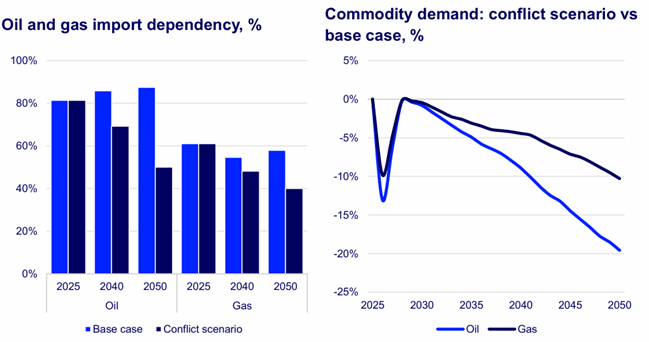
LONDON/HOUSTON/SINGAPORE, April 8, 2026 – Prolonged disruption to Middle East energy supplies could accelerate a structural shift in global energy systems, halving oil and gas import dependence by 2050 and reducing oil demand by 20% and gas demand by 10% relative to the base case. As countries prioritise energy security, demand is increasingly met through electrification, renewables, coal and nuclear, while reliance on globally traded fuels declines, according to Wood Mackenzie.
However, this shift comes with trade-offs. Energy systems become more domestic and diversified, but also more costly, while near-term emissions rise due to increased coal use before converging with the base case over the longer term. These findings are based on a new conflict scenario from Wood Mackenzie, part of its Lens Energy Transition Scenarios, which explores how sustained geopolitical instability could reshape global energy demand, supply and investment through 2050.
Crisis-driven disruption, long-term transformation
The scenario assumes a major geopolitical escalation beginning in early 2026, disrupting 15–20% of global oil and LNG supply. In the near term, oil demand falls by around 9% due to supply outages before recovering to pre-crisis levels by 2030, Wood Mackenzie noted.
Beyond 2030, structural shifts take hold as countries accelerate efforts to reduce reliance on imported fuels. Oil and gas demand declines more rapidly than in the base case, as governments prioritise domestic and diversified energy systems.
“Geopolitical crises can act as powerful catalysts for long-term system change,” said Prakash Sharma, Vice President, Scenarios & Technologies at Wood Mackenzie. “In this scenario, the world moves decisively towards energy independence, with lasting implications for global fuel demand and trade.”
Source: Wood Mackenzie Lens ETS
Electrification and efficiency at the core
Electrification and efficiency emerge as the primary pathways to energy independence. Overall power demand remains broadly in line with the base case, as lower demand from electrolytic hydrogen production is offset by wider electrification across transport, buildings and industry.
This shift reduces reliance on imported fuels while maintaining overall energy service demand.
A rebalanced energy mix
By 2050, the global energy mix shifts significantly under the conflict scenario:
- Oil demand falls 20% and gas 10%, while coal rises 20% as countries diversify supply and prioritise domestic resources
- Nuclear generation increases 40% above the base case, with both conventional and next-generation technologies scaling from the 2030s
- Renewables continue rapid expansion, forming the backbone of domestic power systems
- Hydrogen and carbon capture adoption declines, as policymakers favour more efficient and secure energy pathways
“Energy systems become more local, more diversified and less reliant on complex international trade,” said Jom Madan, Principal Analyst, Scenarios & Technologies. “Electrification and nuclear take priority, while hydrogen and carbon capture are deprioritised due to cost, efficiency and security considerations.”
Near-term coal, long-term nuclear
Coal plays a larger role in the near term as countries respond to supply shocks by maximising domestic energy sources and delaying plant retirements. Over the longer term, nuclear expands significantly, providing stable, fuel-secure baseload power as new capacity comes online from the 2030s.
Gas-fired power and hydrogen-based abatement pathways are scaled back as energy systems favour more secure and proven alternatives.
Security comes at a cost
The shift towards energy independence comes with higher system costs, as countries move away from globally optimised supply chains towards domestic production and diversified sourcing.
“Energy independence reduces exposure to external shocks, but it comes at a structural cost premium,” said Lindsey Entwistle, Principal Analyst, Scenarios & Technologies. “This creates new competitiveness challenges for energy-intensive industries, while advantaging more self-sufficient regions.”
Climate outcomes converge
Despite diverging pathways, cumulative emissions under the conflict scenario remain broadly aligned with Wood Mackenzie’s base case, tracking a 2.6°C warming trajectory. While emissions rise in the near term due to increased coal use, these are offset over time by stronger electrification and nuclear deployment.
“The scenario reaches a similar emissions outcome through a different route,” Sharma concluded. “It reflects a trade-off between near-term energy security and long-term decarbonisation, with countries ultimately relying on proven, domestically controlled technologies.”


