


8, Apr 2026
Call SKY: Skyscanner Launches Fan Hotline for Cricket Match Travel Tips
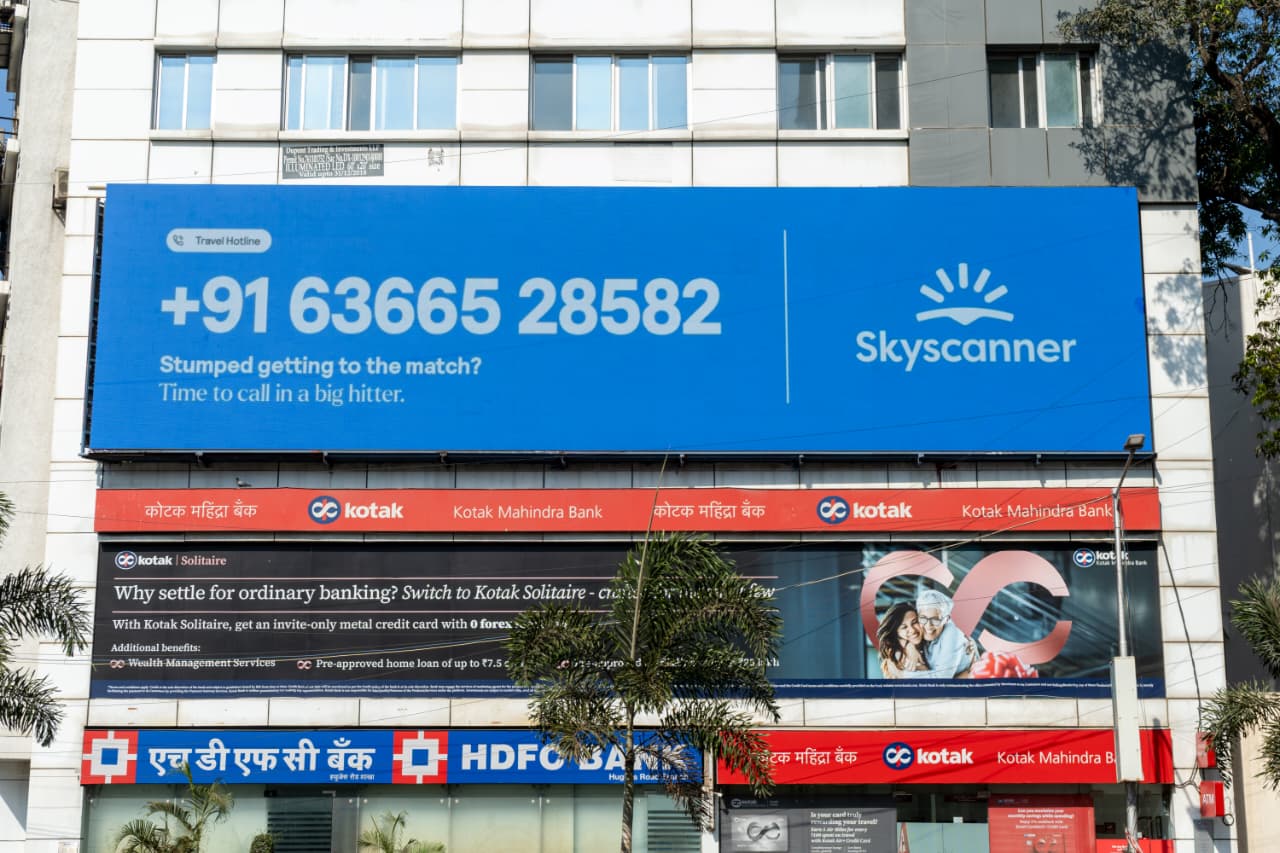
India, Apr 08: Leading global travel app Skyscanner today launched ‘Hotline to SKY’, a first-of-its-kind travel helpline offering cricket fans travel tips and hacks directly from brand ambassador, Suryakumar ‘SKY’ Yadav as they plan their match-day journeys. Blending cricket fandom with travel inspiration, the campaign invites fans to call a dedicated number for simple and smart ways to plan trips around upcoming cricket matches.
About ‘Hotline to SKY’
To spark curiosity, Skyscanner has rolled out a series of billboards across high-footfall locations in Delhi and Mumbai featuring a simple yet compelling prompt. Designed for instant engagement, the campaign turns a moment of curiosity into a real-time travel planning experience.
Once dialled in, callers are greeted by the voice of SKY, who responds to common cricket-related travel questions through a series of short, conversational voice notes. From navigating last-minute travel plans and finding cost-effective options, to building extended match-day itineraries, SKY shares practical advice alongside personal insights, including how he stays composed under pressure and his match-day mindset. The experience is powered by Skyscanner’s key features and expert travel hacks, including Price Alerts and its Calendar view search, helping fans plan more efficiently and make the most of their journeys. Through this, Skyscanner brings fans closer to the game while enabling smarter, more seamless travel planning around cricket.
Inside the Cricket Travel Boom: Key Trends
Travel demand took off following the announcement of the first phase of Indian Premier League (IPL) fixtures on 11 March, with Skyscanner recording a surge in domestic flight searches through to 12 April as fans geared up for the season. In the run-up to the opening clash between Royal Challengers Bengaluru (RCB) and Sunrisers Hyderabad (SRH), searches for the weekend of 27–30 March climbed 45% YoY (year-on-year), signalling early excitement. Mumbai quickly became the top trending destination for that weekend, driven by the face-off between Mumbai Indians (MI) and Kolkata Knight Riders (KKR). Momentum continued into April, with the ever-popular rivalry between RCB and Chennai Super Kings (CSK) in Bengaluru sparking a 56% YoY jump in searches for the weekend of 3–6 April, highlighting how fixture drops could potentially be triggering spikes in travel demand, among Indians.
Commenting on the campaign, Neel Ghose, Skyscanner Travel Trends and Destinations Expert, shared, “Cricket has always had an unmatched hold on Indian audiences, and following the game on the road is just as much a part of that passion. We’re seeing fans plan entire trips around match schedules, navigating last-minute bookings, cross-city journeys, and peak travel windows. With ‘Hotline to SKY,’ Skyscanner is simplifying this process through its features, such as Price Alerts, Whole Month, and flexible search filters, helping users make more informed decisions with greater control. And with SKY lending his voice, we’re bringing a perspective that cricket fans across India instinctively trust, combining real-time insights with guidance that’s as familiar as it is useful, so travellers can stay one step ahead.”
Sharing his experience, Suryakumar Yadav, Skyscanner Brand Ambassador, said, “Being part of ‘Hotline to SKY’ has been special for me. As cricketers, we always feel the energy of fans in the stands, but this was a chance to be part of their journey in a different way, as they travel to support the teams they love. Recording these messages made me think through real travel situations fans face, and I’m proud to be able to share helpful tips via Skyscanner’s features, tools, and hacks, that make their experience smoother. I encourage everyone to pick up the phone and dial in to the hotline to not only get some travel planning tips but also hear some of my personal takes.”
Cricket trips aren’t just about the match anymore; they’ve become mini getaways. Fans are using these moments to explore new cities, discover great local food, and soak in the buzz of match day alongside fellow supporters from all over the world. Skyscanner tapped into this shift through its ‘Pitch Perfect Journeys’ campaign last year, which revealed that while 80% of fans were excited to travel for their favourite IPL teams, more than half were turning it into a longer break, adding a few extra days to enjoy the destination.
Building on this, through the ‘Hotline to SKY’ campaign, Skyscanner continues to deepen its understanding of real traveller needs, offering meaningful support shaped by real-life experiences. By staying close to what fans encounter on their journeys, Skyscanner remains focused on making travel planning simpler, so fans can focus on what truly matters, blending the thrill of the game with the joy of discovering something new.

- 0
- By Neel Achary

8, Apr 2026
TAU Systems & Lawrence Berkeley Lab Achieve Breakthrough in Laser-Powered Accelerator, Enable 8+ Hours of Continuous FEL Output
Carlsbad, California, 8 April 2026: TAU Systems, a pioneer in compact particle accelerator technology, today announced a major scientific milestone: the first-ever demonstration of reliable, continuous operation of a laser-powered accelerator (LPA)-driven free-electron laser (FEL) sustained over more than eight hours without operator intervention. The achievement, published in a new research paper, marks a pivotal step toward making ultra-bright, tunable light sources practical for real-world scientific and industrial applications.
Traditional FEL facilities rely on large, costly radio-frequency accelerators that occupy entire campuses. LPAs shrink the acceleration distance from hundreds of meters to just millimeters by harnessing powerful laser pulses to accelerate electrons in a plasma. While the physics of LPA-driven FELs has been understood for almost 50 years, LPAs have historically had lower beam quality and stability, until now. Translating this technology into a stable light source has remained one of the field’s most stubborn engineering challenges.
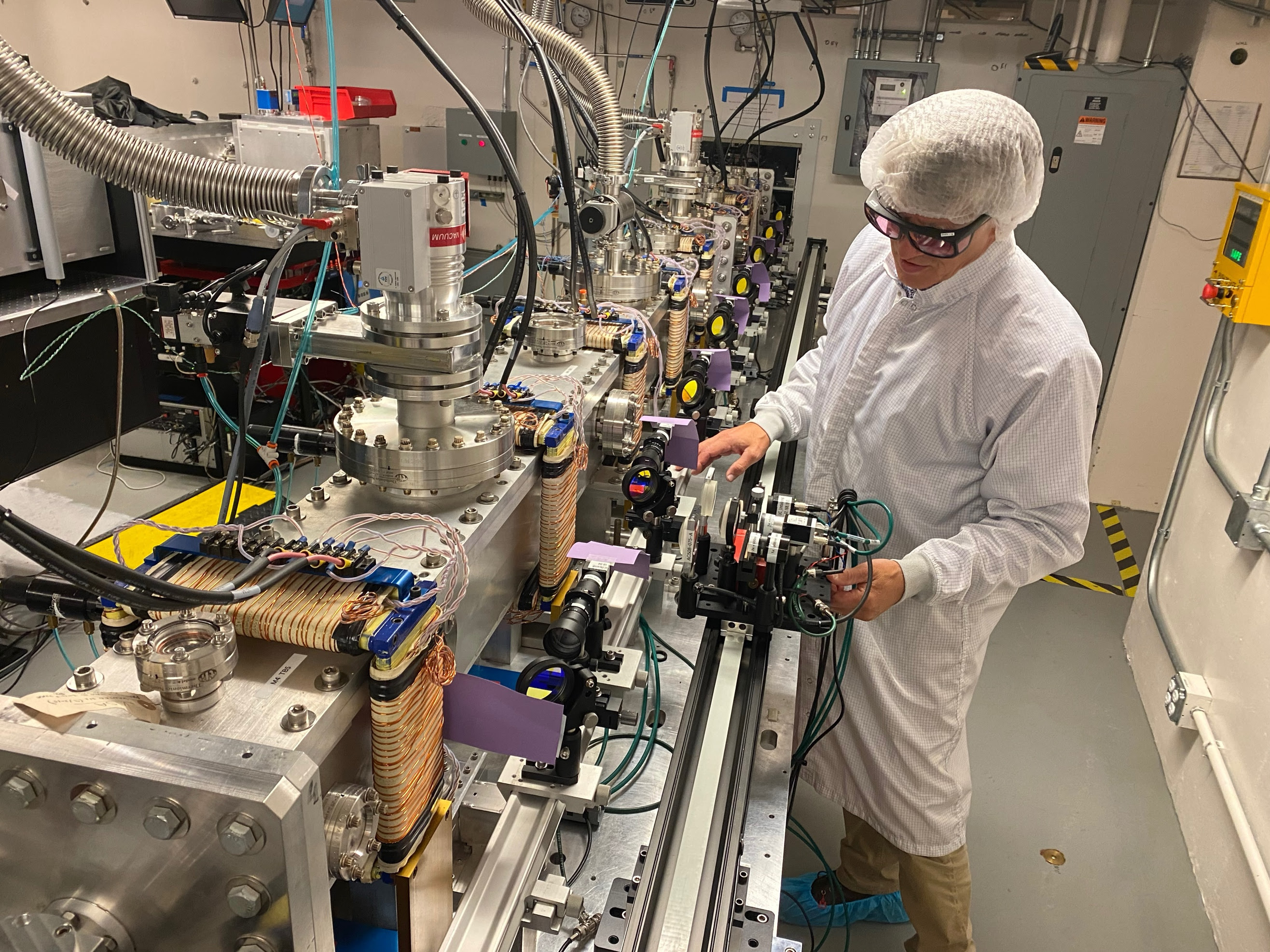
The TAU Systems team, in collaboration with Lawrence Berkeley National Laboratory (Berkeley Lab), achieved this breakthrough by engineering a suite of interlinking stabilisation technologies onto the Hundred Terawatt Undulator (HTU) experiment at Berkeley Lab’s BELLA Center. The result was 100 MeV electron beams delivered at 1 Hz with high consistency over a continuous ten-hour period, driving a self-amplified spontaneous emission (SASE) FEL operating at 420 nm (in the visible blue-ultraviolet range) for more than eight hours without any manual adjustments.
Stephen Milton, VP of Accelerator Science at TAU Systems said: “This is the moment the community has been working toward. We have shown that an LPA-driven FEL is not just a proof-of-concept experiment. It is a platform capable of delivering the stability that real scientific and industrial users demand.”
Beyond simply operating the light source autonomously, the team used the extensive dataset collected during the run to map correlations between the properties of the drive laser, plasma source, and electron beam, and the resulting FEL output. These insights are already informing the next phase of performance improvements, with residual correlations in the data indicating that further gains in stability and brightness are within reach.
“This reported level of reliability and performance of the LPA-driven FEL not only represents a great improvement toward demonstrating the potential for future light source applications,” says Finn Kohrell, a postdoctoral scholar in the BELLA Center at Berkeley Lab and lead author of the published results. “It also allows us to gather an unprecedented amount of data about the highly complex interaction between the LPA and FEL process, and to identify which parameters are most impactful for further improving the FEL performance.”
The implications extend well beyond just one laboratory. Compact LPA-driven light sources have long been envisioned as a way to democratize access to high-brightness X-ray and UV beams, which are currently only available at a handful of national synchrotron and FEL facilities worldwide. Applications include structural biology, materials science, semiconductor lithography, medical imaging, and fundamental physics research. By demonstrating autonomous, multi-hour operation, TAU Systems and Berkeley Lab have cleared a critical barrier on the path to commercially deployable compact FELs.
TAU Systems characterizes the current system as a powerful research platform for the broader LPA-driven FEL community, enabling systematic studies of accelerator-to-light-source coupling that were previously impossible without long-duration stable operation. The company expects the findings to accelerate progress across the field and inform the design of future compact light source installations.
7, Apr 2026
Airrived Named Among Only 11 Startups in Gartner’s “Emerging Tech: AI Vendor Race — Startups to Watch in Agentic AI”
DUBLIN, Calif.–We are at the inflection point. After decades of building systems that assist humans, we are crossing into an era where intelligent systems act autonomously — executing decisions, orchestrating workflows, and adapting to complex environments in real time. Most companies are still laying the groundwork. Airrived has arrived.
Today, Airrived announces it has been recognized among only 11 startups globally in Gartner’s newly released report, “Emerging Tech: AI Vendor Race — Startups to Watch in Agentic AI” (published March 23, 2026). Of 129 companies evaluated, Airrived is the only one purpose-built for cybersecurity and IT — the domains where stakes are highest and trust is non-negotiable.
“129 startups chasing Agentic AI. Only a few made the cut. And just one is focused on Cybersecurity and IT — Airrived. The Agentic era has AIRRIVED.”
— Anurag Gurtu, Co-founder and CEO, Airrived
A Different Kind of Foundation
While much of the market remains fixated on copilots, wrappers, and orchestration layers dressed up as intelligence, Airrived is building something categorically different: the Agentic OS — a new foundational layer for the enterprise that doesn’t just assist, but executes, adapts, governs, and scales.
The Agentic OS combines fine-tuned domain models, deep reasoning, multi-agent orchestration, and policy-driven control into a single governed infrastructure. It transforms autonomous AI from experimental capability into trusted, production-grade operation. Others are enabling AI to act. Airrived is defining how AI can be trusted to act.
At the center of this vision is AetherClaw — Airrived’s flagship security capability and the clearest expression of its mission: autonomous systems that operate across every domain of the enterprise, governed by design, and trusted by default.
“We are not building another layer on top of existing AI. We are building the operating system that makes autonomous AI safe enough to trust — and powerful enough to transform.”
— Anurag Gurtu, Co-founder and CEO, Airrived
Already in Production
Months after emerging from stealth in February 2026, Airrived is not a promise — it is a platform. The company is already deployed in production at some of the world’s most demanding enterprises:
- A Fortune 150 insurance company, running high-volume, mission-critical agentic workflows at enterprise scale.
- A global bank, with governed autonomous agents operating across regulated financial environments.
- One of the largest fast-casual restaurant chains in the world, deploying operational intelligence at scale.
- A major telecom infrastructure provider, running autonomous operations across complex, high-availability infrastructure.
These deployments are not pilots. They are proof that governed, reliable, scalable agentic intelligence is not a future capability — it is a present one.
Industry Recognition
Since emerging from stealth, Airrived has earned recognition from every major industry body in the agentic AI space: Gartner Tech Innovator in Agentic AI • Cybersecurity Excellence Award, Agentic AI Platform (highest votes) • Global InfoSec Award, Most Advanced in Agentic AI • Security Today CyberSecured Award • BIG Innovator in Agentic AI • 2026 AI Excellence Award, Business Intelligence Group.
These honors are not accolades collected at a distance. They are independent validation that Airrived is delivering what the industry has long demanded: agentic AI that enterprises can actually trust.
What Comes Next
Gartner’s report makes clear that the urgent imperative for enterprises is to move beyond single-task AI toward multiagent systems capable of orchestrating complex, cross-domain workflows at scale. The question is no longer whether agentic AI will transform the enterprise. The question is who will build the infrastructure that makes it safe to do so.
Airrived has answered that question.
7, Apr 2026
Executive Centre India Limited to Strengthen its Presence with Multi-Phase Expansion at Aerocity in New Delhi
India, Apr 07: Executive Centre India Limited, a premium flexible workspace provider, is marking a major milestone with a significant multi–phase expansion at Worldmark Aerocity, New Delhi, further deepening its presence in one of India’s most sought-after commercial hubs. This strategic move adds over a cumulative 480,000 sq. ft. of state-of-the-art premium workspace to TEC’s growing footprint in the region. This development underscores TEC’s long-term commitment to supporting the evolving workspace needs of businesses in the capital region and providing Managed Office Solutions.
Set in the heart of one of New Delhi’s most strategic and premium business districts, TEC will be opening three centres across prime assets within Aerocity. The first phase at Worldmark Aerocity Building 4 (Level 7), will offer approximately 101,000 sq. ft. and 1,100 workstations. This will be followed by Building 6 (Level 7), with a gross area of 112,000 sq. ft. and 1,220 workstations. The final phase at Building 8 (Levels 3–5), spans 267,505 sq. ft. and accommodating 2,800 workstations. Together, these centres are designed to deliver a seamless blend of flexibility, functionality, and premium experience for enterprise clients, Global Capability Centres (GCCs), and high-growth companies. The centres will offer state-of-the-art Private Offices, Collaborative Spaces, Meeting Rooms, a Fitness Centre, a Fully Equipped Barista Bar, a Wellness Room, Private Phone Booths and Business Amenities designed as per international standards.
According to a JLL report, Delhi NCR region recorded 17.4 million sq. ft. of gross office space leasing in 2025. This surge was driven by heightened activities from IT/ITeS companies and Global Capability Centres (GCCs), alongside growing demand for flexible workspace solutions. TEC’s expansion in the region is a direct response to this momentum.
Speaking on the expansion, Paul Salnikoff, Managing Director and Chief Executive Officer, Executive Centre India Limited said, “Delhi-NCR continues to be a key market for office space demand, driven by a strong mix of domestic and global occupiers. As per a recent CBRE report, the region accounted for nearly 18% of India’s total office absorption in Q4 2025, and flexible workspace operators contributed 36% of this demand, reflecting the growing shift towards agile workplace strategies. Our expansion in Aerocity aligns with these trends, as we continue to see increasing demand for premium, well-located, and premium flexible work environments. With over 30 years of global expertise, TEC is well-positioned to provide high-quality workspaces that enable businesses to scale and adapt efficiently, shaping the future of work in India.”
Over the past three decades, TEC has built a reputation as a trusted partner to multinational corporations and growth-focused enterprises, delivering premium work environments backed by consistent service, operational excellence, and global scale. Today, the company operates across 15 cities in 8 markets, supporting businesses at every stage of expansion.
7, Apr 2026
Mahindra and Swaraj Announce Price Revision Across Tractor Range
April 7: Mahindra Tractors and Swaraj Tractors, both part of the Mahindra Group, today announced a price increase across their domestic tractor ranges.
The revised prices for Mahindra Tractors will take effect from April 8, 2026, while Swaraj Tractors will implement the adjustment from April 21, 2026.
The price revision is driven by rising input costs, particularly in commodities, impacting production and operational expenses. The increase will vary based on tractor models and regional markets.
Both Mahindra and Swaraj reaffirm their commitment to providing high-quality, reliable tractors to Indian farmers while balancing cost pressures and customer value.
The brands remain focused on innovation, performance, and supporting the agricultural community with dependable solutions.
7, Apr 2026
MetalMandi Crosses 2 Lakh Downloads, Targets 5X Growth to Transform India’s Scrap and Recycling Ecosystem
New Delhi, April 07: MetalMandi, the B2B digital scrap trading platform from Attero, has achieved a significant milestone by crossing 2 lakh downloads across India. The platform is now targeting a 5X growth over the next five years, as it expands its presence across the country’s scrap and recycling ecosystem.
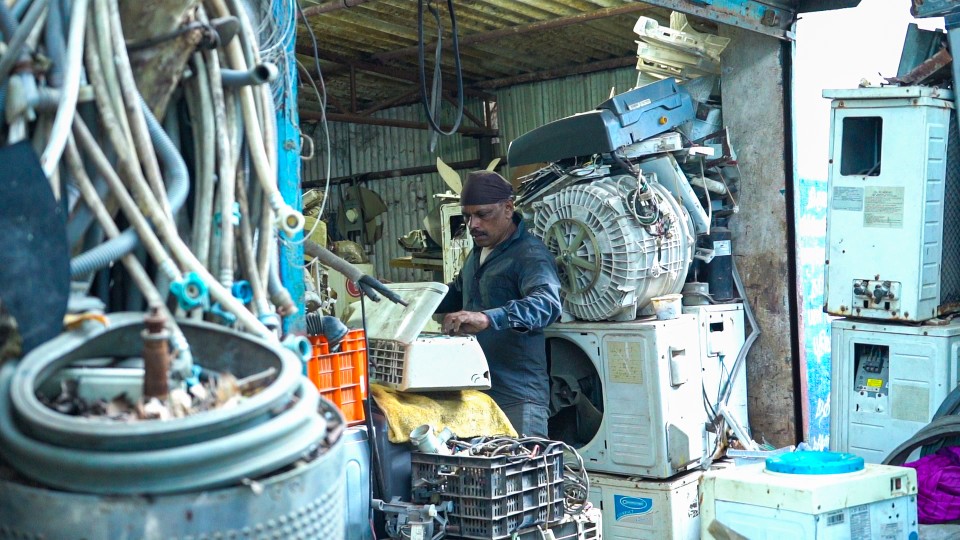
Launched in 2025, MetalMandi currently has over 1.1 lakh registered users, with more than 50,000 monthly active users and around 4,000 daily active users. Participation spans 28+ states and over 100 cities. The platform facilitates the procurement of approximately 15,000 metric tonnes of scrap metal per month, translating to 150,000–200,000 metric tonnes annually. MetalMandi aims to achieve an annual revenue of ₹10,000 crore over the next five years.
Mr. Nitin Gupta, Co-founder and CEO, Attero, said,
“India generates large volumes of scrap, yet the absence of a formal, transparent supply chain has limited its potential. MetalMandi addresses this gap by formalising scrap trading, improving price discovery, and connecting supply with demand directly at scale. Our vision is to make MetalMandi the de-facto pricing and trading platform for metal scrap and e-waste in India, building a self-reliant and secure resource ecosystem.”
The platform has gained strong traction across major industrial hubs, including Delhi NCR, Chennai, Mumbai, Pune, and Hyderabad. MetalMandi provides live market-linked scrap price updates and structured pricing benchmarks for e-waste linked to metal price fluctuations, bringing transparency to an otherwise fragmented sector.
Leveraging artificial intelligence, MetalMandi employs AI-driven quality inspection tools with live image detection to classify scrap categories and assess quality in real time. The platform is also preparing to launch a marketplace model to enable direct interactions between buyers and sellers. To ensure transparency and reliability, it offers end-to-end traceability features, including document uploads, geo-tracking, shipment monitoring, and verified participation of buyers and sellers.
7, Apr 2026
Moody’s Keeps India’s Rating Stable at Baa3
Global ratings agency Moody’s Investors Service has reaffirmed India’s sovereign credit rating at Baa3 with a stable outlook, reflecting confidence in the country’s economic resilience and steady growth prospects.
The agency noted that India continues to benefit from strong domestic demand, ongoing reforms, and a stable financial system, which support its overall economic outlook. At the same time, it highlighted that disciplined fiscal management and sustained policy efforts remain important for maintaining long-term stability.
The stable outlook indicates that risks to India’s growth and fiscal position are currently balanced, with the economy expected to remain on a steady path despite global uncertainties. Analysts believe this rating reinforces investor confidence and supports India’s position as a reliable destination for long-term investments.
Overall, the reaffirmation signals continued trust in India’s economic fundamentals, even as the country navigates external challenges and focuses on sustained growth.
7, Apr 2026
Air India Faces Leadership Shift as CEO Campbell Wilson Steps Down
In a key development for the aviation sector, Campbell Wilson has stepped down as the Chief Executive Officer of Air India, marking a leadership transition at a crucial time for the airline.
Wilson had been at the forefront of Air India’s transformation journey following its return to private ownership. During his tenure, he worked on modernizing operations, expanding the fleet, and improving passenger experience as part of a broader effort to rebuild the airline’s global reputation.
His departure comes at a time when the airline is navigating multiple challenges, including rapid expansion, integration of services, and meeting rising customer expectations. While the exact reasons for his exit remain unclear, the move signals a shift in leadership during an important phase of growth and restructuring.
Industry experts believe that while such transitions can bring uncertainty, they also open the door for fresh direction. With strong backing and an ongoing revival plan, Air India is expected to continue its efforts to strengthen its position in both domestic and international markets.
The airline is likely to announce new leadership soon as it moves ahead with its long-term vision of becoming a world-class carrier.
7, Apr 2026
Jindal Steel Leads Innovation with Coal Gasification for Sustainable Steel Production
Jindal Steel and Power has taken a major step in using domestic coal through coal gasification technology for steel production. The company has set up a Direct Reduced Iron (DRI) plant that uses syngas, making it one of the first to adopt this method at such a scale.
The syngas produced from coal is being used in operations like galvanizing and colour coating, replacing fuels such as natural gas and LPG. It has also been used to run blast furnaces, marking a new development in the steel sector.
Company officials said this approach can reduce dependence on imported fuels like methanol, ammonia, and LNG. They added that better use of India’s coal reserves can support industrial growth and help save foreign exchange.
The initiative is expected to strengthen the country’s push for self-reliance while improving efficiency in steel production.
7, Apr 2026
7 Things Your AC Wishes You Knew Before Summer
We often tend to forget that while we do rely on ACs during summers for comfort, we may be putting an extra strain on the AC units through very simple and mundane habits. Habits that could perhaps affect the cooling performance, affect the energy consumption, and the longevity of the AC.
We must know and be careful of what might happen if our ACs do talk? Well, if they could, here are seven things they would probably ask you to understand and check before summer amplifies.
1.“Clean My Filters and I’ll Cool Better”
Air filters are among the most important components in an AC, yet they are often overlooked. Dust and debris accumulate over time on the air filters, restricting airflow and forcing the system to work harder to cool the room. This reduces cooling efficiency and can increase electricity consumption. Cleaning or replacing filters regularly helps maintain proper airflow, improves indoor air quality, and allows the AC to operate efficiently.
Modern air conditioners such as the Voltas AI Vertis Series are also equipped with intelligent technologies that help optimise performance. For instance, AI Adaptive Cooling automatically adjusts cooling intensity to prevent overcooling while ensuring personalised comfort for every family member, helping maintain efficient cooling without unnecessary strain on the system.
2. “Start Preparing Me Before the First Heatwave Hits”
In many Indian homes, air conditioners remain unused for several months during winter. When summer arrives, switching the AC on without any servicing can reduce performance due to dust buildup, minor component wear, or refrigerant issues.
Scheduling a professional servicing before summer ensures the AC is ready for heavy usage. Pre-season servicing usually includes coil cleaning, refrigerant level checks, electrical inspection, and drain pipe cleaning. This preparation ensures smoother performance when temperatures peak.
3. “Turning the Temperature Down Won’t Cool the Room Faster”
Many people believe that setting the thermostat to the lowest temperature will cool the room quickly. In reality, an air conditioner cools at a steady rate, and extremely low temperature settings only make the compressor run longer.
Maintaining indoor temperatures between 24°C and 26°C offers a good balance between comfort and efficiency. Some modern systems also simplify this process. For example, AI Energy Manager in the Voltas AI Vertis Series, integrated with the Voltas Intelligent app, allows users to set a monthly electricity consumption target. The AC then optimises its performance in real time to maintain comfort while staying within the defined energy budget, helping households manage electricity usage more effectively.
4. “Help Me Cool the Room by Sealing It Properly”
Air conditioners work best when the room is well insulated. If cool air keeps escaping through open doors, windows, or gaps, the AC has to work harder to maintain the desired temperature.
Closing doors and windows, using curtains or blinds to block sunlight, and sealing small gaps around windows can significantly improve cooling efficiency. These simple habits help the AC maintain stable temperatures with less energy consumption.
5. “Don’t Forget My Outdoor Unit”
Most users focus only on the indoor unit, but the outdoor condenser plays an equally critical role. It releases the heat removed from indoor air, and if it is surrounded by dust, leaves, or clutter, heat exchange becomes less efficient.
Ensuring the outdoor unit has adequate ventilation and is not blocked by plants or debris helps maintain smooth performance and prevents unnecessary strain on the system during peak summer months.
6. “Let Smart Features Do the Heavy Lifting”
Air conditioners today are evolving beyond simple cooling appliances. Many newer models integrate intelligent technologies that help optimise cooling automatically based on usage patterns and environmental conditions.
For instance, AI Geofencing in the Voltas AI Vertis Series detects when the user is approaching home and prepares the room in advance for instant comfort upon arrival, while ensuring the AC does not run unnecessarily when the space is unoccupied.
Combined with features such as AI Adaptive Cooling and AI Energy Manager, these smart technologies help deliver efficient cooling while reducing energy wastage.
7. “A Little Care Will Help Me Last Longer”
Like any appliance, an air conditioner performs best when basic maintenance practices are followed. Ignoring routine care can reduce cooling capacity, increase electricity bills, and lead to expensive repairs.
Cleaning filters every few weeks during peak usage, scheduling annual servicing, and avoiding extremely low temperature settings can help maintain the AC’s efficiency and extend its lifespan.