


7, Apr 2026
Dr. Diptimayee Mohanty: Three Decades of Inspiring Education and Empowering Students
For 30 years, Dr. Diptimayee Mohanty has been at the helm of Aryavart Ancient Academy, shaping an educational environment that seamlessly blends Gurukul traditions—discipline, wisdom, and holistic values—with the modern CBSE curriculum.
Her leadership has empowered thousands of students, especially those from modest backgrounds, helping them overcome personal and societal challenges to reach their full potential. Every achievement of her students stands as a testament to her unwavering commitment to nurturing both academic excellence and personal growth.
Under Dr. Mohanty’s guidance, Aryavart Ancient Academy has become more than a school—it is a place where tradition meets modern education, fostering resilience, character, and lifelong learning. Her legacy is a shining example of how passion, perseverance, and vision can transform lives through education.

- 0
- By Neel Achary

7, Apr 2026
Samsung Brings Al, Coding Skills to 1,000 Students in First Major Maharashtra Skilling Initiative
Delhi, Apr 07: Samsung Electronics, India’s leading consumer electronics brand, has successfully certified 1,000 students in Maharashtra under its flagship CSR initiative, Samsung Innovation Campus (SIC), marking a major milestone in strengthening the state’s digital skilling ecosystem.
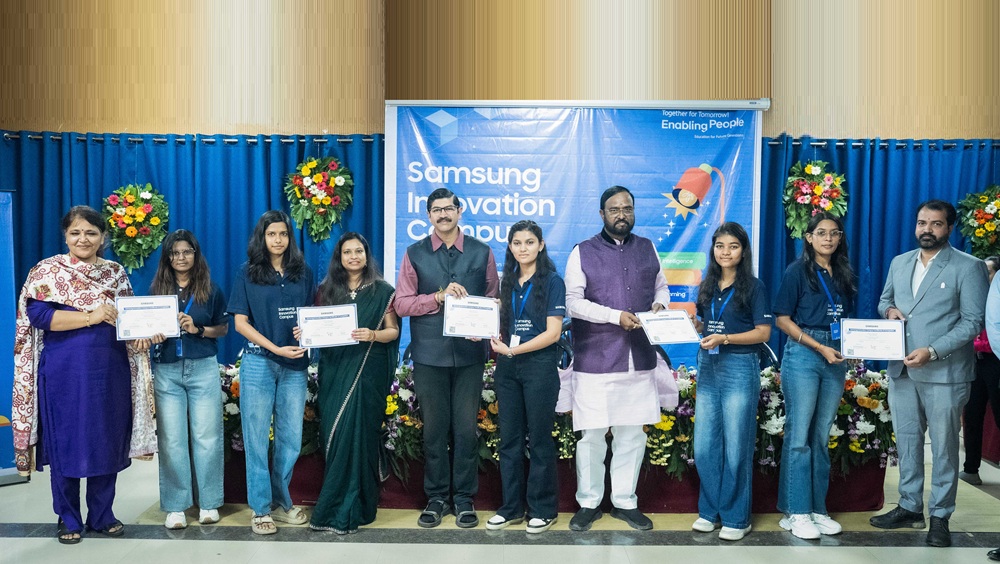
This achievement represents the first large-scale certification rollout of the programme in Maharashtra, with students trained in key future technologies such as Artificial Intelligence (AI) and Coding & Programming—critical pillars of the digital economy.
A total of:
- 127 students from Savitribai Phule Pune University
- 373 students from Pimpri Chinchwad University
- 250 students from D. Y. Patil University’s Ramrao Adik Institute of Technology
- 250 students from Anjuman-I-Islam’s Kalsekar Technical Campus
successfully completed the programme, gaining hands-on, industry-relevant skills to solve real-world challenges.
Building Future-Ready Talent
Beyond technical training, the programme integrates soft skills development and career readiness modules, ensuring participants are both job-ready and future-ready. This holistic approach aims to bridge the gap between academic learning and evolving industry expectations.
Marking 30 years of operations in India, Samsung continues to reinforce its commitment to digital inclusion and education.
Shubham Mukherjee, Head CSR & Corporate Communications, Samsung Southwest Asia, said,
“India’s digital growth will be driven by the strength of its talent pipeline. Programmes like Innovation Campus go beyond education—they build real-world capability by combining deep tech learning with employability and problem-solving skills.”
Expanding Nationwide Impact
Launched in India in 2022, Samsung Innovation Campus focuses on democratizing access to future-tech education through a blend of classroom learning, mentorship, and project-based application.
The programme has:
- Trained 20,000 youth across India in 2025
- Achieved 48% women participation nationwide
- Expanded its footprint across multiple regions
The initiative is implemented in collaboration with the Electronics Sector Skills Council of India and Telecom Sector Skill Council.
Alongside flagship programmes like Samsung Solve for Tomorrow and Samsung DOST, the initiative continues to nurture a new generation of innovators equipped with technical expertise and a future-ready mindset.
7, Apr 2026
India’s Auto Market Surges to Record High in FY26 with 13.3% Growth Fueled by GST 2.0
India’s automobile market recorded a historic year in FY26, with total vehicle retail sales reaching an all-time high of 2,96,71,064 units, marking a 13.3% increase compared to 2,61,87,255 units in FY25, according to the Federation of Automobile Dealers Associations (FADA). Industry experts say the rollout of GST 2.0 played a key role in driving consumer confidence and demand, particularly during the latter half of the fiscal year.

Pic Credit: Pexel
Passenger and Two-Wheeler Sales Lead Growth
Passenger vehicle sales grew 13%, reaching 47,05,056 units, up from 41,63,927 units in FY25. Two-wheelers, which continue to dominate the market, also saw robust growth, with retail sales rising 13.4% to 2,14,20,386 units. Three-wheelers and commercial vehicles recorded steady growth as well, with sales increasing 11.68% and 11.74%, respectively.
A Landmark Year for the Auto Industry
FADA President C S Vigneshwar described FY26 as a “landmark year” for the automotive sector, noting that five out of six vehicle categories achieved record annual sales. He emphasized that strong policy support, market stability, and renewed consumer confidence contributed to this growth, even as the pace of sales varied across different segments.
Looking Ahead
With the positive momentum, industry insiders are optimistic about the future. Continued policy clarity, enhanced financing options, and consumer incentives are expected to sustain demand, helping India maintain its growth trajectory in the auto sector.
The record FY26 figures underscore the resilience of the Indian automotive market and highlight the growing appetite for both personal and commercial vehicles across the country.
7, Apr 2026
Indian Railways Sets New Records in Passenger Revenue and Freight Volumes for FY26
Pic Credit:Pexel
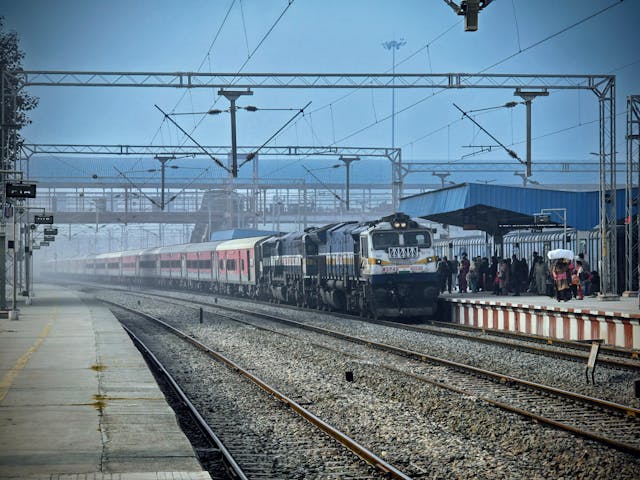
Indian Railways has achieved historic milestones in both passenger and freight operations in the 2025–26 fiscal year, reflecting growing demand and improved operational efficiency across the network.
Passenger revenue grew by approximately 6%, crossing ₹80,000 crore, up from ₹75,500 crore in the previous year. The increase outpaced the rise in passenger volumes, indicating stronger demand for long-distance and premium travel services.
On the freight front, Indian Railways transported a record 1,670 million tonnes (MT) of cargo, marking a 3.25% year-on-year growth. The growth highlights the railways’ crucial role in supporting India’s supply chains, with bulk commodities such as coal, cement, and agricultural products driving the increase.
Passenger and Freight Growth: A Dual Success
The combined growth in passengers and freight underscores the railways’ importance as both a mode of transport and a pillar of the economy. Increased freight volumes help industries move goods efficiently, while rising passenger revenues indicate recovery in travel and confidence in the network.
Modernization and Future Outlook
With ongoing projects including dedicated freight corridors, upgraded stations, and faster passenger trains, Indian Railways is well-positioned to continue its growth trajectory. Experts say these developments will further strengthen connectivity, boost economic activity, and enhance the overall travel experience for millions of Indians.
The record figures in FY26 demonstrate the resilience and strategic importance of Indian Railways as it balances passenger convenience with freight efficiency, playing a vital role in India’s economic growth.
7, Apr 2026
India’s Coffee Exports Hit Record $2.13 Billion in FY26

Pic Credit: Pexel
India’s coffee sector has achieved a historic milestone, with exports reaching a record $2.136 billion in the 2025–26 fiscal year, registering a 17% growth over the previous year’s $1.82 billion. The surge comes on the back of higher international prices and a modest rise in export volumes, according to industry sources.
Rising Global Demand and Prices
The growth reflects strong global demand for Indian coffee, particularly Arabica and Robusta varieties. Higher international prices, combined with steady shipments, helped push the overall export value to an all-time high. Key markets such as the United States, Germany, and Italy continued to drive demand, highlighting India’s reputation as a reliable supplier of quality coffee beans.
A Boost for Indian Coffee Growers
For small and medium coffee growers, the record exports are a welcome development, offering better returns and strengthening livelihoods in traditional coffee-growing regions like Karnataka, Kerala, and Tamil Nadu.
Looking Ahead
Industry experts say that while the export volumes grew moderately, India’s focus on improving quality, exploring new markets, and expanding specialty coffee production could sustain momentum in the coming years. Initiatives to enhance branding, adopt sustainable practices, and support farmers are expected to further consolidate India’s position in the global coffee trade.
The milestone signals both the resilience and growing global recognition of Indian coffee, positioning the country as a key player in the international coffee market.
7, Apr 2026
Curefit Healthcare Pvt Ltd Appoints Four Independent Directors to Strengthen Board Governance
Mumbai, Apr 7: Fitness and wellness platform Curefit Healthcare Pvt Ltd has appointed four independent directors, Kalpana Morparia, Arun M. Kumar, Dr. Indu Bhushan and Pragya Misra as independent directors on its board.
Kalpana Morparia, former Chairman of JPMorgan South and Southeast Asia, is a veteran in banking and financial services. She has held leadership roles at ICICI Bank and currently serves on the boards of several global organisations, bringing strong governance and financial oversight capabilities. In January 2024, she was conferred the Padma Shri award in the category of Trade & Industry.
Arun M. Kumar brings extensive global leadership experience spanning consulting, venture capital and public service. He is currently Managing Partner at Celesta Capital. Previously, he served as Chairman and CEO of KPMG India and as a member of KPMG’s global board of directors. He held a senior role in former US President Barack Obama’s administration as Assistant Secretary of Commerce for Global Markets, where he led international trade and investment efforts.
Dr. Indu Bhushan, the founding CEO of Ayushman Bharat-Pradhan Mantri Jan Arogya Yojana (AB-PMJAY) and a former IAS officer from the Rajasthan cadre, brings deep expertise in healthcare policy and public systems. With over three decades of experience across the World Bank, Asian Development Bank and the Government of India, he has played a key role in shaping large-scale health programmes in the country.
Pragya Misra, Head of Strategy & Global Affairs, India at OpenAI, leads the company’s strategic agenda in one of the world’s most critical AI markets. Her role spans product, policy, partnerships, and go-to-market, driving a unified OpenAI strategy. As OpenAI’s first India hire, she has been instrumental in building and scaling its presence. Previously, she held leadership roles at Truecaller and WhatsApp.
Mukesh Bansal, chairman and founder, Curefit Healthcare Pvt Ltd, said.
“As organisations grow in scale and complexity, strong governance and clarity of thought become increasingly important. We have been thoughtful about on-boarding independent voices who bring rigour, accountability and a wider institutional perspective to the board. Kalpana, Arun, Indu and Pragya each bring that depth, and I look forward to their contributions in helping us build a more resilient and responsible organisation,”
“As we aim to build Curefit for the long term, bringing in diverse, global perspectives to our board is a natural step in our journey. All four leaders bring a unique depth of experience across global business, public systems and technology along with a strong track record of building enduring institutions. Their guidance will be invaluable to us,” Naresh Krishnaswamy, the company’s CEO said.
7, Apr 2026
India Achieves Record Wind Power Growth with 6.05 GW Addition in FY26
Pic Credit: Pexel
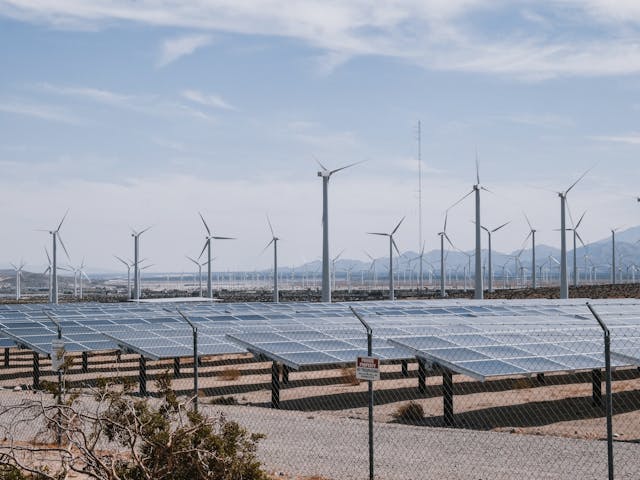
New Delhi – India has set a new milestone in renewable energy, adding 6.05 GW of wind power capacity in fiscal year 2025–26, marking the highest annual growth ever in the sector. This represents a 46% increase over the previous year and surpasses the previous record of 5.5 GW added in FY17.
The country’s cumulative installed wind power capacity now exceeds 56 GW, reflecting a strong resurgence in the sector driven by policy clarity, improved transmission infrastructure, competitive tariffs, and a robust project pipeline, according to the Ministry of New and Renewable Energy.
Leading States and Hybrid Projects
States such as Gujarat, Karnataka, and Maharashtra were at the forefront of this growth, contributing the largest share of new capacity. The rise of hybrid wind-solar projects and the rollout of green energy open access have further accelerated investment in these regions.
Government Support and Policy Boosts
The central government has introduced several measures to support wind energy development, including concessional customs duties on turbine components, graded waivers of inter-state transmission charges until June 2028, and competitive bidding mechanisms. These initiatives have helped create a favorable environment for investors and developers.
Strengthening India’s Renewable Goals
This record growth in wind energy strengthens India’s renewable energy portfolio and aligns with the nation’s ambitious target of achieving 500 GW of non-fossil fuel-based capacity by 2030. Institutions like the National Institute of Wind Energy continue to provide technical guidance and support to improve efficiency and deployment across projects.
The milestone underscores India’s commitment to sustainable energy and demonstrates the country’s ability to leverage technology, policy, and investment to drive large-scale clean energy growth.
7, Apr 2026
India’s Kalpakkam Fast Breeder Reactor Achieves Criticality
India has achieved a landmark moment in its quest for energy self-reliance with the indigenously built Prototype Fast Breeder Reactor (PFBR) at Kalpakkam reaching criticality. Prime Minister Narendra Modi called it a “defining step” in India’s civil nuclear journey, highlighting the nation’s growing expertise in advanced science and engineering.

Pic Credit: Pexel
A Journey Years in the Making
Criticality is the moment when a nuclear reactor achieves a self-sustaining chain reaction—a key milestone before it begins full-scale power generation. For the scientists and engineers behind the PFBR, it is the culmination of decades of research, careful planning, and relentless effort.
The PFBR forms the second stage of India’s unique three-stage nuclear programme, a long-term vision designed to harness the country’s vast energy resources and reduce dependence on imported fuels.
Why the PFBR Is Special
Unlike conventional reactors, the PFBR is a “breeder” reactor—it produces more fuel than it consumes. This ability is vital for India, which has limited uranium but abundant thorium reserves. By generating additional fissile material, the reactor supports a closed nuclear fuel cycle and strengthens the country’s energy security.
This achievement is not just about producing electricity—it is about laying the foundation for future thorium-based reactors, which will form the third stage of India’s nuclear programme. Thorium, more abundant in India than uranium, has the potential to provide cleaner, safer, and virtually inexhaustible energy.
A Global Achievement
With the PFBR, India joins a small group of countries, including Russia, capable of operating commercial fast breeder technology. It demonstrates the country’s ability to innovate and execute complex scientific projects at a global standard.
Looking Ahead
While criticality is a major milestone, the PFBR’s journey is far from over. The next phase will involve fine-tuning the reactor, scaling operations, and eventually integrating it into India’s energy grid.
For millions of Indians, this development represents more than technology—it symbolizes a step toward energy independence, sustainable growth, and a future where the nation can harness its own resources to power homes, industries, and progress.
The PFBR is a reminder that innovation and perseverance can turn ambitious visions into reality, securing energy for generations to come.
7, Apr 2026
Odisha Cabinet Approves ₹929.96 Crore Redevelopment of VSSUT
The Odisha Cabinet, chaired by Chief Minister Mohan Charan Majhi, has approved a redevelopment project worth ₹929.96 crore for Veer Surendra Sai University of Technology in Burla.
The project aims to upgrade the university’s infrastructure and strengthen technical education in the state. As part of the plan, new academic blocks, advanced laboratories, and improved hostel facilities will be developed across the campus.
The redevelopment is expected to benefit more than 10,000 students by providing better learning, research, and residential facilities. Officials said the initiative will enhance the overall academic environment and support the growing demand for quality technical education.
The decision is seen as a key step toward improving higher education infrastructure in Odisha and supporting the state’s long-term development goals.
7, Apr 2026
Shishu Katha Diwas Celebrated to Inspire Young Minds During Odia Pakhya
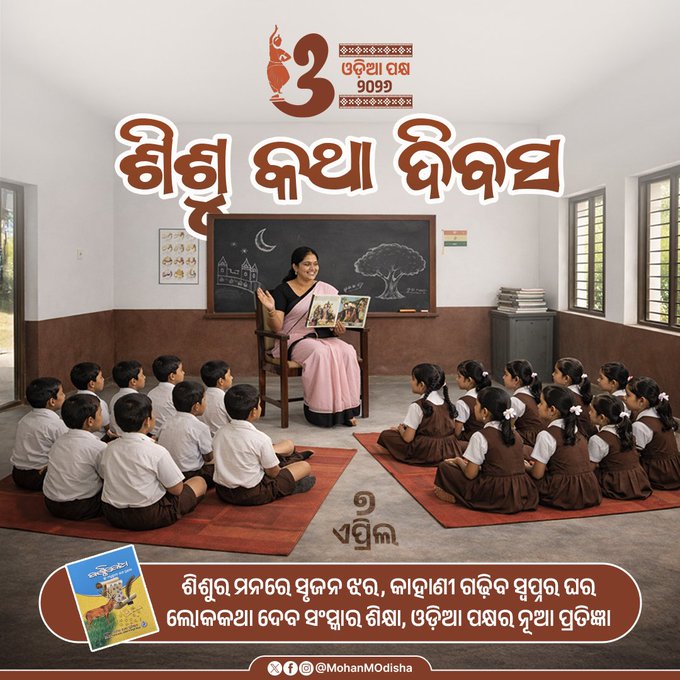
As part of the ongoing celebrations of Odia Pakhya, Shishu Katha Diwas was observed today with the aim of nurturing creativity among children and strengthening their connection with the Odia language.
Pic Credit: https://x.com/MohanMOdisha
‘ଓଡ଼ିଆ ପକ୍ଷ’ ଅବସରରେ ଶିଶୁମାନଙ୍କ ସୃଜନଶୀଳ ପ୍ରତିଭାର ବିକାଶ ଏବଂ ସେମାନଙ୍କୁ ମାତୃଭାଷାର ସମୃଦ୍ଧ ପରମ୍ପରା ସହ ଅନୁପ୍ରାଣିତ କରିବା ଉଦ୍ଦେଶ୍ୟରେ ‘ଶିଶୁ କଥା ଦିବସ’ ଓ ‘ବର୍ଣ୍ଣବୋଧ ବଣ୍ଟନ’ କାର୍ଯ୍ୟକ୍ରମ ଆୟୋଜିତ ହେଉଛି। ଶୈଶବର କଳ୍ପନାପ୍ରସୂତ ଜଗତକୁ ପାରମ୍ପରିକ ଗଳ୍ପର ରଙ୍ଗରେ ରଞ୍ଜିତ କରିବା ସହ ଆଗାମୀ ପିଢ଼ିକୁ ଆମ ସାହିତ୍ୟ ଓ… pic.twitter.com/xLHOYOkOr6
— CMO Odisha (@CMO_Odisha) April 7, 2026
The initiative focuses on encouraging children to engage with storytelling, helping them develop imagination while fostering a deeper appreciation for their mother tongue. Various activities were organized to make learning interactive and meaningful, bringing together students, teachers, and community members.
In addition to storytelling sessions, Varnabodha—basic learning materials designed to introduce young learners to the Odia language—were distributed among children. The effort seeks to build a strong foundation in language skills while also introducing them to the richness of Odisha’s literary and cultural traditions.
Organizers emphasized that storytelling plays a vital role in shaping young minds by passing down values, traditions, and cultural identity. By connecting children with folk tales and traditional narratives, the program aims to keep Odisha’s heritage alive for future generations.
The event also highlighted the importance of collective participation. Parents, educators, and communities were encouraged to actively engage with children, motivating them to read, listen, and express themselves in their native language.
Through such initiatives, Shishu Katha Diwas serves as a meaningful step toward preserving linguistic heritage while inspiring the next generation to stay rooted in culture and creativity.


