


3, Apr 2026
Odisha Retains Census Staff to Ensure Smooth 2027 Operations
The Odisha government has directed all departments, district administrations, and urban local bodies not to transfer officials or employees involved in Census 2027. The move aims to ensure uninterrupted preparation and smooth execution of the census.
Authorities emphasized that retaining personnel in their current positions is critical for accurate data collection, training, and field operations. The directive ensures that staff remain focused and adequately supported throughout the extensive administrative exercise.
Census 2027 will provide essential insights into population trends, urbanization, and demographics, and the state’s proactive measures are intended to guarantee a seamless and efficient process.

- 0
- By Neel Achary

3, Apr 2026
India Unveils Support Measures to Shield Exporters Amid West Asia Tensions
The Indian government is set to roll out a range of measures to support exporters affected by the ongoing conflict in West Asia. Rising freight costs, higher insurance premiums, and logistical challenges have disrupted trade, prompting authorities to step in to ensure the country’s export sector remains robust.
Commerce and Industry Minister Piyush Goyal stated that the initiatives aim to reduce the burden on exporters while maintaining India’s competitiveness in global markets. Planned support includes financial assistance to offset rising shipping and logistics costs, along with expanded insurance coverage to help businesses manage risk in uncertain times.
The Gulf region conflict has disrupted shipping routes, making deliveries more expensive and unpredictable. Exporters, particularly those serving Middle Eastern markets, have faced delays and higher operational costs. The government’s measures seek to stabilize the sector and reinforce confidence among businesses navigating this volatile environment.
Officials emphasized that these steps will not only ease immediate challenges but also help sustain export volumes and secure employment in export-oriented industries. By strengthening the export ecosystem, India aims to safeguard its position in global trade and ensure continued growth despite geopolitical uncertainties.
3, Apr 2026
NMDC Achieves Record 53 MT Iron Ore Production, Boosting Economic Growth
NMDC Limited, India’s largest state-run iron ore producer, has achieved a historic milestone by producing a record 53 million tonnes (MT) of iron ore in the 2025-26 fiscal year, becoming the first mining company in the country to surpass the 50 MT mark. This represents a significant increase over the previous year and reflects strong operational efficiency across its mining sites.
Driving Growth in Steel and Infrastructure
Iron ore is a key raw material for steel production, which fuels construction, manufacturing, and infrastructure projects. NMDC’s record output ensures a steady supply for domestic steelmakers, helping to stabilize costs and meet the growing demand for steel across the country. This supports India’s ongoing urban development and infrastructure expansion.
Reliable iron ore supply also enables steel producers to fulfill orders for housing, transportation, and industrial projects, creating jobs and stimulating investment throughout the value chain.
Strengthening Economic Resilience
By increasing domestic production, NMDC reduces reliance on imported minerals, enhancing supply security and contributing to stable commodity markets. The company’s expansion plans aim to further increase output in the coming years, potentially exceeding 100 MT by the end of the decade, which would strengthen both the mining and downstream industrial sectors.
Looking Ahead
NMDC’s record production is not just a company achievement—it is a significant step for India’s economy. By securing raw materials for key industries, supporting infrastructure development, and fostering job creation, this milestone demonstrates how robust resource management can drive national growth and industrial self-reliance.
3, Apr 2026
Odisha Pushes for Transparent Fuel Supply and Accelerates PNG Expansion
The Odisha government has stepped up efforts to streamline fuel distribution and promote the adoption of Piped Natural Gas (PNG) across urban areas. A high-level review meeting on Thursday brought together state officials and representatives from major oil and gas companies to address supply chain efficiency and transparency.
Officials highlighted the importance of transitioning households from LPG cylinders to PNG to ensure smoother fuel delivery and reduce dependency on traditional supply methods. To maintain accountability, gas agencies have been instructed to implement biometric authentication, including fingerprint and iris scans, for all deliveries.
State ministers stressed that once a household receives a PNG connection, any existing LPG connection must be decommissioned to optimise supply. District authorities have been tasked with providing full support to facilitate the swift laying of pipelines, particularly in urban centres and high-demand areas.
Special attention will be given to Puri ahead of the Rath Yatra festival to meet increased demand, while priority sectors such as schools, hospitals, Anganwadis, and community kitchens will continue to receive uninterrupted gas supplies.
Authorities reassured the public that gas availability remains stable, with continuous monitoring through a 24-hour control room and consistent buffer stock maintained by oil companies. The government emphasized that these steps aim to prevent irregularities, improve transparency, and provide reliable fuel access to all consumers.
3, Apr 2026
Regulatory T Cells (Tregs) Altered in Children with Autism
SACRAMENTO, Calif. Apr 03: Two new studies from the UC Davis MIND Institute examined regulatory T cells (Tregs) and their potential role in neuroinflammation and behavioral changes associated with autism.
Tregs act as immune system “brakes,” calming inflammation to prevent overreaction. They are often decreased in autistic individuals.
Previous studies have found higher levels of inflammatory immune cells in the blood, brain and gastrointestinal tissues of people with autism. These increased inflammatory responses are often linked to greater behavioral support needs, while higher levels of Tregs are associated with improved behavioral outcomes. Despite this, Tregs have not been well studied in autistic children, and their potential as a therapeutic target remains largely unexplored.
Altered Tregs in autistic children The first study, published in the Journal of Neuroinflammation, characterized Tregs in children with autism. It determined if gastrointestinal (GI) issues, a common co-occurring condition, altered Tregs in a unique way.
The researchers found autistic children had altered Tregs both in number and in the genes those cells use. This was compared to typically developing children. All participants were enrolled in the CHARGE study (Childhood Autism Risk from Genetics and Environment), an ongoing study that supports autism research.
The researchers compared the number and type of Tregs in 36 children with autism and 18 typically developing children. They also examined gene expression in Tregs to determine if there were differences between the two groups. In addition, they looked at the relationship between Tregs and gastrointestinal symptoms in autistic children.
The researchers found children with autism showed altered Tregs. Compared to typically developing children, children with autism had:
A lower number of Tregs. Tregs were generally reduced in autistic children but decreases in specific Treg populations differed depending on whether a child had GI issues. Children with autism and GI issues had fewer Tregs capable of producing anti-inflammatory proteins. Children without GI issues had fewer Tregs capable of dividing after activation. Differentially expressed genes. Tregs from autistic children had 213 differentially expressed genes, with 171 upregulated (increased output) and 42 downregulated (decreased output). The upregulated genes mainly help cells reorganize and repair DNA and adjust how they manage energy and fat metabolism. The downregulated genes were mostly involved in energy production, such as the conversion of oxygen and nutrients into usable energy.
The researchers note that more research is needed, but that these changes in metabolism and DNA organization suggest the identity of Tregs is unstable. One commonality was that having fewer Tregs was associated with more challenging behaviors in both typically developing children and children with autism.
“These differences in Treg populations may help explain the higher levels of inflammation seen in autism and could be linked to both gastrointestinal problems and certain behavioral traits,” said Rachel Moreno, a postdoctoral fellow at the MIND Institute and first author of the study. “This data further supports the idea that the immune system plays an important role in autism in at least some individuals.”
Exploring Tregs as potential biological therapies There is growing interest in biological therapies for autism that target Tregs.
In a second study, also published in the Journal of Neuroinflammation, the authors assessed whether increasing Tregs could reduce inflammation and behavioral challenges.
They used a mouse model of altered neurodevelopment, maternal immune activation (MIA), in which offspring exhibit autism-like behaviors.
The team transferred Tregs from healthy mice into male and female MIA mice, and evaluated tissues commonly inflamed in autism, including blood, brain and gut.
They found significant sex differences in the MIA mouse offspring that received the Treg transfer, with males showing greater changes than females.
Male mice showed:
Healthier immune balance: Treg treatment increased helpful Treg cells and reduced pro‑inflammatory cells in both the spleen and gut. Lower inflammation: Males produced fewer inflammatory cytokines, such as IL‑17, after treatment, indicating a calmer immune system. Widespread changes in the brain: Hundreds of genes in the cerebellum, frontal cortex and hippocampus changed after Treg treatment, many related to brain development, immune activity and conditions like autism. Improved behavior: After Treg treatment, males showed improvements in behaviors such as self-grooming and socializing. Female mice showed:
Smaller immune effects: Females showed fewer changes in immune cells, and Treg treatment had only a modest impact on gut and spleen cell types. Mixed inflammatory signals: Some inflammatory molecules decreased (like IL‑6), while others increased after treatment, suggesting a more complex response. Minimal changes in the brain: Females showed little to no change in brain gene expression after treatment. Improved social behavior: Treg treatment helped restore normal social behaviors in females, but self-grooming did not improve. “Transferring Tregs reduced inflammation and improved brain and behavioral outcomes in the MIA model, with the most significant benefits seen in male mice,” said Paul Ashwood, senior author of both studies. Ashwood is a professor in the UC Davis Department of Medical Microbiology and Immunology and a faculty member with the UC Davis MIND Institute.
“These results suggest that Treg therapy could be a promising approach for reducing inflammation and related impacts in conditions linked to maternal immune activation and neurodevelopmental conditions such as autism,” Ashwood said.
Limitations of both studies The researchers noted several limitations. The first study was limited by its small sample size. In the second study, the Treg transfer occurred at 10 weeks, and transferring into younger mice (when the immune and brain systems are still developing) may be more relevant for inflammation than for behavior modification.
3, Apr 2026
Childhood cancer is a substantial contributor to global childhood mortality and global cancer burden
Seattle, Apr 03: A new study published in The Lancet highlights that childhood cancer remains the eighth-leading cause of death among children globally, with outcomes heavily influenced by access to healthcare resources.
The findings, part of the Global Burden of Disease (GBD) 2023 study, were led by researchers from the Institute for Health Metrics and Evaluation (IHME) at the University of Washington School of Medicine and St. Jude Children’s Research Hospital. The study estimates that in 2023, there were approximately 377,000 new cases of childhood cancer worldwide, resulting in 144,000 deaths.
While global childhood cancer mortality has declined by 27% since 1990, the burden remains disproportionately high in low- and middle-income countries (LMICs). These regions accounted for 85% of new cases, 94% of deaths, and 94% of disability-adjusted life years (DALYs) in 2023, underscoring stark global inequities.
“While outcomes for many childhood cancers have improved in high-income countries, these gains have not been equitably shared,” said Lisa Force, lead author from IHME. “Delays in diagnosis, limited access to treatment, and systemic healthcare challenges continue to drive disparities in LMICs.”
Urgent Need for Investment in Cancer Care Systems
The study emphasizes that improving survival rates will require significant investment in cancer control systems, particularly in LMICs. Key priorities include:
- Strengthening referral systems for early diagnosis
- Expanding access to chemotherapy, surgery, and radiotherapy
- Enhancing workforce training
- Improving cancer registries and surveillance systems
Regions such as the WHO African and Western Pacific regions reported the highest number of cases, with the WHO African Region experiencing the greatest mortality rates. Notably, deaths in the African region have increased by nearly 56% since 1990.
Most Common Childhood Cancers
The study identified the most burdensome childhood cancers globally as:
- Leukemia
- Brain and central nervous system cancers
- Non-Hodgkin lymphoma
Nearly half of all childhood cancer deaths in 2023 were linked to six key cancers identified under the World Health Organization’s Global Initiative for Childhood Cancer (GICC).
Global Efforts to Improve Survival Rates
World Health Organization (WHO), in partnership with St. Jude Children’s Research Hospital, continues to advance global initiatives aimed at improving childhood cancer survival rates to at least 60% by 2030.
“These data provide a critical tool to monitor progress and evaluate the global effort to reduce childhood cancer deaths,” said Nickhill Bhakta, senior author and director at St. Jude Global. “Our mission is to ensure equitable access to life-saving care for children worldwide.”
The study underscores the urgent need for coordinated global action to address disparities in childhood cancer outcomes and ensure that advancements in treatment benefit children everywhere, regardless of geography or economic status.
3, Apr 2026
UWF Athletics Announces Move to NCAA Division I Athletics, Joins Atlantic Sun Conference, United Athletic Conference
The University of West Florida announced in a press conference today that it will be transitioning its athletics programs to the NCAA Division I level. Beginning in Fall 2026, UWF will compete in the Atlantic Sun Conference as a full multi-sport member and the United Athletic Conference as a football-playing member.
“Our transition to Division I marks a historic step forward for UWF and reflects the momentum, ambition and excellence that define our community,” said UWF President Manny Diaz Jr. “This milestone is about more than athletics — it represents expanded opportunities for our students, greater national visibility, and a continued commitment to providing an outstanding educational experience. I am proud of the work that has brought us to this moment and excited for the future we are building together.”
The Argonauts Athletics program has a proven record of excellence competing at the NCAA Division II level, leading the Gulf South Conference in all-time championships and all-sports trophies. The University’s 15 varsity programs have earned 11 national and 136 conference championships while competing at the NCAA Division II level. Beyond athletic success, the program fosters leadership and academic achievement, with a cumulative Spring 2025 student-athlete GPA of 3.37.
“This transition represents the next chapter in the evolution of our athletics program and a testament to the dedication of our student-athletes, coaches, staff and supporters,” said Dave Scott, UWF Athletic Director. “As we prepare for Division I competition, we remain focused on building champions for life. We look forward to growing our tradition of success and welcoming our fans and partners to be part of this exciting journey.”
The Atlantic Sun Conference was founded in 1978 and is an NCAA Division I conference composed of eight institutions across the southeastern United States, including universities like Florida Gulf Coast University, University of North Florida and Lipscomb University.
The United Athletic Conference was established in 2023 as a single-sport football conference through a partnership between the ASUN and the Western Athletic Conference, which will expand to a full multi-sport conference and rebrand as the UAC on July 1, 2026.
The ASUN and the WAC (UAC) announced the formation of a strategic consortium beginning July 1, 2026. The alliance will support collaborative scheduling, shared operational efficiencies and expanded competition opportunities while maintaining independent conference structures and automatic qualification to NCAA Championships.
“This addition not only strengthens both conferences, but represents yet another growth milestone for the alliance between these two leagues,” said consortium Chief Executive Officer Jeff Bacon. “Since announcing our plans nearly a year ago, the excitement around what we will unveil on July 1 has been overwhelming, and with UWF on board, we have added significant fuel to the fire. Thank you to President Diaz and Director Scott for their tireless work to bring this moment to fruition. I am honored to welcome them to The Destination!”
During the three-year NCAA reclassification process, UWF athletics teams will compete at the Division I level but will not be eligible for NCAA postseason tournaments. However, they will be eligible to compete for ASUN and UAC conference championships. Full NCAA postseason eligibility will begin once the transition process is complete in 2029.
The transition to Division I aligns with the University’s continued growth in enrollment, research activity and regional engagement. The move will increase the institution’s visibility and expand opportunities for student recruitment while contributing to the overall campus experience.
By fiscal year 2027-2028, with the new Darrell Gooden Stadium fully operational and Division I competition underway, UWF Athletics is expected to see increases in game day attendance and expanded operational needs, including staffing, security, concessions and event management. According to an analysis conducted by the UWF Haas Center, UWF Athletics is projected to generate approximately $42 million in economic impact and support an estimated 280 jobs across the region.
3, Apr 2026
Salesforce & Galgotias Launch Tableau AI Excellence Hub
Greater Noida, April 3 : Galgotias University, in collaboration with Salesforce, the world’s leading AI CRM platform, has established the Salesforce Centre of Excellence Tableau AI Data Lab on its campus. The initiative marks a significant step towards embedding Artificial Intelligence driven data analytics and visualization capabilities into mainstream academic learning, preparing students for the evolving demands of the data driven economy.

The Tableau AI Data Lab is designed to provide students with hands-on exposure to advanced analytics, business intelligence, and AI enabled data interpretation. With a strong focus on real world application, the lab will enable learners to move beyond traditional dashboards towards intelligent, insight-driven decision making using next generation Tableau and Salesforce technologies.
Through this collaboration, students will gain access to industry aligned curriculum, practical learning modules, and exposure to enterprise-grade analytics platforms. The initiative also integrates faculty development, workshops, and guided learning pathways to ensure effective adoption within academic programs.
Speaking on the occasion, Dr. Dhruv Galgotia, CEO, Galgotias University, said,
“At Galgotias University, our focus has always been on creating meaningful, industry integrated learning experiences for our students. The Salesforce Centre of Excellence – Tableau AI Data Lab is a step in that direction, where students will not just learn tools, but develop the ability to work with data, derive insights, and apply them in real world contexts. As AI continues to reshape industries, building strong data and analytics capabilities becomes essential, and this collaboration will play a key role in preparing our students for that future.”
The Centre of Excellence will be accessible to students across disciplines, enabling interdisciplinary learning in areas such as data analytics, business intelligence, AI driven insights, and digital decision making. It is expected to support a wide range of use cases across domains including technology, business, healthcare, finance, and public systems.
This initiative further strengthens Galgotias University’s commitment to industry integration, experiential learning, and future ready education, while reinforcing its position as a leading institution driving innovation at the intersection of academia and industry.
3, Apr 2026
Atmosphere Core Expands into Shillong, Strengthening Northeast India Presence
DHAR GOLF VISTA by Atmosphere Shillong will mark the company’s entry into the scenic hill station of Shillong, Meghalaya representing a prestigious addition into the Northeastern state of India.
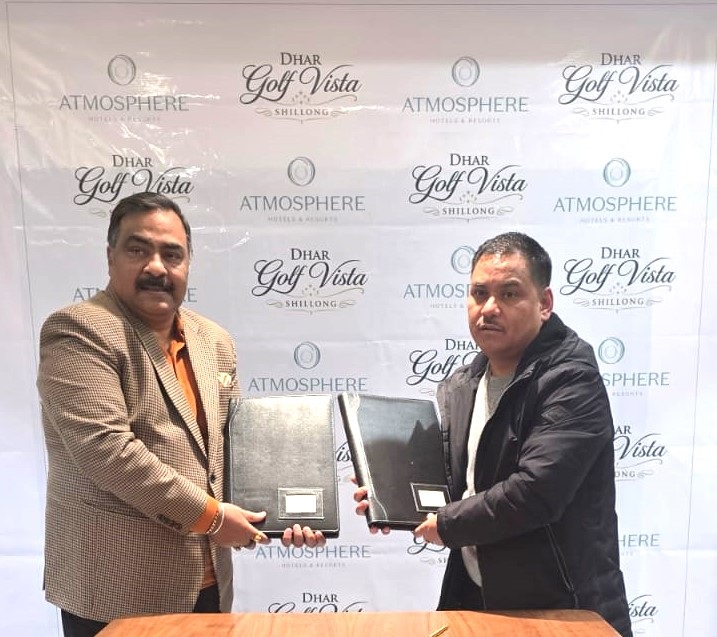
Shillong, Apr 3: Atmosphere Core and Shri Rocky Dhar join hands to launch a boutique hotel – DHAR GOLF VISTA by Atmosphere Shillong in Meghalaya.
Atmosphere Core, a leading name in global hospitality, is pleased to announce its strategic collaboration with Shri Rocky Dhar to launch an upper up-scale boutique hotel in the picturesque northeastern hill station of Shillong, Meghalaya. Slated to open in 2027, DHAR GOLF VISTA by Atmosphere Shillong will be ideally located in the Meghalaya’s capital city, only an hour from Shillong Airport and right beside the prestigious 18-hole Golf Link Arena.
Mr. Salil Panigrahi, Co-Founder & Managing Director of Atmosphere Core stated, “As part of our dynamic expansion across India, a key focus is our approach towards developing premium experiences in hill station destinations particularly in the beautiful northeastern region. This upcoming boutique property at Shillong, Meghalaya is being thoughtfully designed to cater to a diverse range of travellers—from leisure seekers and corporate guests to curated events and social get-togethers”.
Operating under the distinguished Atmosphere Hotels & Resorts brand, the property will feature 75 keys of upper up-scale accommodation, including deluxe rooms, suites, and presidential suites. Panoramic views of the Golf Course, mountain valleys, surrounding greenery and stunning city views will create a serene and immersive ambience.
DHAR GOLF VISTA by Atmosphere Shillong promises an exceptional culinary journey. Guests will enjoy a vibrant all-day dining venue with outdoor seating, a themed sports pub, and a specialty roof top Resto bar celebrating local and multi-cuisine flavours, while serving best of the spirits and wine from across the globe. The wellness offerings will be anchored by the award-winning ELE|NA Ayur spa, offering tranquil therapy rooms with experienced therapists—the perfect setting for rejuvenation and peace. Additional facilities will include a main swimming pool with an outdoor deck overlooking the golf course, a golf simulation pavilion, a kids’ play area, and an indoor games room.
At an elevation of 1,496 metres, Shillong seamlessly blends colonial charm with natural splendour. Ward’s Lake offers serene boating amid gardens, while Elephant Falls’ cascading tiers and Shillong Peak’s panoramic views thrill visitors. Umiam Lake sparkles for watersports, and the Don Bosco Museum unveils Khasi tribal heritage through artifacts and exhibits. As India’s “Rock Capital,” Shillong vibrates with live music at cafes and festivals like the Shillong Autumn Festival, featuring folk dances and local cuisine. Formerly Assam’s capital until 1972, it beckons eco-tourists to caves, waterfalls, and reserves year-round. Shillong’s harmonious mix of history, adventure, and melody invites discovery of Meghalaya’s soul.
Speaking on this latest venture destination, Mr. Souvagya Mohapatra, Managing Director Atmosphere Core India, Bhutan, Nepal & Sri Lanka, added, “The Northeastern state’s hill stations have always been central to our vision of creating iconic luxury experiences. Shillong the capital city of Meghalaya, with its awe-inspiring cultural heritage backdrop and timeless appeal, is a natural choice for our expansion. As plans to enter this extraordinary destination unfold, I am confident that this collaboration will redefine hospitality in the region”.
Shri Rocky Dhar, owner of DHAR GOLF VISTA by Atmosphere, concluded, “Atmosphere Core’s distinguished legacy of excellence aligns perfectly with our vision to unveil a transcendent world-class hotel in Shillong. With our vision and focused approach, we are committed to manifesting inspiring, bespoke hotels and resorts that embody the pinnacle of sophistication. This illustrious partnership will not only elevate Shillong’s hospitality landscape but will also set an unrivalled benchmark for elegance and impeccable service in this breathtaking and scenic Northeastern state of India.”
3, Apr 2026
Master’s Transportation Earns Spot Among Midwest’s Fastest-Growing Private Companies
KANSAS CITY, Mo. (April 3, 2026) – Master’s Transportation™, a leading provider of commercial buses and vans, has been ranked No. 66 in the sixth annual Inc. Regionals: Midwest list – the most prestigious ranking of the fastest-growing privately held companies in the Midwest. The region includes Illinois, Indiana, Iowa, Kansas, Michigan, Minnesota, Missouri, Nebraska, North Dakota, Ohio, South Dakota, and Wisconsin.
An extension of the national Inc. 5000 list, the Inc. Regionals ranking measures revenue and employee growth over a two-year period, making it one of the most credible benchmarks of sustained business performance in the country. Master’s Transportation earned its placement based on significant growth across its 12 locations nationwide, where the company employs 250 team members and serves customers across multiple commercial vehicle segments.
“Being named to the Inc. Regionals: Midwest list is a direct reflection of the hard work and dedication of every single person on our team,” said John Goodbrake, CEO, Master’s Transportation. “This recognition validates what we have been building for years, a company with the infrastructure, the talent, and the drive to grow without losing sight of what matters most, which is moving our customers and our people forward.”
Master’s Transportation’s growth is fueled by a business model that spans commercial shuttle buses and vans, school buses, multi-functional school activity buses, motor coaches, and used commercial buses. The company also operates seven service departments and a centralized parts department, giving it the capacity to serve customers nationwide. Its continued investment in people, facilities, and fleet has positioned it as one of the most comprehensive commercial vehicle providers in the Midwest.
“Landing on this list is significant because it reflects the trust our customers place in us and the commitment our team brings every single day,” said Rita Luukkonen, General Counsel at Master’s Transportation. “It is a reminder that when you invest in people and stay committed to your mission, the results speak for themselves.”
The 2026 Inc. Regionals recognition adds to a growing list of achievements for Master’s Transportation, which has earned multiple regional and national honors in recent years. The company continues to invest in its workforce and infrastructure, with plans to triple its team as it expands its footprint. As one of the few commercial vehicle companies operating at this scale in the Midwest, Master’s Transportation remains committed to creating opportunities for its employees and delivering reliable transportation solutions.
“The honorees on this year’s Inc. Regionals list achieved exceptional growth at a time when the odds were against them. Amid inflation, supply chain disruptions, and ongoing economic uncertainty, they didn’t just persevere – they innovated, adapted, and thrived. Their resilience made them standouts in their industries and true growth engines in their regions,” said Bonny Ghosh, editorial director at Inc.
Between 2022 and 2024, the 144 private companies listed for this year’s Inc. Regionals: Midwest had a median growth rate of 69 percent; by 2024, they’d also added 8,171 jobs and $5.2 billion to the region’s economy. Complete results of the Inc. Regionals: Midwest, including company profiles and an interactive database sortable by industry and metro area, visit: https://www.inc.com/regionals/


