


3, Apr 2026
Portugal votes to extend citizenship residency thresholds pending Presidential review
Lisbon – (April 3rd, 2026) – Global Citizen Solutions (“GCS”), a leading advisory firm in citizenship and residency planning, confirms that on 1st April 2026, Portugal’s parliament approved a revised package of amendments to the Nationality Law, again proposing longer residency requirements for citizenship eligibility.
Under the approved text, nationals from the Community of Portuguese Language Countries (CPLP) and the European Union will require seven years of lawful residence to apply for naturalisation, while all other nationalities will require ten years. These changes remain subject to final drafting and presidential approval and are not yet in force.
Joana Mendonça, General Counsel at GCS, said:
“The majority vote in parliament confirms the government’s intended shift towards longer citizenship timelines, as observed in June and again in October with the Nationality Law causing much debate on and beyond the parliament floor. While certain provisions have been adjusted during the legislative process, the overall direction is clear.
This process has shown us, more than once, that a vote in parliament is not the final word. The President now has his moment, and the Constitutional Court may have another. We respect that — it is democracy working as it should. What we at GCS cannot accept is the absence of transitional provisions for those who made real decisions about their lives in good faith. There are rights at stake that cannot simply be legislated away.”
Key developments
- The new residency thresholds replace Portugal’s previous five-year pathway to citizenship, extending the timeline for all applicants. EU and CPLP nationals would require seven years of residence, while all other applicants would require ten years.
- The criminal bar has been revised. Effective imprisonment of three or more years for specified serious offences does not operate as an automatic disqualification but instead triggers a case-by-case assessment by the Public Prosecutor. This assessment considers factors including the nature of the offence, time elapsed, and evidence of integration into the Portuguese community, with the possibility of judicial challenge.
- A proposal to introduce financial self-sufficiency requirements was not included in the final text.
- The law also confirms a change to how residency is calculated. Time spent awaiting issuance of a residence permit will no longer count towards the naturalisation period, which may extend effective timelines beyond the headline thresholds.
- Additional provisions include revised rules for children born in Portugal to foreign parents, protections for long-term holders of nationality acting in good faith, and the introduction of a potential loss of nationality penalty for dual nationals convicted of serious crimes. This measure is expected to face constitutional scrutiny.
- Parliament did not adopt transitional provisions for applicants who would have qualified under the previous five-year rule, leaving those currently in process subject to the final outcome of the legislative process.
Presidential stage
The legislative process now moves to the President of the Republic. Upon transmission, the President has eight days to refer the law to the Constitutional Court for preventive review. If no referral is made, the President has 20 days to sign the law into effect or exercise a political veto.
Given prior constitutional objections to similar provisions and the continued inclusion of legally sensitive measures, a referral to the Constitutional Court remains a plausible outcome.
Positioning within Europe
Portugal’s revised citizenship timelines bring it closer in line with core European norms. While no longer among the fastest citizenship pathways in the EU if the law is signed into effect, it remains competitive when considered alongside its flexible residency framework and limited physical presence requirements.
Even with extended citizenship timelines, Portugal continues to offer a structured pathway combining legal residence, EU access, and long-term optionality for global investors and families.

- 0
- By Neel Achary

2, Apr 2026
UAE’s First Arrival of Break-Bulk Metals at Fujairah Port Led by Metal Park
UAE, 2 April 2026 – Metal Park has successfully received its first break-bulk cargo of metals at Fujairah Port, marking a further extension of its operational footprint and reinforcing the continuity of metal flows across the UAE.
This development builds on Metal Park’s existing logistics capabilities, which have consistently enabled the import, storage, distribution, and export of metals across multiple entry points in the country. The Fujairah operation adds further flexibility to an already established system, supporting stable cargo movement and supply chain continuity.

Operations remain uninterrupted.
Supply chains remain active.
Metal Park continues to manage metal flows through an integrated approach that connects port handling, inland logistics, storage infrastructure, and distribution within a single operational framework. This allows materials to move efficiently from vessel discharge through to end-market delivery.
A key component of this system is Metal Park’s Storage Hub, operating as an independent fulfilment centre dedicated to metals. The facility supports flexible storage based on metric tonne (MT) or cubic metre (CBM) per day, allowing users to manage inventory without reliance on fixed space or long-term commitments.
The platform also incorporates structured documentation and inventory management processes, including standardised handling of goods receipt, issuance, delivery documentation, and reporting, ensuring traceability and operational clarity across the supply chain.
In parallel, Metal Park has activated access to trade finance facilities of up to USD 50 million, supporting metal and steel producers, traders, processors, and fabricators in maintaining operational continuity and managing working capital requirements.
The combined logistics, storage, and financial framework allows industry participants to sustain operations, adapt to changing conditions, and maintain steady material flow across the UAE and the wider region.
Metal Park remains fully operational, with all services continuing on schedule.
2, Apr 2026
Metacarpal Adds Certified Prosthetist to Strengthen North American Expansion
CHICAGO, Ill. (April 2. 2026) – Metacarpal, a leading medical device manufacturer specializing in body-powered upper-limb prosthetics, added Léa Richer, MSOP, CPO, as Product Support Liaison for its North American team. Richer joined the company to support the expansion of Metacarpal’s GEM prosthetic hand in U.S. and Canadian markets while working with clinicians and limb loss communities across the United States.
In her role with Metacarpal, Richer will focus on clinical education and support, helping prosthetists, therapists, and care teams understand where the Metacarpal GEM can fit within care pathways and how to optimize outcomes for appropriate patients. Her path to orthotics and prosthetics represents her third career, inspired partly by her personal experience wearing a scoliosis brace as a teenager. Her academic training in medical anthropology and history gives her insight into how medical devices impact patients’ lives beyond their technical specifications.

“Seeing patients’ eyes light up when they realize how much the GEM could improve their day-to-day life is incredibly rewarding,” said Richer. “My role is to ensure that clinicians have the knowledge and confidence they need to recommend this technology to their patients, and that patients understand how it can fit into their specific lifestyle and goals.”
Richer brings extensive clinical experience in orthotics and prosthetics, including three and a half years as a Certified Orthotist Prosthetist at Edward Hines Jr. VA Hospital in Illinois. She completed specialized training through NCOPE-certified residencies at VA Portland Health Care System, where she served as Lead Resident nationally and coordinated research examining associations between mental health and prosthetic use. Metacarpal’s U.S. presence continues to grow as more clinics explore the Metacarpal GEM for patients who need a robust, mechanically intuitive option for partial hand difference.
“Léa is instrumental in our North American expansion because she bridges the gap between clinical expertise and patient advocacy,” said Fergal Mackie, founder and CEO of Metacarpal. “Her experience as a Certified Orthotist Prosthetist, combined with her background in medical anthropology and history, makes her passionate about informed decision-making in healthcare for both patients and clinicians. This perspective directly supports our mission to rebuild trust in prosthetics.”
Richer’s appointment coincides with Metacarpal’s recent U.S. launch in January and OrtoPed’s distribution partnership in Canada in February. Her fluency in French and English, along with conversational Spanish skills, will help the company serve diverse patient populations across North America.
For clinicians and clinics interested in learning more, please visit www.metacarpalprosthetics.com.
2, Apr 2026
Amrita Hospital Kochi Inaugurates Neurodevelopmental & Cognitive Care Unit
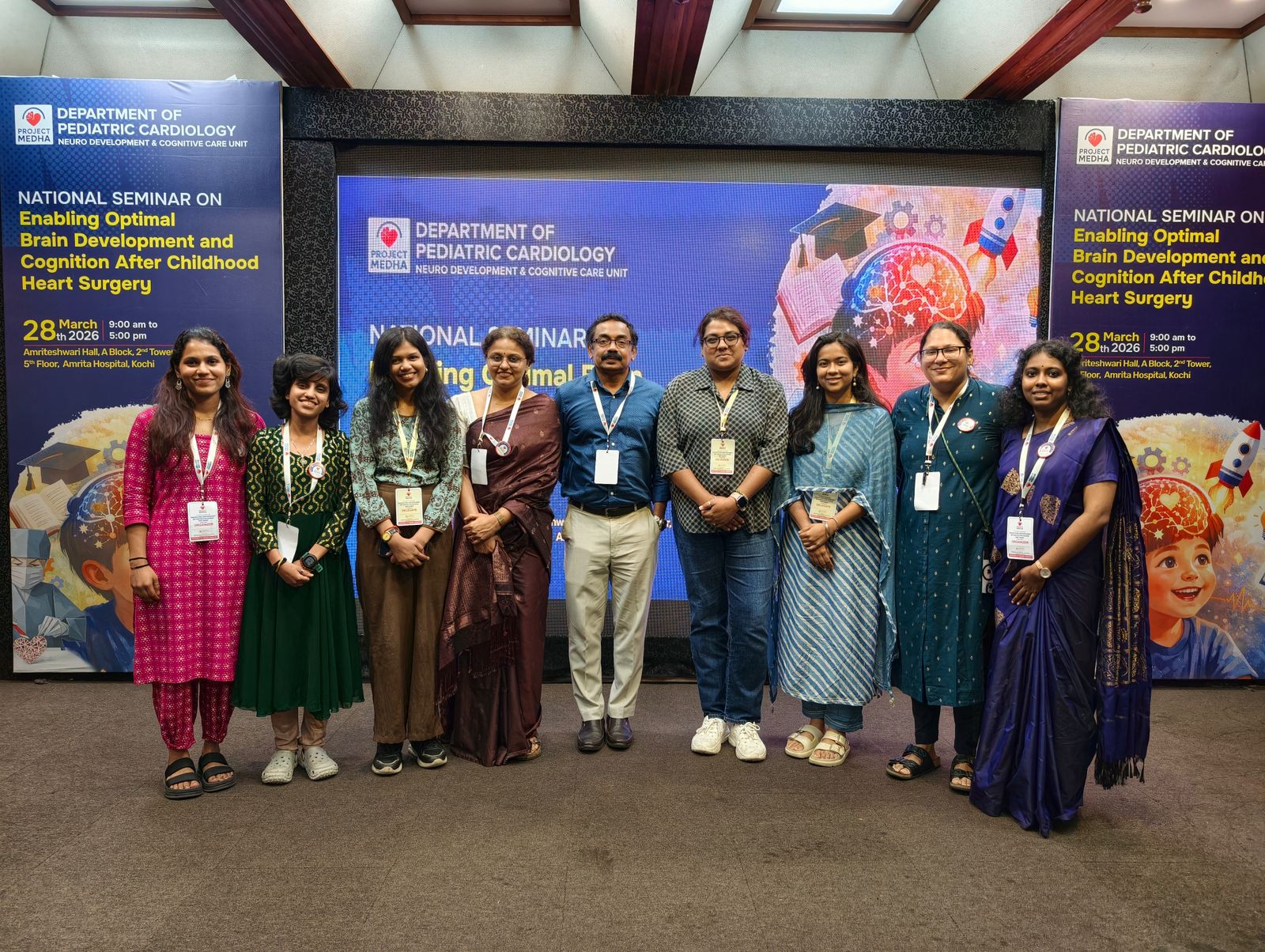
Kochi, Apr 02: The Department of Pediatric Cardiology at Amrita Hospital, Kochi, inaugurated its Neurodevelopmental & Cognitive Care Unit (NDCCU), marking a significant step toward addressing the long-term developmental needs of children with congenital heart disease (CHD). The inauguration was followed by a national seminar titled “Enabling Optimal Brain Development and Cognition after Childhood Heart Surgery,” which brought together leading child development experts and healthcare professionals from across the country.
The initiative aims to bring greater attention to the long-term developmental needs of children with CHD and promote an interdisciplinary approach to care that integrates brain, behaviour and heart health. Experts at the seminar emphasised that while advances in pediatric cardiac care have significantly improved survival rates, it is equally important to focus on how children grow, learn and function in their daily lives following heart surgery.
Speakers highlighted that children with congenital heart disease often demonstrate a distinct neurodevelopmental profile. While many successfully undergo life-saving cardiac procedures, they may later experience challenges in areas such as attention, executive functioning, learning and adaptive skills—difficulties that may become more apparent as the child grows.
Distinguished speakers including Dr. Kirsten Verity (NHS, Edinburgh), Dr. Deepa Bhaskaran (Director, CDC, Trivandrum) and Dr. Arun Singh, National Advisor to RBSK (Government of India), emphasised the importance of focusing on key developmental areas such as learning, executive skills and adaptive behaviour. They also stressed the need for early neurodevelopmental assessments and regular follow-ups to ensure timely support and intervention.
The seminar was conducted as part of Project Medha, a CSR-supported initiative by Premji Invest aimed at strengthening neurodevelopmental care and improving long-term outcomes for children with CHD. Discussions highlighted the importance of making neurodevelopmental assessment a standard practice embedded within the continuum of cardiac care.
The initiative was led by Dr. R. Krishna Kumar, Head of the Department of Pediatric Cardiology, and Dr. Manu Raj, Senior Consultant, Department of Pediatrics, with conceptualisation support from Ms. Sonam Manoj, National Coordinator – Project Medha, through the Neurodevelopmental & Cognitive Care Unit.
The seminar and the inauguration of the NDCCU are among the first initiatives of their kind in India, aiming to transform the way long-term care is delivered to children with congenital heart disease—ensuring that they not only survive complex cardiac procedures but also thrive in their cognitive, behavioural and everyday development.
2, Apr 2026
Govt Exceeds FY23 Spending by ₹54,067 Crore; Debt Repayment Drives Overshoot
New Delhi: The Union government exceeded its approved expenditure by ₹54,067 crore in the financial year 2022–23, largely due to higher-than-expected debt repayments, according to a report by the Public Accounts Committee.
The report, recently tabled in the Lok Sabha, highlighted concerns over gaps in budget planning and expenditure management. It noted that despite seeking additional funds through supplementary grants during the year, actual spending still surpassed the sanctioned limits.
A significant portion of the excess—over 99%—was attributed to debt servicing under the Department of Economic Affairs in the Finance Ministry. A smaller share of the overspending was linked to capital expenditure by the Ministry of Railways.
As per parliamentary procedures, the excess expenditure will now require formal approval for regularisation. The development has raised questions about the accuracy of budget estimates and the effectiveness of financial controls within key government departments.
The findings underscore the need for more precise fiscal forecasting and tighter monitoring of public spending to ensure better alignment with approved budgets in the future.
2, Apr 2026
India’s First Coal Gasification-Based Ammonium Nitrate Plant Planned in Odisha
Bhubaneswar/New Delhi: A major industrial boost is on the horizon for Odisha with the signing of a key agreement for a large-scale ammonium nitrate project in Jharsuguda. The project, to be set up in Lakhanpur, is expected to attract an investment of around ₹25,000 crore.
The agreement was signed between Coal Gasification and Chemicals Limited and Mahanadi Coalfields Limited for leasing land required to establish the facility. The signing took place in New Delhi in the presence of Union Coal and Mines Minister G. Kishan Reddy.
The project will come up on nearly 350 acres of land under MCL and is being developed as India’s first coal gasification-based ammonium nitrate plant. It will use indigenous technology developed by Bharat Heavy Electricals Limited, marking a significant step toward self-reliance in the chemicals and energy sector.
Once operational, the plant is expected to produce around 2,000 tonnes of ammonium nitrate per day. The project is being implemented by Coal Gasification and Chemicals Limited, a joint venture involving BHEL and Coal India Limited. Engineering and development work has been assigned to BHEL and Larsen & Toubro, with groundwork already underway at the site.
Officials indicated that preparatory work, including land development and infrastructure setup, is progressing, with a target to complete the project within 42 months.
The initiative is expected to significantly reduce India’s dependence on imported ammonium nitrate while strengthening domestic manufacturing capabilities. It is also likely to generate employment and support industrial growth in the region, positioning Odisha as a key hub for advanced industrial projects.
2, Apr 2026
AVer Goes “Modus Match” Official: TR Series Auto Tracking and Professional PTZ Cameras Now Verified for Precision 3D Installation Planning
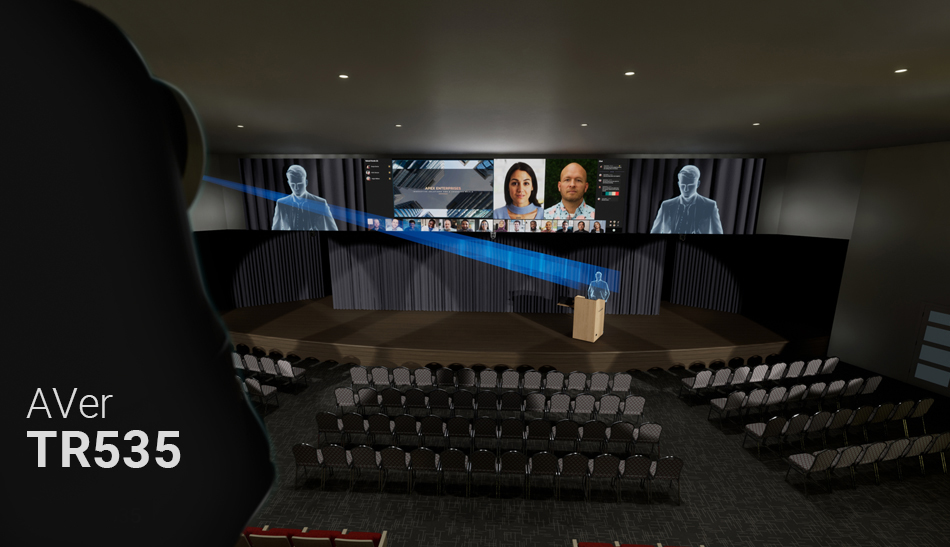
Taipei, Taiwan – Apr 02: AVer Information Inc., an award-winning provider of AI audio-video solutions, today announced its official entry into the Modus Match Partner Program. Following comprehensive technical integration, AVer’s high-performance TR Series AI Auto Tracking cameras and PTZ Series cameras are now fully verified and supported within the ModusVR ecosystem — bringing manufacturer-certified 3D planning to one of the industry’s most trusted camera lines.
Don’t Just Place a Camera. Simulate the Experience.
In the world of Pro AV, “guessing” camera placement is a recipe for a costly truck roll. With this official Modus Match integration, integrators can now move beyond 2D blueprints and experience AVer cameras in fully immersive 3D environments before a single bracket is mounted.
When deploying the latest TR Series models alongside PTZ cameras, ModusVR users can now:
- Visualize Camera Sightlines: Instantly see the exact Field of View (FoV) to ensure the camera can capture presenters over podiums, monitors, or pillars
- Test Pan-Tilt-Zoom Coverage: Adjust PTZ positions in real-time to verify the camera’s mechanical range covers the entire stage, classroom, or conference room
- Validate Mounting Locations: Virtually position cameras at different heights and angles to find optimal placement before installation begins
- Eliminate Installation Guesswork: Identify blind spots, mounting challenges, and coverage gaps in the virtual environment, not during the truck roll
- Optimize the Design Experience: Enable system integrators and end users to preview TR and PTZ cameras within their specific spaces, experiencing the layout to ensure optimal performance and accelerated AV project adoption
- Generate Accurate BoMs: Transition seamlessly from design to purchase with manufacturer-verified specifications
The “Modus Match” Guarantee: Digital Twins, Not Generic Models
The “Modus Match” seal means these aren’t just generic 3D shapes: these are digital twins. Every focal length, pan/tilt limit, zoom range, and physical dimension has been manufacturer-verified by AVer’s engineering team. When you drag an AVer TR or PTZ camera into your ModusVR project, the Bill of Materials (BoM) is 100% accurate, and the field-of-view simulation reflects real-world optical performance.
“Presentation cameras are an important part of many of the spaces our users design in Modus,” says Ken Brueck, Co-Founder of Modus VR. “With AVer’s TR Series now part of the Modus Match program, integrators can accurately visualize placement and confidently define camera coverage in classrooms, divisible training spaces, and auditoriums before installation begins.”
Total Design Certainty for Professional AV Installations
“Our TR Series cameras are built for intelligence and movement,” says David Kuo, President at AVer Information Inc. “By joining the Modus Match program, we’re giving our partners the power to validate camera placement and coverage in a virtual twin of their client’s space. It’s about total design certainty and ending the era of onsite adjustments. Whether it’s a university lecture hall, corporate boardroom, or K-12 classroom, integrators can now design with confidence knowing exactly what AVer cameras will capture.”
Key Benefits for AV Integrators:
- Pre-Installation Confidence: Test multiple camera placements and validate coverage before purchasing equipment
- Faster Client Approval: Present immersive 3D walkthroughs showing exactly what cameras will capture, accelerating stakeholder buy-in
- Reduced Site Visits: Eliminate unnecessary truck rolls by identifying coverage issues in the virtual environment
- Time Savings: Compress weeks of planning into hours with real-time, accurate 3D simulation
Availability
The AVer TR Series and PTZ Series camera libraries are available now for all ModusVR subscribers at no additional cost. Simply update your ModusVR library to start building more accurate room designs with precise camera coverage validation. For demonstrations or technical specifications, visit www.modusvr.com or contact your local AVer representative.
A
2, Apr 2026
Servotech’s Raman Bhatia Named Head of SCO Energy & Green Economy Working Group
New Delhi, April 2 : Servotech Renewable Power System Ltd. a leading player in India’s renewable energy and EV charging ecosystem, announces that its Managing Director, Raman Bhatia, has been appointed as the Head of Shanghai Cooperation Organisation (SCO) Working Group on ‘Energy & Green Economy’ under the SCO Business Council Secretariat .
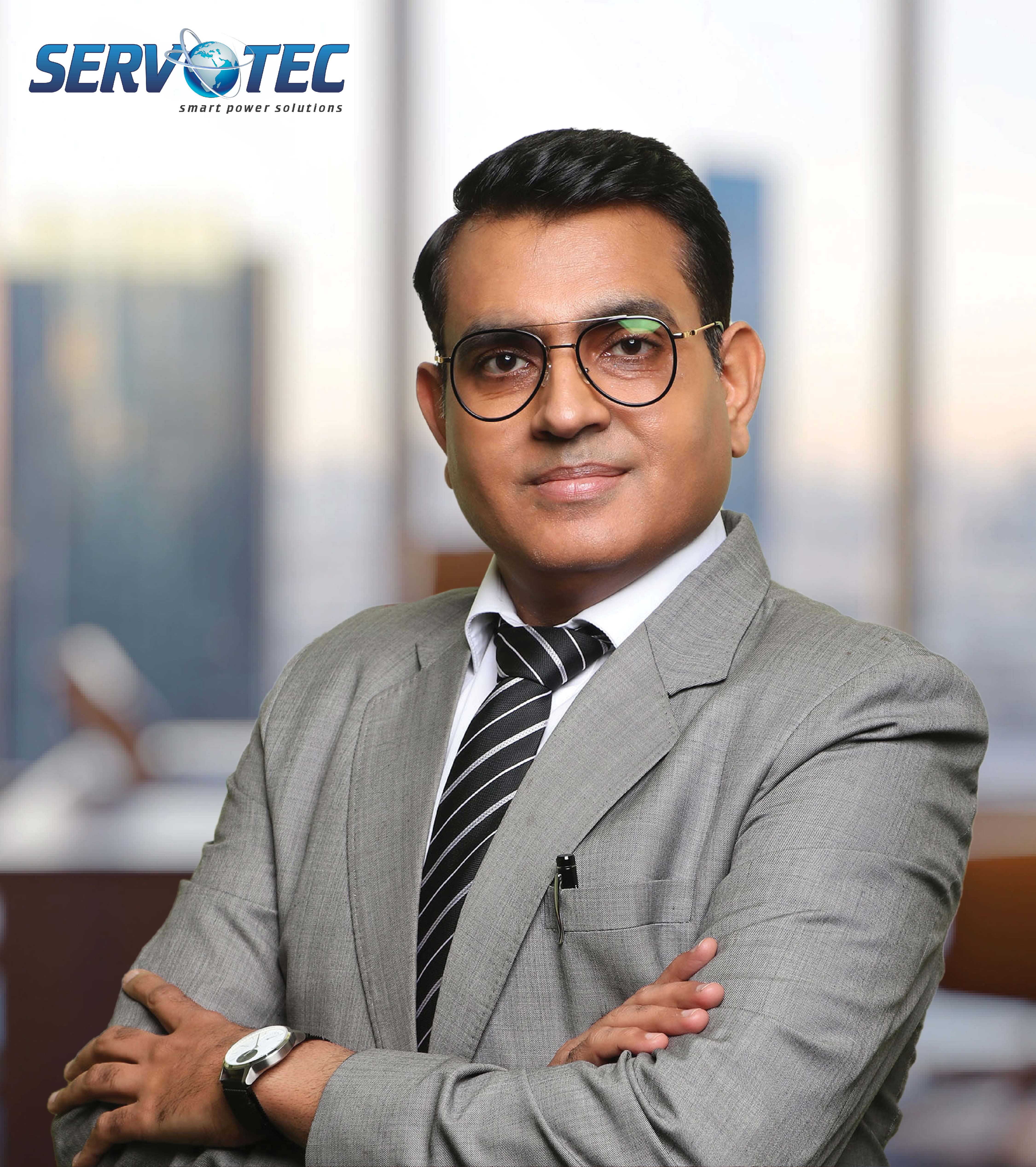
This appointment represents leadership across a consortium of 28 countries within the SCO framework, one of the world’s most influential intergovernmental organizations driving collaboration across energy transition, sustainability, and green economic development.
In this role, Raman Bhatia will work closely with international stakeholders to strengthen cross-border partnerships, enable knowledge exchange, and support the development of scalable and sustainable clean energy solutions across member nations. This recognition reinforces Servotech’s growing global relevance and its active role in advancing EV infrastructure, renewable energy solutions, and power electronics innovation.
Commenting on the appointment, Raman Bhatia, Managing Director, Servotech Renewable Power System Ltd., said,
“I am honoured to take on this responsibility at a time when global collaboration is critical to accelerating the energy transition. The SCO platform provides a unique opportunity to work alongside policymakers and industry leaders across 28 countries to drive innovation, strengthen partnerships, and contribute meaningfully to the development of sustainable energy ecosystems. I look forward to advancing initiatives that support a cleaner, more connected global future.”
2, Apr 2026
MG MAJESTOR Demonstrates Unmatched Capability in Sub-Zero Spiti Valley
Gurgaon, Apr 02: India’s First D+ SUV, the MG MAJESTOR, has once again demonstrated its unmatched capability by navigating the unforgiving winter landscape of Spiti Valley with remarkable composure. Seen driving smoothly over a formidable 2-foot snow bed, the MG MAJESTOR operated seamlessly in extreme weather conditions, braving temperatures as low as -20 degrees Celsius without missing a beat.
Set against treacherous terrain defined by icy stretches, steep gradients and unpredictable surfaces, the MG MAJESTOR showcased its advanced engineering and intelligent drivetrain. Supported by Crawl Control Mode and dedicated Snow Mode, along with a robust 219 mm ground clearance, the SUV maneuvered efficiently across deep snow, delivering a confident and controlled driving experience. Every movement reflected seamless traction management and precise control, reinforcing the MAJESTOR credentials as a true all-terrain performer.
The expedition further underlined the SUV’s endurance as the MG MAJESTOR successfully reached Key Gompa – one of the region’s highest and oldest monasteries, perched at an altitude of 13,668 feet above sea level. Navigating narrow mountain roads and snow-laden passes, the MAJESTOR maintained stability and comfort, even in the most challenging conditions.
Adding another milestone to this high-altitude journey, the MG MAJESTOR also crossed the iconic Chicham Bridge, Asia’s highest suspension bridge. The crossing stood as a testament to the SUV’s structural integrity, advanced suspension setup and overall capability in extreme environments. Engineered to perform where the road ends, the MG MAJESTOR blends power, technology and resilience, making every drive efficient and reassuring, no matter how extreme.
MG MAJESTOR is powered by a 2.0-litre twin-turbo diesel engine delivering best-in-segment 215.5 PS and 478.5 Nm of torque, mated to a best-in-class 8-speed automatic transmission in both 2WD and advanced 4WD configurations, the MG MAJESTOR is engineered for serious capability. It comes with First-in-segment Triple Differential Locks (front, rear and centre), an Advanced 4WD system with 10 off-road modes, and Crawl Control Mode for extreme terrain mastery, along with 219 mm ground clearance and an 810 mm water wading capability. As India’s First D+ SUV with Level 2 ADAS, the MAJESTOR also combines rugged performance with advanced safety and intelligent technology. The 5-5-5 Complete Peace of Mind programme complements this engineering strength, ensuring that customers can confidently experience the vehicle’s full capability with long-term ownership assurance built in.
2, Apr 2026
Odisha Men’s and Women’s Hockey Teams Clinch Titles at Khelo India Tribal Games
Bhubaneswar/Raipur: Odisha has achieved a proud sporting milestone as both its men’s and women’s hockey teams emerged champions at the inaugural Khelo India Tribal Games held in Raipur.
ଛତିଶଗଡ଼ର ରାୟପୁରଠାରେ ଆୟୋଜିତ ପ୍ରଥମ ‘ଖେଲୋ ଇଣ୍ଡିଆ ଜନଜାତି କ୍ରୀଡ଼ା’ ରେ ଓଡ଼ିଶାର ଓଡ଼ିଶାର ଉଭୟ ମହିଳା ଓ ପୁରୁଷ ହକି ଦଳ ଚମ୍ପିୟାନ ହୋଇଥିବାରୁ ସମସ୍ତ କ୍ରୀଡ଼ାବିତ୍ଙ୍କୁ ଆନ୍ତରିକ ଶୁଭେଚ୍ଛା ଜଣାଉଛି। ଏହି ସଫଳତା ଆମ ରାଜ୍ୟ ପାଇଁ ଅତ୍ୟନ୍ତ ଗୌରବର ବିଷୟ।
ଆମର ଜନଜାତି କ୍ରୀଡ଼ା ପ୍ରତିଭାଙ୍କ ଏହି ଅସାଧାରଣ ସଫଳତା ଓଡ଼ିଶା… pic.twitter.com/3ZjlyQ64yV
— Mohan Charan Majhi (@MohanMOdisha) April 2, 2026
The double victory highlights the exceptional talent and determination of athletes from the state’s tribal communities, marking a significant moment in Odisha’s sporting journey.
Sports enthusiasts and officials have extended heartfelt congratulations to the players, praising their dedication and outstanding performance on a national stage. The achievement is being seen as a major boost for grassroots sports development, especially among tribal youth.
This success not only brings pride to the state but also signals a promising future for Odisha in Indian hockey. With continued support and recognition, these athletes are expected to scale even greater heights and further strengthen the state’s reputation in the sporting arena.