


30, Mar 2026
Dhurandhar 2 and Ranveer Singh drive Micro Wellness’ entertainment-led brand strategy for DOLO Pain Relief Spray
Bengaluru, Mar 30: Micro Wellness, the wellness division of Micro Labs Limited, has partnered with Dhurandhar 2, a major 2026 action release starring Ranveer Singh, to promote its flagship product, DOLO Pain Relief Spray. The collaboration reflects the brand’s strategy to leverage high-impact entertainment to connect with India’s active and aspirational consumers.
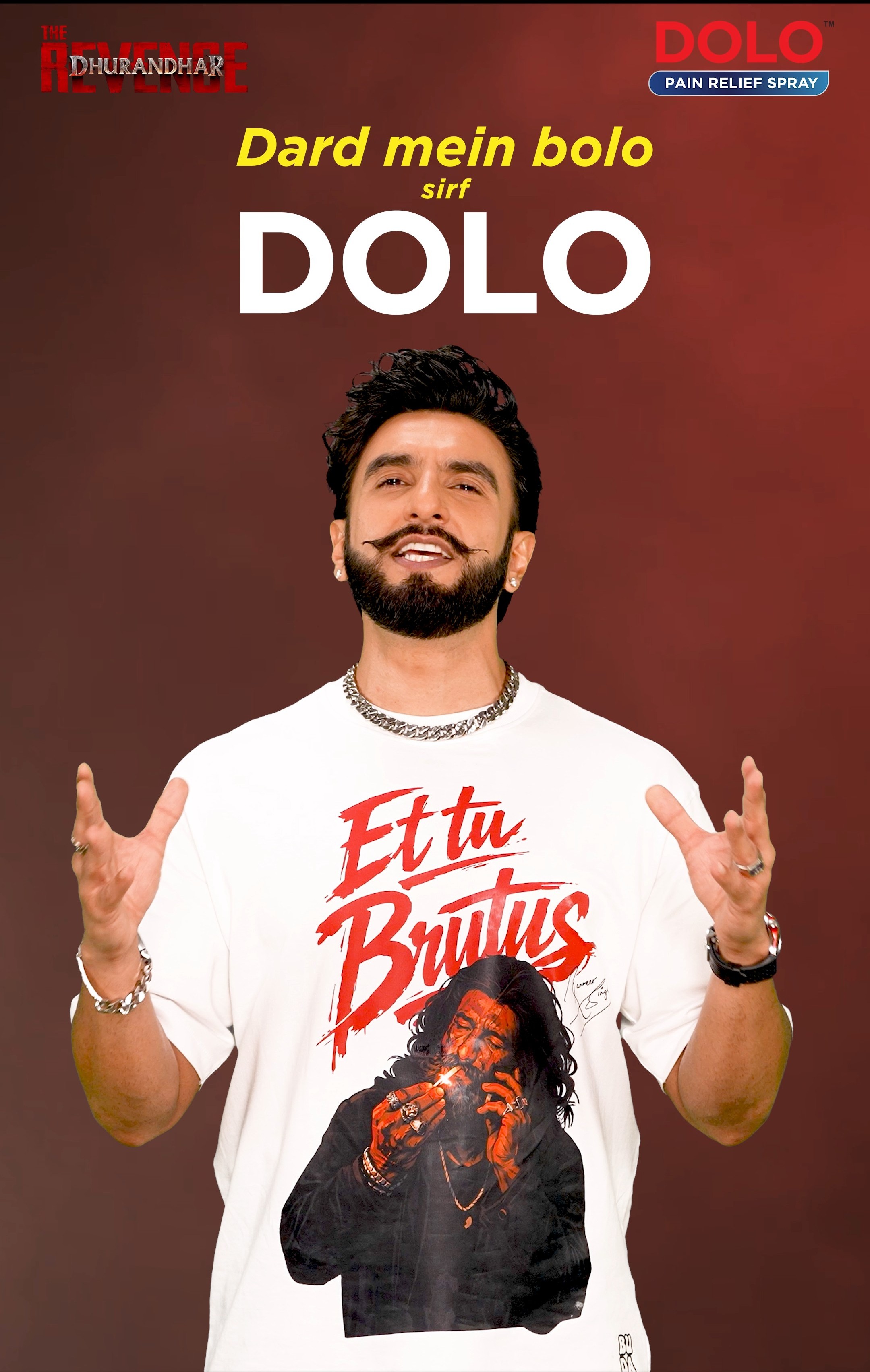
Built around the theme “The Unstoppable Indian”, the campaign draws from the film’s narrative of resilience and determination, aligning with Micro Wellness’ mission to deliver fast, effective pain relief for action-ready lifestyles. The brand aims to position itself as a trusted companion for individuals pushing through physically demanding routines.
The campaign will roll out nationwide across multiple geographies — Hindi, Tamil, Telugu, and Kannada —to maximize reach and engagement. A digital activation, #PainReliefKaDhurandhar, will invite consumers to share their stories of grit and perseverance, driving meaningful interaction, especially among younger audiences.
Commenting on the partnership, Ms. Diya Surana, Head – Micro Wellness, said:
“Our collaboration with Dhurandhar 2 celebrates the unstoppable spirit of today’s India. With DOLO Pain Relief Spray, we aim to empower individuals to stay active, resilient, and unstoppable.”
Amid rising demand for convenient, on-demand pain relief driven by increasingly active lifestyles, Micro Wellness expects this high-impact collaboration to significantly enhance brand visibility, deepen consumer trust, and drive strong double-digit growth across key markets.

- 0
- By Neel Achary

30, Mar 2026
Bengaluru EdTech Startup Oratrics Strengthens Global Footprint with Singapore Expansion
Mar 30: Bengaluru-based EdTech startup Oratrics: The Future Human School has announced its strategic expansion into Singapore, further strengthening its growing global presence after establishing operations in the United States and India. The move marks a significant milestone in the company’s mission to transform how children and young leaders develop communication, confidence, leadership, and global personality skills.
30, Mar 2026
MSMEs Seek Relief as Global Crisis Raises Costs and Uncertainty
Micro, Small and Medium Enterprises (MSMEs) across India are facing increasing pressure due to the ongoing tensions in West Asia, which have disrupted global trade and pushed up fuel prices. As logistics costs rise and supply chains become uncertain, small businesses—often operating with limited financial buffers—are among the hardest hit.

Pic Credit: Pexel
One of the main reasons MSMEs need relief is the sharp increase in transportation and raw material costs, driven by volatile crude oil prices. Higher freight charges, insurance premiums, and delays in shipments are making it difficult for exporters to remain competitive. At the same time, domestic inflation is raising operating expenses, squeezing already thin profit margins.
The primary objective of government relief measures is to stabilise these businesses and prevent job losses. Support packages aim to reduce cost burdens, ensure easier access to credit, and maintain steady production and exports. Protecting MSMEs is also crucial because they contribute significantly to employment and play a key role in sustaining local economies.
With timely intervention, the government hopes to shield small enterprises from global shocks while ensuring continuity in economic activity during a period of uncertainty.
30, Mar 2026
Subhadra Scheme Drives Financial Inclusion and Economic Gains in Odisha
Odisha’s flagship Subhadra Direct Benefit Transfer (DBT) scheme is emerging as a key driver of women’s empowerment and economic stability in the state. Designed to strengthen financial independence among women, the initiative is showing measurable improvements in household resilience and participation in the local economy.
According to a recent report by State Bank of India Research, beneficiaries of the scheme have recorded a 45% increase in savings and a 28% rise in spending. These trends indicate not only improved financial security but also greater confidence in managing household finances.
The Subhadra scheme, which provides direct financial support to women, is helping expand access to formal banking systems while encouraging regular savings habits. Increased spending among beneficiaries is also contributing to local economic activity, particularly in rural and semi-urban areas.
Experts note that such targeted DBT initiatives play a crucial role in promoting inclusive growth by ensuring that financial resources reach women directly. This, in turn, enhances their decision-making power within households and supports long-term socio-economic development.
The Odisha government has positioned the scheme as part of a broader strategy to improve livelihoods, reduce financial vulnerability, and strengthen grassroots economic participation. Early indicators suggest that the initiative is not only uplifting individual households but also contributing to the state’s overall economic momentum.
30, Mar 2026
Noida International Airport Launch Marks Major Infrastructure Push in Uttar Pradesh
Prime Minister Narendra Modi inaugurated the Noida International Airport at Jewar, marking a significant step in Uttar Pradesh’s infrastructure growth. With this addition, the state now ranks among those with the highest number of international airports in India.
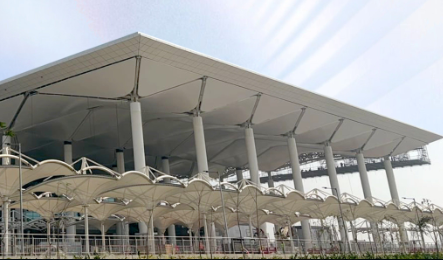
Pic Credit: https://x.com/PMOIndia
Describing the occasion as important for both the state and the country, he said the airport reflects the broader vision of a developed Uttar Pradesh contributing to a developed India. He also noted his long-standing association with the state, emphasizing that the project strengthens its identity at a national and global level.
The airport is expected to improve connectivity across western Uttar Pradesh, benefiting cities such as Agra, Mathura, Aligarh, Ghaziabad, Meerut, Etawah, Bulandshahr, and Faridabad. It is likely to create new opportunities for farmers, small businesses, and young people in the region, while also supporting trade and travel.
Referring to global challenges, Modi mentioned ongoing tensions in West Asia and their impact on supplies of essential commodities like fuel and fertilizers. He said the government is taking steps to reduce the burden of such disruptions on citizens.
He also highlighted recent development projects in the region, including a semiconductor facility in Noida, expansion of metro services in Meerut, and the progress of the Namo Bharat rail corridor. These initiatives, he said, are strengthening connectivity and supporting economic growth.
The airport project was originally approved in 2003 during the tenure of former Prime Minister Atal Bihari Vajpayee and has now been completed after gaining momentum in recent years. It is expected to emerge as a key aviation hub for North India.
30, Mar 2026
Prime Video Sets April 17 Premiere for Vijay Varma’s Matka King
Mumbai, Mar 30: Prime Video, India’s most loved entertainment destination, today, celebrated Vijay Varma’s birthday by announcing April 17 as the worldwide premiere date of his upcoming Prime Original drama Matka King. Created and written byAbhay Koranne and created and directed byNagraj Popatrao Manjule, this compelling series is set in the fast-changing Bombay of the 1960s and traces the fictional journey of an enterprising cotton trader who creates a new gambling system, dubbed ‘Matka’, turning an elite pastime into a nationwide phenomenon. The series is produced bySiddharth Roy Kapur, Nagraj Popatrao Manjule,Gargi Kulkarni,Ashwini Sidwani, andAshish Aryan, under the banners of Roy Kapur Films, Aatpat, and SMR Productions. Matka King featuresVijay Varma,Kritika Kamra,Sai Tamhankar,Siddharth Jadhav,Bhupendra Jadawat, andGulshan Grover in lead roles along withVineet Kumar Singh,Bharat Jadhav,Girish Kulkarni,Jamie Lever,Kishor Kadam,Cyrus Sahukar, Arpita Sethia,Sambhaji Tangade,Ishtiyak Khan,Sanjivv Jotangia, andSimran Ashwini in pivotal roles. The series is set to premiere exclusively on Prime Video, in India and across 240 countries and territories worldwide on April 17.
Matka King follows Brij Bhatti, a sharp-minded and enterprising cotton trader, played by the dynamic Vijay Varma, who navigates the fast-changing landscape of 1960s Bombay in pursuit of legitimacy and respect. Set against a world of bustling markets, crowded chawls, and shifting power dynamics, what begins as an ambitious idea soon takes on a life of its own, drawing in people across social strata. As aspirations grow and stakes rise, the series unfolds into a gripping narrative shaped by ambition, power, and belonging.
“Matka King is a gripping story of one man’s journey to succeed against all odds in a changing world, told in a way that will surprise audiences,” said Nikhil Madhok, director & head of Originals, Prime Video, India.“The tale of Brij Bhatti’s rise as the Mata King is equal parts fascinating and cautionary. We are thrilled to have partnered with Roy Kapur Films, Aatpat, and SMR Productions to bring this bold story to viewers worldwide on April 17”
Siddharth Roy Kapur, co-producer for Matka King, shared,
“What drew us to Matka King was the scale and uniqueness of the world it is set in, and the story of an individual navigating ambition, identity, and the pursuit of respect in a rapidly evolving society. It is a narrative rooted in a specific time and place, yet universally relatable in its exploration of human aspirations and choices. Combining forces with Nagraj Popatrao Manjule, whose extraordinary work I have always admired has been extremely rewarding. And the talented Abhay Koranne, who we have successfully collaborated with before, has brought a distinct creative vision and authenticity to the storytelling. With a stellar ensemble led by Vijay Varma, Kritika Kamra, and Gulshan Grover, the series is brought to life with remarkable depth and nuance. We are delighted to deepen our collaboration with Prime Video on this ambitious project and look forward to bringing Matka King to audiences starting April 17, only on Prime Video”
30, Mar 2026
KIMS Cardiologist Receives National Recognition at INDIA LIVE 2026
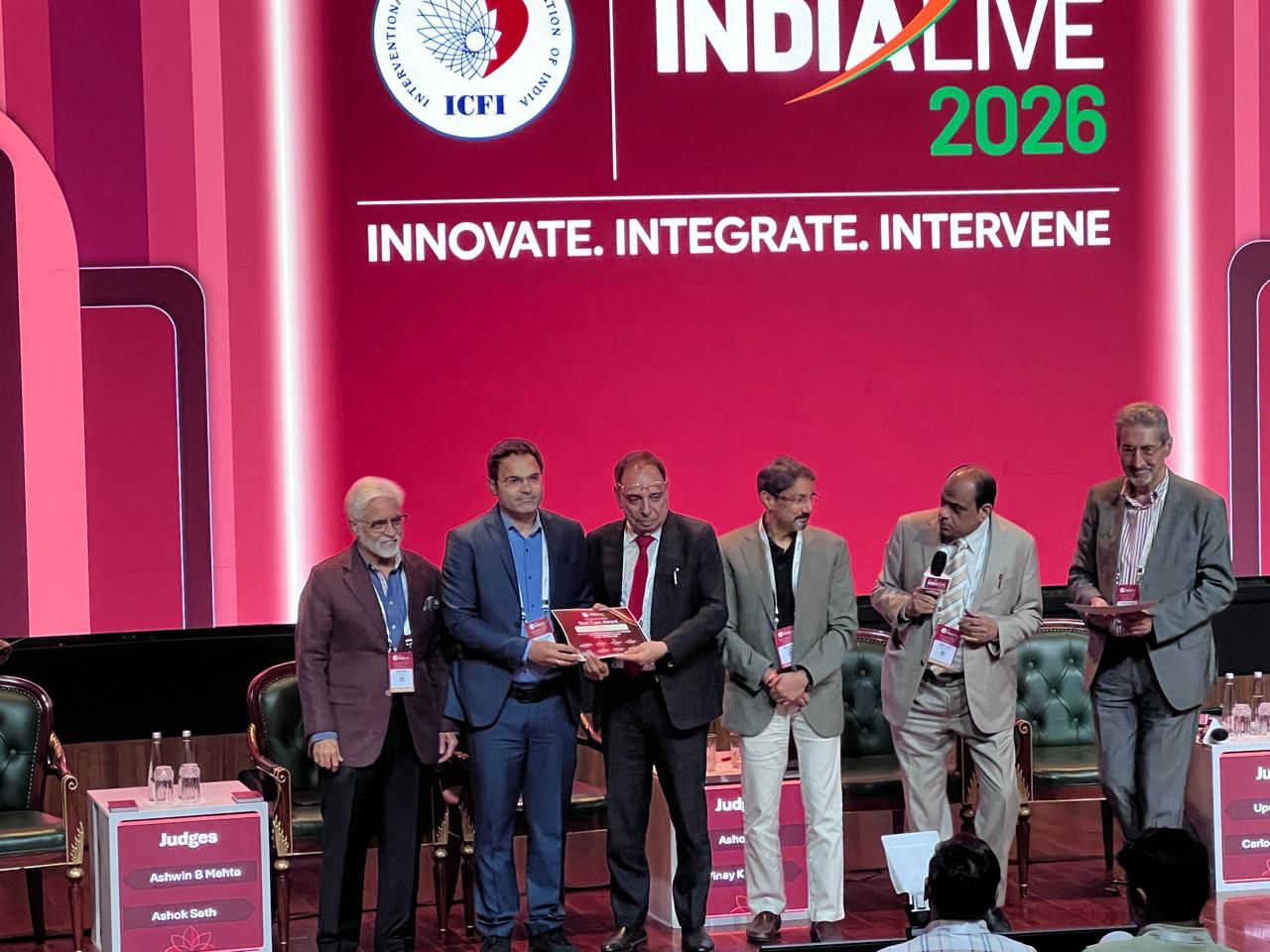
Visakhapatnam, Mar 30: Dr. Ganesh Kasinadhuni, Chief Interventional Cardiologist at KIMS Hospital, Seethammadhara, has received national recognition at INDIA LIVE 2026, one of the country’s most prestigious conferences in the field of interventional cardiology. He was honoured with the “Top 5 Best Cases Appreciation Award” for his outstanding clinical presentation. The conference witnessed participation from leading cardiologists across India, with over 1,000 complex cases submitted from various institutions. Of these, only around 250 cases were selected for oral presentation, reflecting the highly competitive nature of the event.
Dr. Kasinadhuni, who also served as a member of the national faculty, presented a complex cardiac case managed at KIMS Hospital. The case involved severe calcific blockages in the coronary arteries, particularly in the challenging left main bifurcation region. He detailed the successful management strategy adopted to treat this high-risk condition.
The procedure involved advanced techniques such as calcium modification and plaque disruption using rotablation and intravascular lithotripsy. The intervention was further guided by Optical Coherence Tomography (OCT), an advanced imaging modality, enabling precise stent placement and optimal clinical outcomes.
His presentation was widely appreciated by peers for its clinical depth, structured approach, and educational value. In recognition of its significance and impact, the case was selected among the top five presentations and honoured during the valedictory session of the conference.
This achievement underscores KIMS Hospitals’ commitment to delivering advanced cardiac care and highlights its leadership in adopting cutting-edge techniques in interventional cardiology.
30, Mar 2026
Jammu & Kashmir Tourism Showcases Destination Excellence at India International Travel Mart, Kolkata
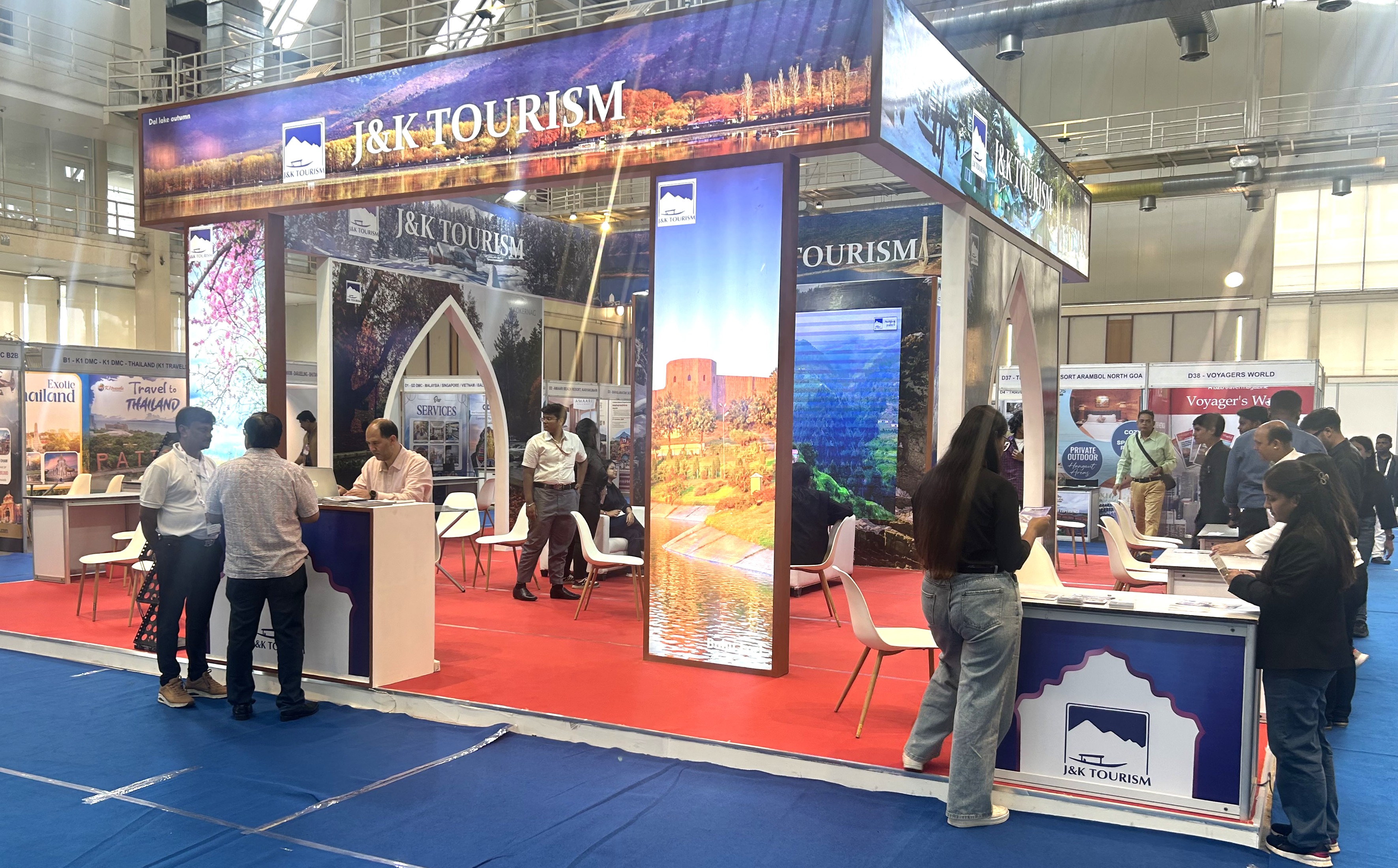
Kolkata, Mar 30: Jammu and Kashmir Tourism Department marked a significant presence at the India International Travel Mart (IITM), held from 27–29 March 2026 at the Biswa Bangla Convention Centre in Kolkata. The participation highlighted the region’s diverse tourism offerings and reinforced its position as one of India’s most captivating travel destinations.
Representing the department were Rashmi Deepika Razdan, Director – Finance, Tourism Department, and Peer Zahid Ahmad, Deputy Director, Tourism Kashmir. Their presence underscored the department’s commitment to strengthening trade partnerships and expanding outreach in key domestic markets such as West Bengal. Jammu & Kashmir Tourism is the Partner State at this year’s edition of ‘India International Travel Mart’ at Kolkata.
The Jammu & Kashmir pavilion drew considerable attention from travel trade professionals, tour operators, and visitors, offering insights into the region’s unique blend of natural beauty, cultural richness, and experiential tourism. From the serene landscapes of the Kashmir Valley to the spiritual circuits of Jammu and emerging adventure tourism opportunities, the showcase emphasized the region’s versatility for leisure, pilgrimage, and experiential travel.
Speaking on the occasion, officials highlighted Jammu & Kashmir’s renewed focus on sustainable tourism, infrastructure development, and enhanced connectivity. The participation at IITM provided an ideal platform to engage with stakeholders, promote curated travel experiences, and encourage increased tourist inflow from eastern India.
The delegation also held productive B2B interactions with travel agents, tour operators, and hospitality partners, exploring collaborations to design customized itineraries and promote year-round tourism. Special emphasis was placed on promoting lesser-explored destinations, winter tourism, and experiential offerings such as houseboat stays, trekking, and cultural tours.
Visitors to the pavilion were introduced to the region’s evolving tourism narrative—one that combines heritage with modern infrastructure, and tradition with contemporary travel experiences. Informational material, destination presentations, and interactive discussions helped create awareness about the wide spectrum of travel opportunities available in Jammu & Kashmir.
The India International Travel Mart continues to serve as a premier platform connecting tourism stakeholders across India and beyond. Jammu & Kashmir Tourism’s participation not only strengthened its visibility in the eastern market but also reaffirmed its commitment to positioning the region as a safe, accessible, and must-visit destination.
As the event concluded, the delegation expressed optimism about forging new partnerships and attracting increased tourist interest in the coming seasons, further contributing to the growth of tourism in the Union Territory.
29, Mar 2026
Vodia Networks Announces the Official Release of Version 70 of the Vodia PBX
BOSTON – 29 March 2026: Vodia Networks, Inc., a provider of unified cloud communications solutions to enterprises, contact centers, and service providers, is pleased to announce the official release of Vodia PBX V70, the next major version of its cloud phone system. V70 has been engineered for operational scale, administrative clarity, and production readiness; it introduces architectural and usability improvements designed for real-world, multi-tenant deployments.
As organizations consolidate communication tools and look to automate customer interactions, V70 brings voice, messaging, and AI into a single PBX platform.
The V70 interface has been designed for efficiency and speed. Whether managing a single system or hundreds of tenants, V70 delivers faster navigation, smarter workflows, and powerful new capabilities to make administration more intuitive. V70 also introduces improvements in scalability, flexibility, and operational safety, including higher call capacity per server, cross-tenant presence and BLF sharing, snapshots, and centralized remote provisioning.
“V70 reflects how our partners deploy and manage PBX systems at scale,” said Christian Stredicke, founder and CEO of Vodia. “We focused on improving visibility, simplifying administration, and enabling automation without adding complexity.”
V70 also gives users enhanced emergency alerts, robust scheduling, and greater control. With V70, administrators can configure emergency and notification alerts triggered by users – once activated, alerts can send notifications via multiple channels and automatically initiate calls to designated numbers. Service flags in V70 can now be configured with multiple events and integrated with external calendars.
AI, automation, and real-time visibility
V70 introduces integrated AI capabilities and real-time monitoring tools to improve operational control, including fully-automated outbound AI Voice Agents for automated customer outreach, powered by OpenAI’s Realtime API. The same framework can handle both inbound and outbound calls, creating consistent conversational experiences. V70 also introduces a powerful custom dashboard framework, allowing administrators complete control to build and tailor dashboards based on their specific monitoring needs, eliminating the need for third-party tools.
WhatsApp business messaging
V70 enables integration with the WhatsApp Business Platform for calling and messaging, allowing WhatsApp users to call your business number and have those calls routed directly into the PBX, without any middleware or gateway. Messaging capabilities are also included to support incoming and outgoing text and image messages.
External presence sharing and skills-based routing
External presence sharing enables two tenants on the same PBX to share presence information, or across different PBX servers in separate locations (the PBX systems must be able to reach each other via the internet). V70 provides users with skills-based routing, so organizations can assign skills to numbers, enabling incoming calls to be routed to agents based on expertise, language, or role.
Supported operating systems and platforms
● Ubuntu 24 and above
● Debian 12 and above
● CentOS Stream 10 and above
● AlmaLinux 10 and above
● Rocky Linux 10 and above
● Amazon Linux 2023 (AL2023)
● Support continues for the embedded Vodia IOP (Raspberry Pi) solution
● Support for AArch64 (ARM64) architecture (to run the PBX on AWS Graviton processors)
Documentation
Detailed release notes for V70 are available for further information.
Vodia welcomes feedback from partners and customers deploying V70, v70feedback@vodia.com, +1 (617) 861-3490.
28, Mar 2026
Frequent Social Media Use Could Impact Child Development
By: Sydney Barrilleaux Newswise
Regular social media use across early adolescence is related to worse reading and vocabulary development over time, according to new research from the University of Georgia.
The study found that adolescents who used social media more often each day tend to struggle with recognizing and pronouncing words.
The new findings come just as Australia became the first country to ban children under 16 from using social media. As other countries consider similar measures, and social media platforms roll out age verification to restrict adolescents’ online activity, the study raises additional concerns on the impact of social media and screen use on childhood development, the researchers said.
“The brain is like a muscle. The more you use it, the more it changes according to however you’re using it,” said Cory Carvalho, lead author of the study who received his doctorate from the UGA College of Family and Consumer Sciences. “If you think of the Olympics, the figure skaters are really good at figure skating because they spend eight hours a day doing it. Their muscles are wired to be figure skating machines.
“If kids spend over eight hours a day using social media, that’s what their brains are going to adapt to and be wired for.”
Spending excessive time on social media linked to weaker reading skills, vocabulary The study relied on longitudinal data from the ongoing Adolescent Brain Cognitive Development study, which follows more than 10,000 adolescents over six years starting around age 10.
The researchers found that frequent social media use was linked to struggles with reading and vocabulary across four years.
“There’s a time cost to social media use. If you’re spending time doing one thing, that means you’re not spending time doing another thing,” Carvalho said. “Other studies found that the more kids are using social media, the less they’re reading, so reading development lags behind. We also found this with their vocabulary.”
Weaker reading and vocabulary skills could impact a child’s school performance.
Children who used social media more often also struggled with attentional control across the same period. This could be because juggling multiple tasks and frequent notifications disrupt kids’ attention, but it’s also possible that adolescents who already struggle with focusing are more likely to use social media, the researchers said.
Kids who use social media more tend to process information faster Not all the impacts of social media use were negative, though, the researchers said. Children who were on social media frequently processed information faster and had shorter reaction times. However, the researchers cautioned that these observed benefits may be limited to screen-based assessments of processing speed, like the one used in the study.
“It’s not necessarily that social media is having only these negative effects or only these positive effects,” said Niyantri Ravindran, co-author of the study and an assistant professor in the UGA College of Family and Consumer Sciences. “The negative effects on vocabulary and reading are more expected because social media is potentially depriving kids of opportunities to engage in some of those higher-level cognitive skills.”
Social media can also help children stay connected with others, especially if they’re in an environment where making friends is difficult, the researchers said.
Limiting screen time, waiting to get kids a smartphone could build better habits To help combat those negative effects, the researchers suggest limiting screen time for adolescents, especially before bed. They also recommend waiting until kids are older to purchase a smartphone.
If parents do need to stay in touch with their kids, a “dumb phone” that can’t access social media could also be an option, the researchers said.
“Social media is new, so everybody’s trying to figure out what we do with this new paradigm,” Carvalho said. “Kids like it. Adults like it. And everybody uses it.
“What you’re going to see is that a lot of different states, countries and organizations are going to try different things. Hopefully, we settle on some norms that work for kids and not for profits.”


