


25, Mar 2026
Greenply Speciality Panels Private Limited Breaks Ground for Second MDF Line at Vadodara Plant
Mumbai, Mar 25: Greenply Speciality Panels Private Limited, wholly owned subsidiary of Greenply Industries Ltd. one of India’s leading interior infrastructure companies, today announced the groundbreaking of its second Medium Density Fibreboard (MDF) production line at its state-of-the-art manufacturing facility in Vadodara, Gujarat. The expansion marks a significant step in the company’s growth journey, reinforcing its commitment to strengthening domestic manufacturing and addressing the rapidly growing demand for MDF across India.
The groundbreaking ceremony was attended by Mr. Rajesh Mittal, Chairman & Managing Director and Mr. Sanidhya Mittal, Joint Managing Director along with over thirty-five dealers and channel partners from across the region who joined the leadership team to commemorate this important milestone.
The second MDF line at the Vadodara facility represents an investment of ₹425 crore and is expected to become operational by Q2 FY2028. The expansion is set to generate substantial employment opportunities across the value chain, supporting livelihoods and contributing to regional economic growth. Once commissioned, the new line will significantly enhance the company’s production capacity, enabling Greenply to better serve rising market demand while further strengthening its leadership position in the MDF category.
Speaking on the occasion, Mr. Rajesh Mittal, Chairman & Managing Director, Greenply Industries Ltd., said, “The groundbreaking of our second MDF line at Vadodara reflects Greenply’s continued commitment to strengthening India’s manufacturing capabilities and supporting the evolving needs of the interior infrastructure sector. As demand for MDF products continues to grow across residential, commercial, and modular furniture segments, this expansion will enable us to scale our operations while maintaining our strong focus on efficiency, quality, and long-term value creation for our partners and customers.”
With this expansion, Greenply continues to strengthen its manufacturing footprint through strategic investments that enhance operational capabilities and future readiness. The Vadodara expansion aligns with the company’s long-term vision of building advanced manufacturing infrastructure and strengthening its MDF product portfolio.

- 0
- By Neel Achary

25, Mar 2026
Zalos raises $3.6M to build Computer Agents that operate finance systems the way humans do
Finance teams have spent years implementing and customizing ERPs, which carry career risk if they fail, yet still require sizable internal and outsourced teams to conduct manual, repetitive work across disconnected systems. Zalos is changing that by using Computer Agents that log into systems and automate end-to-end workflows, without CFOs needing to replace the systems that they have built their operations around.
San Francisco, California – Mar 25; Modern finance teams run on a fragmented stack of ERPs, CRMs, spreadsheets, email, and banking platforms that were never designed to talk to each other. APIs between these systems are often missing or incomplete, which means finance teams become the human API themselves, manually stitching data across systems to complete billing cycles, close the books, and produce reporting their business depends on. Zalos was built on the belief that the next leap in productivity will not come from replacing that stack, but from agentic software that can operate it the same way humans do and understands the deep business context.
Today Zalos, the leader in Computer Agents for Finance Operations, announced a $3.6 million seed round to realize this vision. The funding round was led by 14 Peaks with participation from Cohen Circle, 20VC and notable angels.
Computer Agents are the defining AI technology for 2026. 2023 was generative AI, 2024 brought multi-modal, and in 2025, AI learnt reasoning. Now AI will take over our computers. OpenAI and Anthropic have both moved into the space with generalist Computer Agents, but Zalos is purpose-built for finance operations, where the stakes of getting it wrong are categorically higher. Finance teams cannot operate on 90% accuracy, the agents need finance specific skills, and they need every automated action logged in a format auditors can follow. The Computer Agent market is still in its early stages; comparable to where large language models were at GPT 3.5. Zalos’s purpose-built infrastructure and evaluation systems are designed to push reliability to the accuracy levels that CFOs need to automate finance operations at scale.
“Finance teams have the systems, but they are still doing the work manually because the stack is not connected,” said William Fairbairn, CEO and co-founder of Zalos. “We built Zalos on the belief that CFOs should not need to rip out their existing stack to adopt the latest in AI, we want to start by sitting on top of what is already there. Computer Agents that can log in and run the workflow end to end are the fastest path to real transformation in finance operations.”
Zalos converts screen recordings of finance workflows into Computer Agents that log in, navigate screens, enter data, and check against controls across ERPs, Excel, email, and internal tools. The platform works inside NetSuite, Sage, and SAP S/4HANA today, with no heavy integrations required. Every agent action is captured in an auditable log, and the platform is built to enterprise security standards including SOC 2 Part II certification, enterprise single sign-on, role-based access controls, and on-premise deployment options. Use cases being most actively used by clients include billing automation across multiple systems, month-end reconciliations, and cross-system KPI reporting across multiple ERP instances.
The company was founded by CEO William Fairbairn and CTO Hung Hoang after intersecting paths led them to the same conclusion. Fairbairn spent years at Agicap speaking with hundreds of CFOs, and heard the same frustration consistently: ERP implementations take more than twelve months, deliver limited upside when they go well, and carry real career risk when they go wrong. Hoang left Apple Pay after five years and became focused on Computer Agents specifically because they avoid the API problem that has stalled so many automation efforts in finance. The two began building Zalos last October after joining Y Combinator, with a focus on specialized agents that emulate how finance teams actually operate inside their tools.
Hung Hoang, CTO and co-founder of Zalos added “The opportunity Zalos is addressing reflects a structural reality in enterprise finance. Legacy ERPs’ speed of innovation has stalled, leading to growing manual work in the place of transformative automation. AI-native ERPs may offer a credible alternative for companies that have not yet committed to a system. But for the majority of midmarket and enterprise finance teams, replacing an embedded ERP is not an attractive option; years of processes have been built around it, and too many painful system implementations remain fresh in memory.
The rise of reliable Computer Agents creates a third path: automation that sits on top of the existing stack and operates it as a human would. These agents are trained once with screen recordings, then the process is automated forever, never taking a holiday, and at a speed and consistency a person cannot match.”
Emanuele Larocca, Principal at 14 Peaks: “Finance operations is one of the last areas where the complexity and embeddedness of the underlying systems have made it genuinely hard for CFOs to unlock the ROI promised by AI. What Zalos has built sidesteps that problem entirely. By operating the systems as a human would, training agents with screen recordings, they deliver the true power of finance transformation without losing any domain expertise or asking CFOs to rip out systems they have spent years configuring.”
Nate Pontician, Vice President at Cohen Circle: “Zalos is redefining what software means for the CFOs. Zalos’ computer agents don’t just assist; they log in, navigate systems, and complete workflows end-to-end. They’re giving finance professionals back hours lost to repetitive tasks so they can focus on what actually moves the business forward. It’s not a copilot… it’s a colleague.”
Looking ahead, Zalos plans to expand beyond the major midmarket ERPs where it already has customers and into enterprise ERPs and on-premise systems. By building a wide-reaching context graph across the finance stack, the company aims to help CFOs deploy a swarm of agents and drive a step-change in their finance team’s impact.
Notable angels included: Mike Lenz (CFO Fedex), Ian Sutherland (CFO Tide), Long Dinh (CFO Ada), Nancy Casey (Global Vice President, Oracle, SAP), Paul Forster (Founder, Indeed), Henri Stern (Founder, Privacy), Ed Woodford (Founder, zerohash), James Beshara (Founder, Tilt Payments), Long Lu (Founder, Misa Accounting), Catherine Dahl (Founder, Beanworks Accounts Payable), Pablo Palafox (Founder, Happy Robot), Hasan Sukkar (Founder, 11x), Chris Smoak (Founder, Atrium), Ooshma Garg (Gobble), Minh Pham (Head of Browser Infra, Perplexity), Jon Langbert (Founder, Alight), Mandeep Singh (Founder, Trouva), Thai Duong (Founder, Calif), Ash Rush (Founder, Sterling Road), Jake Klamka (Founder Insight Data Science), Jonathan Meeks (Board, TA Associates).
25, Mar 2026
Andhra Pradesh, Odisha Join Reform Framework for Rural Water Supply Under JJM 2.0
New Delhi, Mar 25 (BNP): The Centre on Tuesday signed reform-linked memoranda of understanding with Andhra Pradesh and Odisha under Jal Jeevan Mission (JJM) 2.0 to strengthen sustainable and community-driven rural drinking water systems.
The agreements aim to advance structured reforms focused on transparency, accountability, and long-term sustainability of water supply services in rural areas.
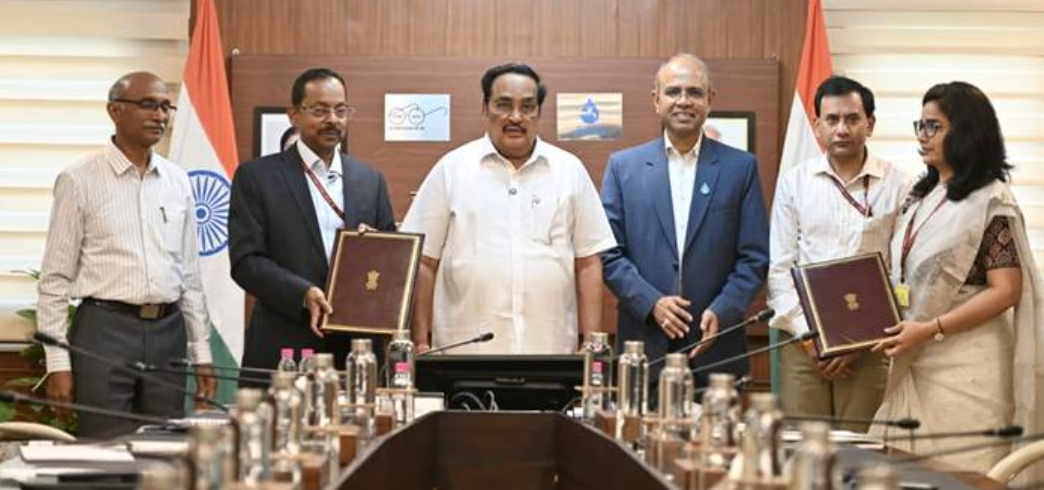
Union Jal Shakti Minister C.R. Patil said the next phase of the mission will prioritise bridging infrastructure gaps, ensuring reliable water supply, and strengthening community-led management systems.
He highlighted the need for proper handover of completed schemes to local communities and emphasised women’s participation in water quality monitoring through field test kits.
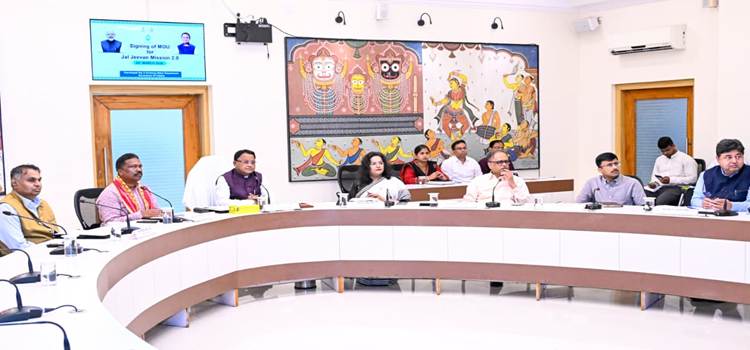
The MoU with Andhra Pradesh was signed in the presence of Chief Minister N. Chandrababu Naidu, while Odisha Chief Minister Mohan Charan Majhi participated virtually during the signing of the agreement with his state.
Both states reaffirmed their commitment to achieving universal household tap water coverage and improving service delivery through community participation and sustainable operation and maintenance systems.
Officials said the reform framework includes measures to strengthen infrastructure, improve monitoring through digital platforms, and enhance citizen engagement through local committees and grievance redressal systems.
The agreements are part of the Centre’s broader push under JJM 2.0 to ensure adequate and quality drinking water supply to every rural household, aligned with the goal of long-term water security and improved living standards.
The development was announced by the Ministry of Jal Shakti in a statement.
25, Mar 2026
CapEx by Heavy Industry CPSEs Rises to Rs.577 Crore in FY25
New Delhi, Mar 25 (BNP): Capital expenditure by Central Public Sector Enterprises (CPSEs) under the Ministry of Heavy Industries rose to ₹577.41 crore in 2024–25, reflecting increased investments in new projects, expansion, and modernisation.
According to data shared in Parliament, total CapEx by these CPSEs stood at ₹340.58 crore in 2022–23 and ₹388.94 crore in 2023–24, indicating a steady upward trend over the past three financial years.

Among the CPSEs, Bharat Heavy Electricals Ltd (BHEL) accounted for the largest share of investment, with CapEx rising from ₹262 crore in 2022–23 to ₹536 crore in 2024–25.
Other enterprises, including Cement Corporation of India Ltd and Sambhar Salts Ltd, also recorded notable investments, though at a smaller scale.
The investments were primarily aimed at setting up new plants and machinery, expanding production capacity, and manufacturing new products, officials said.
Several CPSEs, however, reported relatively modest or declining capital expenditure over the period, reflecting varied operational and investment cycles across entities.
The information was provided by Minister of State for Heavy Industries Bhupathiraju Srinivasa Varma in a written reply in the Lok Sabha.
25, Mar 2026
AI Tools, Digital Platforms to Strengthen Cancer Screening Ecosystem
New Delhi, Mar 25 (BNP): The government has launched a series of initiatives to promote the use of artificial intelligence (AI) in cancer screening, diagnostics, and care under the India AI Mission, Parliament was informed on Tuesday.
A key initiative, the Cancer AI & Technology Challenge (CATCH) grant programme, has been launched in partnership with the National Cancer Grid to support development and validation of AI-based solutions across the cancer care continuum.
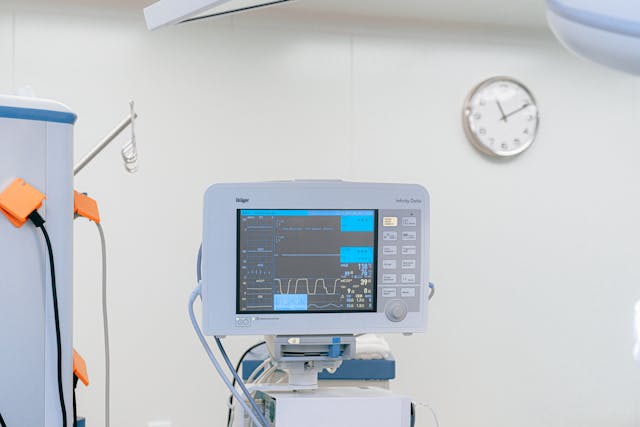
Under the programme, selected projects are eligible for pilot funding of up to ₹50 lakh, with additional support of up to ₹1 crore for scale-up based on clinical readiness.
The Ministry of Health and Family Welfare has also introduced the ‘Strategy for AI in Healthcare in India’ (SAHI), a framework to ensure safe, ethical, and evidence-based adoption of AI, along with the ‘Benchmarking Open Data Platform for Health AI’ (BODH) for testing and validating AI solutions before large-scale deployment.
Officials said digital health infrastructure is being strengthened to support AI integration. The Ayushman Bharat Digital Mission (ABDM) provides a sandbox environment and integration toolkits for developers to deploy AI-based applications, including screening tools.
In addition, the National NCD Portal under the National Programme for Prevention and Control of Non-Communicable Diseases enables digital screening, referrals, and continuity of care for cancers such as breast, cervical, and oral, with integration of Ayushman Bharat Health Account (ABHA) IDs.
The government said funding under the programme has increased steadily, with approvals rising from ₹60,659 lakh in 2021–22 to ₹1,30,288 lakh in 2025–26.
The information was provided by Minister of State for Health and Family Welfare Prataprao Jadhav in a written reply in the Rajya Sabha.
25, Mar 2026
DPIIT Signs MoU with Blue Star to Boost Manufacturing, Startup Ecosystem
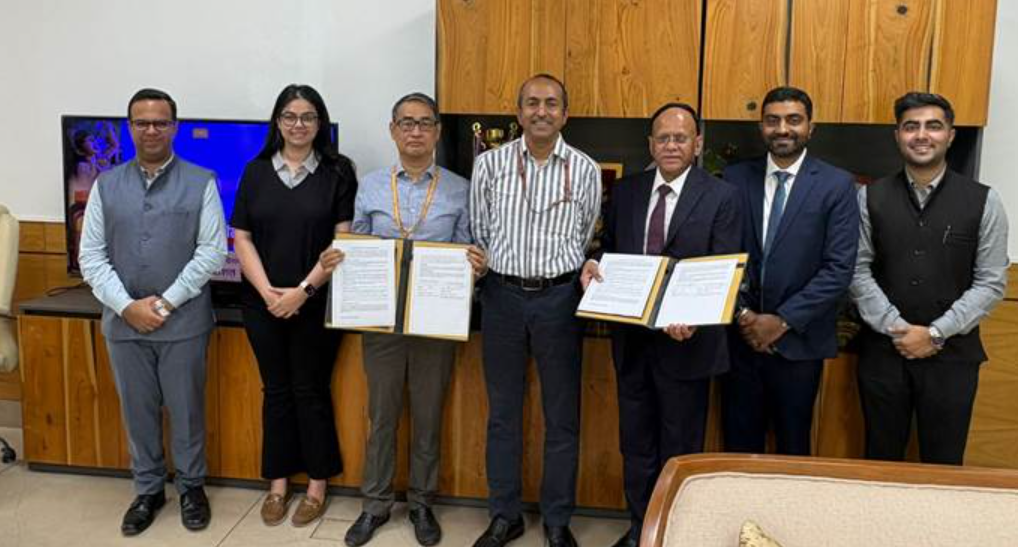
New Delhi, Mar 25 (BNP): The Department for Promotion of Industry and Internal Trade (DPIIT) has signed a memorandum of understanding with air conditioning major Blue Star Ltd to support startups and strengthen India’s manufacturing and innovation ecosystem.
The partnership aims to promote product startups working in areas such as HVAC technologies, digital solutions, advanced manufacturing, and supply chain innovation, officials said.
Under the collaboration, startups will receive mentorship from industry experts, access to R&D laboratories and testing facilities, pilot opportunities, and market linkages to help scale industry-relevant solutions.
DPIIT said the initiative will enable startups to achieve key milestones including product validation, proof-of-concept development, and integration into industry value chains.
Joint Secretary, DPIIT, Sanjiv, said the partnership would help foster industry-driven innovation by enabling startups to work on real-world challenges and scale solutions with tangible outcomes.
As part of the initiative, DPIIT and Blue Star will also explore organising innovation challenges and hackathons under the Bharat Startup Grand Challenge, focusing on HVAC, digital technologies, and manufacturing sectors.
Selected startups will be offered opportunities for pilot deployment and further engagement through structured proof-of-concept programmes.
The MoU was signed by Deputy Secretary, DPIIT, T.L.K. Singh and Managing Director of Blue Star Ltd, B. Thiagarajan, in the presence of senior officials.
Officials said the collaboration is expected to strengthen linkages between startups and industry while enhancing innovation capacity in key manufacturing sectors.
25, Mar 2026
India’s Exports Rise to $714.73 Billion in Apr–Jan FY26
New Delhi, Mar 25 (BNP): India’s total exports of merchandise and services rose to $714.73 billion during April–January of FY 2025–26, registering a growth of 5.26 per cent over $679.02 billion in the corresponding period of the previous fiscal, the government said on Tuesday.
The data reflects continued resilience in India’s trade performance despite global uncertainties, supply chain disruptions, and volatile commodity prices.
Over the longer term, exports have shown steady growth, rising from $497.90 billion in 2020–21 to $828.25 billion in 2024–25, with a compound annual growth rate of 6.9 per cent.

The government said it is strengthening the export ecosystem through policy support, digital infrastructure, and financial incentives, with a focus on enhancing global competitiveness, especially for MSMEs.
The Foreign Trade Policy (FTP) 2023 continues to play a key role, supported by schemes such as Remission of Duties and Taxes on Exported Products (RoDTEP) and the recently approved Export Promotion Mission (EPM), which has an outlay of ₹25,060 crore.
As part of efforts to mitigate risks arising from geopolitical disruptions, the government has also launched a time-bound “RELIEF” scheme under the Export Promotion Mission, to be implemented through the Export Credit Guarantee Corporation (ECGC).
Officials said digital platforms and trade facilitation measures have improved efficiency, transparency, and access to global markets for exporters.
India is also expanding its global trade footprint through free trade agreements, with 19 FTAs in place and several others under negotiation, including with the EU, UK, and New Zealand.
The government said the integrated approach combining policy reforms, digital systems, and market access initiatives is aimed at building a resilient and future-ready export ecosystem.
The information was provided by Minister of State for Commerce and Industry Jitin Prasada in a written reply in the Lok Sabha.
25, Mar 2026
MSP Procurement, Insurance Schemes Strengthen Farmers’ Income: Govt
New Delhi, Mar 25 (BNP): Union Agriculture Minister Shivraj Singh Chouhan on Tuesday said farmers’ incomes have doubled under the current government, citing higher minimum support prices (MSP), record procurement, and expanded welfare schemes.
Replying to questions in the Lok Sabha, Chouhan said the government is committed to ensuring farmers receive fair prices for their produce in all situations and has built a “strong security shield” through initiatives such as MSP procurement, PM-AASHA, and the Pradhan Mantri Fasal Bima Yojana.
He said MSP is being fixed at cost plus 50 per cent, providing better returns to farmers, and stressed that procurement at MSP has been expanded beyond foodgrains to include pulses, oilseeds, fruits, and vegetables.

The minister said agricultural production has increased by nearly 44 per cent in recent years, alongside efforts to improve both productivity and farm incomes.
Highlighting income protection measures, Chouhan said the PM-AASHA scheme ensures support when market prices fall below MSP through direct procurement, price deficiency payments, and other interventions.
He added that under the crop insurance scheme, farmers have received claims worth about ₹1.92 lakh crore against premium payments of around ₹36,055 crore, indicating substantial benefits.
Referring to recent natural calamities in Maharashtra, the minister said ₹14,000 crore was transferred directly to farmers within five days using digital farmer identification systems.
Chouhan said the government is also supporting farmers through the Market Intervention Scheme, including covering transportation costs in some cases to help farmers access better prices in distant markets.
He emphasised increased use of technology, including satellite-based assessment, to improve transparency in crop insurance claims and ensure accurate yield estimation.
The minister reiterated that the government remains committed to protecting farmers’ interests and ensuring they receive the full value of their produce.
25, Mar 2026
Govt Launches Focused Plan for 100 Districts Under Dhan-Dhaanya Krishi Yojana
New Delhi, Mar 25 (BNP): The Centre has identified 100 districts across the country under the Prime Minister Dhan-Dhaanya Krishi Yojana (DDKY) to drive the next phase of agricultural growth, focusing on regions with low productivity and limited credit access.
The districts have been selected based on three key indicators — low crop productivity, low cropping intensity, and inadequate agricultural credit disbursement.
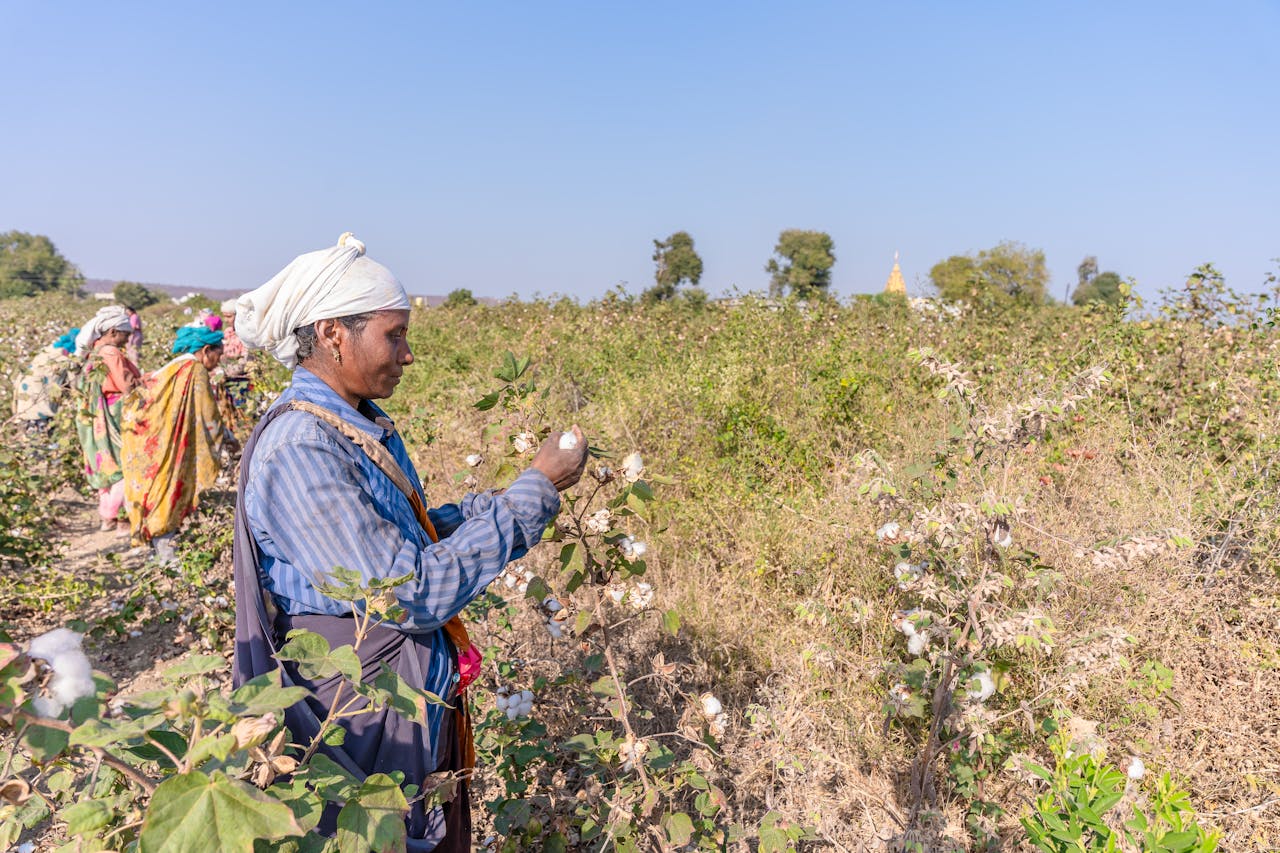
The scheme aims to enhance agricultural productivity, promote crop diversification and sustainable practices, improve irrigation infrastructure, and expand post-harvest storage facilities at the panchayat and block levels. It also seeks to improve access to both short-term and long-term credit for farmers.
Under the initiative, District Action Plans (DAPs) are being prepared and implemented by district-level Dhan-Dhaanya Krishi Yojana committees headed by district collectors.
Officials said the plans will be developed through convergence of 36 central schemes across 11 departments, along with state schemes and private sector participation. The DAPs are designed to address local bottlenecks and integrate interventions such as climate-resilient technologies, micro-irrigation, protected cultivation, and post-harvest infrastructure.
To ensure coordination and monitoring, committees have been set up at the district, state, and national levels. Central Nodal Officers have also been assigned to each district for field visits and performance review.
The information was provided by Minister of State for Agriculture and Farmers Welfare Ramnath Thakur in a written reply in the Lok Sabha.
25, Mar 2026
Govt Highlights Impact of PM-Kisan on Farm Income, Rural Economy
New Delhi, Mar 25 (BNP): The Centre has disbursed over ₹4.27 lakh crore to farmers under the Pradhan Mantri Kisan Samman Nidhi (PM-KISAN) scheme through 22 instalments since its launch in February 2019, the government informed Parliament on Tuesday.
The scheme provides ₹6,000 annually to eligible landholding farmers in three equal instalments through Direct Benefit Transfer (DBT) into Aadhaar-linked bank accounts.

During the release of the 21st instalment on November 19, 2025, more than 9.35 crore farmers received financial assistance under the scheme.
According to government data and independent assessments, the scheme has had a positive impact on farmers’ income and the rural economy.
A 2019 study by the International Food Policy Research Institute (IFPRI) found that PM-KISAN support helped ease credit constraints, boost rural economic growth, and encourage higher investment in agricultural inputs. It also enhanced farmers’ ability to take productive risks.
Feedback collected through Kisan Call Centres indicates that over 93 per cent of beneficiaries used the funds for agricultural activities.
An impact evaluation by NITI Aayog’s Development Monitoring and Evaluation Office (DMEO) found that over 92 per cent of beneficiary farmers spent the assistance on essential inputs such as seeds, fertilisers and pesticides. Around 85 per cent reported an increase in agricultural income and reduced dependence on informal credit, particularly during crop failures or medical emergencies.
The government said the scheme contributes to broader goals including poverty reduction, food security, and improved transparency.
To improve accessibility, a dedicated ‘Farmers Corner’ on the PM-KISAN portal allows beneficiaries to check payment status and eligibility. Farmers can also access these services through Common Service Centres.
A voice-based AI chatbot, ‘Kisan e-Mitra’, has also been deployed to address queries in 11 languages. The chatbot has handled over 95 lakh queries from more than 53 lakh farmers so far.
The government said Aadhaar authentication is mandatory under the scheme, with payments made directly through Aadhaar-based systems. Regular drives are conducted in coordination with states and agencies to ensure Aadhaar seeding of bank accounts.
The information was provided by Minister of State for Agriculture and Farmers Welfare Ramnath Thakur in a written reply in the Lok Sabha.


