


24, Mar 2026
The Four-Wheel Shift, VinFast VF 3 Makes Indonesian Users Upgrade from Motorbikes
JAKARTA, INDONESIA – 24 March 2026 – In Indonesia, where motorbikes have long dominated daily mobility, transitioning to a car has traditionally been seen as a major leap, one associated with higher costs, lifestyle adjustments, and urban constraints. However, the arrival of the VinFast VF 3 is rapidly reshaping that narrative.
For many first-time car buyers, especially those upgrading from motorbikes, the most striking impression of the VF 3 is not its technology, but its sense of relief. No more exposure to heat, rain, or fatigue from long hours navigating traffic, common realities in cities like Jakarta or Surabaya.

‘A small car, yet a whole world of its own’
One user described the experience as “stepping into a completely different world”, a space where they can lean back, relax, and actually enjoy the journey instead of enduring it.
Despite its compact footprint, the VF 3 offers a surprisingly optimized cabin. Its minimalist yet functional design ensures that every element serves a clear purpose, from seating layout to dashboard ergonomics. The air-conditioning system cools the interior quickly, a crucial advantage in tropical climates.
A particularly thoughtful design detail is the upright windshield, which helps reduce direct sunlight entering the cabin, an issue that many traditional sedans in Southeast Asia still struggle with. These seemingly small refinements collectively deliver a noticeably improved everyday experience.
More importantly, for many Indonesian families, VF 3 quickly becomes part of daily life: school runs, grocery trips, and weekend getaways. A compact car, yet a complete personal space on wheels.
Effortless driving, confident journeys
One of the biggest psychological barriers for motorbike users switching to cars is driving complexity. The VF 3 addresses this by making the experience intuitive and approachable.
With a light steering feel, tight turning radius, and a length of just around 3 meters, this mini-SUV is perfectly suited for navigating dense urban environments, a defining characteristic of Indonesian cities.
The gear selector, positioned conveniently behind the steering wheel, further simplifies operation, especially for first-time drivers.
Beyond ease of use, the VF 3 delivers a distinctly different driving experience thanks to its electric powertrain. Acceleration is smooth and immediate, allowing for responsive maneuvering in traffic. Even at speeds of 70-80 km/h, the vehicle maintains stability and a planted feel, giving drivers confidence on highways and intercity routes.
Notably, with a maximum torque of up to 110 Nm, the VF 3 exceeds expectations for a vehicle in its segment. It handles inclines and varied terrains with ease, proving capable even on more challenging routes.
When cost is no longer a barrier
Beyond user experience, economics plays a decisive role in Indonesia’s mobility transition, and this is where VinFastcreates a compelling advantage.
Unlike gasoline vehicles, electric cars offer significantly more predictable operating costs. Users are no longer exposed to volatile global fuel prices. Instead, electricity costs are generally more stable and easier to forecast.
More importantly, VinFast introduces an innovative battery subscription model, which has already received positive feedback in Indonesia. By separating the battery, the most expensive component, from the vehicle price, the company significantly reduces upfront ownership costs.
This aligns closely with Indonesian consumer behavior, where affordability at the point of purchase remains a key decision factor, even if long-term savings are evident.
VinFast further strengthens this advantage through a seasonal promotion: free battery subscription fees for two years for vehicles invoiced before May 31, 2026. Economically, this is highly impactful, as it effectively eliminates a major portion of early-stage operating costs.
When both initial investment and ongoing expenses are minimized, the barrier to switching from motorbikes or gasoline cars to EVs becomes dramatically lower.
A “golden opportunity” to go electric
Amid increasing volatility in global fuel markets, Vingroup has launched the “Trade Gas for Electric” program across multiple markets, including Indonesia.
The initiative provides an additional 3% discount on VinFast electric cars and a 5% discount on VinFast electric scooters for customers who switch from older gasoline vehicles.
At the same time, GSM Green and Smart Mobility is supporting this transition through discounted electric mobility services, allowing users to experience EVs firsthand before making a purchase decision.
Together, these efforts reflect a comprehensive ecosystem approach, not just selling vehicles, but enabling a complete shift in mobility behavior.
In a country where motorbikes have long been the default choice, the VF 3 introduces a new paradigm: compact, accessible, and intelligently designed mobility. It delivers not only convenience and cost efficiency, but also a tangible upgrade in quality of life, from protection against weather conditions to creating a private, comfortable space for families.
As urbanization accelerates and mobility needs evolve, solutions like the VF 3 are no longer optional. Ultimately, the reason many Indonesian users are willing to “ditch motorbikes without regret” is simple. They are choosing a better way to move, and a better way to live.

- 0
- By Neel Achary

24, Mar 2026
Indian Railways Updates Ticket Cancellation and Refund Rules
Indian Railways has revised its ticket cancellation and refund guidelines to improve transparency, reduce misuse, and make seat allocation more efficient for passengers.
Under the updated system, refund eligibility will now depend on how early a passenger cancels their ticket before the train’s departure.
Revised Refund Structure
As per the new rules:
- Tickets cancelled 72 hours or more before departure will be eligible for up to 75% refund, after deduction of applicable charges.
- Cancellations made between 72 and 24 hours before departure will allow around 25% refund.
- If a ticket is cancelled between 24 and 8 hours, passengers may receive approximately 50% refund.
- No refund will be granted if cancellation is done within 8 hours of departure.
Officials say the revised structure is designed to discourage last-minute cancellations that often lead to seat blocking and reduce availability for other passengers.
Greater Flexibility for Boarding Point Changes
Along with refund reforms, Indian Railways has also introduced a passenger-friendly update allowing changes to the boarding station.
Passengers can now modify their boarding point up to 30 minutes before departure, offering greater flexibility, especially for those travelling from cities with multiple railway stations.
Earlier, such changes were permitted only until chart preparation. The new rule extends convenience closer to departure time.
Aim: Prevent Misuse and Improve Efficiency
Railway officials have stated that the updated policy also aims to curb irregular practices by ticket agents and bulk booking operators who sometimes reserve and cancel tickets repeatedly for unfair advantage.
By tightening cancellation rules, Indian Railways hopes to ensure fair access to confirmed seats and improve overall booking system efficiency.
Significance of the New Policy
The revised rules are important because they:
- Promote fair ticket availability for genuine passengers
- Reduce last-minute cancellations and seat wastage
- Improve transparency in refund calculations
- Strengthen system efficiency and booking discipline
- Offer better flexibility for boarding adjustments
Conclusion
The new cancellation and refund framework marks a step toward a more structured and efficient railway booking system. While stricter in approach, the policy is designed to enhance fairness, reduce misuse, and improve travel convenience for millions of passengers across India.
24, Mar 2026
Climate Narrative Hub Launches Guide to Support Context-Rich Reporting on Human–Wildlife Interactions on International Day of Forests
New Delhi, Mar 24: Climate Narrative Hub (CNH), an initiative by Dasra and Momentum Shifts, in collaboration with the Rainmatter Foundation, has launched a new guide to support journalists and content creators in reporting on human–wildlife interactions with greater context, clarity, and on-ground understanding. Released on the International Day of Forests, the manual aims to strengthen storytelling around how communities and wildlife share landscapes across India.
Co-created with a coalition including – Network for Conserving Central India, Wildlife Conservation Society–India, Coexistence Consortium, The Corbett Foundation, Vidhi Centre for Legal Policy, and The Nature Conservancy – this handbook moves beyond episodic reporting tied only to moments of crisis and instead seeks to build a richer understanding of one of the most complex environmental and social challenges facing many regions today.
In doing so, it encourages a broader approach to reporting on human–wildlife interactions by drawing greater attention to coexistence, adaptation, and the everyday practices through which communities navigate shared environments. Across many forested and biodiversity-rich regions, people live alongside wildlife with a deep understanding of local landscapes, seasonal shifts, and ecological patterns. It aims to support narratives that more meaningfully reflect these lived realities.
Vishaka George, Communication Consultant, Dasra said,
“There are many stories to be told about our forests, their biodiversity, and the communities that live alongside them. Told more often and with care, they can deepen public connection to nature and shift conversations towards protecting both communities and wildlife. We hope this resource encourages more thoughtful, sensitive storytelling, mindful of language, data, and whose voices are centred.”
The handbook also supports more informed and well-rounded storytelling by offering practical resources, including:
-
Sample questionnaire for more sensitive reporting – frameworks for engaging with affected communities and experts in an informed and sensitive manner, highlighting key pitfalls such as sensationalism of language.
-
Directory of experts – a curated directory of researchers, journalists, and practitioners to ensure nuanced on-ground reporting.
-
Repository of data sources – a collection of key data references to ground reporting in evidence and support well-rounded, contextualised storytelling.
Drawing from consultations with researchers and practitioners, the guide highlights a few key principles for stronger narrative: moving beyond the immediate event to ask what larger ecological or systemic factors are at play, using clear and neutral language, and ensuring balanced sourcing by including voices such as forest-dwelling communities, Adivasi elders, women, and local conservation practitioners alongside officials. It also underlines that stories can benefit from showing the full spectrum of human–wildlife relationships, including adaptation, local response, and practical solutions on the ground.
24, Mar 2026
The Future of Digital Marketing: AI and Immersive Technologies Driving Hyper-Targeted Campaigns in 2026
Digital marketing in 2026 is evolving into a highly intelligent and experience-driven ecosystem. With the rapid rise of artificial intelligence and immersive technologies like augmented reality (AR) and virtual reality (VR), brands are now able to connect with consumers in more meaningful, precise, and personalized ways.

What was once broad and repetitive advertising has now transformed into data-driven, real-time, hyper-targeted communication that adapts to individual behavior and preferences.
AI at the Core of Modern Marketing
Artificial intelligence has become the central engine of today’s marketing systems. Instead of relying on general audience categories, AI tools now analyze individual user patterns—what people search, click, watch, and buy—to understand intent more deeply.
This allows businesses to deliver highly relevant content such as:
- Personalized product recommendations
- Tailored advertisements based on real-time behavior
- Smart prediction of customer needs
- Automated campaign optimization for better performance
In simple terms, marketing is becoming less about guessing what people want and more about understanding it before they even ask.
Generative AI: Speeding Up Creativity
Generative AI has changed how marketing content is created. Businesses can now produce written content, visuals, videos, and advertisements in a fraction of the time it once took.
This technology helps teams to:
- Quickly generate multiple creative ideas
- Personalize messages for different audiences
- Test and refine campaigns faster
- Reduce production costs significantly
Rather than replacing creativity, generative AI is helping marketers focus more on storytelling, strategy, and emotional connection with audiences.
Immersive Experiences: AR and VR in Marketing
Augmented Reality and Virtual Reality are bringing a new dimension to digital engagement. Instead of simply viewing ads, customers can now interact with products in a virtual environment.
For example:
- Trying furniture in a virtual room before buying
- Exploring digital showrooms from home
- Participating in interactive brand experiences
- Viewing products in real-world settings through AR apps
These immersive tools make marketing more engaging and help customers make more confident decisions.
Business Impact: Efficiency, Reach, and Growth
The combined power of AI and immersive technology is delivering strong business outcomes across industries.
1. Greater Efficiency
Marketing processes are faster and more automated. Campaign creation, audience targeting, and performance tracking now require less manual effort, allowing teams to focus on strategy and innovation.
2. Wider Reach with Precision
Brands can now reach global audiences while still delivering highly personalized messages. This balance of scale and precision was not possible in traditional marketing systems.
3. Stronger Business Growth
Better targeting and improved customer engagement are leading to higher conversion rates, improved customer loyalty, and stronger returns on marketing investment.
Even small businesses are benefiting, as advanced tools are now more affordable and accessible than ever before.
A More Responsible Digital Future
While the opportunities are significant, experts also stress the importance of responsible usage. Concerns around data privacy, ethical AI use, and over-automation are becoming more important in marketing discussions.
Balancing innovation with trust and transparency will be essential for long-term success.
Conclusion: Marketing Becomes Smarter and More Human
Despite being driven by advanced technology, the future of digital marketing is becoming more human in its impact. AI and immersive tools are not just improving efficiency—they are helping brands understand people better and create more meaningful experiences.
In 2026, successful marketing is no longer about reaching everyone. It is about reaching the right person, at the right time, with the right message—powered by intelligence, creativity, and empathy.
24, Mar 2026
Metal Park and Binghatti Sign Strategic agreement to Strengthen Control, Quality and Efficiency Across Construction Supply Chains
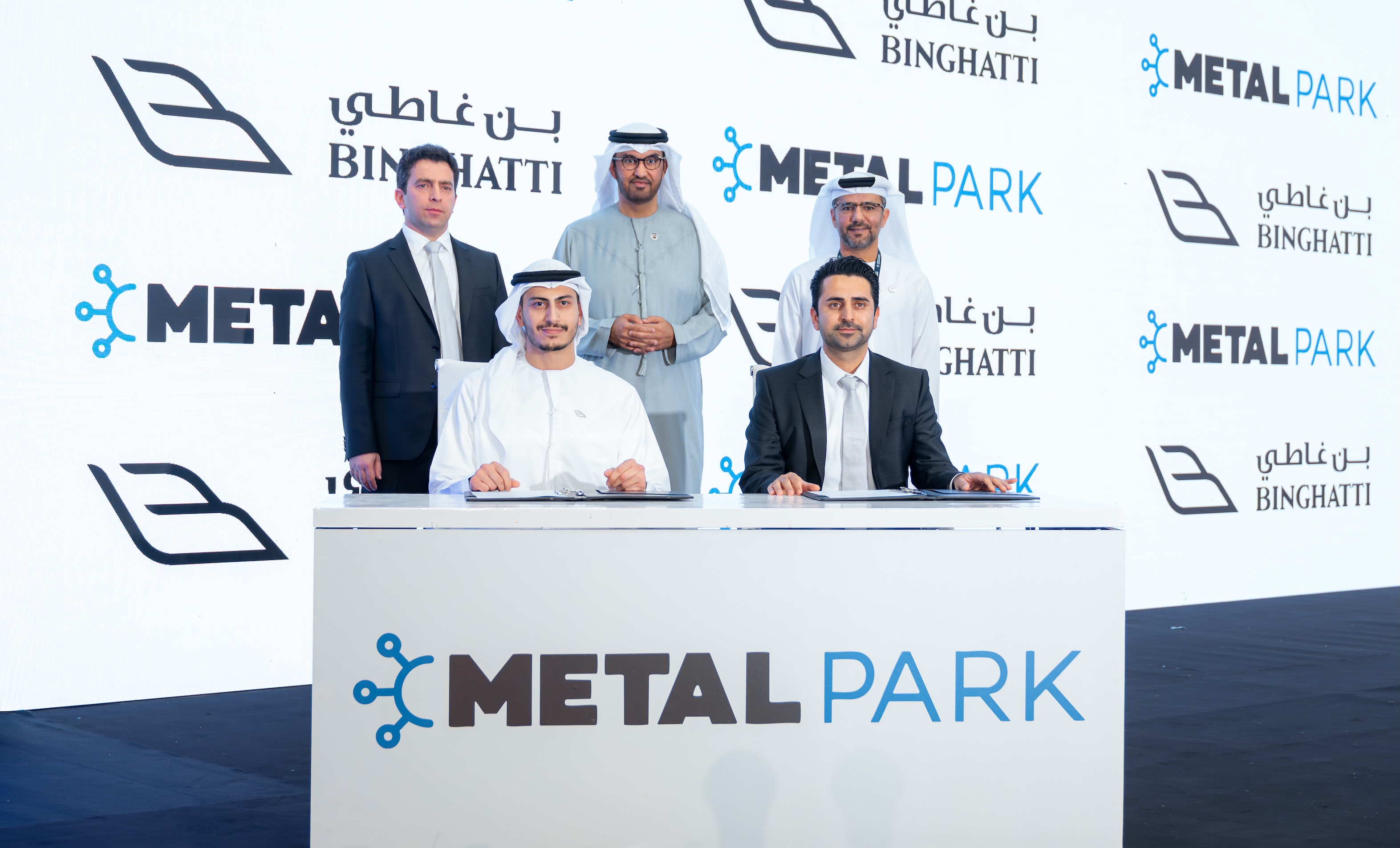
Metal Park has signed a strategic lease agreement with Binghatti, establishing a collaboration focused on optimising Binghatti’s own construction supply chain through improved control, efficiency and material assurance.
The partnership reflects a growing shift among leading developers toward greater ownership of how critical construction materials are sourced, processed and delivered recognising that supply chain performance directly impacts project timelines, quality and cost certainty.
Taking Control of the Construction Supply Chain
At the heart of every construction project lies steel from reinforcement and cut-and-bend for foundations to structural elements that define scale and durability. Through this agreement, Binghatti will utilise Metal Park’s integrated metals ecosystem to centralise key elements of its materials workflow, giving the developer greater visibility and control across its construction pipeline.
By working within Metal Park, Binghatti aims to:
· Secure consistent quality of reinforcement steel rebar products
· Improve coordination between material availability and project schedules
· Reduce reliance on fragmented suppliers
· Strengthen on-time delivery across multiple developments
For a high-volume developer, this level of control is increasingly critical to maintaining execution speed and construction standards.
A New Model for Developers
Metal Park’s ecosystem model brings together steel supplier, metal sizing and finishing services, storage, logistics and supporting service providers within one industrial environment. This structure enables developers to simplify how metals move from mill to site, transforming to semi or fabricated items and to be used in construction while traditionally fragmented procurement into a coordinated, performance-driven system.
While the agreement directly supports Binghatti’s internal construction needs, it also demonstrates a broader shift in how forward-thinking developers are approaching supply chain strategy moving from transactional purchasing toward integrated, service-led models.
Aligning Strategy, Quality and Delivery
For Metal Park, the partnership reinforces its role as an enabler of modern construction providing infrastructure and services that allow developers to retain control over quality and delivery without needing to build in-house industrial capability.
For Binghatti, the collaboration supports vertical alignment across its construction operations, ensuring that materials quality, services and timelines are managed with the same rigour applied to design and development.
The agreement signals a shared belief that construction excellence begins long before materials reach site and that integrated ecosystems can play a decisive role in improving efficiency, predictability and performance across the sector.
24, Mar 2026
Masked Traditions Come Alive: Himachal’s Ancient Raulane Festival Goes Viral
Raulane Festival of Himachal Pradesh: A Centuries-Old Himalayan Tradition Celebrating Faith, Nature and Community

Bright and colourful images from Himachal Pradesh have recently gone viral on social media, drawing attention to the Raulane Festival, an ancient winter ritual celebrated in the Kinnaur district. The visuals—featuring masked performers, traditional costumes, and symbolic rituals—have sparked widespread curiosity about this unique cultural tradition rooted in Himalayan belief systems.
A Sacred Winter Festival of Kinnaur
The Raulane Festival is a deeply spiritual and culturally significant winter celebration observed in remote villages of Kinnaur. It is dedicated to “Saunis”, celestial fairies believed in local tradition to be gentle, radiant beings who protect villagers during harsh winters.
According to local belief, these divine beings provide warmth, guidance, and protection when life becomes difficult in the extreme Himalayan climate.
Symbolic Marriage Ritual: Raula and Raulane
One of the most fascinating aspects of the festival is its symbolic marriage ritual. During the celebration, two men are chosen to represent the divine couple:
- The Raula (groom)
- The Raulane (bride)
They are believed to act as spiritual vessels for the Saunis. This ritual is not a real marriage but a symbolic performance representing divine unity and protection.
The participants wear heavy traditional woollen clothing suited for the cold Himalayan weather. Their faces are fully covered with masks, and their hands are gloved, giving the ritual a mysterious and sacred appearance.
The Raulane, representing the bride figure, is dressed in elaborate attire with decorative ornaments, traditional jewellery, and detailed headgear, transforming the performer into a ritual identity rather than an individual.

Ritual Dance and Village Participation
A key highlight of the festival is a slow, meditative ritual dance performed at the Nagin Narayan Temple, one of the important spiritual centres in the region. The movement is calm and symbolic, reflecting devotion and spiritual connection.
The entire village takes part in prayers, gatherings, and celebrations, making the festival a deeply communal event rather than an individual ritual.
Cultural and Spiritual Importance
The Raulane Festival is not just a celebration—it is a living expression of Himalayan heritage. It plays a vital role in:
- Preserving ancient oral traditions and folklore
- Strengthening community bonding in remote mountain villages
- Honouring nature-based spiritual beliefs
- Maintaining cultural identity in harsh geographical conditions
Local traditions suggest that the festival may be thousands of years old, with some accounts estimating its origins to be nearly 5,000 years old, though this remains part of oral belief rather than documented history.
Why the Festival Is Trending Now
The festival has recently gained global attention due to:
- Viral social media images and videos
- Unique masked performances and costumes
- Curiosity about Himalayan spiritual traditions
- Increased interest in cultural and heritage tourism
Travel enthusiasts and cultural observers are now highlighting Kinnaur as a destination rich in untouched traditions and deep-rooted beliefs.
Conclusion
The Raulane Festival stands as a powerful reminder of India’s diverse cultural heritage. In the remote mountains of Himachal Pradesh, traditions like these continue to thrive, blending faith, mythology, and community life.
Beyond its striking visuals, the festival reflects a deeper message—of harmony between humans, nature, and spirituality, preserved through generations in the heart of the Himalayas.
24, Mar 2026
Yamaha Music India Pvt. Ltd. announced the appointment of A.R. Rahman, Academy Award-winning composer and Internationally Acclaimed Music Icon as Brand Ambassador
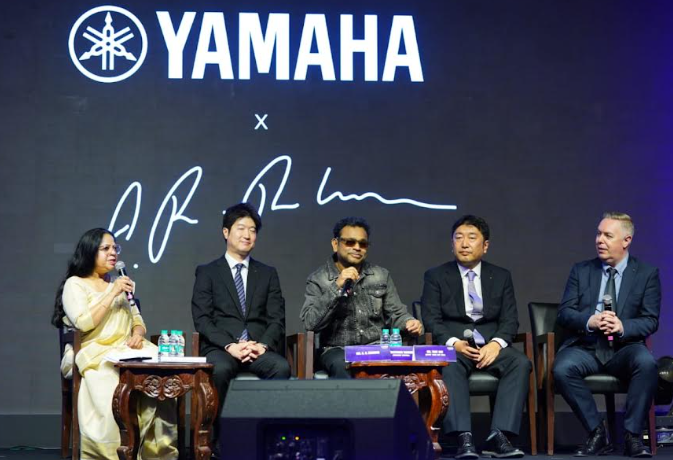
Chennai , Delhi NCR , India Mar 24: An Academy Award–winning composer and globally respected musical icon, A.R. Rahman has played a defining role in taking Indian music to international audiences. His journey reflects the global potential of Indian Talent – a vision that aligns with Yamaha Music India’s commitment to nurturing music culture in India. This association marks a significant milestone in Yamaha Music India’s long-term commitment to strengthening India’s music ecosystem.
Mr. Yamamoto Taketoshi, Managing Director, Yamaha Music India, stated: “Music lies at the heart of Yamaha’s philosophy. India’s rich musical heritage deserves global recognition. Through our ‘Made in India’ initiative and our collaboration with A.R. Rahman, we aim to inspire the next generation of musicians and expand structured music education across India.”
Mr. Ryoji Maruyama, Sales Unit Head, added: “Our mission extends beyond instruments. We are committed to nurturing music communities through workshops, school collaborations, and rural outreach programs. This partnership reinforces our vision of making music accessible to every aspiring artist.”
A.R. Rahman shared: “Yamaha has always represented precision and reliability. I am proud to associate with a brand whose legacy is rooted in music excellence and whose ‘Made in India’ focus is making quality instruments more accessible. This initiative is already benefitting the young talents being nurtured at my own KM Music Conservatory and in The Sunshine Orchestra. If we continue to mentor young artists and strengthen music education, Indian musicians can lead on the global stage.”
24, Mar 2026
DALKHAI Initiative: Strengthening Local Livelihoods to Curb Migration
The state government of Odisha has stepped up efforts to address the issue of labour migration by promoting the DALKHAI initiative, a programme aimed at creating more employment opportunities within local communities and improving rural livelihoods.
The initiative focuses on ensuring that people, especially in rural and tribal regions, can find work closer to home instead of being forced to migrate to other states in search of daily wages. Officials said the programme is being implemented through coordinated efforts of multiple departments to support income generation and skill-based employment.
The main objective is to build stronger village-level economies by promoting self-reliance and creating sustainable livelihood options. The government believes that when employment is available locally, families can remain together and maintain better social and economic stability.
Under the initiative, emphasis is being placed on encouraging small-scale enterprises, supporting agricultural and allied activities, and expanding rural infrastructure-related work. Skill development and capacity-building programmes are also being integrated to help youth and workers access better job opportunities within their own regions.
Officials highlighted that migration is often driven by lack of stable income opportunities in local areas. By addressing this gap, the DALKHAI initiative aims to reduce economic pressure on families and improve overall living conditions in rural communities.
The government has described the programme as part of its broader commitment to inclusive development, where growth is not limited to urban centres but extends equally to villages and remote areas.
Experts note that such initiatives can help strengthen rural economies, increase local spending power, and reduce dependency on external labour markets. Over time, this is expected to contribute to more balanced regional development and improved quality of life.
In essence, the DALKHAI initiative is being positioned as a step towards ensuring that people can earn a dignified livelihood in their own villages, reducing the need for migration and supporting long-term rural development.
24, Mar 2026
Kubbra Sait opens up about portraying Parveen and sharing the screen space with Nana Patekar in Amazon MX Player’s Sankalp
Mumbai, Mar 24: Amazon MX Player, India’s leading free, premium, ad-supported video streaming service, recently launched Sankalp, a gripping socio-political thriller that navigates the intricate intersections of power, mentorship, and ideology. Directed by National Award-Winning Filmmaker Prakash Jha and produced by PJP Productions in partnership with Jio Studios, the series is headlined by Nana Patekar alongside a powerhouse cast featuring Mohammed Zeeshan Ayyub, Kubbra Sait,Neeraj Kabi, Sanjay Kapoor, and Kranti Prakash Jha in pivotal roles. Set against the backdrop of institutional influence and rising ambition, the series delves into the evolving dynamics between mentor and mentee, and how conviction, loyalty, and authority shape those driven to lead and create change.

Reflecting on her character Parveen, Kubbra Sait shares insight into the emotional and moral complexities of the role:
“Parveen is raised within a very strong value system. In her world, only the destined or the truly gifted stand a chance of entering the system. But the battle between personal conscience and the system never really disappears. What drew me to Parveen was her unwavering moral compass , despite the environment she’s shaped by. She believes she can transform the system from within, but gradually realises that the system, in turn, begins to reshape her. That inner conflict made Parveen incredibly compelling for me to portray as an actor.”
Speaking about her experience of working alongside the veteran actor Nana Patekar, Kubbra adds,
“I shared most of my scenes with Nana Saab, who is truly an institution himself. Acting alongside him felt like a masterclass every single day. What stayed with me was his discipline. He would meticulously handwrite all his lines and rehearse them before every scene. Watching someone of his stature approach the craft with that much sincerity was incredibly inspiring. Also, on a lighter note Nana Sir might be the best cook ever —I would like to believe I come in a close second when it comes to biryani.”
With Sankalp now streaming for free on Amazon MX Player, audiences can expect an intense socio-political thriller that explores the fine line between belief, ambition, and the pursuit of power.
24, Mar 2026
India’s M&E Sector Surges to Rs.2.78 Trillion in 2025, Digital Takes Lead
New Delhi: India’s media and entertainment (M&E) industry recorded a strong growth trajectory in 2025, expanding by 9% to reach ₹2.78 trillion (approximately $32 billion), according to the latest FICCI–EY report.
The report highlights a significant structural shift within the sector, with digital media emerging as the largest segment, overtaking traditional television. Digital platforms, driven by advertising and subscription growth, have become the backbone of the industry’s expansion.
Advertising revenues rose sharply by 13.5% to ₹1.5 trillion, with digital accounting for 63% of total ad spends. Meanwhile, digital subscriptions witnessed robust growth, with video subscriptions reaching over 216 million users across 143 million households.
The report attributes much of the industry’s growth to experiential segments, particularly live events, which surged by 44% in 2025. Large-scale gatherings, weddings, government events, and religious congregations played a crucial role in boosting revenues.
India’s film industry also delivered record-breaking performance, with more than 1,900 releases and 37 films crossing the ₹1 billion mark at the box office. However, television revenues declined as audiences increasingly shifted toward digital consumption.
Looking ahead, the sector is projected to grow to ₹3 trillion by 2027 and ₹3.3 trillion by 2028, reinforcing India’s position as a global content powerhouse.