


20, Mar 2026
Dr. Bhargav Mallappa’s Rishikesh Visit Marked by Meeting with Sri Sri Ravi Shankar
Rishikesh, 20 March 2026
Dr. Bhargav Mallappa met spiritual leader Sri Sri Ravi Shankar in Rishikesh, where he sought his blessings and engaged in a discussion on spirituality, service, and societal well-being.

The meeting, held in the spiritually significant setting of Rishikesh, focused on the importance of inner peace, ethical leadership, and the role of individuals in building a harmonious society. Sri Sri Ravi Shankar shared his perspectives on integrating spiritual values into everyday life and leadership.
Dr. Mallappa expressed gratitude for the opportunity, noting that such interactions reinforce the importance of aligning professional pursuits with strong moral and cultural values.
Speaking on the occasion, Dr. Bhargav Mallappa said, “Dharmo Rakshati Rakshitah is not merely a verse, but a guiding principle for life. When we protect dharma—truth, duty, and righteousness—it, in turn, protects us. Meeting Sri Sri Ravi Shankar has deepened my understanding that balance, service, and ethical living are essential to both personal and societal progress.”

The meeting concluded with Dr. Mallappa receiving blessings from Sri Sri Ravi Shankar, reaffirming his commitment to uphold values rooted in India’s spiritual heritage while contributing meaningfully to society.

- 0
- By Neel Achary

20, Mar 2026
Jeanologia Shows Water-Free Denim Production with Environmental Profit & Loss Report
Jeanologia proves it is possible to produce jeans without polluting water and presents its Environmental Profit and Loss Account

Valencia: On World Water Day, a global awareness date highlighting the growing scarcity of this resource and the urgent need for responsible water use, Jeanologia presents its Ecological Profit and Loss Account, a pioneering model that measures the positive impact generated by the implementation of its technology in the textile industry.
In a global context where water has become one of the planet’s most pressing challenges, the company is putting figures behind a transformation already underway: reshaping denim production by eliminating polluting processes and drastically reducing resource consumption.
Since 2015, Jeanologia has been auditing and publishing this Environmental Profit and Loss Account, becoming the first company in the sector to systematically quantify the positive environmental impact derived from the use of its technologies. The model measures two key indicators: the volume of polluted water avoided and the reduction of CO₂ emissions, turning sustainability into a tangible and verifiable result.
Thanks to the global implementation of its technologies, more than 21.5 million cubic meters of polluted water were avoided in 2025, equivalent to the annual water consumption of a city like Copenhagen. In addition, over 103 million kilograms of CO₂ emissions were reduced, comparable to the amount of carbon absorbed in one year by a forest of more than 20,000 hectares.
This impact is the result of integrating technologies developed by Jeanologia, including laser, G2 ozone, low consumption eco washers, e-Flow nanobubble technology, H2 Zero water recycling systems, and Colorbox sustainable dyeing solutions. These innovations enable the elimination of toxic processes, drastically reduce water usage, and support zero-discharge production models.
Today, more than 5,000 machines installed across over 70 countries are transforming denim production processes, reducing intensive water and chemical use, minimizing inefficient manual processes, and producing for some of the world’s leading brands.
In addition, Jeanologia provides the industry with its EIM (Environmental Impact Measurement) platform, a tool that acts as a compass to measure, monitor, and improve the environmental impact of production processes, enabling brands and manufacturers to make data-driven decisions and move towards more responsible production.
“For years, sustainability was understood as a future commitment. Today, it is a measurable reality already in motion. The industry has the technology, the knowledge, and the responsibility to operate within the limits of the planet,” states Enrique Silla, CEO and founder of Jeanologia.
With this initiative, the company reinforces its role as a driving force for change within the textile industry, demonstrating that sustainability and efficiency can go hand in hand when there is real implementation at scale.
Through its ‘Mission Zero’ roadmap, Jeanologia continues to advance towards a dehydrated and detoxified textile industry, where water consumption is reduced to a minimum and environmental impact is eliminated.
At a time when access to water is one of the world’s greatest challenges, Jeanologia calls on the entire value chain –brands, manufacturers and consumers– to accelerate the transition towards more responsible production models. Because the future of fashion is defined not only by design, but by how it is made.
Jeanologia: 30 years leading the transformation of the textile industry
Since its founding, Jeanologia has been on a mission to transform the textile industry into a more ethical, sustainable, and efficient model. The company works closely with brands, retailers, and suppliers on this transformative journey, offering disruptive technologies, innovative software, and a new operational model. Their groundbreaking solutions, including laser technology, G2 ozone, Dancing Box, e-flow, H2Zero, and ColorBox, have redefined garment design and finishing standards, eliminating polluting processes and significantly reducing the use of water, energy, and chemicals. Thanks to these advancements, Jeanologia has saved millions of liters of water and eliminated harmful substances, turning its vision of a truly sustainable textile industry into reality. From the introduction of its laser technology in 1999, which revolutionized denim finishing, to its current challenge of implementing a revolutionary sustainable garment dyeing process, the Spanish company has pioneered solutions that not only benefit the environment but also optimize operational costs. Looking ahead, Jeanologia remains committed to creating an eco-efficient and ethical textile future, encouraging all industry stakeholders to join its Mission Zero initiative: dehydrate and detoxify the textile industry. No more water and toxic chemicals used in garment finishing around the world.
20, Mar 2026
Organic Tattva and Kareena Kapoor Khan Champion ‘Shuddhasana’: Inspiring India to Balance Pure Food with Everyday Wellness
Mumbai, India Mar 20th: Organic Tattva, one of India’s leading organic food brands, has unveiled its latest campaign featuring brand ambassador Kareena Kapoor Khan. At the heart of the campaign is the concept of Shuddhasana – the belief that true wellness begins with the purity of what we eat.
While yoga and fitness routines have become an integral part of modern lifestyles, the campaign reminds audiences that good health is a balance of mindful exercise and pure, nourishing food. Through this message, Organic Tattva aims to encourage Indian households to rethink wellness not just as time spent on a yoga mat, but also as the everyday choices made in the kitchen.
Kareena Kapoor Khan, brand face for Organic Tattva Rice and Pulses range said: “For me, wellness has always been about balance. A daily dose of yoga keeps me centered, but what truly completes it is the food I eat. I love simple, home-cooked meals like dal chawal, khichdi and even the occasional indulgence like biryani. Knowing that the ingredients I cook with are pure and organic gives me peace of mind for my family. That’s why I trust Organic Tattva. It’s about making small, mindful choices every day that lead to a healthier and happier life.”
The film builds on the idea that popular yoga postures such as Padmasana and Tadasana may strengthen the body, but they remain incomplete without Shuddhasana – the practice of eating food that is clean, organic and free from harmful chemicals.
As a mother and a strong advocate for balanced living, Kareena Kapoor Khan highlights how simple lifestyle habits, regular yoga and wholesome home-cooked meals play a crucial role in maintaining health and wellbeing.
The campaign also showcases Organic Tattva’s industry-leading QR code based traceability system, enabling consumers to scan product packs and instantly access detailed test reports and quality data. This initiative reinforces the brand’s commitment to transparency, authenticity and informed food choices.
Rohit Mehrotra, CEO, Organic Tattva, said: “Eating pure and organic is not just a concept, it’s a lifestyle choice. At Organic Tattva, we believe that true wellness comes from the right balance of good food and an active lifestyle. Through the idea of Shuddhasana, we want to inspire Indian households to consciously choose purity, transparency and organic ingredients in their everyday meals.”
With the powerful message, “Switch to Purity. Switch to Organic Tattva,” the campaign speaks directly to modern Indian families especially mothers who seek uncompromised safety and purity in the food they serve their loved ones.
With this campaign, Organic Tattva and Kareena Kapoor Khan hope to inspire millions of Indians to adopt ‘Shuddhasana’, where pure food and mindful movement come together to create a truly holistic approach to health.
20, Mar 2026
Centre Assesses Crop Damage, Promises MSP Support and Relief for Farmers
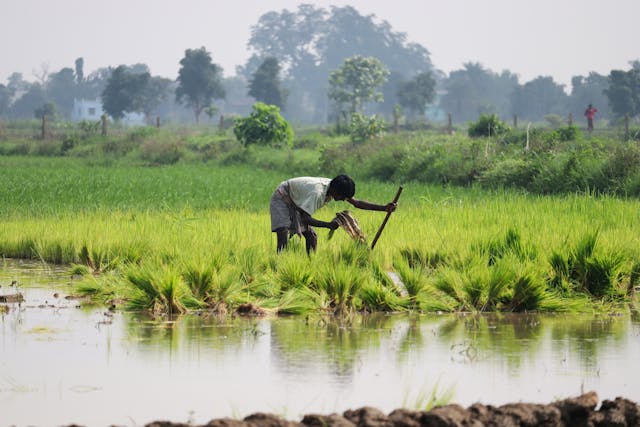
New Delhi: The Centre has reviewed the impact of recent unseasonal rains on crops across several states and assured farmers of necessary support, including procurement at Minimum Support Price (MSP) and relief measures.
Pic Credit: Pexel
Officials said the untimely rainfall has affected standing crops in key agricultural regions, raising concerns over yield losses. The government has directed state authorities to conduct field assessments and submit detailed reports on the extent of damage.
To safeguard farmers’ interests, the Centre reiterated that procurement at MSP will continue, ensuring that affected farmers receive fair prices for their produce. Additional relief measures, including compensation and assistance under existing schemes, are also being considered.
The government emphasised its commitment to supporting farmers during this period, stating that timely intervention will help minimise losses and stabilise the agricultural sector.
20, Mar 2026
Telangana Allocates INR 1,500 Crore to Revamp Musi Riverfront
Hyderabad: The Telangana government has earmarked ₹1,500 crore in its latest budget for the Musi Riverfront Development project, aiming to transform the river into a clean and vibrant urban space.
The project focuses on river rejuvenation, including pollution control, improved sewage systems, and the creation of walkways, parks, and public spaces along the riverbanks. It is part of a broader plan to enhance Hyderabad’s urban infrastructure and livability.
Officials said the funding will help accelerate initial development work and strengthen flood management systems. The project is expected to boost tourism, create jobs, and improve environmental conditions in the city.
Once completed, the Musi riverfront is set to become a key urban landmark, combining ecological restoration with modern city development.
20, Mar 2026
HCLFoundation Announces Winners of 11th HCLTech Grant, Empowering NGOs Across Water, Biodiversity, Health, and Education
NOIDA, Mar 20: HCLFoundation, which drives the corporate social responsibility agenda of global technology company HCLTech in India, today announced the winners of the 11th edition of the HCLTech Grant.
HCLTech Grant supports Indian non-government organizations (NGOs) undertaking innovative and transformative projects across the themes of Water, Biodiversity, Healthcare and Education. This year’s edition sees the introduction of Water as a category and increased grant outlay to ₹24 crores (approx. $2.58 million, 1 INR=93 USD).
Four NGOs will receive ₹5 crore (approx. $537,000) each for their proposed projects.
- Water Category: Gramin Vikas Vigyan Samiti (GRAVIS), Rajasthan. To enhance water harvesting and storage to build resilient and sustainable desert communities in the Thar desert, covering 10 villages in Barmer district.
- Biodiversity Category: Live Foundation, Jharkhand. To revive biodiversity and forest ecosystems through community-led in-situ conservation in 50 villages in West Singhbhum district.
- Health Category: Goodwill Foundation, Mizoram. To improve the health and well-being of rural communities by enhancing access to healthcare services in 40 villages in Mamit district.
- Education Category: Mahila Jan Adhikar Samiti, Rajasthan. To promote gender equality among young women through holistic education in 30 villages in Ajmer district.
Additionally, eight NGOs will receive ₹50 lakh (~$53,700) each for their proposed projects.
- Water: Leh Nutrition Project, Ladakh; Watershed Organisation Trust, Madhya Pradesh
- Biodiversity: Regional Centre for Development Cooperation, Odisha; South Asian Forum for Environment (SAFE), West Bengal
- Health: EKJUT, Jharkhand; Utkarsh Welfare Foundation, Uttar Pradesh
- Education: Shri Bhuvneshwari Mahila Ashram, Uttarakhand; Youth Council for Development Alternatives, Odisha
“Over a decade now, HCLTech Grant has been a catalyst for change in the development sector and contributed to the Viksit Bharat vision. It has empowered NGOs to innovate and scale up creatively to solve complex social and environmental issues, especially at the last mile. Congratulations to the winning NGOs and we wish them the very best for their mission to bring visible and inclusive changes to the communities they are working in,” said Dr. Nidhi Pundhir, Director, HCLFoundation.
For this edition, 7,274 registrations were received from NGOs across India. The winners were selected by a distinguished jury, which included Roshni Nadar Malhotra, Chairperson, HCLTech; Robin Ann Abrams (Jury Chair), Former Board Member, HCLTech; Pallavi Shroff, Managing Partner, Shardul Amarchand Mangaldas & Co; BS Baswan, Former HRD Secretary and Former Director, Indian Institute of Public Administration; Dr. Richard Lariviere, Sanskrit Scholar & President Emeritus, The Field Museum, Chicago and Suresh Narayanan, Former Chairman & Managing Director, Nestle India Ltd.
The HCLTech Grant-supported projects have significantly advanced sustainable development over the past decade, uplifting 2.2 million lives across 60,000+ villages. The grant-funded initiatives have led to the planting of 177,000 saplings, the rejuvenation of 128,100 hectares of land and a reduction of 67,095 tons in CO2 emissions. To learn more about HCLTech Grant, visit: www.hclfoundation.org/hcltech-grant
20, Mar 2026
IIT Mandi Invites Applications for Its First 2-Month Multi-Track Summer Residential Programme ‘HIMSHIKHAR 2026’
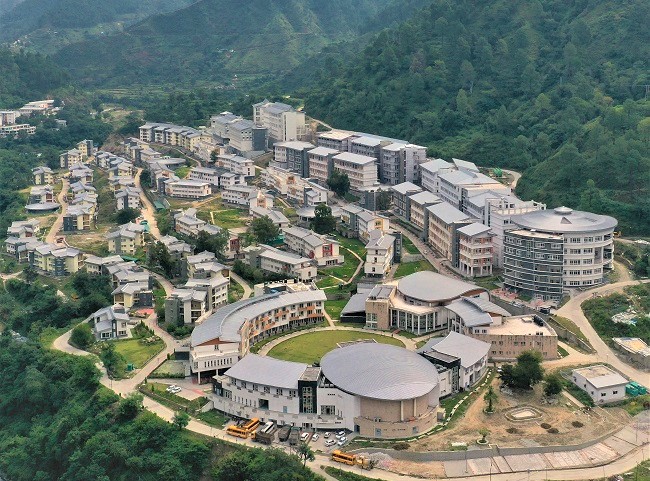
Mumbai, Mar 20: The Indian Institute of Technology Mandi (IIT Mandi), one of India’s leading IITs, through its Centre for Continuing Education (CCE), invites applications for its first 2–month summer residential programme, HIMSHIKHAR 2026. The programme is designed to equip students and young professionals with industry aligned skills in emerging technologies and entrepreneurship, while bridging the gap between academia and industry.
The programme offers an immersive on-campus experience, enabling participants to live and learn within the IIT Mandi ecosystem while working on real-world projects under the guidance of faculty and industry mentors. Structured across 190 hours of engagement, the programme includes 100 hours of faculty-led sessions, 50 hours of tutorial sessions conducted by PhD scholars, and 40 hours of sessions delivered by industry experts.
Five Specialized Tracks Across Emerging Technologies:
1. Software Development with AI: Focuses on building intelligent applications by combining core software development skills with AI Driven capabilities.
2. Artificial Intelligence & Machine Learning : Covers key concepts of AI and ML to develop systems that can analyse data, learn patterns and solve real world challenges.
3. Agentic AI Systems: Introduces autonomous AI systems that can independently perform tasks and make decisions in dynamic environments.
4. Data Science: Emphasizes data analysis, visualization and predictive modelling to derive actionable insights for decision-making.
5. Entrepreneurship & Venture Building: Develops entrepreneurial skills, focusing on start-up ideation, business model creation, and innovation-driven growth.
Speaking on the launch, Prof. Tushar Jain, Head of the Centre for Continuing Education (CCE) at IIT Mandi, said, “HIMSHIKHAR 2026 programme combines academic rigor, national skilling infrastructure, and outcome-driven training for learners. Every module emphasises building, problem-solving, and working with real tools, guided by practitioners, and faculty who understand industry demands.”
Eligibility and Admission Process:
• Minimum Eligibility: Candidates are eligible to apply for various specialization tracks, with the starting minimum entry requirement being passed in Class 12 or an equivalent qualification from a recognized board.
• Application Submission: Interested candidates are required to fill out the online application form through the official website of HIMSHIKHAR 2026.
• Entrance Test: Applicants must appear for an entrance test assessing reasoning and analytical abilities.
• Counselling Process: Shortlisted candidates will be invited for counselling, where they can select their preferred track and receive provisional admission details.
• Final Admission: Candidates must confirm their seat by completing the admission formalities and fee payment within the stipulated timeline.
Total Seats Available: 250 seats in each track (1250 seats in total)
The programme will commence in May 2026, with reporting starting from May 16, 2026, followed by the beginning of classes from May 18, 2026.
Through this initiative, IIT Mandi continues to strengthen its commitment to bridging the gap between academic learning and industry requirements by equipping young learners with future-ready skills in emerging technologies and innovation-driven domains.
20, Mar 2026
Proof Over Perception, Code Over Combat: India Redefines Modern Warfare Playbook at WION World Pulse

New Delhi, Mar 20th: At the Defence Pulse session of WION World Pulse, leading voices from India’s military and defence technology ecosystem highlighted how modern warfare is being reshaped by credibility, speed, and indigenous innovation.
The session featured Air Chief Marshal Rakesh Kumar Singh Bhadauria, Former Chief of the Air Staff in Indian Air Force; Prahlada Ramarao, Former Distinguished Scientist and Chief Controller, Missiles & Strategic Systems, DRDO; and Ankit Mehta, Co-founder, ideaForge.
Drawing from India’s recent military response under Operation Sindoor, Air Chief Marshal Bhadauria emphasised that in today’s conflicts, verifiable proof holds more power than narrative-building, asserting that visible outcomes define credibility on the global stage.
Air Chief Marshal Rakesh Kumar Singh Bhadauria said, “When you have satellite images showing all nine targets struck, what narrative is left to build? The images themselves become the narrative—clear, credible and undeniable.”
Highlighting the technological shift in warfare, Mehta pointed to the rapid evolution of battlefield tactics, stressing that adaptability and indigenous systems are becoming decisive factors.
Ankit Mehta, co-founder of ideaForge, said, “Warfare today is increasingly software-defined. The speed at which you can adapt, upgrade and respond in real time is what determines your advantage on the battlefield.”
Adding to this, the discussion reinforced the importance of self-reliance in defence capabilities with a strong focus on building domestic ecosystems that reduce dependence on external supply chains during critical moments.
Prahlada Ramarao, former distinguished scientist and chief controller, of missiles & strategic systems, DRDO said, “Strategic autonomy in defence is no longer optional—it is essential. Indigenous capability ensures resilience, faster innovation, and preparedness in an increasingly uncertain security environment.”
The session underscored a broader shift where warfare is no longer just about firepower, but about information dominance, technological agility, and credible deterrence, positioning India at the forefront of a rapidly transforming global defence landscape.
20, Mar 2026
India’s Energy Transition Accelerates: Focus on Self-Reliance, Clean Power and Global Leadership
India’s energy transition is entering a decisive phase, driven by strong policy direction, rapid capacity expansion, and a clear focus on Aatmanirbharta (self-reliance), Union Minister of State for Power and Renewable Energy Shripad Naik has said.
Highlighting India’s progress in the power sector, he noted that the country is not only expanding its clean energy capacity at record speed but also strengthening its position as a global leader in renewable energy transformation.
Rapid Growth in Clean Energy Capacity
India’s installed power generation capacity has more than doubled since 2014, with the share of non-fossil fuel sources rising to over 51% by October 2025. This milestone has enabled India to achieve its Nationally Determined Contribution (NDC) target of 50% non-fossil capacity nearly five years ahead of schedule.
In FY 2025–26 alone, the country added a record 47.3 GW of non-fossil energy capacity, reflecting strong momentum in solar, wind, and other renewable sources.
Solar energy, in particular, has seen exponential growth—from just 2.8 GW in 2014 to more than 140 GW by early 2026—making it one of the fastest-growing segments in India’s energy mix.
Strengthening Energy Independence
A key focus of India’s strategy is reducing dependence on imported fossil fuels through large-scale electrification and clean energy adoption. The government is pushing electrification across mobility, agriculture, and industry to reduce oil imports and improve long-term energy security.
Officials estimate that these combined efforts could save over ₹1 lakh crore in fossil fuel imports by the end of the decade.
India is also targeting 30% electric vehicle penetration by 2030, signalling a strong shift towards cleaner transport systems.
Boost to Domestic Manufacturing
The push for clean energy is being matched with efforts to strengthen domestic manufacturing capabilities.
Under the Approved List of Models and Manufacturers (ALMM) framework, India has developed:
-
Around 172 GW of solar module manufacturing capacity
-
Approximately 27 GW of solar cell production capacity
This expansion is aimed at reducing import dependency and building a strong domestic renewable energy supply chain.
Social Inclusion Through Energy Access
Alongside industrial growth, the transition is also focusing on inclusive development. Key government programmes are improving energy access for rural and underserved communities.
The Revamped Distribution Sector Scheme (RDSS) is supporting electrification of 13.6 lakh vulnerable tribal households, strengthening rural infrastructure and energy access.
Similarly, the PM Surya Ghar: Muft Bijli Yojana aims to bring rooftop solar power to 1 crore households by 2027. So far, over 32 lakh households have already adopted rooftop solar systems under the scheme.
The PM-KUSUM scheme is also transforming agriculture by promoting solar-powered irrigation, benefiting millions of farmers while reducing diesel dependency.
Green Hydrogen and Future Energy Vision
India is also positioning itself as a global leader in the emerging green hydrogen economy. The National Green Hydrogen Mission, with an outlay of ₹19,744 crore, aims to achieve:
-
5 million metric tonnes of annual production by 2030
-
125 GW of dedicated renewable energy capacity
-
Creation of nearly 6 lakh jobs
-
Capture of around 10% of global green hydrogen demand
This marks a major step toward building a future-ready clean energy ecosystem.
From Capacity Building to System Strength
Experts note that India’s energy policy is now shifting from rapid capacity expansion to strengthening grid systems, improving integration, and enabling market reforms.
New regulatory mechanisms such as dynamic solar and non-solar pricing windows and virtual power purchase agreements are being introduced to reduce congestion and improve efficiency in the power grid.
Conclusion
India’s energy transition reflects a combination of scale, speed, and strategic planning. With record renewable expansion, strong manufacturing growth, and increasing focus on self-reliance, the country is steadily shaping its role as a global clean energy leader.
As policy evolves from capacity creation to system optimisation, India’s power sector is expected to become more resilient, efficient, and globally influential in the years ahead.
20, Mar 2026
Odisha Steps Into Semiconductor Era with ‘O-CHIP’ Programme and INR 26 Crore Push
Odisha is taking a strategic leap into India’s fast-growing semiconductor sector with the launch of the ‘O-CHIP’ Programme, backed by an allocation of ₹26 crore in the Odisha Budget 2026. The initiative aims to position the state as an emerging hub in semiconductor design, innovation, and skilled talent development.

Pic Credit: Pexel
The programme reflects Odisha’s broader ambition to move beyond traditional industrial strengths and establish a strong presence in high-technology sectors that are critical to the future economy.
Building a Semiconductor Design Ecosystem
The ‘O-CHIP’ initiative is focused on developing a strong foundation for semiconductor design capabilities within the state. Rather than concentrating only on manufacturing, the programme emphasises innovation, research, and chip design development.
Key focus areas include:
-
Strengthening semiconductor design infrastructure
-
Encouraging innovation-driven research
-
Supporting startups and deep-tech ventures
-
Building industry-academia collaboration
This approach is expected to help Odisha integrate into India’s national semiconductor value chain.
Focus on Talent and Skill Development
A major pillar of the programme is human capital development. Odisha aims to build a skilled workforce capable of contributing to advanced semiconductor and electronics industries.
The initiative is expected to support:
-
Specialised training in chip design and electronics
-
Skill development programmes for engineering students
-
Collaboration with technical institutions and research bodies
-
Creation of industry-ready talent for global semiconductor firms
This talent-focused strategy is designed to ensure long-term sustainability in the sector.
Strengthening India’s Semiconductor Vision
India is actively working to expand its semiconductor ecosystem, and Odisha’s entry through the O-CHIP programme adds regional depth to this national mission. By focusing on design and innovation, the state aims to complement existing semiconductor initiatives across the country.
The programme is expected to:
-
Encourage private sector participation
-
Attract semiconductor startups and design firms
-
Support India’s self-reliance in chip technology
-
Strengthen domestic capability in advanced electronics
Economic and Industrial Impact
While still in its early stage, the initiative has the potential to reshape Odisha’s industrial landscape. Over time, it could:
-
Create high-skilled employment opportunities
-
Attract investment in electronics and IT hardware
-
Promote startup growth in deep-tech sectors
-
Diversify the state’s industrial base beyond mining and manufacturing
The ₹26 crore allocation marks the beginning of a longer roadmap aimed at building a future-ready digital economy in Odisha.
Conclusion
With the launch of the ‘O-CHIP’ Programme, Odisha is positioning itself as a new entrant in India’s semiconductor design ecosystem. Backed by targeted investment and a focus on innovation and skill development, the initiative signals a shift toward high-tech industrial growth.
If implemented effectively, O-CHIP could help Odisha emerge as an important contributor to India’s semiconductor ambitions and a growing centre for advanced technology development.


