


9, Mar 2026
Hon’ble Union Minister Shri Piyush Goyal to Inaugurate 40th Edition of AAHAR 2026 on March 10
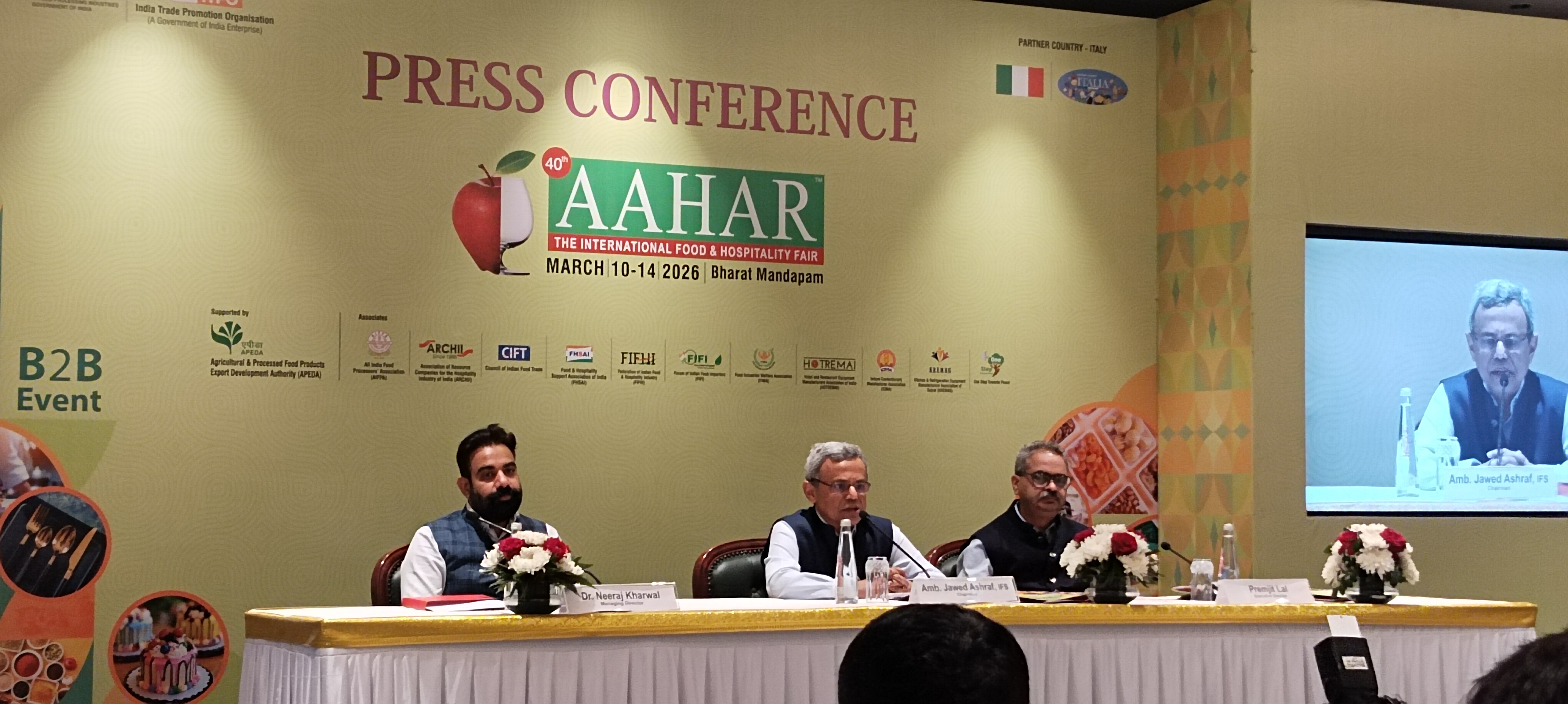
New Delhi, Mar 09: The Hon’ble Union Commerce & Industry Minister Shri Piyush Goyal will inaugurate the 40th edition of AAHAR 2026, one of the world’s premier B2B trade platforms for the food and hospitality industry, on March 10 at Bharat Mandapam, New Delhi.

- 0
- By Neel Achary

9, Mar 2026
DGMS, Vedanta & the Workers Union Join Hands at the Tripartite Safety Committee Meeting
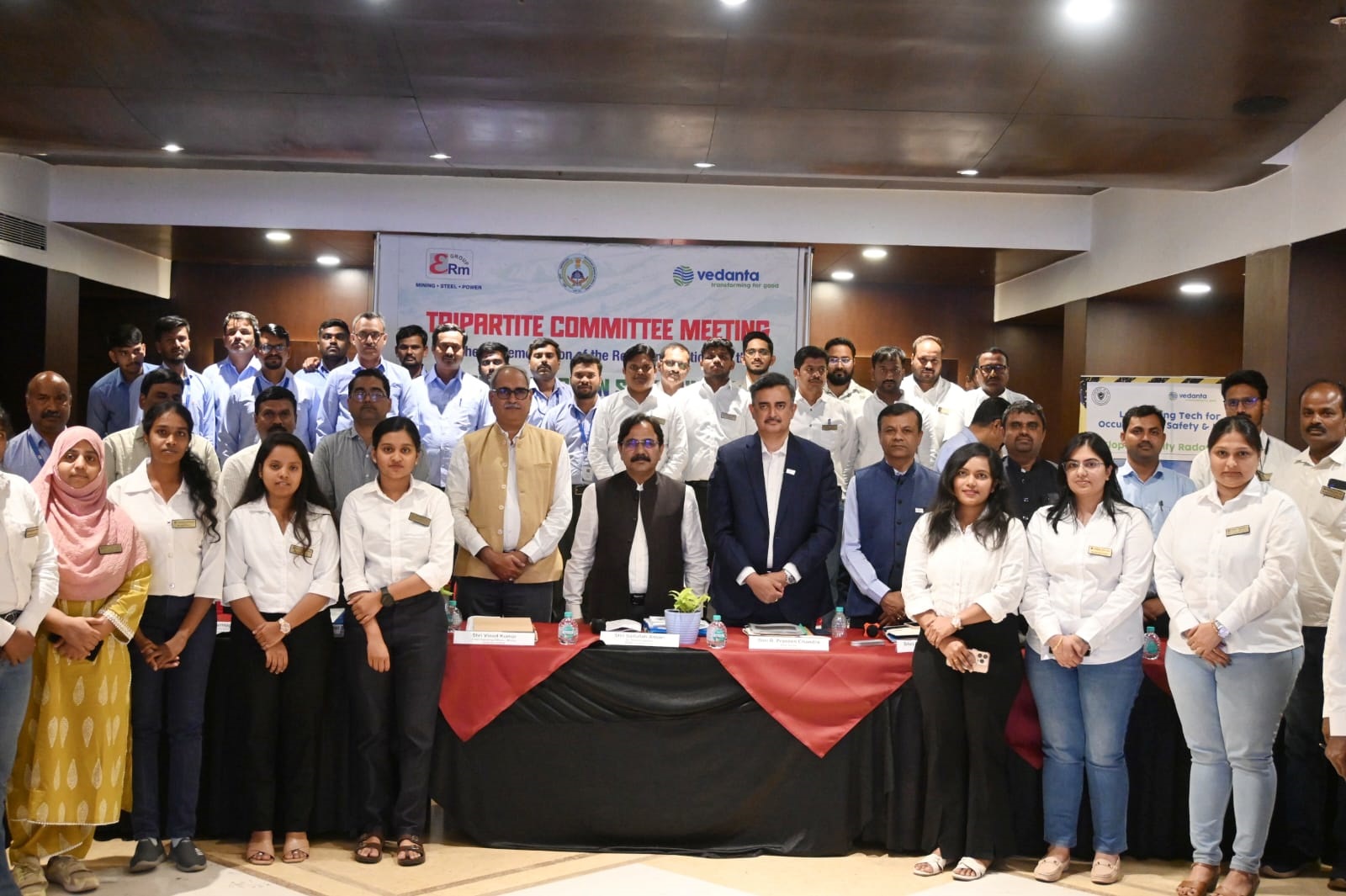
Bengaluru, Karnataka Mar 09: Reinforcing commitment to safe mining practices, and proposing effective measures that contribute to a safer working environment in the mines, Vedanta Sesa Goa – Iron Ore Karnataka, along with ERM Group and under the aegis of the Directorate General of Mines Safety (DGMS) hosted the Tripartite Safety Committee Meeting in Bengaluru, Karnataka.
The event is a significant forum for coordination for key stakeholders including representatives from the DGMS, Worker’s Union and the Mine Management of A. Narrain Iron Ore Mines of M/s. Vedanta Limited and John Mines of M/s. R. Praveen Chandra. The primary objective of the Tripartite Safety Committee Meeting is to deliberate on issues pertaining to further improvement of safety in mines and to propose effective methods, and processes that contribute to a safer working environment in mines across the country.
The event was graced by Shri. Saifullah Ansari, Deputy Director General of Mines Safety, Southern Zone, Bengaluru, Shri. Saket Bharati, Director of Mines Safety, Bengaluru Region, Bengaluru, Shri. M. Arumugam, Director of Mines Safety (Mechanical), Southern Zone, Bengaluru, Shri. G. Narasimha Rao, Director of Mines Safety (Electrical), Southern Zone, Bengaluru, Shri. Yerikala Balakrishna, Deputy Director of Mines Safety (Mining), Bengaluru Region, Bengaluru, Shri. Ajay Kumar Rathore, Deputy Director of Mines Safety (Electrical), Southern Zone, Bengaluru, Shri. Nitin Kamlakar Raut, Deputy Director of Mines Safety (Mechanical), Southern Zone, Bengaluru, along with Shri. Vinod Kumar, COO-Mining, Vedanta Sesa Goa, Shri. Shrishaila Gouda, CEO, Vedanta – Iron Ore Karnataka, Vedanta IOK Workers’ Union, along with other Company & Union functionaries.
Shri. Saifullah Ansari, Deputy Director General of Mines Safety, Southern Zone, Bengaluru said, “The Tripartite Safety Committee Meeting plays an important role in strengthening the dialogue between regulators, industry, and workforce on critical aspects of mine safety. The prime objective of the meeting is to deliberate on safety performances & progress of implementation of Company’s policies on safety & health and of recommendations of the National Conferences on Safety in Mines. At DGMS, our foremost priority is to ensure strict compliance with safety standards and to foster a culture where the well-being of every individual is non-negotiable.
Addressing the gathering as part of the Welcome Address, Shri. Vinod Kumar, COO-Mining, Vedanta Sesa Goa said, “At Vedanta Sesa Goa, safe & responsible production is at the core of operational philosophy. We prioritise Occupational Safety & Health as a collective responsibility. The Tripartite Safety Committee Meeting has served as a constructive forum to deliberate on safety practices and to reaffirm our collective responsibility towards building a safer and more sustainable mining ecosystem.”
The Directorate General of Mines Safety affirmed its dedication to working closely with all stakeholders to develop and implement policies that prioritize the safety and well-being of miners across the nation.
9, Mar 2026
This Women’s Day, Good Flippin’ Burgers and Bombay Teen Challenge Celebrate Women’s Creativity with Handcrafted Tote Bags
This Women’s Day, Good Flippin’ Burgers, India’s most loved burger brands, is marking the occasion with an initiative that goes beyond the usual celebrations. Across its 60+ outlets, customers will find more than burgers. Each outlet will feature limited-edition tote bags handcrafted by women at Bombay Teen Challenge, a residential empowerment center in Mumbai. The bags reflect their care, skill, and creativity, turning everyday retail spaces into platforms where talent and opportunity are celebrated.

Set Beautiful Free Creations, part of Bombay Teen Challenge (BTC), provides long-term care, education, and vocational training for women who are rebuilding their lives. Its programs in tailoring, embroidery, jewelry, apparel, micro greens, and hair and beauty equip women to create work that is meaningful, visible, and valued. Through this collaboration, their craft reaches thousands of customers, giving pride, confidence, and recognition to every woman involved.
The women at Bombay Teen Challenge, trained in tailoring and embroidery, contribute focus, patience, and artistry to every bag. Priced at Rs. 695, the totes are initially available at dine-in outlets, with plans to expand to delivery and online channels. Proceeds are reinvested into producing new bags with evolving designs, ensuring the initiative continues to grow and provide meaningful opportunities over time.
“This initiative allows Good Flippin’ Burgers to transform our reach into real impact,” says Viren D’Silva, Co-founder of Good Flippin’ Burgers. “Every bag carries skill, creativity, and pride. By showcasing the work of women at Bombay Teen Challenge, we are creating a platform where talent is visible and Women’s Day becomes more than a celebration. Each bag tells a story, and our stores become a place where opportunity is tangible and recognized.”
“Good Flippin’ Burgers has created a space where our women’s talent is celebrated,” says Deborah Devaraj, Founder of Set Beautiful Free Creations. “Every tote bag represents skill, care, and opportunity. This partnership transforms creativity into something tangible, showing how brands can make a lasting and meaningful impact.”
Launching on 8th March 2026, the tote bags are available at all Good Flippin’ Burgers dine-in outlets. This ongoing initiative will continue to feature new designs, expanding both the creative possibilities and opportunities for the women at Bombay Teen Challenge. By combining scale, reach, and purpose, Good Flippin’ Burgers demonstrates how a QSR brand can create real social impact, making Women’s Day a celebration of skill, creativity, and meaningful engagement.
9, Mar 2026
Sanjana Sanghi Celebrates Women’s Day with Bata’s Victoria Ballerina

New Delhi/ Gurgaon, Mar 09th: Marking the spirit of International Women’s Day, Bata India hosted an intimate celebration at Ambience Mall, Gurugram to spotlight its iconic Victoria Ballerina collection, bringing together media, creators and guests for an evening centered around everyday comfort, confidence and modern femininity.
Fronting this chapter of the Victoria Ballerina story is actor and leading voice for youth-led development Sanjana Sanghi, who joined the gathering to talk about the evolving role of comfort in women’s everyday lives and her association with Bata’s ‘Make Your Way’ campaign.
The evening unfolded as a relaxed conversation around the many roles women move through every day and the small but meaningful ways comfort enables confidence. Guests experienced the Victoria Ballerina collection first-hand, exploring the lightweight silhouettes, soft materials and versatile colorways designed to support women from morning meetings to evening plans.
The Victoria Ballerina holds a special place within Bata’s design legacy. Inspired by Europe’s classical dance lineage and built around balance and movement, the ballerina silhouette has long been reimagined by Bata for everyday wear. With refreshed color palettes, contemporary detailing and comfort-first construction, the Victoria Ballerina continues that legacy for today’s fast-moving lifestyles.
Speaking at the event, Sanjana Sanghi shared, “Women today move through so many roles in a single day, and comfort becomes essential to that rhythm. For me, confidence begins with feeling at ease in what you wear. The Victoria Ballerina captures that beautifully.”
The immersive pop-up recreates the visual world of the Victoria Ballerina campaign, filmed across the streets of Madrid. Inspired by the effortless flow of modern city life, the space reflects the ease, movement, and understated elegance that define the Victoria Ballerina.
Commenting on the occasion, Badri Beriwal, Chief Strategy and Business Development Officer, Bata India said, “Women’s Day is a moment to celebrate the confidence and individuality women bring to every space they step into. With the Victoria Ballerina collection, we wanted to create footwear that reflects that spirit. The design brings together refined style and everyday comfort, allowing women to move through their day with ease and confidence. Our collaboration with Sanjana Sanghi celebrates this idea of modern femininity, where comfort, style, and self-expression naturally come together.”
With the Victoria Ballerina collection, Bata continues to reaffirm its leadership in everyday footwear, where heritage, comfort and contemporary design come together to support the lives women lead today.
9, Mar 2026
kyron.bio Announces Strategic Partnership with Servier to Advance Precision Glycosylation in Antibody Therapeutics
Innovative glycobiology platform aimed at enhancing the efficacy, safety, and scalability of next-generation antibody therapeutics across multiple disease areas
Paris, Mar 09 – kyron.bio, a biotechnology company pioneering precision glycoengineering for antibody therapeutic development, today announced a strategic partnership with Servier, an international pharmaceutical group governed by a Foundation.
Under the terms of the agreement, kyron.bio will use its technology to glycoengineer an antibody selected by Servier, who will fund the associated research activities. Servier will have the option to further explore antibody engineering and development opportunities based on the outcomes. Financial details are not disclosed.
kyron.bio’s proprietary glycoengineering platform can enhance therapeutic performance of antibodies by enabling precise control of the glycan structures to improve efficacy, safety, and scalability. In this partnership kyron.bio will seek to demonstrate clear glycan control on the Servier antibody of interest for a specific pre-determined N-glycoform.
To date, engineering of glycans have been under-exploited, due to technical challenges, limiting the use of glycan engineering in drug design. kyron.bio is changing that. The company has developed a scalable, proprietary method to achieve comprehensive control over glycosylation, unlocking the possibility to use precision glycosylation in next generation drug design.
Dr. Emilia McLaughlin, founder and Chief Executive Officer of kyron.bio said,
“We are delighted that Servier has chosen to explore the potential of our glycoengineering platform. Servier has deep expertise in therapeutic development and combined with our precision glycosylation technology, this partnership provides a powerful opportunity to unlock new levels of antibody performance and deliver better outcomes for patients.
“Precision glycosylation represents a transformative approach in biologics development. By engineering defined glycan profiles, therapeutic antibodies can be optimized for improved immune engagement, pharmacokinetics, and reduced variability.”
In 2024, kyron.bio was the winner of the Servier Golden Ticket award which has provided invaluable support and mentorship through the company’s early translational phase and has developed a foundation for understanding the potential of kyron.bio’s technology.
Dr. Emmanuel Nony, Director of External Innovation Europe at Servier said,
“Meeting kyron.bio as a winner of Servier’s Golden Ticket award has enabled our scientists to develop an understanding of the kyron.bio glycan engineering technology and its exciting possibilities in antibody drug design. This collaboration is opening new frontiers for antibody derivatives as well. Together, we are exploring innovative pathways to optimize drug design and production, with a shared commitment to bringing safer and more effective therapies to patients.”
kyron.bio’s strategy is to form strategic drug design partnerships with pharmaceutical and biotech companies working on next-generation antibody therapeutics, alongside in house therapeutic development programs.
A successful company creation from the French Entrepreneur First Scheme, in 2025 kyron.bio raised €5.5m in a seed round from an experienced syndicate of venture investors including HCVC, Verve Ventures, Entrepreneurs First and Saras Capital, as well as private angel investors and the European Innovation Council. It has established an R&D base at the biotech hub Paris Biotech Santé in the Cochin Hospital.
9, Mar 2026
SRMIST Grants License for Patented Solar Cell Encapsulant Technology to Anabond Ltd., Chennai
Moving from Fundamental Research to Translational Research”: Prof. C. Muthamizhchelvan, Vice Chancellor, SRMIST, on ₹1-Crore Solar Technology Licensing Agreement with Anabond Limited, Chennai

Chennai, Mar 09: In a significant step toward strengthening India’s clean energy manufacturing ecosystem, SRM Institute of Science and Technology (SRMIST) has licensed a patented solar cell encapsulant technology to Chennai-based specialty materials manufacturer Anabond Limited. The agreement represents an important milestone in the commercialization of university research and highlights the growing role of academia in advancing indigenous technology development.
The licensing agreement includes an upfront payment of ₹1 crore for the patented technology, along with a seven-year royalty arrangement linked to the commercial turnover of products based on the technology. The partnership reflects a broader trend of industry–academia collaboration aimed at translating laboratory innovations into scalable industrial solutions.
India has set an ambitious target of achieving 500 GW of non-fossil fuel energy capacity by 2030, with solar power expected to account for the largest share. As the country rapidly expands domestic solar manufacturing under Production Linked Incentive (PLI) schemes and other policy initiatives, advanced materials such as encapsulants—which play a critical role in protecting solar modules and ensuring long-term performance—are emerging as strategic components of the renewable energy supply chain.
Dr. P. Sathyanarayanan, Pro-Chancellor (Academics), SRMIST, described the partnership as a significant step toward aligning academic research with industry needs and national priorities. “Universities must move beyond knowledge dissemination to knowledge creation—and ultimately to translating that knowledge into real-world solutions.” He emphasized that while universities traditionally focus on education and placements, research achievements become truly meaningful when they lead to practical technologies that benefit society. “When industry partners come forward to adopt research developed in university laboratories, it brings immense satisfaction to researchers and demonstrates the real impact of academic innovation.” Dr. Sathyanarayanan also revealed that SRMIST is planning to establish an Industrial Research Park, which will bring industry R&D units closer to the university campus and create opportunities for students, researchers, and companies to collaborate on real-world technological challenges.
Prof. C. Muthamizhchelvan, Vice Chancellor of SRMIST, described the technology licensing agreement as the culmination of a long institutional journey from academic teaching toward research and innovation. Over the past two decades, SRMIST has steadily strengthened its research ecosystem, moving from a focus on scholarly publications to cutting-edge research supported by government agencies and industry partners. According to the Vice Chancellor, the university currently receives around ₹35 crore annually in research funding across domains such as energy, environment, healthcare, water technologies, and disruptive innovations. “If we can enhance the performance of solar cells by preventing environmental degradation and significantly extending their life and performance, then we are truly moving from fundamental research to translational research.” Prof. Muthamizhchelvan also highlighted the university’s growing intellectual property portfolio, noting that SRMIST currently holds more than 538 granted patents. With this expanding IP base, the institution has begun focusing on commercialization pathways that allow research outcomes to benefit society and industry.
“We wanted to move our research from publications to solutions that benefit society,” he added, emphasizing that the collaboration with Anabond Limited represents a visible example of how academic innovation can translate into industrial applications.
Dr. Shantanu Patil, Director of the Directorate of Entrepreneurship and Innovation (DEI), SRMIST, explained that the university has developed structured mechanisms to support intellectual property development, startup incubation, and technology commercialization. “The Directorate of Entrepreneurship and Innovation serves as a central hub that helps transform ideas developed by students, faculty, and researchers into startups, technologies, and impactful solutions.” He added that the SRM Center for Intellectual Property Rights and Protection plays a crucial role in identifying and protecting innovations emerging from the university, while the Technology Transfer Office (TTO) focuses on commercializing these innovations through industry partnerships.
The licensed technology was developed by Prof. K. Ananthanarayanan and his research team from the Department of Chemistry, SRMIST, who have been working on advanced materials for solar energy systems. Explaining the importance of encapsulation technology, Prof. Ananthanarayanan noted that while solar cells are becoming increasingly efficient, they remain highly sensitive to environmental conditions such as ultraviolet radiation, moisture, dust, and temperature fluctuations. “Encapsulants protect solar modules from ultraviolet radiation, moisture, dust, and environmental stress. When panels are expected to operate for 25 to 30 years, the reliability of this protective material becomes critical.” To illustrate the concept, he compared encapsulation to the tempered glass used to protect smartphone displays. “Just as a protective glass layer prevents damage to a phone screen, encapsulation materials protect solar cells and ensure that they continue to function reliably throughout their lifetime.”
The research team spent four to five years developing a patented polymer encapsulant specifically designed for next-generation solar technologies such as TOPCon and perovskite–silicon hybrid solar cells, which place greater performance demands on encapsulation materials than conventional systems.
“Solar energy will power the world in the future, and we are proud, in our own small way, to contribute to making that future more reliable and durable,” Prof. Ananthanarayanan said.
For Anabond Limited, the collaboration represents an important step in expanding its portfolio into renewable energy materials. Founded in 1979 by a scientist with experience in India’s nuclear research establishments, the company has grown into a major manufacturer of specialty adhesives, sealants, and advanced materials.
Mr. M. Rajan, Managing Director of Anabond Limited, said the company has built its growth on a strong foundation of research and development combined with the ability to scale laboratory innovations into commercial products. “This technology has strong potential for the future, and we are proud to partner with SRMIST in taking this innovation toward commercialization.” He explained that Anabond has extensive experience in technology transfer and industrial scaling, having worked with strategic organizations including ISRO and defense research establishments, where its products have supported demanding aerospace and missile applications. “Scaling laboratory innovations into reliable industrial products is a complex challenge, and we are confident this collaboration will successfully bring the technology to market.”
The company currently operates multiple manufacturing facilities across India and maintains a wide distribution network that supports industrial clients across sectors including aerospace, automotive, electronics, and defense.
Highlighting the broader importance of partnerships between universities and industry, Mr. Abraham, Joint Managing Director of Anabond Limited, said such collaborations are essential for converting research breakthroughs into technologies that create economic and societal value.
“Universities are hubs of innovation and new technologies. Partnering with industry enables these innovations to move from laboratory research to production scale, ultimately benefiting society and contributing to economic growth.” He also acknowledged the role of government initiatives in enabling collaboration between academic institutions and industry, particularly programs that allow companies to access advanced research infrastructure available within universities. “The partnership between SRM Institute of Science and Technology and Anabond Limited will certainly contribute to technological advancement and economic growth, while supporting the national vision of Atmanirbhar Bharat,” he added.
Institutional leaders at SRMIST emphasized that the licensing agreement was made possible through the university’s growing innovation ecosystem. Together, these institutional platforms help bridge the gap between academic discovery and real-world application.
According to SRMIST’s Technology Transfer Office, the university has already facilitated more than 17 technology transfer agreements with industry partners. However, the solar encapsulant licensing stands out as one of the first to include a structured royalty model linked to commercial success.
The university also organizes the Industrial Research and Innovation Summit (IRIS), an annual platform that brings together industry leaders, investors, researchers, and startups to explore commercialization opportunities for emerging technologies. With this licensing milestone, SRMIST reinforces its broader vision of positioning academia not only as a generator of knowledge, but also as a key contributor to India’s industrial capability and sustainable technological future.
9, Mar 2026
realme NARZO Power 5G with 10,001mAh Titan Battery Goes on Sale
New Delhi, Mar 09: realme, the most popular smartphone brand among Indian youth, has announced the first sale of the realme NARZO Power 5G, starting tomorrow, 10th March. Designed for users who demand uninterrupted power and reliable everyday performance, the device is built around a game-changing 10,001mAh Titan Battery, redefining endurance for modern smartphone users. With this launch, realme continues its commitment to delivering meaningful innovation that aligns with the evolving lifestyles of young consumers.
The realme NARZO Power 5G brings in a new era of power and functional value catering to a wide array of use cases including entertainment, gaming, learning and travel. With up to 46.8 hours of standby time it ensures you’re always connected and ready, even between charging cycles. This is endurance that delivers peace of mind, the confidence that your device won’t slow you down when your day refuses to. After years of battery innovation, realme sets another benchmark with the realme NARZO Power 5G’s 10,001mAh Titan Battery, nearly double the capacity of standard smartphone batteries. Powered by latest generation Silicon Anode technology and 16% ultra-high silicon, the device packed more power into less space than ever before. The device even reinvented the protection circuit board, compressing it by 30% through our new C+F pack technology. The device delivers extraordinary power longevity while maintaining a weight of just 219g, striking a rare balance between massive capacity and ergonomic comfort.
9, Mar 2026
Ubitium tapes out universal processor to end embedded computing complexity crisis
Ubitium Tapes Out First Silicon of its Universal Microprocessor Architecture on Samsung 8nm
DÜSSELDORF, GERMANY, Mar 09: Ubitium, a German semiconductor start-up, today announced the tape-out of its first silicon on Samsung Foundry’s 8nm process. The tape-out was completed in December 2025. The chip is the first universal RISC-V processor to replace the stack of specialized processors used in modern embedded systems.
Embedded computing, a $115 billion market, has reached a breaking point. Cars once ran on one processor; today’s vehicles contain more than 200, each with its own toolchain, software stack and supplier. Performance is no longer the only limiting factor. Complexity is. As AI workloads move into robots, drones, and industrial machines, this complexity becomes unsustainable.
Ubitium builds on RISC-V, the open-source architecture already used in billions of chips worldwide and extends it beyond a conventional CPU. Its universal processor runs Linux and RTOS simultaneously, handles radar and audio signals in real time, and executes neural networks for inference at the edge, without separate accelerators or coprocessors. Full RISC-V software compatibility preserved.
“This tape-out turns a long-held thesis into silicon,” said Martin Vorbach, CTO of Ubitium. “Embedded workloads have outgrown the architectures the industry relies on today. Consolidation isn’t optional anymore. It’s inevitable.”
Ubitium does for embedded compute what software-defined radio did for wireless: replaces fixed-function hardware with one reconfigurable silicon. The result: embedded systems that ship faster, cost less, and have long product lifecycles.
Ubitium is working with Samsung Foundry, Siemens Digital Industries Software and ADTechnology as it advances toward production silicon.
“The shift toward software-defined, reconfigurable compute is accelerating. Ubitium’s approach, one universal processor replacing multiple specialized chips, aligns with where we see embedded systems heading. We’re proud to manufacture their first silicon.” Said Taejoong Song, vice president and head of Foundry Technology Planning Team, at Samsung Electronics.
“Shift-left verification helps teams validate system behavior earlier by running more realistic workloads ahead of first silicon,” said Jean-Marie Brunet, Sr. Vice President, Hardware Assisted Verification, Siemens Digital Industries Software. “Ubitium’s use of Siemens’ EDA tools, specifically the Veloce CS hardware-assisted verification and validation system, highlights how early validation can de-risk integration, support design closure, and accelerate time to first silicon.”
“Advanced-node silicon delivery depends on disciplined back-end execution across timing, power, and signoff,” said Jun-Kyu Park, CEO of ADTechnology. “We are pleased to have supported Ubitium throughout the implementation process as it progressed to tape-out on Samsung Foundry’s 8nm process.”
Ubitium’s founders have spent decades building programmable architectures and the software stacks that unlock them at scale. CTO Martin Vorbach created PACT XPP, an early commercial reconfigurable processor, and holds 200+ processor-architecture patents. The core team combines deep industry experience from Intel, Texas Instruments, Apple and NVIDIA, with 350+ peer-reviewed publications.
The tape-out validates the foundational components of Ubitium’s architecture: the Universal Processing Array with runtime reconfiguration and LPDDR5 memory interface. A second tape-out is targeted for later this year, with volume production in 2027.
Technical Notes
- Workload coverage: Ubitium’s universal processor spans general-purpose computing, real-time signal processing, and massively parallel AI inference on a single die; in a homogeneous architecture
Software stack: Full Linux and RTOS support, standard RISC-V toolchains, and compatibility with modern software frameworks. No need for proprietary languages or vendor-specific compilers.Target applications: Radar and multi-sensor signal chains, real-time audio and voice, computer vision, edge AI, automotive cockpits, industrial HMI.Runtime adaptability: The Universal Processing Array shifts execution mode at runtime (CPU, DSP, GPU, parallel accelerator) without context-switch penalty or external offload.System consolidation: One processor, one toolchain, one qualification cycle. Reduces BOM cost, board complexity, and supplier dependencies across product lifecycles.
9, Mar 2026
Staatsolie to Chart Suriname’s Offshore Future at Caribbean Energy Week 2026
The national oil company will showcase its role in shaping offshore investment opportunities, recent exploration milestones and initiatives to prepare Suriname’s private sector for the country’s emerging oil and gas boom
PARAMARIBO, Suriname, Mar 09: Suriname’s national oil company Staatsolie is set to highlight the country’s expanding offshore opportunities at the inaugural Caribbean Energy Week (CEW) 2026, taking place March 30 to April 1 in Paramaribo. Offshore Exploration Manager Sharista Kalapnat-Kisoensingh is expected to speak on Staatsolie’s strategic offshore initiatives, alongside sessions on the company’s Enterprise Development Center (EDC), which aims to strengthen the local private sector and prepare Surinamese businesses for participation in the country’s growing oil and gas industry.
Staatsoilie has been at the center of Suriname’s offshore oil boom. The company’s declaration of the Sloanea field as commercial in November 2025 marked a major milestone, highlighting the basin’s growing hydrocarbon potential. Staatsolie’s seismic survey program with TGS and BGP Offshore, launched late last year, is generating critical geological insights across multiple offshore blocks, while new production sharing agreements for Blocks 9 and 10 are attracting further international investment. Together, these initiatives position Staatsolie not just as a producer, but as a strategic enabler – coordinating development, structuring investment opportunities, and shaping Suriname’s broader offshore growth agenda.
Further supporting the sector’s growth, Staatsolie launched an Open-Door Offering in late 2025, making roughly 60% of Suriname’s offshore acreage available under flexible exploration agreements. Alongside its 20% stake in the $10.5 billion GranMorgu development on Block 58 – which is set to generate over $1 billion in local content expenditure – Staatsolie is driving Suriname’s evolution from a modest onshore producer into a globally relevant offshore player with significant investment, production and local economic potential.
At CEW 2026, Staatsolie’s sessions will also highlight the EDC, a flagship initiative to prepare Suriname’s private sector for offshore participation. As GranMorgu and other developments advance toward production, the EDC will ensure that local companies are equipped to capture opportunities arising from exploration, construction, and supply chain activities.
Staatsolie’s upstream operations already account for roughly 9.5% of Suriname’s GDP and 32% of government revenues, figures expected to rise as offshore production ramps up. Kisoensingh’s participation is expected to outline how the company is managing Suriname’s offshore growth, supporting private sector engagement and positioning the country as an emerging hub in regional energy markets.
9, Mar 2026
Rivet by WeWork India Debuts as End-to-End Design & Build Platform for Enterprises & End-Users
Arnav S Gusain elevated as Chief Executive Officer, Rivet, to drive the next phase of growth

Mumbai, Mar 09: WeWork India Management Limited (“WeWork India”), one of India’s leading premium flexible workspace operators, today announced the launch of Rivet by WeWork India – a design & build platform delivering integrated, experience-led, customised workspaces tailored to the unique needs of enterprises and end users – backed by a proven large-scale operating footprint and expertise. The launch comes at a defining moment for India’s commercial office market. As enterprise expansion accelerates, GCCs scale rapidly, and workplace strategies grow more complex, the demand for execution certainty is rising — a need the fragmented, multi-vendor design and build (D&B) ecosystem has struggled to meet. Built on WeWork India’s extensive experience designing, delivering, and operating commercial workspaces across industries and businesses of all sizes, from global enterprises to high-growth startups, Rivet introduces a fundamentally distinct model to the market: a single contract, unified accountability, and end-to-end delivery from concept to commissioning. Alongside the launch, WeWork India has elevated Arnav S Gusain as Chief Executive Officer, Rivet, in addition to his ongoing role as Chief Supply Officer at WeWork India, underscoring the strategic significance of this new vertical and ensuring leadership continuity.
India’s office market is witnessing unprecedented momentum, with gross leasing activity reaching 83.3 million sq. ft. in 2025 alone, according to JLL. This surge underscores growing demand for high-quality, future-ready environments that place human experience at the centre, enabling collaboration, productivity, and ESG-led performance. Today, WeWork India has evolved from a flexible workspace operator into a full workspace-as-a-service platform, supporting members at every stage of growth — from a day pass for an entrepreneur to fully customised managed offices for large enterprises and GCCs. Despite the scale of opportunity, the D&B ecosystem in India remains deeply fragmented. Enterprises today are required to manage multiple vendors across design, engineering, and construction, with limited cost visibility, dispersed accountability, and significant execution cost risk. The result is workspaces that are delivered late, over budget, and underperforming against the brief.
Rivet represents the next step in that evolution, addressing the gaps through an integrated, governance-led delivery model that combines unified ownership with full lifecycle visibility. The platform is powered by BIM-led planning, real-time site monitoring, and structured financial governance, offering enterprise clients the transparency and delivery performance that the traditional D&B model has struggled to provide. The launch of Rivet reflects WeWork India’s broader vision to build a comprehensive workspace-as-a-service ecosystem, and over time, extend into infrastructure-as-a-service – removing friction points for enterprises as they scale.
Commenting on the launch, Karan Virwani, Managing Director & CEO, WeWork India, said, “India’s workplace landscape is evolving rapidly. Over the past eight years, we have built deep insight into how enterprises operate and how workspace shapes performance, while designing, evaluating, and operating over 8.2 million square feet across markets. Working with businesses of varying scale and sizes, and a broad partner ecosystem has given us real-time understanding of what truly drives workplace success. Rivet brings that experience together into an integrated platform by combining behavioural insight, operational depth, and execution capability. It is built to deliver premium commercial workspaces that perform at scale, with the precision and confidence that enterprises demand.
As we launch this new vertical, Arnav takes on the role of CEO of Rivet, bringing deep domain expertise and a proven track record. With over three decades of experience, he brings a holistic understanding of the real estate and workspace ecosystem. In his capacity as Chief of Supply at WeWork India, he has been instrumental in expanding our portfolio and strengthening delivery capabilities. Furthermore, backed by an experienced team that has delivered large-scale projects across markets, we are committed to building Rivet into the benchmark for end-to-end workspace delivery in India.”
Rivet’s delivery model is powered by technology and built for long-term performance. Its tech-enabled systems bring structure, precision, and real-time visibility to every stage of the design-and-build process – improving cost control, timeline predictability, and execution clarity while reducing inefficiencies. Sustainability is embedded from the outset, with durable materials, efficient layouts, and design choices that enhance longevity and minimise waste, alongside eco-conscious options tailored to client goals. Rivet’s accountability extends well beyond handover, supporting the workspace as an evolving ecosystem through integrated infrastructure, workplace technology, and a curated network of trusted partners. Backed by scale and long-standing vendor relationships, the platform delivers smarter value, consistent quality, and execution certainty without compromising speed or design integrity. Some of the successfully completed projects include workspace for a global leader in agricultural equipment and smart farming solutions, One World Centre, and Embassy One (EMBARK/Embassy Group HQ), spanning over 1 lakh sq. ft. and representing a cumulative project value of nearly ₹ 50 crore. “Rivet is a natural extension of our core business. It allows us to continue serving members who have grown with us and may now seek their own independent spaces, while also engaging new enterprise clients who can benefit from our integrated design and build expertise. It strengthens our ability to serve their broader workspace needs across markets. Together, flexible workspaces, managed offices, and D&B create a connected ecosystem that removes friction and enables seamless scale – advancing our vision to evolve into a comprehensive infrastructure-as-a-service platform for enterprises in India,” added Karan Virwani.
Arnav SGusain, CEO, Rivet by WeWork India and Chief Supply Officer, WeWork India, added, “Enterprises today are making increasingly strategic workplace investments, yet the delivery ecosystem has not evolved at the same pace. Rivet is connected to our larger vision of building infrastructure as a platform and service, where D&B is not isolated from real estate intelligence, but informed by it. Having assessed over millions sq. ft. of real estate across markets, we bring a deep understanding of site potential, constraints, cost variables, and delivery risks, allowing us to integrate those insights into design, cost optimisation, and execution planning from day one.
What differentiates us is our operational DNA. We don’t just design spaces, we understand how they perform at scale and over time. That perspective enables future-ready design thinking – from smarter space planning and adaptability to embedding human-centric elements that enhance collaboration, productivity, and well-being. We also recognise that every organisation carries a distinct design language and cultural identity. Rivet’s role is to translate that into a workspace that is not only aligned to brand and behaviour, but engineered for long-term performance. In my role as CEO, my focus is to build Rivet into a delivery platform enterprises can rely on with complete confidence – not just to create a space, but to deliver infrastructure that performs consistently, sustainably, and in step with how people actually work.”
Rivet further differentiates itself through the operational intelligence embedded within its platform. Drawing on WeWork India’s experience designing and executing large-scale commercial workspaces, Rivet integrates real-world performance insights into every design and infrastructure decision. Transparency is embedded within its operating architecture, with technology-enabled systems providing continuous visibility into timelines, cost structures, and project milestones, ensuring informed decision-making throughout the lifecycle.
With the launch of Rivet WeWork India further strengthens its position across the full workspace lifecycle, from operating flexible workspaces to enabling how modern offices are designed and delivered. As enterprises place greater strategic importance on workplace performance and execution certainty, Rivet positions WeWork India to play a more strategic, end-to-end role in shaping India’s next phase of commercial office development. WeWork India is currently operational across 8 cities, with over 1.21 lakh desks, with robust relationships across key stakeholders such as landlords, IPCs, and members. With solutions for all kinds of businesses – solopreneurs to startups to Fortune 500 companies – WeWork India offers the perfect workspace solutions that deliver a premium experience.


