


25, Feb 2026
NDTV Appoints Naveen Kapoor as Editor of NDTV World
Feb 25: NDTV has announced the appointment of Naveen Kapoor as Editor, NDTV World, strengthening the network’s global editorial leadership as it expands its international news footprint.
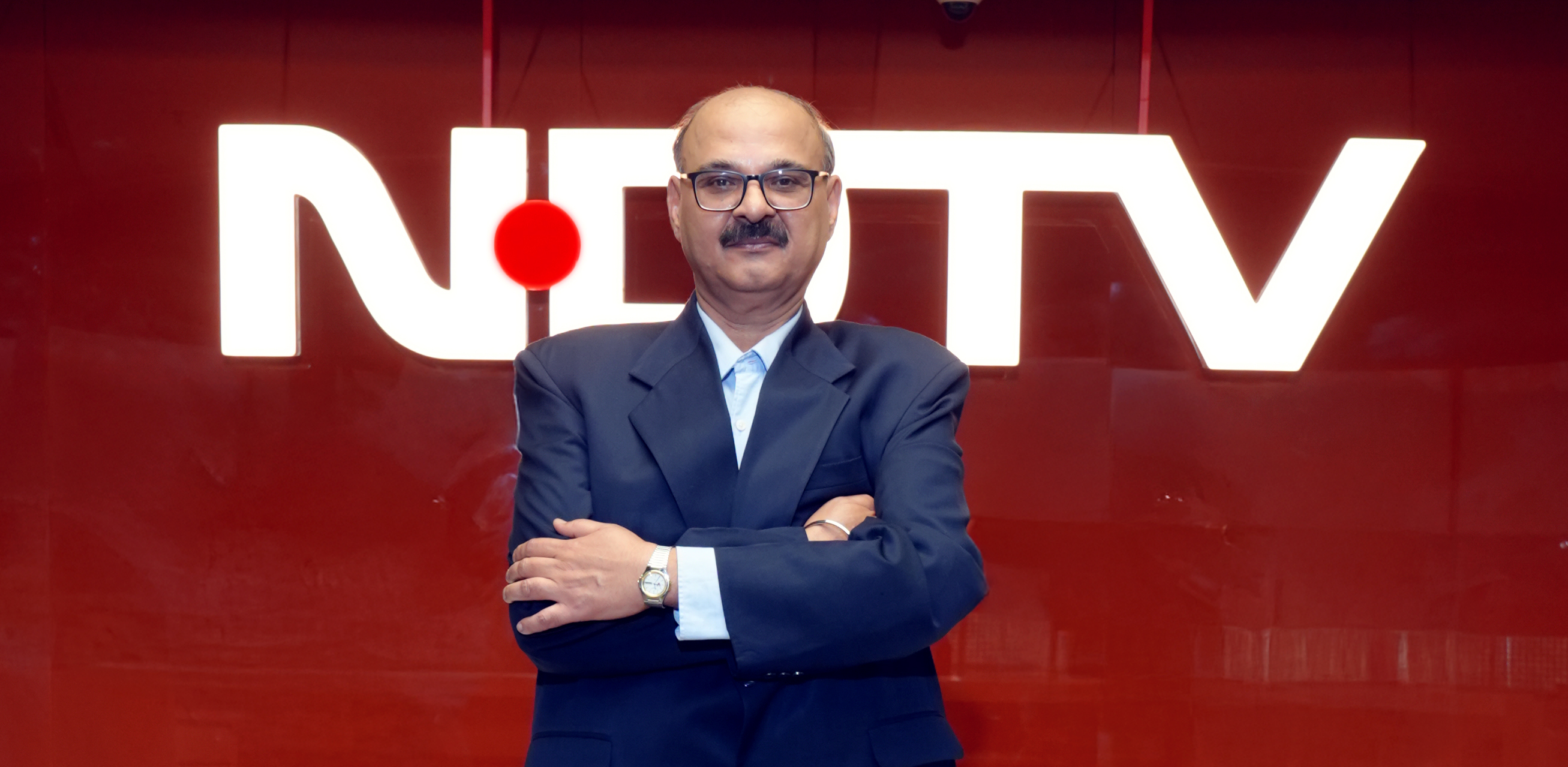
A senior newsroom leader with over 25 years of experience, Naveen Kapoor has been part of the core leadership teams behind some of India’s most influential news organisations, including Times Now, WION, and Press Trust of India (PTI). Over the course of his career, he has played a pivotal role in building, scaling, and leading news platforms that are today leaders in their respective segments.
Commenting on the appointment, Rahul Kanwal, CEO & Editor-in-Chief, NDTV, said, ‘Naveen’s experience in building global newsrooms and leading complex editorial operations makes him a strong addition to NDTV World as we deepen our international focus. His leadership and editorial depth align strongly with our journalism‑first approach.’
Before joining NDTV, Naveen was the Founding Editor of PTI’s Video Services, where he built a modern television and digital news agency from the ground up. His responsibilities included setting up editorial frameworks, domestic and international bureaus, newsroom systems, and content delivery mechanisms aligned with international standards. Earlier, as Head of Newsroom at WION, India’s first global news channel, he was instrumental in transforming the channel into a credible international news brand with an expanded global footprint and robust coverage of major geopolitical and world events. Naveen has also served as Senior Vice President and Chief of News Operations at Times Now, where he was part of the core team that shaped the channel’s editorial and operational foundations and supported its rise as a leading news network.
Across roles, Naveen has led coverage of several defining national and international stories, built high‑performing newsroom teams, and driven journalism that balances credibility, speed, and a strong global perspective.
He holds a B.A in English from Delhi University and a Diploma in Journalism from Bharatiya Vidya Bhavan, and has completed the Reuters Foundation Course in TV Journalism. He has also undergone TV Broadcast Journalism training in the United States under the International Visitor Leadership Program (IVLP).
In his new role, Naveen Kapoor will lead the editorial direction of NDTV World, with a focus on strengthening its global outlook, editorial depth, and commitment to credible, independent journalism.
- 0
- By Neel Achary

25, Feb 2026
Amid a Shifting Publishing Scene, Ascot Media Group Reaches 18-Year Milestone
Texas-based firm reflects on nearly two decades of helping authors find visibility in a fast-changing media market
HOUSTON, Texas, Feb. 25 — From the rise of self-publishing to growing concerns over AI-driven scams, authors today face a complex path to visibility. Ascot Media Group, now celebrating 18 years in operation, continues to work with writers across genres to help their stories reach journalists, producers and readers in an increasingly crowded media environment.
“For nearly two decades, our mission has been to help authors share their voices with the world,” said Trish Stevens, founder of Ascot Media Group. “Every story has the power to touch someone’s life. We just make sure it reaches the people who need to hear it.”
The Story Behind the Stories
Founded 18 years ago in Friendswood, Texas, Ascot Media Group has become a trusted bridge between authors and the media. From debut writers to NY Times bestselling authors and public figures, politicians, judges and celebrities, the company has helped clients across every genre find their audiences — and, in some cases, even movie deals.
“Every day, our inbox fills with fascinating people and powerful stories waiting to be told,” Stevens said. “Whatever the topic, whatever the genre, chances are we’ve worked with an author who has brought one of those stories to life.”
A Reputation Built on Access and Approachability
Behind Ascot’s success is Stevens’ belief that every author deserves a fair shot at being heard — not just those with big budgets or big names. Known for her compassion toward “struggling authors,” she offers a range of affordable publicity plans designed to meet writers where they are.
“I never want cost to be the barrier between an author and their readers,” Stevens said. “Some of our most inspiring clients started with nothing more than a manuscript and a dream of making it big.”
That approach has earned Ascot both loyalty and respect. Many authors return with every new book, and other PR firms even turn to Ascot behind the scenes to execute their campaigns — a testament to the firm’s results and professionalism.
Expanding Services for a Changing Market
In 2026, Ascot Media Group plans to expand its services to include additional support across the publishing process, such as editorial assistance, back-cover copy development, publishing guidance and audiobook production. The expansion reflects broader industry shifts as authors increasingly seek integrated support beyond traditional publicity.
Transparency in an AI Era
As AI-driven scams flood the publishing world, it’s become more important than ever for authors to do their due diligence when it comes to doing business with agents, publishers and marketing firms. Ascot Media Group stands apart because it operates with full transparency, credible testimonials (www.ascotmedia.com/testimonials) and a long track record of real results.
A Partner to the Media
With countless media relationships built over the years, Ascot remains a go-to resource for journalists and producers worldwide in search of credible guests and compelling story ideas.
“If you need stories, we have them — all of them,” Stevens said. “Because stories are what connect us, and helping share them is what drives us.”
25, Feb 2026
Teledyne Flir OEM, Teledyne FLIR OEM Launches Lepton XDS at Mobile World Congress; A Compact Thermal‑Visible Camera Module Featuring Patented MSX Technology
Prism™ ISP–Powered Dual Camera Module Delivers Enhanced Performance and Faster Integration for OEMs
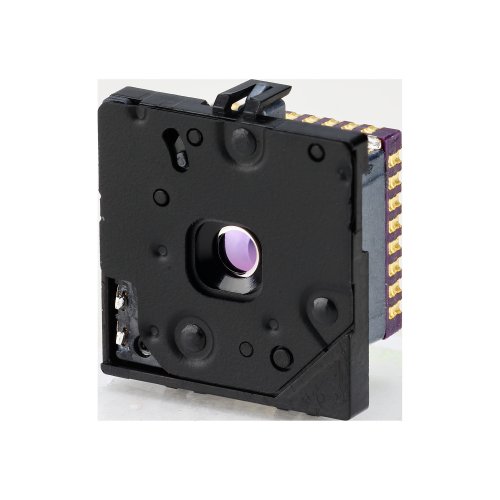
BARCELONA and GOLETA, Calif.,– Teledyne FLIR OEM, a part of Teledyne Technologies Incorporated (NYSE: TDY), today announced the launch of the Lepton® XDS, a compact dual‑thermal‑and‑visible camera module bringing Teledyne FLIR’s patented MSX® (Multi‑Spectral Dynamic Imaging) technology to a new class of space‑ and power‑constrained Original Equipment Manufacturer (OEM) products. Designed for rapid integration, the International Traffic in Arms Regulations (ITAR) -free Lepton XDS reduces development risk and accelerates time‑to‑market for embedded, mobile, and industrial applications.
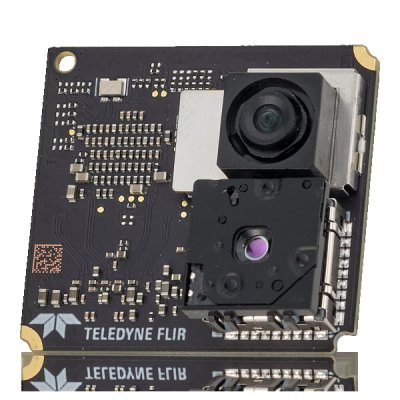
The Lepton XDS pairs a 160 × 120 radiometric Lepton 3.5 micro‑thermal camera with a five‑megapixel (MP) visible sensor, featuring MSX that enhances thermal imagery in real time by embossing visible‑image edges directly onto the thermal scene. This patented software delivers sharper detail, improved context, and a level of actionable thermal intelligence typically associated with more-expensive, higher-resolution camera systems. It is ideal for fire detection and prevention, EV battery monitoring, robotics navigation, unmanned platforms, smart infrastructure, and health and safety systems.
“MSX technology has long been a defining advantage of Teledyne FLIR, and with Lepton XDS, we are making that capability accessible in a compact, OEM‑ready module,” said Mike Walters, vice president of product management, Teledyne FLIR OEM. “By combining a visible camera, a proven micro‑thermal sensor, onboard Prism ISP processing, and direct access to radiometric overlays including spot meters and regions of interest we’re accelerating innovation and enabling OEMs to deliver clearer thermal imagery for faster user interpretation.”
Prism ISP: Advanced Imaging Beyond MSX
The integrated FLIR Prism ISP software ensures real‑time image enhancement while providing a comprehensive out‑of‑the‑box suite of advanced image‑processing features, including thermal‑visible fusion, advanced image processing, and an industry-first radiometric JPEG (RJPEG) output. Built‑in measurement and visualization tools include regions of interest (ROI), spot temperature measurements, isotherms, and customizable color palettes, and it is seamlessly compatible with the Teledyne FLIR OEM software ecosystem for analysis, post‑processing, and reporting.
Designed for Scalable OEM Deployment
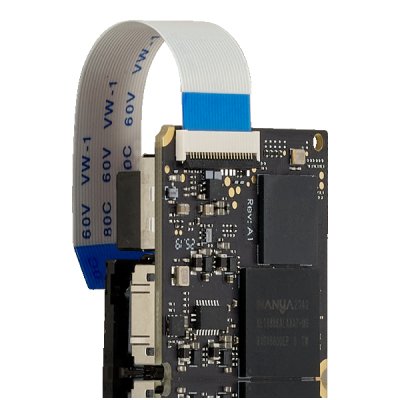
The Lepton XDS is a size, weight, and power (SWaP)‑optimized module, and an industry‑standard USB output makes it well-suited for battery‑powered and always‑on systems. It is also ITAR‑free and classified under 6a993.b.4.b enabling broadly available for commercial applications worldwide.
As the global leader in thermal camera manufacturing, Teledyne FLIR OEM’s global technical services organization and proven high‑volume manufacturing systems have delivered more than six million Leptons supporting scalable production while minimizing supply‑chain risk.
To see the new Lepton XDS and other exciting products from the Thermal by FLIR collaborative development program, visit booth 7B6 at Mobile World Congress in Barcelona, 2-5 March 2026. Learn more at www.oem.flir.com/lepton.
25, Feb 2026
Barakat Group Starts Construction of AED 150M Baby Food Manufacturing Facility in KEZAD
First Dedicated Industrial-Scale Halal Baby Food Purée Facility in the GCC to be Developed within KEZAD Abu Dhabi
Abu Dhabi, United Arab Emirates – Feb 25: Khalifa Economic Zones Abu Dhabi – KEZAD Group, one of the largest operators of integrated and purpose-built economic zones in the region, and Barakat Group, the UAE’s leading fresh food and juice producer, today announced the commencement of construction of a dedicated baby food manufacturing facility through Barakat Group’s joint venture with Pure Baby Food Industries, in KEZAD.
The project marks the development of the Gulf Cooperation Council’s first industrial-scale facility dedicated exclusively to the production of baby food purées. Representing a total investment of approximately AED 150 million by the company, the facility will strengthen local food manufacturing capacity and support growing regional demand for locally produced infant nutrition.
Once fully operational, the 10,000 sqm facility is expected to achieve an annual production capacity of 90 million units of baby food products, covering fruit and vegetable purées as well as protein-rich meat and fish baby foods. Products will be manufactured using fresh fruit, vegetables, meat, and fish, and supplied in both pouch and glass jar formats. Selected ambient juice products will also be produced as part of the integrated operation.
The facility is projected to create approximately 200 direct jobs, spanning manufacturing, quality assurance, food safety, logistics, and operational support roles. Additional indirect employment is expected across local supply chains, logistics, and agricultural sourcing.
The facility is being designed as a fully halal-certified baby food manufacturing plant, applying end-to-end halal certification across the full baby food category, including protein-based meat and fish purées. This addresses a clear gap in the GCC market, where locally produced, halal-compliant protein baby foods remain limited.
Abdullah Al Hameli, CEO of Economic Cities & Free Zones Cluster – AD Ports Group, said, “This investment reflects the scale and sophistication of food manufacturing projects now choosing KEZAD. The projected production capacity and employment impact underline how specialised manufacturing can deliver both economic value and strategic resilience within the food sector.”
Kenneth D Costa – Managing Director, Barakat Group, said, “By expanding our production footprint into premium infant nutrition, this facility reinforces Barakat Group’s mission to nourish the ambitions of the nation. Establishing dedicated capacity within KEZAD allows us to meet regional demand efficiently while creating skilled employment and maintaining the highest standards of quality and halal compliance.”
Designed to meet the highest international standards for food safety, quality, and traceability, the facility will prioritise nutrition, freshness, and clean-label production. It is expected to reduce reliance on imported baby food products while contributing to the development of a domestic, halal baby food manufacturing ecosystem.
The project supports national objectives related to food security, local manufacturing, and value-added food production, and represents a significant milestone in the continued expansion of Abu Dhabi’s food processing sector within KEZAD.
25, Feb 2026
RAKEZ strengthens UK investment ties through multicity roadshow
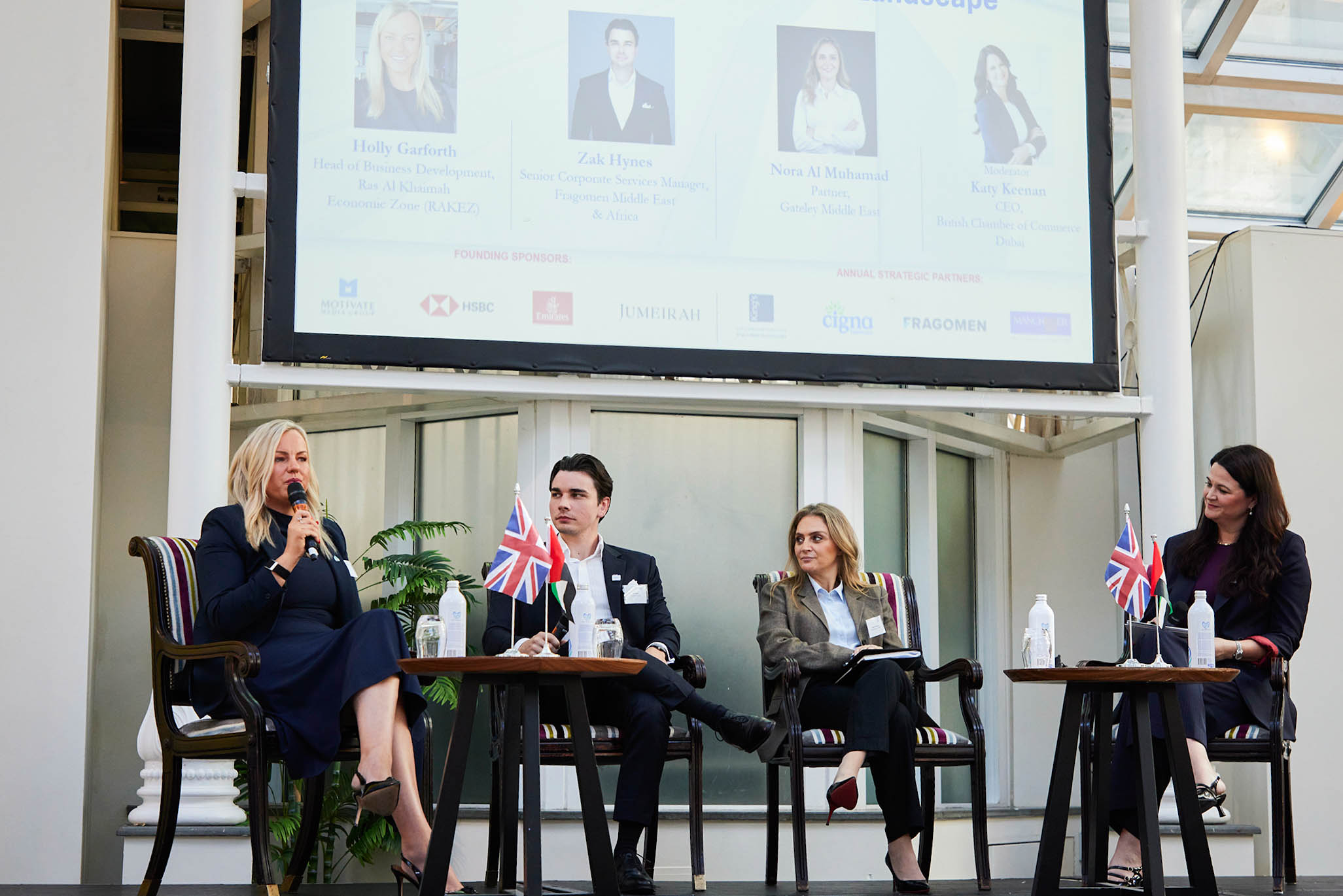
Head of Business Development at RAKEZ, Holly Garforth (L), during the panel at BCCD’s London event
Ras Al Khaimah, Feb 25: A high-level delegation from Ras Al Khaimah Economic Zone (RAKEZ) visited the United Kingdom, engaging British investors and reinforcing its position as a strategic gateway to the UAE and wider regional markets. The economic zone’s representatives met with investors, industry leaders, and business stakeholders across London and Manchester.
In London, RAKEZ sponsored the British Chamber of Commerce Dubai’s (BCCD) business briefing titled ‘Doing Business in Dubai and Northern Emirates’, which brought together British investors exploring opportunities in the Middle East. During the session, Holly Garforth, Head of Business Development at RAKEZ, joined a panel discussion to provide practical insights on setting up and relocating businesses within Ras Al Khaimah’s plug-and-play ecosystem.
The roadshow continued in Manchester, where the RAKEZ delegation took part in discussions on Making the Right Business Setup Choice in the UAE.
Across both cities, the team conducted targeted B2B meetings with stakeholders from the advanced manufacturing, supply chain, and professional services sectors.
Commenting on the roadshow, RAKEZ Group CEO Ramy Jallad said, “The UK continues to be a priority market for RAKEZ, with strong interest from British companies seeking scalable, cost-effective bases for regional and global expansion. Our presence in London and Manchester allowed us to engage directly with decision-makers, understand their ambitions, and demonstrate how Ras Al Khaimah offers the infrastructure, regulatory clarity, and connectivity needed to grow with confidence.”
RAKEZ is home to more than 3,600 British investors operating across SME and industrial sectors. Established British companies at RAKEZ include Ahmad Tea, A2C, Spatial Composite, Polar Manufacturing, Green Rock Manufacturing Group, and Waste to Wonder, operating across sectors such as tea production, aircraft cabin crew training simulators, carbon fibre manufacturing, sustainable packaging, circular economy-led remanufacturing, and social enterprise initiatives. Their continued growth highlights Ras Al Khaimah’s appeal as a reliable base for scale, export-oriented operations, and long-term investment.
The UK roadshow forms part of RAKEZ’s ongoing international outreach efforts to deepen commercial ties, attract quality investment, and further strengthen the economic bridge between Ras Al Khaimah and the United Kingdom.
25, Feb 2026
HOLI 404 by Paradox x Dirty Good Promises a 14-Hour Immersive, Music-Led Celebration in New Delhi

New Delhi, Feb 25: This Holi, step into a celebration where sound, colour, and atmosphere take centre stage. HOLI 404, curated by Paradox x Dirty Good, is a 14-hour immersive experience designed to flow seamlessly from late morning into the night — powered by high-energy programming, elevated production, and a community that gathers as much for the music as for the moment.
Hosted at Dirty Good, HOLI 404 reimagines the festival of colours through a contemporary, music-forward lens. Rooted in EDM and long-format sets, the event brings together a dynamic lineup including Themba, Grossomodo, and House of Tuneman, alongside Carwyn, Daytape B2B Double A, Distil, Gauran Singh Rathi, and RAVR — delivering an evolving sonic journey across the day.
Set in an open, vibrant space, the celebration is curated for those who appreciate immersive environments, strong musical storytelling, and an atmosphere that transitions organically from sun-soaked afternoon to electric nightfall. With immersive production, extended sets, and a carefully crafted crowd experience, HOLI 404 positions itself as Holi done differently — immersive, music-led, and built to last.
Event Details
Event: HOLI 404
Date: Wednesday, 4 March 2026
Time: 11:00 AM onwards (14 Hours)
Genre: EDM
Age Limit: 18+
Venue: Dirty Good, New Delhi
25, Feb 2026
Mandali Explores Choices Where Doing Right Comes at a Cost
Some films grow louder with time. Mandali grows quieter and sharper. Now streaming on OTT, the film feels less like a period reflection and more like a mirror held up to the present. The film shows how difficult, yet how important, it is to protect the ideals of Sanatan values.

Directed by Rakesh Chaturvedi, Mandali draws from Munshi Premchand’s Ramleela to explore a society where righteousness is praised on stage but punished in real life. At its centre is Purushottam Choubey, portrayed by Abhishek Duhan, a man whose faith is simple, deeply personal and increasingly out of place. Times are changing. Society is changing. But will we change our sense of dignity and values?
Puru plays Lord Laxman in Ramleela, believing the role demands humility and discipline. When his uncle Ramsevak (Vineet Kumar), the moral anchor of his life, is sidelined by those who control the performance, Puru is forced to confront a hard truth that power often hides behind tradition and devotion can be weaponised. In today’s fast-paced life, we often forget that our traditions and values are our true identity. Mandali reminds us how Ramleela artists, despite living in poverty, continue to uphold dignity and moral values.
As political influence, caste prejudice and social pressure close in, the film refuses easy victories. Rajneesh Duggall’s character embodies authority that speaks softly but controls deeply, while Aanchal Munjal’s Bunty brings emotional weight to the cost of standing by principles when survival demands surrender. From the Ramleela stage to the reality of society, this is a journey that will open your eyes.
What makes Mandali resonate today is its refusal to romanticise resistance. It shows how lonely moral courage can be and how choosing the right path often means losing comfort, belonging and love. In the name of entertainment, are we losing our values?
With its OTT release, the film finally reaches audiences in a space that allows reflection rather than reaction. Chanting Lord Ram’s name is easy, but walking on the path of Ram’s values is difficult. Mandali reflects the pain of those artists who, despite poverty and humiliation, continue to keep the divine stories of Lord Ram alive.
Produced by Prashant Kumar Gupta, Geetika Gupta and Neetu Sabarwal, Mandali now streams on Amazon Prime Video, asking a timeless question: what happens when doing the right thing costs you everything?
25, Feb 2026
REHAU Achieves Great Place To Work Certification 2026
REHAU has been certified as a Great Place To Work in 2026, a recognition that shows the organisation’s sustained focus on building a workplace defined by trust, fairness, and shared accountability. Based entirely on employee feedback, the certification places REHAU ahead of industry benchmarks and offers a meaningful view into how teams experience the organisation every day.
According to the Great Place To Work assessment, REHAU performed at or above benchmark levels across key dimensions such as credibility, respect, pride, and camaraderie, indicating consistency in leadership behaviour, people practices, and workplace culture.
One of the strongest indicators to emerge from the survey was inclusion. Majority of the employees stated they are treated fairly, irrespective of gender orientation, showcasing REHAU’s emphasis on equality and dignity at the workplace. A similar percentage expressed confidence in the organisation’s contribution to the community, building upon a culture where social responsibility is understood as part of everyday decision-making rather than a separate initiative.
Employee pride remains high across functions and locations. The employees also reported feeling good about working at REHAU, while a comparable number said they feel proud of what the organisation has achieved. These responses are supported by a strong Trust Index score, signalling confidence in leadership intent, organisational direction, and long-term stability.
Commenting on the certification, Mr. Tushar Verma, Executive Vice President, REHAU India and Subcon, said,
“This recognition is important because it comes directly from our people. It shows how teams experience REHAU in their daily roles, right from the shop floor, in offices, or across functions. We have always believed that performance follows trust. When people feel respected, treated fairly, and heard, they engage more deeply with their work. The idea behind ‘Be More, Achieve More’ is to create an environment where individuals can grow with clarity, take ownership, and contribute meaningfully over the long term.”
REHAU’s people culture is anchored in transparent communication, leadership accessibility, and cross-functional collaboration. Employees are encouraged to participate in improvement initiatives, share ideas openly, and build capabilities through structured development programs. This approach has helped create a workplace where accountability is balanced with support, and growth is viewed as a shared responsibility.
Ms. Ashima Deepak Kaul, VP – Human Resources, REHAU India, said,
“Being recognised as a Great Place To Work in 2026 is a strong validation of the culture our teams have built together over time. At REHAU, trust, fairness, and inclusion are reflected in everyday interactions and decisions. When our people say they feel proud to work here and respected for who they are, it tells us that our focus on people-first leadership is resonating. It is our shared belief that when individuals feel supported and valued, they naturally perform better and grow with the organisation. This recognition motivates us to continue creating meaningful careers and a workplace where people can thrive with confidence.”
The Great Place To Work Certification 2026 marks another step in REHAU’s ongoing effort to strengthen its people-first approach as the organisation continues to grow. Through placing trust and fairness at the centre of its workplace philosophy, REHAU remains focused on building teams that are engaged, resilient, and aligned with the organisation’s long-term vision.
25, Feb 2026
Aruna Sairam to Be Inaugural Guest at Super Chennai’s ‘Arattai’
Chennai, Feb 25: Celebrating the spirit, stories and stalwarts of the city, Super Chennai has announced the launch of a brand-new intellectual and cultural property Super Chennai Arattai – a curated, intimate conversation series that brings Chennai’s most celebrated personalities face-to-face with their admirers.
The inaugural edition of Super Chennai Arattai will feature legendary Carnatic vocalist Padma Shri Aruna Sairam, one of India’s most revered classical musicians and a global ambassador of Chennai’s musical heritage. In this special first edition, Padma Shri Aruna Sairam will engage in an intimate chat with her fans, sharing insights from her extraordinary journey, reflections on music, culture and Chennai, and personal anecdotes that have shaped her illustrious career. She will also be felicitated as the ‘Icon of the Month’ for the month of February.
Rooted in the city’s rich culture of dialogue and community, Super Chennai Arattai is designed as a warm, up-close interaction where a distinguished celebrity or legend from Chennai will engage in an open, heartfelt conversation with a select audience of fans.
Speaking about the launch, Mr. Ranjeeth Rathod, Managing Director, Super Chennai said,
“Super Chennai has always been about celebrating the positive narratives and inspiring personalities that define our city. With Super Chennai Arattai, we are creating a platform for meaningful conversations – where legends are not just seen on stage, but heard, felt and experienced up close. It is our way of honouring the icons who have shaped Chennai’s identity.”
The event will be held on 28th February at 5:00 pm and is strictly by invite. Fans and admirers can register to receive an exclusive invite, making the experience both personal and curated.
With its blend of recognition and real conversation, Super Chennai Arattai aims to become a monthly cultural touchpoint – spotlighting icons across diverse fields including arts, sports, entrepreneurship, cinema, literature and public service – and strengthening the bond between Chennai’s legends and its people.
25, Feb 2026
Sports Sensors Vary Wildly in Their Measurements. Standards Are Closing the Gap
Did you know that two different wearable sensors can give an athlete two completely different scores for the same workout?
Those differences, which can be subtle and not-so subtle, make it hard for elite athletes, coaches and even sports leagues to cut through the noise and identify the tools that are best for them.
That’s exactly the challenge IEEE Member Rachel Hybart wants to address through a standard in development through the IEEE Standards Association.
IEEE Standard P3716, a Standard for the Quality Assessment of Human and Object Tracking Technologies Used in Field- or Court-based Sports, is intended to provide an objective performance evaluation of electronic systems that measure things like the speed, position and velocity of humans and objects in sports that are played in fields and courts.
She recently appeared on the IEEE SA Re-Think Health podcast. As the world’s attention begins to focus on elite winter sports, we touched base with her to discuss how this new standard might help elite athletes, coaches and leagues make more informed decisions.
“Without a way of assessing the quality of a specific measurement device or method, it’s really easy for teams and leagues to invest in technology that maybe doesn’t best suit their needs,” Hybart told the podcast.
Why Accuracy Matters
From wearables on wrists to GPS vests to special cameras using LiDAR, sensors are everywhere and data is embedded at the highest levels of decision-making.
“At the elite level, small errors in timing orientation or force estimation can meaningfully change conclusions about fatigue, asymmetry or injury risk,” Hybart said.
And it isn’t just training load. Data from sensors can be used to determine whether an injured player should return to play and to help broadcasters provide context for viewers at home. Sports leagues use data to evaluate rules designed to improve player safety.
How Different Sensors Take Different Measurements
To understand how differences in sensors and electronic devices can impact athlete data, consider the use of satellite-based navigation systems, like GPS, which are often combined with motion sensors worn on the body. While these satellite systems follow common standards, the devices that use them can process the data in different ways. During fast changes in speed or direction, differences in how frequently data is collected, how motion sensors are combined and how the data is smoothed can lead to noticeable differences in reported position and speed between systems.
Furthermore, the way wearables and other sensors measure athletic performance is frequently locked behind proprietary systems and algorithms that are hard to evaluate.
Are Consumer-Grade Sensors Good Enough?
Of course, the use of sensors and wearables isn’t just driven by elite athletes. Hobbyists and student athletes use them as well.
“Consumer devices are optimized for consistency and engagement at the individual level,” Hybart said. “Systems used by elite athletes must be precise enough to inform medical, performance and safety decisions.”
Systems used at elite international events are also designed to integrate multiple data streams such as motion tracking, force measurement, broadcast video and event context rather than relying on a single wearable signal.


