


25, Sep 2026
Rohde & Schwarz Mobile Test Summit 2026 puts the spotlight on 6G – registrations open
This October, Rohde & Schwarz will welcome the wireless community back for the sixth Mobile Test Summit. Under the banner of 6G, the virtual global forum will connect industry leaders, technology experts and testing professionals. Across three online sessions, participants will gain insight into the technologies set to define the next generation of wireless communications.

Caption: The Rohde & Schwarz Mobile Test Summit 2026 brings the wireless industry together to explore the future of 6G.
Following the format of last year’s summit, Rohde & Schwarz will host Mobile Test Summit 2026 as a virtual event. The event will be split across three sessions on October 7, 14 and 21. Wireless communications professionals are invited to register for individual sessions on the Rohde & Schwarz website. Each session covers one of three pillars of the emerging 6G standard: (1) AI-native RAN, (2) integrated sensing and communication (ISAC) and (3) non-terrestrial networks (NTN).
• The series will open on October 7 with a session on AI-native RAN. This architecture unites network operations and AI computing on a single platform. Participants will learn how this technology improves network performance, along with what it takes to validate and test it.
• On October 14, the focus will shift to integrated sensing and communication (ISAC). This technology puts existing radio infrastructure to double use, simultaneously transmitting data and sensing the surrounding environment. The session will cover the current market outlook, use cases already emerging across industries and the ecosystem’s growing momentum. It will close with a look at what ISAC means for testing.
• The final session, on October 21, will focus on non-terrestrial networks (NTN). NTN combines satellites, high-altitude platforms and drones to extend wireless coverage beyond terrestrial infrastructure, reaching regions that ground-based networks cannot. Attendees can look forward to a discussion of current market trends and deployment opportunities. They can also expect to learn more about the technical challenges still standing in the way of truly ubiquitous, uninterrupted connectivity.
Together, the three sessions will cover both the current state of 6G research and its expected future trajectory. The purpose is to provide participants with a well-rounded perspective on the wireless ecosystem.
Alexander Pabst, Vice President of Wireless Communications at Rohde & Schwarz, says: “Now in its sixth year, the Mobile Test Summit has become a trusted meeting point for the wireless community. This year, we’re turning our attention to 6G, with sessions covering AI-native RAN, ISAC and non-terrestrial networks. Beyond exploring where these technologies are headed, we want to give participants practical, actionable insight into what they mean for testing and validation as the industry moves toward commercial 6G.”
There are three sessions for each topic, and participants can choose the one that best fits their time zone
- 0
- By Neel Achary

25, Sep 2026
Odisha Coast Alert: Fishermen Advised to Stay Ashore for 12 Hours
Bhubaneswar, Sept. 25 (UDN): Fishermen along the Odisha coast have been advised not to venture into the sea for the next 12 hours as squally weather is expected to prevail along and off the coastline, the Meteorological Centre in Bhubaneswar said on Friday.

Representational Image
The advisory has been issued in view of strong winds and deteriorating sea conditions forecast during the period.
Winds Up to 60 Kmph Likely
According to the Day-1 fishermen warning issued for September 25, winds of 40-50 kmph, with gusts reaching up to 60 kmph, are likely along and off the Odisha coast.
The strong winds could make conditions hazardous for fishing vessels and other marine activities.
Sea to Remain Rough
The Meteorological Centre has forecast rough to very rough sea conditions during the next 12 hours.
In view of the expected weather, fishermen have been strongly advised to remain ashore and avoid venturing into the sea along and off the Odisha coast until conditions improve.
Advisory Issued as Weather Remains Unsettled
The warning comes amid unsettled weather conditions affecting several parts of Odisha.
Fishermen and coastal communities have been advised to follow the latest weather updates and official advisories during the period of adverse marine conditions.
25, Sep 2026
Odisha Steps Up Restoration of 1,658 Lift Irrigation Projects After Rain, Flood Damage
Bhubaneswar, Sept. 25 (UDN): The Odisha government has directed officials to expedite the inspection, repair and restoration of 1,658 lift irrigation projects under the Odisha Lift Irrigation Corporation (OLIC) affected by heavy rainfall and flooding across the state.
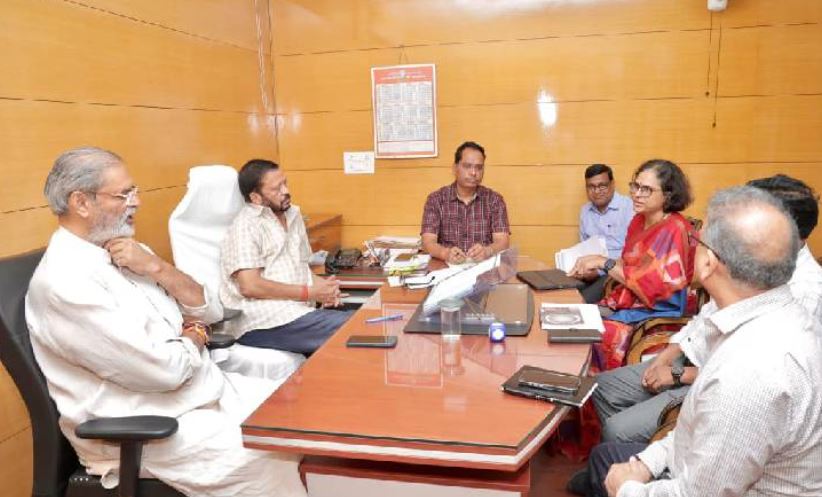
The issue was reviewed at a high-level meeting attended by Deputy Chief Minister and Minister for Energy, Agriculture and Farmers’ Empowerment Kanak Vardhan Singh Deo and Revenue and Disaster Management Minister Suresh Pujari.
Focus on Early Restoration
Pujari stressed the need for a detailed assessment of lift irrigation projects damaged during the recent spell of incessant rain and flooding.
He directed officials to undertake inspections at the affected sites and accelerate restoration work so that the projects can resume functioning at the earliest.
Departments Asked to Work in Coordination
The Revenue Minister called for coordinated efforts involving the Energy Department, Water Resources Department and Office of the Special Relief Commissioner to ensure timely restoration.
The Revenue and Disaster Management Department has been monitoring the repair and restoration of public infrastructure and projects damaged by adverse weather conditions.
Regular Review of Restoration Work
Officials said the department has been holding regular reviews with concerned departments to assess the extent of damage and speed up restoration activities.
The meeting was held at the office of the Revenue Minister at the Odisha Legislative Assembly.
Senior Officials Attend Meeting
Among those present were Energy Department Additional Chief Secretary Vishal Kumar Dev, Water Resources Department Principal Secretary Shubha Sharma, and senior officials from the Office of the Special Relief Commissioner and other concerned departments.
The review focused on coordinated action to restore the affected lift irrigation infrastructure and ensure timely completion of repair works.
25, Sep 2026
Delo Group organized its first own China–Russia voyage via the Northern Sea Route
Moscow, Sept 25: Multimodal transport operator Ruscon (part of the Delo Group) has organized its first own voyage from China to Russia via the Northern Sea Route (NSR). The Honfu container vessel, which sailed the route, has arrived at Delo Group’s terminal in St. Petersburg.
The shipment was carried out as part of Ruscon’s regular container service between St. Petersburg and Chinese ports. Previously, the service operated via the Suez Canal. Ruscon is now offering seasonal shipments via the NSR, with an expected transit time of 25 days compared to 45 days via the Suez Canal.
The route operated by the Honfu, a container vessel with a capacity of approximately 3,700 TEU, includes direct calls at the ports of Nansha, Taicang and Rizhao. Feeder connections are available for cargo from other regions. NSR shipments are operated during the summer–autumn navigation season. Once the season ends, vessels will resume sailing via the Suez Canal.
As part of the service, Ruscon provides end-to-end delivery, including customs clearance. The service accepts dangerous and oversized cargo, reefer containers, as well as cargo transported on flat rack containers.
“We have successfully tested our own service along the Northern Sea Route. We intend to steadily develop this area, taking into account the needs of our clients, in order to provide the most diversified portfolio of services,” said Mikhail Poluyanov, First Vice‑President of Ruscon.
25, Sep 2026
Arvind Limited Is Set To Take Centre Stage With Ashish N Soni At Lakmē Fashion Week In Partnership With Fashion Design Council Of India

New Delhi, 25 September 2026: Arvind Limited, one of India’s leading textile manufacturers,will showcase its collaboration with acclaimed designer Ashish N Soni at Lakmē Fashion Week in partnership with the Fashion Design Council of India (FDCI) on 16th October 2026 at Taj Palace, New Delhi. The showcase will present a contemporary menswear collection crafted using Arvind Limited’s diverse range of fabrics, bringing together textile innovation, design excellence and modern craftsmanship through their runway presentation.
The collection features materials across categories including Cotton, Wool, Linen, Tencel, Bamboo and more, highlighting the versatility, innovation and craftsmanship that define Arvind Limited’s textile capabilities. Through Ashish N Soni’s contemporary menswear lens, these fabrics are transformed into a collection that celebrates the intersection of material innovation and design.
“We are elated to partner with Lakmē Fashion Week in partnership with FDCI this season and to collaborate with Ashish N Soni on this showcase. Ashish has a distinctive ability to translate the character and potential of a fabric into stylish, wearable design. Through this collaboration, we want to demonstrate the versatility of our textiles and the possibilities they offer, from the loom to the runway.” said Kulin Lalbhai, Vice Chairman, Arvind Limited.
Through Ashish N Soni’s distinctive design language, the collection will explore the relationship between fabric, form and contemporary menswear. Known for his refined approach to tailoring and modern silhouettes, Ashish N Soni will translate Arvind Limited’s fabrics into a runway presentation that celebrates craftsmanship, functionality and evolving expressions of Indian fashion.
Commenting on the collaboration Ashish N Soni, Design Director at Ashish N Soni, Ikos Designs Pvt. Ltd said, “Working with Arvind has been a truly exciting and rewarding experience for me. The collaboration brings together my years of experience and design perspective with Arvind’s exceptional skill and deep expertise in textiles. I have always had a great appreciation for fine, high-end textiles, and the quality, sophistication and finish of Arvind’s fabrics make them particularly inspiring to work with. It has been a wonderful creative dialogue, and I’m very pleased with what we have created together. I look forward to sharing it soon”
Select looks from the showcase will be made available at The Arvind Stores shortly after the Lakmē Fashion Week in partnership with FDCI presentation, creating a direct connection between fashion creation and consumer access. The initiative aims to make the journey from textile to runway to retail, real for the consumer.
The association reinforces the evolving role of textile innovation in shaping contemporary fashion, where material expertise becomes an integral part of the creative process. By bringing together Arvind Limited’s heritage in textiles, Ashish N Soni’s design perspective and Lakmē Fashion Week in partnership with FDCI’s influential platform, the collaboration celebrates the complete fashion ecosystem, from fabric development to design and retail.
The collection will debut on 16th October 2026 at Lakmē Fashion Week in partnership with FDCI at Taj Palace, New Delhi, before selected looks become available at The Arvind Stores nationwide.
25, Sep 2026
Saravana Vivek M Takes Charge as Bhubaneswar DCP
Bhubaneswar, Sept. 25 (UDN): Senior IPS officer Saravana Vivek M on Friday assumed charge as the new Deputy Commissioner of Police (DCP) of Bhubaneswar, taking over the responsibility of policing in Odisha’s capital city.

A 2015-batch IPS officer, Saravana Vivek M succeeds Jagmohan Meena in the key post. Before his new assignment, he was serving as the Superintendent of Police (SP) of Berhampur.
New Role in Capital Policing
As Bhubaneswar DCP, Saravana Vivek M will be responsible for overseeing law-and-order arrangements, crime control and overall policing across the city.
His responsibilities will also include coordinating security arrangements during major public events and responding to emerging law-and-order challenges in the capital.
Succeeds Jagmohan Meena
Saravana takes over from Jagmohan Meena, whose resignation from government service was accepted by the Centre on September 11.
The change comes as Bhubaneswar continues to witness growing demands on its policing infrastructure amid rapid urban expansion and increasing public activity.
Experience in Berhampur
Before moving to Bhubaneswar, Saravana Vivek M served as SP of Berhampur, where he handled a range of policing and law-and-order responsibilities.
His new assignment places him at the helm of policing in the state capital, with a mandate to maintain public safety and ensure effective enforcement of law and order.
25, Sep 2026
GCCs Could Become the Biggest Driver of India’s Next Office Real Estate Cycle as 75 percent Plan Expansion
India’s commercial real estate market is entering a new growth phase, with Global Capability Centres (GCCs) emerging as one of the strongest drivers of office demand. According to CBRE’s India Office Occupier Survey 2026, 75% of GCC occupiers expect their India office portfolios to grow over the next two years, signalling continued expansion in both the scale and quality of commercial real estate demand.
The broader occupier market is showing a similar expansionary outlook, with 77% of occupiers planning to expand their India office portfolios over the next two years. Notably, 30% plan to increase their office footprint by more than 30%, almost double the 18% recorded in the 2025 survey.
The scale of GCC activity is already significant. GCCs leased more than 123 million sq ft of office space between 2022 and H1 2026, accounting for 36% of total office leasing during the period. India’s GCC ecosystem has also expanded to more than 2,117 firms and 2.36 million professionals, while GCC revenues reached nearly US$100 billion in FY2026.
This momentum is also visible in the wider office market. The first half of 2026 saw office absorption reach a record 45.5 million sq ft, the highest for any half-year, with 24.6 million sq ft taken up in the second quarter alone, according to CBRE. New supply also reached a record 32 million sq ft in H1, pointing to the scale at which developers and occupiers are now operating.
GCCs remain one of the strongest demand drivers. They accounted for 46% of Grade A office leasing in H1 2026, with 16.6 million sq ft leased, according to Colliers.
Sandeep Chhillar, Founder and Chairman, Landmark Group, said, “Global Capability Centres are fast becoming the defining demand driver of India’s next commercial real estate cycle. With India’s GCC count projected to grow by 41% by 2030, and GCCs already accounting for nearly 35% of Grade-A office leasing across top cities, the numbers tell a clear story. Gurugram is firmly at the centre of this shift in NCR, the city’s combination of superior connectivity, mature infrastructure, established corporate ecosystem and deep talent access makes it one of the most compelling GCC destinations in the country. As mandates grow more sophisticated, location decisions are increasingly being made through the lens of the broader business ecosystem: talent availability, infrastructure quality and long-term liveability. The next phase of commercial real estate will be defined not by volume alone, but by the quality and adaptability of environments built for businesses and their people.”
GCC expansion is changing what occupiers demand
The GCC story is also evolving beyond traditional back-office operations. CBRE notes that GCCs are increasingly taking on higher-value mandates across R&D, engineering, product development, AI, analytics, cybersecurity and enterprise transformation. This is creating demand not just for more office space, but for high-quality, technology-enabled and well-connected workplaces.
More than one-third of occupiers expect AI and automation trends to directly influence leasing decisions over the next 12-24 months. At the same time, 93% of occupiers surveyed are already deploying AI in some capacity, indicating that technology is becoming an increasingly important consideration in workplace strategy.
This expansion, however, is not limited to established business centres. Emerging corridors across Noida, Greater Noida and the Yamuna Expressway are also gaining momentum as technology infrastructure and new investments reshape the region’s commercial landscape.
Connectivity increasingly determines where GCCs expand
The NCR numbers show how this landscape is changing. Delhi-NCR recorded 2.8 million sq ft of gross leasing in Q1 2026, with Gurugram accounting for 60% and Noida 37%. Noida Expressway was the largest micro-market, while Udyog Vihar and NH-8 Prime also recorded significant activity. GCC leasing in NCR stood at 0.9 million sq ft during the quarter.
The emphasis on connectivity is becoming particularly important as occupiers look beyond the availability of space. CBRE’s survey found that 70% of occupiers consider access to commute infrastructure a crucial criterion while selecting office space, while 95% view traffic congestion and commute as a threat to operations and employee experience. Further, 18% of occupiers said they would be willing to pay a premium for public transport access.
Retail leasing reached 3.9 million sq ft in H1 2026, up 20% year-on-year, according to CBRE. Delhi-NCR led the major markets, while fashion and apparel accounted for around 40% of leasing. D2C retailers accounted for about 28%, giving high streets and organised retail destinations another source of occupier demand.
The flight to quality is strengthening
As GCCs expand and take on more specialised functions, the quality and location of office assets are becoming increasingly important. CBRE found that 40% of occupiers are concerned about the availability of high-quality, well-located office space through 2028. At the same time, 41% of leasing during 2025 and H1 2026 occurred in investment-grade assets.
Dr Amish Bhutani, Managing Director, Group 108, said, “Occupiers are becoming more selective about what makes a commercial location work over the long term. Demand will increasingly be driven by factors such as connectivity, accessibility, quality of infrastructure, surrounding development and the availability of well-planned commercial spaces. As emerging NCR corridors improve their connectivity and infrastructure, they will become more attractive for businesses seeking efficient and future-ready locations. The growing availability of quality office and retail spaces in these corridors will further strengthen demand for commercial real estate.”
Investor interest is providing another indication of the depth of the cycle. Institutional real estate investment reached $4.5 billion in H1 2026, up 50% year-on-year, with office assets accounting for more than 40% of the inflows, according to Colliers.
Karan Malik, Regional Director, Realistic Realtors, said, “The expansion of data centres is also opening up a longer development landscape for NCR. Noida and Greater Noida have the existing ecosystem, while the Yamuna Expressway region offers larger parcels and the potential to accommodate infrastructure at scale. The upcoming data centre parks across Noida, Greater Noida and Yamuna Expressway show that this is becoming a wider regional strategy rather than a single-location story. Real estate will increasingly follow the infrastructure that enables the digital economy.”
The next phase of India’s commercial real estate growth is therefore likely to be shaped by the convergence of GCC expansion, technology adoption, talent requirements, connectivity and institutional capital. With 75% of GCC occupiers planning to expand their India office portfolios, the demand story is moving beyond simply adding more office space. It is increasingly about where businesses locate, the quality of the workplace they choose and the infrastructure that enables their workforce to operate effectively.
25, Sep 2026
Gold Imports Slide Sharply, Raising Questions Over FY27 Outlook

Sep 25: India’s gold import outlook for the current financial year is facing fresh uncertainty after a sharp fall in monthly imports, according to a recent report.
Gold imports declined significantly in August, raising questions over whether the slowdown reflects weaker domestic demand, consumers delaying purchases or a shift towards unofficial channels.
According to the report, India’s gold imports during the first five months of FY27 stood at around $17.5 billion, compared with $16.9 billion during the same period last year. However, the latest monthly trend has raised concerns over the overall import estimate for the financial year.
Gold imports fell 57.75 per cent year-on-year to around $2.3 billion in August, compared with $4.16 billion in July. Despite the August decline, imports during April-August remained higher than the corresponding period of the previous year.
The report said the decline could be linked partly to the increase in gold import duties, which raised the overall import duty to 15 per cent from May 13, 2026. Higher domestic prices may have encouraged some consumers to postpone jewellery purchases.
Another possibility highlighted in the report is that consumers may be waiting for any future changes in import duties before making purchases. It also pointed to the possibility of greater activity through unofficial channels, although this does not necessarily mean that overall gold demand has fallen by the same extent.
The decline comes ahead of India’s major festive and wedding season, when gold and jewellery purchases generally increase. A recovery in seasonal demand could therefore influence import volumes in the coming months.
From a broader economic perspective, lower gold imports could help reduce pressure on India’s import bill and support the country’s external balances. At the same time, a shift towards unofficial channels could affect government revenue from customs and taxes.
The report had earlier assumed India’s gold imports at around $88 billion for FY27, but the recent decline has created downside risks to that estimate.
The coming festive and wedding season is expected to provide a clearer indication of whether the recent fall represents a sustained change in gold demand or a temporary slowdown in purchases.
25, Sep 2026
India’s Pharma and MedTech Industries Gain New Momentum from PLI Push
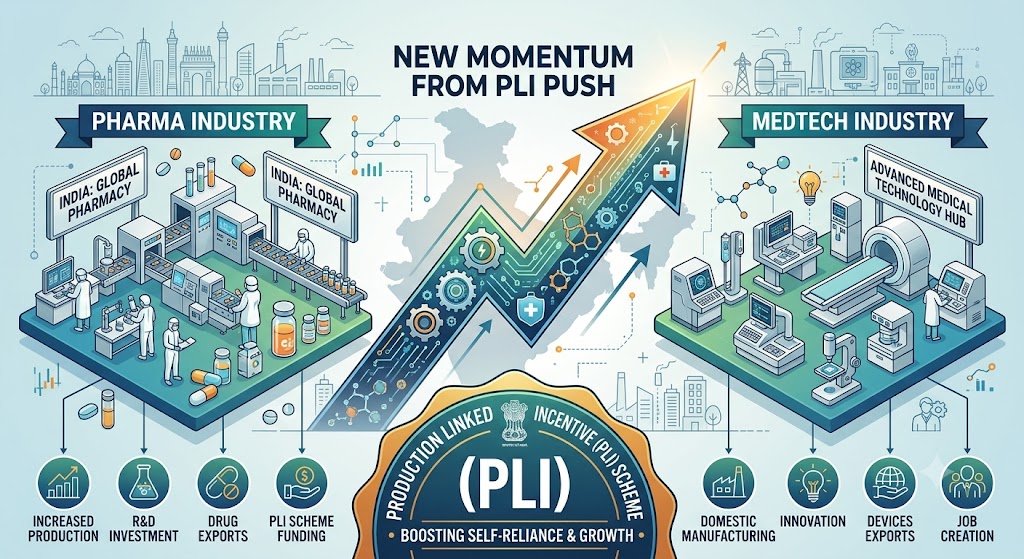
India’s pharmaceutical and medical technology sectors are entering a new phase of growth, driven by rising domestic manufacturing, fresh investments and a stronger push towards innovation.
At the centre of this transformation is the government’s Production Linked Incentive (PLI) programme, which is encouraging manufacturers to increase capacity, adopt modern technologies and develop products that were previously heavily dependent on imports.
The impact is becoming visible across the healthcare value chain. Pharmaceutical companies are expanding production of medicines and critical ingredients, while medical-device manufacturers are increasingly producing sophisticated equipment and implants within the country.
From volume to value in pharma
India has long been a major global supplier of medicines, but the next stage of growth is increasingly focused on moving up the value chain.
The pharmaceutical PLI scheme is supporting investments in areas such as complex medicines, high-value products and critical pharmaceutical ingredients. Government data show that the pharmaceutical drugs segment had attracted Rs 45,158 crore in cumulative investment by March 2026, while the bulk-drug segment recorded around Rs 5,070 crore in investment.
The significance goes beyond production numbers. Greater domestic capacity for critical ingredients can make pharmaceutical supply chains more resilient and reduce exposure to disruptions in international markets.
For Indian companies, it also creates room to expand manufacturing capabilities and compete for a larger share of global pharmaceutical demand.
Medical devices emerge as a new manufacturing opportunity
India’s medical-device industry is undergoing a similar transformation.
Under the Medical Devices PLI scheme, 27 projects have been approved, including 14 involving MSMEs, with actual investment of around Rs 1,153 crore.
Manufacturing is expanding into products such as MRI and CT equipment, mammography systems, C-arms, ultrasound equipment, radiotherapy systems, heart valves and stents.
This represents an important shift for India’s healthcare sector. Medical equipment has traditionally been an area where imports have played a significant role. Increasing local production can strengthen supply chains while giving domestic manufacturers an opportunity to develop technology and scale up.
Innovation becomes the next frontier
The government’s approach is also moving beyond factories and production lines.
The Rs 5,000-crore Promotion of Research and Innovation in Pharma MedTech (PRIP) scheme is designed to support research and development in new medicines, complex generics, biosimilars and innovative medical devices.
Emerging technologies such as AI, machine learning, robotics and advanced diagnostics are also becoming part of this innovation push.
This could create a larger role for startups, research institutions and MSMEs in India’s healthcare technology ecosystem, rather than limiting the sector’s growth to large manufacturers.
More investment, more specialised jobs
The expansion of healthcare manufacturing can have a wider economic impact. New production facilities require engineers, technicians, researchers, quality specialists and other skilled professionals.
At the same time, the growth of pharma and MedTech manufacturing can create opportunities for supporting industries involved in components, electronics, packaging, testing, logistics and specialised services.
This makes healthcare manufacturing an important link between industrial policy and employment generation.
Strengthening India’s healthcare supply chain
The PLI programme is also changing the conversation around healthcare security.
A stronger domestic manufacturing base can help India respond more effectively to disruptions in global supply chains and maintain access to essential medicines and equipment.
For hospitals and healthcare providers, a wider domestic supplier base could eventually provide more options for sourcing medical equipment and components. For manufacturers, it offers an opportunity to develop products suited to Indian requirements while building export capabilities.
The road ahead
The larger opportunity for India lies in combining manufacturing scale with research, technology and innovation.
PLI incentives have helped create an investment framework, but long-term growth will also depend on companies developing globally competitive products, improving quality, investing in R&D and building skilled talent.
As pharmaceutical and medical-device manufacturing expands, India’s healthcare industry could increasingly move from being primarily a large consumer market to becoming a stronger global production and innovation hub.
The PLI push is therefore not just about increasing factory output. It is helping reshape India’s healthcare manufacturing ecosystem around domestic capability, technology, investment and global competitiveness.
25, Sep 2026
1,741 Corrections Flagged in Odisha SCERT Textbooks, Minister Tells Assembly
Bhubaneswar, Sept. 25 (UDN): A total of 1,741 errors and suggested corrections have been identified in Class I to VIII SCERT textbooks introduced during the current academic session, Odisha’s School and Mass Education Minister Nityananda Gond informed the Assembly on Friday.
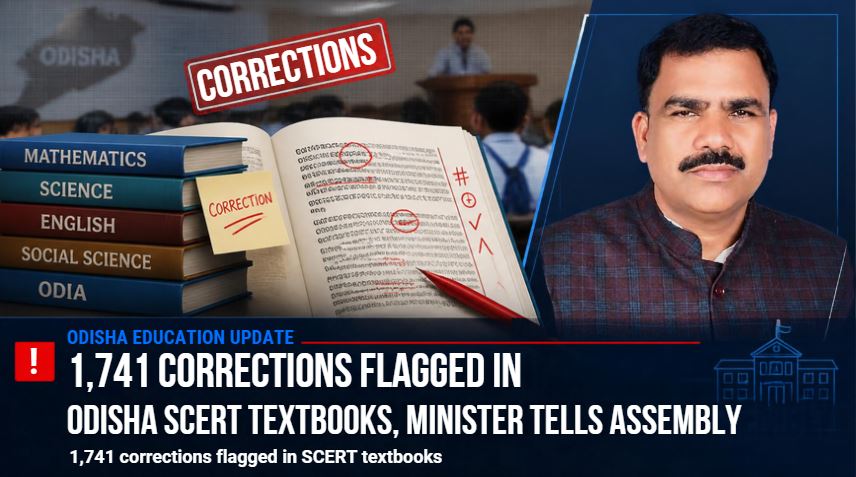
Representational Image
Responding to a question from MLA Kalikesh Narayan Singh Deo, the minister said the issues have been documented through an official corrigendum that has already been circulated to schools.
Majority Were Language and Printing Errors
According to the minister, the identified issues include:
5 factual or conceptual errors
1,075 grammatical, typographical and spelling errors
661 suggestions for improvement
He said the textbooks had undergone preparation through workshop-based drafting, followed by proofreading and a one-day review by subject experts before receiving final approval from the Core Committee.
Corrections Issued to Schools
Among the significant mistakes detected were errors related to a photograph of the Odisha Legislative Assembly, the location of the Niyamgiri Hills, and the identification of the Konark Sun Temple.
The minister said a corrigendum containing the corrected information has been distributed to schools to help teachers and students refer to the revised content.
Officials Face Action
The government has taken disciplinary action over the lapses. The former Director of DTE & SCERT and three Assistant Directors have been suspended, while disciplinary proceedings have also been initiated against six other Assistant Directors of DTE & SCERT.
Measures to Improve Future Editions
Gond told the House that the department has initiated measures to strengthen the textbook review process and improve quality control before publication. He said future revised editions would place greater emphasis on ensuring the accuracy of Odisha’s history, geography, language and cultural heritage.


