


11, Feb 2026
Synopsys to Showcase AI-Driven Engineering Innovation at India AI Impact Summit 2026
Feb 11, New Delhi: Synopsys, Inc., the leader in silicon to systems design solutions, will exhibit at the India AI Impact Summit 2026 in Bharat Mandapam, New Delhi from February 16-20, 2026, showcasing engineering solutions that advance AI development and adoption through software-defined engineering.
As the first AI summit hosted in the Global South, The AI Impact Summit is a flagship platform bringing together government leaders, global CEOs, researchers, innovators, and industry experts to shape how artificial intelligence can drive inclusive growth, sustainable development, and strategic innovation across sectors.
Dr. Prith Banerjee, Senior Vice President of Innovation, Synopsys, will join a lineup of influential leaders speaking at the AI Impact Summit, including such as Sundar Pichai (CEO, Google & Alphabet), Jensen Huang (CEO, NVIDIA), Cristiano Amon (CEO, Qualcomm), Demis Hassabis (CEO, Google DeepMind), Shantanu Narayen (CEO, Adobe), Bill Gates (Chair, Gates Foundation), Alexandr Wang (Chief AI Officer, Meta), and Mukesh Ambani (Chairman & MD, Reliance Industries), among others.
Dr Banerjee’s talk will focus on “Use of AI/ML in Electronic Design Automation (EDA) and Engineering Simulation for Chips to Systems.”, exploring the transformative role of AI and machine learning across engineering workflows, including:
Re-engineering Engineering in the Age of AI, highlighting how AI-augmented design flows and simulation tools facilitate agile, resilient product development across industries.
The Rise of Digital Twins, focusing on how next-generation products evolve virtually first and how they also cut development risk and accelerate the time-to-value.
Innovating Complex Systems for Reduced Time to Market, empowering lower complexity, higher productivity, and a quicker path-to-market for semiconductor and systems innovation through multidomain workflows to enable tight software and hardware co-design.
Connect with Synopsys at AI Impact Summit
Watch Dr Banerjee’s talk on “Use of AI/ML in EDA & Engineering Simulation for Chips to Systems”: Senior Vice President of Innovation, Synopsys, will deliver a talk on the ‘Use of AI/ML in EDA & Engineering Simulation for Chips to Systems’ at the Summit.
Visit the booth: Synopsys will showcase AI-led simulation and digital engineering capabilities at a 400 sq. ft. interactive booth (3F.16) at hall 3 on the first floor in Bharat Mandapam, New Delhi. The booth will showcase AI-driven innovations spanning electronic design automation (EDA), IP, verification, and simulation. There will be a strong emphasis on real-world, cross-industry use cases across mobility, technology, manufacturing, and aerospace, showcasing how AI-led design and simulation are helping organizations address increasingly complex engineering challenges at scale.
Join us for a demo: The Synopsys booth will feature two dedicated demo stations:
AI-driven EDA and IP demo station: showcasing how Generative AI and agentic AI allow faster, smarter, and more autonomous design and verification workflows.
AI-powered simulation demo station: demonstrating how advanced AI techniques are augmenting accuracy, speed, and decision-making in complex engineering simulations across industries.
- 0
- By Neel Achary

11, Feb 2026
Polaris Smart Metering crosses 1 million smart meters milestone, advancing India’s RDSS-led power distribution reform

Jaipur / New Delhi, Feb 11: Polaris Smart Metering announced a major milestone in its AMISP & power distribution journey, having manufactured and deployed over 1 million smart meters across its markets under the Government of India’s Revamped Distribution Sector Scheme (RDSS). The achievement underscores Polaris’ role as a key enabler of large-scale smart metering adoption and power sector digitization in the country.
The milestone was marked by the unveiling of the 1 millionth smart meter at Polaris’ state-of-the-art facility in Jaipur, in the presence of senior government officials and industry stakeholders. The facility represents the company’s commitment to indigenous manufacturing, technology excellence, and scalable execution aligned with national reform priorities.
Gracing the event, Chief Guest, Shri Ajitabh Sharma, IAS, Additional Chief Secretary (Energy) and Chairman, Rajasthan Rajya Vidyut Prasaran Nigam Limited (RVPN), highlighted the importance of smart metering in achieving RDSS objectives. “With the rapid growth of renewable energy and our planned expansion of battery energy storage, smart meters will play a central role in demand flexibility and grid management. Its true value lies in robust data management systems, integrated platforms and informed decision-making that strengthen grid visibility and operational efficiency,” he said.
Commenting on the milestone, Yashraj Khaitan, Founder and CEO, Polaris Smart Metering, said, “Crossing the 1 million smart meters mark is a defining moment for Polaris and a strong validation of our execution capabilities under RDSS. It reflects the trust placed in us by utilities and state governments, and the relentless efforts of our teams on the ground. Our AMI solutions enable two-way communication between utilities and consumers, laying the foundation for a smarter, more efficient and financially sustainable power distribution ecosystem in India.”
Rajeev Sharma, Chairman, Polaris Group said, “It is a moment of immense pride to witness Polaris Group achieving the milestone of our one-millionth smart meter. Smart Metering is backbone of a financially viable power sector. By reducing AT&C losses and enabling the seamless integration of renewable energy, we are securing a sustainable future for our DISCOMs. With continuous effort, Polaris will soon reach the milestone of manufacturing 2 million meters.”
The deployment of Advanced Metering Infrastructure (AMI) at scale is playing a critical role in transforming power distribution by improving billing accuracy, reducing losses, strengthening utility operations, and providing consumers with greater transparency and control over their energy usage.
Polaris currently has a manufacturing capacity of 5 million meters, and is also expanding through Polaris NOVA, its state-of-the-art manufacturing facility, which will increase its production capacity from the current 5 million to 10 million meters annually by mid-2026.
Polaris Smart Metering works closely with distribution companies across multiple states to support end-to-end smart meter rollouts, from manufacturing and deployment to system integration and data security. Its solutions are designed to be robust, interoperable, and scalable, supporting utilities in their long-term digital transformation journey.
The 1 million smart meters milestone reflects the accelerating momentum of India’s smart metering programme and reinforces Polaris Smart Metering’s commitment to partnering with the government and utilities in building a future-ready, consumer-centric power distribution network.
10, Feb 2026
From Shopping Floor to Runway: A Fashion Mob Takes Over Pacific Mall
The Pacific Fashion Takeover brought live fashion, music and choreography straight to unsuspecting shoppers.
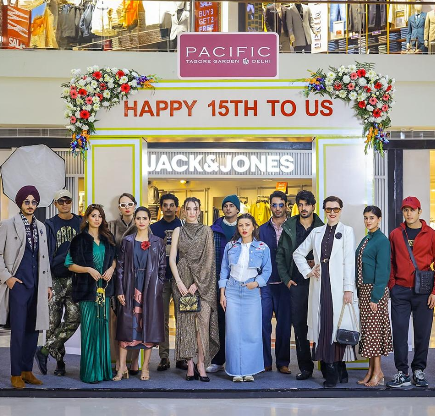
Shoppers at Pacific Mall, Tagore Garden were pleasantly surprised as a live fashion mob unfolded across the mall floor, instantly transforming the space into a high-energy runway to mark the mall’s 15-year milestone. Models emerged seamlessly from within the crowd, creating an immersive experience that blended fashion, music and movement, and turning a regular shopping day into a celebration.
The activation, titled Pacific Fashion Takeover, showcased curated looks from some of the mall’s most popular fashion and lifestyle brands. Models strutted the floor in outfits from M&S, Levi’s, Superdry, Nike, Uniqlo, Vero Moda, Forever New, Kazo, OVS, NewME, House of Fett, Coyu, The Collective and Armani Exchange, reflecting the mall’s diverse and trend-forward brand mix. The looks were complemented with professional styling and grooming by Geetanjali Salon and Looks Salon, adding a polished, runway-ready finish to the performances. The live mob format broke the conventional ramp walk structure, drawing shoppers into the moment and reinforcing the mall’s focus on experience-led retail.
Over the past 15 years, Pacific Mall, Tagore Garden has evolved into a key lifestyle destination in Delhi NCR by consistently aligning with changing consumer preferences. The anniversary celebration reflected this journey, placing live engagement and community participation at the centre of the festivities.
Sharing her experience, Mehak Khanna, a regular shopper at Pacific Mall, Tagore Garden, said, “I came in for routine shopping and suddenly found myself watching a live fashion show right in front of me. The energy, the music and the styling made it feel like a professional fashion event. It was unexpected and truly memorable.”
Known for its diverse brand mix and regular experiential activations, Pacific Mall, Tagore Garden continues to attract shoppers from across West Delhi and beyond. The 15th anniversary celebration further strengthened its connect with patrons by delivering an interactive, feel-good moment within a familiar retail environment.
As the mall steps into its next phase, it remains focused on creating engaging lifestyle experiences that resonate with today’s urban consumers.
10, Feb 2026
Apex Hospitals Launches Free Gynecology Checkups for Women This Valentine’s
Apex Group of Hospitals Offers Free Gynecology & Obstetrics Consultation This Valentine’s — Prioritizing Women’s Health Across Mumbai
Mumbai, Feb 10: Apex Group of Hospitals, a leading healthcare provider in Mumbai, is proud to announce a special Free Gynecology & Obstetrics Consultation from 15th February to 15th March 2026. With over 350 beds and modern facilities across Borivali, Kandivali, and Mulund, the hospital group is celebrating Valentine’s Day by encouraging women and their loved ones to place health at the heart of every relationship.
Women’s health remains a critical concern in India, with conditions such as menstrual disorders, PCOS (Polycystic Ovary Syndrome), cervical infections, fibroids, and reproductive health issues often going undiagnosed due to lack of awareness or delayed medical attention. Regular consultations with a qualified gynecologist can aid early detection of conditions like cervical cancer, hormonal imbalances, and reproductive complications, leading to better long-term health outcomes.
Dr. Tanvi Shah, Assistant Director, Apex Group of Hospitals, said,
“At Apex Group of Hospitals, we strongly believe that preventive care is essential. Regular gynecological consultations empower women with a better understanding of their bodies, reproductive health, and overall well-being. Early detection and timely treatment can truly transform lives and help women build stronger, healthier futures.”
This Valentine’s initiative aims to remove barriers to women’s healthcare by offering complimentary expert consultations for a limited period. Appointments are available by prior reservation only, and slots are limited. Healthcare experts recommend that adult women undergo a gynecological examination at least once a year, or more frequently if symptoms such as irregular periods, pelvic pain, unusual discharge, or reproductive concerns arise.
10, Feb 2026
Valentine’s Day Special : Love, Served Warm With Saz
Feb 10 : This Valentine’s Day, Saz invites you to celebrate love in its purest form—through food that comforts, excites, and lingers long after the last bite.

Rooted in indulgence yet crafted with intention, Saz’s Valentine’s Day special menu is a reflection of love languages expressed on the plate. From bold, playful flavours to soft, familiar comforts, each dish is designed to be shared—or not—because love doesn’t always follow rules.
Whether it’s a Midnight Filo Affair, Roman Pillow Talk, or Chocolate Between the Sheets, the menu leans into pleasure, nostalgia, and unapologetic indulgence—because when food is made with feeling, it becomes more than a meal. It becomes a moment.
At Saz, love is layered, messy, warm, and deeply satisfying. And this Valentine’s Day, that’s exactly how it’s served.
Where: Saz, BKC
Date: 10th – 15th February
10, Feb 2026
Dr Bruce Levine to receive the Genome Valley Excellence Award at Bio Asia 2026
New Delhi: Feb 10: Bio Asia, Asia’s largest annual global biotechnology and life sciences forum organized by the Government of Telangana, is proud to announce that the prestigious Genome Valley Excellence Award will be conferred upon Dr Bruce Levine, Barbara and Edward Netter Professor in Cancer Gene Therapy at the University of Pennsylvania Perelman School of Medicine, for his outstanding contributions to cell and gene therapy, engineered T cells, and cancer immunotherapy.

Dr Bruce Levine’s research has redefined the frontiers of cell and gene therapy, translating bold scientific ideas into lifesaving clinical realities. His pioneering work has enabled the safe and effective genetic modification of human cells, laying the scientific foundation for a new generation of personalised, living medicines.
Through seminal discoveries and first-of-their-kind clinical studies, he has played a pivotal role in advancing engineered T-cell and CAR T-cell therapies, contributing directly to the emergence of the first FDA-approved gene therapies for cancer. These breakthroughs have not only changed treatment paradigms for previously incurable malignancies but have also established new standards for translational biomedical research.
Beyond individual discoveries, Dr Levine’s work exemplifies research excellence with a global impact, spanning fundamental science, clinical translation, scalable manufacturing, and real-world implementation. His prolific scientific output, influential patents, and role in creating successful biotechnology enterprises reflect a rare ability to bridge laboratory innovation with societal benefit.
Equally significant is his commitment to scientific leadership and mentorship, shaping generations of researchers and clinicians while advancing equitable access to cutting-edge therapies worldwide. His body of work stands as a testament to how rigorous, curiosity-driven research can deliver profound and lasting benefits to humanity.
According to Mr D. Sridhar Babu, Minister for Industries, IT and Legislative Affairs, said,
“We are proud to present the Genome Valley Excellence Award 2026 to Dr Bruce Levine, whose pioneering work in CAR T-cell therapy and gene editing has significantly advanced global cancer care. His innovations set new benchmarks in immunotherapy, and Telangana remains committed to recognising such contributions, shaping the future of medicine.”
Speaking on the announcement, Mr Sanjay Kumar, Special Chief Secretary, Department of Industries & Commerce, Government of Telangana, said,
“We are pleased to confer the prestigious Genome Valley Excellence Award 2026 on Dr Bruce Levine for his remarkable advancements in cell and gene therapy. Bio Asia continues to bring together the brightest minds in life sciences, and this award testifies to the global impact of his research.”
Mr Shakthi M. Nagappan, Director, Life Sciences and Pharma, Government of Telangana, added,
“The Genome Valley Excellence Award celebrates distinguished leaders in life sciences. Dr Levine’s work exemplifies innovation in cancer gene therapy, pushing biomedical boundaries on a global scale.”
10, Feb 2026
BJP MP Manoj Tiwari Inspires Students at GAV International School’s Grand Annual Function in Gurugram
Gurugram, Feb 10: GAV International School, Gurugram, hosted its grand Annual Function with BJP Member of Parliament Shri Manoj Tiwari gracing the occasion as Chief Guest. The event, organized around the theme “Sarve Bhavantu Sukhinah”, celebrated universal harmony, well-being, and collective progress.
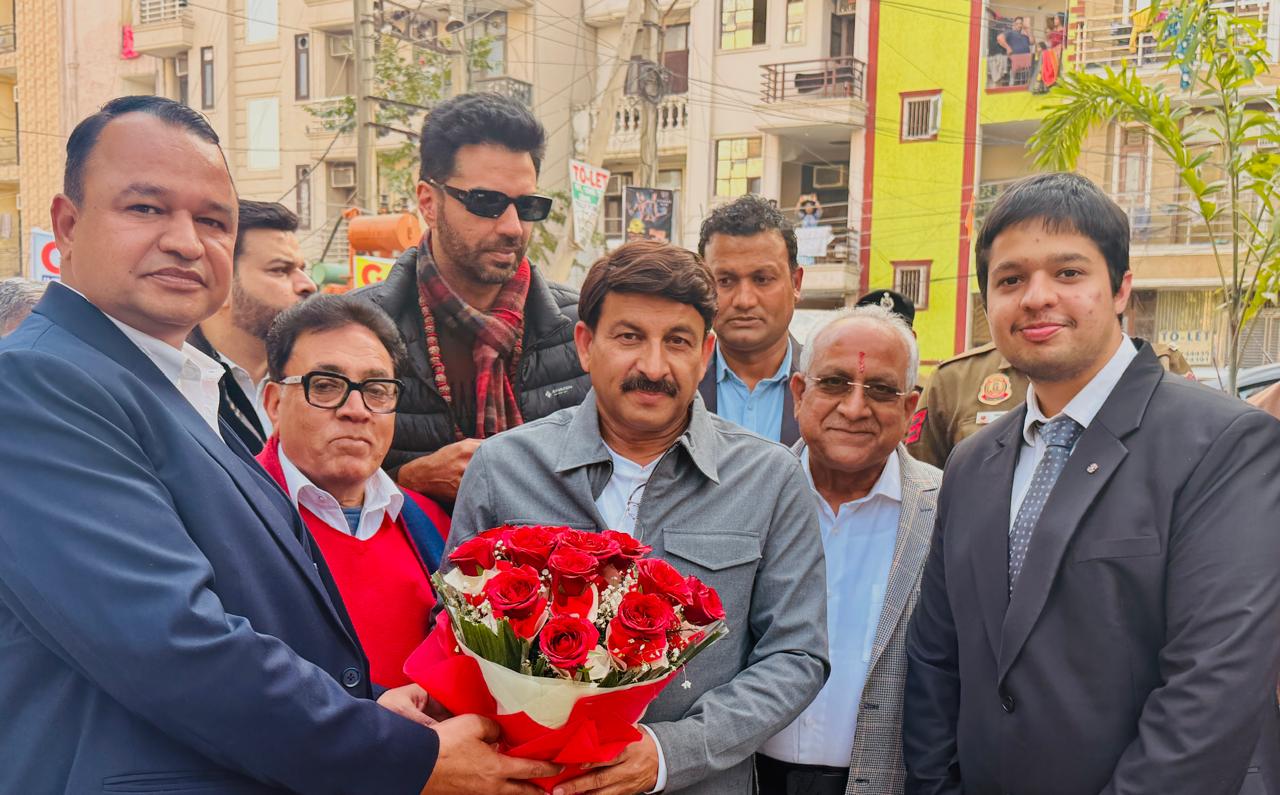
The function was further honoured by the presence of Retired IAS Officer Shri K.K. Khandelwal as Special Guest, who appreciated the school’s commitment to holistic education through culture, values, and creativity.
Students showcased a series of vibrant performances reflecting patriotism, social unity, cultural heritage, and moral values, leaving the audience impressed with their confidence, talent, and stage presence.
Addressing the gathering, MP Manoj Tiwari emphasized that children are the nation’s future and commended the school for providing a platform to nurture leadership and creativity among students.
Shri K.K. Khandelwal highlighted that true education extends beyond textbooks, and cultural activities play a critical role in shaping well-rounded individuals.
Mr. Pradeep Kaushik, Chairman of GAV International School, stated, “Our mission is to empower students by giving them opportunities to perform, build confidence, and realize their potential.”
Mrs. Manisha Kaushik, Managing Director, reaffirmed the school’s commitment to academic excellence, values, culture, and social responsibility.
The event concluded with the National Anthem, drawing thunderous applause for the students’ remarkable performances.
10, Feb 2026
B. Prabhakaran Applauds Visionary Leadership of Devendra Fadnavis and Nitin Gadkari for Transforming Gadchiroli
Mumbai, Feb 10: Gadchiroli and the wider Vidarbha region have long been recognised for their vast mineral wealth and human potential. For decades, however, this promise remained largely untapped. Today, that narrative is decisively changing—driven by focused governance, policy clarity, and a long-term commitment to inclusive and sustainable development.
Encouraging words from Chief Minister of Maharashtra, Shri Devendra Fadnavis ji, and Union Minister for Road Transport and Highways, Shri Nitin Gadkari ji, have deeply resonated with stakeholders working on the ground in the region. Their leadership reflects a development approach where industrialisation is not pursued in isolation, but as a catalyst for employment generation, infrastructure creation, and regional integration.
The sustained push by CM Shri Devendra Fadnavis ji to unlock Gadchiroli’s industrial potential while ensuring balanced regional growth has brought renewed confidence to Vidarbha. His focus on enabling large-scale investments, strengthening governance frameworks, and ensuring that development reaches local communities has been central to the region’s transformation.
Complementing this, Union Minister Shri Nitin Gadkari ji’s long-standing emphasis on infrastructure-led growth and decentralised industrial development has provided critical momentum. His consistent advocacy for Vidarbha has helped position the region on the national economic map, encouraging industry participation and long-term capacity building.
A powerful symbol of this transformation is the Lloyds Fellowship programme, under which 12 additional students from tribal and underprivileged backgrounds in Gadchiroli have been selected to pursue higher education at Curtin University, Perth, Australia. These students have undergone rigorous academic and language training and will now access world-class education—marking a significant shift from local constraints to global opportunities for the region’s youth.
The emergence of a robust steel ecosystem across Gadchiroli, Chandrapur, Wardha, Nagpur, and Bhandara further underscores this inflection point. The vision of developing a Green Steel Hub reflects a forward-looking industrial strategy anchored in sustainability, efficiency, and global competitiveness positioning Vidarbha as a key manufacturing and industrial hub for India.
Commenting on the transformation, Mr. B. Prabhakaran, Managing Director, Lloyds Metals and Energy Limited, said:
“The leadership of Chief Minister Devendra Fadnavis ji has been instrumental in bringing focus, speed, and confidence to Gadchiroli’s development journey. His commitment to ensuring that industrial growth translates into real opportunities for local communities is clearly visible on the ground.”
He added,
“The encouragement and vision of Union Minister Shri Nitin Gadkari ji have further strengthened this momentum. His emphasis on infrastructure, sustainability, and regional equity has helped create an enabling ecosystem for long-term industrial growth in Vidarbha.”
Mr. Prabhakaran further noted,
“The selection of 12 additional students under the Lloyds Fellowship programme reflects our shared belief that true development lies in empowering local youth with global exposure and education. These initiatives ensure that the next generation from Gadchiroli becomes an active participant in India’s growth story.”
The growing national and international focus on Vidarbha—further reinforced by platforms such as Advantage Vidarbha 2026, which brings together global investors, industry leaders, and policymakers signals the region’s readiness for its next phase of growth. With strong political leadership and collaborative intent, such efforts are expected to accelerate investments, deepen industrial ecosystems, and ensure development remains people-centric and future-ready.
10, Feb 2026
Delhi CM Inaugurates 100 Advanced ICT Labs in Government Schools to Boost Digital Learning
New Delhi, Feb 10: In a significant step toward strengthening digital education in government schools, Chief Minister of Delhi, Smt. Rekha Gupta, inaugurated 100 advanced ICT labs across Delhi government schools today. The labs were set up under the Digital Equalizer Program by the American India Foundation (AIF) in partnership with Ladli Foundation Trust. The inauguration took place at Sarvodaya Vidyalaya, Mansarovar Garden.
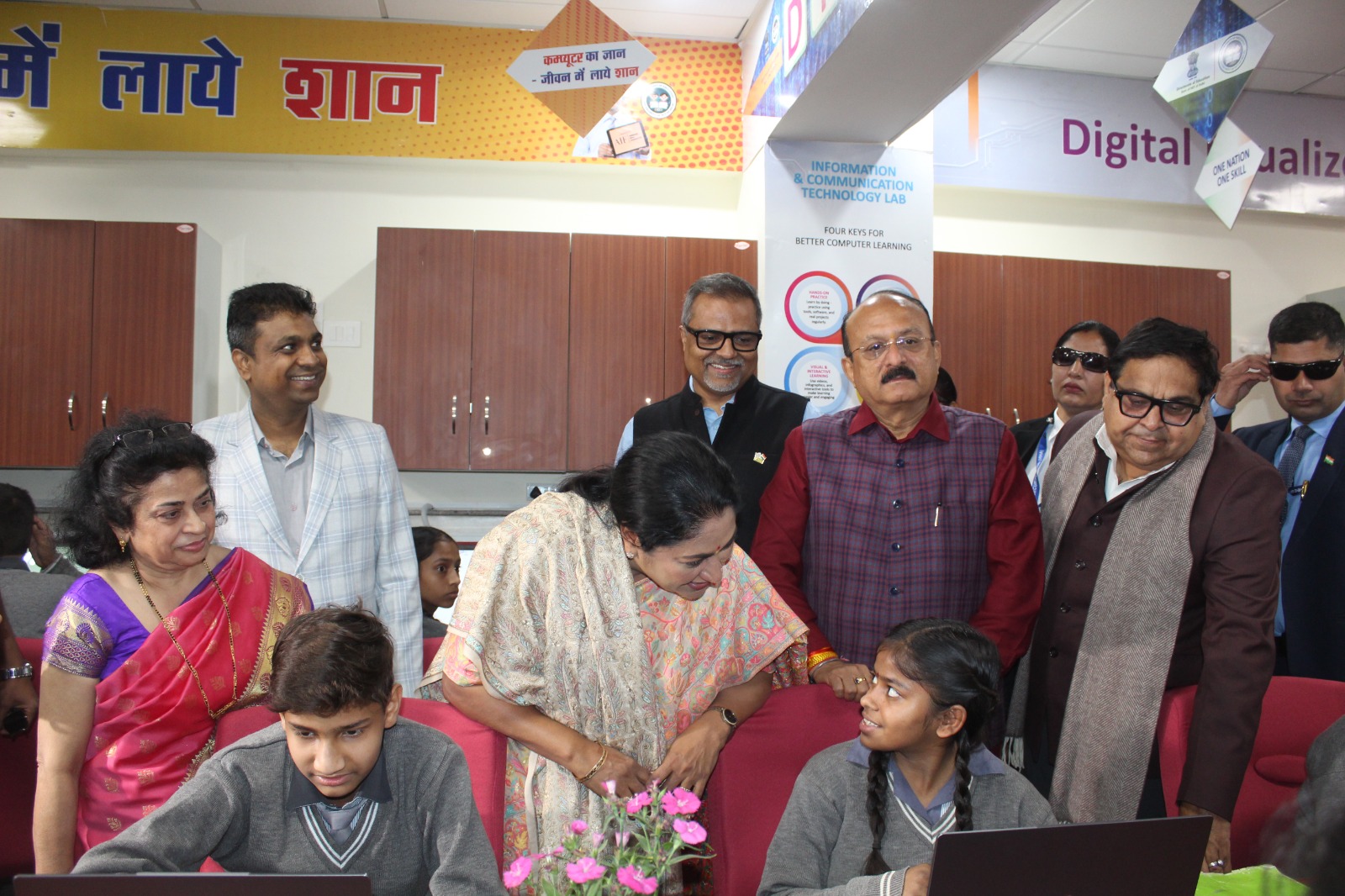
The ceremony was attended by Education Minister Shri Ashish Sood, Director of Education Ms. Veditha Reddy, AIF CEO Mr. Nishant Pandey, Ladli Foundation Founder Devendra Kr. Gupta, along with senior education officials, school principals, teachers, and students.
Each of the 100 schools has been equipped with a state-of-the-art ICT lab, featuring 20 computers and one Interactive Flat Panel Display (IFPD). To ensure effective usage, a trained resource person will be available in each school to assist teachers and students in digital learning.
Key Highlights of the Initiative:
-
100 advanced ICT labs across Delhi government schools
-
20 computers and 1 IFPD per school
-
Dedicated on-ground resource person support
-
Focus on digital inclusion and practical hands-on learning
CM Smt. Rekha Gupta said,
“Before completing one year of our government, we have delivered a century of computer labs for Delhi’s marginalised students. We thank the American India Foundation and Ladli Foundation for partnering with us in this important mission.”
Education Minister Shri Ashish Sood added,
“This initiative strengthens digital education and equips students with essential computer skills for higher education and future careers.”
Mr. Nishant Pandey, CEO of AIF, commented,
“Through the Digital Equalizer Program, we aim to reduce learning inequities by expanding access to technology and building digital confidence among students. These labs will open new learning and career pathways for thousands of young learners.”
Mr. Devendra Kumar, Founder of Ladli Foundation, said,
“This initiative bridges the digital divide for marginalised students, ensuring they can compete equally in a rapidly digitising world.”
The launch marks a major milestone in promoting digital inclusion and practical learning, enabling government school students to gain hands-on experience with technology and preparing them for the demands of the 21st century.
10, Feb 2026
From ideas to authorship: TEDxMahindraUniversity 2026 explores ‘unwritten futures’
Hyderabad/ New Delhi, Feb 10: TEDxMahindraUniversity successfully concluded its latest edition, bringing together students for a day of ideas, reflection and collective imagination. Designed as a platform to share and engage with original thinking emerging from their own community, the event reinforced the role of young voices in shaping the future.
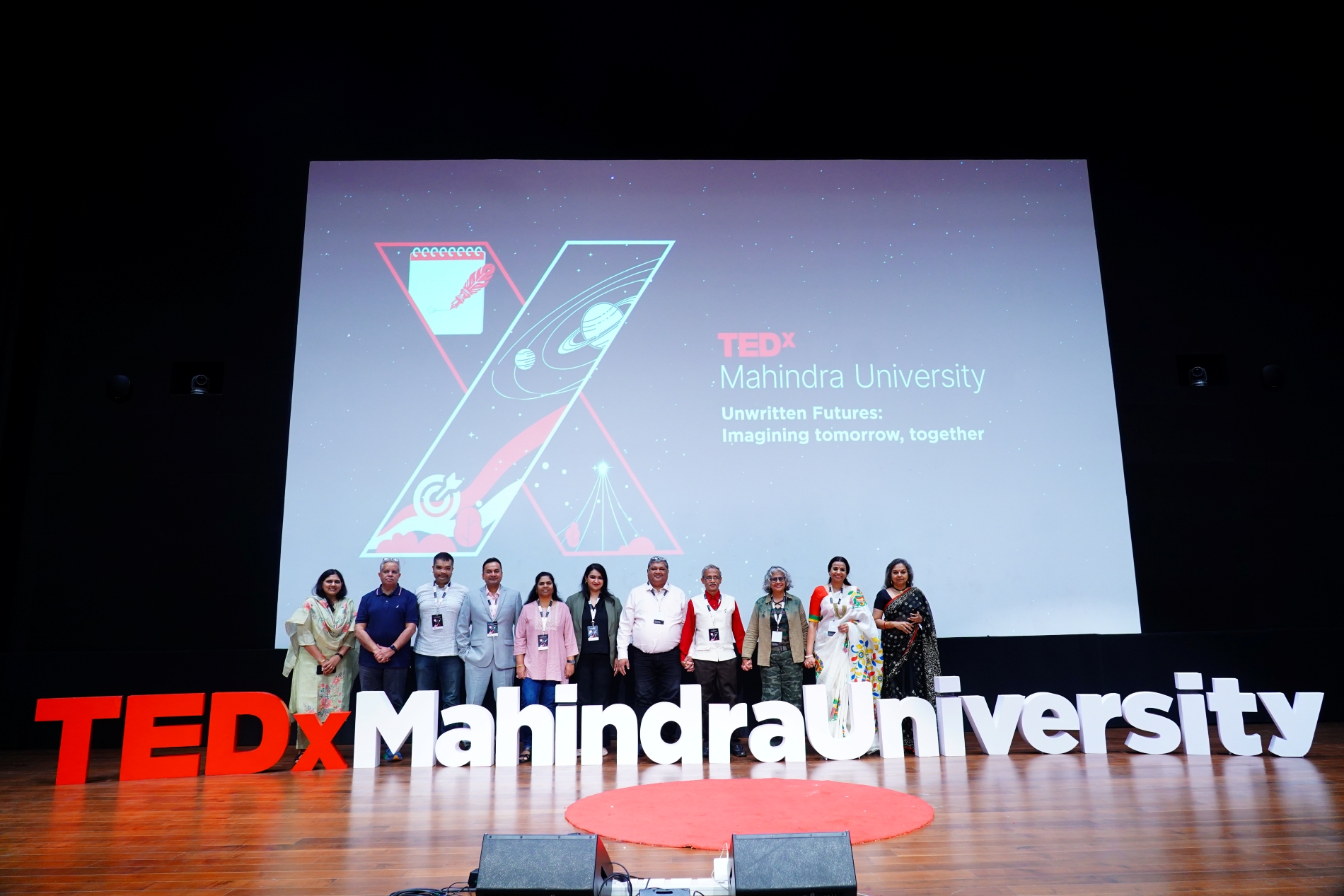
This edition unveiled the theme for 2026, ‘Unwritten Futures: Imagining tomorrow, together’, positioning the future not as a predetermined outcome, but as a blank page open to authorship. The theme challenged students, speakers and the audience to move beyond passive observation and step into active participation, emphasising that meaningful change begins with the courage to imagine beyond existing systems and constraints.
Dr Yajulu Medury, Vice Chancellor, Mahindra University, emphasized,
“The theme of this year reflects our belief that education is not just about understanding the world as it is, but about equipping our students to define what comes next. At Mahindra University, we strive to inspire young thinkers to imagine boldly, act with purpose and build futures that are inclusive, compassionate and impactful.”
Through a series of talks and conversations, speakers explored how true transformation requires more than incremental progress. The ideas presented encouraged a fundamental rethinking of how success is defined, shifting the lens from competition and output towards contribution, compassion and long-term impact. Central to this dialogue was the dismantling of outdated paradigms and the emergence of new frameworks for living, learning and leading in a rapidly evolving world.
The event featured a lineup of inspiring speakers, including Mr. Aaboo Varghese, Founder and Executive Director, Purnata, Dr Bhulakshmi V, Founder, GapSkills Learning Solutions Pvt. Ltd., Dr G Madhavi Latha, Professor, IISc and Chair of Centre for Sustainable Technologies, Dr Sarita Subramaniam, Director and Co-found Earth Brigade Foundation (NGO), Sqn Ldr. Neeraj Sharma (retd.), Cybersecurity Leader, Mr Shrinivas, C S Educator, EduVision TLS, Ms. Sharanbir Kaur, Client Partner – Financial Services, Real Estate and Travel, Meta and Mr. Vivek Sundaram, Technologist Exploring Purpose Presence and Human Potential.
A recurring insight across sessions was that outward innovation must be anchored in inner alignment. Speakers underscored the importance of personal rewriting, recognising that shaping an unwritten future requires internal transformation as much as external action. Discussions highlighted the need for holistic growth that integrates emotional resilience, intellectual courage and purposeful intent, while building the emotional infrastructure necessary to navigate continuous change.
The event examined how collaboration, empathy and cooperation must become foundational principles as societies adapt to shifting global realities. Speakers challenged inherited norms around interaction and resource-sharing, offering perspectives on how shared authorship of the future can lead to models of progress that unite rather than divide.


