


10, Feb 2026
Tarun Khanna to Play Mahadev in &TV’s Hey Bhagwaan
Tarun Khanna to Portray Mahadev in &TV’s Upcoming Divine Dramedy Hey Bhagwaan Kitna Badal Gaya Insaan!
&TV is all set to deepen its promise of delivering light-hearted, relatable, and feel-good entertainment with its upcoming divine dramedy Hey Bhagwaan – Kitna Badal Gaya Insaan!. Set against the spiritual backdrop of Ujjain, the show blends slice-of-life humour, emotional storytelling, and a gentle mythological twist. Adding charm to this unique narrative is known for portraying mythological characters with depth and dignity is veteran actor Tarun Khanna, who steps into the powerful and revered role of Mahadev, bringing divinity closer to everyday human life in a humorous way.
Expressing his excitement about stepping into this divine yet refreshingly human role, Tarun Khanna shares,
“Portraying Mahadev has been an immensely exciting and creatively fulfilling experience for me. This interpretation of Shiva is ruggedly charming, warm, and quietly observant, often amused, and at times gently baffled, by the absurdities of human behaviour. What truly distinguishes him is the way he communicates; through riddles, wit, and references that resonate with today’s generation, making him relatable and approachable in a way audiences haven’t witnessed before. Exploring this lighter, more playful dimension of divinity has been a joy, where Mahadev walks among humans, subtly guiding them, and even brings celestial allies in human form, known only to Mahesh.”
He further adds,
“In real life, I deeply resonate with Shivji’s philosophy. He is called Bholenath, yet his innocence is often misunderstood. He is compassionate and accessible, but also profoundly wise and worldly. Striking that balance is what I strive to bring to the character. In this show, when God himself descends to Earth and begins living like a human, especially in a city like Ujjain, it naturally gives rise to moments that are entertaining, emotional, and deeply thought-provoking. We have seen Mahadev on Mount Kailash, but Mahadev in Ujjain is an experience audiences have never had before. I sincerely hope viewers embark on this journey with us and find it as beautiful as we have while creating it.”
Watch Tarun Khanna as Mahadev in Hey Bhagwaan – Kitna Badal Gaya Insaan!, premiering soon on &TV and streaming exclusively on Hindi Z5.
- 0
- By Neel Achary

10, Feb 2026
Kalidas ka Kathalok Festival Concludes at Purana Qila, Delhi
Kalidas ka Kathalok, a two-day cultural festival curated by Samay Yaan in collaboration with IGNCA, concludes at Purana Qila, New Delhi
New Delhi, Feb 10: Delhi witnessed a rare cultural immersion into India’s ancient civilisational consciousness as Kalidas ka Katha Lok, a two-day cultural festival curated by Samay Yaan in collaboration with the Indira Gandhi National Centre for the Arts (IGNCA), concluded successfully at Purana Qila on 7–8 February 2026.
Rooted in the theme “Kalidas and His India,” the festival invited audiences to experience the world of Mahakavi Kalidas not as distant history, but as a living, breathing continuum of ideas, aesthetics, and social thought. Over two days, thousands of visitors, students, scholars, artists, and families engaged with India’s classical heritage through theatre, music, storytelling, workshops, installations, and scholarly dialogue.
The festival was inaugurated by Shri Kapil Mishra, Hon’ble Minister of State for Language, Culture and Tourism, along with Dr. Sachchidanand Joshi, Member Secretary, IGNCA; Justice (Retd.) S. N. Dhingra, Founder of Samay Yaan; Dr. Sandhya Purecha, Chairperson, Sangeet Natak Akademi; and Shri Chittaranjan Tripathi, Director, National School of Drama.
Held within the historic landscape of Purana Qila, the festival transformed the venue into a symbolic passage into the India of nearly 2,000 years ago. Visitors were welcomed with immersive entry experiences, thematic décor, poetic installations, and curated experiential zones that evoked everyday life, trade, art, and learning from Kalidas’s era.
The festival was graced by several dignitaries including Dr. Sachchidanand Joshi – Member Secretary, IGNCA; Dr. Sandhya Purecha – Chairperson, Sangeet Natak Akademi; Prof. Ranjana Aggarwal – Founder Director of CSIR-NIScPR; Shri Sudhanshu Trivedi – Member of Parliament; Prof. Kapil Kumar – historian and author; Capt. Praveen Chaturvedi – CEO of Prachyam Studios; and Sushri Bharti Dixit, storyteller.
Speaking at the event, Justice (Retd.) S.N. Dhingra, Chairman, Samay Yaan, said,
“Kalidas ka Kathaalok is our attempt to bring ancient India out of textbooks and make it a live experience. We are not recreating history as a spectacle, but opening a space where stories, ideas, and emotions from 2000 years ago can be felt again. By combining performance, craft, music, and conversation, the festival allows people, especially young audiences, to engage with Kalidas and his world and feel the vibrant Bharat of his era.”
Ms. Bharti Dhingra, Project Head – Katha Lok, said,
“This festival is built around listening to stories, to places, and to the questions ancient India was curious about: love, power, nature, and society. Kalidas ka Kathaalok does not tell audiences what to think about the past. Instead, it creates the atmosphere that allows reflection and dialogue.”
Shri Chittaranjan Tripathy, Director, National School of Drama, said,
“At the National School of Drama, we believe theatre is one of the most powerful ways to understand society and history. Through Kalidas ka Kathaalok, we are engaging with young performers and storytellers to explore life in ancient India, not as mythology, but as a living reality. This festival gave opportunity and chance to express and reinterpret classical themes through contemporary performance, ensuring that Indian dramatic traditions continue to grow, evolve, and speak to new generations.”
Shri Sachchidanand Joshi, Member Secretary, IGNCA, said,
“To envision a literary festival devoted to Mahakavi Kalidasa is an inspired endeavour. Kalidasa enriched literary traditions through the vast reach of his genius. Our youth readily know Shakespeare, yet remain largely unaware of Kalidasa. This moment calls for reintroducing Kalidasa to the new generation, so they may engage with and take pride in our rich literary heritage.”
Pandit Abhay Sopori, Santoor Maestro & Music Composer, said,
“Indian classical arts have always carried history not as memory alone, but as lived experience. Kalidas ka Kathaalok created a rare space where poetry, music, and thought come together to awaken that continuity. Just as a raga unfolds emotion beyond words, this festival allows ancient ideas to resonate with contemporary sensibilities. It reminds us that our cultural inheritance is not something to be preserved in silence, but to be listened to, felt, and rediscovered by every generation.”
One of the festival’s key highlights was its experiential haat, where audiences explored ancient Indian practices, from attar-making and traditional board games to Brahmi script calligraphy, dhoti-tying, and forgotten culinary and craft traditions. These hands-on spaces enabled visitors to engage with civilisation through touch, scent, sound, and movement, rather than observation alone.
The intellectual core of Kalidas ka Katha Lok was anchored by curated conversations and storytelling sessions featuring eminent thinkers, historians, authors, and cultural practitioners. Discussions explored themes such as ancient Indian trade routes, governance systems, science, philosophy, aesthetics, and the enduring relevance of Kalidas’s literary imagination in contemporary times.
The performing arts formed a powerful narrative arc across both evenings. A specially curated National School of Drama production on the life and works of Mahakavi Kalidas brought classical literature alive through contemporary theatrical expression.
The much-anticipated Taal Yudh witnessed master percussionists engage in a rhythmic dialogue across traditions, reviving India’s ancient language of rhythm and conversation.
Musical reinterpretations of Kalidas’s works found expression through The Kalidas Bands, an inter-college competition that blended classical and folk traditions with modern musical sensibilities.
The festival concluded with Sur Samay Yaan, a grand musical journey mapping India’s sonic evolution, from the earliest philosophical conception of sound to classical and folk traditions, performed by a large ensemble of renowned musicians and vocalists including Pandit Abhay Sopori, Smt. Ragini Rainu, Dr. Avinash Kumar, Dr. Rindana Rahasya, Pt. Dr. Samit Mallick, and Shri Nitin Sharma.
10, Feb 2026
Enabling Safer, Smarter Banking with TVS Electronics Solutions
Chennai, Feb 10: TVS Electronics (TVSE), a leading player offering integrated end-to-end electronic solutions, highlights its comprehensive ‘Make in India’ hardware portfolio for BFSI sector, ensuring trusted, safe and fast transactions. As transaction volumes rise, digital adoption accelerates, and customer expectations continue to grow, financial institutions face increasing pressure to maintain speed, accuracy, security, and uninterrupted operations. TVSE addresses these demands by delivering reliable, scalable solutions that reduce operational risk, streamline daily workflows, and support consistent service delivery across branch networks and digital touchpoints.
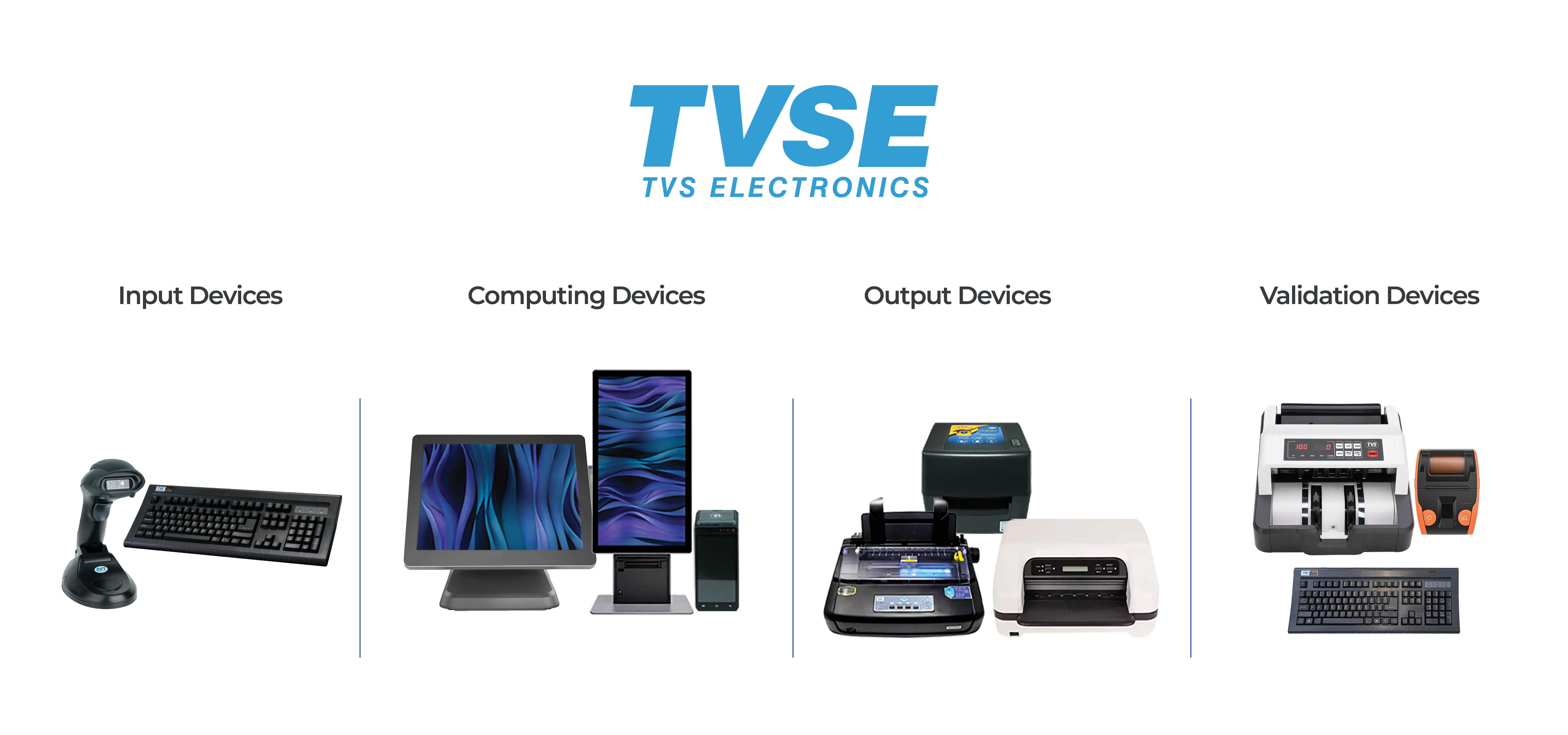
In an industry where precision and trust are essential, TVS Electronics solutions simplify the workload for staff and provide customers with a smoother and more secure experience. TVS Electronics offers a dedicated range of products to help BFSI’s operate seamlessly without compromising on speed, security and accuracy.
According to Mr. C. Balaji, Vice President – Chief Business Officer, Products & Solutions Group, TVS Electronics,
“Banking today demands systems that are secure, resilient, fast, accurate and always available. From counterfeit detection to secure printing, from asset tracking to always on IT support, TVSE strengthens every layer of BFSI operations. At TVS Electronics, we focus on strengthening the operational backbone of financial institutions with technology that enables reliable service delivery across branches, digital platforms, and customer touchpoints, while allowing banks to scale with confidence.”
Key Highlights of BFSI range of Products and Solutions from TVSE
Securing Transactions Through Biometric Authentication
As digital transactions scale, authentication becomes fundamental to trust and compliance. Ensuring that transactions are carried out by the right account holder or operator is critical. TVS Electronics’ fingerprint reader solutions integrate seamlessly into banking and payment workflows, enabling accurate biometric authentication integrated on products.
Smarter and Safer Cash Handling & Digital Payment Momentum
TVSE’s cash management systems help staff process cash with confidence. Modern note counting machines use multiple layers of detection such as optical checks, magnetic sensors, infrared validation, and pattern analysis to identify counterfeit notes instantly. Features like fitness sorting and serial number reading improve traceability while maintaining a rapid workflow.
Today, UPI and RuPay have moved payments beyond conventional modes, setting new expectations around speed, transparency, and convenience. TVS Electronics provides modern POS terminals, sound boxes and all-in-one payment devices built to handle high transaction volumes securely and reliably. For banks and merchants alike, this translates into faster settlements and smoother day-to-day operations.
Secure and Reliable Document Printing
Passbooks, cheques, account statements, and branch receipts remain essential. TVSE’s specialty printers are engineered for this work. They ensure clean, compliant printing of sensitive documents that must be handled with care and precision.
Extending Banking Through Self-Service Kiosks
As customer expectations evolve, banks are increasingly adopting self-service and unattended solutions to improve availability while reducing operational strain. TVS Electronics addresses this shift through its large-panel computing devices under the kiosk portfolio. Designed for continuous operation, these kiosks support services such as account enquiries, form submissions, bill payments, and service requests. This enables greater reach, better availability, and a smoother customer experience without expanding physical branch infrastructure.
Better Tracking and Branch Operations
The BFSI sector moves more than currency. It moves documents, assets, and data. TVSE provides reliable barcode scanners, label printers, and handheld terminals that help branches track everything with accuracy. From cash bags to asset movement logs, these tools improve visibility and accountability at every step.
Moreover, Peripheral devices such as high-durability mechanical keyboards rated for up to 50 million keystrokes, dot matrix printers, and branch-ready accessories are built to withstand continuous use in high-volume banking environments. Together, they reduce operational interruptions and support consistent service delivery where downtime is simply not an option.
Enabling Financial Inclusion Through Business Correspondents
Under RBI-led initiatives, banking services are expanding into tier 3, tier 4, and rural regions through Business Correspondents. TVS Electronics supports this effort with hardware solutions specifically suited for Business Correspondent operations with TVSE all in one tablets. Designed for portability, durability, and ease of use, these products perform reliably in field conditions where infrastructure may be limited. Backed by TVSE’s extensive sales and service reach across India, Business Correspondents gain dependable access to hardware support across geographies ensuring essential banking services remain accessible, consistent, and trustworthy even at the last mile.
TVSE Aikya: Keeping Banking Operations Always On
Behind every modern branch is an IT foundation that must work without interruption. TVSE Aikya provides unified infrastructure management so that systems across multiple branches remain connected, monitored, and supported. Aikya reduces the burden on branch teams by predicting issues before they grow, resolving many problems remotely, and ensuring seamless connectivity across devices and services.
Nationwide Service Coverage for Uninterrupted Banking
TVS Electronics supports BFSI operations through a Pan-India sales and service network with presence across 200+ districts. With service coverage extending to 19,000+ pincodes, TVSE enables consistent deployment, maintenance, and support for banking infrastructure nationwide ensuring continuous operation with zero downtime.
Together, these capabilities from TVS Electronics portfolio help banks and financial institutions minimise downtime, reduce operational complexity, and deliver secure, customer-centric banking experiences across India.
10, Feb 2026
Sattva Group Expands National Footprint with 8 Mn Sq Ft Urban Redevelopment in Mumbai
Mumbai, Feb 10: Sattva Group, one of India’s long-standing real estate developers, today announced its formal entry into the Mumbai Metropolitan Region (MMR) with six residential and commercial redevelopment projects spanning over 8 million sq ft of construction area. The projects, awarded through competitive evaluations, are located in Parel (Sewri), Prabhadevi, Goregaon East, Vile Parle West, Powai and the Bandra Kurla Complex (BKC) vicinity.
With these six projects, Sattva Group expects to deliver more than 2500 rehabilitation homes and over 2000 newly built residences. Construction across the portfolio will begin in 2026 and continue in phases until 2032, with the first project likely to be delivered by 2028. The total Gross Development Value (GDV) across the projects is estimated at approximately ₹11,000 crore.
The company’s entry comes at a time when Mumbai is undergoing an extensive cycle of structural renewal, with more than 16,000 ageing buildings requiring redevelopment to meet modern safety, planning and sustainability standards. Upcoming refinements to Development Control and Promotion Regulation (DCPR) 2034 are expected to further support redevelopment viability across Slum Rehabilitation Authority (SRA), Maharashtra Housing and Area Development Authority (MHADA) and society-led models, creating strong demand for technically capable and financially disciplined developers.
Sattva’s Mumbai portfolio has been shaped through a rigorous multi-parameter evaluation framework encompassing regulatory clarity, engineering feasibility, environmental responsibility, lifecycle asset performance and stakeholder engagement. Over the past year, the Group has built deep on-ground intelligence across key redevelopment micro-markets, enabling precise project phasing, design efficiency and an execution strategy aligned with local regulatory dynamics.
Speaking on the new development, Bijay Agarwal, Managing Director, Sattva Group, said,
“Mumbai is entering a defining phase of urban renewal, driven by the need to replace ageing structures with safer, well-planned, future-ready housing. Redevelopment requires clarity, discipline and long-term commitment, values central to Sattva’s growth over the past three decades. Our entry into Mumbai is a strategic extension of our legacy of delivering large, technically complex projects on time and with consistency. We look forward to contributing meaningfully to the city’s next decade of growth.”
In line with its redevelopment philosophy, Sattva Group’s Mumbai projects adopt a structured, rehabilitation-led approach centred on safety, transparency and long-term sustainability. Existing residents will receive upgraded amenities, enhanced safety systems and structured transition support, overseen by dedicated engagement teams across the redevelopment lifecycle.
Anchored in engineering-led design and governance-driven project management, the Group’s entry into Mumbai reflects a disciplined approach to complex urban redevelopment, with a focus on execution certainty and long-term asset integrity, supporting the renewal of ageing housing stock and Mumbai’s evolution into a safer, more resilient and future-ready city.
10, Feb 2026
Databricks Reaches Record Revenue Run-Rate, Secures Major Funding to Accelerate AI and Lakebase
Feb 10: Dat
This financing drew strong
Financial momentum
This investment follows
- Surpassing a $5.4 billion
revenue run-rate, growing >65% year-over-year. - Delivering positive free cash
flow over the last 12 months. - Crossing a $1.4 billion
revenue run rate for its AI products. - Sustaining a net retention
rate of>140%. - >800 customers consuming at
over $1 million annual revenue run-rate. - >70 customers consuming at
over $10 million annual revenue run-rate.
“We’re seeing overwhelming
investor interest in our next chapter as we go after two new markets,” said Ali Ghodsi, co-founder and CEO of Databricks. “With this new capital, we’ll double down on Lakebase so developers can create operational databases built for AI agents. At the same time, we’re investing in Genie to let every employee chat with their data, driving accurate and actionable insights.” “Databricks is a generational
company that has become a backbone for enterprise data and AI, helping organizations across critical sectors seize opportunities and overcome challenges,” said Todd Combs, Head of the Strategic Investment Group for JPMorganChase’s Security and Resiliency Initiative. “This initial investment reflects the strength of Databricks’ secure platform and continues to support their innovative, production‑scale applications that serve customers around the world.”
Building the future of Data +
The company will use the
10, Feb 2026
Greenspace Launches Ashwagandha QA, Pioneering Quantum Ayurveda
Greenspace Herbs Unveils Ashwagandha QA, the World’s First Quantum-Physics–Applied Ayurvedic Supplement
Bengaluru, Feb 10: Greenspace Herbs has announced the launch of Ashwagandha QA, a next-generation Ayurvedic ingredient positioned as the world’s first clinically evaluated “Quantum Ayurveda” ashwagandha. The innovation combines engineering-led signal discovery with acoustic science to embed supportive frequencies into the botanical matrix—without chemical modification—offering enhanced performance at lower doses.

Greenspace Herbs frames this launch as a new frontier in supplement innovation, emphasizing convergence across multiple scientific faculties. By reducing oxidative stress, Ashwagandha QA enables faster and more efficient absorption of botanical benefits, reflecting the principle that less can be faster when the body’s resistance state is lowered.
Designed with performance efficiency in mind, Ashwagandha QA delivers improved bioavailability and functional outcomes compared with conventional extracts. Lower effective dosing not only supports consumer adherence but also promotes sustainability through optimized raw-material use. The platform shifts the industry focus from milligrams per serving to outcome per milligram, positioning it as a precision-oriented, performance-led ingredient.
Greenspace Herbs also highlighted ongoing research exploring targeted energy modulation to guide botanical benefits more precisely in the body, marking a step toward a new era of high-efficiency nutraceutical formulations.
George Fernandes, Chief Scientist at Greenspace Herbs, said,
“Ashwagandha QA represents a bold intersection of classical Ayurveda and modern engineering principles. Our aim is to enhance the functional performance of botanicals, making supplementation faster, more efficient, and aligned with the body’s natural pathways.”
Ashwagandha QA is part of Greenspace Herbs’ vision to redefine how Ayurvedic ingredients are applied in modern supplements—emphasizing precision, energy-based efficiency, and measurable, reproducible outcomes.
10, Feb 2026
BIAL advances its Customer-First Approach at BLR Airport through Partnership with Mu Sigma
Bengaluru, Feby 10: Bangalore International Airport Limited (BIAL), the operator of Kempegowda International Airport Bengaluru (BLR Airport), has entered into a strategic partnership with Mu Sigma, a global decision sciences company, to further advance BLR Airport as a one-of-a-kind “Algorithmic Airport” that delivers unparalleled customer experience by harnessing the power of data-driven decision making.

The collaboration builds on BIAL’s established Customer-First approach, where every interaction is informed by real-time insights and designed around individual passenger needs. By leveraging Mu Sigma’s proprietary Decision Intelligence Platform AI and advanced analytical models, BIAL will unify and analyse data across airport operations to anticipate evolving traveller requirements and proactively enhance convenience, comfort, and efficiency. This reinforces BLR Airport’s evolution from a transit hub into a holistic experience hub designed around passenger intent.
Through this partnership, BIAL will deepen its data-driven approach to decision-making by integrating Mu Sigma’s advanced Decision Intelligence capabilities across key passenger and operational touchpoints. Unified intelligence from existing systems will enable teams to proactively identify patterns, anticipate requirements, and optimise service delivery in real time. By strengthening its analytical backbone, BIAL aims to improve operational reliability, personalise passenger experiences, and continuously raise service standards across BLR Airport.
At the core of this transformation are guest-first capabilities that make every touchpoint smarter and more intuitive. Predictive analytics will help reduce queues at shops, restaurants, and parking, ensuring a smoother flow through the terminal. Real-time demand forecasting and dynamic pricing will further optimise parking and transport. Passengers engaging through the Pulse App and the official website (bengaluruairport.com) will enjoy an enhanced digital experience with tailored recommendations, loyalty rewards, and timely notifications on services and offers. Inside the terminal, location-based promotions, improved signage, and curated deals will make wayfinding and decision-making effortless.
“At BIAL, we are committed to continuously enhancing the airport experience, and this collaboration supports that ongoing journey. Harnessing Mu Sigma’s advanced Decision Science capabilities will allow us to personalise every interaction, anticipate disruptions before they occur, and elevate efficiency across operations. BLR Airport is charting the path towards a new era of world-class guest experiences.” said George Fanthome, Chief Technical Officer, BIAL.
“Bangalore cannot remain satisfied as just the IT capital of India; it must rise to become the very symbol of innovation for the entire nation. Serving as the gateway to this city, BLR Airport carries the responsibility of representing that pride and possibility. BLR Airport is not just a place where people begin their travels, it is where they embark on their dreams, and it must provide the experience that such a journey deserves, leaving behind a memory that stays with them long after they’ve gone. Together, BIAL and Mu Sigma have the opportunity to reimagine what an airport experience can be, and to create the world’s first true algorithmic airport—an enduring symbol of India’s innovation to the world.” said Dhiraj Rajaram, Founder and CEO, Mu Sigma.
10, Feb 2026
Gifts to Make Your Loved Ones Smile This Valentine’s Day
This Valentine’s Day, love is found in the little things—the thoughtful gestures that bring comfort, confidence, and joy to everyday moments. Beyond grand plans and candle-lit dinners, the day is about celebrating connection in all its forms: romantic, personal, and heartfelt.
Whether it’s getting ready for a special date night, planning a cosy evening at home, or indulging in self-care, the right gifts can make these moments even more meaningful. From beauty and fragrance to fashion care and smart kitchen solutions, this curated Valentine’s Day edit brings together thoughtful picks designed to enhance everyday living and celebrate love, your way.
Philips STH5030/20 Handheld Garment Steamer
A perfect blend of practicality and elegance, the Philips STH5030/20 Handheld Garment Steamer is designed to simplify daily wardrobe care. Ready in seconds, it smooths out wrinkles quickly without the need for an ironing board. Its powerful steam output, dual detachable water tanks, and precision tip make it ideal for everything from everyday outfits to travel-ready looks. With thoughtful accessories and a sleek design, it’s a gift that adds ease and confidence to every morning.
Oriflame Essenza Supreme Perfumed Body Cream
Indulgent body care takes centre stage with the Essenza Supreme Perfumed Body Cream. Crafted to deliver deep nourishment with a luxurious sensory experience, its rich, velvety texture leaves skin soft, hydrated, and delicately scented. Ideal for special evenings and self-care rituals, it brings an elegant touch to Valentine’s Day preparations.
Cellecor Aurifry Air Fryer
For couples who cherish shared moments at home, the Cellecor Aurifry Air Fryer makes healthy cooking effortless. Designed for convenience and performance, it allows users to prepare flavourful meals with minimal oil. Its transparent, illuminated basket, intuitive touch controls, and versatile cooking options make everyday meals enjoyable, turning home-cooked food into moments of togetherness.
Every Me Sweetheart Rose Eau de Toilette
Romantic and refreshing, the Sweetheart Rose Eau de Toilette captures the emotion of Valentine’s Day through fragrance. With delicate rose notes balanced by soft fruity accents, it offers a light yet memorable scent. Perfect for both date nights and personal celebrations, it adds a charming finishing touch to any look, leaving behind a gentle, lingering impression.
This Valentine’s Day, celebrate love through gifts that elevate everyday experiences—because the most meaningful presents are the ones that bring joy, comfort, and a little extra sparkle to daily life.
10, Feb 2026
Outcome-Driven Upskilling Platforms Shaping Future-Ready Careers in 2026
As industries continue to evolve at breakneck speed, traditional degrees alone are no longer enough to stay relevant. In 2026, learners and professionals are increasingly turning to outcome-driven upskilling platforms that offer real-world exposure, mentorship, and career acceleration rather than just certificates.
Here are some of the top upskilling platforms to watch in 2026, based on their focus on employability, learner outcomes, and alignment with future-ready skills.
1. NextLeap:
For young professionals who want to break into tech jobs, NextLeap is a strong job accelerator that helps users find successful paths into high-demand technology-specific positions such as Product Management, UI/UX Design, Data Analytics, Business Analytics, and Software Engineering. NextLeap’s unique fellowship-based approach uses a combination of live training sessions, hands-on projects, peer-based learning, and interview preparation. Unlike traditional passive learning styles, NextLeap’s approach focuses on real-world case studies, solving problems and helping develop skills through structured mentorship. Due to a rapidly increasing audience of users, and recognition as one the most exciting EdTech startups in South Asia, NextLeap is well-positioned to become a primary resource for young professionals who want to obtain practical job-focused skills in 2026.
2. Coursera
Ideal for students looking for a structured program from one of the top global universities and corporations. Coursera provides access to both sub-programs and complete degree programs in many fields, including artificial intelligence, data science, cloud computing, business, and cybersecurity. Coursera combines the academic quality of college courses with industry-relevant material as of 2026, making COURSES from accredited institutions of higher learning (and professional certifications) appealing to many learners.
3. upGrad
Ideal for working professionals who want formal recognition for their skill development. Build on its success as a key player in the upskilling sector in India by partnering with colleges to create long-term programs. upGrad focuses on four major themes: management, technology, data science and digital marketing. Professionals who wish to leave their current jobs to pursue structured professional development while continuing to earn an income are drawn to upGrad’s robust support of students through career services, alumni network connections and partnerships with their industry, making it a very popular choice for professionals.
4. Scaler
Best for people looking to improve their skills in Software Engineering and Coding If you’re looking for a way to become a better developer, Scaler (originally known as CareerMonk) can help improve your DSA, System Design and Software Engineering skill sets. Their extensive curriculum allows you to take live classes, receive mentorship and prepare for the top technology jobs available today. With the exponential growth of highly-skilled engineering professionals in 2026, expect Scaler to remain a significant player in developing talent and helping to build India’s developer workforce.
5. Udacity
Best for those seeking cutting edge technology skills and nano-degrees, the Nano-Degree Courses at Udacity are created for emerging technology areas, such as Artificial Intelligence, Machine Learning, Autonomous Systems and Cloud Computing. Many of these courses were created in collaboration with leading Technology Companies, and are structured as Project-based courses. Expect Udacity to continue as a great option for learners who want to gain a high degree of specialization in emerging technology areas after 2026.
6. Simplilearn
Top choice: Professional certifications and enterprise education. Among the various certification training provider options available today, most people recognize Simplilearn for their entire suite of certification courses in cloud computing, DevOps, information security, project management and digital marketing. They also have an impressive enterprise education platform providing solutions for individual learners as well as corporate teams. With its many industry-aligned certifications Simplilearn maintains its relevance amongst up-and-coming professionals looking to rapidly gain additional skill sets.
The Road Ahead
The trend towards practical-based learning; through industry alignment; by having measurable learning outcomes; and finally having a greater emphasis placed on mentorship; hands-on or real-life applications; and how ready students are for careers rather than simple learning will drive the next phase for upskilling. In 2026 whoever(s) is/are expected to lead will likely be doing so from platforms like NextLeap, which connects the dots between learning and being employable in the eyes of the employer; thus, these types of businesses will help define the next generation of professionals.
10, Feb 2026
5 Common Cybersecurity Blind Spots in Mid-to-Large Enterprises
As mid-to-large enterprises scale cloud adoption, digital customer platforms, and AI-led operations, their attack surface continues to expand. Yet many organisations remain focused on visible threats while overlooking structural vulnerabilities that quietly increase cyber risk. Insights from the India Cyber Threat Report 2026 by Seqrite, the enterprise arm of Quick Heal Technologies, suggest that attackers are increasingly exploiting gaps in visibility, identity controls, and partner ecosystems rather than relying solely on traditional intrusion methods. Meanwhile, Barracuda Networks highlights that modern attacks are becoming more evasive, often bypassing legacy defenses through automation and credential misuse.
Addressing these blind spots is essential, as enterprise resilience today depends on continuous awareness rather than reactive security.
1. Fragmented Visibility Across Hybrid Infrastructure
Enterprises now operate across multi-cloud environments, SaaS platforms, remote endpoints, and legacy systems. While this hybrid architecture enables flexibility, it often creates monitoring silos. Seqrite’s threat intelligence observations indicate that unmanaged assets and misconfigured environments frequently become entry points for attackers. Without unified visibility, threats can persist undetected and move laterally across networks. Consolidated security platforms that deliver centralized telemetry and real-time correlation are becoming critical for faster detection and response.
2. Identity Risks and Excessive Privileges
As organisations grow, so does identity sprawl—spanning employees, vendors, and machine accounts. Over time, access rights accumulate, leaving many users with more privileges than necessary. Barracuda Networks notes that credential-based attacks remain one of the most dependable methods for adversaries because they allow access without triggering conventional alarms. Enforcing least-privilege access, conducting regular entitlement reviews, and strengthening identity governance can significantly reduce this exposure while supporting zero-trust strategies.
3. Alert Fatigue Within Security Teams
Security tools generate massive volumes of alerts, many lacking actionable context. This often leads to operational fatigue, where critical threats risk being overlooked. Barracuda experts stress that security effectiveness relies not only on detection capability but also on operational clarity—ensuring automation enhances analysts’ decision-making instead of overwhelming them. Risk-based alerting, intelligent prioritisation, and clearly defined escalation paths help maintain response readiness without overburdening teams.
4. Underestimated Third-Party Exposure
Modern enterprises depend heavily on vendors for cloud services, analytics, payment processing, and logistics. Each integration expands the threat landscape. Seqrite researchers observe that attackers increasingly target smaller partners as indirect pathways into larger organisations. Treating vendor assessments as a one-time compliance task is no longer sufficient; continuous evaluation, contractual security standards, and shared incident response expectations are now essential components of cyber risk management.
5. Rising Digital Risk and Brand Exploitation
Cyber threats today extend beyond infrastructure to include brand impersonation, fake domains, and social media fraud. Experts at Quick Heal Technologies emphasise that attackers are increasingly weaponising brand identity to power phishing campaigns and financial scams. Proactive digital risk monitoring across open, deep, and dark web environments enables organisations to detect impersonation early and safeguard customer trust.
Looking Ahead
For mid-to-large enterprises, cybersecurity gaps often stem from overlooked fundamentals rather than lack of investment. Strengthening visibility, tightening identity controls, supporting security teams, evaluating partner risks, and monitoring external threats can significantly improve resilience. Organisations that address these blind spots will be better positioned to anticipate disruptions and embed cybersecurity as a strategic business enabler rather than a reactive safeguard.


