


9, Feb 2026
Indo–US Trade Framework Set to Accelerate India’s Semiconductor and Data Centre Push: Pan IIT Alumni India
Feb 09: Pan IIT Alumni India has welcomed the interim India–United States trade framework, stating that it could significantly accelerate India’s ambitions in semiconductors, data centres, and advanced technology manufacturing, especially when complemented by supportive domestic policy measures outlined in the Union Budget.
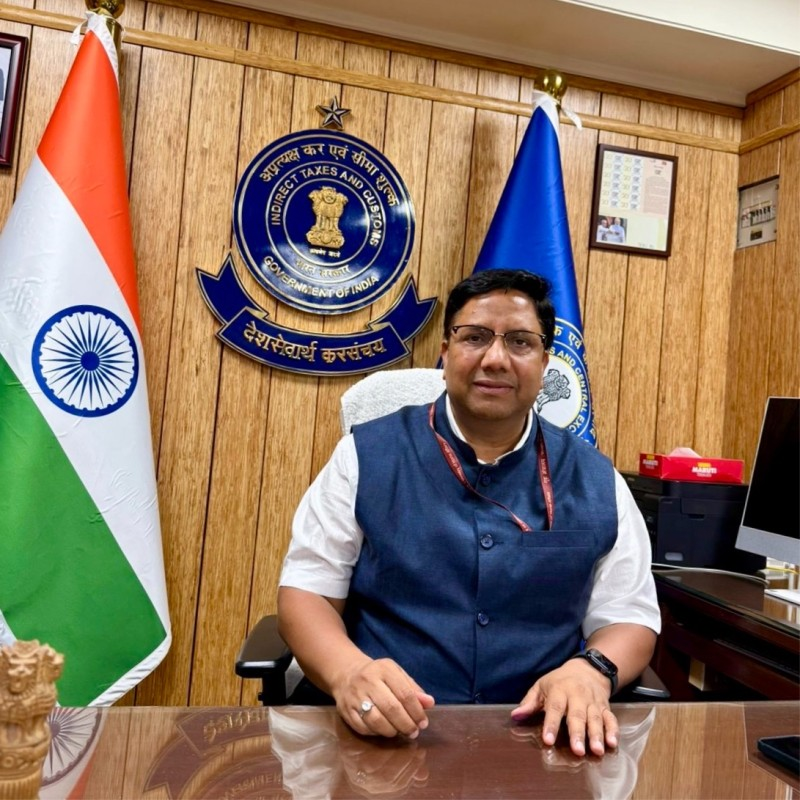
Welcoming the joint statement issued by India and the U.S., the alumni body said the framework signals deeper cooperation in critical and emerging technologies at a time when India is rapidly expanding its manufacturing and digital infrastructure base.
“The trade framework and the Union Budget together reflect a clear strategic alignment. India is building domestic capacity while expanding global technology partnerships,” said Mr. Prabhat Kumar, Chairman, Pan IIT Alumni India.
According to Pan IIT Alumni India, improved access to advanced components and technologies comes at a crucial moment as India pushes forward semiconductor fabrication, packaging, and design under its manufacturing incentive programmes.
“Today, everything runs on chips—from data centres and telecom networks to electric vehicles and defence systems. Stronger engagement with the U.S. can help India move faster from design to manufacturing and packaging, while reducing supply chain risks,” Kumar added.
The alumni body noted that the Union Budget further strengthens the domestic ecosystem through continued support for semiconductor manufacturing and digital infrastructure expansion. It highlighted the proposed tax holiday until 2047 for foreign cloud service providers using Indian data centre infrastructure as a key measure aimed at attracting long-term global investments.
“The trade framework improves access to advanced technology and global markets, while the Budget builds the domestic foundation. Together, they create momentum for sustained growth in advanced manufacturing and digital infrastructure,” Kumar said.
Pan IIT Alumni India also emphasized that startups and MSMEs stand to benefit from smoother cross-border collaboration, improved access to capital, and integration into global value chains. It pointed out that India’s extensive network of IIT alumni working across U.S.-based technology companies and venture funds could play a catalytic role in facilitating partnerships, investments, and market access.
“From electronics and EV components to defence and aerospace, reliability matters. This framework strengthens India’s position as a trusted manufacturing and innovation partner under the evolving China+1 strategy,” Kumar noted.
Pan IIT Alumni India added that its global alumni network is uniquely positioned to help translate this momentum into tangible outcomes by facilitating stronger connections between industry, academia, and policymakers through mentoring, technology partnerships, and cross-border investments.
- 0
- By Neel Achary

9, Feb 2026
Sarda Energy & Minerals Limited Reports Steady Performance in Q3 and Strong Growth for 9M FY26
Mumbai, Feb 09: Sarda Energy & Minerals Limited, today announced its unaudited financial results for the quarter and nine months ended December 31, 2025.
Financial Highlights (Consolidated)
-
Q3 FY26 Total Income registered a 3% year-on-year growth, despite a planned maintenance shutdown of one 300 MW turbine at the Company’s thermal power plant during part of the quarter.
-
EBITDA for Q3 FY26 increased by 7% YoY, reflecting operational resilience.
-
Profit After Tax (PAT) for the quarter remained steady.
-
Cash Profit for Q3 FY26 reflected healthy operating performance.
For the nine months ended December 31, 2025, the Company delivered robust growth:
-
Total Income increased by 32% YoY.
-
EBITDA rose by 53% YoY.
-
PAT grew by 59% YoY.
-
Cash Profit reflected strong operating cash flows.
Management Commentary
Commenting on the performance, Mr. Pankaj Sarda, Managing Director, said:
“During the quarter, the Company delivered a steady operational performance across its integrated energy and minerals platform, reflecting the resilience of our diversified business model.
The Energy segment continued to demonstrate stability, supported by consistent operations across assets. The addition of two new PPAs further strengthened the portfolio’s stability and improved earnings visibility.
While near-term pricing volatility in metals may persist, underlying domestic demand drivers linked to infrastructure and industrial activity remain intact. Our balance sheet remains robust, with comfortable liquidity and low leverage, positioning the Company well to support the next phase of growth.”
Operational and Strategic Update
-
The Company maintained stable performance across its energy assets during the quarter.
-
Two new Power Purchase Agreements (PPAs) were added, enhancing long-term earnings visibility.
-
The balance sheet remains strong, supporting disciplined capital allocation and future expansion.
Outlook
Looking ahead, Sarda Energy & Minerals expects operating conditions to improve as seasonal factors ease, supported by normalization in power demand and improving visibility across the metal segment.
The Company continues to advance its strategic priorities across energy, mining, and metals, with focused investments in clean energy, integrated mining, and operational efficiency. As part of its sustainability roadmap, initiatives are underway to increase the share of clean energy and progress toward lower-carbon, energy-efficient metal production.
With economic activity gaining momentum and demand conditions improving, the Company remains optimistic about the medium-term outlook. Supported by a diversified portfolio, disciplined capital allocation, and a robust balance sheet, Sarda Energy & Minerals Limited is well positioned to deliver a stronger exit into the next financial year and capitalize on opportunities emerging from India’s evolving energy and industrial landscape.
9, Feb 2026
IDA Deccan shines at National Level, bags eight prestigious ‘IDA Performance Awards’
Hyderabad, Feb 09: The Indian Dental Association (IDA), the apex body representing dental professionals across the country, conferred the prestigious ‘IDA Performance Awards’ to outstanding IDA branches and office bearers, recognising exemplary performance, sustained commitment, and impactful initiatives in advancing oral healthcare.
At the 76th IDA Annual General Meeting (AGM) held today at Mangalore, IDA Hyderabad emerged as a standout performer, securing eight national awards, reaffirming its leadership, innovation, and dedication to community service.
The awards honour the branch and members who have demonstrated excellence through diverse projects, independent initiatives, and programmes aimed at achieving optimal oral health for all citizens.
The IDA Deccan branch clinched a plethora of IDA Performance Awards across the categories of:
- School Dental Health Award
- Student Activity Award
- Best CDH Activity
- Best Scientific Activity Award
- Best Local Branch Secretary – Dr. A. Srikanth
- Best All-Round Activity – Local Branch
- Best Local Branch President – Dr. S. Niranjan Reddy
- Best member below 30 years – Dr Ch Shreya
Congratulating the award winners, Dr. Subhra Nandy, President, Indian Dental Association, said,
“It is an honour to felicitate these outstanding contributors for their exceptional service to both the community and the dental fraternity. Their passion, leadership, and commitment set new benchmarks and will continue to inspire others to aim higher and serve better.”
The recognition underscores IDA Deccan’s unwavering commitment to professional excellence, community outreach, and advancing oral health initiatives, further strengthening its position as one of the most dynamic branches in the country.
9, Feb 2026
Signature Packaged Drinking Water Unites Music and Climate Action with ‘Root for Mangroves’ in Gurugram
Signature Packaged Drinking Water Brings Music and Climate Action Together with ‘Root for Mangroves’ in Gurugram
Gurugram, Feb 09: Signature Packaged Drinking Water continued its first of-its-kind concert series, Root for Mangroves, with an electrifying performance by Armaan Malik at Leisure Valley Ground, Gurugram. The concert marked the second stop of a three-city cultural platform that brings live music together with meaningful action to support mangrove regeneration in India.
Conceptualised as a culture-led initiative to spotlight the importance of mangroves, Root for Mangroves transforms live entertainment into a vehicle for environmental awareness and participation. Produced and promoted by TribeVibe Entertainment, the Gurugram concert marked the continuation of the series by combining high-energy performances with a strong message on climate resilience and conscious living.
Armaan Malik brought his energy to the stage, captivating the audience with chart-topping hits and fan favourites including ‘Pehla Pyaar’, ‘Bol Do Na Zara’, ‘Chale Aana’, ‘Jab Tak’ among others. The performance was more than just entertainment—it was a call to action, reminding fans that music has the power to inspire change beyond the stage.
“Climate change often feels like tomorrow’s problem, but it’s impacting our lives today,” said Aanandita Datta, Vice President and Portfolio Head – Marketing, Diageo India. “Root for Mangroves is an exciting music festival and a celebration of the meaningful work we are doing in Odisha, where Signature Packaged Drinking Water is already helping restore 62 acres of degraded mangrove land, planting over 30,000 saplings, and supporting five coastal villages. The festival directly fuels these efforts – every ticket sold contributes Rs 50 towards the ongoing on-groundwork. So when people attend the concerts, they are not just enjoying music; they are actively participating in protecting our environment. This is how we turn entertainment into impact, making climate action meaningful and joyful for everyone.”
Armaan Malik said,
“Performing in Gurugram was incredibly special – there’s an electrifying energy here that you can truly feel. Music has always been about connection for me; it brings people together and reminds us of the world we collectively share and protect. Supporting Signature Packaged Drinking Water’s Root for Mangroves is close to my heart because these ecosystems quietly safeguard millions of lives and livelihoods. If this performance inspires even a few people to pause, reflect, and take action – it would mean everything. I’m grateful to be part of a movement that gives music a larger purpose.”
Shoven Shah, Founder & CEO, TribeVibe Entertainment, added,
“We’re constantly looking to build experiences that go beyond the stage and Root for Mangroves is a powerful expression of that vision. Partnering with Signature Packaged Drinking Water, we’ve created a concert series where music becomes a catalyst for real-world impact. With a cause as vital as mangrove regeneration at its core, the property reflects how live entertainment can drive purpose at scale. Having icons like Armaan Malik lead this movement adds immense creative energy and reach, helping us connect audiences with a message that truly matters while setting a new benchmark for purpose-driven entertainment in India.”
Mangroves are among India’s most effective natural climate shields, protecting coastal communities, absorbing carbon, and supporting biodiversity. Through Root for Mangroves, Signature Packaged Drinking Water continues its commitment to conscious living by championing awareness and action around mangrove regeneration.
9, Feb 2026
PhysicsWallah Offers Free Doubt Support and Mock Preboards for Class 10 CBSE Students
PhysicsWallah Announces Free Doubt Resolution Support and Mock Preboards for Class 10 CBSE Students across India
Bengaluru, Feb 09: Education company PhysicsWallah (PW) announced a student support initiative aimed at assisting aspirants appearing for the Class 10 CBSE Board Exams in 2026. Students across the country can avail free doubt resolution and expert guidance. This initiative is not only open for PW students but any Class 10 student across the country. The initiative is designed to help reduce academic pressure during the exam season.
PW will also facilitate offline preboards in Science and Mathematics nationwide in an attempt to strengthen student readiness. These examinations will be conducted at PW’s physical centres like Vidyapeeth, Pathshala, and Tuition Centres to simulate real board exam conditions and help students improve proficiency and time-management skills under exam-day constraints.
Ankit Gupta, CEO of Vidyapeeth-Offline of PhysicsWallah (PW), said,
“Education should never be restricted by boundaries, especially when a student is preparing for a defining moment like the Board Exams. Many students lack immediate access to quality exam support and we know even a single unresolved doubt can cause stress. By opening our Vidyapeeth, Pathshala and Tuition centres to every student, regardless of whether they are enrolled with us or not, we are simply doing what is right for the student community. We want aspirants to feel supported, confident, and ready to perform to their full potential.”
Students across India can visit their nearest PW Vidyapeeth, Pathshala or Tuition Centre to obtain a Doubt Buster Pass, valid till the board exams, and book a slot for doubt resolution. Experienced faculty members will address specific queries, explain complex topics, and offer strategic guidance on answer-writing techniques. Students can clarify doubts across subjects including Physics, Chemistry, Mathematics and Biology, and also receive revision cards for the CBSE Class 10 syllabus to support their preparation.
Students can book a slot at their nearest centre for the Science exam scheduled on 1 February 2026 and the Mathematics exam scheduled on 8 February 2026 through the PW app.
The initiative is being rolled out through PhysicsWallah’s network of 192 tech-enabled Vidyapeeth and Pathshala centres located across 132 cities in India as of 30th September 2025.
9, Feb 2026
Sanawar Success Summit 2026 Brings India’s Most Influential Minds Together in New Delhi
Feb 9, New Delhi: Hailed as one of the most powerful thought-leadership gatherings of the year – The Sanawar Success Summit 2026, was held on a crisp, sunlit Saturday at Dr. Ambedkar International Centre (DAIC), 15 Janpath, New Delhi. Organised by The Old Sanawarian Society (OSS), the alumni association of The Lawrence School, Sanawar, one of the world’s oldest co-educational boarding schools, the Summit brought together exceptional minds for a day of high-impact conversations, insights, and inspiration. The Summit was proudly sponsored by DKG Landcorp, Mohali, under the leadership of Directors Mr. Mohit Gupta and Mr. Lakshay Gupta.
The Summit commenced with a warm and elegant Chhota Haziri, a traditional high tea, setting the tone for the day ahead. This was followed by the ceremonial lighting of the lamp by the Board of Governors of the Sanawar Society. The formal proceedings began with a welcome address by Pankaj Sapru, Immediate Past President, OSS, followed by a keynote address from Vipin Sondhi, Former MD & CEO, Ashok Leyland; Ex-Chairman, JCB India & TAFE. The gathering was further enriched by remarks from the Chief Guest, Sanjay Kumar, IAS, Secretary, Department of School Education and Literacy, Ministry of Education, and Chairman, Board of Governors.
The Summit witnessed an energetic and impactful start with one of Sanawar’s distinguished alumni, emcee of the programme and also a prominent name in the business world, Gaurav Bhagat, Founder and Managing Director, Consortium Gifts, and a leading skill-training expert, who set the momentum with his engaging presence and insightful observations.
The first panel featured an eminent line-up of speakers, including Vandana Mohan, Founder & Director, The Wedding Design Company; Armeet Sandhu, Managing Partner, MSB Docs; Former CEO, Stoneware Systems Inc.; Ajeet Bajaj, Padma Shri Awardee, renowned mountaineer and Managing Director, Snow Leopard Adventures; renowned agripreneur Jang Bahadur Singh Sangha, widely recognised as the Potato King of India and leader of one of India’s largest potato and maize farming enterprises; and Dushyant Chautala, Deputy Chief Minister of Haryana (2019–2024).
Subsequent sessions throughout the day featured an extraordinary roster of speakers spanning defence, diplomacy, policy, business, academia, healthcare, technology, sustainability, and the arts. These included Lt Gen Ajai Singh, Former Commander-in-Chief, Andaman & Nicobar Command and Independent Director, DLF Ltd; Yashish Dhaiya, Founder & Group CEO, Policybazaar; critically acclaimed Bollywood costume designer and National Film Award winner Niharika Bhasin; Dr Tarun Batra, Cancer Surgeon and Associate Professor, Banaras Hindu University; Rajeev Ahal, Director, Natural Resource Management & Agroecology, GIZ India; Taranjit Sandhu, Diplomat and Former Ambassador of India to the United States and High Commissioner to Sri Lanka; Shaila Brijnath, Founder & Chairperson, Aasraa Trust; Arun Maira, Former Member, Planning Commission of India; Akshay Dalal, Head of Regional Risk, Compliance and Ethics – Google (Middle East, Turkey & Africa); Gaurav Raina, Professor, IIT Madras and Research Fellow, Cambridge University; Ruby Garg, Director, Indus Group; Surbhi Garg, Joint Commissioner of Income Tax; Vivek Mehra, Senior Partner, PwC (Retd.) and Director on the boards of HT, DLF, Vaillant Pharma and Chambal Fertiliser; and Dr Jyotsna Suri, Chairperson & Managing Director, The Lalit Suri Hospitality Group.
The day-long Summit stood out for its depth and diversity of discourse, featuring insightful discussions on education, leadership, the future of work, youth mentorship, governance, and the intersection of creativity with institution-building. The event concluded with a closing address by Brigadier Adarsh Butail, President, The Old Sanawarian Society, bringing to a close an intellectually enriching and purpose-driven gathering that reaffirmed Sanawar’s enduring legacy of leadership and excellence.
7, Feb 2026
KIMS Hospital Trains Auto Drivers as First Responders in CPR & First Aid
Against the Backdrop of India’s approx 1.77 Lakh Road Deaths yearly, KIMS Hospital Trains Auto-Rickshaw Drivers in Life-Saving CPR, First Aid as First Responders
Thane, Feb 07: KIMS Hospitals, Thane, has launched a community-focused, community-led initiative to strengthen emergency response during the critical golden hour by training auto-rickshaw drivers as first responders. As part of the program, over 100 auto-rickshaw drivers from the Thane–Ghodbunder Road belt*are receiving hands-on training in CPR and basic first aid to help stabilize patients before ambulances arrive along with a first aid kit which they can keep in their auto rickshaws.
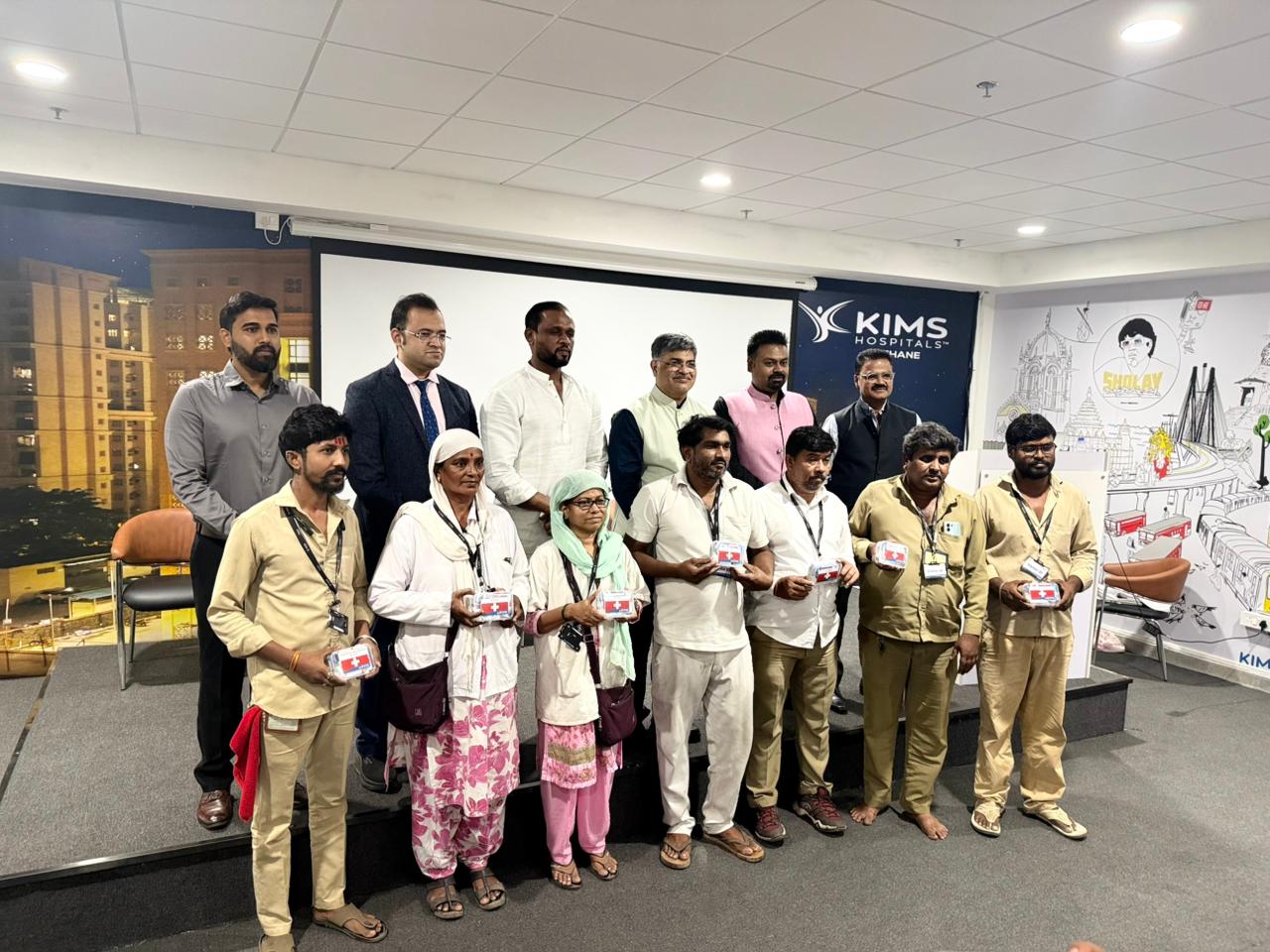
As road crashes and lifestyle-related cardiac arrests continue to claim hundreds of lives daily, KIMS Hospital is empowering auto-rickshaw drivers in Thane with CPR training and basic first aid. With traffic congestion often delaying emergency vehicles, auto-rickshaw drivers are frequently the first to reach accident sites and medical emergencies. This initiative equips them with life-saving skills and first-aid kits, enabling immediate support and early stabilization until professional medical care takes over.
The training includes live CPR demonstrations and hands-on training on mannequins, basic trauma care, and early patient stabilisation techniques, conducted by expert doctors from KIMS Hospital. Each trained driver is also being provided with a First-Aid Kit, strengthening on-ground emergency response.
The initiative is being carried out by KIMS Hospital in association with Amar Gharat Foundation, which is supporting community mobilisation and outreach among auto-rickshaw drivers in the region.
Speaking on the broader vision behind the initiative, Saurabh Gupta, Regional Director, KIMS Hospitals, said,
“Care during the golden hour often starts on the road. By training auto-rickshaw drivers as first responders and also offering them Oral cancer screenings, we are extending critical care beyond hospital walls and into the community.”
Highlighting the medical importance of early action, Dr. Anil Heroor, Director – Oncological Sciences, KIMS Hospitals, Thane, said,
“Many auto-rickshaw drivers are at higher risk of oral cancer due to tobacco use. Simple screenings like these can catch early signs and make a real difference.”
Dr. Hitesh Singhavi, Consultant – Head & Neck Oncosurgery, KIMS Hospitals , Thane, added,
“Oral cancer often goes unnoticed until it becomes serious. Bringing screening closer to people helps with early detection and better outcomes.”
Emphasising emergency preparedness, Dr. Ankit Biyani, HOD – Emergency Medicine, KIMS Hospitals, Thane, added,
“The first few minutes after an accident or medical emergency are critical. Training auto drivers helps bridge the gap between an emergency and ambulance care.”
Alongside the training program, KIMS Hospitals Thane is also conducting oral health screenings for participating auto-rickshaw drivers, with a focus on early detection of oral health issues among those who consume tobacco, reinforcing the hospital’s focus on preventive and community healthcare.
Through this initiative, KIMS Hospitals continues to extend care beyond hospital walls, empowering everyday citizens, strengthening emergency response systems, and building a safer, more prepared community in Thane.
7, Feb 2026
Changthang Shans clinch a clean-sheet victory at the 3rd Season of the Royal Enfield Ice Hockey League
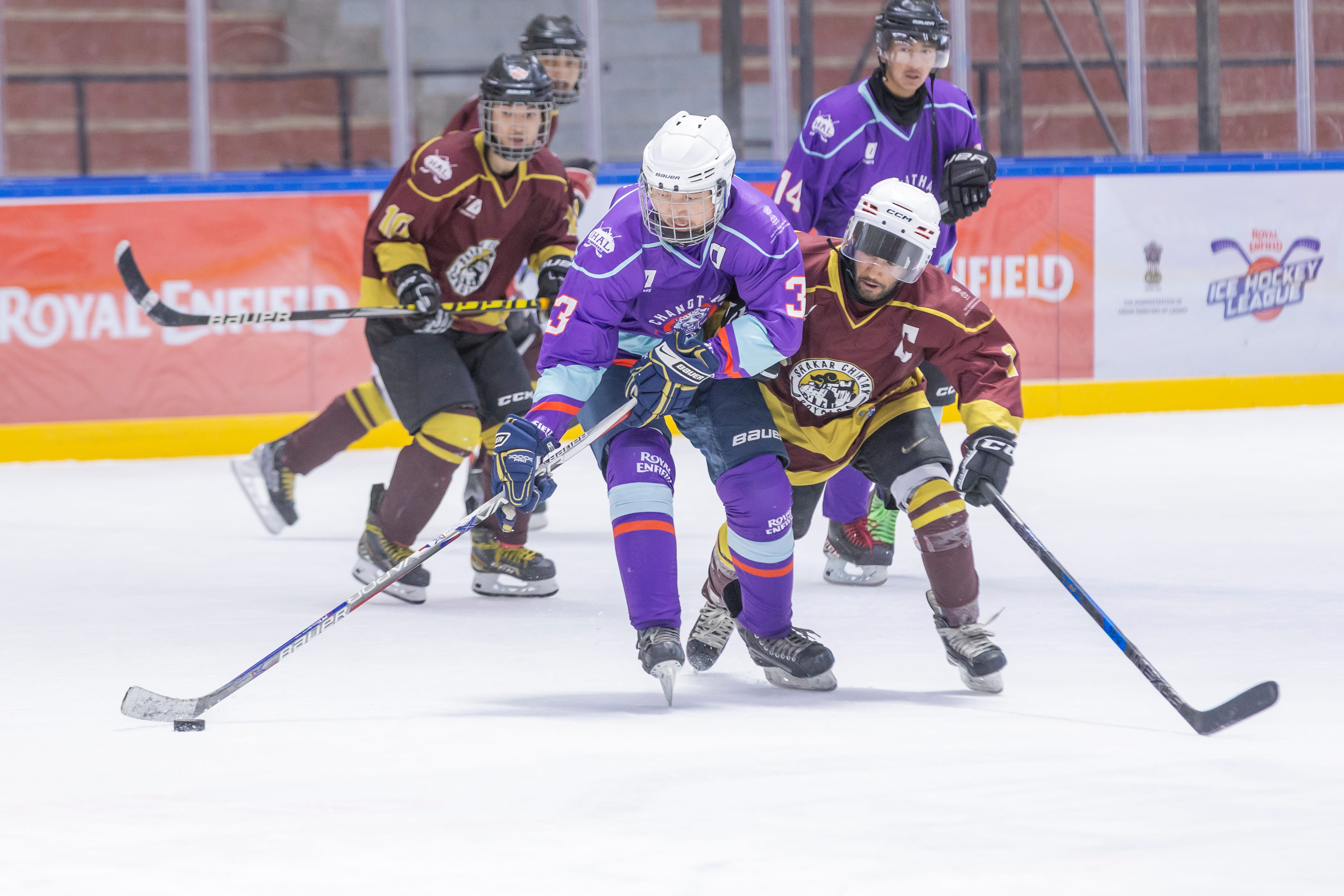
Leh, Feb 07: Changthang Shans recorded a 10-0 win over Shakar Chiktan Royals on Day nine of the Royal Enfield Ice Hockey League Season 3 at Nawang Dorjay Stobdan (NDS) Stadium, Leh. Organised in partnership with the UT Administration of Ladakh and the Ice Hockey Association of Ladakh, the day also featured an 11-2 win for Kangs Sing in the final game. Sham Wolves opened the day with a victory, while Humas Warriors secured a win later in the schedule.
Sham Wolves opened the day with a 9-2 win over Maryul Spawo, led by hat-tricks from Captain Stanzin Chosphel and Jigmet Chotar. Chosphel broke the deadlock late in the first period with a drag shot, then added two more with a drag shot and a tap-in. Chotar struck three times in the third period, completing his hat-trick with drag flicks. Lobzang Rangdol and Nawang Namgail added tap-ins, while Nima Dorjey scored with a drag shot to take the Wolves to nine. Maryul Spawo replied through the Stanzin duo, Stanzin Stanba with a tap-in in the second period, and Stanzin Tundup with a drag-shot finish in the closing seconds. Still, Sham Wolves stayed in control to seal the result.
Changthang Shans registered a comprehensive win 10-0 over Shakar Chiktan Royals. Rigzen Namgyal set the pace with a sliding tap-in in the opening minute, followed by Thinley Dorjey’s tap-in. The Shans continued to build through Rigzen Chosphel’s close-range finish and Stanzin Jambal’s well-timed goal in the second period. Padma Namgyal and Chamba Tsetan scored twice each to keep the score moving, while Tashi Sangdup added a tap-in before Tsewang Gyaltson rounded off the scoring to seal the 10-0 result.
Humas Warriors beat United Nubra 6-1 in the next game, doing most of the damage through the first two periods before closing it out with a controlled third. Mohd Issa opened the scoring in the latter half of the first period, and Waseem Bilal doubled the lead within the next minute. Bilal added his second with a sharp wrist shot, before Sahid Shabir finished with a backhand tap-in and Sajjad Hussain converted a simple tap-in to extend the advantage. Rashid Hassanain added another before the midway point of the game. United Nubra got on the board through Tashi Chotak’s wrist shot, but both sides tightened up defensively in the third period, with no further scoring as the Warriors sealed the 6-1 win.
Kangs Sing closed the day with an 11-2 win over Kharu Falcons, stacking goals across all three periods. Mushtaque Ahmad Giri opened the scoring in the first minute and went on to complete a hat-trick. Stanzin Phuntsog and Captain Karma Rigyal Stein added wrist-shot finishes to push Kangs into early control. The second period turned into a decisive surge, with Tsewang Nurboo and Dorje Gyaltsan scoring with flick shots, followed by Giri’s backhand flick and a slapshot, and Amir Din converting a tap-in as Kangs piled up eight goals in the frame. In the third, Wangail added his second with a drag shot, Wangchen scored with another drag shot, and Phuntsog struck once more, his second and the final goal, from a drag shot, to take Kangs to 11. Kharu’s two goals came through Jigmat Choster and Rigzin Punchok, who scored with tap-ins in the first and second periods.
Points Table
| Team | Played | Won | Draw | Lost | GF | GA | GD | Points | |
| 1 | Humas Warriors | 8 | 7 | 0 | 1 | 41 | 13 | 28 | 21 |
| 2 | Kangs Sing | 7 | 6 | 0 | 1 | 45 | 19 | 26 | 18 |
| 3 | Purig Warriors | 6 | 4 | 0 | 2 | 21 | 15 | 6 | 12 |
| 4 | Shakar Chiktan Royals | 6 | 4 | 0 | 2 | 23 | 30 | -7 | 12 |
| 5 | Changthang Shans | 6 | 3 | 0 | 3 | 33 | 17 | 16 | 9 |
| 6 | Zanskar Chadar Tamers | 5 | 3 | 0 | 2 | 19 | 11 | 8 | 9 |
| 7 | Sham Wolves | 6 | 3 | 0 | 3 | 22 | 19 | 3 | 9 |
| 8 | Kharu Falcons | 7 | 2 | 0 | 5 | 19 | 42 | -23 | 6 |
| 9 | United Nubra | 6 | 1 | 0 | 5 | 10 | 25 | -15 | 3 |
| 10 | Changla Blasters | 7 | 1 | 0 | 6 | 16 | 35 | -19 | 3 |
| 11 | Maryul Spawo | 6 | 1 | 0 | 5 | 13 | 36 | -23 | 3 |
GF – Goals For, GA – Goals Against, GD – Goal Difference
Day ten of the League (February 07, 2026) begins with Changla Blasters facing Changthang Shans. Zanskar Chadar Tamers then take on Purig Warriors, followed by the women’s fixture between Shakar Chiktan Queens and Humas Queens. Sham Wolves meet United Nubra later in the day, before Kharu Falcons face Shakar Chiktan Royals in the final game.
As the Royal Enfield Ice Hockey League Season 3 approaches its semi-final stages, the competition has emerged as noticeably tighter across both the men’s and women’s categories. Teams from regions such as Kargil, Zanskar, Purig, Shakar and Humas have delivered consistently stronger performances this season, reflecting the impact of structured training and wider regional participation. With more teams competing at comparable levels, the league continues to build momentum on the ice while drawing sustained local engagement that anchors it firmly in Ladakh’s winter sporting culture.
7, Feb 2026
Gateway Distriparks Reports Strong Q3 FY26 Performance, Declares Special Dividend
Delhi, Feb 07: Gateway Distriparks Limited (GDL), one of India’s leading multimodal logistics companies, announced its financial results for the quarter ended December 31, 2025 (Q3 FY26), delivering strong operational and financial performance despite Q3 traditionally being a seasonally weaker quarter.
Operational Performance
During Q3 FY26, GDL recorded a total throughput of 1,90,675 TEUs, reflecting a 4.74% year-on-year growth. Year-to-date (YTD) throughput stood at 5,75,887 TEUs, registering a 6.61% YoY increase.
-
Rail Vertical:
-
Q3 FY26: 1,02,575 TEUs (up 10.97% YoY)
-
YTD FY26: 2,97,097 TEUs (up 11.18% YoY)
-
-
CFS Vertical:
-
Q3 FY26: 88,100 TEUs
-
YTD FY26: 2,78,790 TEUs (up 2.13% YoY)
-
Financial Highlights
For Q3 FY26, the Company reported strong growth across key financial metrics:
-
Total Revenue: Up 39.10% YoY
-
EBITDA: Up 26.67% YoY
-
Profit Before Tax (PBT): Up 11.87% YoY
-
Profit After Tax (PAT): Maintained steady performance
On a YTD basis, GDL recorded:
-
Total Revenue: Up 45.85% YoY
-
EBITDA: Up 28.43% YoY
-
PBT: Up 16.63% YoY
-
PAT: Up 12.47% YoY
The financials include the consolidation of Snowman Logistics Limited as a subsidiary effective December 24, 2024. Exceptional income related to fair valuation recorded in FY25 has been excluded to ensure comparability.
Dividend Announcement
The Board of Directors declared a Second Interim Dividend for FY26, along with a Special Interim Dividend.
The special dividend is a one-time, non-recurring payout, marking GDL’s achievement of a net debt-free position for the first time since inception, and commemorating 30 years since the acquisition of land for its first facility at Nhava Sheva CFS.
Management Commentary
Prem Kishan Dass Gupta, Chairman & Managing Director, Gateway Distriparks Limited, said:
“Normally Q3 is a weaker quarter, but our performance has remained strong and consistent with the momentum seen in recent quarters. We are optimistic about the future, particularly with the Free Trade Agreement signed with the EU and the trade deal with the USA, which are expected to significantly boost India’s global trade once ratified.”
He added that the Company has commenced domestic rail services from MMLP New Ankleshwar and is witnessing encouraging traction. GDL is expanding its rail capacity through the addition of new high-capacity rakes and the upgradation of existing leased rakes, taking the total rake count to 37 by the end of Q1 FY27.
Growth Initiatives
GDL has announced the acquisition of land for setting up a greenfield Inland Container Depot (ICD) in Indore, located near the Pithampur Industrial Area, one of India’s fastest-growing industrial regions. The Company continues to actively explore opportunities to further expand its rail and logistics network.
Snowman Logistics is also expected to benefit from upcoming trade agreements, particularly with the revival of seafood exports, and is planning to expand its warehouse network through a combination of owned assets and asset-light build-to-suit models.
7, Feb 2026
Suryakumar Yadav’s Alma Mater Hosts T20 World Cup Trophy Tour
ICC Men’s T20 World Cup 2026 Trophy Tour with DP World Visits the Alma Mater of India’s T20I Skipper Suryakumar Yadav Under the ‘Class of ’26’ Initiative
Navi Mumbai, Feb 07 : The ICC Men’s T20 World Cup 2026 Trophy Tour with DP World marked a significant stop at Pillai College of Engineering, Navi Mumbai, the former college of India’s current T20I skipper Suryakumar Yadav, as part of the ‘Class of ’26’ initiative. The visit celebrated the academic journey of the Indian captain while inspiring students by bringing them face-to-face with one of cricket’s most coveted trophies.
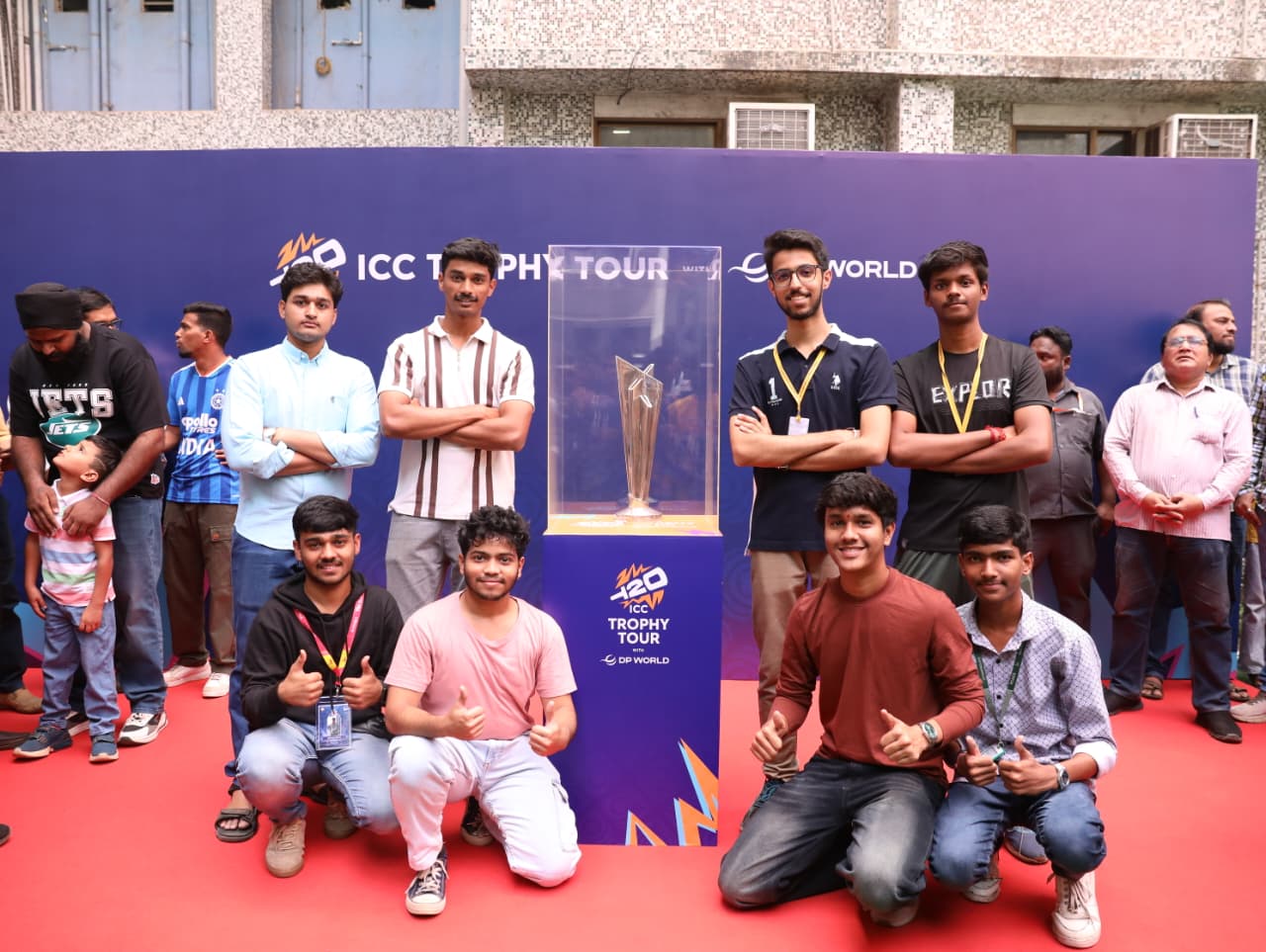
The event was held in the presence of senior dignitaries from the Mahatma Education Society, institutional heads, and faculty members, with students actively participating in cricket-themed engagements including trivia sessions, tap-the-ball challenges, and wicket-taking activities, creating a vibrant and competitive atmosphere around the trophy on campus.
The trophy then travelled to Rizvi College of Arts, Science and Commerce, Mumbai, the former college of India all-rounder Shivam Dube. The event was attended by senior dignitaries from the Rizvi Education Society, along with the principal and faculty members of Rizvi College of Arts, Science and Commerce. Students interacted with the official mascots while taking part in competitive engagements.
Another stop on the tour was Delhi Public School, Amritsar, the former school of India all-rounder Abhishek Sharma. The visit took place in the presence of Abhishek Sharma’s parents, Mr. Raj Kumar Sharma and Mrs. Manju Sharma, along with school dignitaries and faculty members. Students actively participated in activities including trivia sessions and tap-the-ball challenges, making the experience engaging and memorable.
The trophy also visited Karam Devi Memorial Academy, the former school of India bowler Kuldeep Yadav, where the activation took place in the presence of Kuldeep Yadav’s father and his close friend, along with school dignitaries, representatives from the Kanpur Cricket Association, as students participating in cricket-themed engagements including trivia sessions.
The trophy further travelled to Chandigarh University, Mohali, the former college of India bowler Arshdeep Singh, where the event was attended by Executive Director Student Affairs and Administration, along with faculty members. Students actively participated in interactive activities such as trivia sessions and tap-the-ball challenges, adding to the excitement around the visit.
Through the ‘Class of ’26’ initiative, the Trophy Tour with DP World inspired the next generation as the team looks to defend its title on home soil.
Fans can follow the journey on the official Trophy Tour social media handle, @icctrophytour.
Fans can secure their spots for the ICC Men’s T20 World Cup 2026, with tickets starting at just INR 100 in India (approximately USD 1.11) and LKR 1,000 in Sri Lanka (approximately USD 3.26).
The ICC Men’s T20 World Cup 2026 is scheduled to take place from 7 February to 8 March across venues in India and Sri Lanka, including Narendra Modi Stadium (Ahmedabad), MA Chidambaram Stadium (Chennai), Arun Jaitley Stadium (New Delhi), Wankhede Stadium (Mumbai), Eden Gardens (Kolkata), R. Premadasa Stadium (Colombo), Sinhalese Sports Club Cricket Ground (Colombo) and Pallekele International Cricket Stadium (Kandy).


