


5, Feb 2026
Samsung Sets Two Guinness World Records with its India #WithGalaxy Photography Campaign
Feb 5: Samsung, India’s largest consumer electronics brand, today announced that its nation-wide India #WithGalaxy photography challenge for Galaxy S Series has made it to the Guinness World Records (GWR). This marks a milestone in smartphone photography and national storytelling.
Launched in 2010, the Galaxy S series has endeared consumers over the years with its revolutionary photography, premium design and easy-to-use functionality. It has brought users closer to the world around them, made their lives convenient, and offered them unprecedented mobile experiences with one groundbreaking innovation after another
A Record-Breaking Achievement
The campaign captured the essence of the nation through the lens of the Galaxy S Series and set two new world records:
-
Largest Smartphone Photography Competition: Samsung has created the largest smartphone photography competition in history.
-
Most Contributions to an online photo sentence (artwork): The photo submissions have formed one of the world’s largest collaborative digital artwork celebrating creativity and digital participation across India’s rich cultural tapestry.
“The India #WithGalaxy campaign unites people and celebrates the essence of a nation. By setting two Guinness World Records, we have showcased the capabilities of the Galaxy S Series and amplified the voices of our consumers who celebrate India’s diversity, beauty, and spirit through their lenses. This initiative reflects Samsung’s commitment to fostering innovation and cultural storytelling, empowering individuals to share their unique perspectives. We are immensely proud of this achievement and grateful to everyone who contributed to making this milestone possible,” said Raju Pullan, Senior Vice President, MX Business, Samsung India.
The campaign ran from December 30, 2025 to January 26, 2026 and invited Indian citizens to capture real moments in the country using the Galaxy S Series. The initiative garnered a total of 31331 submissions that reflect the country’s diversity, beauty, and spirit, and created a vibrant visual mosaic of “India #WithGalaxy”. The campaign was anchored by celebrated Indian filmmaker Kabir Khan and 30+ regional photographers.
Celebrating India’s Storytelling Through Galaxy S Series, the India #WithGalaxy campaign captured four key themes
-
Faces of India: Portraits of real people that showcase the country’s warmth and diversity.
-
Sights of India: The breathtaking natural and architectural beauty, from the Himalayas to coastal landscapes.
-
Spirit of India: Everyday moments of pride, resilience, and unity that shape the country’s identity.
-
Colours of India: The vibrant textures, attire, and food that make every corner of the nation visually distinct.
A Cultural Celebration Beyond Technology
The campaign highlights the Galaxy S Series’ technological prowess, and also weaves in a deep cultural narrative. Samsung has reinforced its commitment to fostering cultural relevance and people-powered storytelling by enabling citizens to document their India stories. Samsung extends its gratitude to all participants, creators, and partners who made this record-breaking achievement possible. As we celebrate this milestone, we reaffirm our mission to push the boundaries of innovation and inspire global storytelling through technology. For more information about the India #WithGalaxy campaign and Samsung Galaxy’s camera technologies
- 0
- By Neel Achary

5, Feb 2026
SK Telecom Announces FY 2025 Financial Results, Advances AI Transformation and 5G Growth
Seoul, Feb 5: SK Telecom (NYSE: SKM) today announced its consolidated financial results for the fiscal year ended 2025, reporting revenue of KRW 17.0992 trillion, operating income of KRW 1.0732 trillion, and net income of KRW 375.1 billion, in accordance with Korean International Financial Reporting Standards (K-IFRS).
On a year-on-year basis, consolidated revenue declined by 4.7% from KRW 17.9406 trillion in FY 2024, while operating income fell by 41.1% from KRW 1.8234 trillion. Net income declined by 73.0% compared to KRW 1.3871 trillion in the previous year. On a non-consolidated basis, SK Telecom recorded revenue of KRW 12.0511 trillion and operating income of KRW 811.8 billion for the year.
For the fourth quarter of FY 2025, consolidated revenue stood at KRW 4.3287 trillion, a decline of 4.1% year-on-year, while operating income was KRW 119.1 billion, down 53.1% compared to the same quarter last year. Net income for the quarter was KRW 97.0 billion, reflecting a year-on-year decrease of 75.4%. On a non-consolidated basis, fourth-quarter revenue was KRW 3.0837 trillion, operating income was KRW 130.8 billion, and net income was KRW 106.0 billion.
Despite financial headwinds, including the lingering impact of last year’s cybersecurity incident, SK Telecom made progress in restoring customer trust and stabilising its core telecom business. As of the end of 2025, the company’s 5G subscriber base reached 17.49 million, returning to net growth in the fourth quarter with approximately 230,000 additions compared to the previous quarter. Fixed-line subscribers, including high-speed internet users, also returned to pre-incident net growth levels in Q4.
In 2026, SK Telecom will prioritise Customer Value Innovation while strengthening its fundamental competitiveness, with a clear focus on improving profitability and laying the groundwork for sustainable, long-term growth.
AI Business Gains Momentum
SK Telecom’s artificial intelligence business continued to gain traction during FY 2025. Revenue from AI Data Centers (AIDCs) reached KRW 519.9 billion, representing a strong year-on-year growth of 34.9%, driven by higher utilisation rates at the Gasan (Seoul) and Yangju (Gyeonggi) data centres, as well as the acquisition of the Pangyo data centre.
The Ulsan AIDC, a joint project with Amazon Web Services (AWS), progressed steadily following its groundbreaking in September 2025. Looking ahead, SK Telecom plans to break ground on an additional data centre in Seoul in 2026, strengthen its AIDC solution business, and expand its submarine cable operations to create synergies with its data centre infrastructure.
The company also advanced to Phase 2 of the government-led Sovereign AI Foundation Model project in January 2026, reinforcing its competitiveness in sovereign AI and positioning it to capture further opportunities in government-driven AI initiatives.
Driving AI Integration Across Telecommunications
As part of its accelerated AI Transformation (AX) strategy, SK Telecom plans to integrate AI across all areas of its telecommunications business in 2026, including products and marketing, network operations, and distribution channels. AI-driven automation in network design, deployment, and operations is expected to enhance customer experience, improve productivity, and support profitability recovery.
The company will also advance its AI-based Customer Lifetime Value (LTV) modelling to deliver more personalised products, membership benefits, and distribution experiences tailored to individual customer preferences.
Commenting on the outlook, Park Jong-seok, CFO of SK Telecom, said, “This year, SK Telecom will drive customer value innovation across all areas of our telecommunications and AI businesses, and make every effort to improve our financial performance.”
The conference call discussing SK Telecom’s FY 2025 earnings results will be available via the company’s website on February 5, 2026, from 16:00 Seoul Time.
5, Feb 2026
V-Guard Q3 FY26 Revenue Rises 10.6% Despite One-Time Labour Code Impact on Profit
V-Guard Industries Reports 10.6% Revenue Growth in Q3 FY26; Profit Impacted by One-Time Labour Code Charge
Kochi, Feb 05: V-Guard Industries Ltd., a leading Consumer Electricals and Electronics company, announced its unaudited consolidated financial results for the quarter and nine months ended December 31, 2025.
Q3 FY 2025–26 Highlights
-
Consolidated Net Revenue from Operations stood at ₹1,403.51 crore, registering a 10.6% year-on-year growth compared to ₹1,268.65 crore in Q3 FY25.
-
Consolidated Profit After Tax (PAT) for the quarter was ₹57.06 crore, reflecting a 5.2% decline from ₹60.22 crore in the corresponding period last year.
-
The decline in reported PAT was primarily due to a one-time exceptional charge of ₹22.11 crore related to the reassessment of employee benefit obligations under the New Labour Codes.
-
Underlying PAT (excluding the exceptional item) grew by a healthy 22.3% year-on-year, indicating strong operational performance.
Nine Months Ended December 31, 2025
-
Consolidated Net Revenue from Operations for the nine-month period was ₹4,210.51 crore, up 4.2% from ₹4,039.74 crore in the same period last year.
-
Consolidated PAT stood at ₹196.20 crore, compared to ₹222.58 crore in the corresponding period of the previous year, reflecting an 11.9% decline, largely due to the exceptional labour code-related impact.
Management Commentary
Commenting on the performance, Mr. Mithun K. Chittilappilly, Managing Director, V-Guard Industries Ltd, said:
“The business delivered double-digit growth in the third quarter, primarily driven by strong volume growth in the electrical segment, which also witnessed commodity price inflation.
In light of the notification issued by the Ministry of Labour and Employment on the New Labour Codes, the Company reassessed its employee benefit obligations and recognised an incremental charge of ₹22.11 crore as an exceptional item during the quarter.
Overall margins remain resilient, and as we approach the upcoming summer season, we are optimistic about delivering strong results going forward.”
Outlook
V-Guard continues to focus on driving volume-led growth, managing cost pressures effectively, and leveraging seasonal demand, particularly in its electrical and consumer durable segments. The Company remains confident of sustaining momentum in the coming quarters.
5, Feb 2026
Gartner to Spotlight Cybersecurity Trends for 2026 at Security & Risk Management Summit in Sydney
Sydney, Australia, Feb 5: The rapid rise of artificial intelligence, escalating geopolitical tensions, regulatory volatility and an expanding threat landscape are reshaping the global cybersecurity environment, according to Gartner, Inc. These forces are driving the most critical cybersecurity trends for 2026, which will be explored at the Gartner Security & Risk Management Summit, taking place March 16–17 in Sydney.
“Cybersecurity leaders are navigating uncharted territory as multiple disruptive forces converge,” said Alex Michaels, Director Analyst at Gartner. “This environment is testing the limits of teams and traditional models, demanding new approaches to cyber risk management, resilience and resource allocation.”
Gartner identified six cybersecurity trends that will significantly impact governance models, secure emerging digital frontiers and guide the responsible adoption of AI.
Agentic AI Requires Strong Cybersecurity Governance
The growing use of agentic AI by employees and developers is introducing new attack surfaces. The rise of no-code/low-code platforms and “vibe coding” is accelerating the proliferation of unmanaged AI agents, unsecured code and potential regulatory violations. Gartner advises organizations to identify both sanctioned and unsanctioned AI agents, implement robust controls and prepare incident response playbooks to manage emerging risks.
Regulatory Volatility Accelerates Cyber Resilience
Geopolitical uncertainty and evolving global regulations are making cybersecurity a board-level business risk. With increasing executive accountability, compliance failures can result in significant penalties and reputational damage. Gartner recommends closer collaboration between cybersecurity, legal, procurement and business teams, along with alignment to recognized control frameworks and proactive management of data sovereignty issues.
Post-Quantum Computing Moves from Theory to Action
Advances in quantum computing are expected to compromise current asymmetric cryptography by 2030. Gartner urges organizations to begin adopting post-quantum cryptography now to protect sensitive data from “harvest now, decrypt later” attacks and to ensure long-term cryptographic agility.
Identity and Access Management Evolves for AI Agents
The rise of machine identities is challenging traditional IAM models. Issues around identity registration, credential automation and authorization for AI agents are increasing access-related risks. Gartner recommends a risk-based investment approach, focusing on high-impact gaps while leveraging automation to maintain compliance and innovation.
AI-Driven Security Operations Transform SOCs
AI-enabled security operations centers (SOCs) are changing operational norms, creating new workforce, cost and skills challenges. While AI enhances alert triage and investigations, Gartner emphasizes the importance of human-in-the-loop frameworks, workforce upskilling and clear strategic alignment to maintain resilience.
GenAI Disrupts Traditional Security Awareness Programs
As GenAI adoption accelerates, traditional cybersecurity awareness programs are proving ineffective. A Gartner survey conducted in 2025 found that over 57% of employees use personal GenAI tools for work, and 33% admitted entering sensitive information into unapproved platforms. Gartner recommends shifting to adaptive, behavior-based training with AI-specific guidance, supported by stronger governance and clear policies for authorized use.
Gartner clients can access deeper insights in “Top Trends in Cybersecurity for 2026.” Additional guidance is available in the complimentary ebook “AI in Cybersecurity: Minimize Risks and Maximize Impact.”
Gartner Security & Risk Management Summits
Gartner analysts will present the latest insights for security and risk management leaders at upcoming summits worldwide, including March 9–10 in Mumbai, March 16–17 in Sydney, June 1–3 in National Harbor (MD), July 22–24 in Tokyo, August 4–5 in São Paulo, and September 22–24 in London. Updates from the events can be followed using #GartnerSEC on X and LinkedIn.
5, Feb 2026
Ahmedabad Housing Prices Rise 8 percent YoY on Strong End-User Demand: Aaiji Group
Lalit Parihar, Managing Director, Aaiji Group, a Dholera-based real estate firm
“Ahmedabad’s 8% year-on-year rise in housing prices reflects the city’s fundamentally strong, end-user-driven demand. Growth here is being powered by genuine demand, improving infrastructure, and sustained economic activity across Gujarat. This steady appreciation reinforces Ahmedabad’s position as one of India’s most affordable and stable real estate markets for both homebuyers and long-term investors.”
5, Feb 2026
Octobotics Raises INR 10 Cr to Advance Asset Inspection Technology
AI-Enabled NDT Robotics Startup Octobotics Raises ~₹10 Crore in Series Seed Funding to Transform Asset Integrity Across Industrial and Rail Sectors
New Delhi, Feb 05: Octobotics Tech Pvt Ltd, an industrial robotics startup focused on AI-enabled Non-Destructive Testing (NDT) solutions, has successfully raised approximately ₹10 crore in a Series Seed funding round. The round was led by Navam Capital, with participation from BYT Capital.
The funds will be utilised to accelerate product development, strengthen field validation, and support Octobotics’ international expansion across key markets.
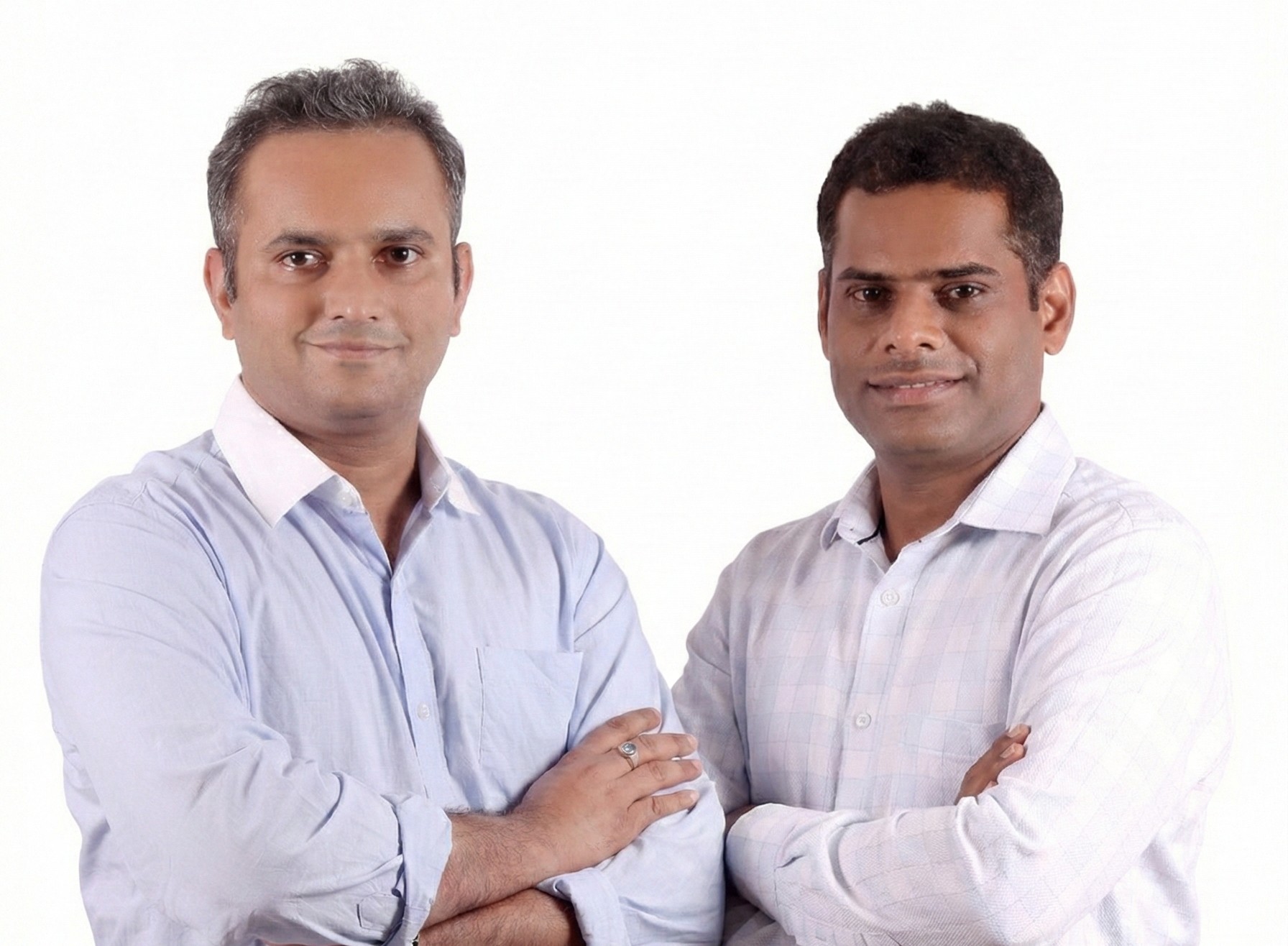
Founded in 2020 by Ishan Bhatnagar and Gulshan Kumar, Octobotics designs and deploys vertically integrated, AI-powered NDT robotics platforms engineered to operate in harsh and high-risk environments. The company’s solutions address inspection challenges across asset-intensive sectors including Oil & Gas, Chemicals & Petrochemicals, Marine, Power, Fertilisers, and Railways.
Octobotics currently serves leading organisations such as the Indian Navy, IOCL, Saudi S-Chem, BPCL, HPCL, Aarti Industries, and GSFC, and reported ₹2 crore in annual revenue in the last financial year.
“This capital will support deeper R&D for vertical integration, enable us to pursue IECEx and ATEX certifications, and help scale our operations across India, Singapore, and the Middle East,” said Ishan Bhatnagar and Gulshan Kumar, Co-Founders of Octobotics.
“Our distribution-led approach allows these systems to work alongside human operators, significantly reducing manual intervention in hazardous environments.”
Commenting on the investment, Dr. Anjan Ray, Investment Partner at Navam Capital, said,
“Octobotics is addressing critical maintenance challenges in infrastructure-heavy industries. Their vertically integrated technology stack combined with a scalable distribution model positions them well to serve the global inspection market.”
In industries where safety, operability, and asset uptime are key competitive drivers, conventional manual inspection methods continue to struggle in high-risk zones such as corroded surfaces, confined spaces, elevated structures, and complex geometries. Octobotics addresses these challenges by automating hazardous inspection tasks and transforming raw field data into actionable asset integrity intelligence.
By enabling early detection of defects, corrosion, and material loss, the company helps operators reduce operational risk, minimise unplanned downtime, and improve inspection reliability. Its robotic and sensor-driven workflows generate high-fidelity data, which is analysed using predictive analytics to deliver a unified, decision-ready view of asset health.
Octobotics’ product portfolio includes:
-
PA RailScan – a PAUT-based system for rail track weld inspection, delivering consistent defect detection and repeatable inspection quality at scale
-
Weld Sensei – an automated inspection platform designed for precise data acquisition in hazardous environments where manual inspection is unsafe
-
Reach Master – a specialised NDT solution for inspections in hard-to-reach and high-elevation zones
The founders first connected at MERI Kolkata and later built careers in complex international operations. Ishan Bhatnagar previously managed maritime operations and automation at BW Maritime (Singapore), while Gulshan Kumar worked as an Operations & Maintenance Engineer at Belgian dredging major D.E.M.E. Inspired by the “Make in India” initiative, they returned to build data-driven, field-ready inspection solutions for critical infrastructure.
5, Feb 2026
Zendesk Appoints Craig Flower as Chief Operating Officer
Bangalore, India, Feb 5: Zendesk recently announced the appointment of Craig Flower as Chief Operating Officer. In this role, Flower is responsible for strengthening customer engagement and service across all parts of the business, accelerating the transition to AI, and improving operational performance. His appointment underscores Zendesk’s ongoing AI-first transformation and commitment to delivering exceptional service.

Flower is a seasoned technology executive who previously served as Zendesk’s Chief Information Officer. As CIO, Flower positioned the IT team to connect and support all parts of the company through updated digital tools, better insights and improved service through AI and machine learning.
“AI is fundamentally reshaping the future of customer service, demanding that all those serious about success operate with radical shifts in speed and efficiency,” said Tom Eggemeier, CEO of Zendesk. “Craig is an unmatched leader with a relentless commitment to our customers, operations and transformation who will bring teams together and turn our vision into measurable outcomes, ensuring we stay aligned and focused on delivering outstanding value to our customers.”
As COO, Flower will concentrate on maximizing the value customers gain from Zendesk’s AI tools by simplifying their adoption, delivering exceptional support, and fostering knowledge sharing through a dedicated center of excellence where Zendesk customers and employees can exchange key learnings and best practices. He will accelerate company strategy by innovating and streamlining processes, aligning operations, and enabling faster execution.
“Modern tech COOs blend customer focus, business strategy, technology, and operational excellence. Zendesk has the right strategy and real momentum; we’re expanding what’s already working to drive alignment and execution week in and week out,” said Craig Flower, COO of Zendesk. “The window is wide open for us to lead AI for Service by staying customer-obsessed, accelerating an AI-first transformation across how we serve, sell, and operate, and achieving strong, measurable results through efficient, modern processes. Strategy matters, but execution wins.”
Prior to Zendesk, Flower served as Chief Technology Officer at TriNet, where he replatformed products, digitized key processes, and accelerated the transition to cloud. Earlier in his career, Flower served as Chief Information Officer at Hewlett-Packard, where during his over 20 year tenure he drove business model innovation alongside process and IT transformation, contributing to significant revenue growth and margin expansion.
5, Feb 2026
ICAR–IARI–SMSF Hosts Seminar and Training on Regenerative Agriculture and Precision Farming
Seminar-cum-Training on Regenerative Agriculture and Precision Farming Organized under ICAR–IARI–SMSF Collaborative Project
A seminar-cum-training programme on “Regenerative Agriculture and precision Farming integration for sustainable production and climate resilience” was organized at Water Technology Centre, Indian Council of Agricultural Research (ICAR), New Delhi, under the ICAR–IARI–SMSF collaborative project “Application of Advanced Technologies for Improved Productivity and Resource-Use Efficiency in Regenerative Agriculture Production Systems.”
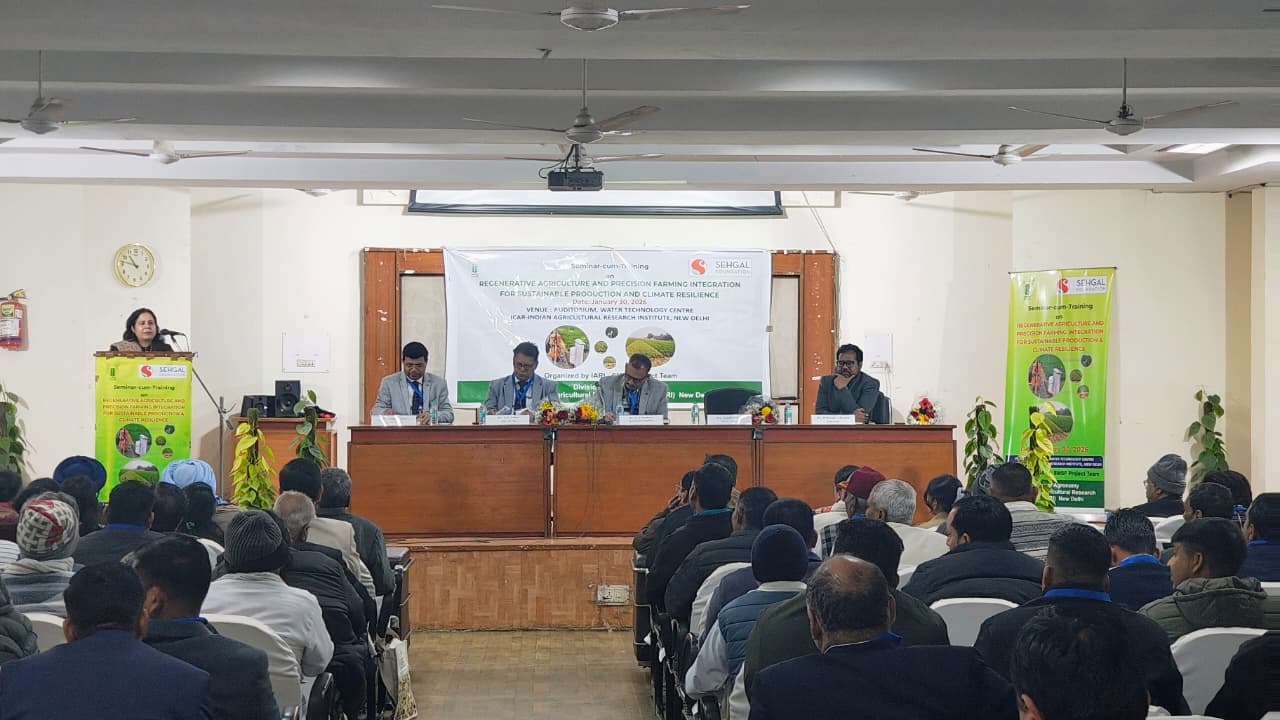
The objective of the seminar-cum-training programme was to create awareness among farmers about regenerative agriculture and precision farming an approach aimed at restoring and improving soil health while sustaining crop productivity and farm profitability. Regenerative and precision farming agriculture emphasizes managing agricultural systems in ways that enhance natural soil processes, improve resource-use efficiency, and build resilience to climate extremes.
Dr. Sanjay Singh Rathore, Head, Division of Agronomy, emphasized the importance of conserving natural resources such as water and soil, stating that modern farming must be guided by both “Pani and Gyani” (water and knowledge). He highlighted that crop cultivation should be undertaken with the precise application of water, and that knowledge of advanced cultivation technologies will play a vital role in enhancing agricultural productivity and restoring soil health.
Dr. P. K. Sahoo, Head, Division of Agricultural Engineering, briefed the participants on the use of farm machinery in crop cultivation, covering operations from planting to harvesting. He also explained to the farmers the utilization of paddy straw through both in-situ and ex-situ management practices, including the processing of paddy straw.
Dr. Anchal Dass, Principal Scientist, Division of Agronomy, explained that crop diversification plays a vital role in improving soil fertility. He shared that it leads to better soil aggregation, increased organic matter, improved water infiltration and moisture retention. By strengthening soil functions, regenerative agriculture improves the farming system’s ability to withstand drought, heat stress, and erratic rainfall, making it a critical component of climate-resilient agriculture.
Ms. Anjali Makhija, CEO and Trustee, S M Sehgal Foundation (SMSF), highlighted the importance of regenerative agriculture in restoring ecological balance and strengthening long-term farm sustainability. She shared insights into SMSF’s initiatives focused on reducing dependence on chemical fertilizers, promoting crop residue management through such as Super Seeder machines, enhancing the inclusion of women farmers, advancing water-efficient irrigation practices, and supporting regenerative coffee cultivation in Karnataka.
Dr. P. S. Brahmanand, Director, Water Technology Centre, emphasized the role of climate-smart technologies in building resilient farming systems. Cautioning against the impacts of glacier melt and increasing water security challenges, he stressed a farmer-first approach.
Prof. T. K. Das, Division of Agronomy, and Dr. Livleen Shukla, Principal Scientist, Division of Microbiology, IARI, apprised the farmers about conservation tillage practices, weed management strategies, and crop residue management using decomposer technology.
The programme brought together over 130 participants, including scientists, farmers, practitioners, and representatives from non-governmental organizations. More than 60 farmers from Kaithal, Kurukshetra, Mahendragarh, Pingwan and Alwar actively participated, making the event highly interactive and practice-oriented.
A major highlight was the on-ground field visit, which enabled farmers to observe the functional models. During the visit, water-saving and precision-based technologies were demonstrated and explained by Dr. Anchal Dass, Dr. Arjun Singh, Shri Rajpal Singh, and Dr. Arti Bhatia at the IARI experimental fields. Farmers expressed great satisfaction with the field visit, noting that seeing the techniques in practice helped them better understand the new technologies.
A panel discussion on emerging innovations such as AI-based precision tools, smart irrigation sensors, smartphone applications, and cybersecurity in digital agriculture provided a platform for farmers to interact directly with agricultural scientists. Shri Chandrasekhar Banukule, Saguna Baug a progressive farmer practicing SRT-based regenerative and conservation agriculture, shared practical experiences, motivating fellow farmers to adopt sustainable, technology-enabled practices.
The seminar-cum-training programme successfully facilitated knowledge exchange between scientists and farmers, underscored the importance of technology-driven regenerative agriculture, and strengthened collaborative efforts toward sustainable agricultural production and climate resilience.
5, Feb 2026
Škoda Auto India Expands Kylaq Line-Up, Celebrates One Year of Strong Growth in the Sub-4m SUV Segment
Mumbai, Feb 05: Škoda Auto India, following its most successful year of sales in 2025 and the introduction of the new Kushaq, continues to accelerate growth with a strengthened product portfolio. Advancing its strategy of democratising European technology for Indian customers, the brand has expanded the variant mix of its best-selling sub-4m SUV, the Škoda Kylaq, offering greater choice, enhanced features, and improved value across the line-up.

Since its launch, the Kylaq has emerged as a cornerstone of Škoda Auto India’s growth story. With over 50,000 units sold, the Kylaq has played a pivotal role in the company’s best-ever sales performance during its 25th year in India. Its strong appeal is driven by a compelling blend of safety, driving dynamics, technology, and value, firmly positioning the Kylaq as a key contender in one of India’s most competitive SUV segments.
Commenting on the Kylaq’s first anniversary, Ashish Gupta, Brand Director, Škoda Auto India, said,
“The Kylaq is a strong testament to our long-term commitment to India and marked our entry into the market’s most competitive segment. Crossing the 50,000 sales milestone reflects the growing trust customers place in the Škoda brand. To build on this momentum, we are expanding the Kylaq range with customer-led enhancements and making it the most accessible vehicle in its segment with a real automatic transmission. With a wider and more structured range, and more exciting additions planned later this year, the Kylaq continues to embody European technology, strong value, and engaging driving for Indian roads.”
Expanded Variant Portfolio
For 2026, the Kylaq range grows from four variants and seven price points to six variants and eleven price points, ensuring greater flexibility for buyers. The newly introduced Classic+ variant is positioned between the Classic and Signature trims, while the Prestige+ now sits at the top of the line-up, enhancing choice across entry, mid, and premium offerings.
Democratising European Technology
Reinforcing Škoda Auto India’s accessibility-first approach, the Kylaq Classic+ introduces several premium features at a competitive entry point. These include an electric sunroof, cruise control, Auto IRVM, rain-sensing wipers, LED headlights and taillights, LED DRLs, and a multi-function steering wheel. Notably, it becomes the most accessible vehicle in its segment with a full-fledged automatic torque converter, further strengthening its value proposition.
Enhanced Features Across the Line-Up
Responding to customer demand, the Signature and Signature+ variants now receive additional features such as an electric sunroof, paddle shifters for the automatic, rain-sensing wipers, rear wiper and washer, and LED reading lamps. The premium end of the range has also been expanded with the bifurcation of the Prestige into Prestige and Prestige+, offering more flexibility among fully equipped variants.
Safety and Ownership Assurance
The Škoda Kylaq continues to set benchmarks as the safest ICE vehicle in its segment, earning the highest safety ratings in Bharat NCAP crash tests. All variants come standard with six airbags and over 25 safety features, with higher trims offering more than 40 safety features. Customers also benefit from a best-in-segment four-year standard warranty, four years of roadside assistance, and four labour-free services, including periodic maintenance at 15,000 km and 30,000 km, along with newly introduced Škoda Check-in services at 1,000 km and 7,500 km—enhancing transparency and peace of mind.
Anniversary Offers
To mark one year of the Kylaq’s success, Škoda Auto India has announced limited-period anniversary offers on select variants, with benefits of up to ₹50,000. Additionally, the one-year Škoda Maintenance Package for the Kylaq is available at a 50% discount, along with an assured gift for every Kylaq customer. These offers are valid until February 28, 2026.
5, Feb 2026
Paras Health Treats Over 20,000 Cancer Patients in a Year Amid Rising Cancer Burden in India
Paras Health Highlights Rising Cancer Burden in India; Treats Over 20,000 Cancer Patients Across Its Network in a Year
Delhi NCR, Feb 5: In the wake of World Cancer Day, Paras Health released consolidated oncology data revealing that over 20,000 new cancer patients were diagnosed and treated between January 2025 and January 2026 across its hospitals in Delhi NCR, Patna, Panchkula, Kanpur, Udaipur, Srinagar, Ranchi, and Darbhanga. The data underscores the growing cancer burden in India and highlights the urgent need to expand access to specialised, high-quality oncology care beyond metropolitan centres to emerging regions.
Over the past three years, hospitals across the Paras Health network have recorded a steady year-on-year rise in cancer cases, with a sharper increase observed post-2024. While larger centres continue to manage higher patient volumes, hospitals in Tier 2 and Tier 3 locations have also reported consistent growth, driven by improved diagnostic capabilities, stronger referral pathways, and rising public awareness around early cancer detection. Cancer remains most prevalent in the 40–70 year age group, with the average patient age ranging between 50 and 60 years. Clinicians are also increasingly observing cancer diagnoses among younger adults.
In terms of cancer types, breast cancer has emerged as the most commonly treated cancer among women over the past decade, overtaking cervical cancer, while tobacco-related head and neck cancers continue to remain disproportionately high in India, reflecting ongoing public health challenges linked to tobacco consumption.
Commenting on the findings, Dr Dharminder Nagar, Co-Chair, FICCI Health and Services and Managing Director, Paras Health, said,
“The rising number of cancer cases reflects a combination of changing lifestyles and improved detection. While risk factors such as tobacco use, obesity, pollution, and sedentary habits continue to drive cancer incidence, greater awareness and timely diagnosis are enabling cancers to be identified earlier, when treatment outcomes are significantly better. This underscores the importance of preventive screening and early intervention.”
Doctors across the Paras Health network attribute the increase in cancer cases to a range of lifestyle and environmental factors, including tobacco use in smoked and smokeless forms, alcohol consumption, obesity, unhealthy dietary habits, physical inactivity, and exposure to air pollution, chemicals, and pesticides, as well as infections such as HPV and Hepatitis.
Despite persistent misconceptions that cancer is incurable or that diagnostic procedures such as biopsy or surgery cause the disease to spread, medical experts emphasise that many cancers detected at an early stage are highly curable. Advances in cancer care—including targeted therapy, immunotherapy, minimally invasive and robotic surgery, and improved chemotherapy protocols—have significantly enhanced survival outcomes and quality of life.
Paras Health continues to strengthen its multidisciplinary, patient-centric oncology services across its hospitals, reinforcing the critical role of early detection, evidence-based treatment, and sustained public awareness in addressing India’s growing cancer burden.


