


3, Feb 2026
Adani Ports Posts Strong Q3 and 9M FY26 Performance, Raises EBITDA Outlook
Ahmedabad, Feb 3: Adani Ports and Special Economic Zone Limited (APSEZ), India’s largest Integrated Transport Utility, today announced robust financial and operational results for the quarter and nine months ended December 31, 2025, driven by sustained momentum across ports, logistics, marine and international operations.
Financial Highlights (Consolidated)
-
Q3 FY26 Revenue: Up 22% YoY
-
Q3 FY26 EBITDA: Up 20% YoY
-
Q3 FY26 PAT: Up 21% YoY
-
9M FY26 Revenue: Up 24% YoY
-
9M FY26 EBITDA: Up 20% YoY
-
9M FY26 PAT: Up 18% YoY
Operational Performance
-
Cargo handled: 123 MMT in Q3 FY26 (+9% YoY); 367 MMT in 9M FY26 (+11% YoY)
-
All-India cargo market share: 27.4% (9M FY26)
-
Container market share: 45.6% (9M FY26)
-
Rail volume: 528,872 TEUs (+11% YoY, 9M FY26)
-
Marine fleet: Expanded to an all-time high of 129 vessels
FY26 Guidance Update
APSEZ raised its FY26 EBITDA guidance, exceeding the earlier upper band, driven by stronger-than-expected organic growth and consolidation of NQXT Australia.
-
Revenue guidance: Revised upward
-
Capex: Maintained as per earlier guidance
-
Net debt / EBITDA: 1.9x (Proforma: 1.8x)
-
Port cargo volume guidance: 505–515 MMT
Management Commentary
Ashwani Gupta, Whole-time Director & CEO, APSEZ, said:
“APSEZ has once again delivered a strong and resilient performance. Sustained momentum across our four business pillars, along with the consolidation of NQXT, has enabled us to raise our FY26 EBITDA guidance. Even post-acquisition, our leverage remains unchanged, underscoring balance sheet strength and disciplined capital allocation.
Our ambition to double revenue and EBITDA by FY29 remains firmly on track, supported by capacity expansion, operational excellence, and superior customer experience. Sustainability continues to be central to our strategy, and our adoption of the TNFD framework reinforces our commitment to nature-positive infrastructure development.”
Business Segment Highlights
-
Domestic Ports: 15% YoY revenue growth in 9M FY26, driven by rising market share and container volumes
-
International Ports: Highest-ever 9M revenue, strengthened further by the NQXT Australia acquisition
-
Logistics: Q3 FY26 revenue surged 62% YoY, led by asset-light trucking and international freight services
-
Marine: Q3 FY26 revenue grew 91% YoY, supported by offshore vessel acquisitions and long-term contracts
Strategic & Operational Milestones
-
Vizhinjam Port crossed 1.3 million TEUs in its inaugural year, becoming the fastest Indian port to surpass 1 million TEUs
-
Mundra Port became the first Indian port to directly berth a fully-laden VLCC
-
Completed acquisition of NQXT Australia, adding 50 MTPA capacity
-
Initiated Vizhinjam Phase 2 expansion
-
Launched India’s first ship-to-ship LNG bunkering initiative through an MoU with BPCL
ESG & Sustainability Leadership
-
First Indian Integrated Transport Utility to adopt the TNFD framework
-
12 ports certified Zero Waste to Landfill
-
Committed to Net Zero by 2040
-
Achieved Top 95th percentile globally in S&P Global CSA 2025
-
MSCI ESG rating upgraded from CCC to B
Credit Ratings & Balance Sheet Strength
-
JCR: A-/Stable (above India’s sovereign rating)
-
Moody’s: Baa3, outlook revised to Stable
-
ICRA: AAA/Stable
-
Fitch: BBB-, outlook Stable
-
S&P: BBB-, outlook Positive
Awards & Recognition
-
Mundra Port ranked among the Top 20 container ports globally
-
Vizhinjam Port won the National Project Excellence Award 2025
-
Dhamra Port won the PAR Excellence Award
-
Kattupalli Port received the Exceed Environment Award 2025
- 0
- By Neel Achary

3, Feb 2026
NEET (UG) 2026: A Strategic Roadmap to Scoring 650+
Scoring 650+ in NEET (UG) is no longer just aspirational—it’s achievable with the right strategy, discipline, and execution. With over 20 lakh aspirants competing for limited MBBS seats, success in NEET 2026 demands a data-driven plan and a topper’s mindset.
This authored article presents a comprehensive preparation framework, curated by Dilip Gangaramani, Founder Director & CEO, Target Learning Ventures Pvt. Ltd., designed specifically to help students cross the 650+ benchmark with confidence.
Why 650+ Is the New Admission Benchmark
If you’re asking, “Is 650 a good score in NEET?”—the answer is a resounding yes. In fact, it has become the minimum competitive threshold for admission into top government medical colleges.
-
In NEET 2024, AIQ MBBS cut-offs (General Category) for premier colleges ranged between 620–652
-
A 650+ score places aspirants in the top 1.5% nationwide
-
It significantly boosts chances for institutions such as AIIMS Delhi, MAMC, and KGMU
With rising competition across categories, scoring 650+ offers a decisive edge.
The 3-Phase Strategic Plan for NEET 2026
Phase 1 (June–October): Building a Strong NCERT Foundation
Focus: Concept clarity + problem-solving
Study Hours:
-
6–8 hrs/day (college-going students)
-
10–11 hrs/day (droppers)
Goals:
-
Complete full NEET syllabus
-
NCERT + one standard reference book per subject
NCERT remains the backbone of NEET preparation. Supplementing it with one trusted reference book per subject helps expose students to varied question patterns without information overload.
Phase 2 (November–February): Testing & Deep Error Analysis
Focus: Accuracy and consistency
Study Hours: 8–10 hrs/day
Key Actions:
-
Solve NEET previous years’ papers weekly
-
Track weak areas early through performance analytics
-
Apply the Feynman Technique to simplify complex concepts
-
Create mistake-based flashcards for recurring errors
This phase transforms effort into precision.
Phase 3 (March–May): Mocks, Speed & Final Revision
Focus: Speed, recall, and exam temperament
Study Hours: 10–12 hrs/day
Strategy:
-
One full-length NEET mock test every alternate day
-
Intensive revision of notes and NCERT
-
Zero new content—only strengthening recall and minimizing errors
Yes, scoring 650+ in 6 months is possible, but only with disciplined adherence to this structure.
Subject-Wise Strategy for NEET (UG) 2026
Physics: Concept Mastery + High-Pressure Practice
Error Logbook Strategy:
Track:
-
Chapter & concept
-
Nature of error (conceptual, calculation, silly mistake)
-
Correct approach
This alone can reduce errors by 40–60% within three months.
Timed Practice:
-
PYQs under exam conditions
-
Planned mock tests to improve speed and stress handling
Chemistry: Categorised, High-Yield Preparation
Physical Chemistry
-
Solve 2,000+ numericals across 10 key chapters
-
Focus areas: Mole Concept, Thermodynamics, Equilibrium, Kinetics
Organic Chemistry
-
Master reaction mechanisms
-
Create one-page reaction flowcharts
-
Use colour coding and symbols for faster recall
Inorganic Chemistry
-
NCERT is non-negotiable
-
Use audio repetition of facts, trends, and exceptions for passive reinforcement
Biology: NCERT-First, Line-by-Line Mastery
3-Level NCERT Highlighting System:
-
Yellow: Facts & definitions
-
Blue: Biological processes & cycles
-
Green: Exceptions & confusing concepts
Additional Techniques:
-
Diagram-only notebook for recall practice
-
Redraw NCERT diagrams without labels
-
Reference books only to strengthen NCERT understanding
The Bottom Line
Scoring 650+ in NEET (UG) 2026 is a result of smart revision, structured execution, and mental discipline. Stick to the plan, track your mistakes, and stay consistent.
Start today—and a 650+ score is well within reach.
3, Feb 2026
Ericsson Launches 5G Advanced Location Services with Unmatched Accuracy
Ericsson unveils 5G Advanced location services – unmatched accuracy for enterprise and mission-critical use cases
Ericsson (NASDAQ: ERIC) announced the launch of its 5G Advanced location services offering, a comprehensive suite of innovations designed to redefine location-based services across commercial 5G Standalone (SA) networks. Set for release in Q1 2026, this breakthrough places Ericsson as the leader in 5G positioning technology, offering a scalable and fully integrated solution on top of Ericsson’s dual-mode 5G Core.
By embedding positioning as a core 5G SA network capability, Ericsson 5G Advanced location services enables Communications Service Providers (CSPs) to monetize precise location services and expand beyond traditional mobile offerings into verticals such as manufacturing, healthcare, public safety, automotive, drones, and more.
Key benefits:
- High Accuracy: Down to sub-meter for indoor and sub-10 cm for outdoor positioning, enabling precise tracking
- Scalability: Scalable, precise positioning for outdoor applications (automotive, agriculture, drones)
- Seamless Indoor/Outdoor Coverage: Unified 5G positioning technology for both environments.
- Developer & Device Friendliness: No need for device-side apps; improved battery life compared to satellite-based solutions
- Support for Large-Scale Use Cases: Enables massive geofencing, population density analysis, and tracking use cases.
Monica Zethzon, Head of Core Networks, Ericsson, says: “With the launch of 5G Advanced Location Services we are evolving the value of 5G Standalone networks. This innovation gives CSPs the precision and scalability to create differentiated services based on location capabilities.”
Caroline Gabriel, Partner at Analysys Mason, says: “Ericsson’s integrated approach to indoor and outdoor positioning sets a new benchmark in the industry. It addresses critical pain points for operators and enterprises, particularly in sectors where location accuracy is mission-critical.”
The global market for 5G positioning is in its early stages but poised for rapid growth, driven by demand for enhanced precision in diverse sectors. Ericsson’s solution responds to this demand with scalable, developer-friendly capabilities that improve device battery life compared to legacy systems.
This launch further strengthens Ericsson’s location solutions based on Real-Time Kinematics technology, with related devices from Ericsson planned for Q1 2026.
Ericsson’s 5G Advanced Location Services will be commercially available starting Q1 2026.
3, Feb 2026
Ekostay Commends Budget Push Positioning Travel as a Strategic Growth Engine
Varun Arora, CEO and Co-Founder, Ekostay
This year’s Union Budget clearly signals a shift in how India views travel and hospitality from a discretionary spend to a strategic growth engine. Measures like the rationalisation of TCS on outbound travel and the announcement of a ₹5,000 crore ‘Growth Connector’ framework for city economic regions show a strong intent to strengthen tourism-led development and urban ecosystems. For hospitality brands, this creates a more confident environment to invest, expand into new destinations, and build experiences that are aligned with long-term economic growth rather than short-term cycles. It’s a welcome step toward positioning travel as a serious contributor to India’s broader growth story.
3, Feb 2026
Digital Risks and Financial Pressures Shape Hyderabad’s Uncertainty Index
Hyderabad, Feb 03: India continues to face elevated uncertainty driven by financial pressures, health-related challenges, digital risks, and broader societal factors. With the national Index at 79, concerns around financial readiness, personal safety, healthcare costs, and long-term stability remain persistent despite economic growth.
Hyderabad records an Index of 76—lower than the national average but still above the South Zone benchmark of 71. Digital safety emerges as the dominant theme shaping uncertainty in the city. Residents rank personal data safety, security of online financial transactions, and vulnerability to online scams as their top three worries. These are followed by concerns about rising crime rates, growing pollution levels, and the impact of government tariffs on cost of living.
Infrastructure-related anxieties also feature prominently, including doubts about whether the city’s systems can keep pace with rapid population growth. Additionally, workplace stress, mental health issues, and the impact of global conflicts on prices contribute to a multi-layered uncertainty landscape.
City-level data shows strong linkages between financial protection and confidence. Uncertainty declines steadily as insurance coverage increases—dropping from 77 among residents with one or two policies to 64 among those with four or more. A similar pattern appears in investment ownership, where the lowest uncertainty is seen among individuals holding either one (Index: 69) or four-plus investment instruments (Index: 67).
Socio-economic segmentation indicates pronounced differences. Respondents from SEC B (82) and SEC C (83) report significantly higher uncertainty than those in SEC A (64), underlining the importance of financial buffers, resource access, and preparedness.
Across demographics, uncertainty levels remain broadly consistent, though women report slightly higher anxiety than men. Older residents—especially Baby Boomers and Gen X—show higher uncertainty than Millennials and Gen Z. Professionally, business owners and salaried individuals report nearly identical uncertainty levels. By life stage, married individuals with children indicate marginally higher anxiety than singles or married individuals without children.
Overall, Hyderabad’s findings mirror the national pattern where financial responsibilities, digital safety concerns, health preparedness, and lifestyle pressures intersect across life stages. The study reinforces that proactive planning and securing adequate protection remain essential for helping residents build confidence and reduce uncertainty over time.
3, Feb 2026
Budget 2026 Boosts Aerospace R&D and Deep-Tech Manufacturing
Shreepoorna S Rao, Founder & CEO, Arctus Aerospace
“Budget 2026 signals a clear shift in how India views aerospace and deep-tech manufacturing. The emphasis on R&D incentives, domestic component ecosystems, and easier access to capital for high-tech startups directly strengthens companies building complex platforms like high-altitude UAVs. What’s encouraging is the recognition that strategic sectors need long-term patient capital and testing infrastructure, not just subsidies. If executed well, this budget can materially accelerate India’s transition from being an importer of aerospace systems to becoming a global developer of critical aerial and Earth intelligence technologies”.
3, Feb 2026
Industry Leaders Weigh In on Union Budget 2026 at BCIC Meet
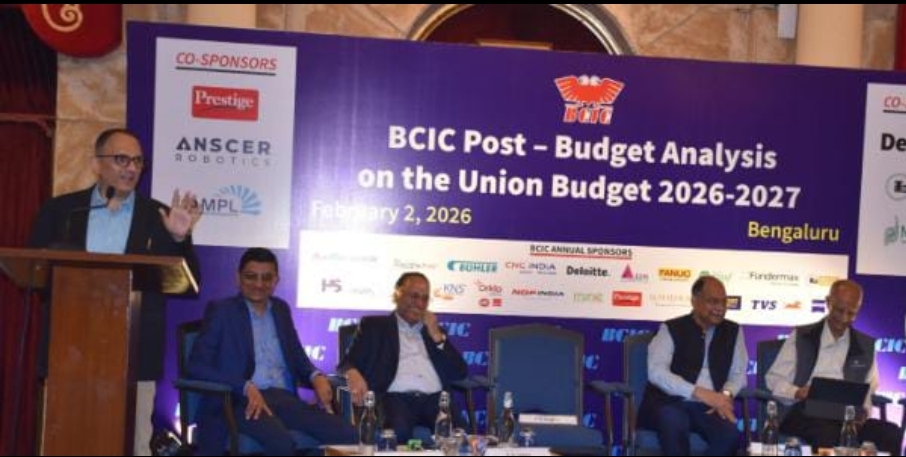
“Our recommendation is that tax incentives extended to foreign service providers must also be made available to Indian businesses serving overseas customers, so that domestic players can build scale and compete on equal terms.”
3, Feb 2026
CFTI Fast-Tracks School Development Initiatives Pre FY-End
Mumbai, Maharashtra, Feb 03: With the March 31 financial year-end approaching, the Centre for Transforming India (CFTI) has rolled out a set of education-focused initiatives across schools in Mumbai and rural regions to support the timely utilisation of unspent CSR funds. These projects are designed for execution within short timelines and aim to address persistent gaps in school infrastructure, access to learning resources, and student mobility—key factors impacting attendance and learning outcomes in government and rural schools.
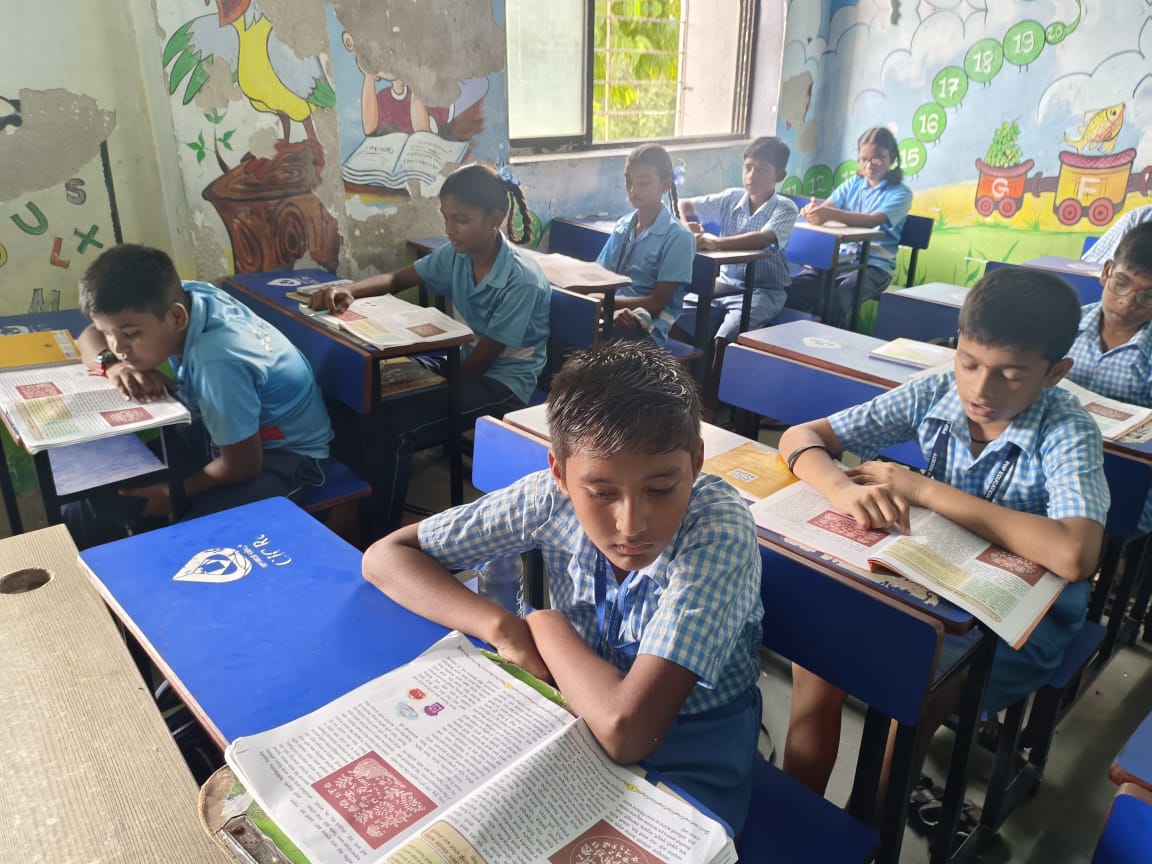
The initiative spans a wide range of school development and education support interventions that can be implemented within FY-end timelines. These include student mobility support such as bicycle distribution for girls; provision of academic kits and scholarships; digital learning enablement through tablets and computer installations; classroom and furniture upgrades; drinking water and sanitation improvements; and the development of sports and physical education infrastructure in rural schools.
CFTI brings significant on-ground implementation experience, having previously executed similar initiatives across multiple states. This includes the distribution of over 35,000 bicycles, award of more than 1,300 scholarships covering students from early education to postgraduate levels, and deployment of over 800 tablets and 100 computers to improve digital access. Infrastructure interventions have included upgrades to more than 90 classrooms, donation of over 1,200 benches across Maharashtra, Bihar, Vizag, and Pondicherry, installation of 34 RO water purifiers, integrated upgrades across 144 schools, and the development of sports facilities in select rural locations.
Commenting on the initiative, Amit Deshpande, Chief Operating Officer, Centre for Transforming India (CFTI), said,
“As the financial year draws to a close, CSR teams often face time and execution constraints. Having projects that are implementation-ready enables CSR funds to be deployed within the reporting cycle while addressing specific, on-the-ground needs of schools and students.”
Through an approach centred on execution readiness, monitoring, and transparent reporting, CFTI partners with corporates to deliver education projects within the financial year, with the objective of converting CSR allocations into clearly defined and measurable outcomes at the school and community level.
3, Feb 2026
AU Small Finance Bank partners with Honda Motorcycle & Scooter India for two-wheeler financing
Mumbai, Feb 03: AU Small Finance Bank (AU SFB), Indias largest Small Finance Bank and the first in over a decade to receive in‑principle approval to transition into a Universal Bank, has entered into a strategic Memorandum of Understanding (MoU) with Honda Motorcycle & Scooter India (HMSI). The collaboration will offer customers affordable and convenient financing options for purchasing Honda two-wheelers across India.
As a preferred financier for Honda two-wheelers, AU Small Finance Bank will provide STP-enabled, analytics-based faster credit decisioning supported by Account Aggregator, along with digitally enabled repayment solutions to deliver a smoother, simpler, and more convenient financing experience. The partnership also includes joint marketing and promotional efforts across HMSI dealerships and AU Small Finance Bank branches.
Key Highlights of the Partnership
This collaboration will help to fulfil the dream of customers across segments including the first-time two-wheeler buyers, by enabling quicker eligibility assessment with paperless process, making it easier to own their vehicle. Honda customers will benefit from competitive schemes, promotional offers, and pre-approved offers, along with end-to-end tech-enabled loan support from AU Small Finance Bank.
AU Small Finance Bank customers will also gain the ability to purchase Hondas trusted range of motorcycles and scooters, supported by the banks seamless system integration that enables online applications, real-time status tracking, and a frictionless financing experience. The tie-up further provides AU customers with direct access to HMSIs extensive dealership network across India.
Commenting on the occasion, Uttam Tibrewal, ED & Deputy CEO, AU Small Finance Bank, said, “Partnering with Honda Motorcycle & Scooter India marks a significant milestone in AU Small Finance Banks journey of expanding mobility finance across the country. Honda is one of the most trusted and aspirational two‑wheeler brands in India, and this collaboration strengthens our commitment to enabling millions of customers with easier access to high‑quality mobility. As we progress toward becoming a Universal Bank, such partnerships reinforce our national distribution strength, customer‑first philosophy, and our ability to deliver transparent and innovative financial solutions at scale.”
Mr. Yogesh Mathur – Director, Sales and Marketing, Honda Motorcycle & Scooter India, said, “Strengthening the financing ecosystem is central to HMSIs customer-centric approach. This collaboration with AU Small Finance Bank is aimed at enhancing the credit solutions offered to the customers at HMSI dealerships across India. It will simplify the purchase journey and enable us to offer customers affordable and convenient financing options, while creating trust and transparency at every stage of the buying experience.”
Through this integrated operational framework, both organizations aim to maximize the effectiveness of the partnership and deliver a consistent, efficient, and customer‑focused financing experience.
3, Feb 2026
AWL Agri Business Ltd. (formerly Adani Wilmar Ltd.) Reports Q3 FY26 Financial Results
Q3 FY26 Performance
AWL Agri Business recorded robust revenue growth in Q3 FY26, supported by a 3% increase in volumes. Edible oils led the growth, while operational EBITDA and PAT remained resilient. On a last-twelve-month (LTM) basis, the company delivered record revenues and operational performance.
Distribution & GTM Strategy
-
Direct reach expanded from ~600,000 outlets in March 2023 to 949,000 outlets as of December 2025
-
Rural town coverage increased from 13,000 to over 60,000 towns
-
98 stock points nationwide, supported by micro-fulfilment centres for smaller-town distribution
Alternate Channels
-
E-commerce, Q-commerce, and Modern Trade achieved strong volume growth in Q3 FY26
-
Edible oils’ alternate channel share increased from ~5% to 9%; Food & FMCG from 11% to 25% over 15 quarters
-
Q-commerce contributed ~30% of volumes within alternate channels
Other Channels
-
HoReCa volumes grew 54% YoY; branded exports up 43% YoY, supported by global distribution networks
Project Updates & Capex
-
Fully operational integrated food complex at Gohana expected to drive efficiencies and operational synergies
-
New oleochemical facility planned in South India
New Product Development (NPD)
-
Launch of Fortune Multi Grain Atta strengthens value-added offerings in staple foods
Segment Performance – Q3 FY26
| Segment | Volume (MT) | YoY Growth |
|---|---|---|
| Edible Oil | 1.1M | 12% |
| Food & FMCG | 0.3M | 9% |
| Industry Essentials | 0.3M | 1% |
| Total | 1.7M | 10% |
Financial Summary – Q3 FY26
| Metric | YoY Change |
|---|---|
| Revenue from Operations | 10% |
| EBITDA | -20% |
| PAT | -35% |
Comment from the MD & CEO
Mr. Shrikant Kanhere, MD & CEO, said:
“Despite a challenging macro environment, AWL Agri Business achieved steady volume growth, led by resilient performance in edible oils and a rebound in our Food & FMCG portfolio. We continue to enhance distribution reach, strengthen alternate channels, and focus on sustainable, profitable growth. Leveraging the Wilmar Group’s global network and our integrated operations, we remain confident in capturing emerging opportunities in India’s evolving food ecosystem.”


