


3, Feb 2026
India–US Trade Deal Signals Strategic Reset: Nachiketa Sawrikar
By:- Mr. Nachiketa Sawrikar, Fund Manager, Artha Bharat Global Multiplier Fund
The India–US relationship, which many expected to strengthen during President Trump’s second term, reached a notable low point in June. For the global economy, strained ties between the world’s two largest democracies were far from encouraging. Against this backdrop, the new India–US trade agreement—reducing the average tariff rate to around 18% from the earlier punitive level of nearly 50%—marks a meaningful reset in bilateral economic relations.
For India, lower tariffs significantly enhance access to the US market for labour-intensive exports such as textiles, engineering goods and pharmaceuticals, supporting employment, manufacturing scale and export competitiveness. The revised tariff level places India broadly in line with ASEAN peers and represents the most favourable outcome realistically achievable under current global trade dynamics. For the US, the agreement opens avenues to expand exports of energy, agricultural products and advanced technologies, while reinforcing supply-chain diversification away from over-concentrated geographies.
Beyond tariffs, the deal signals a renewal of strategic trust. Trade policy is now better aligned with shared priorities including resilient supply chains, clean-energy collaboration, and technology partnerships in areas such as semiconductors and defence manufacturing. Indian consumers also stand to benefit as high-value US and EU products become more affordable, supporting domestic demand and purchasing power.
With the rupee having weakened by nearly 5% over the past six months, improved trade flows and renewed foreign investor interest could aid a partial currency recovery. As India’s relative attractiveness improves versus ASEAN markets, a reversal of recent FII outflows could further strengthen Indian equity markets. Overall, the agreement represents a balanced, win-win outcome for both economies.
- 0
- By Neel Achary

3, Feb 2026
Jayant Chaudhary Hails Union Budget 2026–27 as Yuva Shakti–Driven Growth Blueprint
Shri Jayant Chaudhary, Minister of State (Independent Charge) for Skill Development & Entrepreneurship and Minister of State for Education, Government of India
The Union Budget 2026–27 presents a confident roadmap for India’s next phase of growth. I congratulate Hon’ble Prime Minister Shri Narendra Modi ji for his visionary leadership and thank Hon’ble Finance Minister Smt. Nirmala Sitharaman ji for a Budget that balances ambition with inclusion, and reforms with responsibility.
This is a truly Yuva Shakti–driven Budget, anchored in the vision of Viksit Bharat 2047. By prioritising productivity, competitiveness and cutting-edge technologies, including AI, it lays a strong foundation for Viksit Bharat through sustained structural reforms and people-centric growth. It reinforces India’s steady economic trajectory through fiscal discipline, sustained growth and strategic investments in future-ready capacities.
A strong push to manufacturing, MSMEs and services stands out as a key growth engine. Investments across biopharma, semiconductors, electronics, textiles (SAMARTH 2.0), chemicals, capital goods and sports manufacturing will deepen domestic value chains and position India as a trusted global production hub. The three-pronged MSME framework, ₹10,000 crore SME Growth Fund, TReDS-based liquidity, and professional support through “Corporate Mitras”, will empower entrepreneurs to scale and compete.
Initiatives such as AI-backed Bharat Vistaar to integrate agri-stack, creation of SheMarts, Biopharma SHAKTI, ISM 2.0, rejuvenation of industrial clusters, creation of champion MSMEs through equity support, and the 10-year Khelo India Mission reflect a future-ready approach that integrates technology, health, agriculture and human capital.
A defining feature of this Budget is its decisive commitment to skill development and human capital. The Ministry of Skill Development and Entrepreneurship has received a 62% increase in allocation, with the budget rising from ₹6,100 crore to ₹9,885.80 crore, affirming the Government’s resolve to place skills at the centre of economic transformation. From NSQF-aligned programmes and caregiver training to modernised textile skilling, sports ecosystems and industry-linked pathways, this Budget creates a seamless bridge from education to employment and entrepreneurship, preparing youth to lead in manufacturing, services, technology and the care economy.
The renewed emphasis on the services sector, including healthcare, medical value tourism, AVGC, design, IT and hospitality, recognises that India’s growth will be powered as much by skills and services as by infrastructure. Continued public capital expenditure will crowd in private investment and expand opportunities across Tier-II and Tier-III cities.
I especially welcome the strong focus on agriculture and allied sectors, particularly for states like Uttar Pradesh, —supporting high-value farming, fisheries, animal husbandry, FPOs and agri-startups. These measures will strengthen farmer incomes while opening new avenues for rural youth and women-led enterprises. Integrating skilling with agriculture and rural entrepreneurship will help move our villages from subsistence to sustainability.
The Budget also advances social inclusion through targeted support for women, Divyangjans, education, healthcare and social justice. Empowering women through hostels, skilling and entrepreneurship, alongside focused interventions for persons with disabilities, reflects our commitment to ensuring that every citizen participates meaningfully in India’s growth story.
Sports receives a strategic boost as well, recognising its potential for manufacturing, innovation and youth engagement, while aligning with Uttar Pradesh’s emerging role in sports goods clusters and talent development, and strengthening India’s preparations as we move forward with our bid to host the Olympic Games in 2036. We recently launched SportsEdge Meerut in alignment with this vision—an initiative aimed at building a world-class sports goods manufacturing cluster by integrating skilling, innovation and MSME support, and I am confident it will add significant value by creating jobs, strengthening local enterprises and nurturing sporting talent.
Taken together, Budget 2026–27 is not just a financial statement, it is a national mission document. It strengthens economic foundations, unlocks enterprise, empowers farmers and MSMEs, and invests deeply in skills.
3, Feb 2026
Snowflake and OpenAI Forge USD 200 Million Partnership to Bring Enterprise-Ready AI to the World’s Most Trusted Data Platform
SAN FRANCISCO – Feb 3 Snowflake (NYSE: SNOW), the AI Data Cloud company, today announced a new collaboration with OpenAI that enables global enterprises to unlock greater value from their proprietary data with AI. This multi-year, $200 million partnership agreement cements Snowflake and OpenAI’s commitment to co-innovation and joint go-to-market (GTM) strategies aimed at deploying AI agents across global enterprises. Snowflake and OpenAI will work closely together to develop and deploy customized AI solutions for joint enterprise customers that deliver tangible return on investment.
The direct, first-party partnership agreement also makes OpenAI models natively available to Snowflake’s 12,600 global customers within Snowflake Cortex AI across all three major clouds. This empowers global organizations like Canva and Whoop to bring OpenAI models to their enterprise data for deep research and instant insights. OpenAI models like GPT-5.2 will be accessible within Snowflake Intelligence, the trusted enterprise intelligence agent that empowers every employee to securely access, analyze, and act on all their organization’s knowledge using natural language.
“By bringing OpenAI models to enterprise data, Snowflake enables organizations to build and deploy AI on top of their most valuable asset using the secure, governed platform they already trust,” said Sridhar Ramaswamy, CEO, Snowflake. “Customers can now harness all their enterprise knowledge in Snowflake together with the world-class intelligence of OpenAI models, enabling them to build AI agents that are powerful, responsible, and trustworthy. Together, we’re setting a new standard for AI innovation, helping businesses transform with confidence, while maintaining strong security and compliance standards.”
“Snowflake is a trusted platform that sits at the center of how enterprises manage and activate their most critical data,” said Fidji Simo, CEO of Applications at OpenAI. “This partnership brings our advanced models directly into that environment, making it easier to deploy AI agents and apps, so businesses can close the gap between what AI is capable of and the value they can create today.”
“As we scale our visual AI offering on Canva, both OpenAI and Snowflake have played key roles in how we rapidly empower our users with new creative tools,” said Helen Crossley, Head of Data Science, Canva. “As our platform continues to scale, Snowflake has been foundational to how we manage and activate data, and we’re excited to explore how leveraging OpenAI models in Snowflake Cortex AI can help us extend that foundation. The ability to bridge advanced AI models with our enterprise data allows us to move quickly and test new ideas, without compromising on security or performance.”
“Speed and precision in decision-making are critical for us as WHOOP continues to scale,” said Matt Luizzi, Senior Director of Business Analytics, WHOOP. “Rolling out Snowflake Intelligence to our employees and developing Cortex Agents has provided a secure and governed way for WHOOP to analyze data and make decisions. With OpenAI’s models available directly within Snowflake Cortex AI, we can further enhance those agents with advanced reasoning and analysis, all while maintaining strong security and governance. This partnership will help us continue to make AI a practical, everyday tool for the business.”
Snowflake and OpenAI Help Global Enterprises Deploy AI Agents
By bringing OpenAI models to Cortex AI, global enterprises can gain insights from all their data to deliver richer, more engaging AI agents. Key benefits of the partnership include:
Accelerate Joint Product Innovation: Snowflake and OpenAI teams will partner closely to bring new features that leverage OpenAI Apps SDK, AgentKit, and APIs that support shared enterprise workflows.
Build Custom, Interoperable AI Agents: Snowflake and OpenAI enable enterprises to build state-of-the-art AI agents that reason over governed data and take action across tools and apps. Powered by Cortex AI, these agents run directly on enterprise data, delivering secure, high-impact intelligence at scale.
Democratize Data and Insights with AI: Powered by OpenAI models like GPT-5.2, Snowflake Intelligence is an enterprise intelligence agent that gives every employee instant access to trusted insights. It enables business users to query, interpret, and draw meaning from all their structured and unstructured data with no code required, just natural language.
Enterprise-Ready Governance and Reliability: Snowflake provides built-in business continuity and disaster recovery with a 99.99% uptime service-level agreement, helping ensure that enterprises’ AI initiatives don’t get disrupted by outages or disasters. Users can reliably and securely tap into the power of OpenAI models alongside their most valuable proprietary data in Snowflake, all while benefiting from the governance and responsible AI controls that Snowflake Horizon Catalog provides.
Gain Deep Insights with Multimodal AI: With Snowflake Cortex AI Functions, users can tap into the latest OpenAI models to analyze every kind of data. From rows and columns to text, images, and audio, teams can explore it all seamlessly using SQL, the familiar language of data they already trust.
Snowflake and OpenAI Deepen Collaboration to Advance Responsible AI and Workforce Productivity
This partnership builds on the companies’ existing collaboration, with OpenAI leveraging Snowflake as a secure, scalable data platform for experiment tracking, analytics, and testing.
In turn, Snowflake leverages OpenAI’s ChatGPT Enterprise product internally, empowering employees to harness AI in their day-to-day work and accelerate productivity. As a result, employees can make decisions faster, streamline workflows, and drive stronger cross-functional collaboration through AI-powered insights.
2, Feb 2026
Budget 2026–27 Boosts AVGC Sector, Expands Creator Labs to Build India’s Future-Ready Talent
Akshat Rathee, Co-founder and MD of NODWIN Gaming:
“The Union Budget 2026–27’s support for the Animation, Visual Effects, Gaming and Comics (AVGC) sector through the expansion of AVGC creator labs is a strong step toward building India’s creative and digital talent pipeline. The government’s backing of the Indian Institute of Creative Technologies (IICT), whose inauguration we were proud to be present for, reflects a clear commitment to equipping young Indians with future-ready skills across animation, gaming and storytelling. As organizers of large-scale cultural platforms such as the NH7 Weekender and Comic Con India, we are constantly seeking skilled talent to shape immersive experiences, and initiatives like these will help widen that pool while accelerating original IP creation and high-quality game development. Greater access to creative technologies will enable more homegrown, culturally relevant content to thrive.”
Animesh Agarwal, Founder & CEO, S8UL Esports and 8Bit Creatives:
“Having built teams and businesses in gaming and esports over the years, I’ve seen first-hand how rapidly the AVGC sector is growing and how urgently India needs structured skilling to keep pace. The projection of two million professionals required by 2030 highlights both the scale of the opportunity and the responsibility on industry and institutions to prepare future-ready talent. Initiatives like these will not only create meaningful career pathways for young Indians but also help position India as a global hub for animation, gaming, and digital storytelling.”
Vishal Parekh, Chief Operating Officer, CyberPowerPC India:
“The Budget’s support for AVGC creator labs across 15,000 schools and 500 colleges marks a powerful step toward building a future-ready workforce. With the sector projected to require 2 million professionals by 2030, this initiative can accelerate job creation and empower young Indians to pursue high-value careers in gaming, animation, and visual technologies. Realizing this vision calls for access to high-performance computing environments that match global benchmarks. At CyberPowerPC India, we see this as a defining opportunity to equip the next generation with the tools they need to create, compete, and lead, fueling innovation while strengthening India’s emergence as a global creative and technology powerhouse. We commend the government’s forward-looking commitment to strengthening India’s AVGC ecosystem.”
Sagar Nair, Head of Incubation, LVL Zero Incubator:
“The Finance Minister’s announcement reflects a strong commitment to India’s creative economy. With the AVGC sector expected to require nearly two million professionals by 2030, the rollout of content creator labs across 15,000 schools and 500 colleges can expand early access to future-ready skills and inspire students to pursue careers in animation, VFX, gaming, and comics. When skilling is paired with incubation and clear pathways to entrepreneurship, India can cultivate a generation of creators equipped to build original intellectual property and compete globally. This approach can accelerate job creation, strengthen the talent pipeline, and position the country as a leading hub for creative technology and digital content.”
2, Feb 2026
Sharan Bansal Hails Union Budget 2026 for Capital-Led Growth and Infrastructure Boost
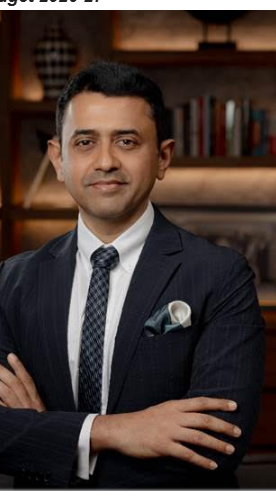
Mr. Sharan Bansal, Director, Skipper Limited
“The Union Budget 2026 gives renewed focus on the government having capital-led growth and developing long-term national infrastructure. The Budget raises capital expenditure to ₹12.2 trillion for FY2026-27, up from ₹11.2 trillion in the previous year, reinforcing infrastructure investment as a key growth driver. The unambiguous difference between revenue spending and capital expenditure, as well as long-term commitments to the development of assets, gives infrastructure developers and manufacturers long-term visibility.
The Budget focuses on the capital formation, monitoring of outcomes and medium-term fiscal planning, which provides a stable policy environment in the energy transition in India. The fiscal deficit is targeted at 4.3 % of GDP for FY2026-27, underscoring continued fiscal stability alongside investment push. The emphasis to productive capital spending and accountability will facilitate grid modernisation, a field that is well aligned with the ability of Skipper to supply power equipment, grid enabling systems and advanced engineering solutions.”
2, Feb 2026
Saurabh Mukherjea Sees Union Budget 2026 as Structurally Positive, Urges Fiscal Discipline
Saurabh Mukherjea, Co-Founder & CIO, Marcellus Investment Managers
“The Union Budget 2026–27 is directionally positive for India’s long-term economic health, even though markets have reacted nervously in the short term. The increase in Securities Transaction Tax on F&O trading is a necessary corrective. Over the past few years, speculative derivatives trading activity has destroyed large amounts of household capital, and this move should help redirect savings towards consumption and productive investment. Equally important is the government’s decision to set up a high-level committee to review the banking and financial system, which could accelerate PSU bank privatisation and unlock greater participation from global and domestic private capital.
The key concern, however, is the rise in capital expenditure at a time when tax revenues are undershooting. Funding higher capex through increased borrowing risks tightening financial conditions by pushing up bond yields and the economy’s cost of capital. Overall, the Budget takes important structural steps in the right direction, but its effectiveness will ultimately depend on maintaining fiscal discipline while pursuing growth.”
2, Feb 2026
India’s New University Townships and NID Expansion Set to Bridge Education-Industry Gap
Fr. Nelson A. D’Silva, S.J., Acting Director – XLRI Delhi-NCR
The plan to develop five University Townships along India’s major industrial and logistics corridors is a transformative step toward bridging the gap between education and industry. These townships are not mere clusters of buildings; they are integrated ecosystems where universities, research hubs, and skill centers coexist with residential spaces.
By colocating academia and industry, we create a living laboratory where learning is informed by real-world industrial challenges. The introduction of a ‘challenge route’ to guide States is particularly innovative—it encourages the creation of high-performance hubs rather than just additional infrastructure. This initiative ensures that graduates are ready to step directly from campus into leadership roles in India’s emerging sectors.
Mr. Kanwal Jeet Jawa, President – DESDS (DJIME)
Placing University Townships adjacent to industrial and logistics hubs is a pragmatic approach to skill development. True mastery comes from learning in proximity to real-world operations, not in isolation. By integrating universities, skill centers, and research labs with industrial corridors, we establish a continuous pipeline of professionals attuned to India’s industry needs from day one.
The ‘challenge route’ is a forward-thinking measure, compelling States to focus on building sustainable ecosystems rather than just opening institutes. Students and mentors living and working near industrial hubs ensures a workforce that is genuinely industry-ready, transforming India from a nation of job seekers into a nation of skilled practitioners and innovators.
Mr. Avik Chattopadhyay, Chairperson, XADM & Founder, INDEA
The establishment of a new NID in Eastern India is a landmark move toward democratizing access to world-class design education. For too long, top-tier design opportunities were limited by geography; this initiative invites talent from every corner of the country to contribute to a nationwide creative renaissance.
Beyond addressing regional imbalances, this initiative fuels India’s growing demand for visual content—from digital media to immersive experiences. By linking education directly to enterprise via the new standing committee, we shift from producing mere stylists to nurturing problem solvers capable of driving Atmanirbhar innovation. This is about cultivating design as a national capability—transforming students into founders, creators, and value generators for tomorrow.
Pathikrit Dasgupta , Co-Founder,SabPaisa
By prioritizing AI and digital innovation, Finance Minister Nirmala Sitharaman has outlined a roadmap for the next phase of India’s fintech revolution. At SabPaisa, we interpret this mandate as a call to action to make financial technologies more accessible than ever. We are committed to translating this national vision into practical solutions—building AI-ready, partner-first platforms that remove operational bottlenecks and drive tangible business value. This is a growth-oriented budget, and it fuels our resolve to empower Indian enterprises.
2, Feb 2026
Label Shivani Nirupam’s Shivani Nirupam Applauds Union Budget 2026–27 Boost for Textile Growth and Exports
2, Feb 2026
Messe Frankfurt Trade Fairs India Partners with BusinessLive Trade Fairs to Expand Media Expo
Mumbai, Maharashtra, Feb 02: Under this collaboration between Messe Frankfurt Trade Fairs India and BusinessLive Trade Fairs, Sign India Expo will evolve into Media Expo marking the launch of Media Expo Kochi and Media Expo Hyderabad while Sign India Expo Chennai transitions under the existing Media Expo Chennai banner. This move significantly expands the overall Media Expo footprint, increasing its presence from three cities to a total of five cities: Chennai, Hyderabad, Kochi, Mumbai and New Delhi.
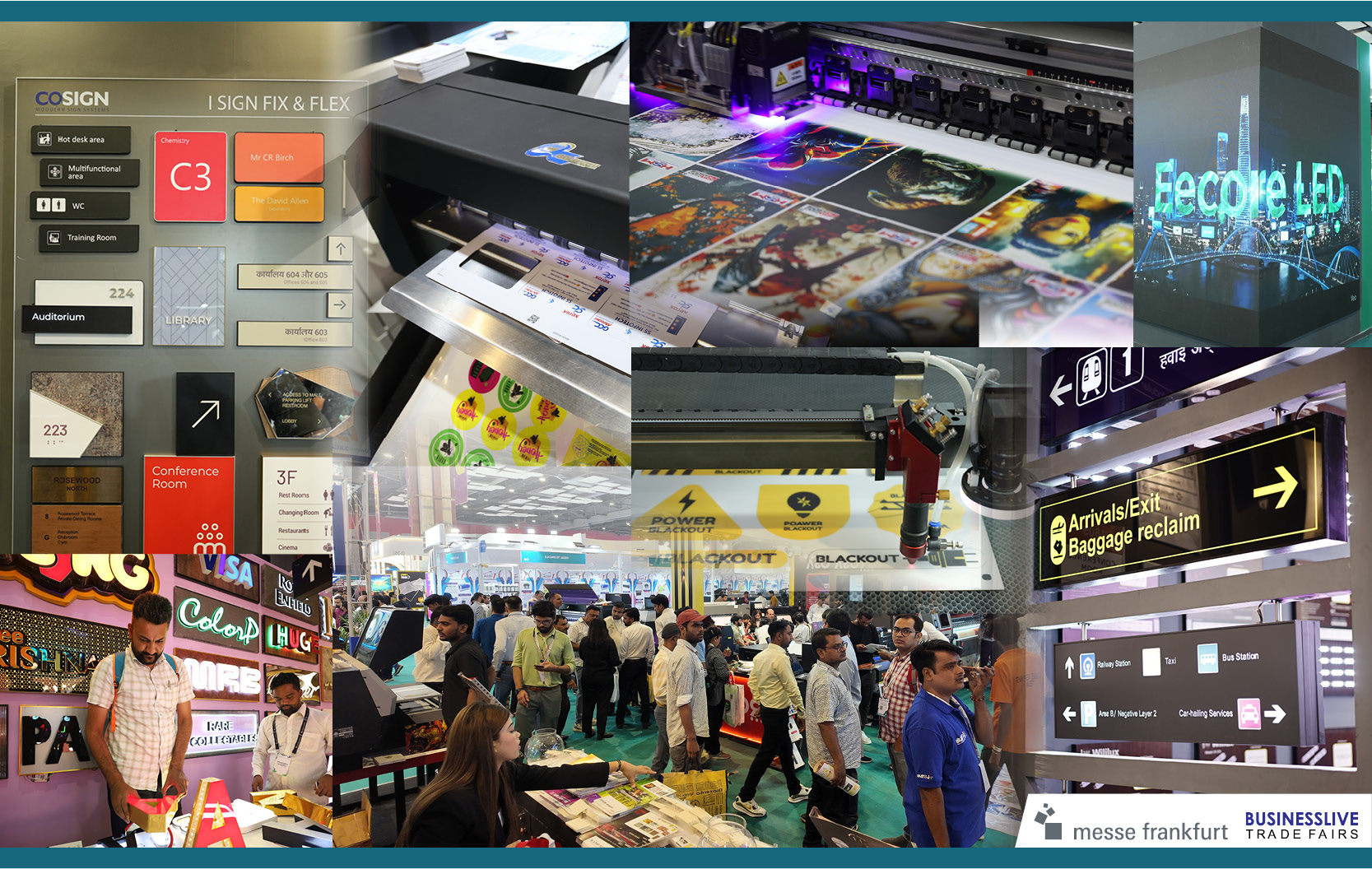
Media Expo, which has delivered 56 successful editions across Mumbai, New Delhi and Chennai, will now become the primary exhibition platform in the three southern markets of Kochi, Hyderabad and Chennai, transitioning from the long-established Sign India Expo. This move will ensure focused regional engagement while offering the industry consistent and unified platforms across these South Indian markets. The collaboration will be implemented beginning with Media Expo Chennai, scheduled for later this year at Chennai Trade Centre, Chennai, Tamil Nadu.
Sign India Expo is backed by a legacy of 70+ editions across India with a particularly deep presence in the Southern markets like Bengaluru, Chennai, Kochi and Hyderabad. This collaboration brings together two of the most recognised exhibition brands from the industry to create a unified and impactful industry trade fair platform.
This partnership will leverage the region’s strong business potential and create a broader and wider exhibition platform. The combination of their expertise, the organisers aim to expand exhibitor participation and enhance the overall product showcase across the product segments like: printing, signage, digital signage, advertising solutions for out-of-home (OOH)
and digital out-of-home (DOOH), retail displays and branding solutions, large-format and industrial printing, fabrication equipment and materials, POP-POSM, LED screens, printing equipment, sign substrates, inks, advanced 3D and laser printing solutions and much more.
By leveraging BusinessLive Trade Fairs established presence in South Indian markets, this alliance enables Media Expo to strengthen its positioning as a central platform for the printing, signage, branding and advertising solutions segment. For the industry, this partnership will deliver increased opportunities by strengthening participation and market reach through the platform, bringing together exhibitors, visitors, associations and professionals from across the printing, signage, branding and OOH-DOOH ecosystem. By consolidating participation and
aligning market engagement, this pivotal step will strongly drive buyer-seller connections across South India’s key commercial hubs.
Commenting on the collaboration, Mr Raj Manek, Executive Director & Board Member, Messe Frankfurt Asia Holdings Ltd, said:
“South India continues to be one of the most dynamic and opportunity driven regions for the printing and signage industry. This collaboration with BusinessLive Trade Fairs allows us to expand Media Expo’s footprint while offering the industry a stronger, more centralised platform that supports long-term growth and meaningful engagement.”
Likewise, Mr Siva Prasad Palnati, Director, BusinessLive Trade Fairs, added:
“Sign India Expo has built a strong and trusted presence across South India over the years. Partnering with Messe Frankfurt Trade Fairs enables us to elevate that legacy by combining regional strength with global exhibition expertise, creating region-specific platforms with Media Expo brand that will serve the industry and its evolving needs better.”
The growth outlook is underscored by industry estimates, with India’s printing and signage market projected to grow from USD 1,074.5 million in 2025 to USD 3,494.3 million by 2034 as per IMARC Group, while the OOH and DOOH market is expected to expand from USD 519.93 million in 2025 to USD 656.13 million by 2030 according to Mordor Intelligence.
Complementary strengths, deep market understanding and being established exhibition brands, the partnership between Messe Frankfurt Trade Fairs India and BusinessLive Trade Fairs marks a strategic move towards building a more cohesive and future-ready printing and signage industry ecosystem in South India.
2, Feb 2026
Industry Leaders Applaud Union Budget 2026’s Growth, MSME, Skilling & Innovation Push
Industry Leaders Welcome Union Budget 2026, Highlight Focus on Growth, MSMEs, Skilling, Healthcare and Innovation
New Delhi, Feb 2: Industry leaders across healthcare, MSMEs, education, manufacturing, mobility, financial services, and creative industries have broadly welcomed the Union Budget 2026, calling it a balanced and forward-looking roadmap that reinforces India’s long-term growth ambitions while maintaining fiscal discipline.
The Budget’s emphasis on capital-led growth, MSME financing, skilling, healthcare infrastructure, green mobility, and innovation-driven development has been widely acknowledged as a strong signal of policy continuity and confidence.
Strengthening Agriculture, Food Systems and Rural Livelihoods
Mr. Sasikumar Kallanai, Co-founder & CEO, TenderCuts, noted that the Budget’s focus on agriculture and allied sectors such as fisheries and animal husbandry will strengthen India’s protein ecosystem. Measures supporting Fish FPOs, women-led groups, veterinary infrastructure, and AI-led AgriStack integration are expected to improve traceability, supply consistency, and income stability for producers.
Consumer Confidence and Discretionary Spending
Mr. Paul Alukkas, Managing Director, Jos Alukkas, said the Budget reinforces confidence by targeting ~7% growth while continuing fiscal consolidation. Rationalisation of TDS and lower TCS on overseas education expenses are expected to improve disposable incomes, supporting discretionary spending, especially in tier-2, tier-3, and rural markets.
Green Mobility and Manufacturing Push
Mr. Nemin Vora, CEO, Odysse Electric, welcomed the government’s focus on local EV component manufacturing and middle-class purchasing power. Enhanced MSME credit guarantees and green mobility incentives were seen as critical enablers of India’s Atmanirbhar mobility ecosystem.
Financial Inclusion and MSME Credit
Mr. Vivek Singh, CEO, Home Credit India, highlighted the ₹10,000 crore SME Growth Fund and ₹2,000 crore micro-enterprise risk capital top-up as vital steps to strengthen community-level financing, job creation, and sustained consumption. Infrastructure spending and MSME compliance support through Corporate Mitras are expected to improve borrower resilience.
Manufacturing, Housing and Infrastructure Growth
Mr. Manoj Tulsian, CEO & Joint MD, Greenply Industries, said continued public capex and infrastructure focus will boost housing demand in non-metro regions, benefiting organized manufacturers and skilled workers. He also welcomed reforms that simplify compliance and strengthen MSME clusters.
Cooperative and Digital Economy Reforms
Shri Prabhat Chaturvedi, CEO, NUCFDC, termed the Budget a continuation of India’s long-term development vision. Cooperative-focused tax measures, MSME funding support, and the proposed high-level banking committee were described as important steps toward safer, more inclusive credit expansion and global competitiveness.
Mental Health and Neurodevelopmental Care
Mr. Jaishankar Natarajan, CEO & Director, India Autism Center, welcomed the announcement of a second NIMHANS, calling it a meaningful shift toward expanding mental health and neuroscience infrastructure. He highlighted the importance of skilled caregiving alongside institutional capacity.
Infrastructure and Energy Transition
Mr. Sharan Bansal, Director, Skipper Limited, said the increase in capital expenditure to ₹12.2 lakh crore reinforces infrastructure-led growth and provides long-term visibility for manufacturers in power and grid systems, while maintaining fiscal stability.
Research, Innovation and Education
Mr. Vikram Aditya Sahoo, Director – Research & Innovation, SAI International Education Group, welcomed enhanced funding for research infrastructure, biopharma clinical trials, AYUSH research, and carbon capture technologies, calling them transformative for education and innovation-led growth.
Entrepreneurship and MSME Ecosystem
Dr. Sunil Shukla, Director General, EDII, said the recognition of MSMEs as ‘Champion Enterprises’ and support for women-led initiatives such as SHE-Marts will enable sustainable enterprise ownership and job creation.
Biopharma and Healthcare Manufacturing
Dr. K. Anand Kumar, MD, Indian Immunologicals Ltd, described the ₹10,000 crore BioPharma SHAKTI initiative as a defining moment that can elevate India from a volume-driven vaccine supplier to an innovation-led global biopharma hub.
MSME Growth Beyond Metros
Dr. Irfan Khan, Chairman, EBG Group, highlighted reforms in TReDS, invoice discounting, and compliance support as critical for manufacturers in tier-2 and tier-3 towns, enabling decentralised and sustainable industrial growth.
Skilling, AI and Youth Empowerment
Mr. Rahul Attuluri, CEO & Co-Founder, NxtWave, and Mr. Karun Tadepalli, Co-Founder & CEO, byteXL, described the Budget as “Yuva Shakti–driven,” applauding its focus on AI, employability, education-to-employment pathways, and digital infrastructure.
Creative Economy and AVGC Sector
Mr. Rajiv Chilaka, Founder & CEO, Green Gold Animation, said the AVGC Content Creator Labs initiative will build a strong talent pipeline, boost regional creators, and position India as a global hub for animation and gaming.
Grassroots Finance and Rural Growth
Mr. Murty LVLN, CEO, Dvara KGFS, said the Budget reinforces the importance of strengthening rural incomes and last-mile finance through AgriStack, infrastructure investments, and MSME credit reforms.
Banking and Debt Market Reforms
Mr. Chandan Churiwal, CEO & Whole-Time Director, Assets Care & Reconstruction Enterprise Ltd. (ACRE), described the Budget as mature and fiscally prudent, noting that maintaining the fiscal deficit at 4.3% while introducing sectoral reforms and proposing a high-level banking review committee will strengthen debt markets and accelerate consolidation.


