


23, Sep 2026
BJP Appoints D Purandeswari As Odisha In-Charge, Swadesh Singh Named Co-In-Charge
Bhubaneswar, Sept. 23 (UDN): The Bharatiya Janata Party (BJP) has appointed senior leader D Purandeswari as its new in-charge for Odisha, while Dr Swadesh Singh has been named co-in-charge as part of a major organisational reshuffle announced by the party on Wednesday.

The appointments, made by BJP national president Nitin Nabin, take effect immediately and are part of a wider restructuring of the party’s organisational responsibilities across 36 states and Union Territories.
Purandeswari, a senior BJP leader from Andhra Pradesh, will be responsible for overseeing the party’s organisational activities in Odisha. Singh will assist her in the state as co-in-charge.
The appointment marks Purandeswari’s return to the Odisha organisation. She had earlier been assigned charge of the state in 2020 and has been associated with the party’s organisational work in the region.
She and Singh will succeed Vijay Pal Singh Tomar and Sushree Lata Usendi, who previously held the respective positions.
Reshuffle Ahead of Local Body Elections
The organisational changes come at a significant time for Odisha, with panchayat and urban local body elections approaching. The new appointments are expected to bring a fresh organisational focus to the BJP’s preparations at the grassroots level.
The latest reshuffle extends beyond Odisha, with the BJP assigning new state responsibilities to several senior leaders as part of an effort to strengthen and streamline its organisational structure.
In Maharashtra, BJP national vice-president Baijayant Jay Panda has been appointed in-charge, with Amit Malviya, Sadanand Shet Tanavade and Kamaljeet Sehrawat named co-in-charges.
Vinod Tawde has been given charge of Uttar Pradesh, assisted by Jagdish Patel, Medha Kulkarni, Pradeep Verma and Anant Ojha.
Several leaders have also been assigned responsibility for multiple states. Sunil Bansal will oversee Telangana and West Bengal, while Ram Madhav has been given charge of Tamil Nadu and Uttarakhand.
Harish Dwivedi will be responsible for Bihar and Karnataka, while Satish Poonia has been assigned Jammu and Kashmir and Punjab.
The appointments form part of the BJP’s broader organisational exercise aimed at reallocating responsibilities among senior leaders and strengthening the party’s state-level machinery.
- 0
- By Neel Achary

23, Sep 2026
India’s GCCs Set to Become Agentic Transformation Engines by 2030, Finds Dell Technologies and Zinnov Report
Bengaluru, Sep 23: Dell Technologies, in partnership with Zinnov, today released a report at the Dell Technologies Forum 2026 that charts the next phase of India’s Global Capability Center evolution. Titled “India GCCs 2030: From Capability Centers to Agentic Transformation Engines”, the report draws on surveys and interviews with more than 50 senior GCC leaders across BFSI, retail, manufacturing, and software sectors, concluding that the GCCs poised to lead by 2030 will not be those running the most AI pilots, but those that have built the foundations to scale AI into measurable enterprise outcomes.
“The most influential GCCs of 2030 will not be measured by the number of AI initiatives they launch, but by their ability to industrialize AI responsibly and at scale. As they take on greater strategic ownership, robust foundations across data, infrastructure, and governance will become the bedrock of enterprise innovation. The GCCs that build these capabilities now will define how their organizations harness AI globally, and Dell Technologies is focused on enabling that journey from foundation to transformation.,” said Manish Gupta, President and Managing Director, Dell Technologies India.
“The GCC model is reaching an inflection point. For the last two decades, the conversation was largely about scale, talent, and capability. The next decade will be about ownership. As AI and agentic systems become embedded into enterprise workflows, GCCs will increasingly be expected to own products, platforms, markets, and measurable business outcomes. Those that build the right data, technology, governance, and talent foundations now will move from being capability centers to becoming true transformation engines for the enterprise,” said Sidhant Rastogi, President, Zinnov.
A Sector at an Inflection Point
India hosts over 2,100 GCCs employing 2.36 million people and generating $98.4 billion in revenue in FY26. 64% of GCC leaders hold dual global mandates, running the India centre while owning a global function. 70% have a defined AI roadmap or charter, and Indian GCCs account for approximately 28% of global GCC AI talent, with over 1,200 centres having built AI and machine learning capabilities. Significantly, 66% of GCC leaders already rank top-line business impact as a high priority for their enterprise AI strategy, signalling that the conversation has moved well beyond cost and delivery.
The maturity curve is also compressing. 27% of new GCCs now reach Portfolio Hub maturity within five years, compared with nearly a decade historically. AI mandates are arriving earlier in the journey, and capabilities once expected at advanced stages are now becoming requirements at earlier ones.
But scale and ambition alone are not enough. Nearly 70% of GCCs remain stuck at the pilot stage, unable to consistently move promising proofs of concept into sustained enterprise adoption. The constraint is foundational: fragmented data, legacy systems, unclear governance, immature security controls and talent models built for a pre-AI world.
The Pilot Problem and What It Will Take to Solve It
AI pilots stall for structural reasons: production data is messier than controlled environments, governance is addressed after the fact rather than built in, and use cases developed outside common enterprise platforms are difficult to integrate at scale. The economics shift significantly once token consumption, compute, tooling and reskilling costs are factored in at production volume. Agentic workflows can consume between 10,000 and 500,000 tokens per workflow, compared with 1,000 to 2,000 for a standard chat interaction. GCC leaders who do not make workload-level infrastructure decisions early often find themselves managing a budget problem rather than a business outcome.
Four Forces Reshaping the GCC Operating Model
The report identifies four levers that will define the next phase of GCC evolution. Building functional AI capabilities means moving beyond scattered experiments to repeatable, AI-enabled workflows embedded into core business functions. Planning AI architecture ahead of production means treating data readiness, compute, security, governance and economics as one integrated decision rather than a sequence of separate ones. Owning markets means taking genuine responsibility for products, regions and business outcomes rather than supporting them from a distance. And redesigning the workforce means restructuring roles so talent moves from repetitive execution toward engineering, product and business problem-solving where human judgment creates lasting value.
With 55% of routine GCC work already exposed to AI-driven automation and 60% of the workforce requiring reskilling by 2030, the imperative is not incremental AI training but a fundamental reinvention of work itself
Own It or Lease It: Making the Right Infrastructure Call
One of the report’s most actionable contributions is a framework for deciding which AI workloads to own and which to consume through leased or managed environments. Workloads involving sensitive data, regulatory exposure, business-critical processes or high and predictable usage increasingly require greater control. Lower-risk and exploratory workloads may be better served through flexible, leased models. The report also introduces a Sovereign Sandbox model for GCCs that need to experiment with regulated or proprietary data in a contained environment before those workloads progress toward production. As agentic AI moves from experimentation to always-on enterprise operation, getting these infrastructure decisions right early is what will determine whether GCCs can run autonomous workflows at scale or remain constrained by the foundations they failed to build.
23, Sep 2026
A Continued Testament to Refined Elegance: OZEN RESERVE BOLIFUSHI Retains Coveted MICHELIN Key for Second Consecutive Year
Maldives, Sep 23: In the rarefied realm of the MICHELIN Key, with nearly 500 bestowed worldwide across a multitude of extraordinary properties, true distinction is found not in abundance, but in scarcity. OZEN RESERVE BOLIFUSHI is counted among just 15 resorts in the Maldives to receive this coveted honour, a distinction that speaks volumes about its unwavering commitment to excellence.

While international hospitality superpowers have long staked their claim on the Maldives, there remains room for something more intimate, a vision both all-encompassing and uncompromising. THE OZEN COLLECTION, an exclusive luxury brand within the island nation, has nurtured a flagship that stands shoulder to shoulder with the most recognisable names in the region. OZEN RESERVE BOLIFUSHI commands its own private island and lagoon in the South Malé Atoll, where a curated collection of suites, villas, pavilions, and RESERVES redefines the art of refined Maldivian living.
The MICHELIN Key serves as a powerful endorsement of the brand’s philosophy of refined elegance, one where every aspect of the guest journey is meticulously curated, from the moment of arrival to the final farewell. At its heart lies the signature RESERVE™ Plan, a comprehensive paradigm of all-encompassing indulgence that ensures a seamless continuum of bespoke experiences: unlimited gourmet dining across multiple specialty restaurants, a curated selection of premium international beverages, and the dedicated service of a private Hiyani butler who anticipates every desire with discreet precision.
Beyond the table and the villa, the resort offers dedicated sanctuaries for wellbeing and connoisseurship. The award-winning ELE|NA Elements of Nature Spa invites guests into transformative wellness journeys. Meanwhile, the exclusive CUVEÉ wine library, housing over 300 prestigious labels, offers a sophisticated enclave for curated tastings, where rare vintages and expert guidance converge.
Speaking on the recognition, Abnash Kumar, General Manager of OZEN RESERVE BOLIFUSHI, remarked:
“To retain the MICHELIN Key is a profound honour. It is not simply an award, it reflects the passion and dedication that our team brings to every guest, daily. It speaks to our commitment to creating experiences that go beyond expectation, where every detail matters, every moment is meaningful, and every guest feels genuinely seen. This recognition belongs to them, and to the guests who inspire us to keep raising the bar.”
Each element of the island converges to create something rare: a holiday that feels both boundless and intimately yours. As OZEN RESERVE BOLIFUSHI looks ahead, it does so with quiet confidence, continuing to redefine what it means to experience the Maldives at its most extraordinary.
23, Sep 2026
ONGC’s Mahanadi Basin Gas Find Marks Major Energy Milestone For Odisha, Says CM Majhi
Bhubaneswar, Sept. 23 (UDN): Odisha Chief Minister Mohan Charan Majhi has described ONGC’s offshore natural gas discovery in the Mahanadi Basin as a landmark development that could strengthen the state’s energy sector and contribute to India’s push for greater energy self-reliance.
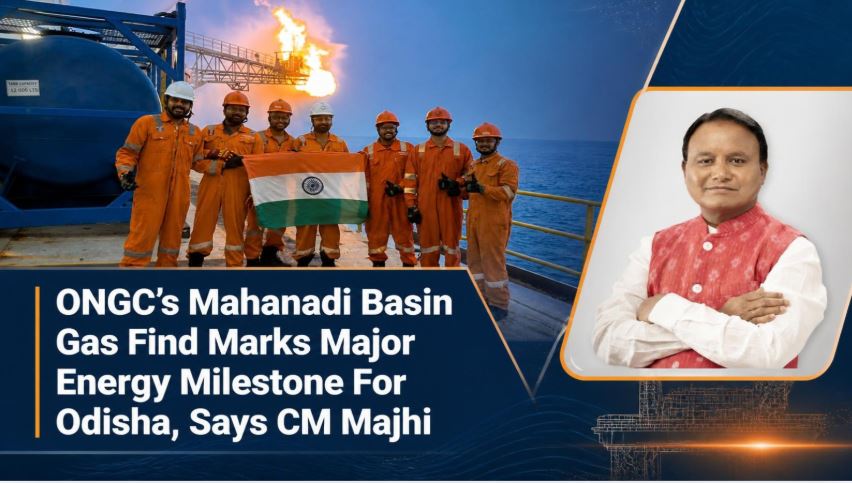
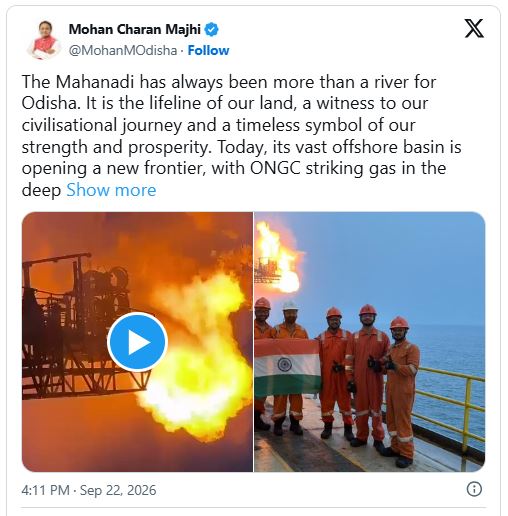
Reacting to the discovery on social media, the Chief Minister said the Mahanadi, long regarded as Odisha’s lifeline, is now poised to play a significant role in the country’s energy future through resources beneath its offshore basin.
CM Hails Discovery As Step Towards Energy Self-Reliance
In a post on X, Majhi said the offshore gas find represents an important step towards unlocking Odisha’s energy potential and supporting India’s goal of becoming more self-reliant in the energy sector.
He described the discovery as a new chapter in the Mahanadi’s contribution to the state, saying that the river, which has sustained Odisha for centuries, now holds the potential to power future growth through offshore resources.
Discovery Made Off Konark Coast
The natural gas discovery was made by the Oil and Natural Gas Corporation (ONGC) on September 18 at the MN-DW18-1-H-D well (MDW-28), located about 43 kilometres off the Konark coast.
The well forms part of Samudra Manthan, ONGC’s deepwater exploration campaign launched on July 25 by Union Minister for Petroleum and Natural Gas Hardeep Singh Puri.
Boost To Offshore Exploration
The discovery is expected to add momentum to offshore exploration efforts in the Mahanadi Basin, one of India’s key hydrocarbon-bearing regions along the eastern coast.
While further assessment will determine the commercial potential of the find, the development has been viewed as an encouraging outcome for ongoing exploration activities in Odisha’s offshore waters.
23, Sep 2026
Odisha Teacher Turns Moss-Covered School Walls Into Lifelike Portraits
Balasore, Sept. 23 (UDN): What appears to be ordinary moss growing on the walls of a government primary school in Odisha’s Balasore district has become an unconventional medium for art, thanks to the creativity of a teacher.

Ajay Kumar Ghosh, a primary school teacher at Sri Krishnapur Primary School in Remuna block, has been using naturally grown moss on the school walls to create lifelike portraits of freedom fighters and other eminent personalities—without paint, brushes or chemical colours.
Moss Becomes An Unusual Art Medium
Instead of removing the moss, Ghosh uses it to shape portraits on the walls. The green layer provides the basic outline, while carefully scraping portions of the moss exposes the white surface underneath, helping him bring out facial features, hair and other details.
The approach has given the school walls a distinctive appearance while turning them into an informal learning aid for students.
Ghosh said the initiative also reflects a lesson he wants children to understand—that even seemingly insignificant things can have value when used creatively.
The idea gained momentum after a lack of funds made it difficult to construct a boundary wall around the school. Rather than allowing the existing walls to remain plain, the teacher used them as a canvas to create portraits of personalities familiar to students from their textbooks.
From Textbooks To The School Walls
The artwork has transformed the school surroundings into a more visually engaging space for children. Figures such as Gopabandhu Das, Subhas Chandra Bose and Jawaharlal Nehru, whom students read about in their lessons, have been represented through Ghosh’s wall art.
For the children, the portraits offer a different way of connecting classroom lessons with their everyday surroundings.
A student, Dinesh Kumar, said Ghosh had also introduced them to several forms of art, including techniques involving sand and clay, apart from drawing portraits using moss.
Encouraging Children To Explore Art
Ghosh’s efforts extend beyond decorating the school walls. He regularly encourages students to practise drawing and develops their interest in different forms of creative expression.
The teacher also uses art-based activities to make classroom learning more engaging, helping students become familiar with notable personalities while developing their own artistic abilities.
What began as an innovative response to limited resources has consequently given Sri Krishnapur Primary School a distinctive visual identity. The moss-covered walls, instead of being treated simply as part of the school structure, have become an unconventional canvas showcasing both art and lessons from history.
23, Sep 2026
Khordha-Balangir Railway Project: Freight Locomotive Trial Run Reaches Charichhak
Bhubaneswar, Sept. 23 (UDN): The Khordha-Balangir railway project has moved closer to its next operational milestone with a successful trial run of a freight locomotive up to Charichhak, marking progress on the Purunakatak-Charichhak section.
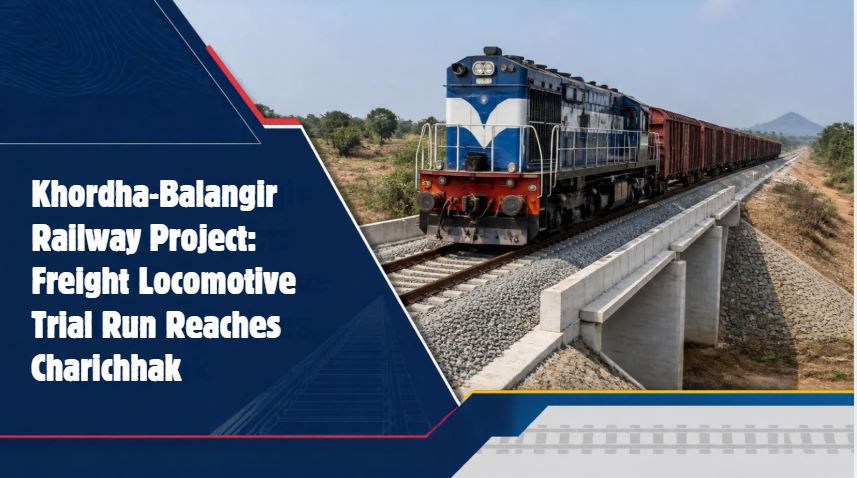
Representational Image
The latest test run followed the completion of major track and infrastructure work in the area, with railway authorities now preparing for the next stage of inspection and clearance.
Locomotive Crosses Tunnel, Two Viaducts
A freight locomotive was operated on the newly completed stretch towards Charichhak at a speed of around 60 kmph during the trial.
The locomotive crossed two viaduct bridges and Tunnel No. 7 during the exercise, allowing railway officials to assess the condition and readiness of the track and associated infrastructure.
A subsequent trial was also conducted with a freight locomotive hauling several wagons. The tests were aimed at checking the operational readiness of the newly laid section before it proceeds to the formal safety assessment.
Charichhak Station Work In Final Phase
Following the completion of railway connectivity up to Boudh and Purunakatak, work is now progressing towards extending the operational section to Charichhak.
Construction work at Charichhak railway station and the connecting track is reportedly nearing completion. The remaining works are being taken up ahead of the required inspection and clearance procedures.
The latest trial run is being seen as another step towards completing the next segment of the long-awaited railway project.
Safety Inspection To Determine Next Step
The Purunakatak-Charichhak section is expected to undergo a safety inspection in the coming weeks.
The inspection will be an important stage before regular train operations can begin on the newly completed stretch. The commencement of passenger or other regular services will depend on the outcome of the inspection as well as completion of the mandatory formalities.
With track testing already underway and station construction nearing completion, railway authorities are working towards taking the Charichhak section to the next stage of commissioning.
23, Sep 2026
Auto Sales May Moderate After Festive Boost as Inflation Risks Rise
Festive Season Keeps Auto Demand Strong, but Growth May Cool After the Rush

India’s automobile market is heading into the festive season with healthy demand, but the industry may see sales growth settle at a more normal pace once the festive rush passes, as manufacturers face a high base of comparison and changing market conditions, according to a sector report by JM Financial Institutional Securities.
The report expects inventory build-up ahead of the festive season to provide near-term support to wholesale vehicle volumes. However, this boost may not continue at the same pace after the festive period, when growth is expected to normalise against stronger volumes recorded earlier.
SUVs continue to drive passenger vehicle demand
Passenger vehicle demand has remained particularly strong. Domestic passenger vehicle volumes increased 37 per cent year-on-year in August 2026, while volumes during the first five months of FY27 were up 30 per cent.
Utility vehicles, especially SUVs, have emerged as the strongest growth driver. Their August volumes increased 46 per cent year-on-year, taking their share of overall passenger vehicle sales to around 69 per cent, compared with about 65 per cent a year earlier.
The shift highlights the growing preference for larger and feature-rich vehicles and is providing an advantage to manufacturers with a wider SUV portfolio.
Two-wheelers maintain steady momentum
The two-wheeler market has also remained resilient, although growth moderated in August. Domestic internal-combustion-engine two-wheeler sales rose 5 per cent year-on-year during the month, taking FY27 year-to-date growth to 14 per cent.
Premium motorcycles are showing stronger momentum. Sales in the 150-250cc segment increased 28 per cent in FY27 so far, while motorcycles above 250cc recorded 34 per cent growth. In comparison, the sub-125cc category grew by around 6 per cent.
The trend points to continuing demand for higher-value models alongside overall volume growth.
Festive inventory could lift near-term sales
The festive season remains a crucial period for automobile manufacturers and dealers. Building inventory ahead of major festivals allows dealerships to offer a wider choice of vehicles and respond quickly when customer demand increases.
However, the industry is also entering the season with a relatively high base. As a result, strong festive volumes may not necessarily translate into equally high growth rates in the months that follow.
West Asia tensions add an inflation risk
Alongside demand, rising costs remain an important concern for the automobile industry. JM Financial has identified sustained inflationary pressure linked to the ongoing West Asia conflict as a key factor to monitor.
Higher energy, commodity and transportation costs can increase expenses across the automobile supply chain, from manufacturers and component suppliers to logistics providers and dealers. If such pressures persist, companies could face challenges in protecting margins while maintaining competitive pricing.
The risk is particularly relevant for the auto-component industry, where higher input costs can take time to pass through to customers.
Industry enters the festive season with mixed signals
The latest data shows that India’s auto sector continues to benefit from healthy consumer demand, particularly in SUVs and premium motorcycles. At the same time, manufacturers will need to carefully manage inventory and costs as the market moves beyond the festive period.
For the industry, the next phase will be less about simply increasing volumes and more about sustaining demand while managing inventory, input costs and changing consumer preferences.
23, Sep 2026
Cathay Cargo moves its Mumbai freighter operations to Navi Mumbai International Airport
Sep 23: Cathay Cargo, the cargo division of the Cathay Group, announced the relocation of its Mumbai freighter operations to Navi Mumbai International Airport, effective 21 September 2026.
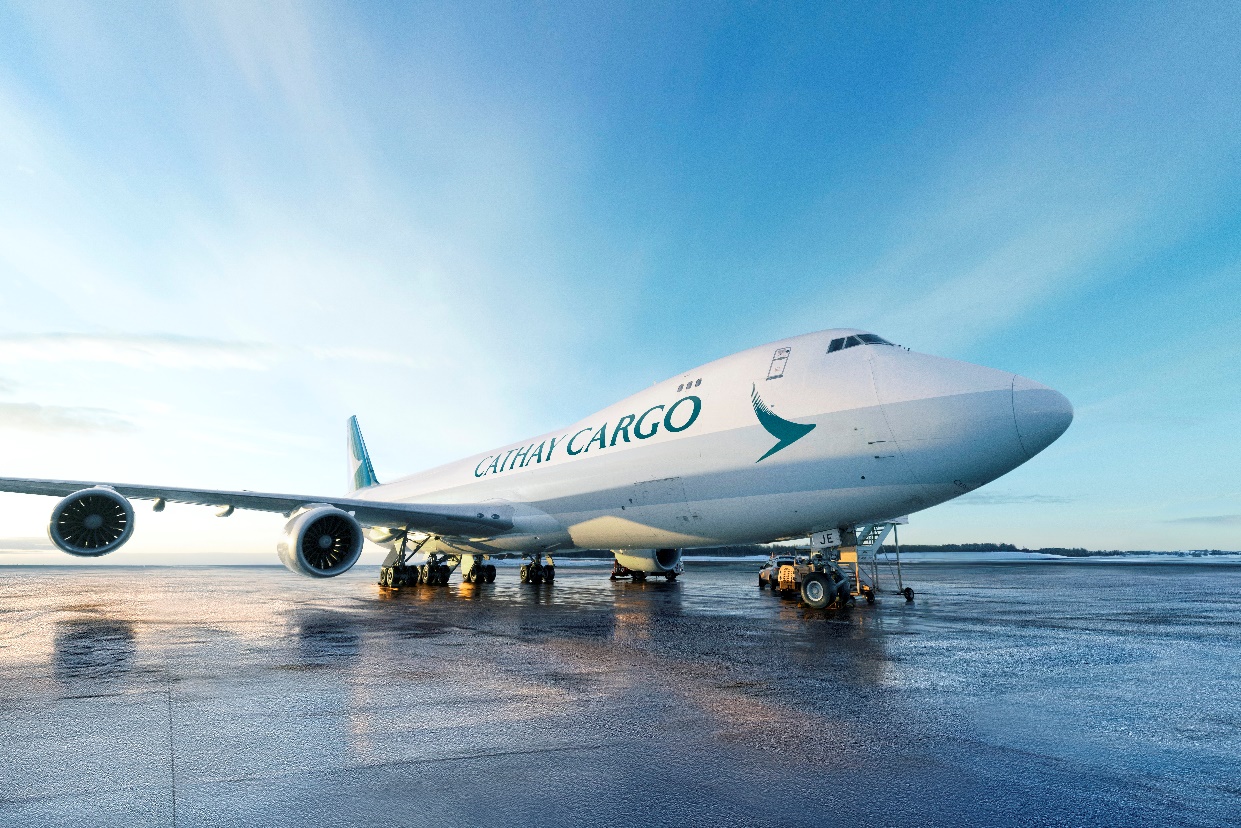
Through its dedicated freighter network serving major Indian cities and its well-connected Hong Kong hub, Cathay Cargo connects Indian customers and businesses to key markets across the Chinese Mainland, Southeast Asia, North America and beyond. From its home hub, Hong Kong, Cathay Cargo offers seamless connectivity between India and major global markets, with half of the world’s population reachable within five hours’ flying time. Beyond providing capacity, Cathay Cargo serves as a strategic partner in India’s manufacturing and export growth story by helping Indian goods reach global markets faster, more safely and more competitively.
Cathay Cargo operates three dedicated freighter flights per week from Navi Mumbai International Airport using its Boeing 747-400ERF and Boeing 747-8F freighters, offering robust and consistent main-deck capacity, and nose-door loading capabilities to seamlessly transport odd-size, heavy cargo to and from its Hong Kong hub and beyond.
Cathay Regional Head of Cargo for South Asia, the Middle East, and Africa Rajesh Menon said:
“The move of our Mumbai freighter operations to Navi Mumbai International Airport reinforces our steadfast commitment to the Indian market and its growth trajectory. By combining Navi Mumbai International Airport’s modern infrastructure with our dedicated freighter presence and our ‘We Know How’ expertise, we are providing reliable connectivity and specialist handling for local enterprises, exporters and SMEs. This will also further strengthen connectivity between Western India’s exporters and key global markets through our Hong Kong hub.”
In addition to its Navi Mumbai International Airport freighter service, Cathay Cargo continues to operate its dedicated freighter network across India, operating five weekly freighter flights from Delhi and Chennai respectively.
Cathay Cargo’s operational excellence is anchored in its “We Know How” ethos, with a suite of specialist solutions tailored for each special shipment, including:
-
Cathay Expert: Dedicated handling for odd-sized, heavy and project cargo utilising nose-door freighter loading.
-
Cathay Pharma: Strict temperature-controlled logistics for life-saving pharmaceuticals and vaccines.
-
Cathay Fresh: High-speed cold-chain transport ensuring fresh produce, perishables and seafood arrive in optimal condition.
-
Cathay Priority: Guaranteed space and expedited processing for time-sensitive commercial shipments.
-
Cathay Live: Specialised care and safe transport for live animals.
Furthermore, Cathay Cargo’s specialist solutions and Cathay Cargo Terminal operations at Hong Kong International Airport are backed by a complete set of IATA CEIV certifications – including CEIV Pharma, CEIV Fresh, CEIV Live Animals, and CEIV Lithium Batteries. These internationally recognised accreditations ensure the highest global standards of safety, quality control, and regulatory compliance across all specialised cargo streams.
Complementing its freighter network, Cathay Cargo utilises additional belly-hold capacity on Cathay Pacific’s passenger aircraft across all five of its Indian gateways: Mumbai, Delhi, Chennai, Bengaluru and Hyderabad. Operating 45 passenger flights per week across these five cities, the passenger airline offers time-bound, high-frequency connectivity into Hong Kong and beyond.
23, Sep 2026
Bharat Taxi Launched In Uttar Pradesh With Zero-Commission Model, Rs 5 Lakh Security Cover
Lucknow, Sept. 23: Uttar Pradesh Chief Minister Yogi Adityanath on Wednesday launched Bharat Taxi in the state, announcing a zero-commission model for taxi, two-wheeler and three-wheeler drivers along with social security measures of up to Rs 5 lakh.
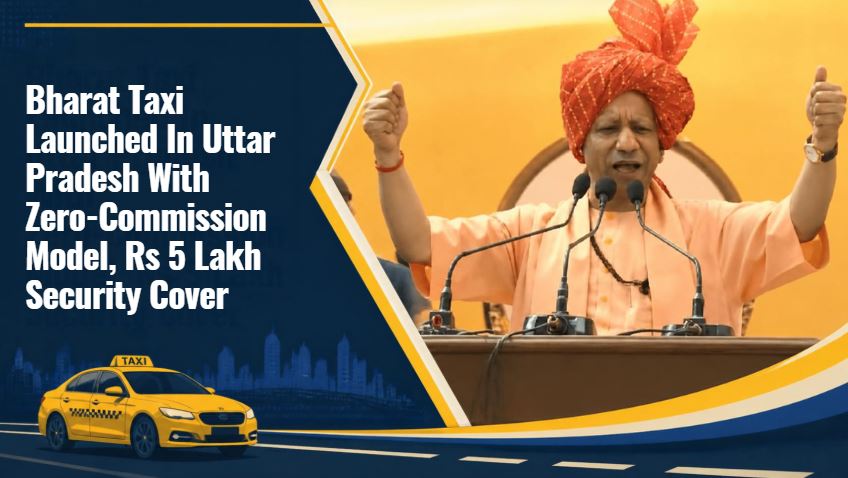
Representational image
The service was launched in Lucknow, Gorakhpur, Varanasi and Prayagraj. The Chief Minister also launched the Mukhyamantri Krishak Samriddhi Yojana, under which the interest rate on loans provided through the Uttar Pradesh Cooperative Rural Development Bank has been reduced from 11% to 6%.
Drivers To Operate Without Commission
Under the Bharat Taxi model, drivers, referred to as Saarthis, can register with the cooperative-led platform without paying a commission on rides. The model is designed to allow drivers to retain their fare earnings, in line with Bharat Taxi’s nationwide zero-commission structure.
The platform also provides access to social security benefits. The Ministry of Cooperation has said Bharat Taxi Saarthis can be linked to e-Shram and access health and insurance-related benefits, including medical treatment and accident cover.
Speaking at the launch, Yogi said taxi, two-wheeler and three-wheeler drivers had traditionally received limited attention and said the new model would provide them with greater social security.
Memoranda of understanding were also signed with institutions including Lucknow Airport, Lucknow Metro and Lucknow Police to facilitate Bharat Taxi’s operations.
Push For Rural Transport Network
Yogi asked Uttar Pradesh Transport Minister Dayashankar Singh to explore extending the Bharat Taxi model to rural bus services.
He said such services could expand transportation options in rural areas while creating employment opportunities for young people.
Referring to the Prayagraj Mahakumbh 2025, the Chief Minister said motorcycle-based transport services had helped ferry devotees between the Sangam, railway station and airport during the event.
Farmer Loan Rate Cut To 6%
The Chief Minister also launched the Mukhyamantri Krishak Samriddhi Yojana, highlighting the reduction in the interest rate on loans issued through the Uttar Pradesh Cooperative Rural Development Bank.
The rate has been brought down from 11% to 6%, according to the state government’s announcement.
Yogi also said the interest-free cash credit limit available to Primary Agricultural Cooperative Societies (PACS) had been raised from Rs 10 lakh to Rs 15 lakh.
He further said 54 lakh new members had joined the cooperative sector and that efforts were underway to strengthen cooperative banking and digital services for farmers.
New Digital Platforms Unveiled
During the programme, the Mukhyamantri Krishak Samriddhi Portal app, UPCDC and mobile applications related to fertiliser services and cooperative data management were launched.
The platforms are intended to improve access to cooperative services and strengthen digital systems for the delivery of agricultural inputs and other services.
Yogi also handed over Bharat Taxi share certificates to five Saarthis and loan sanction letters to five beneficiaries of the farmer scheme.
The launch was formally marked by a flag-off ceremony attended by Yogi Adityanath, Union Minister of State for Cooperation and Civil Aviation Murlidhar Mohol and other officials.
23, Sep 2026
Odisha Seafood Exports Fall 14.57 pc Amid Middle East Conflict, Rs 23.40 Crore Loss in 2025-26
Bhubaneswar, Sept. 23 (UDN): Odisha’s seafood trade with the Middle East took a hit amid the ongoing regional conflict, with the value of marine product exports to the war-affected market declining by 14.57% in 2025-26, resulting in an estimated Rs 23.40 crore reduction in export earnings, the state government informed the Assembly on Wednesday.

Representational Image
Fisheries and Animal Resources Development Minister Gokula Nanda Mallik disclosed the figures in a written reply to a question raised by Aali MLA Pratap Keshari Deb.
MPEDA Data Shows Regional Decline
According to data received from the Marine Products Export Development Authority (MPEDA), Odisha recorded a 14.57% fall in the value of seafood exports to the Middle East during 2025-26 compared with the previous financial year.
The decline translated into an estimated loss of around Rs 23.40 crore in export earnings when compared with 2024-25.
The figures cover exports of fish, shrimp and other marine products shipped to the region.
Overall Seafood Exports Continue To Grow
Despite the setback in the Middle Eastern market, Odisha’s overall seafood export earnings increased during 2025-26.
The state recorded a 16.36% rise in the total value of seafood exports compared with the previous financial year. The overall increase amounted to Rs 763.94 crore, according to the minister’s reply.
The contrasting figures indicate that the decline in exports to the Middle East was limited to the affected market and did not result in a reduction in Odisha’s total seafood export earnings.
Conflict Disrupts Trade With Key Market
The Middle East remains an important overseas destination for seafood products, including shrimp and other marine commodities. Disruptions linked to regional conflict can affect shipping activity, market demand and trade flows.
For Odisha’s seafood sector, the fall in exports to the region represents a loss in one overseas market even as demand from other destinations helped sustain overall export growth during the year.
The government’s response did not indicate any decline in Odisha’s total seafood export value. Instead, the state registered a substantial increase in overall earnings despite the contraction recorded in the Middle Eastern market.


