


23, Sep 2026
India’s Ethanol Market Gears Up for a New Growth Phase as Demand May Touch 17.9 Billion Litres
New Delhi, Sep 23: India’s ethanol industry is heading towards a crucial growth phase, with demand projected to reach 17.9 billion litres by FY31 if ethanol blending rises to 25 per cent. The expected increase could push utilisation of the country’s existing distillation capacity close to full levels, creating a stronger focus on efficiency, feedstock availability and future investment.
India currently has around 18.25 billion litres of installed distillation capacity. Under an E25 blending scenario, demand could absorb nearly 98 per cent of this capacity by FY31. If blending remains at E20, demand is estimated at around 14.3 billion litres, translating into utilisation of approximately 78 per cent.
The industry could, however, face a significantly different investment requirement if blending moves towards E30. Under that scenario, ethanol demand could rise to around 21.5 billion litres by FY31, roughly 18 per cent above current installed capacity. Such a trajectory could shift the sector from maximising existing plants to building fresh distillation capacity.
The changing demand outlook is also reshaping the industry’s raw-material mix. Grain-based ethanol accounted for 72 per cent of allocations in ESY26 Cycle 1, compared with 28 per cent for sugar-based routes. Maize alone accounted for 45.7 per cent of allocations, highlighting its growing role in the country’s ethanol supply chain.
For producers, however, higher demand also brings the challenge of managing production costs. EBITDA margins of grain-based distilleries declined from 9.2 per cent in FY21 to 6.7 per cent in FY25, indicating continued pressure from feedstock costs. This makes efficient sourcing and better utilisation of existing plants increasingly important for the industry’s next phase.
The ethanol programme has already transformed India’s biofuel landscape. Government data shows that ethanol blending in petrol increased from below 1.5 per cent in 2013-14 to 20 per cent in 2025-26, while production capacity expanded from 421 crore litres in 2014 to about 2,000 crore litres in 2026. The expansion has also helped reduce dependence on imported crude oil and support domestic renewable fuel production.
With the E20 milestone largely achieved, the industry’s focus is now moving towards higher capacity utilisation, feedstock optimisation and better returns from existing assets. Emerging applications such as sustainable aviation fuel could also create additional avenues for the sector.
The projected rise in ethanol demand could therefore have implications well beyond fuel blending. It could support investment across distilleries, feedstock supply chains, agriculture-linked businesses and biofuel technologies. At the same time, the pace of future blending and the availability and cost of feedstock will remain important factors in determining how quickly the industry expands.
For India, the next phase of ethanol growth is increasingly about making existing capacity work harder today while preparing for the additional infrastructure that could be required tomorrow.
- 0
- By Neel Achary

23, Sep 2026
Odisha Records 2,915 Registered Startups, Over 3,000 Applications Received
Bhubaneswar, Sept. 23 (UDN): Odisha has recognised 2,915 startups so far, while another 3,091 applications have been received from entrepreneurs seeking startup registration in the state, MSME Minister Gokulananda Mallik informed the Assembly on Wednesday.
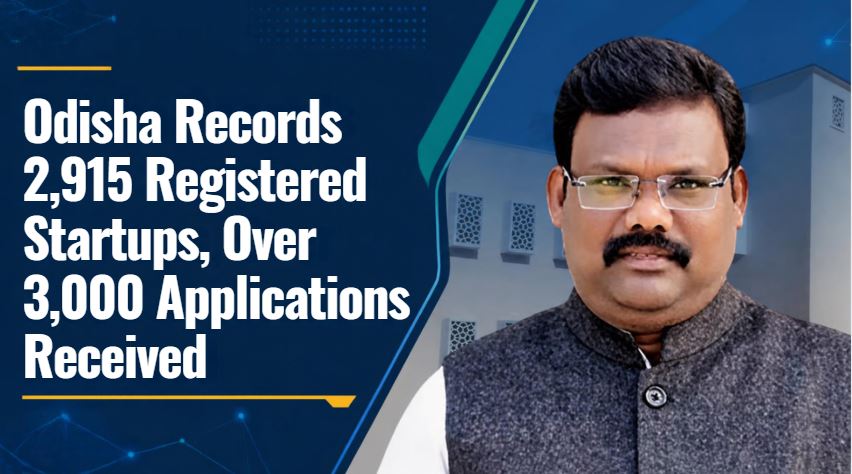
The minister provided the figures in a written reply to a question raised by MLA Pabitra Saunta.
13 Nodal Agencies, 42 Incubators Supporting Startups
According to Mallik, the state government is working with 13 nodal agencies involved in the evaluation and other processes related to startups.
The government is also coordinating with 42 incubators that provide entrepreneurs with incubation, mentorship and other forms of institutional support.
Registered startups can access assistance under several schemes, including the Monthly Allowance Grant (MAG), Product Development and Marketing Assistance (PDMA), Need Based Assistance (NBA) and subsidised incubation facilities.
714 Startups Receive Incentives
The MSME Minister said 714 startups have received incentives under various government schemes so far.
To further strengthen business support, the state has 45 mentors available to guide entrepreneurs and provide consultancy on business-related matters.
The support framework is aimed at helping startups with areas such as product development, marketing, incubation and business guidance.
33 MSMEs Established In Koraput
The minister also informed the Assembly that 33 micro, small and medium enterprises (MSMEs) have been established in Koraput district.
The figures were shared during the ongoing Assembly session while responding to questions on startup registrations, institutional support and the growth of MSMEs in Odisha.
23, Sep 2026
Odisha Installs Over 1.45 Lakh Smart Prepaid Meters Across 30 Districts
Bhubaneswar, Sept. 23 (UDN): Odisha has installed 1,45,141 smart prepaid electricity meters across all 30 districts, with Khurda recording the highest number of installations, Energy Minister Kanak Vardhan Singh Deo informed the State Assembly on Wednesday.

Representational Image
The minister provided the details in a written reply to a question raised by Balangir MLA Kalikesh Narayan Singh Deo.
Khurda Leads Meter Installation
Khurda topped the state with 36,744 smart prepaid meters, followed by Ganjam with 16,304 and Cuttack with 13,964 installations.
Angul accounted for 7,933 meters, while Kendrapara and Dhenkanal recorded 6,283 and 6,177 installations, respectively. Koraput had 5,227 smart prepaid meters installed, according to the minister’s reply.
The installations form part of the state’s ongoing transition towards smart metering in the electricity distribution sector.
1,499 Billing Complaints Received
Addressing concerns over billing, the Energy Minister said the state’s distribution companies (DISCOMs) received 1,499 complaints regarding erroneous billing from smart prepaid meters during the past two years.
According to the minister, all the complaints received during the period have been resolved.
Balangir Agricultural Feeders Get Over 23 Hours Of Supply
The minister also shared details of electricity supply to agricultural consumers in Balangir district.
During the last irrigation season, agricultural feeders in the district received an average of 23 hours and 25 minutes of power supply per day, he said.
However, 5,419 agricultural pump-set connections were still pending in Balangir.
Of these, 5,310 applications were pending at the consumer end, while the remaining 109 were pending with TP Western Odisha Distribution Company Ltd (TPWODL).
The figures were placed before the Assembly amid questions on the expansion of smart prepaid metering, resolution of billing-related complaints and the status of electricity connections for agricultural consumers in the state.
23, Sep 2026
Odisha Paddy Coverage Touches 36.18 Lakh Ha In Kharif 2026, Down From Last Year
Bhubaneswar, Sept. 23 (UDN): Paddy cultivation in Odisha has covered 36.18 lakh hectares during the ongoing Kharif season as of September 19, 2026, according to the first advance estimates presented in the Odisha Assembly.
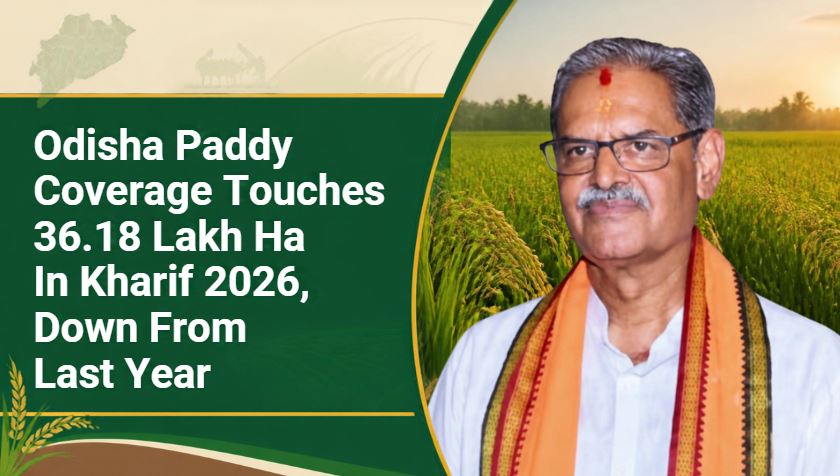
Deputy Chief Minister and Agriculture Minister Kanak Vardhan Singh Deo provided the figures in response to a question raised by MLA Pratap Kesari Deb.
Mayurbhanj Tops Paddy Coverage
The preliminary district-wise assessment shows Mayurbhanj recording the highest paddy coverage at 3.15 lakh hectares.
It is followed by Bargarh with 2.59 lakh hectares, Ganjam with 2.12 lakh hectares, Sundargarh with 1.98 lakh hectares and Balangir with 1.86 lakh hectares.
Coverage Lower Than Previous Year
The current paddy coverage remains below the levels recorded in the previous two Kharif seasons.
Odisha recorded 37.49 lakh hectares under paddy cultivation in 2024-25, while the figure rose to 39.42 lakh hectares in 2025-26.
Compared with last year’s coverage, the current preliminary figure is lower by around 3.24 lakh hectares.
Seven Districts See Increase
Despite the overall decline, seven districts have reported an increase in paddy cultivation area compared with the previous year.
Bargarh and Khordha have each recorded an increase of 0.16 lakh hectares, while Puri has added 0.14 lakh hectares and Cuttack 0.13 lakh hectares.
Nuapada has registered an increase of 0.03 lakh hectares, followed by Jagatsinghpur and Nayagarh, which have each recorded a rise of 0.02 lakh hectares.
Final Figures Yet To Be Released
The Agriculture Minister clarified that the 36.18 lakh-hectare figure is provisional and based on the first advance assessment.
The final area under paddy cultivation for Kharif 2026 will be determined after the completion of the agricultural season. The coverage could increase further depending on the actual area brought under cultivation.
23, Sep 2026
Odisha Has Nearly 24,000 Broiler Farms, Produces 1.64 Lakh MT Poultry Meat Annually
Bhubaneswar, Sept. 23 (UDN): Odisha has 23,956 small and large broiler poultry farms and 189 commercial layer farms, with the state producing around 1.64 lakh metric tonnes of poultry meat and more than 40,000 lakh eggs annually, the Assembly was informed on Wednesday.
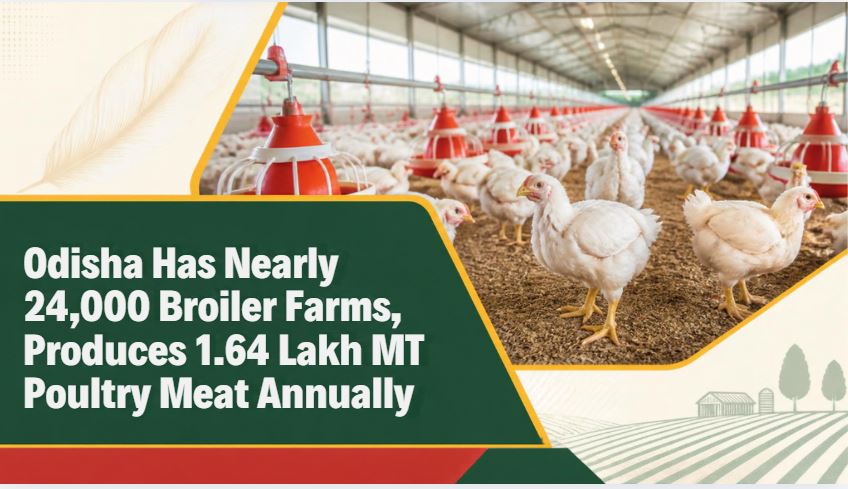
Representational Image
Fisheries and Animal Resources Development Minister Gokulananda Mallik provided the details in a written reply to a question raised by Jharsuguda MLA Tankadhar Tripathy.
Poultry Output Rises Across State
According to the minister, Odisha produced around 164,000 metric tonnes of poultry meat and 40,913 lakh eggs during the financial year 2025-26.
The poultry sector has also attracted investment from several private companies, with many operating through integration-based models covering different stages of production.
Companies active in Odisha include IB Group, Suguna Feeds, Japfa, Venky’s, Pashupati Agrovet, Eastern Hatcheries, Utkal Feeds, Salimar Group, Poultech, Amrit Feeds, Baramati, Bhairabi, Kalpana Poultry, Gurukrupa Chicks, Poultry Premium Chicks and Sahoo Broiler.
Nearly 49,000 MT Meat Sent Outside Odisha
The minister further informed the Assembly that Odisha’s poultry industry supplies markets in other states as well.
While the government does not maintain specific data on the quantity of poultry meat exported outside Odisha, records available with poultry meat-producing companies indicate that around 49,000 metric tonnes were supplied to other states during 2025-26.
No Government-Controlled Broiler Price
On the issue of broiler chicken prices, Mallik said rates are determined by producers and traders.
Prices are influenced by factors including production costs, market supply and demand, and prevailing wholesale rates, he said.
The minister clarified that the state government currently has no specific mechanism or guidelines for fixing the retail or wholesale price of poultry meat.
The figures presented in the Assembly highlight the scale of Odisha’s poultry sector and its growing role in meeting both domestic demand and supplies to markets outside the state.
23, Sep 2026
Wildlife Photography Essentials to Pack for Your Next Outdoor Adventure

Bangalore | Sept 23: As winter’s approaching soon, cooler mornings and comfortable days make it an ideal time to step outdoors with a camera and explore the nature around us. From planning a jungle safari and joining a bird walk to exploring nature trails or simply heading out for a weekend photo walk, the season brings plenty of opportunities to observe wildlife and capture moments in their natural surroundings.
Wildlife photography often calls for patience, flexibility, and equipment that can keep up when a fleeting moment suddenly unfolds. Whether you are photographing a bird taking flight, an animal emerging from the foliage, or smaller details along a nature trail, having the right combination of reach, speed, portability, and image quality can make the experience more rewarding. Here are some Sony imaging essentials to consider for your next outdoor photography adventure.
Sony Alpha ILCE-7RM6: Wildlife photography often comes down to a single moment, whether it is a bird taking flight, an animal turning towards the camera, or a brief interaction that lasts only a few seconds. The Sony Alpha ILCE-7RM6 combines a 66.8MP full-frame fully stacked Exmor RS CMOS sensor with high-speed performance, giving photographers the resolution and responsiveness needed to capture detailed images when the action unfolds unexpectedly.
Powered by the BIONZ XR2 image processing engine with an integrated AI processing unit, the camera can shoot at up to 30fps with full-resolution images and AF/AE tracking, while supporting up to 60 AF/AE calculations per second. Sony also provides specific shooting guidance for wild birds, including Pre-Capture, which can help record the moments immediately before the shutter is fully pressed when the timing of movement is difficult to predict.
Sony FE 100–400mm F5.6–8 OSS: A morning bird walk or wildlife trail can quickly turn into a search for subjects at different distances, making a versatile telephoto lens particularly useful. The Sony FE 100–400mm F5.6–8 OSS offers a 100–400mm focal range in a compact and lightweight design, allowing photographers to follow distant birds and wildlife without carrying a particularly heavy setup throughout the day. Weighing just 654g, the lens is designed for handheld shooting and can be a practical companion for longer outdoor photography sessions.
Fast, precise autofocus and Optical SteadyShot image stabilisation help when photographing active subjects, while its dust and moisture resistant design adds reliability when shooting outdoors. The lens also offers a minimum focusing distance of 0.86m at the telephoto end and up to 0.41x magnification, making it useful for photographing smaller subjects such as birds, insects and flowers encountered along a nature trail. An optional teleconverter can further extend its reach up to 800mm.
Sony RX10V: Not every outdoor photography outing comes with a fixed plan, and photographers may find themselves moving from wide landscape views to distant birds and wildlife within the same walk. The Sony RX10 V offers an all-in-one solution with a ZEISS Vario-Sonnar T 24–600mm F2.4–4.0 zoom lens, allowing photographers to move between wide-angle and super-telephoto perspectives without changing lenses.
The camera combines a 1.0-type stacked Exmor RS CMOS sensor with 20.1 megapixels, a BIONZ XR image processing engine, and an AI processing unit that supports Real-time Recognition AF for different subjects. With blackout-free continuous shooting at up to 30fps and up to 575 phase-detection AF points, the RX10 V is equipped to capture unpredictable moments, whether it is a bird taking flight, an animal moving through the frame, or a fleeting moment during an outdoor walk.
Sony FE 50–150mm F2 GM: Early mornings and late afternoons can offer some of the most interesting conditions for outdoor photography, when softer light adds depth to landscapes and wildlife images. The Sony FE 50–150mm F2 GM combines a versatile telephoto range with a constant F2 aperture, giving photographers greater flexibility to capture subjects against their surroundings while creating a smooth, defocused background.
The lens is particularly suited to situations where photographers want to capture more than just a distant subject, whether that means an animal within its habitat, a bird perched against a textured background, or details emerging as the light changes. Its internal zoom design maintains a consistent lens length while zooming, while the combination of telephoto compression and F2 aperture gives photographers greater creative control over how subjects stand out within the frame.
The appeal of outdoor photography lies in the fact that no two outings unfold in quite the same way. A quiet bird walk can turn into an opportunity to capture a bird in flight, while a planned safari can offer everything from distant wildlife and dramatic landscapes to smaller details hidden along the trail.
With winter bringing more comfortable conditions for exploring the outdoors, it is a good time to plan photography adventures around the subjects and environments you enjoy most. From lightweight telephoto lenses and versatile all-in-one cameras to fast lenses and high-resolution camera bodies, Sony’s imaging lineup offers options that can help photographers stay ready for the moments that make every outdoor adventure worth capturing.
23, Sep 2026
India’s Corporate Globalization Accelerates: Outbound Expansion Grows 53 percentage vs 17 percentage Inbound Growth
Mumbai, Sep 23: The emerging Multinational Benefits Guide by Howden Employee Benefits examines how companies are managing employee benefits across different markets. It looks at Indian companies with overseas operations as well as foreign-owned businesses in India and highlights the challenges employers face in meeting local regulations, responding to employee expectations and managing costs.
The report records 8,285 Indian companies with cross-border investments, an increase of around 53% in two years. These include companies across IT services, pharmaceuticals, manufacturing, fintech, engineering and consumer sectors, with operations in markets such as Singapore, the US and the UK. It also identifies nearly 34,500 foreign-owned businesses operating in India, up 17% over the same period. This includes 2,117 Global Capability Centres, which together employ more than 2.3 million people.
For employers, managing employees across different countries brings a common challenge: how to provide benefits that meet local regulations, remain competitive for employees and continue to make commercial sense. Indian companies entering a new market may initially have relatively small teams, but they are still expected to provide benefits that are relevant to the local workforce.
Cost and measurable value remain important considerations for Indian employers. Benefits programmes therefore need to balance local employee expectations with consistency, cost efficiency and a clear return on investment.
Long-term international deputations add another layer of complexity. Employers must consider international medical insurance, continuity of pension and retirement benefits, repatriation support and, in some cases, continued protection for parents and dependants in India. These requirements can vary significantly across markets and employee groups.
Foreign companies operating in India face a different set of pressures. As Global Capability Centres compete for talent, employee benefits are becoming an important part of attracting and retaining skilled professionals. Programmes designed at a global level may also need to be adapted to the expectations and needs of employees in India.
Howden and REBA’s research shows that half of multinational businesses, in India and globally, do not have a competitive global or multinational benefits strategy in place*. As more companies manage employees across multiple markets, the need for locally relevant, compliant and cost-effective benefits is becoming harder to overlook.
Howden x REBA Multinational Benefits Strategy Research 2023
Leigh Dauncey, Regional Employee Benefit Leader- India, Middle East and Africa at Howden, commented:
“As businesses scale internationally, whether they are Indian companies moving into new markets or global firms expanding their India operations, benefits design is quickly becoming a critical business consideration. Getting it right requires a partner who understands the compliance requirements of each market, the expectations of employees and the commercial need to demonstrate value.
“For Indian companies, the challenge is particularly nuanced. Benefits must support locally hired teams as well as employees on long-term international assignments, without losing sight of cost, consistency or the needs of families who may remain in India. Emerging multinationals need robust benefit structures designed for lean, fast-moving teams, and many are navigating this complexity without the right support.”
Pratyush Ranjan, Associate President & Head of Multinational Employee Benefits, Howden India, commented:
“Global companies are scaling their Capability Centres here and competing for talent, while a new generation of Indian companies is establishing teams overseas.
“For Indian employers, this often means finding the right balance between local compliance, employee expectations and cost efficiency. It also means addressing the needs of employees on long-term deputation, from international medical cover and retirement continuity to repatriation support and protection for dependants in India. The goal is to create benefits that work across borders while delivering clear and measurable value to the business.”
23, Sep 2026
Deep Depression Moves Slowly Towards Coast, Likely to Cross North AP-South Odisha Tonight: IMD
Bhubaneswar, Sept. 23 (UDN): The Deep Depression over the westcentral and adjoining northwest Bay of Bengal is advancing slowly towards the coast and is expected to cross the North Andhra Pradesh–South Odisha coast later on Wednesday, the India Meteorological Department (IMD) said.
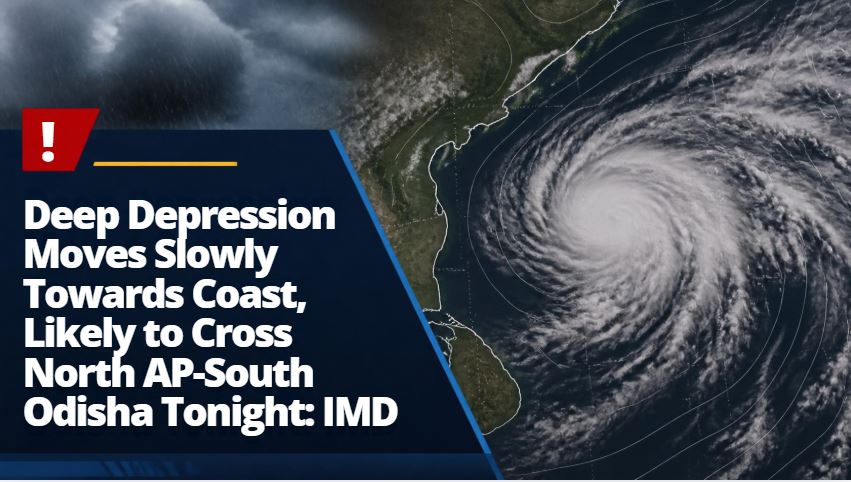
Representational Image
According to the latest IMD bulletin, the system moved westward at a speed of around 5 kmph during the past six hours and remained centred over the westcentral Bay of Bengal.
System Nears Kalingapatnam
The Deep Depression was located near latitude 18.0°N and longitude 84.6°E, the weather agency said.
At the time of the bulletin, the system was positioned approximately 60 km southeast of Kalingapatnam in Andhra Pradesh, 140 km east-northeast of Visakhapatnam, 150 km south of Gopalpur in Odisha and around 240 km south-southwest of Puri.
Landfall Expected Tonight
The IMD said the system is likely to continue moving west-northwestwards and cross the North Andhra Pradesh–South Odisha coasts between Visakhapatnam and Gopalpur.
The system is expected to make landfall close to Kalingapatnam as a Deep Depression by Wednesday night.
With the weather system approaching the coast, coastal districts of Odisha and adjoining areas are likely to remain under the influence of unsettled weather conditions. Authorities and residents in vulnerable areas have been advised to remain alert and follow official weather updates.
23, Sep 2026
Rough Sea Forces 28 Andhra Fishing Trawlers to Take Shelter at Paradip Port
Paradip, Sept. 23 (UDN): Rough sea conditions along the Odisha coast have forced 28 fishing trawlers carrying 248 fishermen from Andhra Pradesh to seek refuge at Paradip Port as the weather system over the Bay of Bengal intensifies.

Representational Image
The trawlers were unable to safely return to their home state amid deteriorating sea conditions. The Paradip Port Authority has allowed the vessels to take shelter inside the harbour as a precautionary measure.
The fishermen and their boats have been accommodated at the EQ-1 berth, where they will remain until conditions at sea improve.
Ship Movement Restricted
With the sea remaining rough, Signal No. 3 continues to be in force at Paradip Port.
As part of the precautionary measures, restrictions have been placed on the entry of ships into the harbour. Vessels currently engaged in cargo-handling operations have been directed to complete their work and move to a safe location at sea.
Port authorities have also begun arrangements to move ships out of the harbour in view of the prevailing weather conditions.
Port Authorities Keep Watch
Officials are maintaining close surveillance of the weather and sea conditions and are coordinating safety measures in response to updates from the meteorological authorities.
Further decisions regarding vessel movement and other port operations will be taken depending on the intensity and movement of the weather system.
The sheltering of the Andhra fishing boats comes as a Deep Depression over the Bay of Bengal approaches the north Andhra Pradesh–south Odisha coast, with the India Meteorological Department forecasting heavy rain and strong winds in parts of the region.
For the fishermen taking shelter at Paradip, the immediate priority remains safety until the sea conditions become favourable for their return journey.
23, Sep 2026
Pocket FM takes Sherpa global with campaign spanning India and the US
Bengaluru, Sep 23: Pocket FM has launched a global campaign for Sherpa by Pocket FM, its AI-powered fiction-writing platform, across India and the United States.

Rolled out across San Francisco, Bengaluru and Mumbai, the campaign expresses one product idea across multiple formats: AI should help writers build entire fictional worlds, not merely generate sentences.
AI built for stories, not just sentences
Sherpa by Pocket FM is a self-evolving agent harness built on custom-trained proprietary models, combining hierarchical story planning, long-term narrative memory and narrative prose generation to help creators build immersive stories that can span hundreds of episodes. Built around Narrative Intelligence, Sherpa is designed to understand, develop and maintain complex fictional worlds as they evolve, allowing it to track characters, relationships, conflicts and storylines rather than treating every episode as an isolated piece of text.
Sherpa has already helped drive a 75x increase in annualised content production to more than 2.5 million hours, alongside a 10x increase in the number of blockbuster titles. Its development is informed by Pocket FM’s ecosystem of more than 770,000 titles, 550,000 creators and 5.5 billion hours of audience playtime.
One idea across two countries and five formats
At the centre of the campaign is a satirical film featuring Rohan Nayak, Co-founder of Pocket FM, alongside actor Chris Diamantopoulos. Diamantopoulos plays a larger-than-life fictional tech investor and Pocket FM board member who is convinced Sherpa will change the world and perhaps make him its first deserving trillionaire.
Through humour and self-awareness, the film playfully subverts the conventions of technology launches while introducing the problem Sherpa is designed to solve: helping creators turn an initial idea into a complex, sustainable, long-form story.
As the film travelled across social platforms, the campaign took to the skies above the San Francisco Bay Area, with an aircraft carrying the Pocket FM flag across one of the world’s most influential technology markets. The activation reflected Pocket FM’s growing international presence and the global ambition behind Sherpa.
In India, the campaign brought the product proposition to life through outdoor and print innovations in Bengaluru and Mumbai.
The outdoor execution transforms a billboard into the face of a snow-covered mountain, complete with climbers scaling its surface, alongside the line:
“Writing stories is no more a climb.”
The visual uses Sherpa’s name to turn the scale and complexity of writing long-form fiction into a simple metaphor.
In Bengaluru, Pocket FM also transformed the front page of some of India’s leading newspapers into a deliberately blank canvas carrying the line:
“This isn’t a blank page. It’s where every great story begins.”
Instead of filling the space with a conventional advertisement, the execution invited readers to begin writing directly on the page, with Sherpa positioned as the creative partner that can help take their first idea forward.
“Sherpa is complex technology built around a simple human truth: more people have stories in them than believe they can write,” said Vineet Singh, Global Head of Brand Marketing, Communications, Partnerships & Public Affairs, Pocket FM. “That shaped the entire launch. Across film, social, print, outdoor and even the skies above San Francisco, we used one idea in very different ways: with the right companion, creating an entire fictional world no longer needs to feel like a climb. Taking the campaign beyond India also reflects the global ambition behind Pocket FM and Sherpa. We want to make powerful storytelling tools accessible to creators wherever they are and, ultimately, get more people writing.”
The campaign marks the global consumer-facing launch of Sherpa as Pocket FM continues to build AI-powered tools that make entertainment creation faster and more accessible, enabling individual creators to develop stories that can scale across languages, markets and formats.