


10, Sep 2026
Pracheen Kala Kendra to Present Uttarbanga Festival 2026 in Siliguri
Two-day festival to celebrate Indian classical music, dance and fine arts on October 5 and 6

Siliguri, West Bengal | Sept 10: Pracheen Kala Kendra, Chandigarh, will present Uttarbanga Festival 2026, a two-day celebration of Indian Classical Music, Dance and Fine Arts, in Siliguri on October 5 and 6, 2026.
The festival will bring together eminent artistes, performers, disciples and cultural institutions for two days of artistic expression, celebrating the richness and diversity of India’s classical traditions.
As part of the festival, an Art Exhibition will be organised at Ramkinkar Hall, Siliguri, on October 5 and 6 from 4:00 PM to 9:00 PM daily.
The Indian Classical Music and Dance performances will be held at Dinabandhu Mancha, Siliguri, on both days from 5:00 PM onwards.
A Celebration of Classical Dance on Day One
The opening day of Uttarbanga Festival 2026, on October 5, will feature a vibrant presentation of Indian classical dance forms, including Bharatanatyam, Odissi and Kathak.
The performances will include:
- Bharatanatyam by Vidushi Sangita Chaki & Disciples
- Odissi by Dr. Pompi Paul & Disciples
- Kathak by Ms. Dona Dutta & Disciples
- Bharatanatyam by Smt. Rimpi Saha & Disciples
- Kathak by Vidushi Sahelee Basu Thakur & Disciples
- Kathak by Mrs. Debjaya Sarkar & Disciples
- Kathak by Hakimpara Nritya Malancha, Siliguri
- Bharatanatyam by the Disciples of Mr. Prosenjit Deb
- Bharatanatyam by the Disciples of Mr. Shuvam Ghosh
- Kathak by Smt. Agnimitra Sengupta & Disciples
- Kathak by Shri Jyoti Mondal & Disciples
- Kathak by Ms. Sanchari Sarkar & Disciples
- Odissi by Dr. Dripta Chakraborty & Disciples
- Kathak by Shri Gobinda Saha & Disciples
- Kathak by Shri Ayan Bhattacharjee and Smt. Sujata Chatterjee
The first day’s programme will be anchored by Shri Amitava Ghosh and Smt. Sumita Dutta.
Day Two to Showcase Indian Classical Music
The second day, October 6, will focus on Indian classical music, featuring vocal, instrumental and solo performances by distinguished artistes and emerging performers.
The programme will include:
- Vocal performance by Shadaj Music Academy, Siliguri
- Vocal performance by Vidushi Mousumi Dasgupta & Disciples
- Vocal performance by Vidushi Barnali Basu & Disciples
- Tabla performance by Pandit Subir Adhikari & Disciples
- Solo performances by Vidushi Malobika Chakraborty, Dr. Sutapa Dutta, Vidushi Nibedita Bhattacharjee, Shri Ashish Banerjee, Shri Satyaki Chakraborty, Shri Abhiman Roy and Shri Deborshi Hore
- A Sitar Solo Recital by Pandit Debopratim Roy
The accompanying artistes will include Pandit Subir Adhikari, Dr. Dhrupad Ray, Pandit Sudip Chakraborty, Shri Riju Saha, Shri Prianshu Nandi and Shri Amit Saha on tabla, along with Shri Ashis Kansa Banik on harmonium.
The second day’s programme will be anchored by Shri Subir Bhattacharjee and Smt. Tapasi Deb.
Uttarbanga Festival 2026 aims to create a platform that brings together artistes, students, connoisseurs and lovers of Indian art forms while celebrating the continuing relevance and richness of India’s classical cultural heritage.
With classical dance, music and fine arts coming together over two days, the festival promises to offer audiences in Siliguri an opportunity to experience a wide range of artistic traditions and performances.
RSVP
Shri Sajal Koser
Secretary, Pracheen Kala Kendra
Ashutosh Mukherjee Road,
(Upstairs Bani Library), College Para,
Siliguri, Darjeeling – 734001, West Bengal
Pracheen Kala Kendra
- 0
- By Neel Achary

10, Sep 2026
Progress needs proof: Rohde & Schwarz showcases its trailblazing test solutions at EuMW 2026 in London
Sept 10: When devices under test outperform the instrument measuring them, progress stops. But Rohde & Schwarz keeps innovation moving with advanced test solutions that push beyond the limits of traditional measurement methods. At European Microwave Week (EuMW) 2026 in London, visitors can discover the company’s latest test solutions for RF and microwave components, as well as wireless, radar and satellite systems. Among them are solutions designed to help engineers address the growing demands of today’s electronic warfare (EW) and electromagnetic spectrum operations (EMSO).

Rohde & Schwarz keep progress in RF and microwave technology moving with its T&M solutions at EuMW 2026 in London.
London is calling once again for European Microwave Week, bringing together leading experts in RF, microwave, wireless and radar technology who are pushing the boundaries of design. From October 6 to 8, 2026, Rohde & Schwarz will present at booth B10 in the European Microwave Exhibition at Excel London its latest test and measurement solutions designed to help engineers stay ahead at the cutting edge of design and prepare systems for increasingly contested and complex spectrum environments.
Markus Lörner, Application Segment Manager RF & Microwave Components at Rohde & Schwarz, says: “Our EuMW 2026 motto, ‘Progress needs proof,’ reflects what many engineers are facing today: when DUTs push beyond the limits of conventional methods, innovation slows down. At the show, we will demonstrate how our advanced test solutions support customers across RF and microwave components, satellite and radar systems, phased-array antennas and emerging 6G sensing applications. As R&D moves toward higher frequencies, more integrated designs and increasingly demanding spectrum environments, precise and reliable measurement becomes a key enabler of progress.”
From EW and EMSO scenarios to advanced high-frequency characterization
A highlight at the Rohde & Schwarz booth is the FSWX signal and spectrum analyzer, displayed in a radar and electronic warfare (EW) test scenario within the context of electromagnetic spectrum operations (EMSO), focused on DRFM-based jammers. In this setup, an R&S SMW200A vector signal generator simulates radar signals, while the FSWX uses its multi-channel architecture to analyze jammer input and output signals simultaneously for a comprehensive assessment of deceptive signal behavior. The new, fully integrated R&S FSWX-KM700 pulse analysis option measures both channels in parallel and provides detailed insight into pulsed radar parameters, differences between the channels and the parameter trends over time.
In a second demonstration, Rohde & Schwarz will show how the game-changing multi-channel capabilities of the FSWX can be extended into the E-band and even up to 110 GHz for advanced high-frequency component characterization. Combined with the R&S SFI100A wideband IF vector signal generator and the fully calibrated R&S FE110ST/SR external frontends, the setup supports wideband satellite component testing for next-generation payload and link applications and beyond, helping engineers capture the true characteristics of the device under test and overcoming the limits of traditional measurement equipment.
Advanced testing for low-noise sources and high-power RF frontends
Rohde & Schwarz will also showcase the enhanced R&S FSWP phase noise analyzer and VCO tester platform for advanced component characterization. With support for residual and absolute phase noise measurements up to 56 GHz and further improved internal reference, R&S FSWP-B62, the solution offers high flexibility for testing synthesizers, OCXOs, DROs, VCOs and two-port components such as amplifiers. New options for integrating external signal sources as local oscillators can dramatically accelerate measurements, in some cases by up to a factor of 1,000, making the R&S FSWP well suited for the development of low-noise signal sources for radar, satellite, base station and high-speed digital applications.
Rohde & Schwarz will also present the new R&S SAM200 system amplifier for high-power test applications in the Ka- and V-band up to 53 GHz. In radar, satellite link and backhaul applications, RF frontends must deliver higher power levels so signals can travel farther and cover larger distances. Designed to support validation of these components, the amplifier extends test setups with higher signal power while maintaining precise and reliable level control. At EuMW, Rohde & Schwarz will showcase the R&S SAM200 in two demonstrations: one characterizing a high-power Ka-band amplifier with the R&S ZNA vector network analyzer in a fully integrated and calibrated test setup, and another highlighting the amplifier’s linearity in a wideband modulated test scenario with the R&S SMW200A vector signal generator and the R&S FSW signal and spectrum analyzer.
Scalable test for SATCOM and phased-array systems
At EuMW, Rohde & Schwarz will also highlight the R&S ZNB3000 vector network analyzer for measurement applications in satellite communications, Earth observation and radio astronomy. Its wide dynamic range and low trace noise provide the sensitivity required for demanding antenna characterization and radar measurements. For higher-frequency applications, optional millimeter wave converters extend coverage up to 330 GHz, including bands used by microwave and millimeter wave radiometers. Together, these capabilities make the R&S ZNB3000 a versatile and cost-effective solution for a broad range of measurement needs in the satellite and space sectors.
Rohde & Schwarz will also demonstrate a phased array antenna test setup highlighting fast and accurate OTA testing and antenna diagram pattern validation for advanced wireless and aerospace and defense applications. Featuring a 5G NR FR2 device under test, the solution combines the R&S ATS1800C CATR-based over-the-air test system with the R&S ZNA vector network analyzer to help reduce test complexity, increase throughput and preserve beamforming accuracy from development through verification to production. A special see-through version of the R&S ATS1800C will be on display at EuMW, featuring a plexiglass wall, giving visitors a rare look at the chamber’s internal CATR technology.
Micro-Doppler emulation for emerging sensing use cases
With the AREG800A radar target generator, Rohde & Schwarz will showcase new test capabilities addressing use cases like 6G integrated sensing and communication (ISAC). As 6G networks evolve beyond data connectivity toward environmental awareness, ISAC is emerging as a key technology for detecting and classifying objects using mobile infrastructure. In addition to emulating distance, speed and radar cross section (RCS), the solution can also generate micro-Doppler signatures, enabling more realistic test scenarios for applications such as drone detection and supporting the development of advanced sensing capabilities.
Rohde & Schwarz at EuMW 2026
Visitors will find Rohde & Schwarz at booth B10 at Excel London from October 6 to 8, 2026, where they can learn how next-generation test solutions support engineers from component characterization to system-level validation across radar, satellite, wireless and aerospace and defense applications. In addition, experts from the company will contribute to the EuMW 2026 with presentations and workshops as part of the European Microwave Conference (EuMC) as well as the European Radar Conference (EuRAD).
10, Sep 2026
Creativity, Technology and Innovation, the new frontiers of Fine Arts, aver experts at Amity
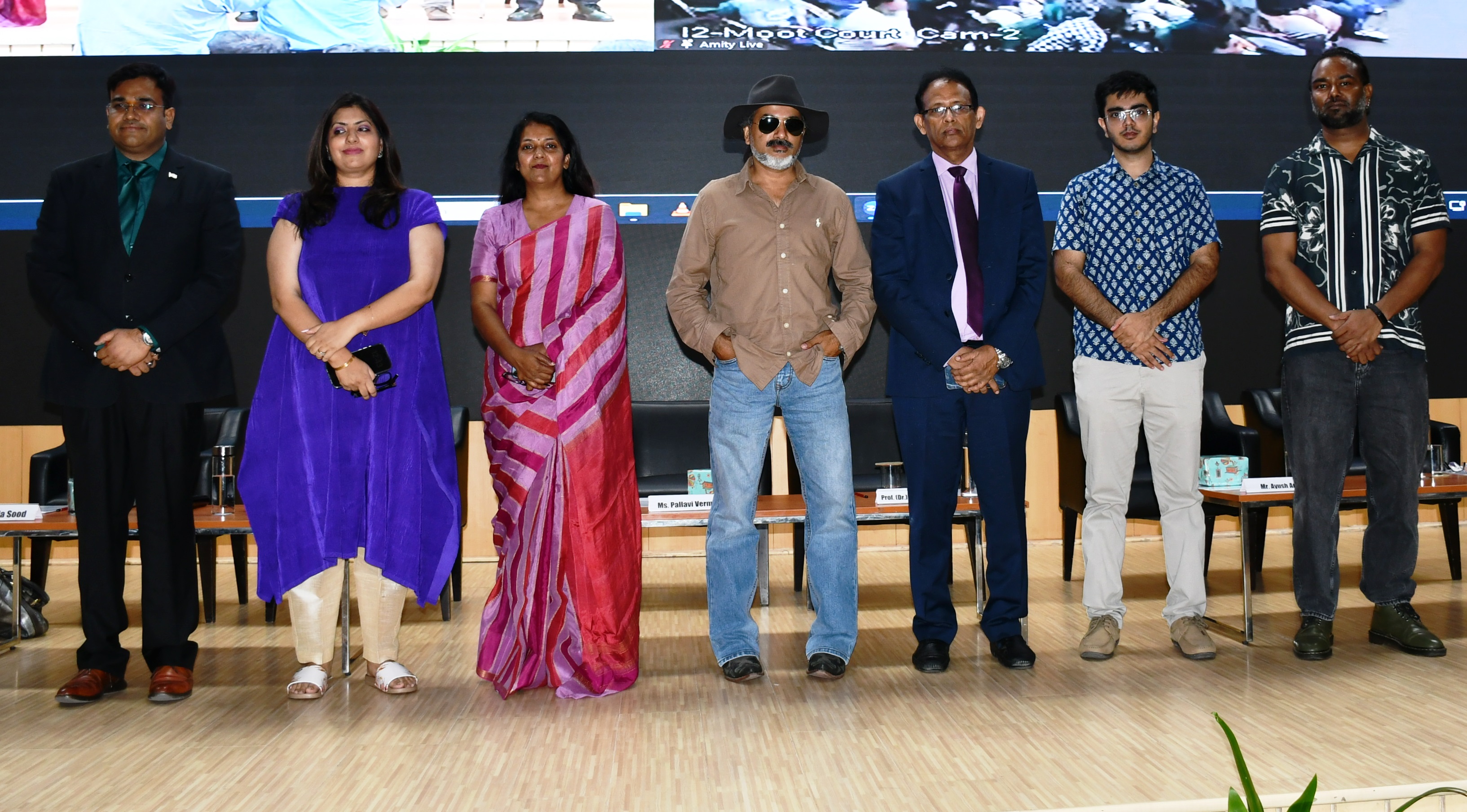
Amity School of Fine Arts, Amity University Uttar Pradesh Noida campus organized an insightful seminar on “Creativity, Technology and Innovation in Fine Arts”, bringing together eminent creative professionals, artists, designers and industry experts to deliberate on the evolving landscape of fine arts and the growing intersection of creativity, technology and innovation. The seminar provided students with an opportunity to gain valuable insights into emerging trends in the creative industry, the role of digital technologies in artistic expression, and the importance of innovation in building successful careers in the creative domain.
Mrs. Divya Chauhan, Chairperson, Amity School of Fine Arts, averred, “The fine arts are constantly evolving, and today’s artists have access to technologies and platforms that were unimaginable a few decades ago. At Amity, we believe that creativity must be nurtured alongside technological awareness and innovation. Our endeavour is to equip students with the artistic vision, skills and confidence required to contribute meaningfully to the rapidly changing creative ecosystem.”
Sharing his perspective on the evolving media and creative landscape, Mr. Krishna Kant, Creative Director & Video Producer, Soda Can Media, averred, “Technology has fundamentally changed the way stories are imagined, created and consumed. For young artists, the opportunity lies in understanding technology not as a replacement for creativity but as a powerful tool to amplify their ideas. The strongest creative work emerges when a compelling idea is combined with the right technology and execution.”
Emphasizing upon the importance of developing industry-relevant competencies among creative professionals, Ms. Pallavi Verma, SVP – HR & Operations, QSB Learning, said, “The creative industry today looks beyond degrees and technical expertise. Organizations are seeking professionals who can think creatively, collaborate effectively, adapt to change and continuously learn. Students of fine arts must therefore develop a combination of artistic ability, technological understanding and professional skills to remain relevant in a dynamic workplace.”
Speaking about the role of innovation in the creative sector, Ms. Vrinda Sood, CEO & Director, Citrus Ink Studios, opined, “Innovation begins with curiosity and the courage to experiment. The creative industry is changing rapidly, and artists need to constantly explore new formats, mediums and technologies. Students should embrace experimentation, learn from failure and develop their own creative identity rather than simply following existing trends.”
Highlighting the importance of preserving artistic sensibility in an increasingly technology-driven environment, Mr. Joyattam Dutta Roy, Contemporary Artist & Mentor, said, “Technology can expand the possibilities of art, but the heart of every meaningful artwork remains human expression. Artists must use new tools while staying connected to observation, emotion, imagination and their own lived experiences. Innovation becomes meaningful when it adds depth and meaning to artistic expression.”
Addressing the gathering, Dr. Pradeep Joshi, Group Additional Pro Vice Chancellor & Dean, Faculty of Applied Arts, Fine Arts, Performing Arts, & Visual Arts, said, “The convergence of creativity, technology and innovation is redefining the possibilities within fine arts. While technology provides artists with new tools and platforms, creativity remains the driving force behind meaningful artistic expression. It is important for students to develop an interdisciplinary outlook, experiment with emerging technologies and remain grounded in strong artistic fundamentals. At Amity, we are committed to creating an environment where imagination, innovation and industry exposure come together to prepare our students for the future of the creative world.”
Speaking about the growing possibilities offered by digital design and emerging creative technologies, Mr. Ayush Arora, Visual Designer, Adobe, asserted, “Digital tools have made the creative process more accessible, collaborative and experimental. Today, designers and artists can move seamlessly between different mediums and bring their ideas to life in innovative ways. Students should focus not only on mastering tools but also on developing strong conceptual thinking and a distinctive visual language.”
The engaging Q&A Session between the speakers and students provided valuable perspectives on career opportunities, changing industry requirements and the future of creative professions. The seminar reinforced the importance of creating an academic environment where artistic imagination is complemented by technological knowledge, innovation and industry exposure..
10, Sep 2026
KPMG in India and Mastercard Report Highlights India’s Opportunity to Build an Intelligent, Sovereign and Scalable Financial Ecosystem
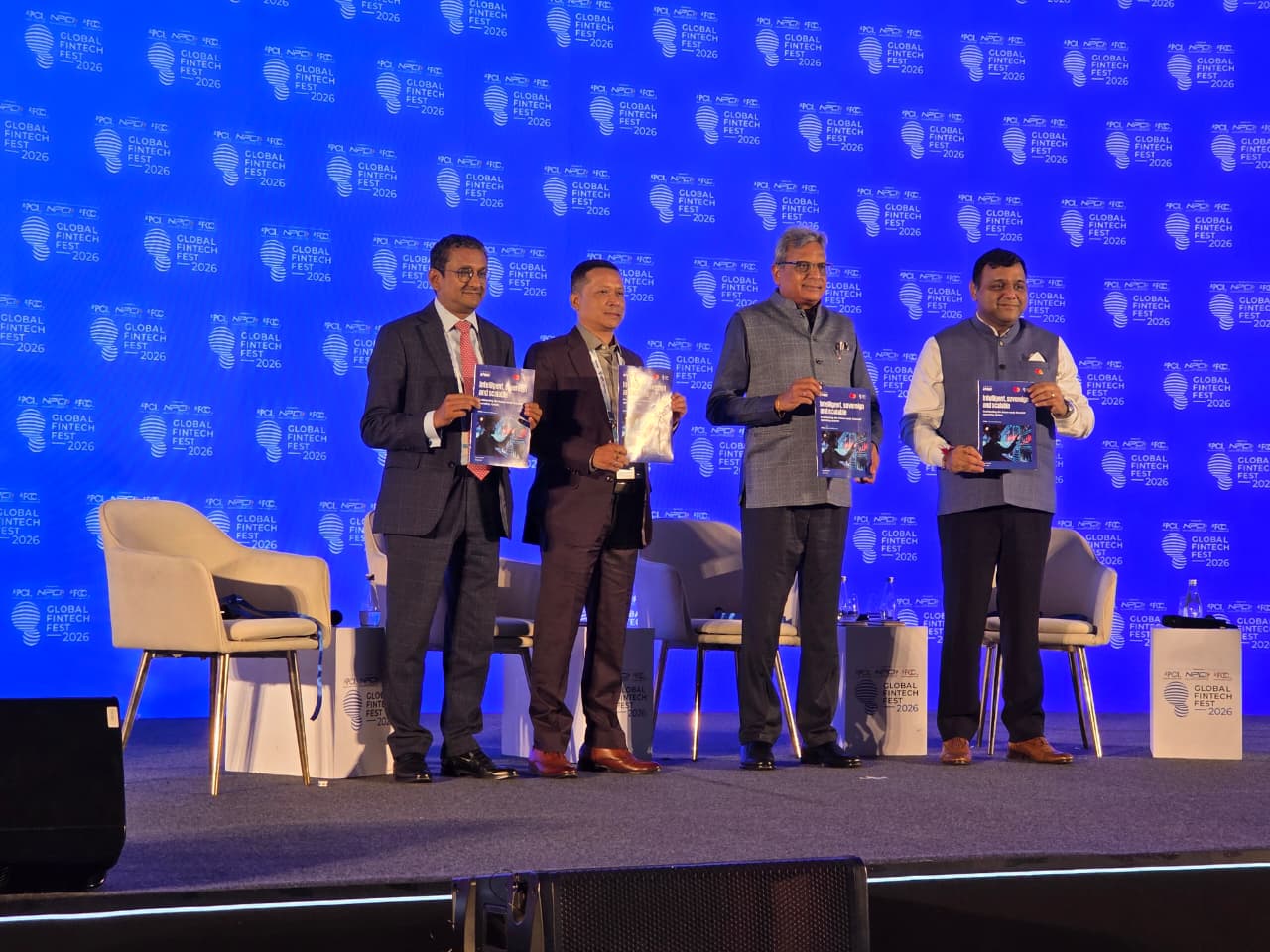
Amid rapid advances in artificial intelligence (AI), evolving cybersecurity threats, growing demands for digital trust and the increasing importance of technological self-reliance, KPMG in India and Mastercard today unveiled their report, Intelligent, sovereign and scalable: Architecting the future-ready financial operating system, at Global Fintech Fest 2026. The report highlights how AI, digital public infrastructure (DPI), trusted data-sharing frameworks, tokenisation and sovereign technology capabilities are reshaping the future of financial services.
It examines the strategic forces transforming the industry and explores India’s opportunity to build a financial ecosystem that is intelligent in decision-making, sovereign in its technological foundations and scalable in its ability to drive innovation and inclusive growth.
The report explores the convergence of AI-driven decisioning, programmable finance, consent-based data sharing, quantum-safe security and embedded regulatory intelligence, highlighting how these developments are creating a more connected, resilient and responsive financial ecosystem globally. It also examines how financial institutions are moving beyond standalone technology deployments towards integrated architectures that connect intelligence, execution and governance across the financial services value chain.
For India, these themes have particular significance. Over the last decade, the country has demonstrated how interoperable digital public infrastructure can drive financial inclusion and innovation at population scale. Platforms such as Aadhaar, UPI, DigiLocker, ONDC and the Account Aggregator framework have helped establish a foundation that supports seamless digital interactions, real-time payments and trusted data sharing across the economy. As the focus now shifts towards sovereign AI, trusted governance frameworks and resilient digital infrastructure, India is well positioned to shape a globally relevant financial ecosystem that balances innovation, trust and strategic self-reliance.
As financial services continue to evolve, institutions are increasingly exploring AI-native operating models, tokenised financial infrastructure, federated fraud intelligence and real-time compliance capabilities. At the same time, strengthening sovereign technology capabilities, enhancing cyber resilience and preparing for emerging risks such as quantum-era security threats are becoming important priorities for long-term competitiveness and sustainable growth.
Akhilesh Tuteja, Partner and Head, Clients and Markets, KPMG in India said “The future of financial services will be defined by the convergence of AI, trusted data sharing and real time digital infrastructure. India starts from a position of strength, having built some of the world’s successful digital public platforms at scale. The next opportunity is to combine innovation with trust and resilience to create a financial ecosystem, that is intelligent, sovereign and globally relevant”
Hemant Jhajhria, Head of Consulting, KPMG in India said “India has already demonstrated the transformative power of digital public infrastructure at scale. The next frontier lies in combining AI, trusted data-sharing frameworks, programmable finance and sovereign technology capabilities to create a financial operating system that is intelligent, resilient and future-ready. By embedding trust, governance and innovation into the foundation of financial services, India has the opportunity to shape a globally relevant model for the future of finance.”
Manoj Kumar Vijai, Non Executive Chairman, KPMG in India said “India’s digital journey has created a strong foundation for the future of financial services. As technology reshapes the industry, the opportunity lies in harnessing innovation responsibly to drive sustainable growth, greater inclusion and lasting value for the economy.”
Vishnu Pillai, Financial Services Technology Leader and Office Managing Partner- Kochi, KPMG in India said “The report highlights that the future of financial services will be shaped by the convergence of AI, tokenisation, trusted data-sharing frameworks and resilient digital infrastructure. As these capabilities mature, institutions will need to move beyond standalone technology adoption towards integrated operating models that can enable more intelligent decision-making, programmable solutions for customers and scalable innovation across the financial services value chain.”
Kunal Pande, Partner and Leader – Cyber, Risk and Compliance, KPMG in India said “The true test of innovation is not whether it can be launched, but whether it can be trusted, scaled and sustained. As financial services become more intelligent and interconnected, trust, risk, resilience and sustainable unit economics must form part of the design blueprint. Institutions that combine technological ambition with strong governance, cyber resilience and commercial viability will be better positioned to scale responsibly, navigate emerging risks and create enduring value for customers and the wider financial ecosystem.”
Highlights from the report :
- India’s fintech ecosystem has grown to more than 17,700 fintechs, driving AI-led digital transformation across banking, payments, and financial services
- Financial services firms are approaching an AI inflection point, with adoption expected to rise from 26 per cent to 65 per cent within 12 months, signaling a rapid shift from experimentation to scaled deployment across the industry
- Approximately 2.9 billion financial accounts are enabled to share data through the Account Aggregator framework, supported by over 538 million fulfilled consents as of July 2026, enabling faster and more data-driven financial services
- With the global digital assets market expected to generate ~USD 101 billion in revenue by 2026, tokenization is emerging as a key catalyst, enabling the conversion of financial assets into digitally tradable instruments that enhance liquidity, accessibility, and market efficiency
- Quantum-safe security is becoming an increasingly important strategic priority, with institutions preparing for future cryptographic risks across payments, digital identity and financial infrastructure
- Regulatory intelligence is becoming increasingly embedded within financial operations, enabling AI-driven monitoring, automated reporting and continuous compliance oversight across complex regulatory environments
Together, these developments point to a new phase of transformation where AI, trusted digital infrastructure, programmable finance and sovereign capabilities are increasingly shaping how institutions operate, manage risk and deliver value. For India, the convergence of DPI, trusted governance frameworks and strategic technology investments presents a significant opportunity to build a financial architecture that is intelligent, resilient, inclusive and globally relevant.
10, Sep 2026
TechnoStruct Group Becomes an Authorized Autodesk Reseller and Authorized Autodesk Learning Partner in India
New Delhi, Sep 10: TechnoStruct Group, a player in Building Information Modeling and Virtual Design & Construction in India, announces that it has been named an Authorized Autodesk Reseller and an Authorized Autodesk Learning Partner. As an Authorized Autodesk Reseller, TechnoStruct is now empowered to sell and support a portfolio of Autodesk’s AEC solutions, including Revit, NavisWorks,Civil 3D, AEC Collection to name a few, to clients across India. Combined with its existing standing as an Autodesk Learning Partner, the dual designation allows TechnoStruct to offer clients an end-to-end pathway: from selecting the right Autodesk products, through implementation and adoption, to training teams and providing ongoing BIM services support.
The partnership marks a significant step in TechnoStruct’s broader expansion plans across the Architecture, Engineering, Construction, and Operations space. The company positions the reseller status as a natural complement to its established BIM skilling business under TechnoStruct Academy and BIM/VDC services under AECO TechnoStruct, giving it a differentiated edge in serving clients with a single integrated offering.
“Becoming an Authorized Autodesk Reseller and Learning Partner is a natural next step for us. It allows TechnoStruct to move beyond training & BIM/VDC services, and offer clients a true end-to-end solution, from choosing the right Autodesk products to implementing them, training their teams, and supporting them through every stage of adoption. This is a key part of our larger AECO expansion, and it strengthens the value we bring to the industry,” said Mr. Roy Aniruddha, Founder, TechnoStruct Group.
With this authorization, TechnoStruct becomes one of the few organizations in India equipped to combine Autodesk software procurement with hands-on implementation and training expertise under one roof. The company said the move strengthens its ability to support AEC organizations navigating digital transformation, particularly as demand for BIM adoption, Digital Twins, and data-driven project delivery continues to accelerate across the sector.
Going forward, TechnoStruct plans to build out its Autodesk solutions and services offering further, integrating it with its BIM training programs and industry partnerships to support clients through every stage of their digital transformation journey.
10, Sep 2026
Samsung Certified Re-Newed Brings Galaxy S26 Series to More Customers

Gurugram, Sep 10, 2026: Samsung India is now offering the Galaxy S26 series — Samsung’s third-generation AI phones — as part of its Samsung Certified Re–Newed programme (CRN). Available on Samsung.com, Certified Re–Newed Galaxy S26 Ultra and Galaxy S26 devices are in like-new condition and at a great value.
10, Sep 2026
NABARD Uses AI to Make Kisan Credit Card Loans Faster and More Accessible for Farmers

Kisan Credit Card (KCC) is one of India’s key agricultural credit initiatives, designed to provide farmers with timely and affordable loans for crop cultivation and other farming-related needs. The scheme helps farmers access formal credit without having to depend heavily on informal lenders. Over the years, KCC has also been extended to allied activities such as dairy, fisheries and animal husbandry.
Now, the Kisan Credit Card ecosystem is moving into a more digital phase, with the National Bank for Agriculture and Rural Development (NABARD) developing artificial intelligence-based models that could help farmers access credit on demand.
NABARD develops AI models for Kisan Credit Card loans
NABARD Chairman Shaji Krishnan V said the institution is working on AI models aimed at enabling more convenient and on-demand Kisan Credit loans as rural lending increasingly adopts digital technologies.
The move could significantly change the way farmers access agricultural credit by making the loan process faster, more data-driven and potentially more responsive to their financial requirements.
Instead of relying only on traditional paperwork and physical banking processes, digital lending models can help financial institutions assess relevant information more efficiently and improve the speed of credit decisions.
How AI can transform Kisan Credit Card lending
The use of AI in agricultural lending could help banks and financial institutions process large amounts of information more efficiently. For farmers, this could translate into quicker access to credit when funds are needed for seeds, fertilisers, farm equipment, irrigation, harvesting and other agricultural expenses.
AI-based models can also support more data-driven credit assessment, particularly in rural areas where traditional credit histories may not always provide a complete picture of a farmer’s financial activity.
The larger objective is to make formal agricultural credit more accessible while improving the efficiency of rural lending.
Kisan Credit Card can support affordable farm credit
The Kisan Credit Card scheme was introduced to provide farmers with adequate and timely credit for agricultural operations. Government support through interest subvention and incentives for timely repayment has helped make eligible short-term agricultural loans more affordable.
According to government information, short-term agricultural loans under the scheme are available at a 7 per cent interest rate, with an additional 3 per cent incentive for timely repayment, bringing the effective rate to 4 per cent for eligible loans. The collateral-free credit limit has also been increased to Rs 2 lakh per borrower from January 1, 2025.
These measures are important for small and marginal farmers because timely access to affordable credit can reduce dependence on costly informal borrowing.
Digital lending can strengthen rural financial inclusion
The shift towards digital Kisan Credit Card loans comes at a time when India’s rural financial ecosystem is becoming increasingly technology-driven.
Digital platforms can reduce paperwork, improve access to banking services and make it easier for farmers to interact with formal financial institutions. This can be particularly useful for farmers living in areas where access to traditional bank branches remains limited.
The development of AI-based lending models could therefore become an important part of India’s broader push towards digital financial inclusion in rural India.
Kisan Credit Card and the future of agriculture finance
The future of agricultural lending is likely to depend increasingly on technology, data and faster digital services. NABARD’s AI initiative signals a move towards a system where farmers could potentially receive credit more quickly based on their actual financial and agricultural requirements.
This could help farmers manage seasonal expenses more effectively and reduce delays in accessing working capital.
The development is also significant for banks because improved digital assessment and processing can help lenders manage rural credit more efficiently while expanding their reach.
AI can create wider economic benefits for rural India
Faster access to agricultural credit can have an impact beyond individual farmers. When farmers receive funds on time, they can purchase agricultural inputs, invest in equipment, maintain livestock and improve farm productivity.
Higher agricultural activity can increase demand for seeds, fertilisers, machinery, transportation, storage and other rural services. This creates business opportunities across the wider rural economy.
A stronger digital lending ecosystem can therefore support not only farmers and Kisan Credit Card borrowers, but also rural businesses, agricultural supply chains and employment.
What NABARD’s AI push means for farmers
The development of AI-based Kisan Credit Card lending models represents a broader shift from traditional rural banking towards technology-enabled finance.
If implemented effectively, such systems could make agricultural credit more accessible, reduce processing time and improve the overall borrowing experience for farmers.
At the same time, responsible use of AI, data security, transparency and proper safeguards will remain important as financial institutions expand the use of technology in rural lending.
Conclusion
NABARD’s move to develop AI models for on-demand Kisan Credit Card loans highlights how technology is becoming an important part of India’s rural finance ecosystem.
For farmers, faster and more convenient access to formal credit can support timely investment in agriculture and allied activities. For banks and rural businesses, digital lending can improve efficiency and expand the reach of financial services.
As India’s agriculture sector becomes increasingly connected to digital platforms, the combination of Kisan Credit Card, AI and digital banking could play an important role in strengthening rural financial inclusion and supporting long-term agricultural growth.
10, Sep 2026
IFFCO-TOKIO Strengthens Leadership Team, Elevates Sanjeev Chopra as Director – Operations
Delhi/Gurugram, Sep10: IFFCO-TOKIO General Insurance Company Limited, one of India’s general insurance companies, has announced the elevation of Mr. Sanjeev Chopra as Director – Operations. In his new role, he will focus on strengthening operational efficiency, governance frameworks and organisational capabilities while supporting IFFCO-TOKIO’s continued focus on sustainable and customer-centric growth.
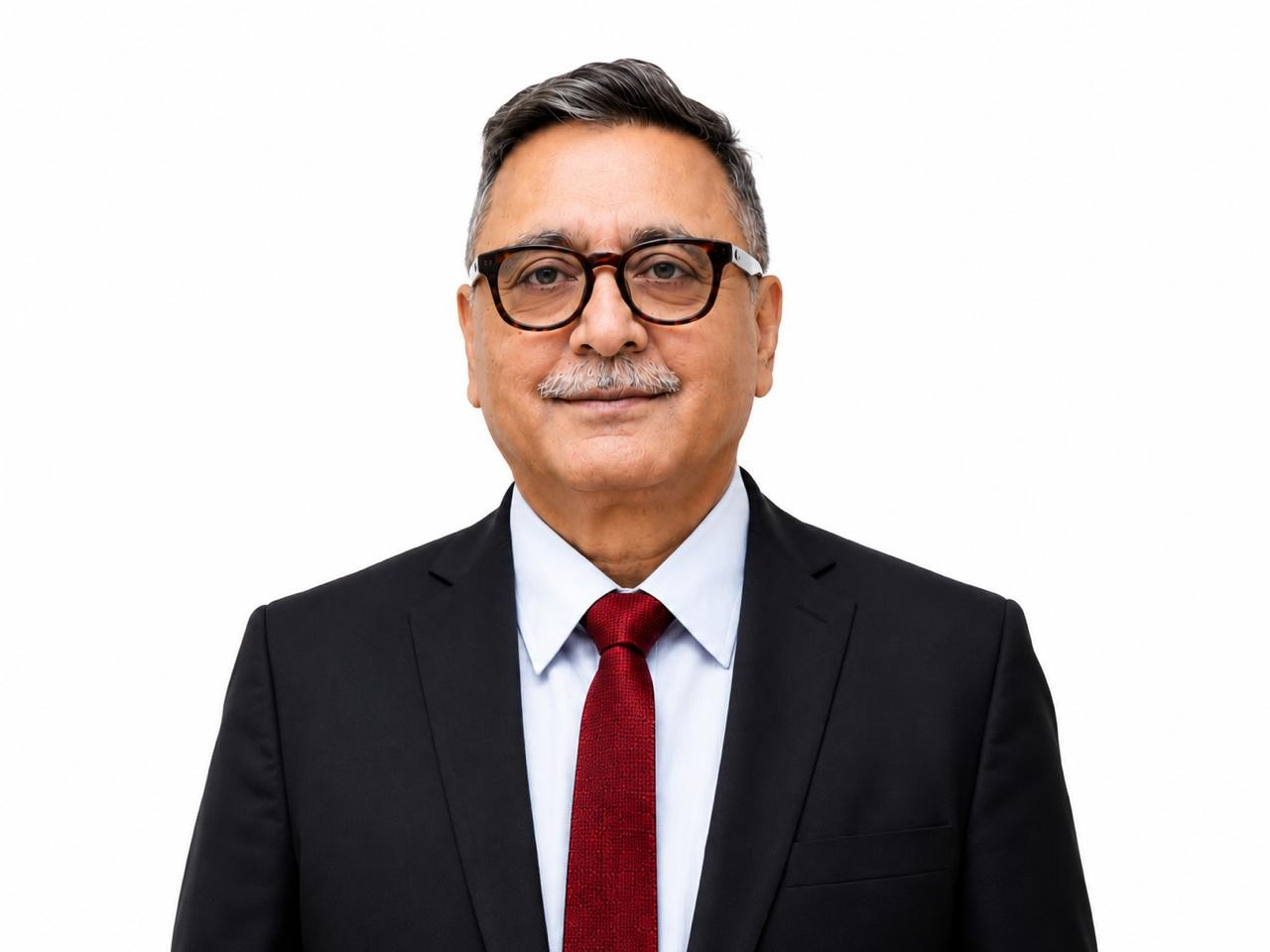
With over four decades of experience in the general insurance industry, Mr. Chopra brings extensive expertise across financial strategy and planning, underwriting, finance and pricing, investments and treasury management, tax strategy, reinsurance, governance, stakeholder management and regulatory compliance. His deep understanding of the evolving regulatory, financial and operational landscape of the industry has enabled him to contribute significantly across multiple facets of general insurance.
Associated with IFFCO-TOKIO General Insurance since 2001, Mr. Chopra has held several key positions during his tenure, including Senior Executive Director & Chief Financial Officer. Over the years, he has played an important role in strengthening the company’s financial and operational frameworks and contributing to its overall growth journey.
Commenting on the elevation, Mr. Tatsuya Fujimoto, Managing Director & CEO, IFFCO-TOKIO General Insurance Company Limited, said,
“Sanjeev has been a valued part of IFFCO-TOKIO’s journey for over two decades. His extensive experience, deep understanding of the insurance industry and strong financial expertise have made him a trusted and accomplished leader within the organisation. We are confident that, in his new role, he will further strengthen our operational capabilities, enhance organisational effectiveness and contribute meaningfully to IFFCO-TOKIO’s continued growth and success.”
Expressing pleasure on his elevation, Mr. Sanjeev Chopra as Director – Operations said,
“It is a privilege to have been associated with IFFCO-TOKIO for over two decades, and I am grateful for the trust and confidence the organisation has placed in me. I look forward to taking on this responsibility and contributing to the company’s continued growth and operational excellence.”
Mr. Chopra is recognised for his extensive experience and expertise across the general insurance spectrum, with a career spanning financial management, underwriting, investments, reinsurance, governance and regulatory matters. His elevation to the role of Director – Operations further strengthens IFFCO-TOKIO’s leadership team as the company continues to enhance its operational capabilities and deliver sustained value to its customers and stakeholders.
10, Sep 2026
Asset Managers Confident of Using AI in their Operations, but Mindful of Necessity for High Quality Data, Global Research Reveals
70% of asset managers believe the quality of their organization’s data is good or excellent, while almost a third (32%) claim it to be excellent
BOISE, Idaho, NEW YORK, CHICAGO, LONDON and HONG KONG, Sept 10 – Asset managers are broadly confident in the quality of the data being used to train artificial intelligence (AI) models being deployed in their organizations, new research from Clearwater Analytics, drawn from its “GenAI and the Data Divide” study, shows.
The study, which covered a broad spectrum of fund managers including insurance asset managers, hedge funds, private markets specialists, and general asset managers, reveals that nearly three quarters of asset managers (70%) surveyed believe their data is good or excellent (32% said it is excellent). That confidence isn’t evenly spread. It depends heavily on which part of “data quality” is being asked about.
As far as accuracy and reliability is concerned, only just over half (56%) said their data was good or excellent, the lowest score of any dimension tested. Yet on the matter of completeness and coverage, almost eight out of 10 (79%) said it was good or excellent, (48% said it is excellent). The gap between the two, roughly 23 percentage points, is the clearest sign that firms have more data than they fully trust.
Almost three quarters (73%) were satisfied that data quality with regard to representativeness and bias was good (31%) or excellent (42%). However, more than a quarter (27%) said it was poor (11%) or average (16%).
Slightly fewer (70%) consider the timeliness and freshness of the data to be good (46%) or excellent (24%). On every dimension but one, confidence holds above seven in 10. Accuracy is the exception, and it’s the dimension that decides whether an AI output can actually be acted on.
The majority (69%) said that their data sets are complete, while 12% of those said they were very complete. However, more than a fifth (21%) said they were incomplete. Coverage, in other words, is largely a solved problem. Trust in what that coverage actually says is not.
Despite the overall confidence in the quality of the data, there remains quite high levels of concern about the potential use of poor quality data in an organization’s AI operations, and those concerns escalate quickly once the conversation turns to consequences. Almost three quarters (72%) said the risk of this made them concerned or very concerned (36% in each group).
Four out of five (80%) were concerned – 20% of them very concerned – that the use of poor quality data could erode trust in the effectiveness of their AI tools, rather than placing the blame on the quality of the data that has been used to develop it. That’s the risk compounding on itself: a data problem gets misread as a technology problem, and the tool takes the blame the data deserves.
Seven out of 10 (70%) of managers are concerned about the financial and legal risks coming from biased investment decisions or regulatory fines, with almost half (48%) very concerned about the impact from the use of poor quality data.
These concerns have an impact on available resources, too. Almost two thirds (65%) were concerned that data scientists are spending their time cleaning up data instead of building better models, with 39% of them very concerned about resources being wasted. The people best equipped to improve AI are the ones stuck fixing the data underneath it.
Almost all asset managers (99%) agreed that the biggest barrier to trusting AI outputs, fueling an “AI trust gap”, is the use of unreliable and opaque data. Near-unanimous numbers like that are rare in any survey. It’s the clearest signal in the entire study of where the industry’s attention needs to go next.
It has been well documented that without careful monitoring, poor quality data can amplify inherent biases within AI models. While almost three quarters (73%) are concerned that this could happen, more than two thirds (67%) are satisfied their organizations’ AI models have the ability to track and audit sources of data. Even so, more than a fifth (22%) were unsure and a further 10% suggested the abilities were incomplete. That leaves close to a third of firms without full visibility into the data their own AI models are relying on.
The vast majority (74%) said the data aggregation platform they use is effective at reconciling and aggregating data from disparate sources into a unified system. A fifth (20%) said it was very effective. Aggregation, like coverage, is a capability most firms have already built. Accuracy is the one they’re still building toward.
Souvik Das, CTO at Clearwater Analytics, said: “The data that a model trains on is the input that actually matters, more than the model itself. That’s why this finding lands the way it does. Firms have built real confidence in their AI, but confidence in the underlying accuracy hasn’t caught up yet, and that gap is what determines whether a firm acts on an output or checks it first. Closing it is the discipline this next phase of AI actually requires.”
10, Sep 2026
BULLET Microdrama Partners with Tata Motors Commercial Vehicles for ‘Apna Superstar’, Celebrating the Spirit of Aspirational India

Mumbai, September 10, 2026: BULLET Microdrama has partnered with Tata Motors Commercial Vehicles for Apna Superstar, starring Naman Arora and Nishi Saxena, marking the launch of its another branded microdrama. Centred on ambition, resilience, and the desire to build a better future, the collaboration uses the emerging microdrama format to bring to life a culturally rooted narrative that reflects the dreams and determination of aspirational India.
As storytelling and consumption habits continue to evolve, BULLET is using the microdrama format to tell stories that are fast paced, emotionally engaging and culturally rooted. With Apna Superstar, the platform extends this approach to branded storytelling, building on its earlier work with JK Cement. Now, Tata Motors Commercial Vehicles has backed BULLET’s vision, trusting the platform to weave its philosophy of aspiration and progress naturally into the narrative.
Speaking about the collaboration, Azim Lalani, Co-Founder & Chief Business Officer, BULLET Microdrama, said, “Apna Superstar is an important milestone for BULLET as our first branded microdrama. The format gives us the opportunity to tell emotionally rich stories in a way that reflects how audiences are consuming entertainment today. What made this collaboration particularly exciting was Tata motors commercial vehicles’s willingness to embrace that evolution and trust BULLET to translate the brand’s ethos into the narrative authentically. That gave us the freedom to create a story rooted in the realities while ensuring the brand had a meaningful role within Sonu’s world.”
Built on the belief that storytelling is evolving as fast as the audiences consuming it, BULLET Microdrama has embraced microdrama as a format that is quick, culturally rooted and unafraid to go straight to the emotional core of a story. Apna Superstar reflects that evolution, speaking to the lives, struggles, and ambitions of audiences today.
At the centre of Apna Superstar is Sonu, a young man honouring his late father’s memory while chasing the dream of building something of his own, a journey of resilience that Tata Azura became part of as a quiet enabler of his progress.
Trailer Link: https://www.instagram.com/p/
Highlighting the significance of the partnership, Munaf Merchant, Head – AVOD & Partnerships, BULLET Microdrama, said, “As microdrama continues to find a wider audience, we’re seeing more brands wanting to be part of stories that carry real emotional weight, rather than just appearing alongside them. With Apna Superstar, the idea was to build a story that reflects everyday ambition, and to bring a brand into that world in a way that feels seamless. This aligns closely with BULLET’s focus on meaningful, high-value content that resonates with audiences. We’re grateful to Tata motors commercial vehicles for their trust and support in bringing this vision to life.”
Tabassum Modi, Chief Content Officer and Head, Havas Play India, who played a key role in bringing this partnerhsip to life, said, “Microdrama is emerging as one of the most consumed storytelling formats in the country today, and brands that recognize this shift early are positioned to build a far deeper connect with audiences. At Havas Play, we conceptualized a deeply resonant narrative designed to truly humanize the brand. By facilitating this collaboration, we are proud to bring together Tata motors commercial vehicles and BULLET Microdrama, a visionary brand and an innovative platform that share a clear conviction in the format’s immense potential.”
Apna Superstar, starring Naman Arora and Nishi Saxena, is now streaming on BULLET Microdrama.


