


20, Jun 2025
New Zealand High Commission Hosts Matariki Celebration in India
20th June, 2025 – The New Zealand High Commission, in collaboration with the Fashion Design Council of India (FDCI) and Education New Zealand (ENZ), presented an evening celebrating Matariki — the Māori New Year – through the lenses of culture, creativity, and sustainability. The event was entitled RE/NEW: A Time to Shine and took place on Thursday, 19 June.

The event brought together traditional performances by the Māori cultural group Ngāti Koraha and a specially curated collaborative fashion showcase.
Twelve young designers from five institutions — the National Institute of Fashion Technology and Pearl Academy in India, and Auckland University of Technology, Massey University and Whitecliffe College in New Zealand — presented ensembles they had collaboratively worked on for two months, fusing indigenous Māori concepts with Indian textiles and techniques. This cross-cultural collaboration reflected the values of Matariki — remembrance, renewal and community — and showcased the deepening connections between New Zealand and India.
A high-powered jury comprising top Indian designers Namrata Joshipura and Nikhil Mehra (of the Shantnu & Nikhil label), and renowned fashion editors and tastemakers Nandini Bhalla (Editor-in-Chief of The Word) and Virender Bhardwaj (Fashion Editor, Esquire) picked the winning team comprised of Ella Rhodes from Auckland University of Technology and Stuti Gupta from Pearl Academy. The runners-up were Samsara Jasper from Whitecliffe College and Vanya Aggarwal from NIFT.
“This is a special occasion for us as we mark Matariki, the Māori New Year, here in India,” said New Zealand High Commissioner H.E. Patrick Rata. “The values of Matariki of connection, reflection and renewal resonate deeply across cultures. The evening celebrates the shared creativity and enduring bonds between our peoples. We are honoured to bring to India a window into New Zealand’s indigenous Māori culture through this unique partnership.”
FDCI Chairman Sunil Sethi said, “It is a pleasure to be part of this collaboration and advance the cultural connections between India and New Zealand through the universal language of fashion. We are proud to support such cross-cultural initiatives that explore new narratives, foster sustainable design and inspire young talent to think global while honouring their roots.”
Matariki marks the rising of the Pleiades star cluster in the Southern Hemisphere’s midwinter sky and signifies the beginning of the Māori lunar calendar year. In Māori culture, it is a time to reflect on the past, celebrate the present, and plan for the future, principles that align strongly with India’s own rich cultural traditions and seasonal festivals.
RE/NEW: A Time to Shine was part of New Zealand’s Cultural Diplomacy International Programme and exemplified the vibrant cultural diplomacy between New Zealand and India. It emphasized the power of creative industries to build bridges across borders
- 0
- By Neel Achary

20, Jun 2025
Price of Independent Floors in South Delhi rises upto 105% in 3 years: Golden Growth Fund
New Delhi, June 20, 2025: The price of luxury independent floors in South Delhi has risen between 64-105% in the last three years, according to a report by Golden Growth Fund (GGF), a Category-II real estate focussed Alternative Investment Fund (AIF).
According to the report, in Category-A colonies, between June 2022-June 2025, the average price for a 2500 sq. ft. floor has risen by approximately 100% from Rs 8 to 11 crore to Rs 16 to 22 crore while for a 6000 sq. ft. floor, the price has risen by 105% from Rs 18 to 22 crore to Rs 36 to 45 crore.
In Category-B colonies, between June 2022-June 2025, the average price for a 2500 sq. ft. floor has risen by approximately 70% from Rs 5 to 6.5 crore to Rs 8.5 to 11crore while for a 3200 sq. ft. floor, the price has risen by approximately 64% from Rs 8 to 11 crore to Rs 13 to 18 crore.
Ankur Jalan, CEO, Golden Growth Fund said: “South Delhi is today the most premium real estate market with per sq. ft. rate in a Cat-A colony ranging between Rs 60,000-Rs 90,000 and in Cat-B colony between Rs 36,000-Rs 56,000 depending upon floor and colony. With growing interest from startup founders and businessmen, South Delhi has emerged as an end-user destination with privacy and customised space as primary needs of these ultra-rich habitants. Its connectivity to the office hubs in Gurugram and Noida; and the airport adds to its appeal. The excellent return on investment is another factor that has added to the growing interest.”
| Average Price of Independent Floors in South Delhi | ||||
| Colony Category | Floor Size | June 2022 (Rs cr) | June 2025 (Rs cr) | % change |
| Category A | 2500 sq. ft. floors | 8-11 | 16-22 | 100% |
| 6000 sq. ft. floors | 18-22 | 36-45 | 105% | |
| Category B | 2500 sq. ft. floors | 5-6.5 | 8.5-11 | 70% |
| 3200 sq. ft. floors | 8-11 | 13-18 | 64% | |
| Source: Golden Growth Fund | ||||
*Price range is to indicate floor-wise and colony-wise pricing
In an earlier report, GGF said the redevelopment potential of South Delhi is worth Rs 5.65 lakh crore across 42 MCD Regulated colonies with plots (occupied and vacant) in Category A & B colonies alone accounting for over Rs 5.35 lakh crore.
“The real estate market in the last three years has been bullish. However, what separates South Delhi from the rest is the consistent demand, reliable and safe investment and substantial returns. Besides, it also boasts of safety of the asset against depreciation of capital,” Ankur Jalan said.
Some of the Category-A and B colonies are Mayfair Garden, Panchsheel Park N Block, Panchsheel Park S & E Blocks, Sadhana Enclave, Anand Niketan, Vasant Vihar, Shanti Niketan, Westend, Chankyapuri, Golf Links, JorBagh, Sundar Nagar, Maharani Bagh, Chirag Enclave, GK, Green Park, Gulmohar Park, Niti Bagh etc.
“HNIs, NRIs and family offices, who earlier invested in local properties without the cushion of compliance and safety, are making investments in AIFs that invest in these colonies. With returns as high as 18-20% without the hassle of maintenance, AIFs have opened a new avenue for these investors, Jalan further added.
20, Jun 2025
Techno India Group Public School-Garia Hosts CBSE District Level Deliberation On STEM Education
Kolkata, 20th June, 2025: Techno India Group, Eastern India’s largest education provider, in its quest for educational excellence and innovation, successfully hosted the CBSE District Level Deliberation (DLD) Workshop on STEM Education at Techno India Group Public School (TIGPS), Garia. Under the guidance of the CBSE Centre of Excellence, Bhubaneswar, the event brought together STEM educators from across South 24 Parganas in a vibrant exchange of progressive teaching practices, collaborative inquiry, and transformative learning strategies.

The District Level Deliberation is part of a CBSE initiative encouraging schools across India to conduct localized workshops that enrich pedagogical frameworks around STEM (Science, Technology, Engineering, and Mathematics) education. With a strong emphasis on inquiry-based learning, interdisciplinary integration, and hands-on practices, the DLD aims to align classroom experiences with the vision set forth by the National Education Policy (NEP) 2020.
The day began with a ceremonial lighting of the lamp by the Appreciation Committee which included Ms. Tania Sen, Principal of TIGPS Garia & CBSE District Training Coordinator for South 24 Parganas; Mr. Dipankar Bhattacharya, Principal of Techno Main Salt Lake and Pro-Vice Chancellor, Techno India University; and Dr. Apala Chakraborty, Principal of Future Scholars Academy. The mood was set by a soulful prayer song performed by the TIGPS Garia choir infusing the space with positivity and purpose.
“Education today is all about experiences. In alignment with the vision of NEP 2020, the learning experiences have to be transformative, meaningful, and relatable to real life ensuring the quality of education as envisioned in SDG 4. Our efforts have to be directed towards making STEM Education interactive, innovative, and interesting for the learners, thus equipping them with skills of research, development, and entrepreneurship,” said Ms. Tania Sen, Principal, TIGPS Garia & CBSE District Training Coordinator (South 24 Parganas).
Schools participating in the deliberation included:
- Jyotirmoy Public School
- Saini International School
- Silver Point School
- Swarnim International School
- Techno India Group Public School, Garia
Each institution presented insightful case papers that showcased unique practices and classroom innovations around topics such as:
- Hands-on Practical Learning in STEM
- Sustainable Development through STEM Education
- Motivating Students Towards AI, Design Thinking, Coding & Robotics
The case presentations were assessed by the Appreciation Committee who not only evaluated the contributions but also shared valuable inputs, enriching the dialogue further.
As the event concluded with the National Anthem, it left behind a strong message of collaborative growth and actionable strategies for teaching STEM. This District Level Deliberation marks yet another step by Techno India Group towards creating learning ecosystems that are responsive, forward-thinking, and truly student-centric.
20, Jun 2025
Sundaram Finance expands Sundaram Wealth as a specialised service to serve High Net Worth and Affluent Clients

Chennai, Friday, June 20, 2025…– Sundaram Finance, one of India’s most respected financial institutions with over seven decades of exemplary customer obsession, today announced the expansion of Sundaram Wealth as a dedicated wealth management offering. This strategic initiative positions the company to better serve the sophisticated financial needs of Ultra High Net Worth Individuals, High Net Worth Individuals (HNI) and affluent families across India.
The expanded offering builds upon the company’s existing franchise in wealth management and will provide comprehensive financial solutions including strategic financial planning, portfolio allocation and risk management through enhanced capabilities.
Strategic focus on affluent market segments
Sundaram Wealth will primarily target families and individuals who require sophisticated wealth management solutions beyond traditional investment products. Rooted in Sundaram Finance’s enduring customer relationships with self-employed and entrepreneurs, this offering is designed to serve those who have created significant wealth, as well as those who are thoughtfully and steadily building toward it.
“Our expansion of Sundaram Wealth represents the natural evolution of our client relationships and our commitment to providing comprehensive financial solutions,” said Harsha Viji, Executive Vice Chairman of Sundaram Finance. “Over the decades, we have witnessed many clients progress significantly in their financial journey through disciplined investing and financial planning. This expansion allows us to serve our multigenerational relationships in addressing their increasingly complex wealth management needs with the same integrity and personalised service that has defined our customer centricity for over 70 years.”
Leveraging distribution excellence
Sundaram Wealth will leverage and expand Sundaram Direct, the company’s distribution business, which has been a cornerstone of Sundaram Finance’s financial products & services offerings for over two decades. Sundaram Direct deals with both SF Group and third-party financial products and has built a wealth and investments portfolio exceeding Rs. 7,000 crore of assets under management. This established distribution infrastructure provides Sundaram Wealth with extensive product access and proven operational capabilities to deliver differentiated wealth management solutions.
The wealth management expansion will tap into this distribution strength while simultaneously targeting new affluent clients across India’s growing wealth segments. The growth strategy will include both organic growth through existing customer relationships and targeted acquisition of new HNI and affluent clients seeking comprehensive wealth management services. The company aspires to achieve an AUM of 20,000 – 25,000 crore in the next 4 – 5 years.
“The formal expansion of Sundaram Wealth reflects our optimism about India’s march towards a middle-income economy and the country’s growing affluent population. We are keen to serve these customers, particularly the self-employed, and address their evolving financial needs in the Sundaram Way that has stood the test of time over the past over seven decades,” said Rajiv Lochan, Managing Director of Sundaram Finance. “We are uniquely positioned to serve this market through our combination of multi-generational client relationships combined with a “you first” approach to clients, comprehensive product suite, and unwavering commitment to prudent wealth management. Our goal is to be the trusted wealth partner to families and individuals who aspire to a long-term financial journey built on openness and discipline.”
20, Jun 2025
d’you launched their Minis and made it Massive
Once an afterthought, mini skincare is now a cultural flex – trial-sized, collectible and designed for modern routines. Homegrown premium skincare brand d’you didn’t just follow the shift; they led it, launching full-strength formulas of their hero products in sleek, travel-ready packaging that the public actually wants to be seen with.

But the product was only half the story. They rolled out a bold, 360° campaign grounded in community insight, designed to spark curiosity and land with cultural relevance.
Weeks before the official drop, creators across diverse verticals with a balanced mix of men and women (because skincare and fun don’t play by gender rules) casually started posting stories about their favourite d’you product and began mentioning, “Wish this came in a mini…”. It didn’t feel like a push. It felt like a genuine moment of product desire. Then, the replies rolled in: “Please make this happen”; “OMG, yes!! Manifesting this.” And just like that, the audience became part of the narrative. The want turned into collective anticipation.
Then came the puzzle. Yes, a puzzle. In a world of overly slick campaigns, d’you went analog – because puzzles are equal parts nostalgic and cerebral, and just the right kind of unexpected. Select creators received a custom puzzle with cryptic, branded copy – a physical teaser that hinted at something small was coming. It was a clever spin on the brand’s iconic sale IP from their annual sale – “something big is coming.” No overt branding. No product reveals. Just curiosity.
Around the same time, d’you rolled out a series of cheeky Instagram teasers – visually striking edits featuring models, dressed in the colours of the products, staring down at their miniature selves. It was surreal, editorial and unmistakably d’you. The copy did its part too, with playful, on-brand wordplay like “size matters” and “you asked, we listened” – a nod to the brand’s community-led approach and its knack for turning even the smallest drop into a conversation.
To turn up the heat, d’you teamed up with Diet Sabya – the internet’s favorite culture watchdog and an early supporter of the brand. In fact, d’you was the first homegrown skincare label Diet Sabya had ever organically championed. So this partnership wasn’t just strategic, it was a full-circle moment. For the minis drop, d’you gave exclusive early access to Diet Sabya’s broadcast community, turning the launch into an insider moment that sparked real buzz and felt more cultural than campaign.
The buildup didn’t stop at social – d’you pushed the limits of creativity with bold, unexpected email and WhatsApp teasers with sharp, curiosity-piquing messaging – reaching over 100,000 people and keeping their inner circle guessing. No product reveals, just enough intrigue to fuel anticipation.
Then finally, the minis dropped. But d’you wasn’t done. To celebrate the launch, the brand threw a cold plunge party called The Mini Plunge, in the middle of sweltering Bombay summer. Freezing dips, dewy skin, and friends of the brand dunking in style in ice buckets shaped like d’you minis – all in the name of skincare. It was unexpected, totally on brand, and (pun intended) the coolest skincare event of the year.
The brand also executed a seeding strategy by distributing mailers to over 500 creators across diverse categories – stylists, beauty influencers, wellness professionals and more. This approach resulted in 300+ organic Stories, collectively generating over 2 million impressions capturing authentic excitement, and making the launch feel deeply personal and community-led.
What stood out in this launch wasn’t just the product. It was the way it was brought to life. There was less selling, more storytelling. Less push, more participation. From social whispers to puzzle drops to a literal plunge into the unknown – this was brand-building as culture play, not just campaign.
20, Jun 2025
Swamiraj Becomes ‘House of Swamiraj’, Announces INR 210 Cr Expansion
Swamiraj Constructions Rebrands as ‘House of Swamiraj’, Announces Rs 210 Cr Projects in Thane and Ambernath
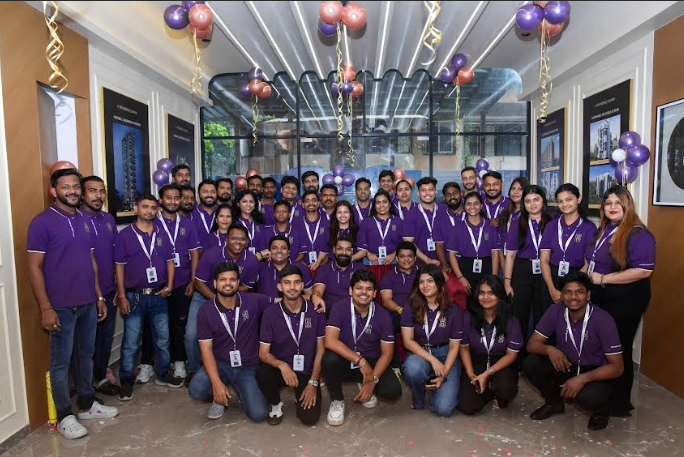
Mumbai, 20th June 2025: In a defining moment that marks its evolution from a reputed builder to a future-focused lifestyle brand, Swamiraj Constructions has officially announced its rebranding as House of Swamiraj. With a legacy spanning two decades and over 1,700 satisfied homeowners across the Mumbai Metropolitan Region (MMR), the company is now stepping into a new era that fuses its time-tested values with a progressive approach to community-led, wellness-driven living.
The rebranding was officially launched through a digital campaign titled #BeyondDimensions. Rolled out in three phases: teaser, engagement, and launch, the campaign highlighted the company’s renewed focus on designing homes that are not only functional but also emotionally connected to the people who live in them.
At the heart of the rebranding lies a transformative vision: to go beyond the developer role and become a curator of experiences that foster belonging legacy, and lifestyle enrichment. The shift from “Swamiraj Constructions” to “House of Swamiraj” signifies more than a name change. It reflects a strategic repositioning that puts emotional intelligence, sustainable living, and design innovation at the core of every project.
“Changing our name to House of Swamiraj is not just about a new look. It’s about staying true to who we are while preparing for what’s next. For over 18 years, families have trusted us to build their homes, and that trust is the foundation we are building on. With this new chapter, we are focusing even more on thoughtful design, stronger communities, and meaningful living. The name may be new, but our purpose remains the same, and that is to create homes that truly improve lives,” said Jason Samuel, Director, House of Swamiraj.
To mark this remarkable transformation, House of Swamiraj is set to launch three significant residential developments. Two of these developments are located off Pokhran Road No. 1, Thane (West) — one being a thoughtfully designed affordable 2BHK lifestyle community, and the other offering a mix of 1BHK and 2BHK residences, with a combined investment of ₹160 crore.
The third is a premium residential tower in Ambernath (West), with a project value of ₹50 crore, aimed at redefining modern living in emerging locations.
Alongside these, a new development is planned in Vartak Nagar, Thane, aligning with the brand’s ambitious goal to achieve a turnover of Rs 2,000 crore while maintaining its commitment to affordability, innovation, and community-centric growth.
With its new identity, House of Swamiraj aims to transcend conventional construction by building homes that resonate emotionally and function intuitively. The long-term vision includes expanding into emerging urban hubs across Maharashtra, delivering over 12,000 homes, and achieving a sales milestone of Rs 10,000 crore. The brand aspires to establish itself among Maharashtra’s top five lifestyle-centric developers, championing future-ready living with wellness amenities, sustainability, and smart home innovations embedded into every project.
As House of Swamiraj ushers in this new chapter, it promises not just spaces to live in but places to thrive, reaffirming its belief that a house is not just built with walls but with purpose, emotion, and vision.
20, Jun 2025
Rural Healthcare Needs People, Not Just Infrastructure
Bridging the Human Gap in Rural Healthcare: Why India’s Next Health Investment Must Be in People, Not Just Infrastructure
New Delhi, 20 June, 2025 – Despite rapid infrastructure development across rural India, one critical gap continues to undermine progress in public health: the absence of a robust rural healthcare workforce. While nearly 65% of India’s population lives in rural areas, these regions have access to only a fraction of the country’s physicians—often just 3 per 10,000 people, compared to 13 in urban zones.
Real change begins not with more infrastructure, but with investing in people. Without trained doctors, nurses, and frontline health workers embedded within rural communities, even the best-equipped facilities cannot deliver meaningful health outcomes. It’s time to shift the focus from simply building hospitals to building a resilient, motivated, and well-supported rural healthcare workforce.
The problem starts early. Only 132 of India’s 480 rural districts have medical colleges, limiting access to education for rural youth. And even when rural students train in urban centres, few return—citing poor infrastructure, limited opportunities, and lack of support. This results in critical service gaps, from maternal health to emergency care.
There is an urgent need for a comprehensive roadmap to address the rural healthcare workforce crisis. Key solutions include expanding localised training and medical education, offering scholarships to students from rural areas, and creating meaningful career development incentives that make rural service both viable and rewarding. Equally critical is the need to strengthen public-private partnerships to scale these efforts effectively. The roadmap also underscores the importance of empowering community health workers—like ASHAs and ANMs—by providing them with better training, tools, and the respect they deserve, recognising their pivotal role as trusted health anchors within their communities.
“Healthcare in rural India can’t be fixed by infrastructure alone—it needs people. By investing in local talent and making rural service both meaningful and sustainable, we can create a healthcare system that truly reaches every corner of the country,” said Dr Sunil Khetrapal, Director- AHPI. “This is not just a healthcare challenge, it’s a nation-building opportunity.”
The message is clear: if India wants to build a healthier, more equitable Bharat, it must prioritise the people who care for it. That means rethinking how rural health professionals are trained, supported, and empowered—so no one is left behind because of where they live.
20, Jun 2025
Leading the Change: 4 Platforms Revolutionizing India’s Dental Industry
India’s dental industry is evolving rapidly, driven by growing demand, increased awareness of oral health, and the need for streamlined access to quality supplies. In this changing landscape, a new league of platforms is stepping up, transforming how dental professionals discover, purchase, and manage essential products and services. These platforms are bridging the gap between manufacturers and clinics, bringing affordability, convenience, and nationwide reach to a once fragmented supply chain. Whether you’re running a well established practice or just setting up your first chair, these companies are making daental procurement faster, easier, and more reliable than ever before.
Here’s a look at four key platforms that are leading the charge and revolutionizing India’s dental ecosystem.
Dentalkart
Dentalkart is India’s leading online destination for dental supplies and the most recognized name in the country’s dental e-commerce space. Founded in 2016 and now listed on the NSE, Dentalkart offers an extensive range of over 20,000 products across 700 categories, sourced directly from more than 500 manufacturers. Whether you’re looking for consumables, instruments, or equipment, Dentalkart provides competitive pricing, and a seamless ordering experience. Its user-friendly interface, fast delivery network that reaches even remote areas, and responsive customer support have made it the trusted choice for hundreds of thousands of dentists across India. Committed to creating the most dependable and accessible dental marketplace in the country, Dentalkart continues to set the benchmark for e-commerce in the dental industry.
PinkBlue
PinkBlue positions itself as more than just a marketplace; it is a tech-enabled ecosystem for dental practices. Known for features like inventory tracking, real-time stock visibility, and seamless integration with clinic management software, PinkBlue helps automate supply chain operations. Clinics can even subscribe for recurring deliveries, ensuring they never run out of essential items. It’s ideal for medium to large clinics looking to improve operational efficiency through digital tools.
Dental Avenue
Dental Avenue caters to dentists who focus on high-end, specialist procedures. As a distributor for international brands such as Septodont and Ivoclar Vivadent, Dental Avenue emphasizes quality over quantity. The platform is especially strong in categories like endodontics, implants, and prosthodontics. With dedicated B2B support and a more curated catalog, it’s well-suited for specialists and premium dental clinics that demand top-tier products and service.
ToothKart
ToothKart is gaining attention as a fast-growing online dental store with a strong presence in Tier 2 and Tier 3 cities. It focuses on delivering competitively priced dental supplies without compromising quality. Their platform is beginner-friendly and often features promotions targeted at dental students and newly established clinics. As they continue to expand their product range, ToothKart is becoming a popular choice for price-sensitive professionals and those just starting out.
20, Jun 2025
How Education Fosters Independent Thinking? 7 Key Insights with Examples

Discover how education fosters independent thinking through real-world examples. Explore 7 key insights that show how students learn to think for themselves!
In the contemporary era, Education plays a fundamental role in fostering independent thinking. It encourages the students to analyse the information, enhance critical thinking and develop their perspective. Where information is everywhere and critical decision-making is crucial, the skills to think independently are more valuable than ever.
According to the OECD, professional education fosters creativity and critical thinking in students and teachers. The road map toward critical thinking is like a marathon, not like a race. Education helps the individual to analyse their thoughts. Without education, it’s difficult to promote critical thinking and analyse complex thoughts. Independent thinking elevates the living style of an individual.
In this article, we will discuss what independent thinking is, how it relates to education, and 7 ways that education helps promote this necessary skill, accompanied by examples from real life.
Key Insights of the Article
Here’s what you need to know:
- Independent thinking is the ability to make your own decisions.
- Education is key in encouraging free thinking.
- The modern education system promotes critical thinking.
- Project-based knowledge and discussions develop independent thinking.
- Every day, examples highlight how education promotes student thinking.
What is Independent Thinking?
Independent thinking is your thoughts, using your mind to understand things, make decisions and form your own opinions. You don’t let people tell you what to do; rather than you’re going to ask questions and look at the facts, and think about it.
For instance, if a student studies climate change and goes on to look up what that means for their city or village, it’s independent thinking. They’re not just taking everything they hear on faith; they are probing for the truth themselves.
Independent thinkers are:
- Curious and questioning
- Free to express its own opinion with confidence
- Open-minded and analytical
7 Key Insights on How Education Promotes Independent Thinking Among Students
Education plays an important role in fostering independent thinking. It empowers students to analyse, evaluate, and make decisions on their own. It goes beyond the traditional way of memorisation and encourages creativity, problem-solving, and the growth of critical thinking skills.
Teachers can assign tasks on such subjects to promote critical analysis and creativity in students. However, many students often face challenges when it comes to analytical writing, especially when crafting well-structured essays. In such cases, turning to professional essay writing services can make a significant difference.
These services are committed to supporting students on their academic journey by offering valuable insights and helping foster the development of strong critical thinking skills. Let’s explore seven key ways in which education nurtures independent thinking:
1. Critical Thinking Activities
Critical thinking activities can assist people in making an informed decision and in analysing information closely. These promote questioning, evaluating and reasoning and help people to be better problem solvers. For example, debate, puzzle, and case study contribute to developing critical thinking. It turns out that engaging in such activities makes cognitive abilities better.
A report discovered that by engaging students more effectively, critical thinking assignments can lead to increases in academic achievement. Also, such things help foster creativity and open-mindedness as they teach people to look at various sides before they come to a decision.
According to a Gate Research study that students who engage in critical thinking tend to think rationally in both personal and professional contexts. So, stimulating critical thinking in daily life or in an educational model is needed for the development of high-quality decision-making and intellectual products.
2. Problem-Based Learning (PBL)
PBL is an instructional strategy whereby students learn by solving problems. There are no lectures in the traditional sense; students work in groups to solve more complex problems. This method promotes critical thinking, working together, and independently driven discovery. In PBL, the students are put in charge of their learning to identify, through research and resources, the problem and the solution.
According to research that PBL enhances creativity and prepares students for real life. Further, A study by Dochy reported that learners in PBL environments achieved higher scores than those in a conventional context in thinking critically. PBL helps to develop teamwork and communication skills when students need to work together and share information in the process of problem-solving.
PBL works because it connects learning to real life and makes that learning fun. It teaches skills students need in the modern workforce. This method also benefits from a concept of long-term sustainable knowledge retention.
3. Inquiry-Based Learning
Inquiry-based based is a learning method where children learn by asking questions and then looking for answers. It is dedicated to active learning, where students themselves take responsibility for their process of learning by exploring ideas. In IBL, teachers lead students by asking questions, developing inquiries, and promoting Independent thinking.
This approach assists students in learning problem solving, creativity and independence. There have been findings that inquiry-based learning promotes students’ engagement and retention. For instance, Krajcik and Blumenfeld observed in their study that IBL contributes to deep conceptual understanding and retention.
Further, NCBI support a hypothesis which points out that inquiry-based methods can foster students’ mastery of skills for reasoning that are important for scientific inquiry and for lifelong learning. All in all, IBL works well to motivate students and to connect students with the material.
4. Diverse Curriculum and Interdisciplinary Learning
A variety of curricula is needed to prepare students for the world’s complexities. It encompasses a variety of topics, views, and teaching styles. The fact that students are exposed to multiple fields allows them to understand on a deeper level. It also teaches them how to think of a problem in different ways.
Interdisciplinarity is central to this. It connects knowledge from different fields, and it lets us see where the consequential relations are. For instance, bringing together science and art or history and technology may lead to creative solutions and ideas. According to research by the National Academy of Sciences, interdisciplinary learning promotes critical thinking, creativity, and problem-solving.
It is undertaking this work so that students can solve real-world problems that are often complex. It needs knowledge and skills to be combined. With a multifaceted curriculum with an interdisciplinary approach, students can be more engaged and educated about the world around them.
5. Technology Integration
Integration of technology can pertain to the strategy of applying technology devices and methods. It helps with the improvement or streamlining of academic tasks, corporate, or personal processes. It means using software, hardware, and web-based tools in your day-to-day work in order to gain efficiency in the education sector. For instance, it allows for two-way learning through digitised classrooms, virtual labs and online exams.
Integration of technology helps business operations become faster, efficient. Through integration, businesses can analyse data and they can effectively make decisions. Other studies through the Harvard Business Review also indicate that companies using technology for their operations have greater efficiency, lower costs and higher customer satisfaction.
In summary, technology integration is necessary for the growth and development of multiple fields, and smarter choices and better outcomes are a direct result of it.
6. Student-Centred Classrooms
The student-centred classroom is a classroom whose primary focus is the needs, capacities, and interests of the students. In such classrooms, students become active rather than receptive learners. Teachers focus on facilitating students through activities, discussions, and projects.
The result is self-motivated students who learn the skills to think critically, solve problems, and even make decisions in groups.
Studies indicate that student-centred classrooms result in higher rates of engagement and academic achievement. Hattie also suggested that children in contexts where they are actively engaged in learning demonstrate greater levels of success. Furthermore, learner-centred methods foster self-regulation as well as motivation, both factors that are key to lifelong independent thinking.
Through building a room and atmosphere in which all students are appreciated and where creativity and independent thinking are encouraged, teachers can respond to a variety of students’ learning styles. Such a method of teaching helps students relate their classroom learning to the practical approach and prepares them for life ahead.
7. Encouragement of Reflection
Promoting reflection enables people to reflect on their experiences and derive meaning. It provides them connection to more meaning behind their actions and choices. We can grow and make better decisions in the future by looking back. It’s a process useful for students, too. Reflection in education fosters critical thinking and deepens learning.
It invites students to assess what worked, what fizzled and what to do better next time. At NIH research, reflective practice contributes to the training and development of practitioners by learning from one’s own experience. Reflection also promotes self-knowledge and emotional intelligence.
If you can think about how you felt and how you reacted, you can have better control over it. Research indicates that reflection becomes a potential enhancer to problem-solving skills and more positive outcomes, in academia and practice. In summary, reflection is a key to personal and professional growth.
What is the Relationship Between Education and Independent Thinking?
Education and independent thought are closely connected. A good education isn’t only about telling the students what to remember, but also helps students learn to think for themselves. Free thinking is the freedom to ask questions, to explore ideas and to have opinions based on reason and evidence.
In the classroom, where teachers foster open discussions, critical thinking and problem solving, the student learns to think for herself.
For instance, instead of merely instructing students about history with dates and events, a teacher could encourage pupils to look at the causes of a war and come up with their own point of view. This fosters reasoning skills and teaches students how to support their thoughts with evidence.
Research does validate that the association that Critical thinking is a key component of independent thinking, is optimally developed through active learning and problem-based learning activities. A further OECD report highlights that students who experience the support of an agency school can have more voice and make choices.
Besides, today’s educational system is moving away from memorising and examination. It has become more creativity-oriented and problem-solving. This change mirrors a realisation that real-world success depends on independent thinking. It requires the capacity to think for yourself.
Education is a platform for independent thinking; it does not help to solve problems alone, but it also teaches us to make decisions and how to perform an analysis. The more students are permitted to think critically, the more they develop as independent thinkers.
Education and Independent Thinking Examples
Education is the backbone of Independent thinking. However, its understanding is very important. So here are some examples given below which help you to understand more.
1. Encouraging Debate in the Classroom
In a high school class, students were split into two rooms to argue about the effects of social media on mental health. The teacher directed them to research on their own and come to their own conclusions. Debating helped students to think critically and to communicate their thoughts effectively. Debate encourages independent thinking.
As stated by Brookfield, debate encourages independent thinking, critical evaluation and questioning of various viewpoints. It also teaches students to recognise that some things are more complex than we think and to see that other people don’t see things quite the same way we do.
Students didn’t just sharpen their public speaking skills through the debate; they learnt how to actively listen and respect different viewpoints too. This kind of teaching guides students on how to solve problems and think critically, giving them the confidence to tackle the same in real life as well as in an academic context.
2. Problem-Solving Activities
A college lecturer sets a task for students to create a model of an eco-city. These students have to do their investigations, consider a number of variables, and report their findings. This exercise invites them to be creative and independent as they consider various elements of city planning.
Based on research performed by Research Gate, solving problems enables independent thinking and can foster active learning. Through grappling with the difficulties of urban design, students need to weigh up competing demands, generate solutions and explain themselves. This also forces them to analyse their decisions on a long-term basis.
Additionally, the applied work means students are applying their theoretical learning in physical, real-life situations. These are the kind of practical exercises that prepare students to solve problems faced by professionals in the field.
3. Independent Investigations
In a college history class, students often have to research a historical figure and write a thesis on it. They try their best to include relevant information and use writing tones that help them present their point of view effectively. This promoted student-led learning where the students themselves decided what resources to use, and would self-critique their method with their results. Deci and Ryan also added to their study that self-directed learning promotes independent thinking and problem solving.
Students owned their learning as each chose their topic and took that plunge into the research. They also learned to analyse sources on their own, think critically about accounts of the past and conclude. This is the kind of learning that encourages students to be self-sufficient and students who will be ready to face challenges in their future academic and professional lives.
In addition, student-directed research enables students to study what they are interested in, and the process of learning becomes more interesting and enjoyable.
4. Collaborative Learning Groups
In an engineering class, students were assigned in small groups to address a complex design challenge. They were also encouraged to think independently before involving peers in a conversation. This way it encourages individual participation and collaboration. Research by Johnson and Johnson has proven that through cooperative learning, the development of critical thinking and independent decision making occurs. It created variety: Because everyone had come up with their answer independently, the responses were more diverse and more informed.
Collaborative mechanics also brought students to contest each other’s conceptions, thus attuning and revising these and their solutions to problems based on discussions in the group. This approach does more than just develop students’ problem-solving abilities; it also instils the necessity of working together. It calls for a balance between individual contributions and group contributions for optimal outcomes at work.
5. Creative Writing Exercises
In an English class, students had been given a writing task to write about their imaginations. So they could write about any subject, etc, around personal interpretation, etc. This activity forced students to think for themselves by using reflection until they were fully expressing themselves. Creative writing helps to enhance cognitive flexibility and independence.
Creative writing enables students to view the world through different lenses and to express thoughts and ideas freely. This trains them in how to think critically, because they need to structure their thoughts coherently and innovatively develop their ideas.
Further, the discipline of writing encourages introspection and self-examination, since students may be tasked to delve into personal experiences and sentiments in their writing. Independent thinking of this kind fosters intellectual creativity and supports students’ overall cognitive growth.
6. Independent Reading Projects
An independent reading assignment from a literature teacher, in which students were asked to choose a book from a list and write a review. This took their reading and their thoughts to the next level. Studies conducted by Guthrie and Wigfield suggest that reading alone enhances comprehension and reasoning skills.
Students have agency in choosing their books; they are more likely to be active readers, working to find books and characters they enjoy. They feel motivated to learn and seek out intellectual pursuits. Independent reading leads to independent thinking as students are encouraged to analyse characters, themes and plot structures on their own.
7. Case Study Analysis
At a business school, students were assigned to analyse real-life case studies that demanded they research market trends, financial data and company tactics. It was a challenge for students to break free from mimicry and think for themselves when overcoming business problems.
According to the report that the use of case studies fosters experimental learning by students and helps them to think critically and individually. Through seeing real examples, they grasped the complexities of business decisions and the costs and benefits of alternate strategies.
Case studies enable students to experience their theoretical knowledge in actual situations so that they can perceive the direct consequences of their solutions.
In addition, case studies promote a critical reflection on assumptions and prejudices and urge students to develop more independent thinking in decision making.
What is Independent Thinking In Education?
Independent thought in education is the capacity for the individual to process the information with which they come into contact rationally and to make informed decisions. It promotes participants’ assessment of ideas, challenges assumptions, and informed judgment. By promoting independence, students take ownership of their learning, increasing problem-solving, creativity, and confidence.
To enhance critical thinking in students, teachers can assign tasks on such subjects. However, writing on such topics becomes tough for students. In such cases, many students prefer to acquire support from top-rated essay writing agencies in the UK. These services not only provide well-researched essays but also offer full-fledged guidance to help students understand the core of critical thinking. They are devoted to supporting students in achieving academic excellence.
What is Independent learning in Education?
Independent learning in education is a kind of learning where students have control over their learning process. This template promotes self-directed learning with students finding resources, setting goals and monitoring their progress.
Independent learning aids students in time management, motivation and problem solving alone. It facilitates a better comprehension of content as students are challenged with their instructional choices. This approach allows students to work as fast or as slow as they need to.
What Is The relationship Between Education and Cognition?
Education and cognitive function are intertwined, which means that education facilitates such cognitive skills as attention, memory, problem solving, and task management, so here, glad tidings are likely to come again. Educational experiences in schools challenge the brain to work harder, and this is good for overall cognitive function.
The development of cognition is the learning of knowledge and skills, which are the primary objectives of education. Teachers get opportunities during the structured platform of teaching learning process to enhance the cognitive faculties of the students, for better grasping, memorising and applying of knowledge.
What Happens When a Child Develops Independent Thinking?
Once a child starts thinking for themselves, they gain a sense of independence and self-confidence. They start to figure things out, to question, to solve. This encourages creativity, inquisitiveness and problem-solving skills.
Critical thinking empowers children to tackle problems rationally and come out on top both academically and emotionally. It also helps them with their social skills, figuring out how to respectfully express their opinion and listen to others.
What Is the Importance of Independent Thinking?
When you can think independently, it is important to note that the same people make healthier choices, solve problems efficiently, and see through things in the world around them. By doing so, students and adults can finally leave rote memorisation behind and engage in purposeful learning experiences.
Free thinking is the key to idea generation, innovation and the ability to be flexible in new situations. This is not just a skill they will need as adults, but also in their interactions with others throughout their lives.
What Does Independently Educated Mean?
To be self-educated is to learn as a result of one’s own experiences and reading, rather than through formal instruction. The self-educated mind desires knowledge, does research, and exercises critical thinking in order to grasp concepts.
In doing so, it promotes self-motivation, curiosity and education for life. It is indicative of how an individual can independently educate themselves and put ideas into practice, and indicates a willingness to lifelong learning and adaptation to an ever-changing world.
Conclusion
Education has an important contribution in promoting independent thinking by teaching students to investigate and reflect, to question. By producing curiosity, it enables learners to create their own viewpoints rather than just memorising information. One important way education encourages independent thought is through problem-solving exercises that make students think about and apply what they know.
For instance, students engage in critical and creative thinking when they are asked to develop innovative solutions. Fostering classroom debate also encourages learners to confront different perspectives, enhancing their ability to argue rationally.
20, Jun 2025
Galgotias University Among the World’s Leading Universities in QS Rankings 2026
20 June 2025: Galgotias University proudly ascends in the QS World University Rankings 2026 by Quacquarelli Symonds, securing a coveted position in the 1201–1400 global band. Ranked 15th among top private universities and 43rd among all Indian universities—public and private combined—this achievement marks a powerful endorsement of Galgotias’ unwavering commitment to academic excellence, global relevance, and innovation in higher education.
This remarkable recognition comes with additional distinctions that underscore Galgotias’ international outlook and academic reputation. The university is ranked 6th in India for international students and international diversity, 9th for international faculty, 13th for faculty-student ratio, and 20th for academic reputation—a reflection of its global standards and student-first approach.

Dr. Dhruv Galgotia, CEO of Galgotias University stated, “This is a proud moment for Galgotias University. Breaking into the QS Rankings is a reflection of our commitment to world-class education, cutting-edge research, and holistic development of our students. We dedicate this achievement to our outstanding faculty, students, and partners who continue to push the boundaries of excellence.”
At the heart of Galgotias’ rapid ascent is its transformative educational model—the Galgotias Student-Centric Active Learning Ecosystem (G-SCALE)—which replaces rote learning with collaborative, hands-on, and industry-aligned education. From real-world projects to cutting-edge innovation labs like the iOS Development Center powered by Apple and Infosys, Galgotias prepares students for global careers and real-world challenges.
Dr. Dhruv Galgotia has been a passionate advocate for moving beyond outdated teaching methods and embracing active learning, international collaboration, and innovation. His vision is clear—not just to build one of India’s best universities, but to create a university the world can learn from.
Mr. Suneel Galgotia, Hon’ble Chancellor, laid the foundation for Galgotias University with a strong focus on holistic development, ethical values, and world-class education. His dedication to inclusive and character-driven learning continues to guide the university’s ethos.
Galgotias University, with its eyes set firmly on the horizon, remains committed to rewriting the rules of higher education by bringing active learning to India through consultancy support and mentorship by Inspire at Nanyang Technological University (NTU), Singapore.
In just 14 years, Galgotias has transformed into one of India’s fastest-rising academic institutions—powered by its dedication to impactful research, global partnerships, future-ready learning, and student empowerment. With this QS World Rankings milestone, Galgotias celebrates not just a global placement, but a collective movement to redefine higher education from India to the world.