


4, Sep 2026
Stronger Won Signals New Business Shift for South Korean Companies
Seoul, Sep 4: South Korea’s strengthening currency is creating a mixed business environment, offering relief to importers and companies dependent on overseas inputs while putting pressure on exporters as the won climbs to its strongest level in more than a year.
The won closed at around 1,350.4 per US dollar on Friday, its strongest level in 14 months, after falling into the 1,340-won range during intraday trading. The currency has gained significantly from its recent lows as the dollar weakened and market expectations around US interest rates shifted.
For Korean businesses that import raw materials, energy and equipment, a stronger won can reduce the local-currency cost of overseas purchases. This could provide some relief to companies facing higher input costs and help improve margins if the currency remains firm.
Export-oriented companies, however, face a different challenge. A stronger won can make Korean products relatively more expensive in overseas markets and reduce the value of foreign earnings when they are converted back into the local currency. This is particularly important for major exporters in sectors such as electronics, automobiles and machinery.
At the same time, South Korea’s technology sector continues to benefit from strong global demand. The country’s recent export performance has been led by semiconductors, with demand linked to artificial intelligence providing significant support to chipmakers and the wider technology supply chain.
Investor confidence has also improved. The benchmark KOSPI rose 1.64% to 6,687.21 on Friday, while foreign investors remained active buyers of Korean equities. Semiconductor companies were among the major beneficiaries of the improved market sentiment.
The currency’s gains also come against the backdrop of substantial foreign-exchange activity linked to SK Hynix. South Korean authorities reportedly purchased about $20 billion of dollars repatriated by the chipmaker following its US listing, highlighting the scale of capital flows influencing the won.
For businesses, the direction of the won will therefore remain important in the coming months. A stable currency could support import costs and business confidence, while a rapid appreciation could become a concern for exporters competing in global markets.
With semiconductor demand remaining strong and foreign investment flowing into Korean assets, the stronger won is emerging as an important factor for corporate earnings, trade competitiveness and investment decisions across South Korea.
- 0
- By Neel Achary

4, Sep 2026
CII-IGBC’s Green Synergy Noida 2026 Champions Climate Resilience and Water Security
Noida, Sep 4: The Indian Green Building Council (IGBC), part of the Confederation of Indian Industry (CII), organized the 2nd edition of Green Synergy Noida 2026, Noida, bringing together government, real estate, infrastructure, industry and sustainability leaders to deliberate on the future of climate-resilient, resource-efficient and low-carbon development.
Currently, in India we have 20,012 registered green building projects covering more than 16.33 billion sq. ft., across IGBC’s 33 Green and Net Zero rating systems. The movement spans approximately 41 lakh residential dwelling units, 11,770+ commercial projects, 1,320+ transit infrastructure projects, 985+ industrial buildings, 271 Net Zero projects and 190+ built environment projects.
Under the theme ‘Future-Ready Built Environment: Client Risk, Resilience & Business Value’, the programme focused on climate resilience, water security, high-performance buildings and the adoption of low-carbon construction materials. The discussions highlighted the need to integrate resilience and resource efficiency into the planning, design, development and operation of buildings and infrastructure.
Mr. K D Singh, Chairman, IGBC Noida Chapter and Managing Director, Aircon Engineers Pvt. Ltd, said:
“Climate resilience is no longer an option but an imperative for the future of our cities and built environment. As Noida continues to evolve as a leading hub for real estate and infrastructure, we must ensure that growth is supported by resource-efficient, resilient and future-ready development. Green Synergy Noida 2026 provides an important platform for government and industry to collaborate, exchange best practices and translate sustainability ambitions into actionable solutions.”
Mr. Nikhil Hawelia, Co Chairman, IGBC Noida Chapter and Managing Director, Hawelia Group, spoke on reimagining real estate by moving from sustainability towards resilience. “The real estate sector must now move beyond the question of whether a building is green to asking whether it is truly resilient and future-ready. With climate risks, water stress and extreme weather events increasingly shaping urban development, resilience must become an integral part of how we design, build and operate our assets. This is not simply a cost or compliance consideration—it is an investment in risk reduction, long-term asset value and customer trust. The developers who embrace resilience today will be the market leaders of tomorrow.”
The inaugural session, ‘Building a Future-Ready Built Environment: The New Imperative for Climate Resilience’, featured perspectives from government and industry. The inaugural session had a special address by Mr. Dinesh Gupta, President, CREDAI Western U.P & Managing Director, Samriddhi Group, said, “Climate resilience is fast becoming a defining factor for the future of real estate in NCR. With the region witnessing unprecedented growth, our responsibility is to ensure that the buildings and communities we create today remain efficient, resilient and valuable for decades to come. Sustainability is no longer a premium feature but a basic market expectation, and the way forward is to mainstream climate-resilient practices across every stage of development. At CREDAI Western UP, we believe that resilience is not a cost centre but a value-creation strategy that can strengthen both business performance and quality of life.”
Mr. Rohit Puri, Convenor, CII Western Uttar Pradesh – Government Affairs Panel and Director, APPL Packaging, said,
“Western Uttar Pradesh stands at the forefront of India’s next phase of economic growth, driven by world-class infrastructure, manufacturing, logistics and urban development. As the region scales new heights, competitiveness will increasingly depend on how effectively we manage climate risks, strengthen resource security and build resilience into every aspect of development. Sustainability is no longer merely an environmental consideration, it is a growth strategy that enhances productivity, attracts investment and secures long-term economic prosperity.”
A leadership panel on ‘Climate Risk, Water Security & Asset Value: Building Future-Ready Real Estate and Infrastructure’ examined how climate risk and water security were influencing investment decisions, urban planning and long-term asset performance. The panel featured Mr. Dharmendra Kumar Kamra, Former Member, Airports Economic Regulatory Authority of India; Mr. Pankaj Varshney, Omaxe Group; Mr. Atul Saxena, Pacific Group; Gaurs Group; Mr. Mukund Kumar, Brookfield India Real Estate Trust; and Mr. Keshav Singhal, Noida International Airport.
The technical session, ‘Designing Buildings That Perform Under Climate Stress’, showcased solutions for improving building performance, occupant comfort and long-term resilience. Mr. Karanvir Singh, Saint-Gobain India, spoke on next-generation glass technology; Mr. Mohit Agarwal, Vinayak Industries, discussed high-performance reflective materials for net-zero buildings; and Mr. Ankit Magan, Retas Enviro Solutions Pvt Ltd, highlighted smart rainwater systems for water-positive infrastructure.
The programme also featured a special stakeholder consultation on ‘Accelerating the Acceptance of Low-Carbon Cement in India’s Built Environment’. The session examined the benefits, applications, market potential and life-cycle performance of low-carbon cement, with contributions from Ms. Shashikala Agrawal and Mr. Fattesinh Gaikwad of CII Green Business Centre.
The concluding stakeholder panel examined the technical, economic, market, regulatory and procurement barriers to low-carbon cement adoption. It featured Mr. Pankaj Khanna, Development Alternatives; Mr. Rajiv Sadavarti, Shree Cement; Mr. Ashish K Jain, AEON Integrated Building Design Consultants LLP; Mr. Sunil Kumar, Heidelberg Cement; and Ar Rahul Tyagi, Architects Association Noida, under the chairmanship of Mr. Sandeep Tandon, Anusandhan National Research Foundation.
Mr. Nilesh Kumar Rana, Deputy Director, CII—IGBC and Mr. Punit Agarwal, Senior Counsellor, CII—IGBC, set the context on climate resilience through
The event concluded with stakeholder consultations on barriers, opportunities and the way forward, reinforcing the importance of government-industry collaboration, climate resilience, water security and low-carbon construction in shaping a future-ready built environment for NCR and Western Uttar Pradesh.
4, Sep 2026
El Nino Raises Fresh Concerns as India Braces for Weak September Rains
New Delhi, Sep 4: India’s monsoon outlook has come under renewed pressure as strengthening El Nino conditions coincide with expectations of below-normal rainfall in September, raising concerns for agriculture, water resources and the broader rural economy.
The India Meteorological Department (IMD) has forecast September rainfall at less than 91 per cent of the long-period average. The projection follows a weak August, when rainfall across the country was 16 per cent below normal.
The developing weather pattern is particularly important because September is a crucial month for crops that were sown during the southwest monsoon. Reduced rainfall at this stage could affect crops such as cotton, soybean, maize and pulses, while lower soil moisture may also create difficulties for farmers preparing to sow winter crops.
El Nino is adding to the uncertainty. The weather phenomenon, marked by warmer-than-usual sea surface temperatures in the central and eastern Pacific Ocean, can disrupt global weather patterns and is often associated with drier conditions across parts of Asia. The IMD has indicated that El Nino conditions have strengthened and could influence the final phase of this year’s monsoon.
The implications extend beyond the farm sector. The monsoon supplies a large share of India’s annual rainfall and plays an important role in replenishing reservoirs, rivers and groundwater. With a significant portion of Indian agriculture still dependent on rainfall, a prolonged shortfall can affect farm incomes, food production and rural demand.
Lower rainfall could also put pressure on water availability in areas already experiencing deficient precipitation. Reservoir levels, irrigation requirements and drinking-water supplies could become more important concerns if the dry conditions persist.
The agricultural impact may be particularly significant because crops affected by August’s rainfall deficit are entering important stages of development. A further shortage of rain could increase the risk of lower yields, while insufficient soil moisture could complicate the planting of wheat, chickpea and rapeseed later in the year.
The weather outlook also comes against the backdrop of an unusually hot August. India recorded its warmest August since 1901, with the national mean temperature reaching 28.01 degrees Celsius, while rainfall during the month was among the lowest recorded since 2001.
For policymakers, the immediate focus will be on monitoring rainfall distribution rather than looking only at the national average. Rainfall can vary sharply between regions, and the impact on crops and water availability depends heavily on where and when the rain falls.
The possibility of a weaker September therefore adds another layer of uncertainty to India’s monsoon season. While it does not automatically point to a severe drought, continued rainfall shortages combined with strengthening El Nino conditions could increase pressure on agriculture, water management and rural economic activity.
With the monsoon entering its final stretch, the coming weeks will be critical. For farmers, reservoirs and policymakers alike, every spell of rainfall could make a significant difference to how India closes the 2026 monsoon season.
4, Sep 2026
India’s Data Centre Boom Signals a New Phase of Digital Growth
New Delhi, Sep 4: India’s fast-growing data centre industry is quietly becoming an important part of the country’s digital and economic transformation. Behind everyday activities such as online payments, video streaming, cloud applications, e-commerce and artificial intelligence services are large-scale facilities that store, process and manage vast amounts of data.

The country is witnessing a sharp rise in investment in data centre infrastructure as businesses and technology companies prepare for rapidly increasing demand for computing capacity. Domestic conglomerates, global technology firms and specialised operators have announced investments exceeding $250 billion, reflecting growing confidence in India’s digital economy.
The expansion is being driven by several factors, including rising internet usage, the rapid adoption of cloud services, digitalisation across businesses and the growing use of artificial intelligence. As companies generate more data and adopt increasingly sophisticated digital tools, the need for reliable computing infrastructure within India is also increasing.
Artificial intelligence is expected to become one of the biggest drivers of future demand. AI applications require significant computing power, particularly for training and running advanced models. As businesses across sectors begin using AI for customer service, financial services, manufacturing, healthcare, logistics and software development, demand for high-performance data centres is likely to increase.
Despite the scale of investment, the direct contribution of the sector to India’s overall GDP is expected to remain relatively modest. Moody’s Ratings estimates that data centre capital expenditure could add around 0.10 percentage point to nominal GDP during the construction phase in 2025, while related investment in power generation could contribute another 0.03 percentage point.
By 2030, the direct contribution of the data centre industry is projected to stabilise at around 0.13 per cent of GDP. The relatively limited contribution reflects the capital-intensive nature of the industry, where large investments are required but the number of permanent jobs created is comparatively small.
However, the wider economic impact could be considerably larger. Data centre projects generate demand for construction, electrical equipment, cooling systems, networking, security, engineering, maintenance and other specialised services. The expansion can also create opportunities for Indian manufacturers if a greater share of the equipment and components is produced domestically.
This localisation could become one of the most important benefits of the data centre boom. Building stronger domestic supply chains would allow India to retain more economic value from the investments while creating additional opportunities for manufacturing and technology companies.
Employment in the sector itself is expected to remain focused on specialised skills. Data centres require professionals in areas such as cloud computing, cybersecurity, network management, electrical engineering, artificial intelligence and facilities management. At the same time, the businesses that depend on this infrastructure could create much broader employment opportunities as digital services expand.
Power availability will remain another important consideration. Data centres operate continuously and require substantial electricity for computing and cooling. Moody’s expects the sector to account for less than 5 per cent of India’s electricity demand by 2030, suggesting that it is unlikely to create a nationwide power constraint. However, reliable transmission and distribution infrastructure around major data centre clusters will be essential.
The growing demand for electricity could also encourage investment in renewable energy, energy storage and more efficient cooling technologies as companies seek to manage operating costs and reduce environmental impact.
The benefits of the data centre boom are also likely to be felt at the city and state level. Locations offering reliable power, strong internet connectivity, skilled workers and favourable business conditions are increasingly competing to attract large projects. New data centre clusters can bring investment into supporting infrastructure while creating demand for engineering, construction and technology services.
India’s data centre expansion, therefore, is about much more than building large facilities filled with servers. These centres provide the foundation for cloud computing, artificial intelligence, digital payments, online commerce, software services and a growing range of technology-driven businesses.
The immediate contribution to GDP may appear modest, but the longer-term opportunity could be much bigger if India succeeds in developing local suppliers, skilled talent, reliable energy networks and innovative digital businesses around the sector.
For India, the real value of the data centre boom will ultimately be measured not only by how much infrastructure is built, but by how effectively that infrastructure helps businesses grow, technology develops and the country strengthens its position in the global digital economy.
4, Sep 2026
Health Ministry Unveils SUMAN Roadmap 2030 to Accelerate Maternal and Newborn Care
The Union Ministry of Health and Family Welfare convened a two-day national workshop in Lucknow on September 2–3 to advance the implementation of SUMAN Roadmap 2030, with the objective of accelerating progress towards zero preventable maternal and newborn deaths. Held under the chairpersonship of Smt. Aradhana Patnaik, Additional Secretary and Mission Director, National Health Mission, the workshop brought together more than 200 participants, including senior health officials from States and Union Territories, experts, academics, professional bodies and development partners.
Addressing the inaugural session, Uttar Pradesh Deputy Chief Minister Shri Brajesh Pathak stressed the importance of registering newly married couples as an early intervention to prevent unintended pregnancies and promote planned and healthy pregnancies. Smt. Patnaik said India has made considerable progress in reducing maternal mortality but highlighted the need for sustained efforts, particularly in States with high maternal mortality ratios and in vulnerable and hard-to-reach areas. She said the SUMAN roadmap places safety, dignity and quality healthcare at the centre of the maternal health journey.
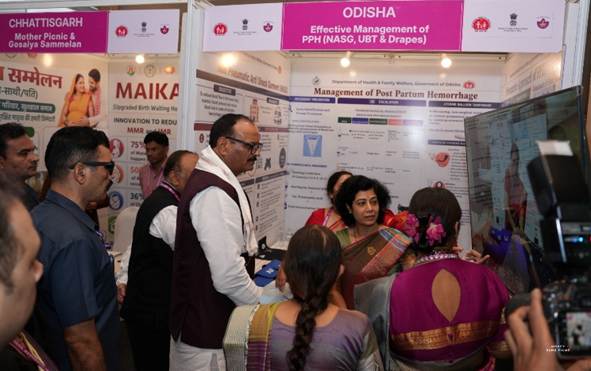
The roadmap follows a life-course and continuum-of-care model, covering healthcare interventions from the pre-pregnancy stage through antenatal, delivery and postnatal care. Its strategy is divided into two components: one specifically targeting 13 high-focus States and 130 districts with a disproportionate burden of maternal and newborn deaths, and another covering all States and Union Territories to sustain progress towards Sustainable Development Goal targets. The workshop examined issues including high-risk pregnancies, postpartum haemorrhage, Caesarean-section services, community interventions, Birth Waiting Homes, digital health, grievance redressal and the impact of climate change on maternal health. Guidelines on Birth Waiting Homes, communication material and a video on SUMAN Roadmap 2030 were also launched.
The meeting also gave States an opportunity to present their priorities, implementation challenges and proposed solutions, while a Gallery Walk showcased field innovations from across the country, including maternal health interventions and digital initiatives. Representatives from WHO, UNFPA, UNICEF, Gates Foundation, Jhpiego, FOGSI, C3 and CIFF participated in the discussions and reiterated their support for the programme. Through technical sessions and group exercises, participants worked on practical solutions for high-risk pregnancy management, pre-pregnancy care, postpartum haemorrhage and Caesarean-section services. The Ministry said the deliberations would help translate the SUMAN Roadmap 2030 into measurable action and strengthen the national effort to eliminate preventable maternal and newborn deaths by 2030.
4, Sep 2026
NIELIT, Intel India Roll Out Agentic AI Programmes to Build India’s Future-Ready Workforce
India’s workforce is set to receive a new skilling push in emerging Artificial Intelligence technologies, with the National Institute of Electronics and Information Technology (NIELIT) and Intel India launching a joint initiative focused on Agentic AI. The programme was announced at a National Leadership Dialogue in New Delhi that brought together policymakers, educators, industry representatives and skilling experts to examine how rapidly advancing AI systems are changing the requirements of jobs and education.
The dialogue placed particular emphasis on the transition from conventional and generative AI to agentic systems that can reason, plan and carry out complex tasks while operating under human oversight. Participants discussed the need to move beyond theoretical AI education towards practical, industry-linked learning, including updated curricula, faculty development, experiential training and AI-enabled learning environments. Shri Shashi Shekhar Vempati, Chairperson of the Central Board of Film Certification, said continuous learning and employability would become increasingly important as technology transforms workplaces, while stressing the value of real-world exposure for young professionals.
The partnership has introduced two skilling tracks with different levels of technical focus. Agentic AI for Everyone is designed to familiarise learners with AI agents, workflow automation and multi-agent systems, using no-code platforms to explore productivity, business transformation and intelligent decision-making. The second programme, Engineering Agentic AI Systems, is aimed at learners seeking deeper technical capabilities, covering agent architecture, tool integration, orchestration, memory and deployment through no-code, low-code and coding-based frameworks. Together, the programmes are intended to provide learners with hands-on experience in developing and using agentic systems.
NIELIT Director General Dr. Madan Mohan Tripathi said the collaboration combines NIELIT’s nationwide reach with Intel’s technology expertise to take emerging AI education to more institutions and learners. Shri Sudeep Shrivastava, COO of the IndiaAI Mission and Joint Secretary, MeitY, highlighted the importance of developing a strong AI talent pipeline through industry-led training, AI-focused educational programmes, AI Data Labs and closer industry-academia engagement. Intel also stressed that skills, adaptability and human judgment will remain critical as AI systems become more capable. The initiative is expected to widen access to practical Agentic AI training and strengthen India’s talent base for an increasingly AI-driven economy.
4, Sep 2026
Goyal Pushes Nationwide FTA Drive to Take Indian Exports to Global Markets
Union Commerce and Industry Minister Piyush Goyal has called for a nationwide campaign to ensure that Indian businesses make greater use of the country’s expanding network of Free Trade Agreements (FTAs). Speaking at a national workshop on leveraging FTAs in New Delhi, Goyal said the benefits of preferential market access must reach businesses at the grassroots, including MSMEs, startups, traders, first-time exporters and women entrepreneurs across all 780 districts. He said wider FTA utilisation would be critical to expanding India’s global trade footprint and supporting the country’s long-term ambition of becoming a $30 trillion economy by 2047.
The Minister pointed to India’s recent economic performance, including 7.8% GDP growth in the first quarter, as evidence of the economy’s resilience amid global uncertainty. He said India’s nine existing FTAs cover economies accounting for around $60 trillion in GDP and offer preferential access to nearly two-thirds of global trade. With additional agreements and market-access initiatives under consideration, India could gain preferential access to about 75% of global trade at more competitive tariff rates, he said. Goyal stressed that the effectiveness of an FTA should ultimately be judged by how Indian exporters fare against competitors in the same markets.
India is targeting $1 trillion in exports this year, with exports touching nearly $317 billion during the first four months, up from about $280 billion in the same period last year. Goyal said sectors ranging from textiles and engineering to electronics, pharmaceuticals, chemicals, agriculture, marine products, gems and jewellery and leather have significant potential in international markets. He also called for stronger institutional support to help exporters overcome challenges related to standards, sanitary and technical requirements, regulatory approvals and logistics. The government, he said, must particularly ensure that smaller exporters are not left behind as new trade opportunities emerge.
Goyal also outlined a last-mile strategy to convert FTAs into actual export growth. States have been asked to identify products and clusters where FTA benefits are already visible as well as areas where opportunities remain untapped. He urged Export Promotion Councils and industry associations to expand their outreach to smaller businesses, provide information in local languages and bring more exporters into international trade delegations. The workshop also examined the Export Promotion Mission and Districts as Export Hubs, with state-level discussions focused on export clusters, barriers to FTA utilisation and required government support. The Centre said the broader effort aims to deepen Centre-State coordination and ensure the country’s trade agreements translate into jobs, foreign exchange earnings, and wider participation in global commerce.
4, Sep 2026
GeM, Textiles Committee Join Hands to Promote Recycled and Upcycled Textile Products
The Government e Marketplace (GeM), under the Ministry of Commerce and Industry, and the Textiles Committee (TC), Ministry of Textiles, have signed a Memorandum of Understanding (MoU) to promote the procurement of recycled and upcycled textile products made from pre- and post-consumer textile waste, scrap and second-hand clothes.
The partnership, formalised during the 62nd Foundation Day celebrations of the Textiles Committee in Mumbai, seeks to create new market opportunities for enterprises operating in India’s circular textile economy.
The collaboration aims to establish a “Waste-to-Value-to-Market” ecosystem, enabling textile waste and discarded materials to be converted into quality, value-added products for government procurement. Under the agreement, the Textiles Committee will identify, verify, certify and recognise eligible manufacturers and producers of recycled and upcycled textile products. It will also support stakeholder consultations, capacity building, market research and the formulation of technical specifications for such products.
GeM, meanwhile, will develop dedicated categories for recycled and upcycled textiles, facilitate seller registration and provide online market access to government buyers. Training and handholding will be extended to recyclers and last-mile upcyclers to help them participate in public procurement.
The partnership will follow a hub-and-spoke model, with Textiles Committee offices supporting outreach, mobilisation, capacity building and the development of suitable product specifications and catalogues. The initiative will particularly benefit women-led enterprises, MSMEs, artisans, local businesses and other circular-economy participants.
The event was attended by Union Minister of Textiles Shri Giriraj Singh and Maharashtra Minister of Textiles Shri Sanjay Savkare. The MoU was signed by Additional CEO, GeM, Shri Ajit B. Chavan, and Secretary, Textiles Committee, Shri Kartikay Dhanda, in the presence of senior officials and industry stakeholders. GeM CEO Shri Mihir Kumar said the partnership would connect certification, standardisation and market access, enabling government procurement to generate reliable demand for products made from textile waste. The initiative is expected to promote resource conservation, sustainable livelihoods and responsible consumption while supporting the country’s transition towards a circular and resource-efficient textile economy.
4, Sep 2026
ELC 2.0 to Empower Youth and Strengthen Democratic Participation: CEC Gyanesh Kumar
The Election Commission of India (ECI) held its fourth regional conference on Electoral Literacy Clubs (ELC 2.0) and ECINet in Goa, with a focus on enhancing electoral awareness and democratic participation among young citizens. Chief Election Commissioner Shri Gyanesh Kumar said students are the future of the country and that Electoral Literacy Clubs can play a crucial role in strengthening the world’s largest democracy by helping young people understand electoral processes and democratic values.
Interacting with students and teachers from schools, colleges and universities across Goa, the CEC described ELCs as important platforms for developing informed and responsible citizens. He also emphasised that elections in India are conducted in accordance with the Constitution, laws and instructions issued by the ECI, with transparency maintained through the concurrent participation and audit of recognised political parties, candidates and their representatives at various stages of the electoral process.
Under the theme “Learn Democracy. Lead Democracy,” ELC 2.0 seeks to transform Electoral Literacy Clubs into structured, visible and digitally enabled platforms across educational institutions. The initiative will use the ECINet digital ecosystem to provide election-related information and services, while promoting year-round activities through a dedicated ELC portal. With India’s vast education network comprising around 15 lakh schools, nearly 25 crore students, over one crore teachers, nearly 1,500 universities and about 70,000 higher education institutions, the programme aims to create a nationwide network of young citizens engaged in informed democratic participation.
The initiative will focus on experiential and factual electoral education, covering voter registration, polling, counting, the ECINet App and other ECI initiatives, while encouraging students to become ambassadors of democratic awareness. Shri Gyanesh Kumar was on a two-day visit to Goa, during which he also interacted with Booth Level Officers (BLOs) from across the state. At a session attended by more than 1,000 BLOs on Thursday, he commended their contribution to the smooth conduct of the Special Intensive Revision (SIR) of electoral rolls. The Goa conference also featured a question-and-answer session, giving students an opportunity to directly engage with the Chief Election Commissioner.
4, Sep 2026
National Institute of Homoeopathy, Kolkata Marks Golden Jubilee with New Clinical and Research Facilities
The National Institute of Homoeopathy (NIH), Kolkata, has celebrated its Golden Jubilee, marking 50 years of contribution to homoeopathic education, research and patient care. The milestone event also saw the inauguration of a state-of-the-art Modular Operation Theatre and a Centre of Excellence, aimed at strengthening the institute’s clinical services, academic capabilities and research infrastructure.
The celebrations were attended by Shri Prataprao Jadhav, Minister of State (Independent Charge), Ministry of Ayush and Minister of State, Ministry of Health & Family Welfare, and Shri Sukanta Majumdar, Union Minister of State for Education. Members of Parliament Jyotirmay Singh Mahato and Samik Bhattacharya, West Bengal MLA Sumana Sarkar, Vaidya Rajesh Kotecha, Secretary, Ministry of Ayush, along with senior officials, faculty members, doctors, students and other stakeholders, were also present.
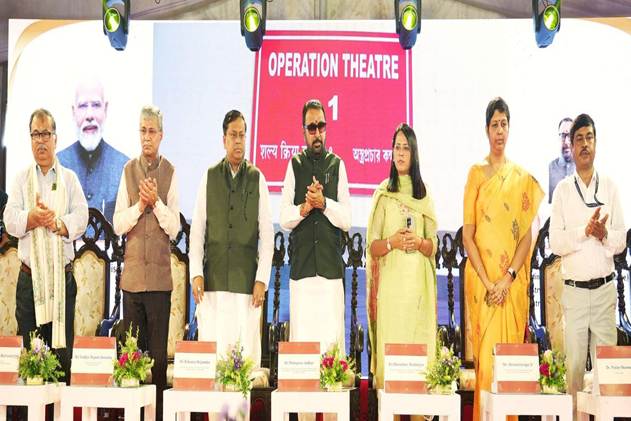
Addressing the gathering, Shri Prataprao Jadhav described the completion of 50 years as a significant milestone in NIH Kolkata’s journey. He said the Golden Jubilee provides an opportunity not only to recognise the institute’s achievements over the past five decades but also to define its priorities and vision for the years ahead.
The Minister said the newly inaugurated facilities demonstrate the government’s focus on modernising Ayush institutions through improved infrastructure, quality education, advanced research and better patient-care services. He stressed the importance of combining the strengths of traditional systems of medicine with contemporary technology, research and innovation to respond to emerging healthcare needs. Jadhav also called for stronger opportunities in homoeopathic education and research for students, researchers and young professionals, expressing confidence that NIH Kolkata would further strengthen its position as a leading centre for homoeopathic education, research and patient care.


