


25, Jun 2026
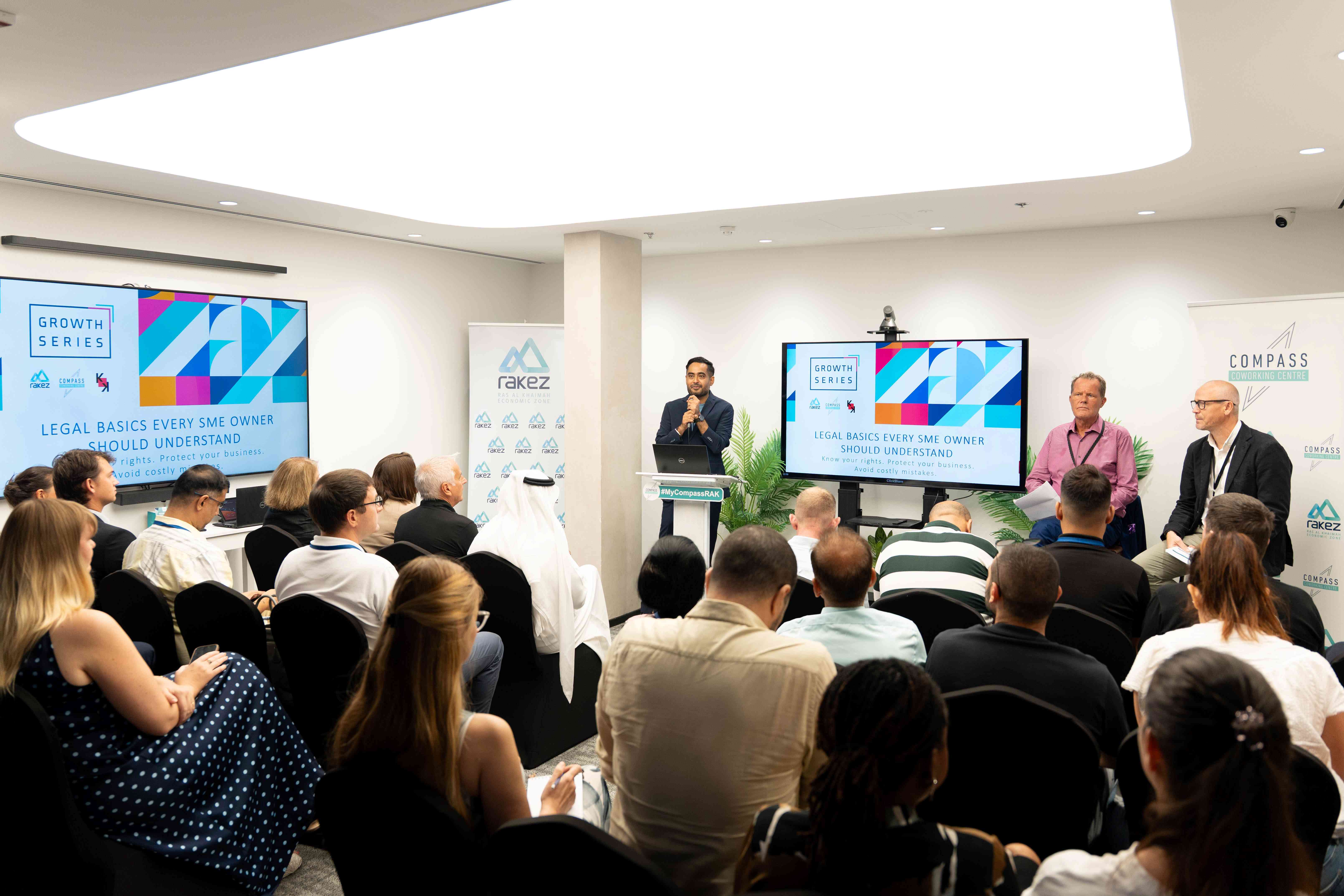
RAKEZ session helps SMEs strengthen business foundations through legal insights
|
- 0
- By Neel Achary

25, Jun 2026
India’s Startup Ecosystem Attracts Robust Funding in H1 2026
New Delhi, June 25: India’s technology sector has attracted $7.2 billion in funding during the first half (H1) of 2026, marking a 12% year-on-year increase and reflecting sustained investor confidence in the country’s digital ecosystem, according to a recent industry report.
The rise in funding highlights continued global and domestic interest in India’s tech-driven economy, with investments flowing into startups and companies operating across fintech, artificial intelligence, SaaS, deep tech, and consumer internet segments.
Analysts said the growth in funding is supported by strong digital adoption, expanding internet penetration, and increasing demand for technology-enabled services across both urban and semi-urban markets. Improved investor sentiment and a maturing startup ecosystem have also contributed to the upward trend.
Despite global macroeconomic uncertainties, India remains one of the most attractive destinations for venture capital and private equity investments in the technology space, driven by its large consumer base and innovation potential.
Industry experts noted that late-stage funding and growth-stage investments have shown renewed momentum, while early-stage startups continue to attract steady capital inflows, indicating a balanced investment environment.
The report suggests that India’s tech sector is expected to maintain its growth trajectory in the coming months, supported by digital transformation initiatives, policy stability, and increasing enterprise adoption of technology solutions.
With $7.2 billion already raised in H1 2026, the sector is on track for another strong year in technology investments, reinforcing India’s position as a global innovation hub.
25, Jun 2026
India Makes First Sea Shipment of Banganapalle Mangoes to Singapore
New Delhi, June 25: In a significant milestone for India’s agricultural exports, Banganapalle mangoes have been exported to Singapore via sea route for the first time, marking a major step towards expanding cost-efficient and scalable logistics for perishable goods.
The shipment highlights India’s efforts to diversify export channels beyond air cargo and strengthen cold chain infrastructure for fresh produce. The use of sea transport is expected to reduce logistics costs and improve export volumes for premium agricultural products in the long term.
Officials said the development is an important breakthrough for exporters, as sea-based shipments can offer better scalability for international trade, especially for high-demand fruits like mangoes. It also supports India’s broader goal of improving post-harvest handling and global supply chain efficiency.
Banganapalle mangoes, a GI-tagged variety from Andhra Pradesh, are widely known for their rich taste, fibreless texture, and strong demand in international markets, including Singapore.
Experts believe that successful adoption of sea routes for mango exports could pave the way for wider use of maritime logistics for other perishable commodities, provided adequate temperature-controlled systems and packaging standards are maintained.
The initiative is expected to benefit farmers and exporters by improving price competitiveness and opening new opportunities in global markets.
Authorities stated that this milestone reflects India’s growing capability in agricultural exports and its focus on strengthening trade infrastructure for long-term growth.
25, Jun 2026
Government Tourism Schemes Drive Infrastructure Growth Across India
New Delhi, June 25: Government tourism schemes are significantly transforming tourism infrastructure across India, leading to improved connectivity, upgraded facilities, and increased visitor inflows at key destinations.
Officials said various central and state-level initiatives focused on tourism development have led to the renovation of heritage sites, development of new tourist circuits, and enhancement of basic infrastructure such as roads, signage, accommodation, and transport facilities.
The initiatives aim to promote both domestic and international tourism by improving accessibility to culturally and historically significant locations, while also supporting local economies through job creation and livelihood opportunities.
Tourism stakeholders noted that improved infrastructure has helped boost footfall at several destinations, particularly in heritage, spiritual, and eco-tourism segments. The development of integrated tourism circuits has also contributed to better travel experiences for visitors.
The government has been focusing on sustainable tourism development, ensuring that infrastructure growth aligns with environmental conservation and community participation.
Officials added that ongoing investments in tourism infrastructure are expected to further strengthen India’s position as a global tourism hub in the coming years.
Experts believe that continued focus on tourism development will play a key role in regional economic growth, especially in rural and semi-urban areas where tourism acts as a major source of income.
The overall impact of these schemes is being seen in improved facilities, better connectivity, and rising tourist engagement across multiple states in the country.
25, Jun 2026
Two Premier Erling Haaland Cards From Logan Paul’s Personal Collection Headline Goldin Weekly Auction
June 25: Goldin, an internationally recognized leader in high-end collectibles and memorabilia, opened its 2026 Weekly Auction running from June 23 through July 2. The sale spans sports and pop culture, with standout collectibles across soccer, including this year’s FIFA World Cup participants.
Two of this week’s most significant lots are consigned from the personal collection of influencer, entrepreneur, and professional wrestler Logan Paul, featuring Norway’s Erling Haaland. Following an incredible performance against Senegal in the FIFA World Cup 2026, this week’s auction opens with a 2019-20 Topps Chrome Bundesliga SuperFractor #72 Erling Haaland Rookie Card (#1/1) – BGS GEM MINT 9.5 – True Gem+. The indomitable Manchester City and Norway striker Erling Haaland shines on this wholly unique Topps Chrome Bundesliga SuperFractor, one of the “Holy Grails” of the modern soccer collecting hobby. This singular card is a fantastic, ultra-prestigious Haaland showpiece that would instantly become the centerpiece of any high-end modern soccer card collection. Not to be missed as well is a 2019-20 Topps Chrome Bundesliga Red Refractor #72 Erling Haaland Rookie Card (#04/10) – PSA GEM MT 10 – Pop 4, one of four examples of this piece recorded at its unimprovable tier in PSA’s census reporting.
Building off the momentum of Harry Kane’s brace for England in the World Cup match last week, fans and collectors will find a 2023-24 Panini Donruss FIFA Kaboom! Gold #9 Harry Kane (#02/10). With a grading of PSA MINT 9, only one copy of this piece recorded in PSA’s census reporting has achieved a higher grading tier.
Beyond the remarkable soccer collectibles, Goldin’s Weekly Auction also includes a 2025 Topps Marvel Studios Chrome The Fantastic Four: First Steps SuperFractor #6 Silver Surfer (#1/1) – PSA MINT 9. The Silver Surfer—one of the primary antagonists in The Fantastic Four: First Steps— appears on this singular Topps Marvel Studios Chrome The Fantastic Four: First Steps SuperFractor collectible.
The 2026 Weekly Auction will close on July 2, with extended bidding beginning at 10:00 p.m. ET.
Additional ongoing auctions include the Airrack Youtuber Exclusive Auction open through June 24; the Spring Goldin 100 Auction, open through June 28, the USA 250th Anniversary Historical Auction, open through July 8, the June Elite Auction, open through July 11, and the Global Football Auction Part 2, which will open on June 26 and close July 25.
25, Jun 2026
Investment Migration enters the Sustainable Finance Mainstream, Global Citizen Solutions Research finds
London, June 25: Global Citizen Solutions (“GCS”), a leading residency and citizenship planning advisory firm, today publishes new research examining investment migration through the lens of sustainable finance. The briefing, Sustainable Citizenship: Investment Migration as an Impact-Investing Asset Class, traces how 22 citizenship and residency programs have evolved from capital-based fiscal instruments into purpose-driven mechanisms aligned with the United Nations Sustainable Development Goals and the EU sustainable finance taxonomy.
Of the 22 programs examined, approximately half carry some form of sustainability framing. The analysis identifies Small Island Developing States (SIDS) as the most advanced globally, with Caribbean programs including Dominica, St. Kitts and Nevis, Grenada, and Antigua and Barbuda representing the strongest regional concentration of sustainability-framed investment migration. For many of these economies, citizenship-by-investment revenue covers climate adaptation needs that multilateral finance has consistently failed to meet. Climate adaptation costs for SIDS reach USD 5.1 billion per year, while actual multilateral adaptation finance covers less than a third of that figure. CBI revenue has become a parallel channel for the same developmental outcomes the SDG framework was built to deliver.
Dominica records CBI inflows at 33% of GDP in 2022 and 26.9% in 2023, directly supporting public investment in disaster reconstruction, climate-resilient infrastructure, and a geothermal energy transition. St. Kitts and Nevis shows the fiscal deficit widening to -11% of GDP following a decline in CBI revenue, illustrating the same relationship from the opposite direction. For small-island economies, investment migration is a fiscal capacity necessity, not discretionary income.
The research also identifies an alignment between the Caribbean and Europe, despite operating through entirely different mechanisms. Caribbean programs work through sovereign statute: St. Kitts and Nevis has legislated seven sustainability pillars directly into its contribution mechanism. As Joe Rice, Head of Citizenship Programs at Global Citizen Solutions, observes: “The framing is shifting from we want your capital to we want your contribution. The next generation of programs will be purpose-driven, with measurable outcomes attached to the contribution itself.” In Europe, programs work through EU-wide financial regulation. For example, Portugal’s fund route operates within the EU Sustainable Finance Disclosure Regulation (SFDR) perimeter, bringing investment migration into direct contact with the regulatory architecture governing sustainable finance. Vera Avidano, product specialist at Global Citizen Solutions, notes: “Even though the fund investment route remains the most popular choice, we are seeing a growing interest in the cultural donation route as well.”
Investor demand is accelerating this structural shift. Morgan Stanley’s 2025 Sustainable Signals survey found that 99% of Gen Z and 97% of Millennial investors expressed interest in sustainable investing. A Standard Chartered Private Bank survey of HNW and affluent investors across Hong Kong, Singapore, the UAE, and the UK found that 84% were open to shifting funds from philanthropy to sustainable investing. In the United States, the US SIF Foundation’s 2025/2026 Trends Report placed total US sustainable investment assets at $6.6 trillion, with 46% of surveyed institutions expecting to increase their impact investing activities over the next three years. As investment migration programs continue to evolve their fund-based routes, this demand profile strengthens the commercial rationale for sustainability-framed qualification structures.
Impact investing has emerged as a significant segment of global finance, enabling investors to generate positive social and environmental outcomes alongside financial returns. According to the Global Impact Investing Network (GIIN), more than 3,900 organizations managed an estimated US$1.57 trillion in impact investing assets worldwide in 2024, reflecting a 21% compound annual growth rate since 2019 (GIIN, 2024). The sector is driven by increasing investor interest in addressing challenges such as climate change, affordable housing, healthcare, education, and sustainable infrastructure while achieving competitive financial performance.
The briefing situates sustainability framing within a longer history. Panama’s Reforestation Visa, operating under Law 24 of 1992, has required capital to be deployed in government-approved tropical reforestation projects for over thirty years, predating the ESG label entirely. At the other end of the timeline, Nauru’s Economic and Climate Resilience Citizenship Act, launched at COP29 in November 2024, was the first citizenship program designed and marketed from inception as a climate-finance instrument. São Tomé and Príncipe’s National Transformation Fund, launched in August 2025, is the newest entrant to the sustainability-framed cluster. New Zealand extends this pattern to the Anglosphere through administrative pre-approval of climate-impact funds.
The transition, however, remains uneven. Gulf, North American, and most MENA programs carry no sustainability framing. The United States Gold Card, designed explicitly as a revenue tool for the federal government rather than as an investment in any specific national priority, it has no requirement that the money go toward a defined project or outcome — and no mechanism to verify that it does. Structured as a purely economic and deficit-reduction instrument, it falls at the opposite end of the spectrum from fund-based, sustainability-framed programs: it carries no sustainability framing, no traceable developmental mandate, and no alignment with recognized impact-investing frameworks.
“The programs we analyzed fall into two almost equal groups: those structured around sustainability and measurable development outcomes, and those designed purely as fiscal instruments. That divide is the defining feature of the sector right now,” said Liana Simonyan, Researcher at GCS’ research arm, the Global Intelligence Unit.
25, Jun 2026
IPO bound Steamhouse secures INR 50 crore pre-IPO investment from Madhusudhan Kela and Niveshaay Sambhav Fund
Madhusudhan Kela-backed Singularity Large Value Fund III and Singularity Equity Fund I along with Niveshaay Sambhav Fund, have invested an aggregate Rs 49.99 crore in Steamhouse India Limited through a pre-IPO placement at an issue price of Rs 73 per equity share.
As part of the transaction, Steamhouse India allotted 68,49,315 equity shares to the investors through a private placement. Singularity Large Value Fund III received 47,94,520 equity shares aggregating Rs 34.99 crore, while Singularity Equity Fund I was allotted 6,84,932 equity shares worth Rs 5 crore. Niveshaay Sambhav Fund received 13,69,863 equity shares aggregating Rs 9.99 crore.
Following the allotment, the three investors collectively hold approximately 2.94% of Steamhouse India’s pre-offer equity share capital. As per SEBI regulations, the proposed fresh issue size under the IPO will be reduced to the extent of the amount raised through the pre-IPO placement.
The Surat-headquartered company, which pioneered the concept of centralized steam supply for industrial customers in India, has already filed its Updated Draft Red Herring Prospectus (UDRHP) with the Securities and Exchange Board of India (SEBI).
Founded in 2014 and backed by the industrial legacy of the Sanjoo Group, Steamhouse India operates one of the country’s largest industrial steam distribution networks. The company serves more than 167 industrial clients across sectors such as chemicals, textiles, pharmaceuticals, food processing, paper and manufacturing through a centralized utility model that supplies steam directly to factories through dedicated pipeline infrastructure.
Steamhouse introduced the concept of community boilers, a centralized alternative to captive boilers, enabling industrial customers to reduce operational costs, improve efficiency and lower emissions. The company leverages IoT and AI technologies across procurement, generation and distribution to deliver steam at approximately 190 degrees Celsius to customers.
The company has built over 45 kilometres of pipeline infrastructure across major industrial hubs including Sachin, Vapi, Ankleshwar, Sarigam, Panoli and Nandesari. Its operating model creates high entry barriers and establishes a dominant position in the industrial clusters where it operates.
It is expanding capacity across key industrial locations including Ahmedabad, Dahej, Vapi, Ankleshwar, Panoli, Jhagadia and Nandesari, while also evaluating opportunities across Andhra Pradesh, Telangana, Maharashtra, Himachal Pradesh, Madhya Pradesh, Rajasthan, Uttar Pradesh and Haryana.
In line with its sustainability focus, Steamhouse has commissioned a waste-to-steam boiler at Vapi that converts non-recyclable plastic waste from paper mills into industrial steam. The company also secured a 5 MW Waste-to-Steam project from Ahmedabad Municipal Corporation under the public-private partnership (PPP) model.
Beyond steam distribution, the company is expanding into adjacent businesses including nitrogen compression and distribution, waste-to-energy solutions and aviation logistics.
25, Jun 2026
India’s Housing Market Outlook: Decoding Sales and Supply Trends Across 9 Cities in Q2 2026
India’s housing market continues to demonstrate strong growth despite the Middle East conflict. The sharp increase in supply has expanded choices for homebuyers, while strong absorption levels indicate that underlying demand remains healthy across major markets. The reworking of supply pipelines by developers especially in Southern and Western India to suit the affordability of homebuyers have helped sales growth. Additionally, India’s stable economic outlook, improving infrastructure and growing investor confidence have enabled the housing market to maintain its growth trajectory reaffirming real estate as a preferred asset class for both end-users and investors.
25, Jun 2026
Gold, Silver Trade Volatile as Fed Rate Uncertainty Weighs on Sentiment
New Delhi, June 25: Gold and silver prices witnessed volatile trading in global and domestic markets amid growing uncertainty over the U.S. Federal Reserve’s interest rate outlook, according to market analysts.
Precious metals experienced fluctuations as investors reacted to mixed signals from the U.S. economy and evolving expectations around future rate cuts. Strength in the U.S. dollar at times weighed on bullion prices, while safe-haven demand provided intermittent support.
Analysts said that gold and silver continue to respond sharply to macroeconomic cues, particularly inflation trends, bond yields, and central bank commentary. Expectations of prolonged higher interest rates have limited upside momentum in bullion markets.
In the domestic market, traders reported range-bound movement with heightened volatility as global cues influenced sentiment. Investors remained cautious, awaiting clearer signals from the Federal Reserve regarding its monetary policy trajectory.
Despite short-term fluctuations, experts believe that gold retains its appeal as a safe-haven asset amid global economic uncertainty, while silver continues to see demand driven by both industrial usage and investment interest.
Market participants are expected to closely monitor upcoming U.S. economic data and central bank statements for further direction in precious metal prices.
The outlook for bullion remains sensitive to interest rate expectations, inflation trends, and broader global financial stability.
25, Jun 2026
India’s Real Estate Sector Sees Strong Dollar 4.3 Billion Institutional Inflows in H1 2026
New Delhi, June 25: India’s real estate market has attracted institutional investments worth $4.3 billion in the first half (H1) of 2026, reflecting strong investor confidence and sustained growth momentum in the sector.
According to industry data, the inflows were driven by robust demand across key segments, including commercial office spaces, residential developments, warehousing, and logistics infrastructure. The trend highlights India’s continued position as a preferred destination for global and domestic institutional investors.
Experts noted that stable economic fundamentals, improved regulatory frameworks, and growing urbanisation have contributed to increased investor participation in the real estate sector. The rise in demand for quality office spaces and expansion of e-commerce-driven logistics networks have also supported investment activity.
Analysts said the strong inflows indicate long-term confidence in India’s growth story, with both foreign and domestic investors actively participating in large-scale projects and development platforms.
The residential segment also witnessed steady interest, supported by improving affordability conditions and rising demand in major metropolitan regions. Meanwhile, the warehousing and industrial segments continued to benefit from supply chain expansion and infrastructure development initiatives.
Market observers believe that sustained institutional investments will further strengthen India’s real estate ecosystem, improve project execution, and enhance overall market stability in the coming years.
With $4.3 billion already invested in H1 2026, the sector is expected to maintain its growth trajectory, supported by policy stability and increasing demand across asset classes.


