


11, Jun 2026
USD 2 Trillion a Year Never Makes It from Obligation to Settlement. Rivvun AI Is Built to Recover It
Icertis veterans raise $7.55 million seed for Rivvun AI to recover enterprise spend and revenue leakage — Co led by Sitara Capital and 3one4 Capital
Seattle, WA – June 11, Rivvun AI Inc. announced a $7.55 million oversubscribed seed round led by Sitara Capital and 3one4 Capital, to deploy an autonomous AI execution layer purpose-built for enterprise spend and revenue recovery.
The scale of the problem is staggering. McKinsey research finds that enterprise procurement functions lose up to one-third of planned savings during execution — with an additional 3– 4% of total external spend lost to transaction inefficiency and noncompliance. Across fortune 2000 revenues that compounds to more than $2T in value that never reaches the bottom line. The money isn’t lost to fraud or bad contracts. It disappears in the gap between what was contractually committed and what enterprise systems were ever built to collect.
Built by the Executives Who Saw This Problem at Scale
Anand Veerkar and Niranjan Umarane spent the last decade as senior executives at Icertis, where they helped scale the company to more than $350 million ARR and built a platform governing some of the world’s largest commercial portfolios. Across every industry, the pattern was consistent: terms of trade were precisely structured; financial execution against them was not. Money owed under negotiated agreements quietly went uncollected — not because anyone decided to leave it, but because no system in the enterprise stack was designed to recover it. They left to build that system. They are joined by serial entrepreneur Patrick Linton, who brings deep experience scaling global operations for enterprise software companies.
The Problem Is Structural. So Is the Solution.
ERP systems record transactions. CRM tools track relationships. Procurement platforms manage approvals. None of them enforce outcomes. Rivvun’s autonomous AI execution layer connects to existing ERP, CRM, and procurement systems, interprets commercial obligations, identifies what hasn’t settled as agreed, and initiates recovery at the transaction level. No rip-and-replace. No new system of record.
Two agentic families power the platform: Spend Assurance on the buy side — recovering supplier rebates, pricing commitments, and procurement obligations that have gone unenforced; and Margin Defense on the sell side — recovering customer settlement variances, trade term discrepancies, and revenue that left the P&L without authorization.
Built Vertical-First, Because Leakage Isn’t Generic
Chargeback mechanics in pharma — GPO compliance, government pricing obligations — look nothing like settlement gaps in banking or trade term failures in CPG. Generic AI produces generic results. Rivvun deploys with vertical-specific agent logic tuned to the precise failure patterns of each industry, across Pharma, Healthcare, Banking, CPG/Retail and Industrial
Anand Veerkar, CEO and Co-Founder, Rivvun AI commented: “The enterprise has spent years being told AI will transform how it operates. What it needed was AI that creates direct, measurable impact on the P&L – not productivity narratives, not dashboards. Rivvun closes the gap between what was agreed and what was collected, recovering money that goes straight to the bottom line.
Sachin Bhanot, Managing Partner, Sitara Capital added: “We’ve invested in enterprise technology for years. The winners tie their value directly to a number the CFO can see on the P&L. Rivvun does exactly that with precision rare for a company at this stage – and with a founding team that has already built a category-leader in this space.”
Anurag Ramdasan, Partner, 3one4 Capital said: “The team at Rivvun is one of the strongest founder-market fit we’ve seen in the vertical AI category so far. They are not pitching a horizontal AI solution and hoping for enterprises to extract value out of it. They are delivering ROI on AI for large enterprises from the first day of implementation, which is very critical for enterprise AI adoption. This rigor comes from the deep expertise of the founders, and we are incredibly excited to back such a transformational team at seed stage.”
- 0
- By Neel Achary

11, Jun 2026
Global Triumph: True IDC, Backed by CP Group and GIP, Wins ‘Digital Infrastructure of the Year’ at IJGlobal Awards
True IDC, Backed by CP Group and GIP, Wins ‘Digital Infrastructure of the Year’ at IJGlobal Awards, Set to Transform Thailand’s Digital Economy with EEC Mega Data Center Project
BANGKOK, June 11 - True Internet Data Center, or True IDC, Thailand’s largest data center operator, backed by Charoen Pokphand Group (CP Group) and Global Infrastructure Partner (GIP), a part of BlackRock, has announced a landmark achievement in winning the ‘Digital Infrastructure of the Year’ award at the IJGlobal Awards, a globally recognized institution for infrastructure and project finance intelligence. This recognition not only reflects the organization’s success but also signals Thailand’s capabilities on the international stage.
The ‘Digital Infrastructure of the Year’ award affirms the stature of the AI Hyperscale Data Center project, spanning over one hundred megawatts in the Eastern Economic Corridor (EEC), Rayong Province, as a world-class development drawing global attention. The project features a robust financial and investment structure, developed under advanced data center technology across all dimensions and international sustainability and environmental standards. The first phase is expected to go live in Q3 2026. The project is also among those receiving BOI investment promotion, with a total value exceeding THB 77 billion.

Thanasorn Jaidee, President of True IDC, commented, “The IJGlobal Award is proof of the strength of this mega data center project, both in financial structure and operations, which True IDC has been developing since 2025. This project is a magnet for investor confidence worldwide and marks a turning point that firmly positions Thailand as a regional technology infrastructure hub, generating substantial long-term economic value. True IDC extends its gratitude to all partners who have driven this project forward, securely, safely, and sustainably, to meet every challenge of the digital era”.
Panuwat Hirunpatawong, Chief Investment Officer of True IDC added, “This award reflects our proven ability to structure and finance world-class data center projects. As the country’s longest-established data center provider operating in one of the fastest-growing data center markets in the region, we combine that financial capability with unparalleled operational expertise and local market knowledge. True IDC is well positioned to support hyperscalers as they establish and grow their presence in Thailand.”
This achievement at the IJGlobal Awards confirms that True IDC is ready to lead Thailand toward becoming a prominent digital hub in the Asia-Pacific region.
10, Jun 2026
Your Brain Decides What to Buy Before You Do

Imagine yourself in a shopping mall on a casual Saturday afternoon. There are signs of discounts, smells of freshly baked bread, and calm, rhythmic music in the background. Your hand reaches for a luxurious-looking pack of coffee as if on its own. When you return home, you rationalise the purchase to yourself or to your friend as ‘this coffee was discounted and the packaging is very convenient.’
But the real story of this decision is far more complex. When you were rationalising your choice, a barrage of processes occurred in your brain. A few seconds before the decision, your limbic system, the part of the brain responsible for emotions, had already given the ‘buy’ command. You had no chance of resisting it. This was not a rational decision; it was influenced by pure human biology.
According to Assistant Professor Dr Indrė Radavičienė of the Faculty of Economics and Business Administration at Vilnius University, consumer decisions are often shaped by emotional and subconscious processes long before people consciously evaluate their choices.
“We tend to think of ourselves as rational consumers, but emotions often begin shaping our decisions before conscious reasoning takes over,” says Dr Radavičienė.
Our brain reacts faster than the mind decides
Welcome to the world of neuromarketing, where neurobiology, psychology, marketing, and consumer behaviour research meet. Here, we seek answers to seemingly simple yet fundamentally important questions: what makes a person trust one brand and completely ignore another? What happens to our brain when we see a discount sign? Why do some colours calm us down and others make us rush? Is it possible to predict a purchase decision even before the person is consciously aware of it?
Neuromarketing is often misunderstood as an attempt to create ‘zombie consumers’ who are helplessly following advertising instructions. But the true purpose of this science is far more human: to understand the authentic and spontaneous human reaction, often disguised by social norms, politeness, or simply a lack of self-awareness. Neuromarketing allows us to take a peek at the mysterious process taking place in our brains, even before we consciously utter the final ‘I will buy it.’
Using modern technology, neuromarketing reveals how evolutionary instincts, emotional stimulation, and subconscious filters shape our daily choices. It also explains why stories created by brands often beat even biological tastes, how FOMO – the fear of missing out – encourages impulsiveness, and why the sustainable future of business belongs to a deep and respectful understanding of the emotional needs of the consumer rather than aggressive advertising. Traditional market research – surveys, focus groups, and interviews – is based on the assumption that the consumer knows what they want and can name it. But psychologists note the paradox that we are ‘emotional beings who sometimes think’ rather than ‘thinking beings who sometimes feel.’ When you are asked why you like a certain advertisement, your brain begins to create a logical response to an emotional impulse. This is called post-hoc rationalisation, when we come up with reasons to justify our behaviour after it happened.
“When people explain why they chose a product, they are often constructing a logical explanation for an emotional response that occurred earlier,” explains Dr Radavičienė.
Neuromarketing bypasses this ‘filter’. It observes the nervous system directly, capturing reactions that occur within the first milliseconds, before you can think.
How do they know which product will be successful?
To understand consumer behaviour, researchers use tools that were only available to top-notch medical centres a few decades ago.
1. Functional magnetic resonance imaging (fMRI)
One of the most advanced tools is functional magnetic resonance imaging (fMRI). This technology measures changes in blood flow in the brain. When a certain area of the brain is activated, it needs more oxygen, which is brought by blood. For example, if the pleasure and reward centre nucleus accumbens lights up when seeing a certain product, marketing specialists know – the product will be successful. If the amygdala is activated, the consumer feels insecurity or fear, i.e. emotions that can discourage the purchase.
2. Electroencephalography (EEG)
Another widely used method is electroencephalography (EEG), which measures electrical impulses in the brain. This is an extremely fast method that allows us to see how a person’s state changes when watching a 30-second video clip. At which point did the viewer stop being interested? When did they feel engaged? The EEG provides the answers in almost real time.
3. Eye-tracking and pupillometry
Eye-tracking equipment plays an equally important role because our eyes are among the most reliable traitors of the subconscious mind. Eye-tracking technologies create ‘heat maps’ that reveal exactly where our gaze is headed. For example, on a page with a photo of a baby, people usually look at the baby’s face rather than the text. However, if the baby in the photo is looking in the direction of the text, consumers’ eyes automatically follow the baby’s gaze. Pupils are also measured: the more they expand, the greater the emotional excitement (positive or negative) that a person is experiencing.
“What makes these tools particularly valuable is that they allow researchers to observe reactions that occur before consumers themselves become fully aware of them,” says Dr Radavičienė.
Pepsi and Coca-Cola: which is tastier?
One of the most famous neuromarketing experiments concerns the eternal rivalry between Pepsi and Coca-Cola. In the blind test, most of the subjects preferred Pepsi. The taste centres in their brain reacted positively to this drink.
However, things changed when people saw brands. Drinking Coca-Cola activated areas of the brain associated with long-term memory, emotions, and self-identification. People didn’t just say that Coca-Cola tastes better – their brains really ‘experienced’ a better taste. Over decades of marketing, the brand has become part of their identity, leading to a loss of biological taste in favour of the emotional story it creates.
Another astonishing example is the wine price experiment. When the subjects tasted the same wine, but with different prices indicated (between $5 and $90), their brains recorded a real, physiological increase in pleasure from drinking a ‘more expensive’ drink. This means that the price is not just a number; it is an expectation set by your brain that directly changes your sensory experience.
“These experiments demonstrate that our experience of a product is shaped not only by its physical characteristics but also by expectations, memories, and emotions,” notes Dr Radavičienė.
A perfect example of neuromarketing – the layout of IKEA stores
Companies have long used neuromarketing knowledge to imperceptibly ease consumers’ path to purchase. For example, a study by Frito-Lay found that the glossy packaging of potato crisps activates areas in the brain associated with feelings of guilt about unhealthy food intake. The shift to matte, more ‘natural’-looking packaging has suppressed this response in the brain, so people started buying crisps more freely, without remorse.
Have you ever wondered why so many fast food restaurants use red and yellow colours? Red stimulates energy and appetite, and yellow promotes optimism and attentiveness. In contrast, blue is rarely used in the food industry because, in nature, it is often associated with decay or poison, so it subconsciously suppresses appetite.
The layout of IKEA stores is a masterpiece of neuromarketing. The one-way path makes you see thousands of trifles. Your brain gets tired of making decisions, and when you reach the checkout, your ‘muscle of self-control’ is so weakened that you can easily throw a few more candles or a cutting board into your cart that you didn’t need at all.
“Many retail environments are designed around well-established psychological principles. Consumers may not consciously notice these influences, but they can nevertheless affect behaviour,” says Dr Radavičienė.
Are we still making our own decisions?
Many people have a legitimate question: isn’t this manipulation? If companies know how to bypass our rational thinking, do we still decide for ourselves what to buy and what not?
We have to understand that neuromarketing cannot make you buy something you essentially don’t want. It simply helps brands communicate more effectively. For example, the National Cancer Institute used brain scanning to find the most effective social advertising against smoking. The winner was not the most aesthetically pleasing advertisement, but the one that gave the brain the strongest impulse to take action and call the helpline. In this case, science has contributed to public health. In addition, professional studies are conducted in accordance with strict ethical guidelines. The subjects always give their consent, and their privacy is protected by law. Brain data does not reveal personal thoughts or memories; it only indicates a general reaction to the stimulus.
“Neuromarketing cannot force people to buy something they fundamentally do not want. Its purpose is to better understand human reactions rather than manipulate them,” emphasises Dr Radavičienė.
Online, emotions are even more important
When you buy online, emotions are even more often ahead of logic, so the buying process becomes impulsive rather than consistent. Here, the purchase is determined by two main factors: a person’s emotional stimulation (energy level) and the pleasure experienced. If a website or an advertisement creates positive emotions and, at the same time, piques curiosity, a person tends to buy now, without going into long reflections. Neuromarketing studies show that visual information is processed thousands of times faster in our brains than text, so emotional impulse acts as a fast filter: users are reluctant to analyse all the technical data but rely on what they feel when they see an immersive image. Brands that understand these brain mechanisms are able to establish a connection with the consumer even before they can logically evaluate the price or characteristics of the product.
A ‘TrustPulse’ (2023) market study confirmed that one of the strongest drivers of impulsiveness is the fear of missing out something important (FOMO), which accounts for about 60 per cent of unplanned purchases. This feeling is deeply rooted in our evolution as an instinct to acquire resources in time and to remain part of the social group, so time-limited offers create a sense of urgency that directly bypasses rational thinking. Meanwhile, research by the ‘Edelman Trust Barometer’ in 2022 and 2023 confirmed that when making high-value decisions, the brain is looking for security and emotional certainty – as many as 83 per cent of consumers are determined to make big purchases only after receiving affirmation through feedback from other people or a trusted brand reputation.
“Digital environments encourage rapid decision-making, which is why emotional responses often play an even greater role online than in traditional retail settings,” explains Dr Radavičienė.
In addition to these primary reactions, secondary emotional mechanisms, such as pride and strengthening of social status, also operate. This is particularly evident in the luxury goods sector, where the analysis of the luxury goods market in 2023 performed by ‘Deloitte’ confirmed that as many as 72 per cent of shoppers choose a product not because of its practical characteristics, but because of the psychological satisfaction it provides and the ability to demonstrate their identity or status. This emotional reward brings constant joy even after the moment of purchase, strengthening the connection with the selected brand.
Finally, the greatest value is created by a sense of community – companies that focus on both product features and creating a common identity are able to retain customers three times longer, because for them, buying becomes no longer a simple transaction but an emotional attachment to a social group close to them.
Why does the future belong to neuromarketing?
In a world where we see thousands of advertising messages every day, traditional methods are starting to fail. We learned to ignore advertising banners, to ‘disconnect’ our attention through pauses, and to filter out noise. Neuromarketing, however, offers a different path – it helps to create content that does not scream, but resonates quietly and accurately with human emotions and experiences.
A business that understands the emotional needs of its customers can create products that really solve problems instead of simply bombarding the consumer with empty promises or shoving goods that they don’t need. Rather than creating an artificial need through aggressive advertising, neuromarketing specialists seek to respond to the deepest human expectations by creating value that the brain recognises as authentic and useful. This is the way to more sustainable marketing with less ‘noise’ and more meaning. Such a strategy allows companies to optimise their resources, avoid wasting their budget on advertising that annoys consumers, and build a long-term, trust-based relationship with their audience rather than one-off sales.
“The future belongs to organisations that understand the emotional needs of their audiences and create genuine value rather than simply competing for attention,” says Dr Radavičienė.
So, the next time you feel an irresistible urge to buy a new item, just smile. This is a sign that your brain has recognised something familiar, safe, or joyful. We are not rational machines; we are very complex and wonderfully emotional people – and this is the biggest part of our charm.
10, Jun 2026
TechnoMile Recognized among Notable Vendors in Contract Lifecycle Management Platforms Landscape Report
Leading research firm notes TechnoMile CLM’s self-reported focus on obligation management and regulatory and policy compliance use cases
TYSONS, VA — June 10, 2026 — TechnoMile, the leading AI solution that unifies growth, contracts, compliance, and security workflows, today announced it has been included in Forrester’s report, The Contract Lifecycle Management Platforms Landscape, Q2 2026. The report provides an overview of notable CLM platform vendors and is designed to help technology executives as well as contracts, procurement, legal, and risk professionals understand vendor differences and explore CLM options based on size and market focus.
Forrester’s report describes the CLM market as shifting toward postsignature intelligence, governance, and integration depth – capabilities that have long been mission-critical realities for organizations operating in the federal contracting environment. The report identifies these capabilities as the emerging center of gravity for mature CLM platforms as AI-native tools increasingly automate earlier-stage drafting and negotiation workflows.
For TechnoMile, its inclusion reflects the company’s purpose-built focus on the complexities of government contracting. According to self-reported data in the report, TechnoMile’s top extended use cases – obligation management and regulatory and policy compliance – are precisely the capabilities that federal contractors rely on to manage highly regulated, postsignature contract execution.
“To us, being included in Forrester’s CLM Platforms Landscape report reflects the growing market recognition that federal contracting demands a fundamentally different approach to contract lifecycle management,” said Mick Fox, COO, TechnoMile. “For GovCon and Aerospace & Defense organizations, the complexity has never been in drafting – it’s in executing against contractual obligations, managing compliance across a highly regulated environment, and maintaining audit readiness throughout the life of a contract. TechnoMile was built for exactly that reality.”
Unlike general-purpose CLM platforms designed primarily around negotiation workflows, TechnoMile’s Contracts Suite is built for the full operational lifecycle of federal contracts – from opportunity identification through contract closeout. The platform supports organizations in managing OCI vetting, clause tracking and flowdowns, contract modifications, limitation of funds monitoring, subcontractor oversight, CDRL and deliverable management, CPARS, and contract closeout, among other postsignature functions.
TechnoMile’s AI strategy is purpose-built for the regulated workflows of federal contracting, leveraging domain-trained AI agents and copilots that continuously learn from historical capture, contract, program, and compliance data across the enterprise – helping organizations reduce manual workload, improve decision quality, mitigate risk, and strengthen audit readiness over time.
To access a complimentary copy of The Contract Lifecycle Management Platforms Landscape, Q2 2026 report, please visit https://technomile.com/
10, Jun 2026
Insurance Professionals Report an Average 17% Rise in Luxury Watch Claims, According to New Research
10th June 2026 — The Watch Register, the world’s largest and most established international database of lost and stolen luxury watches, reports new research2 that highlights a significant increase in insurance claims relating to the loss and theft of high-value watches.
The study, conducted amongst 100 insurance loss adjustors and claims managers across the United States, Europe, Asia and the Middle East, reveals that luxury watch-related claims have risen markedly in recent years. When asked how claims volumes have changed compared to three years ago, two-thirds (67%) of respondents reported an increase of between 10% and 25%, while a further 9% cited even sharper rises of between 25% and 50%. Overall, insurers reported a mean average increase of 17% in luxury watch claims over the period. Insurance respondents in Asia reported the highest mean average increase in claim volumes (21%) compared with an average of 15% in the US.
The findings suggest that the volume of watch-related claims will continue to increase. More than half (54%) of respondents anticipate claims will rise by a further 10% to 25% over the next three years, while nearly one third (32%) expect increases of between 25% and 50%. A smaller proportion (2%) predict even more significant growth of up to 75%. The mean average anticipated increase stands at 24%, underlining the expectation that luxury watch theft will remain a persistent and growing challenge for insurers globally.
Additionally, given the high circulation of stolen goods on the market, three in four (77%) of insurance respondents report seeing an increase in defective title claims from jewellers’ block policy holders who have unwittingly purchased stolen watches. The majority (83%) of insurers say they are now taking steps to mitigate risk by only paying out defective title claims for watches on the condition that the policy holder has carried out due diligence prior to the transaction by checking a stolen watch database.
Katya Hills, Managing Director of The Watch Register, said: “Insurance professionals report a clear rise in luxury watch-related claims, which reflects the high incidence of theft affecting watch owners and jewellers today. Watches are expensive, portable, easy to steal, and highly liquid. The exceptional resale value of watches and high demand for the most desirable models on the secondary market are continuous drivers of theft.
“It is more imperative than ever that insurers record the serial numbers for lost and stolen watch claims and report these losses to The Watch Register database to facilitate future detection. The database proactively searches the global pre-owned watch market, maximising the chances of recovery for insurers and their policy holders, and enabling insurers to recoup funds paid out on claims.”
In 2025 The Watch Register reached a landmark 5,000 lost and stolen watches identified since the service was founded more than a decade ago. In the past year alone, stolen watches identified by The Watch Register have been traced across 34 countries spanning North and South America, Europe, Asia, North Africa, Australia and the Middle East, underlining both the global scale of the problem and the reach of the platform.
10, Jun 2026
FUJIFILM India Opens First Revoria Experience Center, Launches AI-Driven Revoria Press PC2120
Faridabad, June 10 : FUJIFILM India announces the opening of a new facility, the “Revoria Experience Center”, in Faridabad, Delhi-NCR area of India on June 10. This center will serve as a strategic hub for validating high-value printing using the “Revoria Press” series production printers and for developing skilled personnel. The facility aims to support the rapidly growing printing market in India by conducting output validation for a wide range of papers and specialty toners to achieve high-value-added printing, as well as providing training and development programs for operators and designers. Through these efforts, the center will contribute to expanding business opportunities and improving productivity for printing industry customers.

At the Experience Centre launch, FUJIFILM India also unveiled its latest Revoria Press PC2120, the flagship model in the Revoria Press series for high-end professional printing. The system builds on the strengths of its predecessor with advanced AI-driven automation, including intelligent pre-press optimization and real-time print monitoring. It also features an expanded color gamut with a newly developed green toner alongside pink, enabling stable one-pass six-color printing and more vivid, RGB-like color reproduction. The expanded specialty toner range enhances creative flexibility and supports a wide spectrum of high-quality, value-added commercial print applications.
Emphasizing Fujifilm’s focus on supporting India’s growing digital print ecosystem, Mr. Hiroshi Kida, Corporate Vice President and Director General Manager, Graphic Communication Division, said,
“India is one of the most dynamic and promising markets for digital printing, driven by growing demand for high-quality, customized, and value-added print applications. The Revoria Experience Center has been established to support this growth by enabling customers to experience Fujifilm’s latest production print technologies, expand paper compatibility, and unlock new possibilities in specialty color and premium printing. We believe this center will play an important role in strengthening customer capabilities and contributing to the sustainable growth of India’s printing industry.”
In India, economic growth and an increasing labor force are driving a rapid expansion of the middle class with enhanced purchasing power. This has led to a shift in consumer and business activities from a focus on price to an emphasis on quality and added value. Against this backdrop, the commercial printing market in India is experiencing growing demand for printed materials that prioritize design, high print quality, and added value over low-cost printing. This trend is expected to continue, resulting in strong market growth.
In response to these changing market conditions, printing businesses serving the commercial printing sector are required to meet increasingly diverse customer needs. In particular, the digital quick printing sector that handle a wide variety of printed materials from both individuals and companies need to strengthen their ability to work with diverse types of papers, including specialty papers. Moreover, in the photobook printing sector, there is a strong focus on meeting demand for high-value-added printing that involves high-quality finishing and decoration.
FUJIFILM Business Innovation has supported printing industry customers in achieving high-quality, high-value-added printing through the provision of the “Revoria Press” series production printers. Our technologies, including specialty toners in green and pink that enable wide color gamut printing, and gold and silver toners with high glossiness, as well as the capability to handle specialty papers such as embossed paper and films, have received high acclaim in areas that demand visual expression, including promotional materials and photobooks.
Celebrating the launch, Mr. Koji Wada, Managing Director, FUJIFILM India, said,
“At FUJIFILM India, we are committed to delivering innovative products and solutions that embody our Group purpose of ‘Giving our world more smiles. The opening of the Revoria Experience Center in Faridabad along with launch of the Revoria Press PC2120, featuring advanced AI-driven automation while simplifying complex work, is a significant step in this direction, as it brings advanced digital printing technologies closer to customers in India. Through this facility, we aim to help print businesses explore new applications, validate diverse media, enhance print quality, and create greater value for the end customers.”
The newly opened “Revoria Experience Center” is named after the globally proven “Revoria Press” brand. This facility is aimed at enabling printing industry customers to experience our products and technologies firsthand, leverage them for proposing high-value-added printing solutions, and improve productivity through the following functions.
-
Experience and evaluate the latest production printer technologies:The facility is equipped with actual production printers, including the “Revoria Press” series, allowing customers to experience and evaluate the machines firsthand. The specialized staff supports output validation and practical proposals for a wide range of printed materials such as promotional items, packaging, and photobooks, utilizing specialty papers and toners.
-
Operator training to support print quality and productivity improvement:Training programs are provided to enhance operator skills for stabilizing print quality and improve equipment utilization.
-
Designer development to strengthen proposal capabilities:To enhance proposal skills for clients ordering printed materials, designer development programs are offered to deepen designers’ expressive abilities and understanding of printing technology from a design perspective.
-
Hands-on experience of photobook printing:To expand opportunities for photobook printing, the facility provides a hands-on photobook printing experience using production printers, making it accessible even to those without special knowledge or advanced skills.
Commenting on the launch of the new experience center, Mr. Priyatosh Kumar, Associate Director and Head of Graphic Communications & Device Technology, FUJIFILM India said
“As the digital penetration continues to increase in India it becomes critical to help enable local media suppliers and work for their product compatibility on digital machines. It also would serve as a training ground for operator related trainings and knowledge sharing. This experience center is an effort in that regard. It acknowledges the need to have a local platform to enable expansion of digital printing applications in India. Today also marks the commercial launch of the new powerhouse flagship product, Revoria Press 2120. Built as an upgrade to the hugely successful model of Revoria Press PC1120, the new Revoria Press PC2120 introduces advance AI-driven automation, an expanded color gamut featuring a newly developed green toner, and stable one-pass six-color printing using CMYK plus seven specialty toners options.”
FUJIFILM Group will leverage this facility as a base to meet the diverse printing demands of the Indian market and strive to create new demand moving forward.
Facility Overview
-
Facility Name: Revoria Experience Center
-
Opening Date: June 10, 2026
-
Location: Faridabad, Delhi-NCR, India
-
Installed Equipment: Revoria Press PC2120, Revoria Press EC2100S, Revoria Press SC285S, ApeosPro C810 / C650
The services and product names mentioned in this press release are registered trademarks or trademarks of FUJIFILM Corporation and FUJIFILM Business Innovation Corp.
10, Jun 2026
Leadership ‘Behavioural Gap’ Stalling Global AI Adoption, Major Study Finds
June 10: A significant disconnect between executive ambition and organisational reality is stalling the integration of artificial intelligence across the world’s leading companies. This is according to a new study by leadership consultancy The Positive Group – conducted in collaboration with researchers from Harvard Business School, RSGI, and Hubel Labs – which states the primary obstacle to a successful AI strategy is not the limitations of technology, but a deficit in critical leadership behaviours at board and C-suite levels.
The report AI Success: The Leadership Factor, is based on an in-depth qualitative study of 35 senior leaders from global giants including HSFKramer, ServiceNow, McDonald’s and Grant Thornton, spanning professional services, financial services, consumer brands, tech, and life sciences. The findings reveal a stark “AI Ambition-Maturity Gap”: while 86% of leaders interviewed aim for advanced AI maturity within the next 12–24 months, only 28% have successfully embedded AI into core workflows to deliver measurable value at scale.
The research identified three specific day-to-day areas to address.
1.The Role Model Gap
Only 33% of executives who took part in the study see their leaders demonstrate adaptability, highlighting a huge disconnect between “talking” and “doing.” Leaders need to move beyond theory and actively use AI tools in their daily workflows. Showing vulnerability by experimenting and failing in front of the team builds the psychological safety needed for others to innovate.
2.The Communication Gap
While 65% of the study respondents believe their leadership team can tell a motivating story for AI use, only 45% said they keep their teams regularly informed about actual AI developments. Leaders need to close the 20-point gap between general motivation and consistent, practical updates.
3.The Training Disconnect
Just 62% of the study respondent believe their leaders encourage employees to take ownership of AI innovation. The fact this number is not higher could be linked to inadequate AI training programmes. Only six out of ten (59%) of those who took part in the study said their organisations have structured AI training in place for all, 28% said it was for senior leaders or specific teams only; 10% said training was managed on a case-by-case basis, and 4% said training was not prioritised at all.
The Human Barrier to Technical Progress
The study suggests that the technical AI hurdle is being cleared far more quickly than the human one. The study identifies four recurring behavioural barriers that are currently outpacing traditional corporate planning cycles:
1.Continuous Disruption: AI capabilities evolve so rapidly that they render standard strategic cycles obsolete, leading to executive fatigue and short-termism.
2.Fragmented Expectations: A lack of shared meaning regarding AI’s purpose leads to a proliferation of “hype-driven” pilots without consistent criteria for success.
3.Emotional Polarisation: AI unsettles established expertise hierarchies, creating a divide between enthusiasm and deep-seated anxiety regarding professional identity and relevance.
4.The Innovation-Risk Tension: In regulated environments, the absence of clear leadership on trade-offs leads to either paralysing caution or unstructured, risky experimentation.
The Data on Leadership Influence
The study provides a rare quantitative link between leadership culture and technical maturity. Leaders in “high-maturity” organizations – those successfully scaling AI -rated their management teams significantly higher across three key behavioural metrics compared to those in the pilot stages. They reported:
40% higher adaptability-related behaviours
30% higher clarity-related behaviours
25% higher trust-related behaviours
Will Marien, CEO of The Positive Group, emphasizes that the “Next Chapter” of the AI revolution will be written by people, not code.
“Over the past few years, organisations have explored artificial intelligence through pilots and experimentation. Today, we are moving beyond exploration to the pressing challenge of maximising value from these technologies,” says Marien. “That shift raises the question: what does effective leadership look like in the AI era? Real value emerges when AI is paired with judgement, meaning and shared understanding. It is leadership that will determine how powerfully that partnership performs.”
A New Framework for the C-Suite
The report argues that the most successful organisations are moving away from treating AI as a “tech project” and are instead adopting three specific leadership modes:
Sensemaking and storytelling: The ability to translate complex AI concepts into plain language and define what “good” looks like for the specific business context “Storytelling and simplicity are powerful drivers of adoption.
“We need to explain AI in plain language, simple enough that even my six-year-old could understand it, because accessibility builds curiosity and trust.” – Tarv Nijjar, Global Head of Product & Platform Transformation, McDonalds, who took part in Positive Group’s study.
Mediation and trust: Building trust by making uncertainty visible and acknowledging the legitimate emotional responses of a workforce facing disrupted roles.
Perry Burton, Head of Partner Learning and Development, Grant Thornton UK, who took part in the study, said: “In partnerships, you can’t simply tell people what to do. Change has to come through influence and example. That’s challenging when people are moving fast, feel pressure to deliver, and are understandably anxious about how their roles might evolve.”
Adaptive Execution: Reframing experimentation as structured learning, where leaders model the use of tools themselves and provide explicit permission to “stop” initiatives that do not align with strategy.
“Successful AI leadership requires both strategy and courage. There’s enormous pressure to chase every trend, but the real discipline lies in holding to a clear strategy and resisting the temptation to be reactive.” – Isabel Parker, White & Case, Chief Innovation Officer, who took part in the study.
As global markets face a fast-moving regulatory environment and shifting expertise hierarchies, The Positive Group’s research suggests that the highest-leverage move an executive team can make is not increasing their R&D budget, but strengthening the behavioural capabilities of their leaders.
“The gap is not primarily technical, but behavioural,” the report concludes.
Marien adds: “Strengthening these capabilities may be the highest-leverage move organisations can make as AI reshapes how work is done.”
10, Jun 2026
Evergreen Goodwill Brings Seattle Soccer Summer to Life with Custom Screen-Printing Events at the World’s Largest Goodwill
SEATTLE, June 9: As Seattle gears up for a global influx of soccer fans this summer, Evergreen Goodwill of Northwest Washington is inviting locals and visitors alike to experience a different kind of matchday energy—one rooted in creativity, community, and uniquely Seattle style.
Just steps from Seattle Stadium, the Seattle flagship store—the largest Goodwill in the world—will host two special screen-printing events as part of its Seattle Soccer Summer celebration. Taking place June 19 and June 24 from 3–7 PM, these one-of-a-kind activations transform thrifted shirts into meaningful, personalized keepsakes.
Designed by Seattle-based artist Hoa Hong, the limited-edition graphics draw inspiration from soccer culture and the global connections that define the sport—offering a wearable memory for travelers and a point of pride for locals. Each item will be screen-printed live on-site by The Vera Project, turning every piece into something personal, creative, and distinctly Seattle.
For fans heading to or from nearby match watch parties, the events offer a natural extension of the day’s energy. Located a short walk from the Chinatown–International District, the flagship store provides an easy post-match destination at which to wait out the heavy traffic.
Event Highlights:
Limited-edition, soccer-inspired designs by Hoa Hong
Live screen-printing with custom tees and totes made on the spot
Curated selection of high-quality blank t-shirts to choose from
Live DJ set from 3–5 PM
A creative, community-driven atmosphere that reflects Seattle’s culture
Beyond the experience itself, each purchase carries a deeper impact: Revenue from every sale supports Evergreen Goodwill’s tuition-free job training, education, and career placement programs across Northwest Washington—connecting a moment of creativity to long-term community benefit.
10, Jun 2026
ALAN CAGLE NAMED MANAGING DIRECTOR AT LOEWS PHILADELPHIA HOTEL
PHILADELPHIA, PA , June 10: Loews Philadelphia Hotel, Philadelphia’s Historic Treasure and home to the Philadelphia Savings Fund Society (PSFS), is pleased to welcome Alan Cagle as Managing Director of Loews Philadelphia Hotel. With over 25 years in hospitality, Alan brings a wealth of experience and a strong commitment to excellence to Loews Hotels & Co.
With Cagle at the helm, the hotel is poised to continue to penetrate its presence within Philadelphia’s meetings, events, and social catering landscape while elevating its profile among leisure and business travelers alike. Combined with the recent reimagination of the hotel’s iconic 33rd floor event space and the launch of new family-focused summer experiences, Loews Philadelphia Hotel is entering an exciting new chapter that reinforces its role as both a historic landmark and a dynamic gathering place in the heart of the city.
New this Summer, Loews Philadelphia Hotel is pleased to launch a new STEAM initiative as an extension of its Loews Loves Families and Loews Little Legends program. The hotel’s monthly art and jazz brunch, will now include a complimentary art activity experience inspired by the featured monthly artist from Morton Contemporary Gallery allowing children to unleash their inner artist alongside a trained professional on the last Sunday of every month in June, July and August. Children can simply sign up at the Front Desk prior to participation.
“I am thrilled to join Philadelphia’s Historic Treasure at Loews Philadelphia Hotel and work alongside talented leaders and team members at the property. As we continue to build upon the hotel’s legacy and introduce exciting new experiences for our guests and the Philadelphia community, I am confident my leadership will further elevate the property’s position as one of the city’s premier and iconic hospitality destinations.”
Alan most recently joins us from Hilton Philadelphia at Penn’s Landing with Pyramid Global Hospitality, a full-service waterfront hotel featuring 350 guest rooms and 24,000 square feet of banquet and catering space, where he served as General Manager. During his tenure, he has built strong industry partnerships through involvement with the Philadelphia Convention & Visitors Bureau and the Greater Philadelphia Hospitality Association, driving citywide and social catering opportunities.
Prior to living in Philadelphia, Alan spent nearly eight years leading the Food & Beverage team at Hyatt Regency Princeton, NJ, where he oversaw multi-outlet operations including banquets, restaurants, lounges, and in-room dining, and launched two concept-driven restaurant brands. In his spare time, Alan enjoys cooking with his family and recently started experimenting with hydroponic growing.
10, Jun 2026
RAKEZ joins forces with Mohammed bin Rashid Innovation Fund to strengthen support for innovators and high-potential businesses
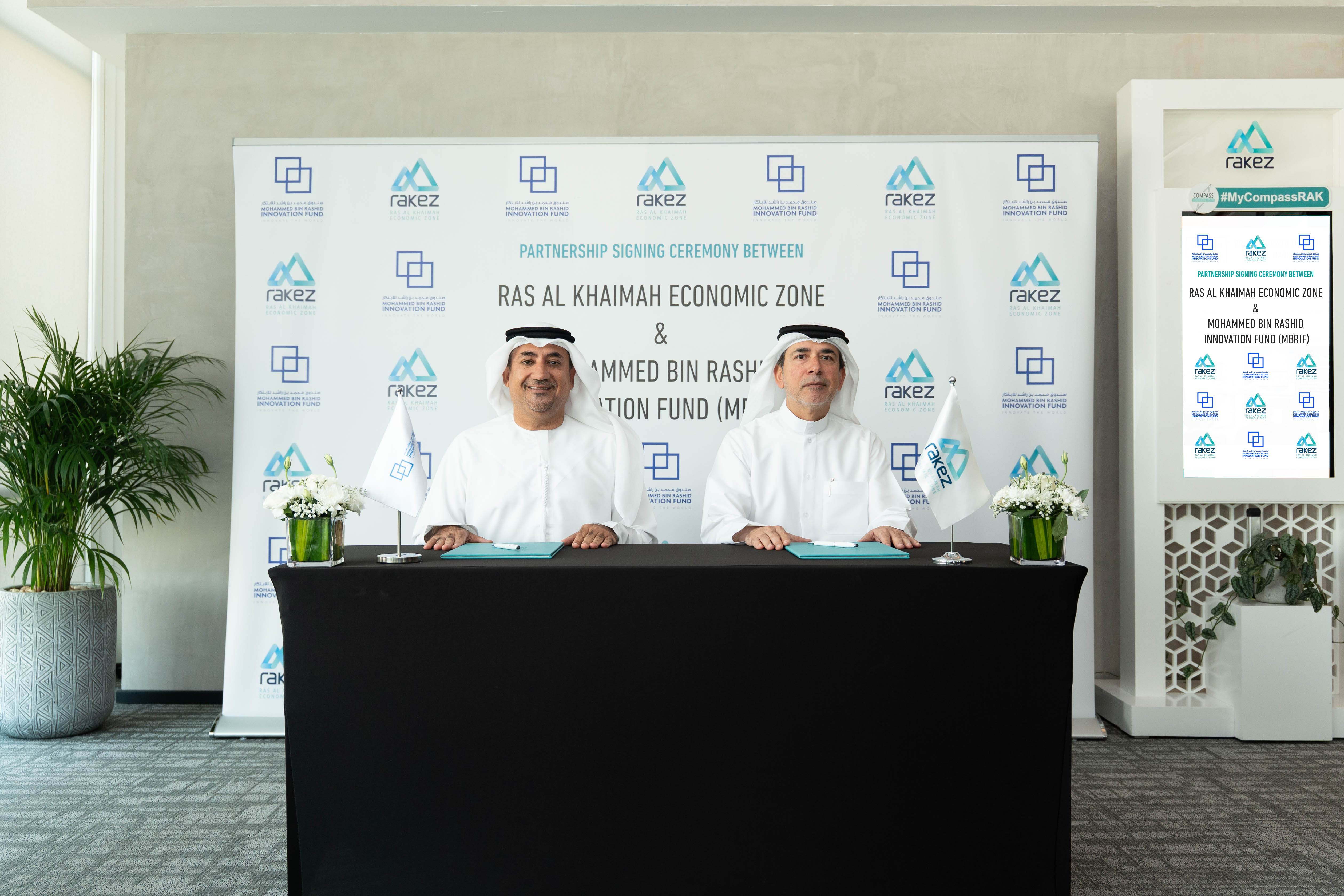
Ras Al Khaimah, 10 June: Ras Al Khaimah Economic Zone (RAKEZ) entered into a strategic partnership with the Mohammed bin Rashid Innovation Fund (MBRIF), a federal initiative launched by the Ministry of Finance, to strengthen support for innovators, startups, and growth-stage businesses within its ecosystem.
The partnership was formalised during a signing ceremony at Compass Coworking Centre between MBRIF Head Shaker Zainal and RAKEZ Chief Government & Corporate Relations Officer Yaser Abdulla Al Ahmed. The collaboration reflects a shared commitment to helping innovative businesses access funding support, ecosystem connections, and growth opportunities that enable long-term scalability and market expansion.
Through this collaboration, RAKEZ customers will gain access to a broader range of support services designed to accelerate business growth. This includes access to financing pathways and funding support through MBRIF, alongside structured mentorship and expert advisory to help innovative businesses strengthen their business models and scale more effectively. The partnership will also provide access to joint workshops and innovation programmes focused on practical areas such as growth strategy, financial planning, and market expansion.
These offerings will be complemented by RAKEZ’s streamlined business set-up, licensing, and operational support, as well as access to a wider ecosystem of partners, investors, and networks. Together, these elements are intended to help businesses launch, grow, and expand with greater confidence while contributing to sustainable, impact-driven outcomes.
Acting Assistant Undersecretary for the Support Services Sector at the UAE Ministry of Finance and the Ministry’s representative at MBRIF, Fatima Yousif Alnaqbi, said: “The Mohammed Bin Rashid Innovation Fund continues to play an important role in advancing the UAE’s innovation ecosystem and supporting the country’s vision for a competitive, knowledge-based economy. Partnerships of this kind help expand the support available to high-potential businesses by strengthening access to financing, strategic guidance, and growth opportunities. Continued collaboration across the ecosystem is essential to creating the conditions in which innovation can scale, diversify the economy, and contribute meaningfully to the UAE’s long-term development.”
RAKEZ Group CEO Ramy Jallad said: “Innovation plays a critical role in shaping resilient and future-ready economies. Through our partnership with MBRIF, we are creating stronger pathways for startups and growth-stage businesses within our ecosystem to access specialised support, funding opportunities, and strategic networks that can help accelerate their growth journeys. This collaboration reflects our continued focus on building an environment where innovative businesses can scale with confidence from Ras Al Khaimah.”
By bringing together funding, mentorship, and innovation support with a seamless business set-up and operating environment, the partnership ensures that startups and SMEs have what they need at every stage of their growth journey. RAKEZ and MBRIF will continue to work closely to help innovative businesses scale with confidence and unlock new opportunities within the UAE’s evolving innovation landscape.


