


3, Jun 2026
Industry Seeks Dedicated Credit Rating Framework for MSMEs
New Delhi, : In a move aimed at strengthening the growth prospects of small businesses, engineering exports promotion body EEPC India has urged the government to introduce a separate credit rating framework for Micro, Small and Medium Enterprises (MSMEs), arguing that the current system often places them at a disadvantage.
The industry body has highlighted that MSMEs are frequently assessed against large corporate players in their respective sectors, making it difficult for smaller enterprises to secure investment-grade ratings despite their operational strengths and growth potential.
According to EEPC India, the absence of a dedicated rating mechanism limits MSMEs’ access to affordable credit, as lower ratings often result in higher collateral requirements and increased borrowing costs. This, in turn, affects their ability to expand operations, invest in innovation, and compete effectively in domestic and global markets.
The proposal calls for a separate evaluation framework that benchmarks MSMEs against businesses of similar size and scale rather than large industry leaders. Such a system, industry representatives believe, would provide a more accurate assessment of an enterprise’s financial health and business performance.
A dedicated rating model could significantly improve access to finance for thousands of small businesses, which form the backbone of India’s manufacturing, exports, and employment ecosystem. Easier access to credit would enable MSMEs to strengthen productivity, create jobs, and contribute more effectively to the country’s economic growth.
Industry stakeholders have also suggested that a specialised framework, developed in consultation with regulators and rating agencies, could help build greater confidence among lenders while ensuring fairer treatment for smaller enterprises.
As India seeks to strengthen its manufacturing and export capabilities, policymakers are increasingly focusing on measures that improve the ease of doing business for MSMEs and unlock their growth potential.
- 0
- By Neel Achary

3, Jun 2026
World Environment Day The Westin Gurgaon, New Delhi Reaffirms Commitment to Sustainable Hospitality
New Delhi, Jun 3: As the hospitality industry continues to redefine luxury through the lens of responsibility and environmental consciousness, The Westin Gurgaon, New Delhi is strengthening its commitment to sustainable operations through a comprehensive framework of initiatives designed to reduce environmental impact while enhancing guest experiences.
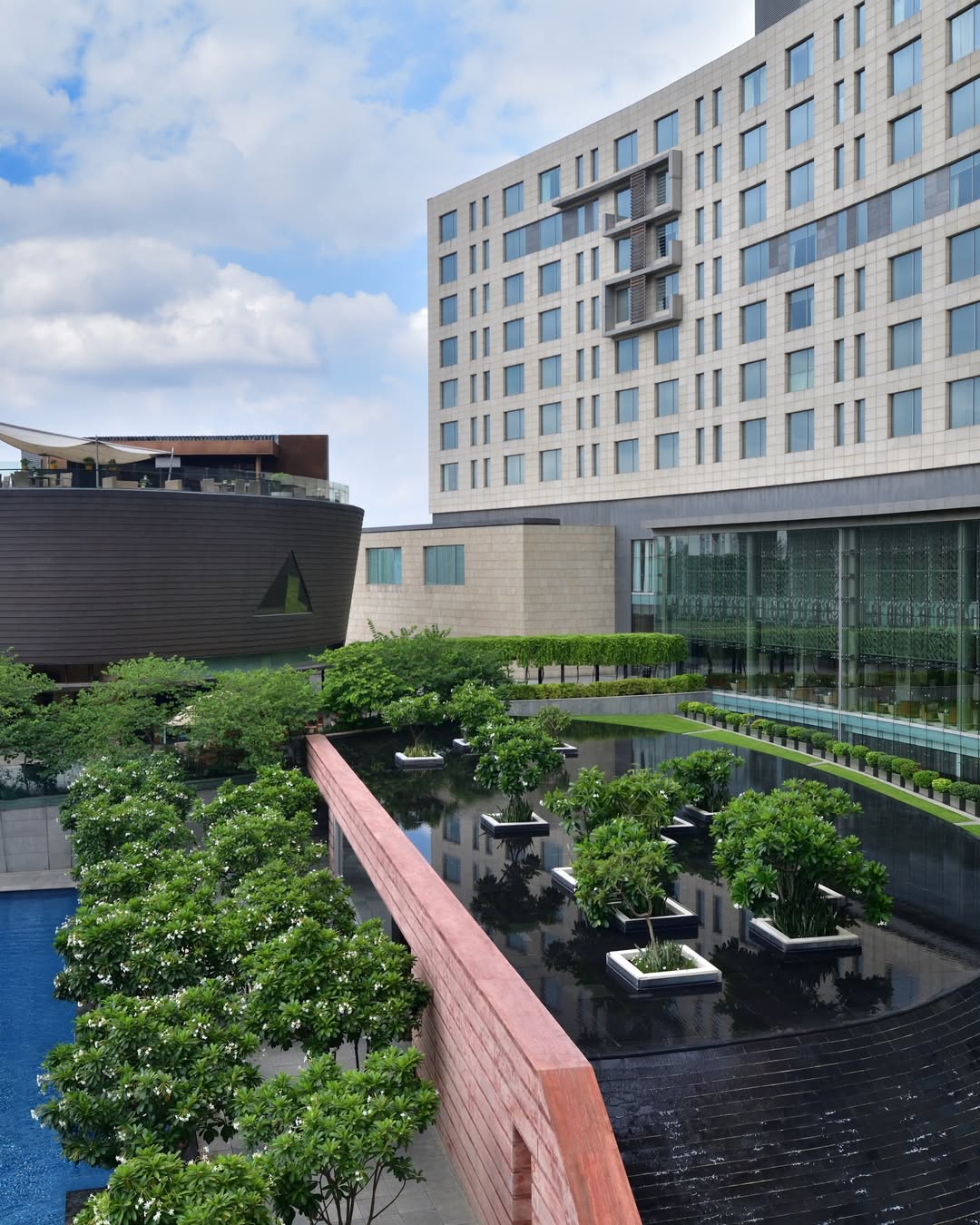
On the occasion of World Environment Day, the hotel highlights its ongoing efforts to embed sustainability across every aspect of its operations, demonstrating that exceptional hospitality and environmental stewardship can go hand in hand. Guided by the belief that true wellness extends beyond guests to the planet itself, The Westin Gurgaon has adopted a holistic approach that focuses on resource conservation, energy efficiency, responsible waste management and healthier built environments.
Water conservation remains a key priority for the hotel. Through its on-site Sewage Treatment Plant (STP), the property operates a closed-loop system that enables treated water to be reused for flushing and landscaping purposes, significantly reducing freshwater consumption. Additional measures including rainwater harvesting, smart irrigation systems, sensor-based faucets, low-flow showerheads and dual-flush systems further support efficient water management across the property.
The hotel has also invested significantly in energy-efficient infrastructure and smart technologies to optimize consumption and reduce its carbon footprint. The adoption of PNG-based boilers and solar-powered hot water systems has helped reduce reliance on conventional energy sources, while advanced technologies such as the Building Management System (BMS), Energy Management System (EMS) and Chiller Plant Manager (CPM) continuously monitor and optimize energy usage across operations. Intelligent LED lighting equipped with photodetectors, coupled with insulated building materials and natural stone cladding, further contribute to lowering overall energy demand.
Recognising the growing importance of sustainable mobility, The Westin Gurgaon has installed dedicated EV charging stations to support cleaner transportation alternatives for guests and visitors. The hotel also encourages associates to adopt environmentally conscious commuting practices through shared transportation and public transit options, contributing to a reduction in overall emissions.
Aligned with circular economy principles, the property has implemented comprehensive waste management initiatives aimed at minimizing landfill contribution. An on-site Organic Waste Composter converts food waste into nutrient-rich manure, while partnerships with authorised recycling partners ensure responsible disposal and recycling of dry waste. Sustainable materials including recyclable carpeting, eco-friendly furnishings and non-toxic bedding have also been thoughtfully incorporated throughout the property.
Environmental wellness extends beyond resource management to indoor air quality and guest well-being. Advanced air filtration systems, supported by centralised monitoring technologies, help maintain healthy indoor environments throughout the hotel. The use of non-CFC refrigerants, biodegradable cleaning products, eco-friendly laundry detergents and non-toxic pest control solutions further reflects the hotel’s commitment to minimizing environmental impact without compromising guest comfort.
The property also conducts regular government-approved air and soil quality assessments and remains focused on continuous improvement through globally recognised sustainability standards. Its ISO 10001 Sustainability Certification underscores this commitment and serves as a testament to the hotel’s dedication to responsible hospitality practices.
Recognising that sustainability is a collective responsibility, The Westin Gurgaon actively invests in training and awareness programmes for associates, empowering teams across departments to adopt resource-conscious practices and contribute meaningfully towards the hotel’s environmental goals.
As climate action becomes an increasingly important priority for the hospitality sector, The Westin Gurgaon, New Delhi continues to demonstrate how responsible luxury can create lasting value for guests, communities and the environment alike, setting a benchmark for sustainable hospitality in the region.
3, Jun 2026
Study reveals family offices need to strengthen cyber risk defence
June 03: New global research from Ocorian, the specialist global provider of services for asset managers and owners, including private client, fund administration, capital markets, corporate, and regulatory solutions, shows that many family offices are putting themselves at greater risk of a potential cyber attack and don’t have plans in place to recover if they are hit.
It’s estimated that 43% of family offices globally have suffered a cyber attack in the past two years but Ocorian’s study among family members and senior family office employees handling total wealth of $119.37 billion shows almost a fifth (19%) don’t have any defence plans in place to protect themselves from a potential attack. However, 18% of them say that they do plan to put one in place.
This compares to three quarters (75%) of respondents who have taken steps to strengthen their defences against a potential cyber attack in the past two years. Just 7% say they had plans in place more than two years ago.
Should they suffer a cyber attack more than a fifth (22%) of those surveyed say they don’t currently have an incident plan in place to respond and recover. Around 78% say they do have an incident plan ready.
More than one in 10 (11%) family offices surveyed admit that they feel significantly challenged when it comes to delivering the level and quality of cyber security expertise they need to operate effectively. Almost half (49%) say they currently receive advice and support from third-party professionals over cyber security, but this is set to significantly increase, with 72% saying they see the levels of outsourcing around cyber security to increase over the next three years. Of these 41% say they expect a dramatic increase.
Ian Rumens, Head of Private Client – Jersey, at Ocorian said: “A cyber security attack is becoming an increasing reality and can have huge implications for family offices, damaging reputations, triggering loss of stakeholder confidence and putting long-term relationships at risk. While many are taking steps to put the necessary precautions and defences in place, such as getting expert third-party advice, there are still too many who are highly susceptible.
“The financial impact can also be significant, from direct theft and fraud to business interruption, incident response costs, regulatory fines and potential litigation. It’s also vital that family offices work closely with all their service providers and suppliers to make sure those partners have the right protections in place too, helping reduce the risk of a cyber incident spreading through the wider ecosystem.
“Finally, organisations should ensure strong backup and recovery arrangements are tested regularly to help protect against data loss or corruption, so critical records and reporting can be restored quickly and accurately. On top of this, with no incident plan in place, it could also take those affected by an attack much longer to respond and recover afterwards.”
Ocorian’s award winning dedicated family office team provides a seamless and holistic approach to the challenges and opportunities families face. Its service is built on long-term personal relationships that are founded on a deep understanding of what matters to family office clients. Its global presence means Ocorian can provide bespoke structures and services for international families no matter where they live.
Key services include formation and administration of family offices, HR support services, support with lifestyle and luxury assets, family governance, resident and relocation services and specialist support with immigration, visas, payroll, marine and aircraft crew management and financial reporting.
3, Jun 2026
Clean Energy Sector to Generate 44 Lakh Jobs by 2030, Rooftop Solar Leads Growth: CEEW-NRDC
New Delhi, June 3 : India’s 500 GW non-fossil fuel capacity target and goals under the National Green Hydrogen Mission could generate over 44 lakh full-time equivalent jobs, according to a new independent study launched today by the Council on Energy, Environment and Water and the Natural Resources Defense Council India. Rooftop solar is projected to be the single largest employment engine, accounting for ~43 per cent of these estimated jobs.
The study, Driving Energy Transition: Workforce, Skills, and Gender in India’s Renewable Energy Sector, was conducted with technical guidance from the Ministry of New and Renewable Energy . It is based on a primary survey of companies conducted in 2024–25 across the solar, wind, bioenergy, and hydropower sectors. The study developed new FTE employment coefficients to estimate workforce intensity across different clean energy technologies and business phases across solar, wind, bioenergy, and hydropower sectors, and estimates direct jobs created during component manufacturing, project deployment, and operations. India now ranks third globally in renewable energy installed capacity and achieved its target of meeting 50 per cent of cumulative electric power installed capacity from non-fossil sources in 2025, five years ahead of schedule.
Speaking about the prospects of job creation in clean energy sectors, Shri Santosh Kumar Sarangi, Secretary, MNRE said,
“The element of people’s involvement is intrinsic to a successful green transition. The positive externalities involved in keeping people as the focus of this green transition is intrinsic, and India has shown that our economic growth trajectory as well as sustainability goals can be pretty well aligned. Last year, we achieved about 51 gigawatts of solar and wind, and hopefully, this momentum will continue and expand in the subsequent years..”
Dr Arunabha Ghosh, CEO, CEEW, said,
“India’s energy transition must also be a workforce transition. The opportunity is about creating livelihoods, building skills, deepening domestic supply chains, and ensuring that the benefits of clean energy reach households, farmers, workers, and entrepreneurs while also adding gigawatts. Rooftop solar shows why distributed renewables matter: they generate clean power while creating more jobs per MW than utility-scale projects. To convert India’s clean-energy ambition into a durable employment engine, India must continue to invest in high-quality skilling, transparent workforce data, and inclusive participation.”
Rooftop solar leads workforce addition
The findings are significant as rooftop solar gains momentum. The CEEW-NRDC study finds that of the 6.5 lakh clean energy workers added between FY23 and FY26, the largest share came from rooftop solar, which accounted for 62 per cent of the total workforce addition. This was followed by PM-KUSUM at 16.3 per cent, biomass power at 12.6 per cent, ground-mounted solar at 6 per cent, etc.
Rooftop solar creates more jobs because it has to be installed home by home, shop by shop, and building by building, unlike large solar or wind projects that are built at a single site. This means more workers are needed for customer outreach, site surveys, design, installation, grid connection, and maintenance. For instance, rooftop solar generates 44 times more FTE job-years per MW than utility-scale solar. The study estimates that rooftop solar generates ~45 FTE job-years/MW, compared to 1 FTE job-year/MW for ground-mounted solar and ~0.6 FTE job-year/MW for wind. Decentralised clean energy systems were found to be significantly more jobs-intensive than large-scale systems.
Dipa Singh Bagai, Country Director, NRDC India, said,
“Clean energy jobs are essential to India’s economic growth, energy security, and climate goals. This study shows that distributed renewable energy, especially rooftop solar, can create employment across cities, small towns, and rural areas. But job creation will require deliberate planning, credible workforce reporting, and stronger industry-training partnerships so that workers are ready for the next phase of India’s energy transition.”
Women remain underrepresented in solar and wind energy jobs
The CEEW-NRDC study finds that women account for only 11 per cent of the total workforce in solar and wind deployment and manufacturing sectors. Women’s participation is highest in rooftop solar at 15 per cent, followed by solar module manufacturing at 13 per cent, floating solar at 12 per cent, and ground-mounted solar at 11 per cent. The study also finds that 61 per cent of women in the clean energy workforce are employed in non-technological roles such as human resources, accounting, and administration.
Clean energy jobs will require higher skills
The study also finds that ~13 lakh FTE jobs could be in operations and maintenance and manufacturing roles, sustained over the lifetime of projects or manufacturing facilities. However, realising this employment opportunity will require a stronger skills ecosystem. Around 60 per cent of jobs in clean-energy project deployment require highly skilled or semi-skilled workers. In manufacturing sectors, this rises to 80–90 per cent, underscoring the need for technical training, practical field exposure, and career progression pathways.
Recommendations
The study recommends that MNRE and related institutions institutionalise mandatory workforce reporting through existing processes such as subsidy disbursement, tenders, and regulatory frameworks. It also calls on clean-energy companies to invest in gender inclusion and career advancement programmes, while training institutes should strengthen hands-on learning and keep curricula aligned with changing industry needs. As India scales towards its 2030 clean-energy targets and long-term net-zero goal, the CEEW-NRDC report emphasises that workforce planning, skilling, gender inclusion, and reliable jobs data will be essential to ensure that the clean-energy transition creates not just capacity, but quality livelihoods.
3, Jun 2026
Staying Without Leaving a Scar: How EkoStay Is Building a Travel Brand That Works With Nature, Not Against It
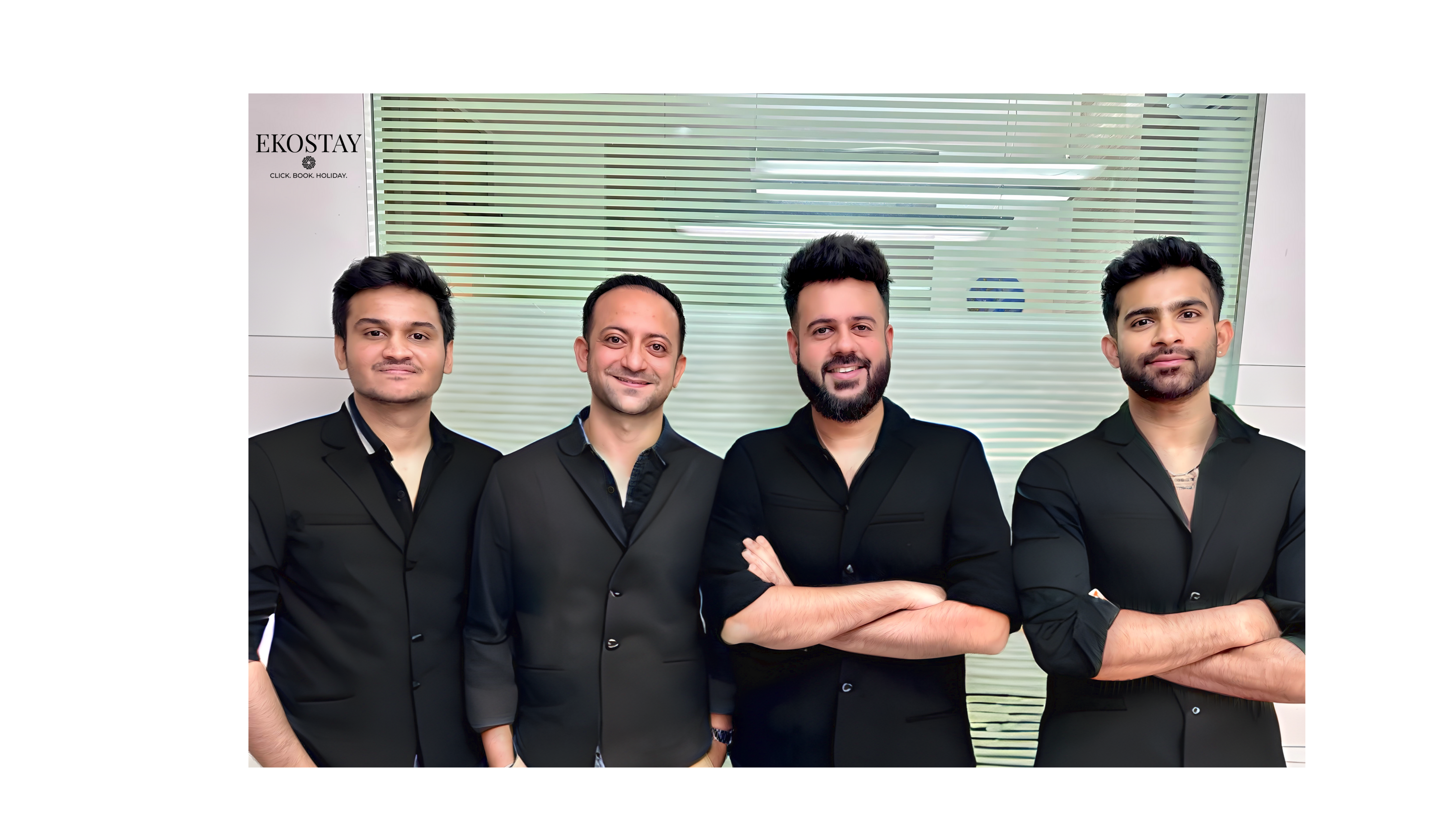
Mumbai, June 03: Every year on World Environment Day, the conversation turns to what must be changed. At EkoStay, the conversation has always been about what should never be built in the first place.
Founded in 2018, EkoStay is India’s fastest-growing professionally managed villa brand with 150+ curated homes across 12+ leisure destinations, ₹40 crore in revenue for FY 2025–26, and not a single rupee of external funding. But behind those numbers is a model that, by its very design, treads lightly on the planet.
In an industry where growth typically means breaking ground, pouring concrete, and consuming energy at scale, EkoStay has grown by doing the opposite: unlocking the potential of homes that already exist.
THE GREENEST HOTEL IS ONE THAT WAS NEVER CONSTRUCTED
India’s hospitality sector is booming and so is its construction footprint. New hotels, resorts, and mega-developments continue to consume land, water, and natural resources across the country’s most ecologically sensitive destinations.
EkoStay’s model is structurally different. Rather than erecting new buildings, the brand brings underutilised second homes and private properties into its professionally managed portfolio. Every villa onboarded is an existing structure renovated, not built; restored, not razed.
This approach means that EkoStay’s growth does not directly increase the construction footprint on India’s natural landscapes. The hillsides of Ooty remain hillsides. The coastline in Alibaug remains a coastline. EkoStay simply creates a better-managed way for travellers to experience them within homes that were already there.
“Our expansion is not just about increasing numbers. It is about deepening our connection with travellers across India. Each new property is a step toward our vision of creating immersive, design-led spaces that feel like a second home while delivering exceptional hospitality.” Husain Khatumdi, MD & Co-Founder, EkoStay
NATURE IS NOT THE BACKDROP-IT IS THE BUSINESS
EkoStay’s portfolio spans some of India’s most ecologically rich and environmentally significant destinations: the Nilgiris (Ooty, Kodaikanal), the Western Ghats (Lonavala, Mahabaleshwar, Igatpuri, Karjat), the Konkan Coast (Alibaug), wine country (Nashik), and the shores of Goa.
These are not generic tourist zones. They are biodiverse, often fragile environments that benefit from responsible, low-density travel rather than mass tourism infrastructure. By channelling travel demand into existing private homes, EkoStay inherently distributes visitor footfall across residential spaces rather than concentrating it in large, resource-intensive hotel complexes.
The brand’s deliberate, demand-led expansion strategy selecting only high-traction micro-markets with structurally strong demand also acts as a check against overdevelopment. EkoStay does not expand for the sake of scale. It expands where the ecosystem of travellers and destinations can genuinely sustain it.
“Our focus has always been on identifying destinations where demand is structurally strong and aligning our supply accordingly.” Zishan Khan, Chief Acquisition Officer & Co-Founder, EkoStay
REVIVING PROPERTIES, EMPOWERING COMMUNITIES
EkoStay’s Villa Makeover Programme which transforms underutilised second homes into professionally managed vacation villas is as much a community initiative as it is a business one.
When a property is onboarded onto EkoStay’s platform, renovation and beautification work is carried out by skilled local manpower sourced from the surrounding community. This is not incidental it is a stated commitment of the programme, ensuring that the economic benefits of tourism flow directly to the people who live closest to these natural destinations.
The logic is simple and powerful: when local communities have a material stake in the health and attractiveness of their surroundings, conservation becomes self-sustaining. A local carpenter who builds the furniture for a villa, a local caretaker who maintains the garden, a local cook who serves guests each has a reason to care about the quality and preservation of the place they call home.
This model mirrors the foundational principle of responsible tourism: that travel should leave communities better off, not just passed through.
“This initiative strengthens our long-term vision to not only expand EkoStay’s presence across new regions but also to create sustainable, profitable models for property owners.” Sohail Mirchandani, COO & Co-Founder, EkoStay
A PRIVATE VILLA STAY IS ALSO A QUIETER FOOTPRINT
The environmental case for private villa stays over conventional hotels is straightforward. A group of eight travellers sharing a villa uses one kitchen, one water supply, one set of common spaces. The same group in a hotel occupies eight separate rooms, eight separate sets of air conditioning, eight separate housekeeping cycles, eight sets of daily linen changes.
Villa stays are inherently resource-efficient not because EkoStay mandates specific green practices at each property, but because the format itself consolidates consumption. Guests cook together, share spaces, and self-manage many of the daily resource decisions that hotels manage centrally and wastefully.
As India’s travel preferences shift toward private, experience-led stays a shift that EkoStay both reflects and leads this structural efficiency becomes a meaningful environmental dividend.
BOOTSTRAPPED, PROFITABLE, AND BUILT TO LAST
There is an environmental argument for financial sustainability too. Businesses that rely on external capital to fund growth often prioritise speed over responsibility expanding inventory before the operational discipline is in place to manage it well.
EkoStay’s eight-year journey without a single rupee of external funding tells a different story. The brand has grown because guests come back. Revenue is reinvested. Properties are chosen carefully. Operations are scaled only when the capability to serve guests well is already in place.
This is, at its core, a philosophy of sufficiency the same philosophy that underpins sustainable living. Take what you need. Grow at the pace the ecosystem supports. Build things that last.
“India’s travel behaviour has fundamentally shifted towards private, experience-led stays where travellers seek space, flexibility, and curated hospitality. We are focused on building depth within high-performing micro-markets while simultaneously unlocking new leisure destinations that show strong long-term potential.” Varun Arora, CEO & Co-Founder, EkoStay
EKOSTAY: BY THE NUMBERS
•Founded: 2018 | Headquarters: Worli, Mumbai
•Portfolio: 150+ professionally managed villas | Target: 220+ properties
•Destinations: 12+ leisure micro-markets across India
•Revenue FY 2025–26: ₹40 crore | YoY Growth: 43% | EBITDA Margin: ~10%
•External Funding Raised: Nil — entirely bootstrapped
•Occupancy Rate: ~56%
•Key natural destinations served: Nilgiris, Western Ghats, Konkan Coast, Goa, Nashik wine country
•Community impact: Local labour and manpower engaged for all property renovations under Villa Makeover Programme
3, Jun 2026
Bhartiya Mall of Bengaluru Strengthens its Experiential Retail Portfolio with Sorele, Kameleo and Frido
Bengaluru, June 3: Bhartiya Mall of Bengaluru continues to strengthen its position as one of North Bengaluru’s premier lifestyle and experiential retail destinations with the addition of emerging D2C and innovation-driven brands Sorele, Kameleo, and Frido.
The latest additions reflect a larger shift in consumer preferences, as shoppers increasingly seek brands that combine individuality, comfort, wellness, and experience-driven retail. As digitally native brands continue expanding into offline spaces, Bhartiya Mall of Bengaluru is evolving its retail mix to offer immersive and community-driven shopping experiences tailored to Bengaluru’s young, aspirational, and fast-growing consumer base.
Among the newest additions is Sorele, a contemporary fashion jewellery brand known for its minimalist yet modern and versatile collections, crafted with 18K gold plating and lab-grown Moissanite diamonds. Catering to Gen Z, working professionals, and urban families, the brand offers conscious luxury designed to transition seamlessly from workwear to occasion wear.
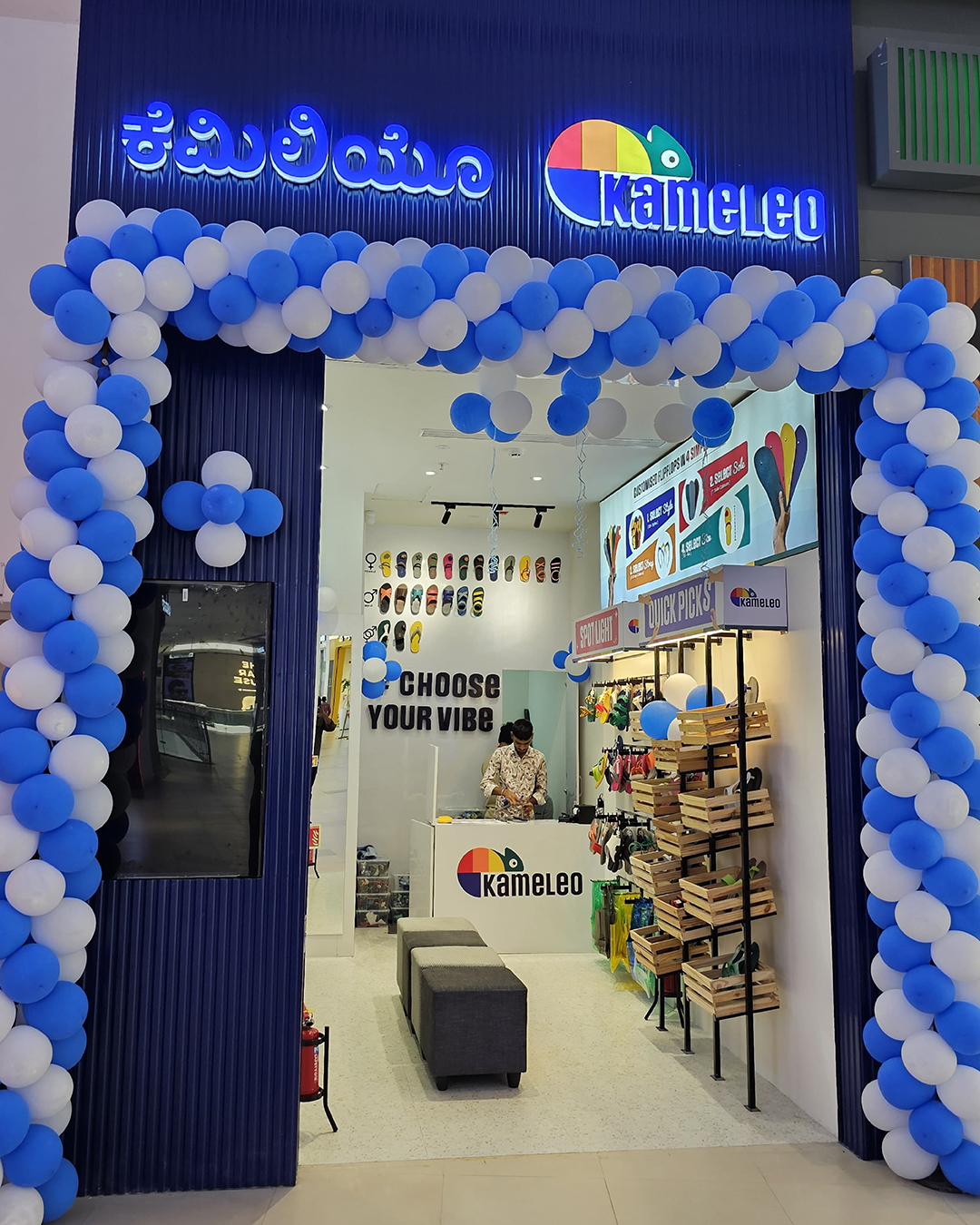
Enhancing the mall’s fashion portfolio is Kameleo, a customised fashion footwear brand focused on creativity and self-expression. Kameleo allows shoppers to personalise footwear by mixing and matching soles and straps across collections such as Candy, Poppi, and Twin, combining vibrant aesthetics with lightweight, all-day comfort for younger consumers seeking personalised fashion experiences.
The launch of Sorele and Kameleo at Bhartiya Mall of Bengaluru also marks the brands’ first-ever store within a mall format, reflecting a broader shift from high-street retail to destination-led experiential spaces.
Further strengthening the mall’s lifestyle and wellness offerings, Frido brings its ergonomics and comfort-led product range focused on posture support, mobility, and everyday wellness. As health-conscious living and functional lifestyle products gain traction among urban consumers, brands like Frido offering strongly aligns with the needs of today’s consumers, particularly young tech professionals within the Bhartiya Center of Information Technology ( a tech park within the Bhartiya City ecosystem), alongside families and wellness-conscious shoppers seeking comfort-driven innovations in their daily lives.
The addition of brands such as Sorele, Kameleo, and Frido highlights the growing momentum of digitally native and experiential brands expanding beyond online-first models to build stronger consumer engagement through physical retail environments. Increasingly, consumers want to physically experience and interact with the D2C brands they discover online, and Bhartiya Mall of Bengaluru is enabling that transition by bringing these brands closer to customers within an integrated lifestyle destination.
As North Bengaluru rapidly evolves into one of the city’s most dynamic residential and commercial growth corridors, Bhartiya Mall of Bengaluru continues to build a future-ready retail ecosystem that seamlessly integrates fashion, lifestyle, wellness, dining, and entertainment experiences under one destination. With over 5,000 families moving into North Bengaluru every month, the region is fast emerging as one of Bengaluru’s most high-growth real estate markets.
“At Bhartiya Mall of Bengaluru, we are seeing a strong shift in how digitally native brands approach offline retail. Today’s consumers discover brands online, but they increasingly want immersive physical experiences before making purchase decisions. Brands like Sorele and Kameleo choosing Bhartiya Mall of Bengaluru for their first mall stores reflects the strength of our ecosystem and the kind of consumer community we cater to, from young residents and working professionals to families and aspirational shoppers across North Bengaluru. With additions like Frido, we are also strengthening categories centred around wellness, comfort, and lifestyle innovation, which are becoming increasingly relevant for modern urban consumers,” said Jermina Menon, Brand & Marketing Strategist, Bhartiya Urban.
With an expanding mix of fashion, lifestyle, wellness, dining, and entertainment offerings, Bhartiya Mall of Bengaluru remains committed to delivering curated retail experiences aligned with the aspirations of Bengaluru’s next-generation consumers.
3, Jun 2026
Supplementing with Peptides: Good for Extra Pep or a Needless Step
In the most basic of terms, peptides are short proteins: chains of amino acids, the body’s building blocks, that are between 2 and 50 units long.
Peptides and proteins alike are touted as a sort of fountain of youth by health and wellness influencers.
Here, Jorge Ruas, Ph.D., of the U-M Department of Pharmacology, talks about peptides, how they work and whether supplementing them lends any benefit.
How does what you study relate to peptides?
Ruas: My lab is very interested in the idea of organ-to-organ communication to understand how the body adapts to exercise.
For example, when you are running, your muscles release a variety of substances, including peptides and small molecules (metabolites), that together can inform the rest of your body, your brain, heart, liver, fat tissue, kidneys, about the state of your body’s systems.
And this is fundamental for your whole body to adapt to the benefits of exercise training.
We’re interested in it from a physiological perspective, because these are exactly the same mechanisms that get dysregulated in many diseases and from a pharmacology perspective, since we want to know if these substances can have therapeutic value.
Can you explain more about what peptides are and what they do?
Ruas: Proteins and peptides as made of amino acids linked together.
There are 20 different amino acids, 9 of which the body can’t make and has to take in from diet.
If you imagine each amino acid represented by a letter (which they can be), each peptide and protein can be any combination of those 20 amino acids in any possible order.
You can imagine it’s complicated to talk about their functions because they are so diverse.
One of the most familiar peptides is the hormone insulin, which is secreted from the pancreas to control blood sugar, by communicating with muscle, fat, the liver and the brain.
It’s involved in the systemic regulation of energy.
What is an example of a peptide drug?
Ruas: With peptide drugs, we are essentially trying to mimic what the body does naturally.
For example, GLP-1 is released by the intestine after a meal to stimulate insulin production and suppress appetite and tell you when to stop eating (GLP-1 analogues were initially developed to treat diabetes).
People have thought, well, if GLP-1 naturally suppresses appetite, let’s just use it to suppress appetite to treat obesity.
The problem is that the GLP-1 that the body makes has an extremely short half-like, meaning it goes into circulation and then quickly disappears.
What pharmaceutical companies were able to do is come up with a method so that after you inject GLP-1 it would last longer in circulation so that your brain is constantly receiving the message to stop eating.
What are some of the challenges that come with peptide supplementation?
Ruas: There is a whole class of drug investigation centered around identifying peptides the body’s organs use to communicate with each other and then trying to copy them.
One of the issues is with taking these drugs or supplements by mouth.
The acid and protein-digesting enzymes in the stomach break down proteins and peptides (that are too large to be absorbed into circulation) into their components, amino acids.
Those can then be absorbed in the intestine, distributed to the organs, and used for whatever processes the body needs.
So what’s absorbed into your body is no longer the peptide you ingested, but its building blocks.
The pharmaceutical industry has techniques to try to work around these limitations and produce something that has a consistent, reproducible effect that can be studied with clinical studies, a process that costs many millions of dollars.
Supplements don’t have this level of study or regulation.
While the idea of the peptide may not be wrong, non-regulated supplements are often produced without proper formulation, quality control or human testing.
What that means is that there’s not enough information or very small clinical studies to support their use.
And if they do exist, the results were not impressive, because otherwise people would have pursued them as pharmaceuticals (which would fall under FDA regulation.)
Do most people need supplements?
Ruas: If you have a balanced diet, you don’t need a supplement.
You will get all the amino acids you need from your food, unless you’re doing a restrictive diet.
And while you can provide your body with extra, it will not take what it does not need.
If you are actively exercising and lifting weights, then the supplementation of amino acids does have an effect because your body is building more muscle.
But the body of a sedentary person will either not use extra peptides and proteins or store that energy in the form of adipose tissue, or fat.
What is your message for people interested in peptides and the like for longevity?
Ruas: My most boring and repetitive message is to care about your diet, exercise and sleep well; this is not just my message, but what the World Health Organization recommends.
The movement of your body, the contraction of your muscles naturally releases a lot of these peptides and substances that keep you healthier, more alert and so on.
As for supplements, think about whether you really need them and what might be the price might be in the long run by ingesting or injecting something that is not properly validated for safety and efficacy.
In biology there’s always a price to pay.
2, Jun 2026
Ecobank Group Launches World First Nature Bond Mobilising Global Capital to Protect Africa’s Natural Ecosystems
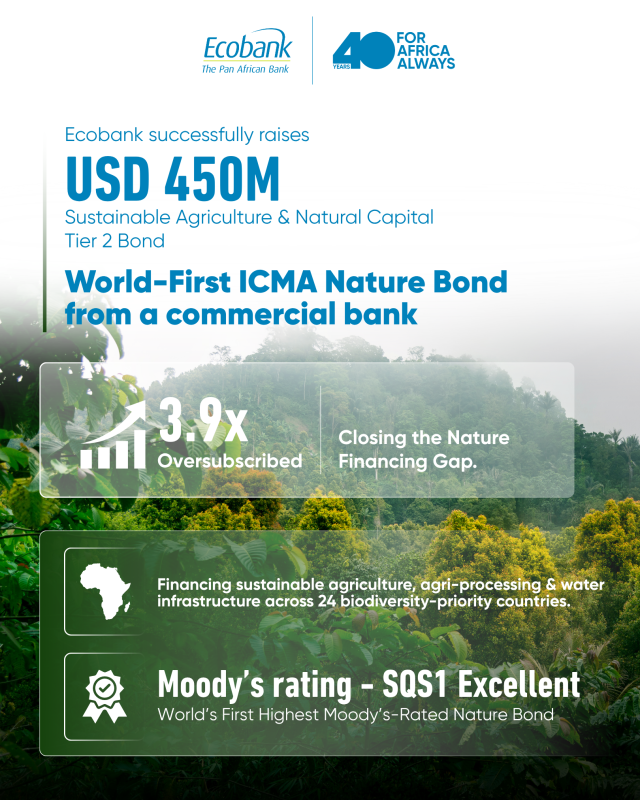
LOMÉ, Togo, June 2, 2026/ – Ecobank Group (www.Ecobank.com) has launched the world’s first ICMA commercial bank-issued Nature Bond on the London Stock Exchange, creating a new route for international and African capital to protect Africa’s biodiversity. Moody’s awarded the transaction its highest possible sustainability quality score, SQS1 Excellent. The bond will support African farmers, sustainable agriculture businesses and water systems, protecting some of the planet’s most important ecosystems.
Impact on the ground in Africa
Africa is home to some of the world’s most important natural capital, including arable land, tropical forests, freshwater systems and biodiversity across hundreds of millions of hectares. But, until now, private nature capital has not flowed to Africa at the scale the continent’s ecological significance warrants in global ecological resilience. Despite hosting 25% of global biodiversity, Africa receives less than 3% of nature finance.
Ecobank’s Nature Bond is a direct response to this gap. It will support smallholder farmers adopting sustainable agricultural practices, agri-processors with verified deforestation-free supply chains, and water infrastructure protecting freshwater ecosystems relied upon by millions of people. Unlike many conservation-focused financing vehicles, Ecobank’s Nature Bond channels capital directly through Africa’s real economy — financing businesses and communities whose day-to-day activities shape environmental outcomes at scale.
The investments will be made in 24 markets, with significant deployment in biodiversity-priority countries such as Côte d’Ivoire, Burkina Faso and Ghana. Importantly, 81% of the eligible lending pool is allocated to countries where agricultural land-use change is the primary driver of biodiversity loss, helping direct capital to the areas where it can have the greatest environmental impact.
The framework also incorporates independent monitoring and verification mechanisms, including deforestation screening and supply chain traceability requirements, helping ensure that financed activities deliver measurable nature-positive outcomes. Every eligible loan carries seven independently verified sustainability conditions.
The launch of this bond also comes as governments and investors worldwide face mounting pressure to mobilise private capital for biodiversity protection and sustainable land use.
What is a Nature Bond?
A Nature Bond, under the ICMA secondary designation, requires proceeds to actively contribute to nature-positive outcomes, including transforming economic activities to reduce the drivers of nature loss at scale.
The Nature Bond was designed to reach those that conservation-focused instruments were not designed to serve – farmers, agri-processors and water operators whose daily activities collectively determine ecosystem outcomes.
While green bonds typically finance a broad range of environmental objectives, the Nature Bond designation focuses the use of proceeds specifically on nature-related outcomes, including biodiversity, sustainable agriculture, land use and water infrastructure.
The transaction
The USD 450 million bond was priced following strong investor demand with the final orderbook exceeding USD 1.36 billion – 3.9x the original target size. The strength of demand enabled Ecobank to increase the transaction by USD 100 million and tighten pricing by 50 basis points.
The transaction attracted support from both international and African investors, demonstrating Ecobank’s unique ability to mobilise capital across global and African markets.
For the first time, international and African capital markets have a credible, scalable mechanism for financing the protection of African natural capital through the communities who depend on it.
Jeremy Awori, Group Chief Executive Office, Ecobank Transnational Incorporated, commented:
“This transaction is a defining moment for African sustainable finance. Investors did not just support this bond. They demanded more of it, allowing us to increase the size and tighten pricing.
We are not a bank that simply labels bonds. We have spent four years building the systems, governance and accountability needed to make nature finance credible and scalable in Africa.
This bond is ultimately about the farmers, cooperatives and communities whose livelihoods depend on healthy ecosystems.”
Rachael Antwi, Group Head of Sustainability and ESRM, Ecobank Transnational Incorporated, added:
“Nature finance will only scale in Africa if it is practical, measurable and connected to the real economy. This bond is designed to do that by linking international capital to eligible lending for sustainable agriculture and water infrastructure across 24 countries. It reflects the systems and standards Ecobank has built to ensure nature finance supports both environmental resilience and the communities whose livelihoods depend on healthy ecosystems.”
2, Jun 2026
AD Ports Group Acquires CLI, Brazil’s Leading Agri-Bulk Port Terminal Operator, for over AED 3 Billion
São Paulo, Brazil, and Abu Dhabi, UAE – 2nd June 2026: AD Ports Group (ADX: ADPORTS), a leading global enabler of trade, industry, and logistics solutions, today acquired Corredor Logística e Infraestrutura (CLI), Brazil’s leading independent agri-bulk port terminal operator, entering the South American market with a strategically major expansion transaction.
São Paulo-based CLI operates two of Brazil’s most important agri-bulk export terminals under long-term concessions: CLI Sul, Brazil’s leading sugar export terminal and key export terminal for corn and soybeans, located in the Port of Santos; and CLI Norte, another key grains gateway at the Port of Itaqui, which is part of the Brazilian ‘Arc of the North’, an essential geographical region encompassing the Amazon basin that is a pivotal logistics hub and significant emerging corridor for agriculture exports.
In 2025, ports and terminals in northern Brazil recorded the fastest growth in the country, reinforcing the strategic role of the “Arc of the North’ corridor in reshaping the nation’s logistics map.
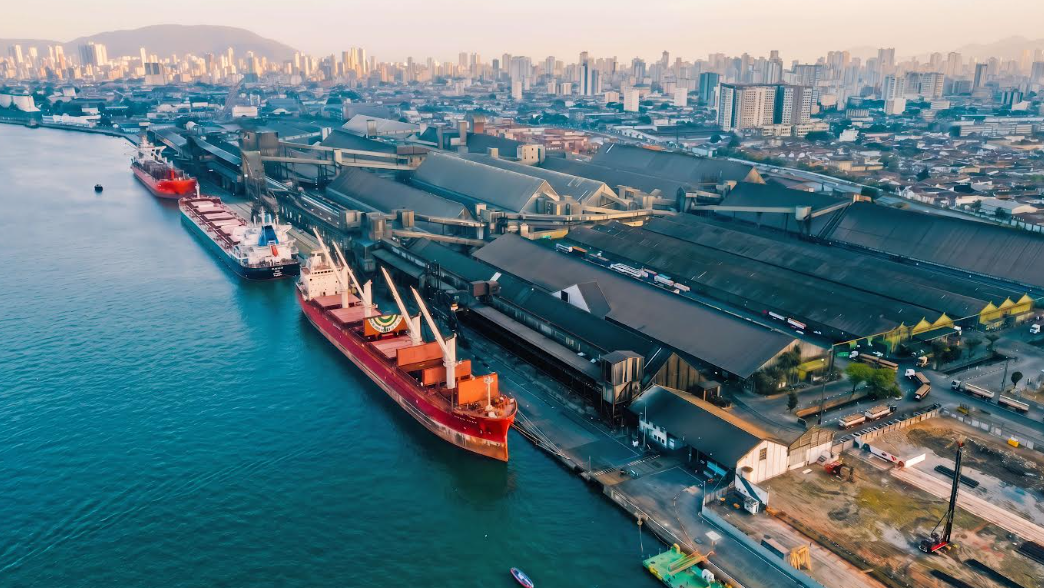
The two terminals play a key role in connecting the producing regions of Brazil, the world’s leading sugar exporter and one of the largest grain exporters, to the world.
AD Ports Group agreed to acquire CLI from joint owners Macquarie Asset Management, and IG4 Capital. CLI owns 100% of CLI Norte, which operates a terminal at the Port of Itaqui, and 80% of CLI Sul, which operates a terminal at the Port of Santos.
The transaction, which is expected to be completed in the second half of the year subject to customary closing conditions, including regulatory and antitrust approval, was conducted at an enterprise value of AED 3.1 billion (USD 835 million).
It has also been agreed that CLI’s existing senior management team will remain in place to continue running the company.
The CLI acquisition represents a transformative step for AD Ports Group, positioning it as one of South America’s leading independent agri-bulk terminal operators, with strategic access to a vast new number of opportunities for the Group’s associated businesses of maritime and shipping, logistics, economic cities, and digital services.
Captain Mohamed Juma Al Shamisi, Managing Director & Group CEO of AD Ports Group, said: “The purchase of CLI is a game changer for AD Ports Group. The transaction extends our Group’s international reach for the first time into Latin America, and deepens our growing agrifoods activities, one of our core verticals. Under the wise guidance of our leadership in the United Arab Emirates, AD Ports Group is committed to enabling trade in one of the world’s most-important, fastest-growing agricultural commodities markets, which will not only benefit the Group’s global clients, including those in Brazil, but also strengthen the AD Ports Group global network.”
Brazil supports AD Ports Group’s geographic expansion as well as the Group’s plan to develop a major new East-West trade spoke linking South America’s largest economy to the Indian Subcontinent, East Africa and Southeast Asia. The UAE is in advanced negotiations with Mercosur, the South American trading bloc that includes Brazil, to establish a Comprehensive Economic Partnership Agreement. Emirati investments in Brazil are estimated to be approximately USD 5 billion in total, according to the UAE Ministry of Foreign Affairs. The two countries maintain a highly active strategic partnership, having signed a Double Taxation Agreement and eliminated various tax and investment barriers to boost bilateral business.
Fernando Lohmann, Head of Macquarie Asset Management in Brazil, said: “Brazil’s agricultural export sector continues to demonstrate remarkable resilience, reinforcing the country’s position as one of the world’s leading suppliers of agricultural commodities. As a long-term investor in the country, Macquarie remains committed to acting as a responsible custodian of essential infrastructure assets that help drive economic development, improve connectivity and support Brazil’s role in global trade and we believe AD Ports Group is ideally positioned to support CLI’s next phase of growth.”
Paulo Todescan L. Mattos, Co-Founder, Managing Partner, and CEO of IG4 Capital, said: Since becoming shareholders in CLI, our focus has been on strengthening the company’s operational capabilities, expanding its strategic footprint, and positioning the platform to capture the long-term growth of Brazil’s agri-bulk export sector. We believe AD Ports Group is the right strategic owner to build on this foundation, bringing global trade expertise, infrastructure capabilities, and a long-term vision that will support CLI’s continued growth and development.”
The purchase of CLI gives AD Ports Group an entry point into Latin America, and a platform for further regional expansion. Moreover, the agrifood sector is a priority vertical in the Group’s intelligent internationalisation expansion strategy, with several key investments made in that space recently.
In December 2025, the Group’s Karachi Gateway Multipurpose Terminal Ltd. (KGTML) and the Pakistan unit of global merchant and agricultural goods processor Louis Dreyfus Company signed a long-term agreement to develop a clean bulk handling and storage facility for agricultural goods at Karachi Port. In January 2025, the Group agreed to invest about USD 30 million in the greenfield Sarzha Grain Terminal on the Caspian Sea at Kuryk Port in Kazakhstan and earlier this year, the Group secured a 30-year concession to operate the Aqaba multipurpose port in Jordan, which is a key player in agri-bulk in the Middle East with over 3 million tonnes of grains handled annually. Moreover, Noatum Ports’ Spanish operations are already significantly involved in agri-bulk with the Tarragona and Sagunto terminals handling around 2 million tonnes of grain imports annually and with an additional investment of AED 90 million (EUR 21 million) announced recently for modernising existing facilities at the Tarragona terminal.
In 2025, CLI handled a combined 17 million tonnes of agri-bulk cargo and delivered a revenue of AED 654 million (USD 178 million), generating an EBITDA of AED 360 million (USD 98 million).
CLI operates one of Brazil’s few large-scale, agri-bulk port platforms, strategically located along export corridors and ports. The ports of Santos and Itaqui are structurally constrained, particularly in Santos, where limited expansion capacity and chronic congestion are expected to underpin long-term utilisation and pricing resilience.
Long-term demand for the Group’s Brazilian terminals is also supported by Brazil’s global leadership and the strategic importance of the country’s grain and sugar exports. Brazil is the world’s largest sugar exporters, accounting for 40-50% of total global sugar exports, according to industry figures, and a leader in soybeans, coffee, and corn.
The purchase of CLI is AD Ports Group’s largest acquisition to date following the Group’s AED 2.65 billion (USD 720 million) purchase of Spain’s Noatum in 2023, and its AED 1.9 billion (USD 510 million) purchase of a 51% stake in Dubai-based Global Feeder Shipping (GFS) in early 2024.
For the transaction, AD Ports Group was advised by BTG Pactual, while IG4 and Macquarie Asset Management were advised by Citi.
2, Jun 2026
Ozen Life Maadhoo Reimagines the Maldives Through the Art of Slow Luxury
For discerning traveller, the resort offers an experience of stillness, indulgence and beautifully unhurried island living

June 6: As luxury travellers increasingly seek privacy, presence and experiences with emotional depth, OZEN LIFE MAADHOO emerges as a rare kind of escape, one where time slows, the senses awaken, and every detail is designed for a more meaningful kind of indulgence in the Maldives.
Luxury today is no longer defined by excess alone, but by the freedom to experience a destination more deeply, more privately, and at one’s own pace. For affluent Indian travellers who increasingly value immersive escapes over hurried itineraries, slow travel has become the new marker of sophistication. At OZEN LIFE MAADHOO, set within the serene beauty of South Malé Atoll, this philosophy unfolds naturally through expansive ocean views, intuitive service, and a sense of calm that begins the moment one arrives on the island.
At the heart of the experience is the resort’s signature INDULGENCE™ Plan, a thoughtfully crafted concept that allows guests to surrender to the pleasures of island life without interruption. Days begin with leisurely Champagne breakfasts at THE PALMS and unfold into a choice of richly layered experiences; snorkelling in crystalline waters, restorative rituals at ELE | NA Elements of Nature Spa, tranquil moments in a private villa, or sunset voyages across the Indian Ocean. Dining is integral to the rhythm of the stay, from refined Far Eastern flavours at TRADITION PEKING and soulful heritage cuisine at TRADITION INDOCEYLON to reimagined Maldivian expressions at LONU. At M6m, the resort’s iconic underwater restaurant, contemporary seafood is served against a mesmerising panorama of marine life, transforming dinner into theatre.
“The most meaningful luxury today is the luxury of feeling completely present,” says Mei P. Pun, General Manager of OZEN LIFE MAADHOO. “We are seeing a growing desire among travellers for journeys that restore, inspire and allow space for genuine connection. At OZEN LIFE MAADHOO, that sense of ease is woven into the island itself—through immersive dining, intuitive wellness, ocean-led experiences and the rare pleasure of unhurried time.”
The villas at OZEN LIFE MAADHOO are designed as sanctuaries of quiet refinement, where architecture and landscape exist in seamless conversation. The beachfront Earth Villas are nestled within tropical gardens, while the overwater Wind Villas open onto uninterrupted Indian Ocean views and expansive private decks above the lagoon. For families or guests seeking greater seclusion, the Earth Pool Pavilion and THE OZEN RESIDENCE offer exceptional privacy, generous proportions and an effortless sense of exclusivity.
At OZEN LIFE MAADHOO, slow luxury is not a trend statement, but an elegant way of experiencing the Maldives—defined by space, beauty, privacy and the freedom to linger. For the modern Indian traveller seeking a journey that feels both indulgent and deeply personal, the resort offers not simply a holiday, but a return to life’s most exquisite pace.
Where time softens, the ocean shimmers, and every moment is crafted to be savoured.


