


30, May 2026
Scale, Cash Flow and Capacity Drive NMDC to Record FY26 Performance
Hyderabad, 29 May 2026: State-owned iron ore major NMDC capped FY26 with its strongest operational and financial performance to date, as robust production growth and disciplined execution helped the company scale new highs across key performance indicators.
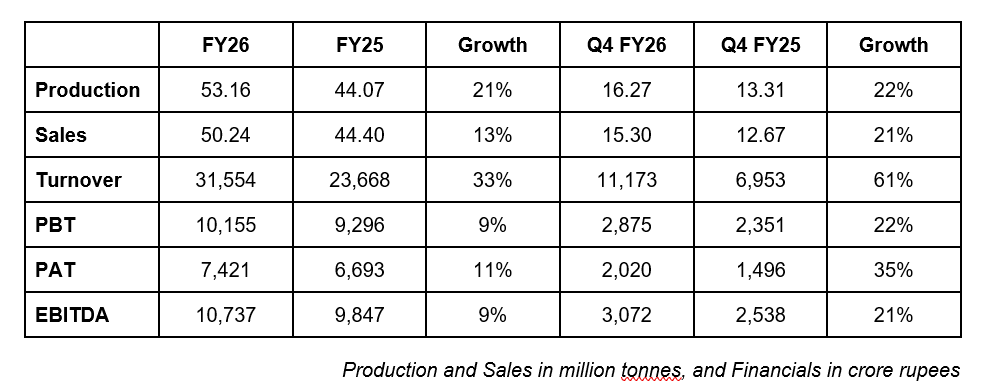
With iron ore production climbing 21% to a record 53.16 million tonnes and sales rising 13% to 50.24 million tonnes in FY26, NMDC delivered the highest-ever annual volumes in its history. The twin milestones signal both resilient domestic steel demand and the expanding capabilities of India’s largest iron ore producer.
The surge in production and dispatches fed directly into NMDC’s financial performance, with turnover growing by 33% to an all-time high of Rs. 31,554 crore for FY26. EBITDA rose 9% to Rs. 10,737 crore, while profit before tax rose 9% to Rs. 10,155 crore and net profit increased 11% to Rs. 7,421 crore.
NMDC reported capital expenditure of ₹3,690 crore for FY26, while continuing to deliver healthy shareholder returns. The Board recommended a final dividend of Re 1 per share, subject to shareholder approval. Together with the interim dividend of Rs. 2.5 per equity share declared for FY26, the total dividend for the year amounts to Rs. 3,077 crore.
NMDC delivered a strong finish to FY26 with a standout Q4 performance, marked by broad-based growth across production, sales and financial metrics. Iron ore production rose 22% year-on-year to 16.27 million tonnes, while sales increased 21% to 15.30 million tonnes.
The robust volume growth translated into a sharp expansion in financial performance, with turnover surging 61% to Rs. 11,173 crore. Profit before tax rose 22% to Rs. 2,875 crore, while profit after tax increased 35% to Rs. 2,020 crore, supported by improved realisations and steady operational efficiency. EBITDA grew 21% to Rs. 3,072 crore, rounding off a quarter that reinforced NMDC’s dominance in the sector.
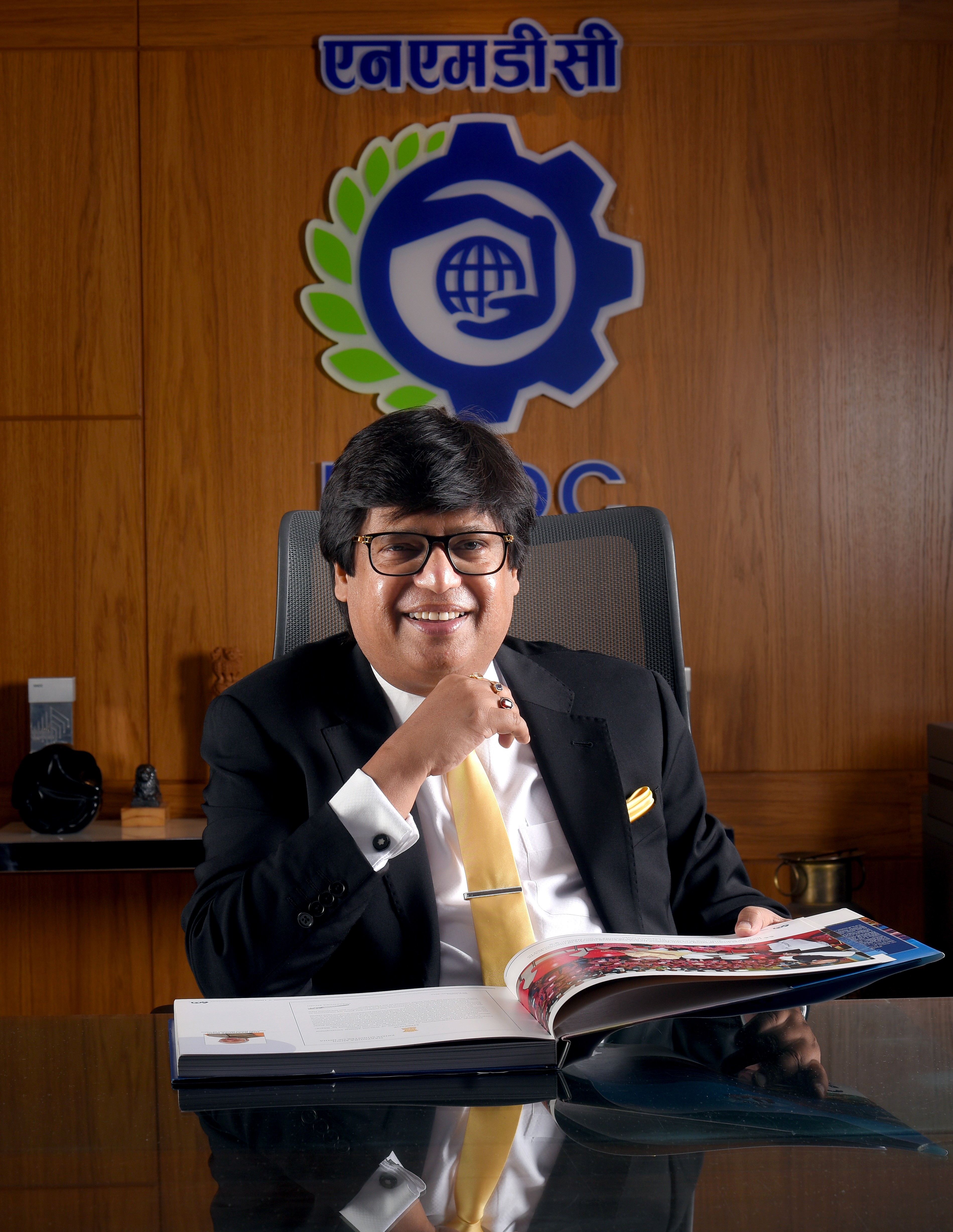
“With record production, topline growth, strategic capital deployment and stronger financial metrics across the board, NMDC closed FY26 with a momentum that places us in a distinctly higher league among India’s large public sector enterprises. We are determined to sustain this volume growth, enhance asset productivity and build future-ready mining capacity” said Shri Amitava Mukherjee, CMD, NMDC.
This performance reflects a transition underway within the company, from being primarily a high-cash-flow mining PSU to emerging as a larger-scale, capital-intensive resource enterprise with expanding operational and financial heft.
- 0
- By Neel Achary

30, May 2026
Humanscale to Explore “Body. Planet. Materials.” at Fulton Market Design Days 2026 Featuring Diffrient Lounge, eFloat Quattro Studio, and M/Charge
(Chicago, Illinois – May 2026) – Humanscale, the leader in high-performance ergonomic design, will return to Fulton Market Design Days 2026 with a showcase centered on the
future of adaptable, human-centered environments. Presented during the industry’s leading commercial interiors event, Humanscale’s exhibition will highlight solutions designed to support flexibility, wellness, and productivity across today’s evolving workplaces as well as hospitality and residential environments. Guided by the theme “Body. Planet. Materials.,” the presentation will explore the interconnected relationship between human wellbeing, sustainable innovation, and the future of materiality in design.
A major component of the presentation will be a museum-style exhibition exploring Next Generation Materials and the future of sustainable manufacturing. Centered on the belief that the future of design depends on materials that support both human wellbeing and planetary health, the installation will showcase emerging innovations that transform waste into resources and biology into manufacturing. The exhibit will examine how these advanced materials can reduce reliance on virgin extraction while opening new possibilities for high-performance, environmentally responsible design.
Expanding on the “Body. Planet. Materials.” concept, the exhibition will also feature conversations and activations developed in collaboration with leading sustainability organizations including the International Living Future Institute (ILFI), Design for Freedom, and mindful MATERIALS, further reinforcing Humanscale’s commitment to transparency, material health, and ethical manufacturing practices across the built environment.
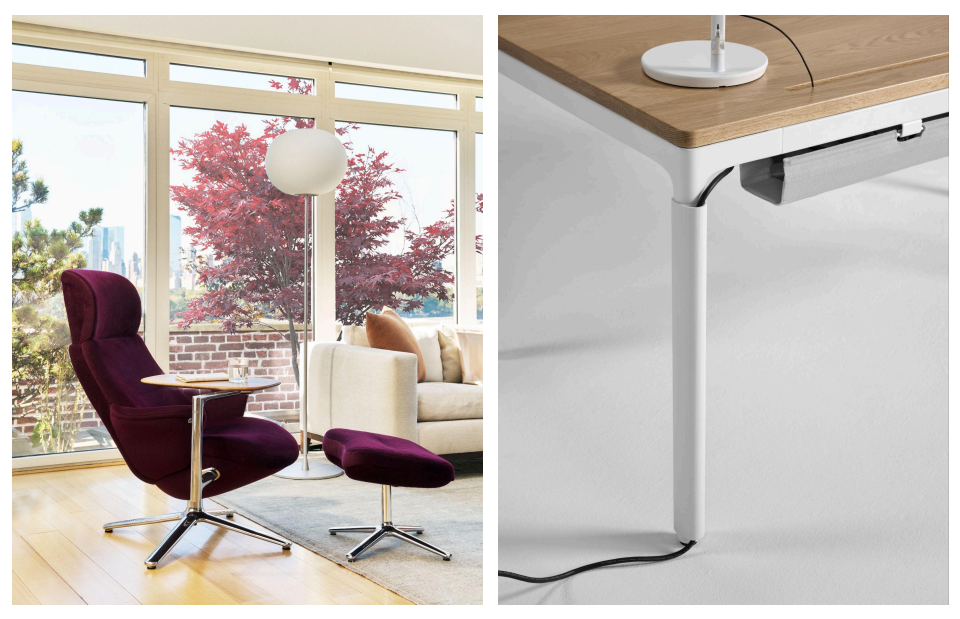
Among the featured products will be Diffrient Lounge, one of the final concepts envisioned by legendary designer Niels Diffrient and recently honored with a Red Dot Design Award in Product Design. Blending residential comfort with advanced ergonomic engineering, the lounge chair reimagines how people work, relax, and connect within hybrid environments.
Motorized adjustments, integrated power, and an adaptable worksurface create a seamless experience that responds intuitively to the body while maintaining a refined, minimalist
aesthetic while enabling smooth transitions between seated work, rest, and informal collaboration.
Building on this platform, Humanscale will debut eFloat Quattro Studio, a purpose-built meeting table designed specifically for today’s hybrid collaboration environments. Optimized for small-group meetings of two to seven people, eFloat Quattro Studio integrates connectivity, power, and display support directly into the table itself, simplifying meeting environments while enabling organizations to deploy collaborative spaces quickly and efficiently without complex AV infrastructure, permanent room builds, or extensive installation requirements.
Designed to support both seated and standing collaboration, the solution creates flexible meeting environments that adapt seamlessly across open-office huddle spaces, executive offices, project review areas, and hybrid meeting rooms.
The presentation will also feature M/Charge, Humanscale’s new modular 2-in-1 magnetic wireless charging solution designed to integrate with the M/Connect 3 ecosystem while also functioning as a standalone charging dock. Supporting simultaneous dual-device charging through Qi2 and MagSafe-compatible technology, M/Charge delivers fast, efficient charging with magnetic alignment, flexible viewing angles, and a weighted metal base engineered for stability and effortless one-handed use. Designed for modern workspaces, hospitality settings, and residential environments alike, the solution reflects Humanscale’s continued focus on intuitive functionality, seamless integration, and reduced desktop complexity.
Humanscale’s presence at Fulton Market Design Days will further underscore its broader commitment to sustainability and purposeful innovation. As the only major commercial
furniture manufacturer in the United States certified as a B Corp, Humanscale will continue to develop products and processes that prioritize both human health and environmental responsibility through a net positive design approach that integrates material transparency, reduced environmental impact, and long-term product longevity.
In addition to the showroom presentation, Humanscale will host a series of Fulton Market Design Days events and activations throughout the week designed to foster conversation around design, sustainability, and the future of work. Programming will include a Morning Walk/Jog Meet-Up on Monday, June 8 from 7:00–7:45 AM, followed by a Happy Hour with mindful MATERIALS from 5:00–6:00 PM and a Party at Federales from 6:00–9:00 PM.
On Tuesday, June 9, Humanscale will host a Happy Hour with Living Future and Design for Freedom from 5:00–6:00 PM. The showroom, located at 345 N Morgan St., Suite 150 in Chicago, will remain open daily from 9:00 AM–6:00 PM throughout Fulton Market Design Days from June 8-10, 2026, with coffee and light fare available at The Emily Hotel café adjacent to the showroom.
These events and activations will bring together designers, architects, sustainability leaders, brand partners, and members of the broader creative community for networking opportunities and discussions centered on innovation, wellbeing, and material transparency.
29, May 2026
MIT-WPU, Industry Leaders Call for Industry-Led Learning and AI-Ready Talent at Bengaluru Conclave
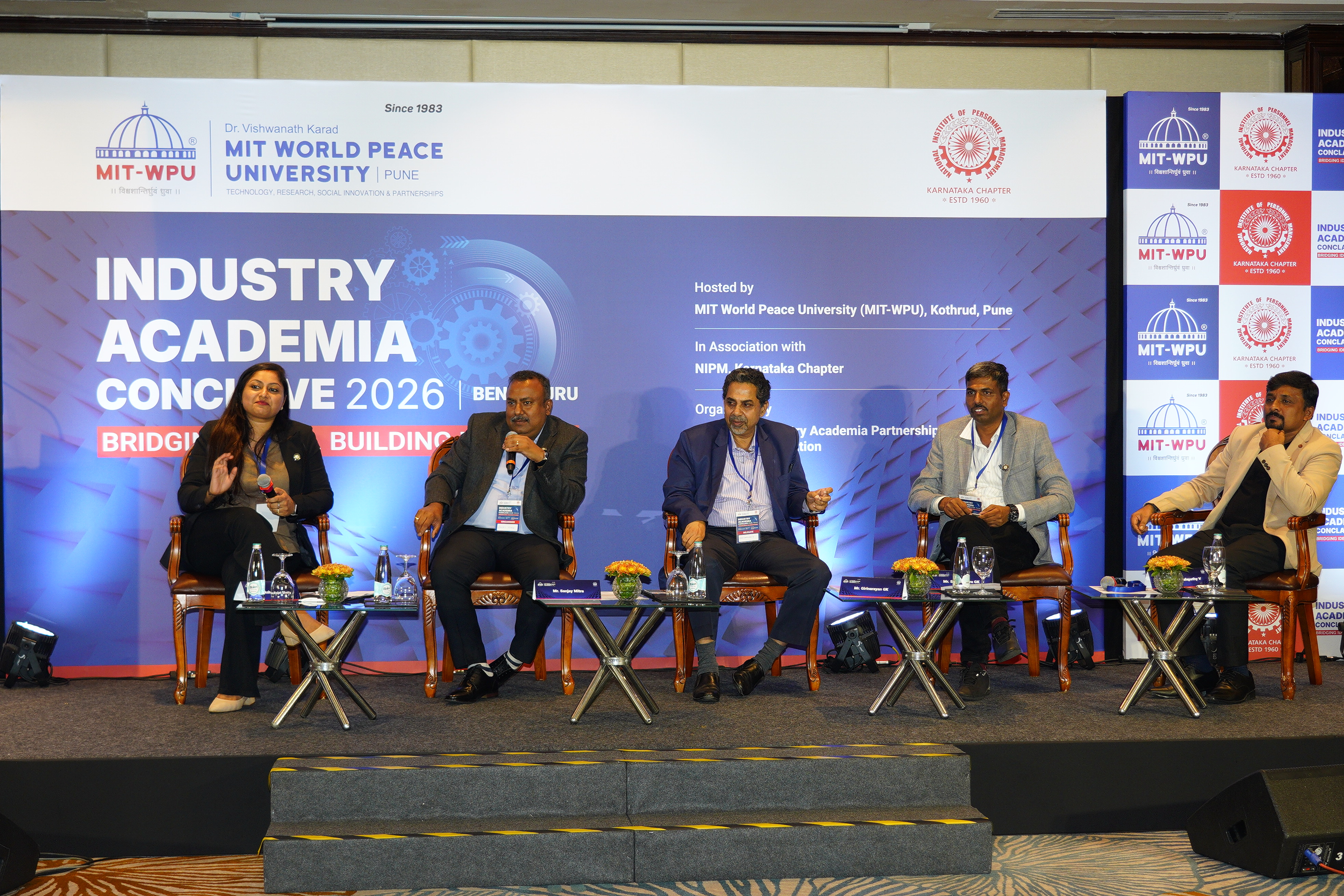
Mumbai/Bengaluru May 29: As Artificial Intelligence (AI), automation, and rapid technological advancements continue to reshape workplaces globally, industry leaders and academicians at the Industry Academia Conclave 2026 organised by MIT World Peace University (MIT-WPU), Pune, in association with the National Institute of Personnel Management (NIPM), Karnataka Chapter, called for stronger collaboration between academia and industry to create future-ready talent and bridge the growing employability gap.
Held in Bengaluru under the theme “Bridging Ideas. Building Futures,” the conclave brought together senior HR leaders, academicians, technology experts, manufacturing professionals, and industry stakeholders to deliberate on the future of work, AI-led disruption, changing workforce expectations, and the need for continuous upskilling and reskilling. The event featured multiple panel discussions, keynote sessions, and industry-academia interactions focused on preparing students and professionals for rapidly evolving workplace demands.
The event featured keynote addresses and panel discussions with industry leaders including Mr. Thyagu Valliappa, Vice Chairman, Sona Valliappa Group; Prof. Prasad D. Khandekar, Chief Academic Officer, MIT-WPU; Mr. Sanjay Mitra, Chairman, NIPM Karnataka Chapter; and senior professionals from IBM, Biocon, Canonical, Kraft Heinz India, JLL, and other leading organisations.
In his keynote address, Mr. Thyagu Valliappa highlighted how industry-integrated learning models are improving employability outcomes for students. He stressed that educational institutions must evolve from simply responding to industry trends to actively anticipating future technologies and workforce requirements.
“The future belongs to institutions that can teach tomorrow’s technologies today. One-size-fits-all models will no longer work in education or skilling,” he added.
The discussions also focused on the shrinking shelf-life of skills in sectors such as technology, electronics, semiconductor manufacturing, and advanced manufacturing, where rapid innovation is continuously changing job roles and skill requirements. Industry experts noted that organisations today are increasingly looking for talent with practical exposure, interdisciplinary capabilities, problem-solving ability, and adaptability alongside academic qualifications.
Mr. Sanjay Mitra, Chairman, NIPM Karnataka Chapter, said closer collaboration between HR professionals and educational institutions is critical to ensure academic curricula remain aligned with evolving industry expectations and workplace realities.
Addressing the conclave, Prof. Prasad D. Khandekar said educational institutions are facing increasing pressure to redesign curricula and teaching methodologies to keep pace with AI-led transformation across industries.
“Industry expectations are changing faster than ever before. Universities today are not just preparing students for current jobs, but for roles that may evolve significantly over the next three to four years. This challenge can only be solved when academia and industry work together continuously,” he said.
He added that universities must focus not only on technical knowledge, but also on mindset development, adaptability, experiential learning, and interdisciplinary thinking to prepare students for the future workplace.
The discussions concluded with a collective call for long-term industry-academia partnerships, innovation-driven learning ecosystems, and collaborative skilling initiatives that can help India build globally competitive, AI-ready talent for the future economy.
29, May 2026
The Future of Colour is Here: Sony Introduces its True RGB TVs Powered by RGB Backlight Master Drive Pro™ with BRAVIA 7II Across India
BRAVIA 7 II: A new dimension of colour with True RGB
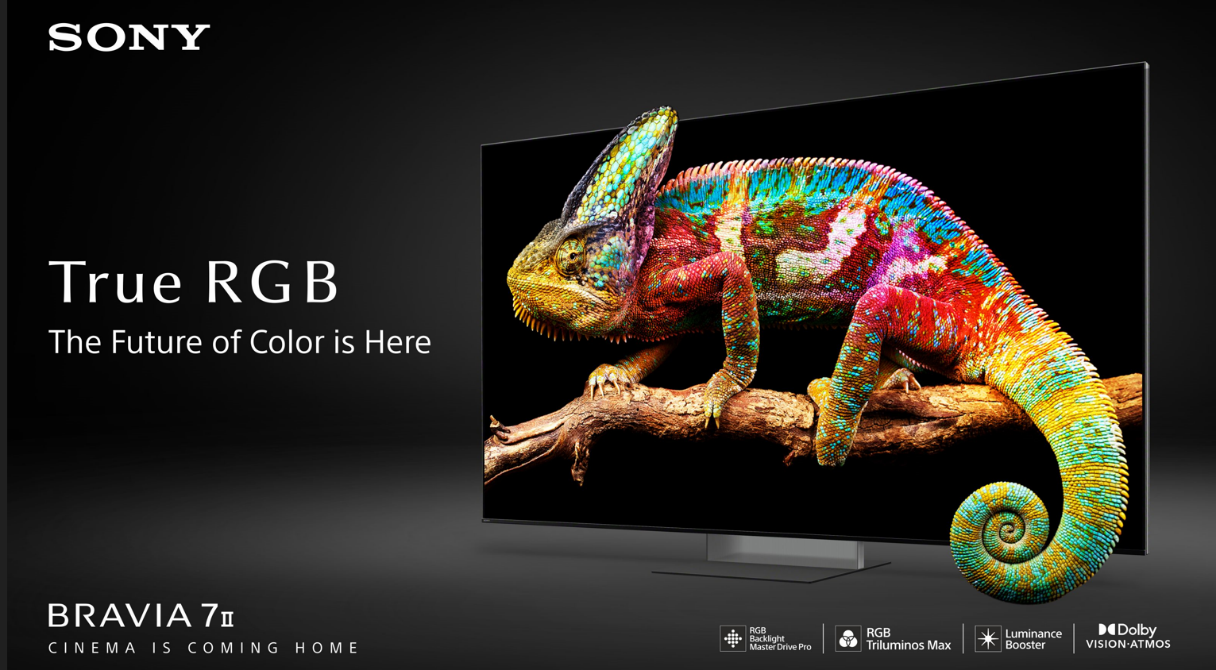
New Delhi, 29th May 2026: Sony India On May 28 announced the launch of BRAVIA 7II, introducing True RGB technology to redefine home entertainment with richer colour, greater depth and more immersive viewing experiences. Pre-booking for select BRAVIA 7II models starts today. Bringing together Sony’s advanced display innovation and intelligent processing technologies, BRAVIA 7II delivers cinema-grade picture quality designed to transform everyday viewing into an extraordinary entertainment experience.
At the heart of BRAVIA 7II is True RGB, powered by RGB Backlight Master Drive Pro™, Sony’s proprietary backlight control technology that independently controls red, green and blue light to achieve exceptional colour precision, deeper contrast and remarkable realism. Combined with Cognitive Processor XR™, BRAVIA 7II reproduces content the way humans naturally see and hear-creating visuals with enhanced depth, vibrant colours and lifelike detail.
Key technologies powering the experience include:
- RGB Backlight Master Drive Pro™ – Sony’s advanced individual RGB backlight control technology delivers precise local dimming with deeper blacks, reduced blooming and stunning contrast.
- RGB Triluminos Max™ with Luminance Booster – Uniting QD-OLED-level colour richness with Mini LED brightness to achieve Sony’s richest colour volume and brighter brilliance.
- Smooth Color Gradation – Reveals every nuance across dark and bright scenes with ultra-fine tonal transitions and enhanced visual depth.
- X-Wide Angle Pro – Maintains consistent colour and contrast from wider viewing positions for an immersive cinematic experience from every seat in the room, available in select screen sizes.
Starting with a 55 (140 cm) model, the series extends across 65 (165 cm), 75 (190 cm) and 85 (215 cm) variants, and will further culminate in a stunning 98 (248 cm) model expected in June, bringing Sony’s vision of “Cinema is Coming Home” to more consumers across India.
Experience cinema-grade colour, highlighting true to life colour and depth with True RGB
Building on Sony’s legacy of innovation, the BRAVIA 7II introduces Sony’s first True RGB LED BRAVIA TV technology, using independently driven red, green and blue LEDs for precise colour reproduction in bright living room environments. Powered by RGB Backlight Master Drive Pro™, this advanced backlight control system drives each LED with high precision to improve brightness, reduce blooming, deliver deeper blacks and produce purer colour than conventional Mini LED displays.
With RGB Triluminos Max™, the television delivers Sony’s widest colour volume, reproducing a broader spectrum of colours with remarkable accuracy, while Smooth Colour Gradation enables seamless and ultra-fine tonal transitions across every scene. Powered by RGB Triluminos Max™ with Luminance Booster, it combines QD-OLED-like colour depth with the brightness of Mini LED technology to deliver Sony’s richest and most vibrant visual experience yet. On 65-inch and larger models, X-Wide Angle Pro maintains consistent colour and contrast from wider viewing positions, ensuring an optimal experience from every seat in the room.
Powered by Cognitive Processor XR™ for lifelike picture quality
At the core of the BRAVIA 7II is Sony’s Cognitive Processor XR™, which processes images in line with how humans naturally perceive sight and sound. This enables the TV to enhance depth, contrast, and clarity in real time, delivering more natural and immersive visuals.
XR Contrast Booster (20) intelligently balances light and dark elements for enhanced realism, while XR Clear Image reduces noise and upscales lower-resolution content to near 4K quality, while XR Motion Clarity™ analyses motion across multiple frames to ensure fast-moving scenes such as sports, movies, and gameplay remain smooth, bright, and blur-free
Experience cinematic HDR visuals and multidimensional surround sound powered by Dolby Vision and Atmos
With support for Dolby Vision®, HDR10, HLG and IMAX® Enhanced, BRAVIA 7II delivers a truly cinematic viewing experience with richer colours, deeper contrast, enhanced brightness and creator-intended picture quality. Studio Calibrated Modes for Netflix, Prime Video, and Sony Pictures Core automatically optimize picture settings to reflect the creator’s intent across different content environments.
On the audio front, Acoustic Multi-Audio+™ on 65 (165 cm) and above models positions sound precisely with on-screen action, creating a more immersive experience and sound positioning Tweeters further enhances the bass performance without compromising the slim design.
Voice Zoom 3 with AI Sound Separation technology ensures dialogue remains clear above background sound, while 3D Surround Upscaling transforms standard audio into an expansive 5.1.4 channel virtual surround experience. With Dolby Atmos® and DTS:X®, viewers can enjoy multidimensional, theatre-like sound with overhead effects that bring every scene to life.
Engineered for next-generation gaming with 4K 120Hz and intelligent gaming features
BRAVIA 7II supports 4K at 120fps via HDMI 2.1, delivering ultra-smooth and responsive gameplay. Features such as Auto Low Latency Mode (ALLM) and Variable Refresh Rate (VRR) reduce input lag and eliminate screen tearing, ensuring a seamless gaming experience.
With Game Menu 2, users can quickly access and customise gaming settings, including crosshair, black equalizer, and motion blur reduction. Dolby Vision® Gaming enhances visual fidelity with richer colours and contrast, while PS Remote Play and dedicated optimizations for PlayStation 5, including Auto HDR Tone Mapping and Auto Genre Picture Mode, make BRAVIA 7II an ideal choice for console gaming enthusiasts.
Discover effortless entertainment with Google TV and Gemini
Powered by Google TV, BRAVIA 7II offers access to over 400,000 movies and TV shows along with thousands of apps and games, delivering a personalized and intuitive content discovery experience. Supported by Hands-Free Voice Search and built-in Google Assistant, users can control the TV, search for content, or manage compatible smart home devices using voice commands. The TV also supports Apple AirPlay 2, Apple HomeKit, Google Cast, and works with Alexa-enabled devices for added convenience.
Additionally, Gemini for Google TV will be introduced via an over-the-air update, enabling more natural, AI-powered interactions and smarter content recommendations.
Experience studio-quality cinematic entertainment at home with Sony Pictures Core
BRAVIA 7II enables users to experience studio-quality entertainment at home with Sony Pictures Core, offering a curated library of blockbuster movies, including IMAX® Enhanced titles.
Powered by Pure Stream™, users can stream content at up to 80 Mbps, delivering picture quality comparable to 4K UHD Blu-ray. Customers will also receive an exclusive 10 movie credits with access to a curated selection of premium titles from Sony Pictures for 24 months.
Combining thoughtful design with enhanced accessibility and robust durability
Designed with Sony’s Harmonic Presence concept, the BRAVIA 7II blends seamlessly into modern living spaces with its Immersive Frame design and Mirage Stand for 55-inch to 85-inch models, while the 98-inch variant features a premium T-Shape Stand.
The television is built for durability with X-Protection PRO, offering resistance against lightning, power surges, dust, and humidity. With Eco Dashboard 2 and power-efficient RGB LED control by RGB Backlight Master Drive Pro™, users can monitor energy consumption and access power-saving recommendations.
The Inclusive Affordable Remote, developed in collaboration with people with disabilities, features optimized button design, tactile differentiation, and clear spacing for ease of use.
Price and Availability
The BRAVIA 7II will be available across all Sony retail stores (Sony Center and Sony Exclusive), the www.ShopatSC.com portal, leading electronic outlets and major e-commerce platforms in India starting 28th May 2026 onwards. Pre-booking for select BRAVIA 7II models also starts today, and customers can register their interest through this link.
|
Model |
Screen Size |
MRP |
Best Buy (in INR) |
Availability |
|
BRAVIA 7 II
|
55 (140 cm) |
3,59,900 |
2,21,990 |
Pre-booking starts today Link (28th May 2026 onwards) |
|
65 (165 cm) |
4,39,900 |
2,74,990 |
||
|
75 (190 cm) |
Coming Soon
|
Coming Soon |
End of June, 2026 |
|
|
85 (215 cm) |
||||
|
98 (248 cm) |
End of July, 2026 |
29, May 2026
Fintech Week London returns with new city-wide festival to match the capital’s global fintech status
Fintech Fringe is behind the bigger, bolder format with the backing of the Department for Business and Trade and London & Partners
London, 29 May 2026: London has long earned its place as one of the world’s defining fintech centres. Dealroom’s latest report just confirmed London as the world’s number one fintech ecosystem – home to 137 unicorns and a combined enterprise value of $714 billion.
New York has a fintech week. Singapore has one too. It is time London stepped up a gear with its own fintech week to reinforce why London is the world’s best city to scale a fintech business.
Fintech Week London returns from 7 to 11 September 2026 under new leadership, backed by Fintech Fringe founder Calypso Harland and the UK’s fast-growing fintech community.
Anchored by the Scale & Grow Summit on 9 and 10 September in central London, the event is expected to attract more than 1,500 founders, investors, financial institutions, policymakers, regulators and international fintech leaders to the capital.
This year’s theme is Growth with Agency, and focuses on the practical questions now shaping fintech growth. Sessions will examine how AI is changing competitive advantage, how regulation is affecting growth strategies, how fintechs can access capital, and how the long-anticipated convergence of fintech, crypto and payments is beginning to reshape the market.
Fintech Fringe is opening the week to companies, associations, communities and event organisers across London, inviting them to host their own events as part of a shared city-wide fintech moment. The model gives the wider ecosystem, including smaller companies and emerging communities, a way to access a larger audience and contribute to the global fintech conversation.
Calypso Harland, Founder of Fintech Fringe, said:
“London needs a fintech week that reflects the ecosystem itself: ambitious, practical, international and open to the people building what comes next. Fintech Week London is a platform for the whole city – from founders and investors to banks, regulators, associations and emerging communities. We’re here to rally everyone together and show the world why London is built to create champions.”
Emma Banymandhub, CEO of The Payments Association, said:
“Calypso is a natural collaborator and the perfect person to bring the ecosystem together to bridge the divide between fintech, crypto and payments. These communities often live in parallel universes, and bringing them together can only mean better things for the industry as a whole. The Payments Association is delighted to support.”
The relaunch follows Fintech Fringe’s merger with Fintech Week London last year. Since launching in 2023, Fintech Fringe has grown rapidly, with its own festival tripling in size over three years.
Fintech Week London 2026 will run from 7 to 11 September, with the Scale & Grow Summit taking place from 9 to 10 September.
For hosting, speaking and partnership opportunities, visit www.fintechweek.london.
29, May 2026
HGI Hosts Global Knowledge Exchange Series on Entrepreneurship, MedTech & Interdisciplinary Research
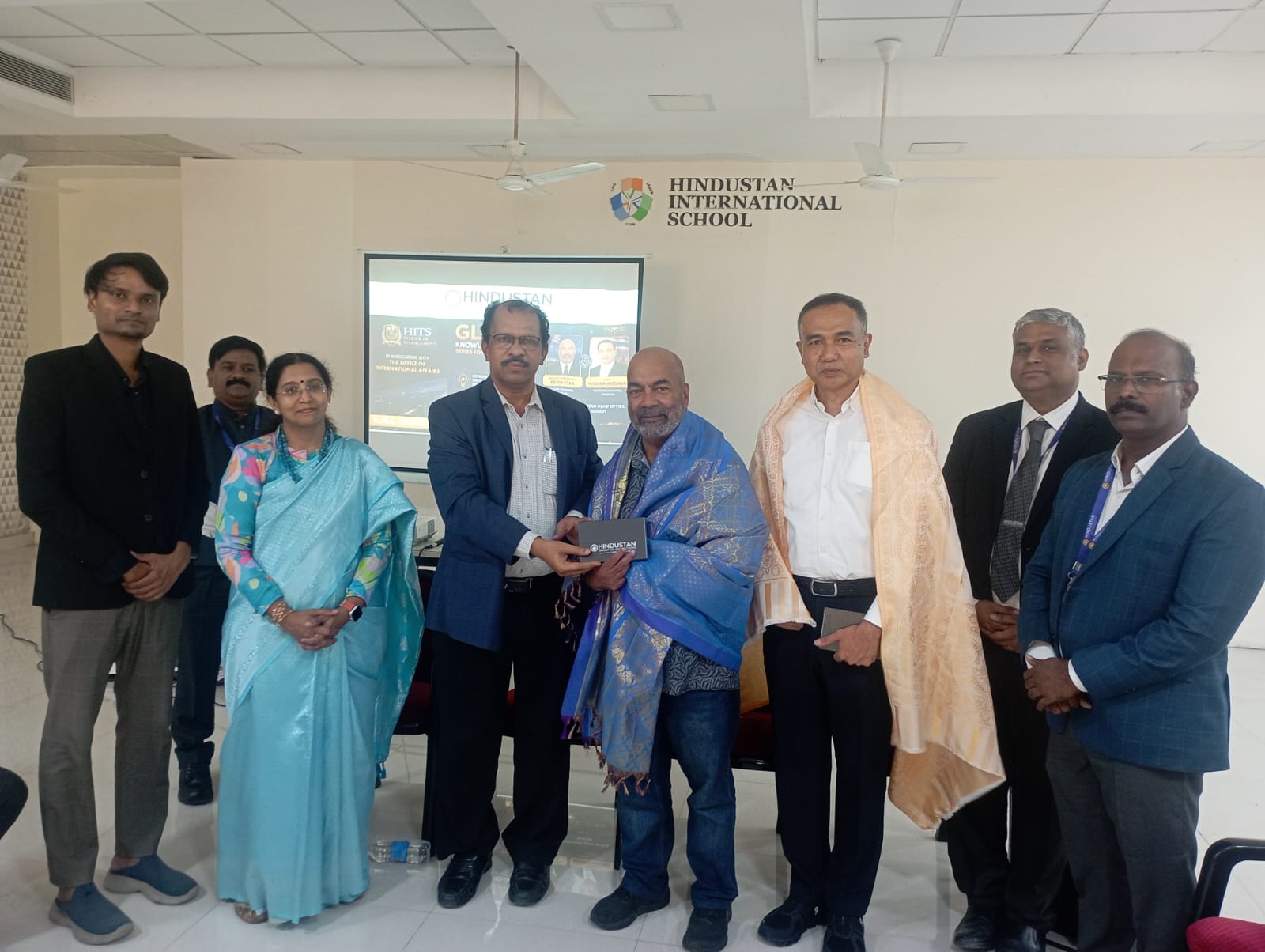
Chennai, May 29: Hindustan Group of Institutions (HGI), through the HITS School of Management in association with the Office of International Affairs, organized the “Global Knowledge Exchange Series for Faculty Excellence” at the Hindustan Head Office, Guindy, bringing together academicians, researchers, and faculty members from management, engineering, healthcare, and executive education domains to discuss entrepreneurship, MedTech, healthcare innovation, and interdisciplinary research.
The Faculty Development Programme focused on the theme “Entrepreneurship, MedTech & Interdisciplinary Research” and aligned with HGI’s vision of fostering globally connected, innovation-driven, and future-ready academic ecosystems as the institution celebrates 60 years of academic excellence.
The programme featured keynote sessions by internationally renowned academicians including Prof. Kevin Fynn, Emeritus Professor at Curtin University, Australia, and Prof. Paisarn Muneesawang, Professor at Mahidol University, Thailand.
Professor Kevin Fynn spoke about academic entrepreneurship, commercialization of research, and industry-academia collaboration, drawing from his experience in academic leadership and technology entrepreneurship.
Prof. Kevin Fynn said, “Universities today must evolve beyond traditional teaching models and become active innovation ecosystems where academia, industry, investors, and entrepreneurs collaborate to create meaningful societal impact.”
Professor Paisarn Muneesawang presented his work in digital healthcare ecosystems, telemedicine, healthcare analytics, AI-driven healthcare technologies, and interdisciplinary research models transforming healthcare delivery globally.
Speaking about the significance of interdisciplinary innovation, Dr. S. Priya, Director, HITS School of Management, said, “The most transformative innovations globally are emerging at the intersection of management, healthcare, engineering, analytics, policy, and entrepreneurship. Academic institutions therefore need to actively encourage interdisciplinary collaboration and research-driven learning.”
The discussions also focused on entrepreneurship education, healthcare digitalisation, MedTech innovation, international collaborations, and industry-academia partnerships. Participants further discussed the Tamil Nadu Government’s University Research Park initiatives and the Government of India’s PRIP scheme aimed at strengthening research and innovation in the pharma and MedTech sectors.
Speaking on the institution’s larger academic vision, Dr. Anand Jacob Verghese, Chairman, Hindustan Group of Institutions, said, “As HGI celebrates 60 years of academic excellence, we remain committed to building globally connected, innovation-led academic ecosystems that encourage interdisciplinary research, international collaborations, entrepreneurship, and industry engagement.”
The programme concluded with an interactive faculty engagement session, open-house discussions, and deliberations on future collaborations, joint research initiatives, and innovation-led academic partnerships.
29, May 2026
New action plan for Aboriginal tourism in WA launched
Western Australia’s Aboriginal tourism sector is entering a new phase, with the official launch of the Cook Labor Government’s next Jina Plan to strengthen Aboriginal-led visitor offerings across the State.
The Jina: Western Australian Aboriginal Tourism Action Plan 2026-2030 outlines the Cook Labor Government’s framework to grow Aboriginal tourism businesses, support jobs and strengthen Aboriginal culture as the heart of the State’s visitor economy.
The Plan outlines 40 initiatives that will be delivered by Tourism WA in partnership with the Western Australian Indigenous Tourism Operators Council (WAITOC) and seven Cook Government agencies and is backed by a $20 million investment.

WA Tourism Minister Reece Whitby joined WAITOC chair Darren Capewell and CEO Robert Taylor in Carnarvon at the 2026 Perth Airport WA Tourism Conference to celebrate the launch of the plan and meet with Aboriginal operators.
The 2026-2030 Jina Plan comes after the inaugural Jina Plan 2021-2025 delivered strong results, growing the number of Aboriginal tourism businesses to around 150, up from 110 in 2019. It supported initiatives including marketing campaigns, cultural activations, the development of Aboriginal-owned and managed campgrounds, training programs and public art projects.
Visitor interest in Aboriginal tourism continues to grow in Western Australia, with more than four in five visitors expressing interest in experiencing Aboriginal tourism in WA in 2024-25.
In 2023-24, Aboriginal tourism businesses in Western Australia contributed $55.1 million to the State’s economy, an increase of more than 25 per cent from 2021-22.
The Jina Plan 2026-2030 will continue to support Aboriginal communities to stay connected to Country, strengthen cultural pride, and deliver high-quality tourism experiences that showcase Western Australia’s unique cultural heritage.
The plan is a key part of the Cook Labor Government’s strategy to develop and maintain regional destinations and support Aboriginal tourism as a vital sector in building a resilient, diversified economy.
Find out more at Our strategies – Tourism Western Australia
Comments attributed to Tourism Minister Reece Whitby:
“Aboriginal tourism is a cornerstone of Western Australia’s tourism industry, and the new Jina Plan 2026-2030 will build on the success of the first plan to create even more opportunities for communities and businesses across the State.
“The results of the previous Jina Plan speak for themselves – more Aboriginal tourism businesses, more visitors experiencing Aboriginal culture, and stronger connections to Country. This next plan will take that work further and make Aboriginal tourism an even bigger part of Western Australia’s story.
“Through strong collaboration with Aboriginal people, communities, businesses and government agencies, the Jina Plan 2026-2030 will ensure Aboriginal voices and stories remain central to our tourism industry, while supporting jobs and economic growth in regional WA.”
Comments attributed to Aboriginal Affairs Minister Don Punch:
“This plan is about empowering Aboriginal communities to lead, create and grow their own tourism businesses, sharing culture in a way that is guided by community and grounded in Country.
“We are supporting Aboriginal people to shape their own economic future, build strong businesses, create local jobs, and ensure communities directly benefit from tourism across Western Australia.
“At its heart, this plan is about showcasing the strength of culture, connections to Country and knowledge sharing by Aboriginal tourism throughout WA.”
29, May 2026
Kärcher Showcases Advanced Cleaning Solutions for Growing Automotive Sector in Jaipur
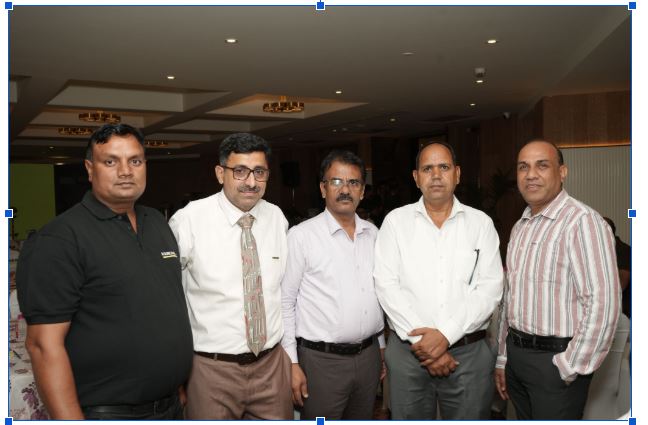
New Delhi, May 29: Kärcher India participated in an exclusive automotive seminar in Jaipur themed “No Matter What Your Challenge Is. There’s Kärcher for That.” The session focused on helping automotive workshops and dealerships improve operational efficiency, maintenance standards, and customer experience through advanced cleaning technologies.
With Rajasthan, particularly Jaipur, emerging as a growing hub for automotive retail and service businesses, the seminar brought together industry professionals, dealership representatives, and business partners to discuss evolving operational requirements and the increasing need for smarter, more efficient workshop management solutions.
The event featured interactive discussions and live demonstrations showcasing how modern cleaning systems can help automotive businesses reduce downtime, improve turnaround efficiency, maintain hygiene standards, and create a better customer-facing environment across workshops and showrooms.
As part of the showcase, Kärcher demonstrated a range of professional cleaning solutions designed for automotive applications:
●High-pressure cleaner – HD 7/16 – Used for efficient vehicle exterior cleaning and heavy-duty automotive washing applications.
●High-pressure cleaner – HD 6/15 – Designed for effective cleaning of vehicles, workshop areas, and automotive equipment.
●Wet and dry vacuum cleaner – NT 30/1 – Suitable for workshop maintenance and vehicle interior cleaning applications.
●Scrubber dryer – BD 43/40 – Used for cleaning and maintaining showroom and workshop floors with improved efficiency.
●Manual sweeper – KM 70/20 – Ideal for indoor and outdoor sweeping applications across automotive facilities.
●Single-disc machine – BDS 43/150 – Designed for deep floor cleaning, scrubbing, and polishing applications.
●Steam vacuum cleaner – SG 4/4 – Used for deep cleaning and sanitization of automotive interiors, surfaces, and hard-to-reach workshop areas.
Speaking at the seminar, Mr Puneet Sharma, MD, Kärcher India, said, “Jaipur and the larger Rajasthan market are witnessing steady growth across the automotive sector, with businesses increasingly focusing on operational excellence and customer-centric service experiences. As workshops, showrooms and dealerships continue to modernize, the demand for efficient and reliable maintenance solutions is also growing. Through initiatives like these, we aim to engage closely with industry stakeholders and showcase technologies that can help improve productivity, optimize operations, and maintain high standards across facilities.”
The live demonstrations enabled attendees to experience Kärcher’s solutions first-hand and understand their role in enhancing operational efficiency and long-term maintenance management within automotive facilities.
29, May 2026
Trident Limited bags Gold Trophy at TEXPROCIL export awards
May, 29: Trident Limited has been honoured with the Gold Trophy for Global Exports at the TEXPROCIL Export Awards 2023–24, held on May 25, 2026, in Mumbai. The award was presented at a ceremony graced by the Union Finance Minister, Smt. Nirmala Sitharaman, recognising excellence in India’s textile export sector.
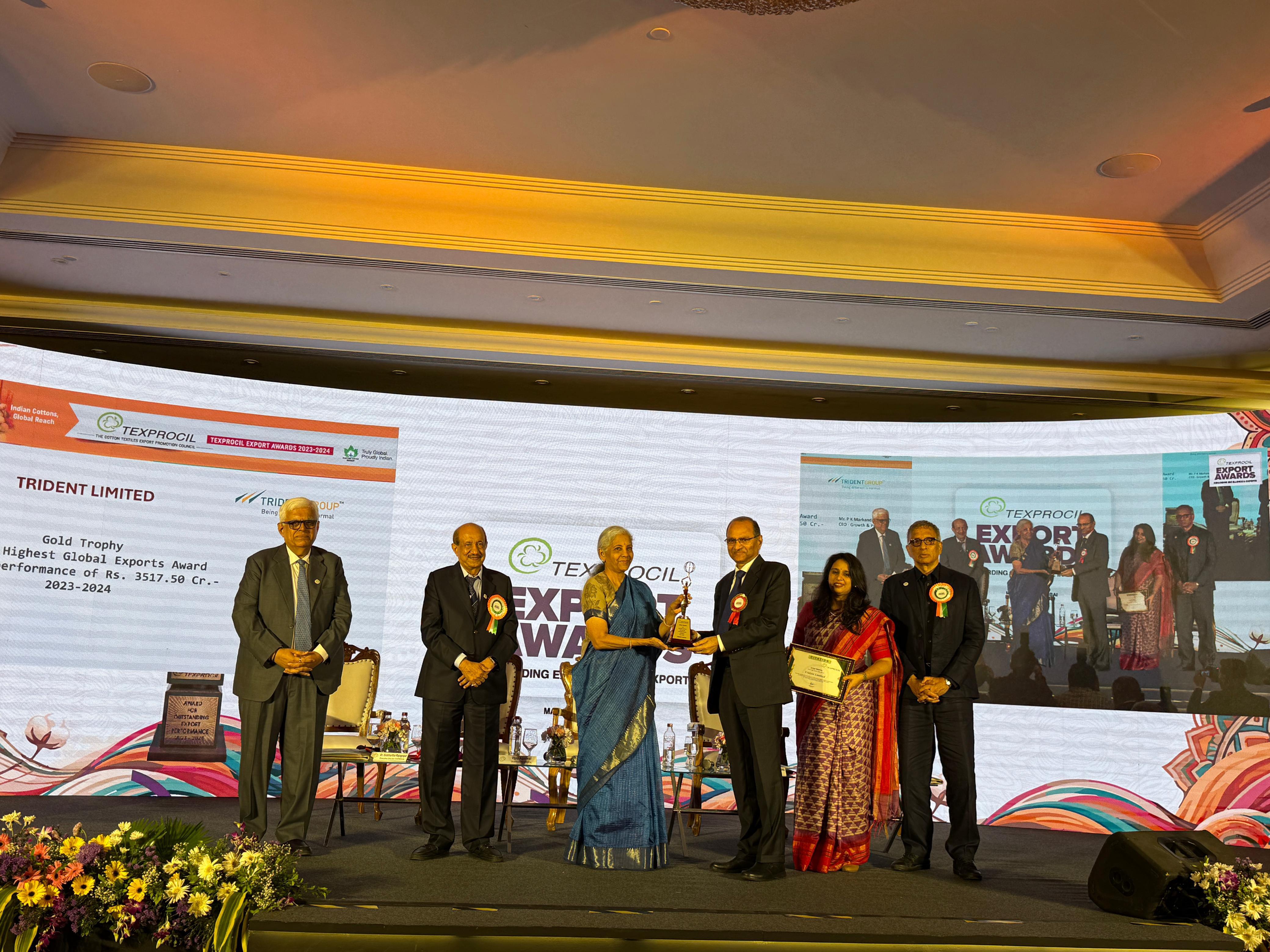
Commenting on the achievement, Padma Shri Rajinder Gupta, Chairman Emeritus, stated:
“We are elated to receive the Gold Trophy for Global Cotton Textile Exports at the TEXPROCIL Export Awards for the year 2023–24. It reflects our contribution to India’s growing global textile presence. This recognition is a testament to our continued commitment to quality, innovation, and sustainability as India’s textile industry strengthens its global leadership and contributes to the vision of Viksit Bharat.”
Trident has been on a winning streak for its performance in exports, having bagged more than 30 awards across categories since 2005. Trident has been honoured by TEXPROCIL for the 19th consecutive year, underscoring the group’s robust export performance.
Established by Government of India in 1954, The Cotton Textile Export Promotion Council is one of the autonomous nonprofit export promotion councils, supporting cotton textile exports through trade facilitation, global market access, policy advocacy, and industry development initiatives.
Trident Limited continues to advance India’s export vision, strengthening the country’s global textile leadership through its consistent export performance and integrated capabilities.
29, May 2026
Ashok Leyland appoints K. M. Balaji as Whole-Time Director
Chennai, May 29: Ashok Leyland Limited, the Indian flagship of the Hinduja Group, has announced a stellar performance for Q4 and for full year FY2026, delivering the highest-ever quarterly and annual Revenues, EBITDA, and PAT.
The company reported an EBITDA of Rs. 2,066 Cr for Q4 FY26, up 15% from Rs. 1,791 Cr for the same period last year. The operating PBT for the quarter was at Rs. 1,909 Cr, up 14% vis-a-vis Rs. 1,671 Cr for the same period last year. PAT was at Rs. 1,405 Cr, up 13% vis-a-vis Rs. 1,246 Cr in Q4 last year. Cash generated during the quarter was Rs. 3,280 Cr.
The Company declared record numbers for the year ending March 31, 2026:
|
FY26 |
FY25 |
Change |
|
|
Revenues (Rs. Cr) |
44,007 |
38,753 |
14% |
|
Operating PBT (Rs. Cr) |
5,163 |
4,245 |
22% |
|
Profit After Tax (Rs. Cr) |
3,566 |
3,303 |
8% |
After a one-time charge of Rs. 308 Cr owing to the new Labor Code
FY26 EBITDA was at Rs. 5,732 Cr (13.0%) vis-a-vis Rs. 4,931 Cr (12.7%) last year. The Company ended the financial year with Net cash of Rs. 5,899 Cr, vis-a-vis Rs. 4,242 Cr at the end of the previous year.
Overall CV volumes scaled a new all-time high of 220,437 units, surpassing the previous peak of 197,366 units achieved in FY19. The CV Volumes in FY26 were up 13% from last year. LCV volumes set a new benchmark, reaching 74,322 units, well above the earlier high of 66,633 units in FY24.
Export volumes also reached a historic high of 18,082 units, delivering a robust growth of 18.5% over the previous year’s 15,255 units. The Power Solutions and Aftermarket businesses continued their strong momentum, posting impressive growth during the year.
Our major subsidiaries further accelerated their growth journeys during FY26. Switch Mobility delivered a standout performance, with a surge in e-Bus volumes to 1,530 units, growing by 238% over the previous year. The e-LCV volumes rose to 1,606 units, with a robust 56% growth. The revenue more than doubled to ₹1,807 Cr, with PAT of ₹ 104 Cr in FY26 against a loss of ₹ 62 Cr in the previous year.
Hinduja Leyland Finance Limited (HLF – standalone) posted a stellar 24% growth in FY26 to achieve AUM of Rs. 59,531 Cr. HLF PAT is up by 20% to Rs. 491 Cr. Hinduja Housing Finance (HHF – standalone) has grown its AUM by 15% to Rs. 15,937 Cr, with PAT growing by 4% to Rs. 387 Cr.
Mr. Dheeraj Hinduja, Chairman, Ashok Leyland Limited said,
“Achieving these record-breaking milestones and delivering a strong financial performance across our businesses is a matter of immense pride for us. Our CV and export volumes were at an all-time high, reflecting the deep trust our customers place in us. The Company delivered significant growth in Power Solutions, Aftermarket and Electric Mobility businesses. Our Defence order pipeline is at its all-time high, signifying ability to deliver superior growth in the coming years. Our entry into Indonesia gives further boost to our ambition in global markets. The record financial performance is backed by relentless innovation, unwavering focus on customer satisfaction, and ability to accelerate our ambition in global markets. We are well-positioned to sustain profitable growth and create long-term value.”
Mr. Shenu Agarwal, Managing Director & CEO, Ashok Leyland Limited said,
“FY26 has been a defining year for us, marked by record-breaking achievements across revenue, EBITDA, profitability and cash generation. Our strong margin expansion reflects the success of our premiumization strategy, the resilience of our operations, and the growing strength of our diversified business portfolio. A record cash surplus of nearly Rs. 6,000 Cr provides us with significant firepower for enhanced investments in products, technology and future-ready solutions, while continuing to elevate customer experience. With consecutive three years of record performance, we are more confident than ever in our ability to strengthen our technology leadership, gain market share and further enhance price realization through superior value delivery.”
The Board of Directors declared a second interim dividend of ₹ 2.50 per share (Face value of ₹ 1/- per share). Together with the interim dividend declared and paid during Q3, the overall dividend for the year works out to ₹ 3.50 per share. (350%).


