


13, May 2026
hubergroup Chemicals showcases advanced solutions for coatings and inks at Paintistanbul 2026
|

- 0
- By Neel Achary

12, May 2026
Researchers Measure Energy Below a Zeptojoule – Enough for a Red Blood Cell to Move a Nanometer
The fundamentals of quantum mechanics are miniscule. Scientists constantly home in on finer resolutions to measure, quantify, and control these fundamentals like photons that carry light and have no mass unless they are moving. The more precise the measurement, the more possibilities for better quantum technology or the ability to detect elusive dark-matter axions in deep space.
Now, researchers in Finland have successfully used a calorimeter, a type of ultra-sensitive heat-based energy sensor, to detect energy levels below one zeptojoule, or a trillionth of a billionth of a joule. For context, a zeptojoule is approximately the amount of work it takes for a red blood cell to move a nanometre, or a billionth of a metre, upwards in Earth’s gravity.
The team, led by Academy Professor Mikko Möttönen at Aalto University, together with an industry collaborator IQM and the Technical Research Centre of Finland (VTT), used a novel technique to achieve the milestone measurement.
The study was published on May 12th in the journal Nature Electronics.
Unparalleled energy sensitivity
At such a miniscule scale, measuring is far more complex than just firing a beam and seeing the results pop up. The team shot a microwave pulse into a sensor that they had built from two different kinds of metals: superconductors, where the pulse traveled freely, and regular conductors, which put up resistance.
‘That combination of metals makes superconductivity such a fragile phenomenon that it weakens immediately if the temperature in the ultracold conductor rises even a little bit. This makes it such a sensitive setup,’ says Möttönen, who is also a founder of the quantum computer unicorn IQM.
After optimized filtering, the team read out the final result. It showed their setup had detected an electromagnetic pulse so minute it beggars belief: only 0.83 zeptojoules, or less than a trillionth of a billionth of a joule. The result is a world-first for calorimetric measurement devices which are considered some of the most sensitive in the field.
Qubits and axions
The study paves the way to counting individual photons. According to Möttönen, such sensitivity is a long-sought goal not just in quantum technology but fields like astrophysics.
“We want to make this setup capable of measuring input that has an arbitrary time of arrival, which is important for things like detecting dark-matter axions in space when you have no idea when they might reach your system.’
Möttönen envisions that their calorimeter could be integrated into a variety of measurement setups due to a key advantage.
‘A calorimeter operates in the same millikelvin temperatures that qubits require. This introduces less disturbance into the system as we don’t have to bring the device to a high temperature or amplify the qubit measurement signal to get a result. In the future, our device could be a component for reading out qubits in quantum computers, for example.’
The team used the facilities of OtaNano, Finland’s national research infrastructure for nano-, micro- and quantum technologies. This result mainly stems from the Future Makers project funded by the Jane and Aatos Erkko Foundation and the Technology Industries of Finland Centennial Foundation.
12, May 2026
Cityflo appeal statement on shared mobility supporting PM’s address to the nation
New Delhi, May 12: “Hon’ble Prime Minister Shri Narendra Modi’s appeal to shift to public transport comes at a critical inflection point for India’s urban mobility sector, one shaped as much by geopolitical pressure as by long-term climate commitments.
At Cityflo, shared urban transport has been our operating thesis since inception. Every commuter who moves from their car seat to Cityflo saves 1.8 litres of fuel per trip. In the last year alone, our commuters collectively avoided 75 lakh litres of fuel by making that switch, which is a figure that only scales with the right policy environment behind it.
India has immense ridership density and is making rapid progress on urban infrastructure. If the Prime Minister’s appeal signals a broader shift in that direction, the sector is positioned to respond.” said, Jerin Venad, CEO &Co-founder, Cityflo.
12, May 2026
NAO – Next Asian Outing Expands, Launches First Noida Outlet at Skymark One

Delhi’s award-winning Pan-Asian bistro, NAO – Next Asian Outing, has announced its expansion into Noida with the launch of its newest outlet at Skymark One, Sector 98. Marking a significant milestone, this opening represents the brand’s transition from a single-location success story to a growing multi-outlet dining destination, entering one of NCR’s most dynamic and fast-evolving markets.
Founded in 2022 by Amul Kapoor, a first-generation restaurateur with over 12 years of experience in the F&B industry, NAO was built to bridge the gap between quick-service Asian offerings and fine dining experiences. With a strong focus on premium-casual dining at approachable pricing, the brand quickly gained traction as among one of the firsts in Delhi to integrate Korean flavours into the Pan-Asian dining format, tapping into a cultural shift that resonated strongly with a young, experience-driven audience. Its flagship in GK-2 M Block Market and subsequent delivery kitchen in Lajpat Nagar established NAO as a go-to for bold, contemporary Asian cuisine crafted with authentic ingredients and globally sourced bases like Gochujang, Miso, and Thai curry pastes.
The Noida outlet brings with it NAO’s signature menu featuring crowd favourites such as Thai Chilli Garlic Chicken, Tom Yum Udon Noodles, Korean Ramyun, Tteokbokki, Japchae Noodle Bao, Curried Dim Sums, and Bulgogi Grills. The brand’s standout Tom Yum Stone Bowl and customisable sizzling bowls promise both visual appeal and layered flavours, while health-forward options like Quinoa Poke Bowls and fusion creations such as Guacamole & Teriyaki further expand the offering.
Staying true to its design-forward aesthetic, the space features neon accents, curated art walls, and warm ambient lighting that create a vibrant, social atmosphere tailored for Noida’s young diners. With delivery integrated from day one, NAO ensures accessibility alongside experience.
Speaking on the expansion, Mr. Amul Kapoor, Founder at NAO, shares, “We saw the Korean wave building and made it part of our DNA before it became mainstream. But what keeps people coming back isn’t the trend – it’s the food. Noida has the appetite for what we do, and this is the beginning of NAO becoming a brand that belongs to more than one city.”
With its Noida debut, NAO – Next Asian Outing sets the stage for its next phase of growth, focusing on consistent execution, strong delivery integration, and creating culturally relevant dining experiences across markets. As the brand expands its footprint, it remains committed to bringing bold Pan-Asian flavours to a wider audience while staying rooted in quality, authenticity, and experience-led dining.
12, May 2026
NEDFi Partners with Veefin Solutions to Revolutionise Digital Lending Operations in Northeast India
May 12: North Eastern Development Finance Corporation Ltd. (NEDFi) has partnered with Veefin Solutions Limited to implement a comprehensive digital lending ecosystem aimed at enhancing credit access across the North Eastern Region of India.
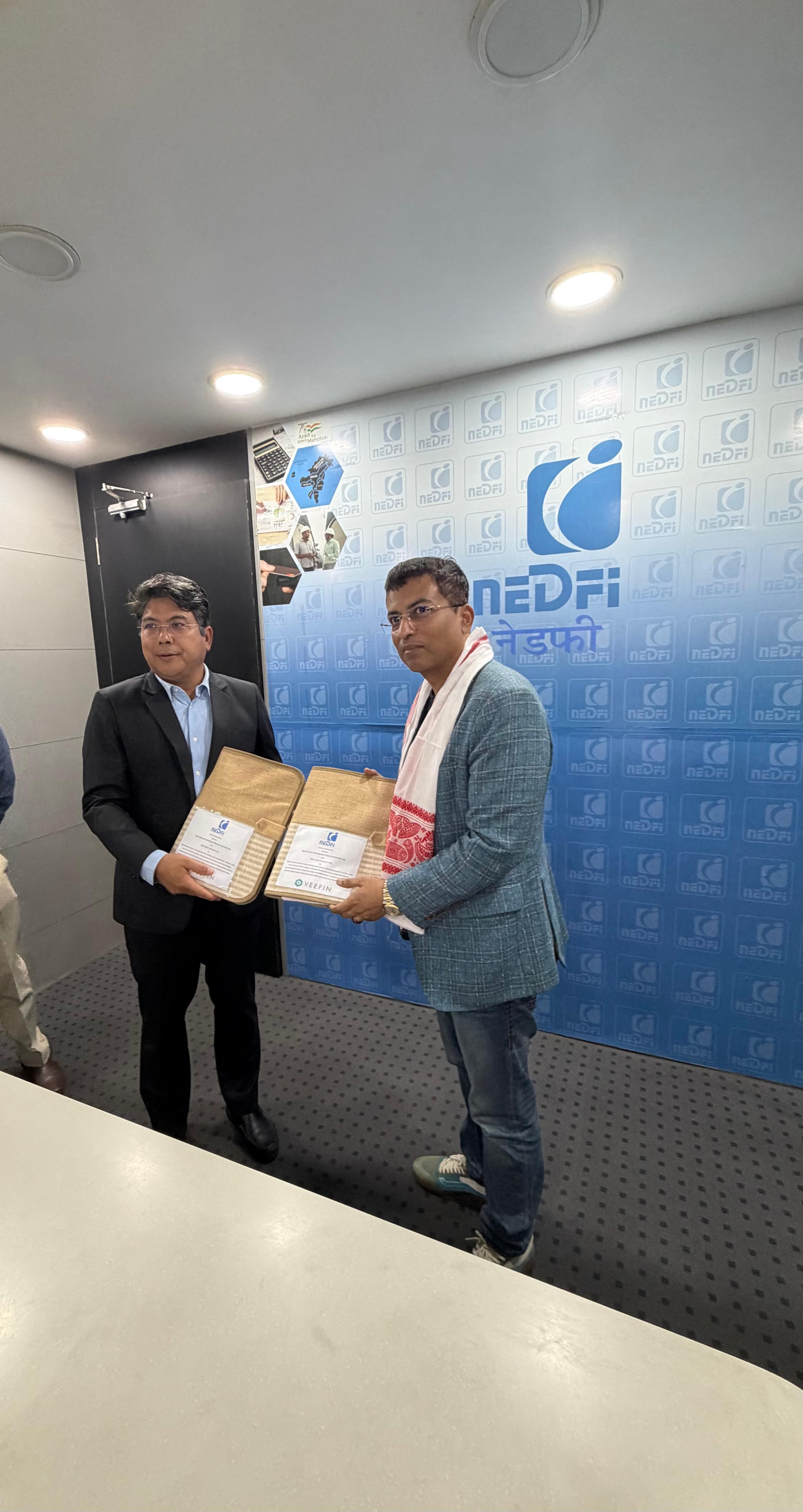
Under the multi-year agreement, Veefin will deploy a cloud-hosted suite of digital lending solutions, including a Loan Origination System (LOS), Loan Management System (LMS), and Loan Collection System (LCS). The project will also include dedicated mobile applications for sales and collections, along with a customer portal designed to provide borrowers with a seamless end-to-end digital experience.
The platform will integrate with external systems such as credit bureaus and banking APIs to create a unified and efficient financial services ecosystem.
P V S L N Murty said the technology platform will help NEDFi expand its outreach to entrepreneurs in remote and underserved areas across the Northeast. He added that the mobile-based lending system would enable new entrepreneurs to apply for loans digitally while allowing existing customers to access account-related information through smartphones. The new platform is also expected to support the expansion of NEDFi’s financial product offerings, including working capital revolving loans.
Lemli Loyi stated that Veefin Solutions was selected through an extensive RFP-based process and that its technology solutions met NEDFi’s digital transformation requirements. He noted that the partnership would play a key role in modernizing lending processes and extending advanced financial services across the Northeast region.
Raja Debnath described the partnership as a strategically important project for the company and reaffirmed Veefin’s commitment to building a secure, scalable, and high-performance lending platform to support NEDFi’s long-term growth.
The agreement focuses on strengthening financial inclusion by supporting last-mile credit delivery across the Northeast while ensuring compliance with the Reserve Bank of India’s latest IT governance and outsourcing guidelines. The platform will include end-to-end encryption and real-time security monitoring features.
12, May 2026
BULLET Microdrama App Onboards Saatvik Goel to Boost Growth
India, May 12 : BULLET Microdrama app has announced the onboarding of Saatvik Goel to its leadership team, as it strengthens its focus on scaling the platform and driving growth in India’s emerging microdrama ecosystem.

Saatvik has been appointed by ZEE Entertainment Enterprises Ltd. as Executive Vice President – Marketing, New Initiatives, and will work closely with the BULLET Microdrama app team as part of this mandate. With over a decade of experience in scaling startups and new-age platforms, he brings a strong focus on agile, insight-led, and outcome-driven marketing.
In his role, Saatvik will lead marketing and growth for BULLET, focusing on building a distinctive brand, driving user acquisition at scale, and strengthening its position as a destination for short-format, mobile-first storytelling.
Commenting on his new role, Saatvik Goel, said:
“BULLET Microdrama app is building in a space that is at an inflection point globally. The opportunity to shape consumer behaviour and establish a new storytelling format in India is incredibly exciting. I look forward to building a strong brand, driving growth, and making BULLET Microdrama app a daily habit for audiences.”
Welcoming him to the team, Azim Lalani, Co-founder, BULLET Microdrama app, said
“We are excited to have Saatvik join the BULLET Microdrama app leadership team. As a new and evolving format, microdrama demands speed, experimentation, and deep consumer understanding. Saatvik’s experience in scaling new-age platforms will be instrumental in accelerating growth, strengthening our market presence, and helping us build this category in India.”
With Saatvik’s addition, the BULLET Microdrama app is poised to accelerate its growth journey and deepen it connect with India’s digital-first audiences. Alongside his focus on BULLET Microdrama app, he will also oversee marketing for other new initiatives within ZEE’s portfolio, including Hipi, as part of his broader mandate.
12, May 2026
Hansa Research Group Appoints Pramod Pawar as National Head Quantitative Research
May, 12 : Hansa Research Group, India’s leading consumer insights provider, has elevated Pramod Pawar as National Head Quantitative Research. In his expanded role, he will lead the company’s quantitative research operations across India, with a focus on driving business expansion, strengthening client relationships, and advancing consultative research solutions for brands across industries.

The move comes amid increasing demand for consumer intelligence and analytics-driven business decision-making. Pramod will oversee large-scale quantitative research mandates across sectors including BFSI, FMCG, Retail, Healthcare, Automotive, Technology, and Telecom. His mandate includes leading customised research frameworks spanning brand tracking, segmentation, campaign evaluation, pricing, product testing, and consumer journey studies, while further enhancing delivery excellence and team development across the organisation.
Pramod brings over 20 years of experience in market research and consumer insights across organisations including Kantar, HDFC Life, and Nielsen. Over the past four years at Hansa Research Group, he has served as Quantitative Head West & South, where he played a key role in expanding regional operations, strengthening strategic client mandates, and leading complex multi-category research engagements. He has also been instrumental in building consultative research practices, enhancing operational efficiencies, and mentoring high-performing teams.
Commenting on his elevation, Pramod Pawar, National Head – Quantitative Research, Hansa Research Group, said,
“Hansa Research Group has built a strong legacy of enabling organisations with strategic consumer intelligence and actionable market insights. I am pleased to take on this expanded responsibility at a time when businesses are increasingly focused on leveraging analytics and deeper consumer understanding to drive growth. My focus will be on further strengthening our quantitative research capabilities, fostering long-term client partnerships, and delivering meaningful insights that support informed business decisions.”
Praveen Nijhara, CEO of Hansa Research Group, stated,
“Pramod’s elevation marks an important step in strengthening our quantitative research leadership as we continue to expand our integrated insights and analytics capabilities. His extensive experience in market research, deep understanding of consumer and market dynamics, and ability to lead strategic client engagements have contributed significantly to our growth journey over the years. We are confident that his leadership will further strengthen our consultative capabilities and enhance the value we deliver to clients across sectors.”
This move further reinforces Hansa Research’s commitment to delivering high-impact consumer intelligence and strengthening its position as a trusted research and analytics partner for brands across India and global markets.
12, May 2026
Epson named CitySwitch Champion for third consecutive year
Recognising ongoing commitment to sustainability and carbon management
SYDNEY, May 12– Epson Australia has been recognised as a CitySwitch Champion for the third consecutive year, affirming the company’s long-term commitment to sustainability leadership, carbon management and practical climate action across its Australian operations.
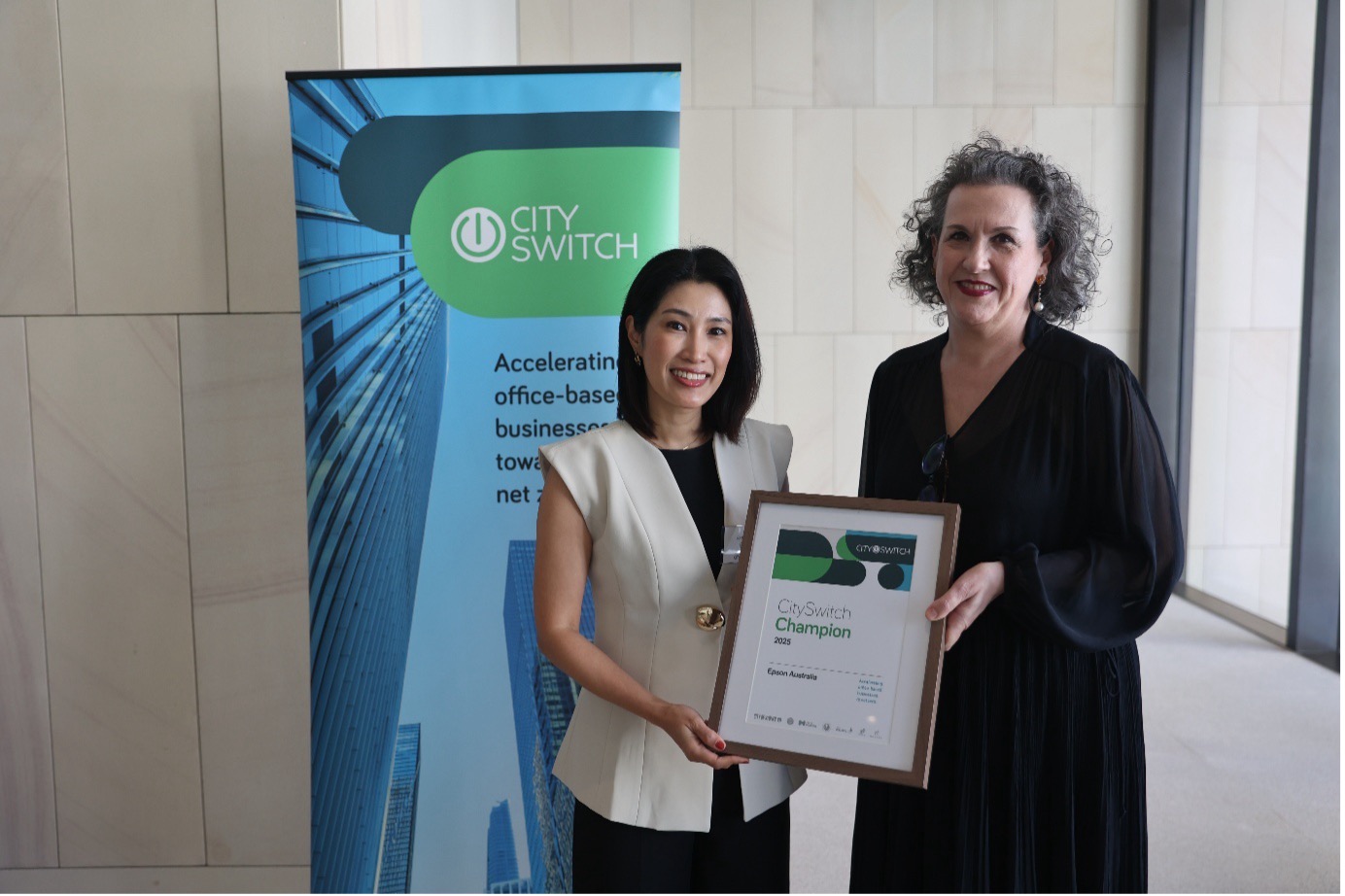
(l-r) Epson Australia’s environment and sustainability manager Fatida Un and North Sydney Mayor Zoë Baker
The CitySwitch Awards celebrate businesses demonstrating genuine progress in areas such as emissions tracking, waste reduction, sustainable procurement and staff engagement.
Epson was formally honoured at the North Sydney Council Champion Lunch with the award presented by North Sydney Mayor Zoë Baker.
This achievement reflects Epson’s sustained commitment to transparency, data-driven carbon reduction and continuous environmental improvement.
CitySwitch is Australia’s flagship decarbonisation program for businesses. Run by council partners and NABERS, the initiative supports office-based organisations to measure, manage and reduce their carbon footprint on the path to net zero emissions.
Since joining CitySwitch as a signatory in 2023, Epson has reported annually on energy use, emissions and waste across its five Australian workplaces and built a robust foundation for long-term carbon management.
Key achievements to date include:
• Transitioning all Australia and New Zealand offices to 100% renewable electricity
• Reducing landfill waste at its primary warehouse facility by more than half compared with FY2023 levels
• Shifting inbound freight from road to rail, cutting logistics-related emissions
• Developing a full Scope 1, 2 and 3 emissions framework, aligning local goals with Epson’s global science-based targets
• Enhancing energy efficiency at its Sydney head office, reducing overall electricity use
• Improving recycling processes across its Sydney offices and the recyclability of consumer product packaging
While continued emissions reduction remains a priority, Epson is equally focused on building robust systems, data quality and organisational capability to support meaningful, long-term progress.
Craig Heckenberg, Managing Director, Epson Australia and New Zealand said, “Being recognised for a third time as a CitySwitch Champion is a valued acknowledgement of the commitment and hard work of our teams across Australia. It reinforces our approach of connecting sustainability to everyday decisions from how we source electricity and manage waste, to how we design systems and ship products. Every improvement brings us closer to a low-carbon future.”
The annual CitySwitch Champions Forum also brings together participants to share practical insights into carbon management. This year, Epson presented on building a practical approach to carbon tracking, drawing from its own journey of “progress over perfection”. This includes:
• Starting with the data already available
• Focusing on key emissions hotspots
• Connecting reduction efforts directly to business priorities
• Maintaining steady momentum through collaboration and knowledge sharing
By applying this pragmatic approach, Epson continues to strengthen its operational sustainability while supporting the company’s broader global target of achieving carbon negativity and underground resource-free status by 2050.
Epson’s recognition as a three-time CitySwitch Champion demonstrates its leadership as an innovation-driven manufacturer that embeds sustainability into products and operations alike.
Through collaborations like CitySwitch, the company continues its commitment to act decisively on its decarbonisation journey.
Learn more about sustainability at Epson Australia here: https://www.epson.com.au/
Founded in 2005, CitySwitch initially focused on office energy efficiency before expanding to help businesses integrate broader sustainability practices — including waste reduction, green procurement and Scope 3 emissions management.

12, May 2026
Kafka Media Group Wins 2026 Communicator Award for Soft-Analytics®
The boutique marketing firm is recognized for its trademarked approach to interpreting marketing and communications impact through human-centered analysis
ORLANDO, FL (May 12) – Kafka Media Group, an integrated marketing firm, has been named a winner in the 32nd Annual Communicator Awards for its proprietary Soft-Analytics® methodology, recognizing the agency’s innovation in modern communications strategy and marketing intelligence.
Presented by the Academy of Interactive & Visual Arts, the Communicator Awards honor excellence and innovation across the communications industry, with thousands of entries submitted annually by agencies, organizations, and brands worldwide.
Soft-Analytics® is Kafka Media Group’s trademarked methodology that combines traditional performance metrics with human insight, strategic interpretation, and contextual analysis to help clients better understand the true impact of their marketing and communications efforts.
“Soft-Analytics® was built around a simple idea: data alone cannot tell the full story,” said Pierce Kafka, CEO & Creative Director of Kafka Media Group. “In a communications landscape increasingly shaped by automation and AI-generated content, interpretation, strategy, and context matter more than ever. This recognition validates the importance of understanding not just what happened in a campaign, but why it mattered.”
Unlike traditional reporting that focuses solely on impressions or mentions, Soft-Analytics® evaluates the context, sentiment, momentum, and strategic value behind media coverage and audience engagement.
Kafka Media Group officially trademarked Soft-Analytics® in 2025 as part of its broader effort to redefine how communications impact is evaluated and interpreted. The methodology has been applied across its integrated marketing and publicity campaigns, helping clients translate visibility into actionable strategic growth.
“This recognition reinforces what we believe the industry is moving toward: smarter measurement, stronger storytelling, and more strategic interpretation of what drives real influence,” Kafka added.
11, May 2026
COMAU and OMRON Robotics Partner to Advance Industrial Automation Worldwide
Turin, Italy and Pleasanton, California, USA – May 11, 2026 – COMAU and OMRON Robotics (Omron) have entered into a strategic collaboration agreement to accelerate the global adoption of advanced industrial automation solutions. The partnership will focus on fast-growing industries including electronics, semiconductors, medical manufacturing, and light industrial intralogistics, where demand continues to rise for flexible and easily deployable automation technologies.
The collaboration is designed to address increasing customer demand for scalable, adaptable automation systems that integrate efficiently with both existing production lines and next-generation manufacturing environments. By combining their complementary technologies, product portfolios, and industry expertise, COMAU and Omron aim to expand access to advanced automation solutions for manufacturers worldwide.
The companies also see the agreement as a foundation for future joint initiatives. By integrating robotics hardware, intelligent control systems, and software-driven automation, the partnership aims to help manufacturers improve operational efficiency, increase flexibility, and enhance overall production performance across a wide range of industrial applications.
“This initiative reflects our strategy to strengthen Comau’s solution portfolio through high-value partnerships,” said Pietro Gorlier, CEO of COMAU. “Omron is a strong strategic fit because we share a common vision centered on innovation and customer value. By combining Comau’s robotics expertise with Omron’s advanced technologies and software capabilities, we can deliver automation solutions that are easier to implement, highly adaptable, and ready to support future manufacturing needs. This collaboration also reinforces our position in high-growth industries and emerging markets, helping customers manage increasing industrial complexity with safe, reliable, and scalable automation.”
“By bringing together two highly complementary portfolios, this collaboration creates new opportunities for manufacturers seeking greater agility and efficiency,” said Olivier Welker, CEO of OMRON Robotics. “Combining our strengths in robotics, intelligent automation, advanced control, and application expertise will help customers respond more quickly to evolving market requirements. Together, we aim to deliver flexible, connected, and sustainable production systems that support long-term growth.”


