


3, Oct 2026
RAKEZ showcases Ras Al Khaimah’s food manufacturing potential at Future Food Summit 2026
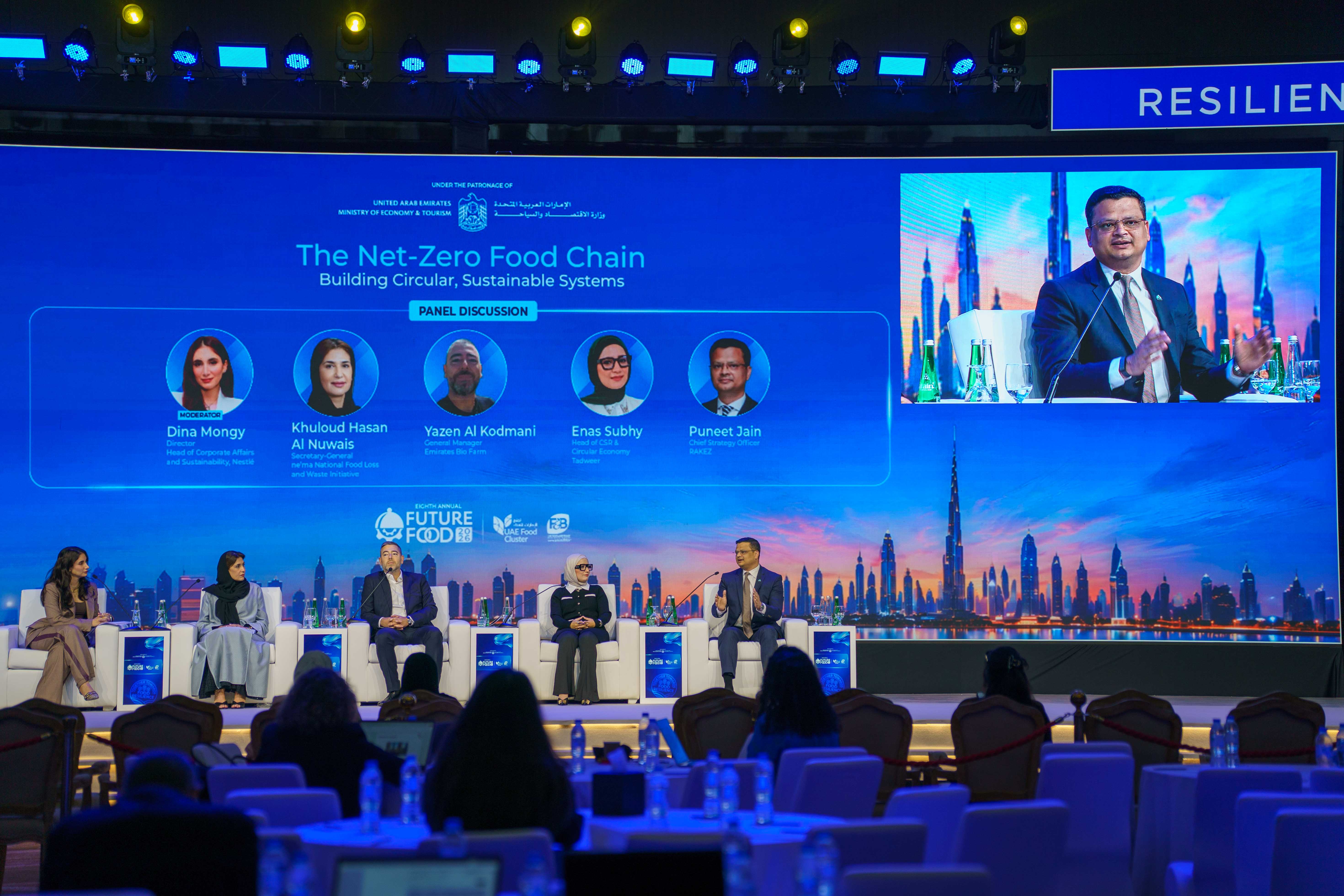
Ras Al Khaimah, Oct 03: Ras Al Khaimah Economic Zone (RAKEZ) participated as a Silver Sponsor in the eighth edition of Future Food Summit 2026, organised by the UAE Food Cluster and the UAE Food & Beverage Business Group under the patronage of the Ministry of Economy and Tourism. The annual summit brought together key players from the UAE’s food ecosystem to discuss food security, trade, supply chains and sector growth.
Throughout the summit, the RAKEZ team engaged with food and beverage manufacturers, suppliers, investors and industry stakeholders, highlighting Ras Al Khaimah’s competitive operating environment and the range of business and industrial solutions available to F&B companies.
Ramy Jallad, Group CEO of RAKEZ, said: “Food and beverage manufacturing is an important part of the UAE’s industrial growth story, and Ras Al Khaimah offers a strong platform for companies looking to establish, scale and serve regional markets. At RAKEZ, our focus is on creating the right conditions for that growth through competitive industrial solutions, connected infrastructure and practical business support. As the sector continues to evolve, sustainability and resource efficiency will become increasingly important, and we are committed to helping manufacturers access the facilities, services and partnerships they need to grow responsibly and competitively.”
As part of RAKEZ’s participation, Puneet Jain, Chief Strategy Officer at RAKEZ, joined the panel discussion ‘The Net-Zero Food Chain: Building Circular, Sustainable Systems’, which explored how circular production models and stronger collaboration can support the UAE’s transition towards a more sustainable food system.
During the discussion, Jain highlighted the role economic zones can play in enabling circularity by bringing manufacturers, suppliers, logistics providers, technology companies and service providers together within connected ecosystems. He noted that closer collaboration can make it easier for businesses to share infrastructure and resources, including opportunities for by-products or materials from one operation to be repurposed as inputs for another.
He also emphasised the importance of making sustainable practices practical and commercially viable for F&B businesses, particularly through shared infrastructure and solutions around cleaner energy, water efficiency, waste management and resource recovery. By giving businesses access to the right facilities, technologies and partners, economic zones can help them operate more efficiently while remaining competitive as they grow.
The panel also examined opportunities to strengthen water reuse, waste segregation, recycling and recovery, and encourage greater resource exchange across the food value chain.
Through its participation in Future Food Summit 2026, RAKEZ reinforced its role in supporting the development of the food and beverage sector and advancing a more sustainable business ecosystem. This also supports the objectives of the UAE’s National Food Security Strategy 2051 by contributing to a more resilient and future-ready food ecosystem.
|
- 0
- By Neel Achary

3, Oct 2026
Sachin Kumar Yadav IAS Takes Charge as KFON Managing Director

Thiruvananthapuram, October 03 2026: Sachin Kumar Yadav, IAS, has assumed charge as the Managing Director of Kerala Fibre Optic Network (KFON). Currently serving as the Director of Kerala State IT Mission, he is also holding additional charge as the CEO of Technopark and Director of the Kerala State Remote Sensing and Environment Centre (KSRSEC). He has previously served as Deputy Secretary and Officer on Special Duty in the Finance Department and the AIS Department of the General Administration Department. He has also served as the Deputy Chief Executive Officer of the Rebuild Kerala Initiative.
Born in Jhunjhunu district of Rajasthan, Sachin Kumar Yadav completed his B.Tech in Electrical Engineering from IIT Delhi before joining the Indian Administrative Service. He has served in various positions in the Kerala Government, including Assistant Collector, Ernakulam; Sub Collector, Tirur; and District Development Commissioner, Malappuram.
His leadership is expected to provide fresh impetus to efforts to further strengthen digital connectivity across the state and expand KFON services to more regions and sections of society. Expanding connectivity to homes, government institutions, educational institutions and commercial establishments, while further strengthening digital inclusion, will remain key areas of focus.
3, Oct 2026
V D Satheesan Delivers 18th K P Hormis Memorial Lecture Hosted by Federal Bank

Kochi, October 03, 2026: The Hon’ble Chief Minister of Kerala, Shri V D Satheesan, delivered the 18th K P Hormis Memorial Lecture, hosted by Federal Bank, at Grand Hyatt Kochi.
The Chief Minister delivered the memorial lecture on the topic “Reimagining Kerala”. In his lecture, he highlighted the need for a comprehensive transformation of Kerala across key sectors, including education, healthcare, tourism, sports, public welfare, elderly care and women’s safety, in keeping with the changing needs of the modern era. He noted that Kerala already possesses infrastructure and social amenities comparable with those in several Western countries, and emphasised the need to utilise these resources more efficiently. He also stressed the importance of transforming the State’s geographical and demographic challenges into opportunities for growth, while creating greater opportunities for the youth and ensuring the welfare of senior citizens.
He added that the State should move beyond its traditionally recognised development achievements and create a distinctive Kerala model of development capable of redefining growth across sectors. As part of this vision, he announced plans to organise ‘Festival Kerala’, initially across different parts of India and subsequently at international locations. The initiative will showcase Kerala’s heritage, art, culture and traditions while also providing a platform to highlight the State’s entrepreneurs, investment opportunities, tourism potential and talent to audiences in India and across the world. He emphasised that Festival Kerala would go beyond being a cultural showcase and serve as a platform for investment promotion, tourism, entrepreneurship and presenting Kerala’s capabilities to a wider global audience.
The Chief Minister welcomed Federal Bank’s contribution to the State’s development and called for its continued participation in the efforts to reimagining Kerala and drive its transformation across sectors.
Mr. Elias George, Chairman, Federal Bank, welcomed the gathering and set the context for the evening. Mr. KVS Manian, Managing Director & CEO, Federal Bank, delivered the vote of thanks and expressed his gratitude to the Hon’ble Chief Minister for delivering the 18th K P Hormis Memorial Lecture.
The event was attended by over 1,500 people, including eminent personalities, Trustees of the Foundation, members of the Bank’s Board of Directors, Senior Executives and officials of the Bank. Students from various business schools also attended the event. The event also featured a digital exhibition showcasing some of the latest innovations and technologies in the banking and financial sector, including FedHive, the Bank’s social media monitoring tool.
The lecture was followed by a question-and-answer session with the Chief Minister, in which he deliberated on the topic further.
The K P Hormis Memorial Lecture is organised in memory of Late K P Hormis, Founder of Federal Bank, and has over the years provided a platform for distinguished leaders and eminent personalities to share their perspectives on issues of contemporary relevance.
The Federal Bank Hormis Memorial Foundation was instituted in 1996 to perpetuate the memory of Late K P Hormis. The Foundation and its activities were inaugurated by the then Union Finance Minister, Shri P. Chidambaram, at Ernakulam on October 18, 1996. Since its inception, the Foundation has undertaken various initiatives aimed at promoting knowledge and awareness in the areas of banking, finance and economics, alongside educational and community welfare programmes.
The 18th K P Hormis Memorial Lecture continued this legacy by bringing together a diverse audience for an exchange of perspectives and ideas on issues relevant to society and the economy.
3, Oct 2026
AD Ports Group Successfully Completes Acquisition of Brazil’s CLI Upon Receiving Full Regulatory Approvals
Abu Dhabi, UAE/ São Paulo, Brazil – 03 October 2026: AD Ports Group (ADX: ADPORTS), a leading global enabler of trade, industry, and logistics solutions, today announced the successful completion of the financial closing of its acquisition of Corredor Logística e Infraestrutura (CLI), Brazil’s leading independent agri-bulk port terminal operator from funds managed by Macquarie Asset Management and IG4 Capital.
The transaction, announced on 2 June 2026, was completed following the satisfaction of customary closing conditions, including regulatory and antitrust approvals. AD Ports Group received the necessary approvals from Brazil’s National Waterway Transportation Agency (ANTAQ) and the Administrative Council for Economic Defense (CADE), enabling the transaction to proceed to completion.

The acquisition was conducted at an enterprise value of AED 3.1 billion (USD 835 million), making it the largest acquisition in the Group’s history. With the closing now finalised, CLI has become an operational member of AD Ports Group’s international portfolio and represents the Group’s first strategic entry into South America.
Mohammed Al Tamimi, Chief Executive Officer of Noatum Ports – AD Ports Group, said: “The formal completion of the CLI acquisition marks an important development in AD Ports Group’s international growth and strengthens our presence in one of the world’s most important agricultural export markets. The acquisition gives our Group powerful new global reach and capabilities. AD Ports Group, through its international ports operating arm Noatum Ports, is committed to quickly integrating CLI into our existing global operations, to further expand the range and relevance of our portfolio of global end-to-end trade solutions.”
Fernando Lohmann, Head of Macquarie Asset Management in Brazil, said: “CLI has delivered strong growth and built a highly competitive position in Brazil’s port and logistics market, supported by strategic assets, operational scale and a resilient customer base. With the transaction now completed following all required approvals, AD Ports Group is well positioned to build on that platform, which has clear relevance to Brazil’s trade flows, and support CLI’s next phase of development.”
Paulo Todescan L. Mattos, Co-Founder, Managing Partner, Chair, and Co-CIO of IG4 Capital Group, said: “We are grateful for the constructive engagement of all parties involved in bringing this transaction to its close. CLI has evolved into an important supply chain provider supporting Brazil’s export and import markets with a strong operating platform. We are proud of the progress achieved in transforming CLI and believe AD Ports Group is well placed to support CLI’s continued development and long-term growth.”
CLI operates two strategically important agri-bulk export terminals under long-term concessions. CLI Sul, at the Port of Santos, is a leading sugar export terminal that also handles corn and soybeans, while CLI Norte, at the Port of Itaqui, forms part of Brazil’s “Arc of the North”, an important logistics corridor for agricultural exports. Together, the terminals connect Brazil’s major producing regions with global markets.
The acquisition strengthens AD Ports Group’s growing agrifoods platform and broadens its ability to serve customers across the agricultural supply chain. It also creates opportunities to connect Brazilian export flows with the Group’s wider network across ports, maritime and shipping, logistics, economic cities, and digital trade services, supporting new trade links between South America, the Indian Subcontinent, East Africa, and Southeast Asia.
With the transaction completed, AD Ports Group intends to establish new trade routes directly connecting Brazil with Khalifa Port and Abu Dhabi Food Hub in KEZAD, the region’s largest food hub, supporting the movement of Brazilian agricultural commodities into regional and international markets.
Through CLI, the Group will contribute its global ports and logistics expertise to a major agricultural export market while supporting the continued development of Brazil’s trade infrastructure. The transaction also reinforces AD Ports Group’s commitment to building resilient, connected, and customer-focused supply chains that enable trade across continents.
2, Oct 2026
Canara Bank Kolkata Circle Organises “Swachhata Hi Seva” Campaign
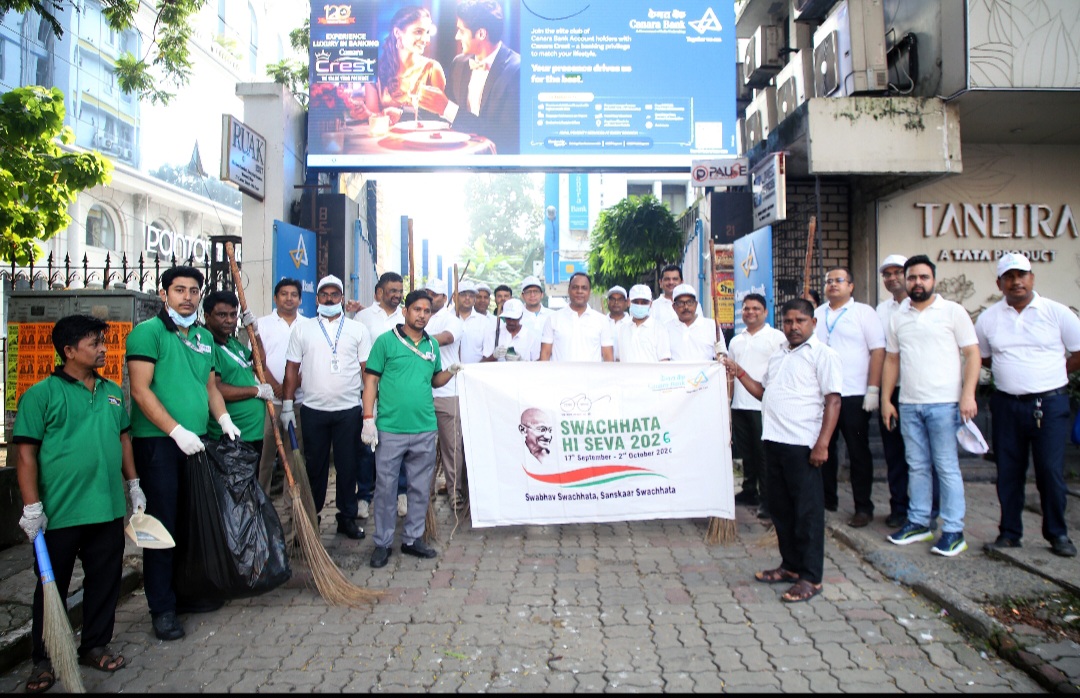
Kolkata | Oct 02: Canara Bank, Kolkata Circle, organised a “Swachhata Hi Seva” Campaign on 1st October 2026 at its Circle Office premises in Kolkata, reaffirming the Bank’s commitment towards cleanliness, sanitation and responsible citizenship.
The cleanliness drive was conducted in the presence of Shri Manoj Kumar Meena, General Manager & Circle Head, Canara Bank, Kolkata Circle, along with Deputy General Managers, other executives and staff members of the Circle Office. Officials and employees actively participated in cleaning the office premises as well as the adjoining areas, spreading the message that cleanliness is a shared civic responsibility.
Addressing the gathering, Shri Manoj Kumar Meena highlighted the significance of the Swachhata Hi Seva initiative and emphasised the important role of every citizen in maintaining cleanliness and hygiene in workplaces, neighbourhoods and public spaces. He encouraged employees to make cleanliness a part of everyday life and contribute actively to the larger national cleanliness movement.
As part of the programme, sanitation equipment was distributed among the cleaning staff to support their day-to-day work. In recognition of their invaluable contribution towards maintaining a clean and hygienic workplace, thank-you gift hampers were also presented to the cleaning staff as a gesture of appreciation.
The programme concluded with a collective commitment by the officials and staff of Canara Bank, Kolkata Circle, to uphold the spirit of “Swachhata Hi Seva” and contribute towards a cleaner, healthier and more responsible society.
2, Oct 2026
Survey: CHRO Confidence Remains in Positive Territory, But Continues to Inch Down
AI Is Changing Workforce Planning, Yet Few Organizations Feel Fully Prepared
New York, October 2, 2026—CHRO confidence remained positive in Q3, but continued to edge down from its record high earlier this year. That’s according to the latest survey of US chief human resource officers (CHROs) from The Conference Board.
The CHRO Confidence Index declined to 56 in Q3 from 58 in Q2. A reading above 50 reflects more positive than negative responses. The hiring component of the Index rose slightly, while the retention and engagement components declined.
The survey also reveals that AI is already changing workforce planning, even as many organizations remain early in preparing for its impact. More than 8 in 10 CHROs (82%) say their organization has changed its workforce-planning process because of AI, although half describe the change as only slight. Just 19% say anticipated AI effects have been incorporated into workforce and financial planning across the enterprise.
And while 55% of CHROs consider their organizations at least somewhat prepared to manage AI-driven workforce change over the next two years, only 4% say they are very prepared. The biggest barriers are difficulty predicting AI’s workforce impact (41%), limited AI skills (39%), and an unclear AI strategy (31%).
“CHROs are still planning to hire, but the broader workforce picture is becoming more cautious,” said Diana Scott, US Human Capital Center Leader, The Conference Board. “Organizations are balancing the need for talent with slower workforce growth and mounting concerns about engagement and retention. At the same time, AI is forcing leaders to rethink what skills they will need in the future and how they plan their workforces.”
Hiring: Do HR leaders expect to hire more employees in the next six months?
The CHRO Confidence Index: Hiring component was 61 in Q3, up from 59 in Q2.
Hiring expectations remain positive.
- 53% expect hiring to increase over the next six months, compared with 17% who expect it to decrease.
- Those expectations were relatively stable from Q2, when 54% expected an increase and 17% expected a decrease.
Expectations for overall workforce size have cooled.
- 49% expect total workforce size to increase over the next six months, down from 55% in Q2.
- 28% expect workforce size to remain unchanged, up from 23%.
- 23% expect their workforce to decrease, essentially unchanged from 22% in Q2.
Retention: Do HR leaders expect employees to stay over the next six months?
The CHRO Confidence Index: Retention component declined slightly to 54 in Q3 from 55 in Q2.
Retention expectations softened.
- 33% of CHROs expect employee retention to increase, down from 36% in Q2.
- 22% expect retention to decrease, up from 19%.
- The gap between those expecting improvement and deterioration narrowed to 11 percentage points from 17 points in Q2.
Engagement: Were employees committed, motivated, and connected to their work and the organization over the past six months?
The CHRO Confidence Index: Engagement component fell to 55 in Q3 from 59 in Q2.
Employee engagement emerged as the clearest source of weakness this quarter.
- 44% report increased engagement, down slightly from 46% in Q2.
- 24% report decreased engagement, up notably from 16% in Q2.
AI and Workforce Planning: How is AI changing organizations’ workforce planning?
Most are changing workforce planning because of AI, but for many, the changes remain limited.
- 50% of CHROs say their organization has made only a slight change to workforce planning.
- 25% report a moderate change, while only 7% report a significant change.
Organizations are analyzing AI’s impact more often than changing how frequently they plan.
Among organizations that have changed their workforce planning process:
- 67% have analyzed AI’s potential impact on jobs, tasks, or workforce demand.
- 67% have brought AI technologies or AI leaders into workforce planning discussions.
- 45% have incorporated new AI-related workforce, skills, or labor-market data.
- Just 21% have changed workforce planning schedules; 20% have increased the frequency of planning.
Enterprise-wide integration of AI into workforce planning remains limited.
- Enterprise-wide incorporation is 19% for both global and non-global organizations.
- Among global organizations, 32% have incorporated anticipated AI effects into workforce and financial planning for selected functions, roles, business units, or geographies.
- Among non-global organizations, 30% have done the same.
The biggest barriers to successful AI workforce planning are:
- 41%: Difficulty predicting AI’s workforce impact.
- 39%: Limited AI skills among the current workforce.
- 31%: An unclear AI strategy.
- Financial resources, executive alignment, and workforce data are cited much less frequently as barriers.
Few organizations feel very prepared for AI-driven workforce change.
- 55% describe their organization as prepared to manage AI-driven workforce change over the next two years, but only 4% say they are very prepared.
- 27% say their organization is unprepared.
“AI is clearly becoming part of workforce planning, but most organizations are still working through what it means in practice,” said Robin Erickson, PhD, Head of Human Capital Research, The Conference Board. “The biggest obstacles aren’t simply budget or data. Organizations are uncertain about how AI will change work, the potential gaps in workforce skills, and, thus, the lack of a clear AI strategy. CHROs will need to connect the HR technology strategy much more closely with workforce and skills planning.”
1, Oct 2026
Malaysia Aviation Group Signs SPA with Airbus for theAcquisition of Sepang Aircraft Engineering
KLIA, 1 October 2026 – Malaysia Aviation Group (MAG) has signed a Sale and Purchase Agreement (SPA) with Airbus for the acquisition of Sepang Aircraft Engineering (SAE), a wholly owned subsidiary of the Airbus Group. The proposed acquisition marks a strategicmilestone under MAG’s Long-Term Business Plan 3.0 (LTBP 3.0), supporting the Group’sstrategy to strengthen its engineering and maintenance capabilities, expand its integratedaviation services portfolio and accelerate the growth of third-party revenue.
Captain Nasaruddin A. Bakar, President and Group Chief Executive Officer of MAG, said,“It has been a challenging year for the aviation industry, with a constantly changing globalenvironment, volatile fuel prices putting immense pressure on the sector, and challenges that have tested us in many ways. Against this backdrop, as we execute LTBP 3.0, weremain focused on making disciplined investments in areas where we see a clear pathwayto sustainable value creation. This means being deliberate about where we deploy capitaland prioritising opportunities that strengthen our core businesses, diversify revenue andsupport the Group’s long-term growth aspirations.
The proposed acquisition reflects this approach. It builds on our established engineeringand maintenance foundations, positioning MAG to capture opportunities in the growingMRO market and meet increasing third-party demand. SAE further complements MAB Engineering’s existing capabilities through its A320 expertise, dedicated paint hangar andspecialised component repair services, while building on the strong technical, operationaland quality foundations developed under Airbus’ stewardship.
Together, these strengths will enable MAG to offer a broader suite of MRO solutions and better serve existing and new third-party customers across ASEAN and beyond. At the same time, we are leveraging Malaysia’s competitive cost-to-skill advantage and established engineering expertise to support the country’s accelerated ambition tobecome a leading regional aerospace hub – strengthening Malaysia’s position and drivingthe continued growth of the national aviation ecosystem.”
The transaction remains subject to the fulfilment of customary Conditions Precedent, including approval from the Civil Aviation Authority of Malaysia (CAAM).
MAG will continue to work closely with SAE, CAAM and other relevant stakeholders to facilitate the necessary approvals and ensure a smooth completion of the transaction targeted for 2027.
1, Oct 2026
Is Central Asia running into an air cargo capacity gap?
Central Asia is becoming a larger industrial and logistics market. The region faces an estimated $33 billion in annual infrastructure requirements, while trade through the Middle Corridor could potentially triple by 2030. Growth in mining, energy, infrastructure and manufacturing is also creating more demand for heavy, oversized, time-critical and project cargo.
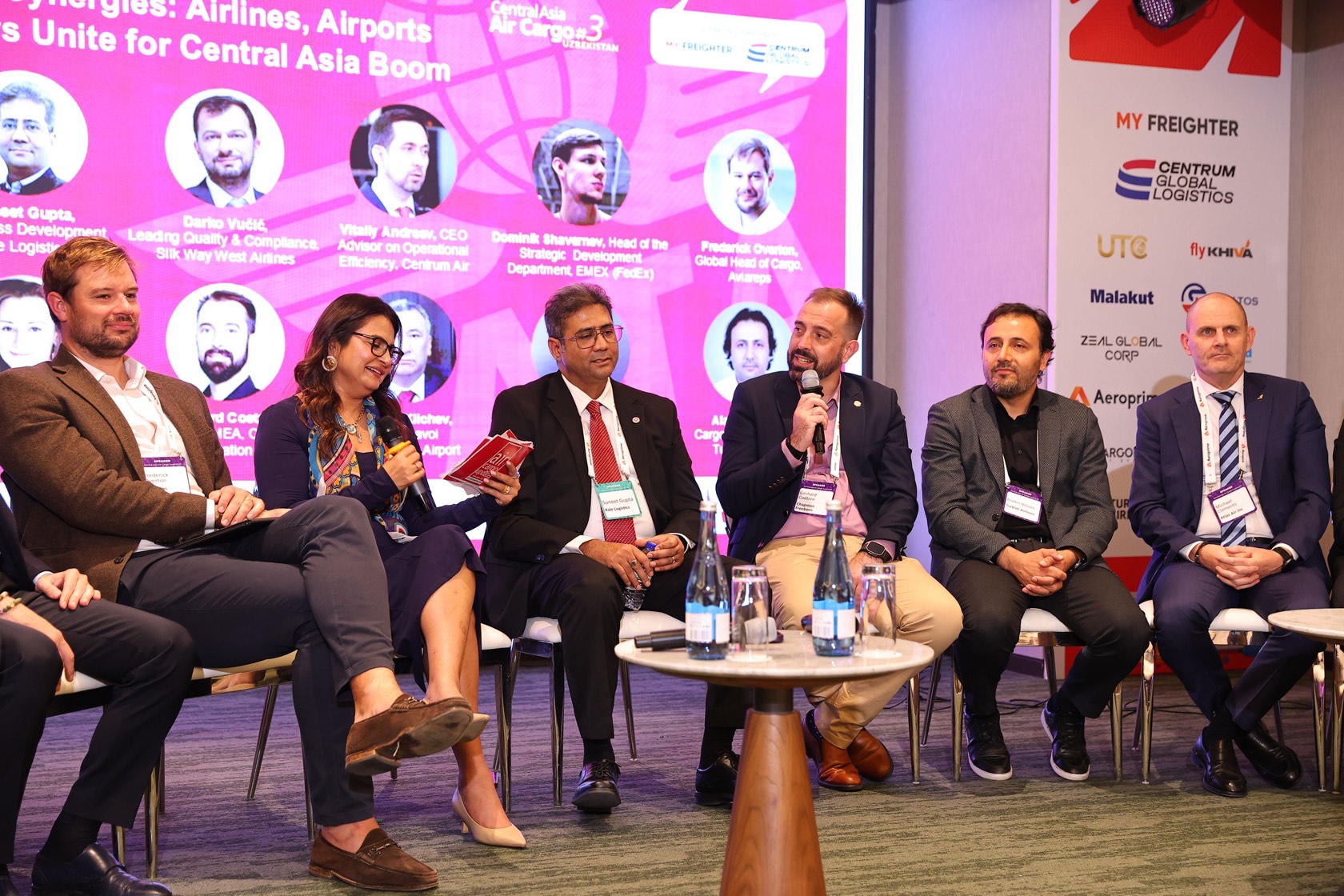
Speaking at the Central Asia Air Cargo Summit, Gerhard Coetzee, Vice President Cargo – IMEA at Chapman Freeborn, said this growth is exposing a gap between the capacity available in the market and the capacity required by the region’s expanding industries.
“The important point is that cargo demand is increasingly being generated inside Central Asia – rather than simply passing through it,” said Coetzee. “Every one of these sectors creates a different type of cargo requirement, and not all of that cargo can move efficiently through a scheduled network.”
When available capacity is not the right capacity
Connectivity between Central Asia and major global markets is improving. China is increasingly connected with Kazakhstan, Uzbekistan and Kyrgyzstan, while scheduled links with Europe are also developing. But more connectivity does not automatically mean suitable capacity for every shipment. The issue is whether the right aircraft is available for the cargo, route and deadline.
This becomes particularly important for project cargo. An aircraft may have sufficient available payload, but the cargo may be too large for the aircraft type, the required route may not be available at the right time, or the airports involved may not have the infrastructure to handle the movement.
For larger aircraft such as the B747F, B777F or AN-124, airport infrastructure and ground handling can determine whether a movement is executable at all. Cargo such as a 70-tonne transformer or 16-metre pipes requires suitable loading equipment, runway capability and specialist handling. Permits and regulatory approvals add another layer, while winter weather and de-icing can affect both timing and operating cost.
“There is an air cargo network, but it isn’t necessarily designed around the cargo that these new industries are generating,” Coetzee said. A scheduled service may work well for standard freight, but a heavy industrial component moving to a remote destination against a project deadline creates a different requirement altogether.
For mining, energy and infrastructure projects, getting that decision wrong can have consequences beyond the shipment itself. A delayed critical component can hold up installation, construction or production, making the cost of downtime significantly more important than the difference between scheduled airfreight and charter.
Matching the aircraft to the cargo
A previous Chapman Freeborn energy project demonstrates the type of planning involved. The company was asked to move urgent manufacturing cargo including 12-metre manifolds requiring purpose-built 12 m × 4 m × 2.4 m transport frames.
The operation was split across two aircraft: a Boeing 767 carried the smaller pieces, while an AN-124 transported the oversized manifolds. Both flights were completed within the required timeframes and the cargo reached the project site.
Although the operation took place outside Central Asia, it illustrates a problem increasingly relevant to the region’s project cargo: the solution has to be built around the cargo rather than simply around available aircraft capacity.
“Aircraft selection isn’t about which aircraft is the biggest. It’s about selecting the most efficient aircraft for the mission,” Coetzee said.
That can mean splitting a movement between aircraft types or using dedicated charter only for the part of a shipment that cannot move through the scheduled network.
From emergency response to capacity planning
Charter therefore complements rather than replaces scheduled airfreight. It becomes relevant when the scheduled network cannot meet a shipment’s weight, dimensions, timing, destination or operational complexity.
The bigger opportunity is to identify those constraints before the cargo is ready to move. For major mining, energy and infrastructure projects, aircraft requirements, airport capability, permits and potential capacity gaps can often be considered during the planning stage rather than once a shipment becomes urgent.
That changes charter from a last-minute response into one of the capacity options available to the project. It also gives shippers more time to assess aircraft, routes and handling requirements before a fixed deadline removes those choices.
As Central Asia becomes more integrated into global supply chains, the challenge will not simply be how much air cargo capacity exists in the region. It will be whether companies can access the right capacity, in the right place and at the point when their project requires it.
1, Oct 2026
Delinea Report Finds 84% of Indian Enterprises Saw an AI Tool Access Sensitive Data Beyond Its Scope, Despite Near-Universal AI Data Access Policy Adoption
Indian organizations are ahead of global peers on AI governance, but they give AI far wider access to sensitive data and see overreach at almost the same rate
INDIA – Oct 1 – Delinea, the identity security platform that continuously controls what AI agents, humans and machines can do and for how long, today published new research examining where AI governance breaks down in practice. According to the report, 2026 Identity Security Report: The AI Enforcement Gap, Indian organizations have near-universal AI governance, with 99% of organizations reporting they have a formal policy governing what data AI tools and agents can access. Yet 84% say an AI tool or agent accessed sensitive data beyond its intended scope in the past year.
Governance maturity in India exceeds global levels on most measures. 87% of Indian organizations say their AI data access policy is actively enforced, compared with 71% globally. At the same time, AI tools in India can access far more sensitive data. 76% of Indian organizations say AI tools can reach employee data, compared with 51% globally, and the gap is similar for customer data, financial records and source code. This AI enforcement gap leaves standing access that can lead to AI agent overreach.
“India’s enterprises have done the hard work on AI governance. Almost every organization has a policy, and most enforce it more rigorously than their global peers,” said Cynthia Lee, Vice President, APJ, Delinea. “But AI agents here also reach more customers, employees and financial data than the global average. At that point, a policy alone stops being enough. As DPDP obligations take effect, Indian enterprises will be asked to prove what actually happened: who authorized each access, what the agent did and why it was allowed.”
Key findings from the report include:
-
Confidence is running ahead of control: 98% are confident they could demonstrate compliant AI access to a regulator, despite the widespread AI overreach survey respondents reported.
-
Standing access hides behind the policy: 99% say they treat AI agent credentials, such as API tokens and MCP configuration files, as governed privileged credentials. Yet 45% say some of those credentials stay active until the next audit, well after the task they were issued for has ended.
-
Accountability is thin: Nearly every organization requires a named individual to sign off before AI accesses a new sensitive data source. Yet only 47% can always trace a sensitive AI access event back to that person.
India catches overreach faster, but the execution layer is a blind spot Indian organizations detect AI overreach faster than their global peers. 34% caught their most recent scope violation as it happened, compared with 20% globally. Nearly half could immediately revoke both an AI tool’s credentials and an active agent session, compared with 35% globally. The gap is in the environments where coding agents do the most work. Only 43% can enforce AI access at the point of action in CI/CD pipelines. Kubernetes is the one environment where India trails the global average. Closing the gap between policy and enforcement calls for authorizing AI access at the moment of action, not only at login. Delinea applies continuous, runtime authorization with least-privilege scoping and full session visibility across AI, human and machine identities, giving security teams a defensible record of who authorized each access, what the agent did and why it was allowed.
1, Oct 2026
New Bush Institute report reveals nation’s strongest innovation districts
Report reveals winners on prosperity and housing metrics
DALLAS, TEXAS | Oct 01– The George W. Bush Institute-SMU Economic Growth Initiative released a report demonstrating that America’s innovation districts – compact urban areas where knowledge-generating institutions and leading-edge companies cluster together to stimulate creativity, collaboration, innovation, and entrepreneurship – are growing and delivering significant economic development and opportunity in their immediate surrounding areas.
This report presents new data on the performance of America’s urban innovation districts as economic development engines, updating data reported in a previous analysis based on 2020 data. This new information shows that these districts are delivering significant economic benefits for surrounding neighborhoods, measured by prosperity metrics, such as population growth, incomes, commuting times, and housing development.
Districts that stand out for their strong performance on prosperity metrics include the following:
- Cortex Innovation District (St. Louis, Mo.)
- Kendall Square (Cambridge, Mass.)
- Pittsburgh Innovation District (Pittsburgh, Pa.)
- Research Triangle Park (Raleigh-Durham, N.C.)
- South Lake Union (Seattle, Wash.)
- Tech Square (Atlanta, Ga.)
- uCity Square (Philadelphia, Pa.)
- University of Utah Research Park (Salt Lake City, Utah)
Additionally, the data shows that neighborhoods surrounding innovation districts are also experiencing considerably greater housing price pressures than they saw in the 2010s, reflecting rapid growth in housing demand.
Districts that stand out for their strong performance on housing and neighborhood stability metrics include the following:
- Cleveland Health-Tech Corridor (Cleveland, Ohio)
- Pegasus Park (Dallas, Texas)
- Research Triangle Park (Raleigh-Durham, N.C.)
- St. Pete Innovation District (Tampa-St. Petersburg, Fla.)
- Tech Parks Arizona (Tucson, Ariz.)
- Winston-Salem Innovation Quarter (Winston-Salem, N.C.)
“Housing challenges are now far more pronounced than they were when we wrote our previous report based on 2020 data,” said Cullum Clark, author of this report and Fellow at the George W. Bush Institute-SMU Economic Growth Initiative. “Almost half the district leaders in our survey say that housing availability and price are constraining the growth and success of their innovation districts.”
The report shares findings from a new survey of innovation district leaders. The results highlight several priorities for today’s leaders: accelerating mixed-use development, making better use of underutilized spaces, enriching programming for district tenants, building essential infrastructure, and adding more restaurants, greenspace, and other amenities that enhance quality of life.
The following six new districts have been added to the dataset compared to the last report in 2024:
- 195 District (Providence, R.I.)
- BioPark (Baltimore, Md.)
- Buffalo Niagara Medical Campus (Buffalo-Niagara, N.Y.)
- LSU Innovation Park (Baton Rouge, La.)
- Sandia Science & Technology Park (Albuquerque, N.M.)
- St. Pete Innovation District (Tampa-St. Petersburg, Fla.)
While this data shows immense opportunity, many of the nation’s innovation districts currently face growing headwinds, including rising vacancy rates, unpredictable policy changes at the federal and state levels, and above all surging housing market pressures.
The report states federal, state, local, and university leaders should continue to invest in the growth of innovation districts – but they’ll also need to address current challenges to ensure their future success. Strategies include encouraging expanded federal research funding, infrastructure investment, supportive land-use and housing policies, and, in some cases, direct financial assistance.
America’s innovation districts are a success story, playing a central role in the nation’s innovation economy and contributing to the revitalization and growth of many U.S. cities. Despite the new headwinds faced by these districts, both governmental entities and private organizations are poised to make positive changes going forward. Through the strategic prioritization of funding and prudent policy, innovation districts can continue to act as engines of opportunity across the nation.