


7, May 2026
Industry Reaction on ECLGS 5.0 from M1NXT, Tide & Progcap
May 07: India’s MSME ecosystem is likely to see a meaningful liquidity boost with the rollout of ECLGS 5.0, especially at a time when exporters and small businesses continue to grapple with global demand volatility, tighter cash flow cycles, and rising operational uncertainty. Industry players across trade finance, MSME banking, and fintech believe the enhanced guarantee support and expanded credit coverage could improve lender confidence, accelerate working capital access, and strengthen the resilience of small businesses navigating supply-side and trade challenges. The move is also expected to deepen adoption of digital financial tools and enable more inclusive credit deployment across underserved MSME segments.
“ECLGS 5.0 comes at a time when many MSMEs are dealing with tighter cash flow cycles and increasing uncertainty in their day-to-day operations. What really matters in such moments is timely access to working capital and the 100% guarantee structure helps unlock that by giving lenders the confidence to move faster. From what we see on the ground, demand for short-term, flexible credit is only increasing, and interventions like this play a critical role in helping businesses stay resilient, keep their operations running, and protect livelihoods across the value chain.” – Pallavi Shrivastava, Co-Founder, Progcap
“ECLGS 5.0 is a timely move that reinforces support for MSMEs navigating ongoing global uncertainties. With ₹2.55 lakh crore in additional credit and 100% guarantee support, it will help ease immediate liquidity pressures and sustain business continuity. Importantly, this also reflects a broader shift—resilience today goes beyond access to credit, with MSMEs increasingly focusing on stronger cash flow management, real-time financial visibility, and digital tools to build more stable, future-ready businesses.” – Gurjodhpal Singh, CEO, Tide in India
“ECLGS 5.0 is expected to ease credit constraints for global trade MSMEs by improving access to working capital and strengthening lender confidence through sovereign guarantees. This will enable MSMEs better navigate supply-side challenges, scale operations, and enhance their competitiveness in international markets. At the same time, the expanded risk coverage is likely to drive higher participation from financial institutions, enabling broader credit deployment and supporting a more robust and inclusive trade finance ecosystem, while reinforcing India’s position in global supply chains.” – Munindra Verma, CEO, M1 NXT

- 0
- By Neel Achary

7, May 2026
Odisha Positioned to Drive India’s Next Industrial Growth from the East Coast: CM Mohan Majhi
Bhubaneswar, May 7 (BNP): Odisha Chief Minister Mohan Charan Majhi has called for a more balanced model of industrial development in India, stating that the country’s next major growth phase should be powered by the eastern coastline, with Odisha emerging as a central hub for investment, trade and manufacturing.
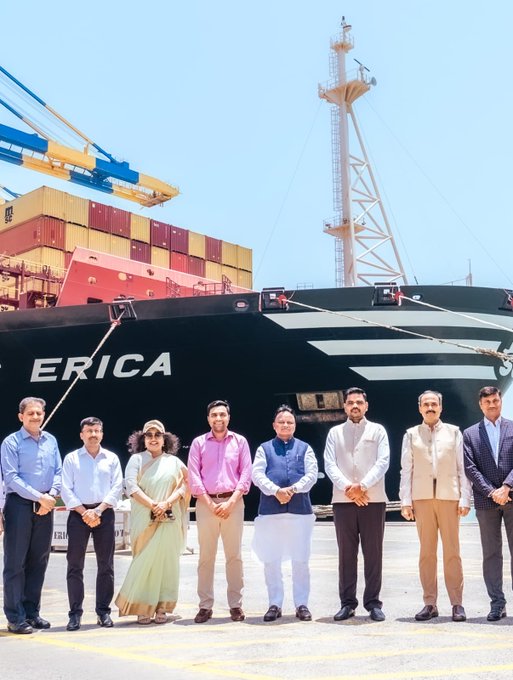
Pic Credit: https://x.com/MohanMOdisha
Speaking during his visit to Gujarat, the Chief Minister said India’s western coast has played a crucial role in driving maritime trade and industrial expansion over the years, but the time has now come to unlock the untapped potential of the East Coast.
During interactions with industry leaders and stakeholders at Mundra Port, Majhi proposed a “two-coast strategy” aimed at strengthening industrial activity across both the western and eastern seaboards to ensure more balanced and sustainable economic growth.
He said Odisha is well-positioned to lead this transformation due to its strategic location, expanding infrastructure network and growing industrial ecosystem. The state’s proximity to Southeast Asia, East Asia and the Indo-Pacific region, he noted, offers strong advantages for trade, logistics and manufacturing.
The Chief Minister emphasised that Odisha is building an investment-friendly environment backed by policy support, faster clearances and improved connectivity. He added that the state is focused on converting investment commitments into on-ground projects within a defined timeframe.
Majhi, accompanied by Industries Minister Sampad Chandra Swain, Chief Secretary Anu Garg and senior officials, showcased Odisha’s industrial potential and infrastructure readiness during meetings with business leaders.
As part of the visit, the delegation toured major facilities at Mundra Port, including container terminals and Very Large Crude Carrier (VLCC) jetties, to study large-scale cargo handling and integrated port operations. They also visited industrial units within the adjoining Special Economic Zone, including facilities linked to copper manufacturing and renewable energy components such as solar cells and wind turbine parts.
On the second day of my Gujarat visit, I visited Mundra Port and engaged with industry leaders, where I proposed a balanced two-coast strategy as a defining framework for India’s next phase of industrial development. India’s growth cannot remain one-sided; the next phase of… pic.twitter.com/2zur2kYtbR
— Mohan Charan Majhi (@MohanMOdisha) May 6, 2026
Highlighting Odisha’s recent investment momentum, the Chief Minister said the state has approved 433 investment proposals worth nearly ₹8.37 lakh crore over the past 22 months. Of these, 148 projects worth around ₹2.86 lakh crore have already moved into the implementation stage.
He noted that sectors such as logistics, petrochemicals, chemicals, downstream industries and manufacturing are witnessing growing investor interest, supported by expanding industrial corridors, logistics parks and port-led infrastructure.
According to officials, Odisha is steadily strengthening its position as a major industrial and logistics hub on India’s eastern coast. Ports including Paradip Port, Dhamra Port and Gopalpur Port are expected to play a key role in driving future industrial growth and regional connectivity.
The visit is being seen as part of Odisha’s broader effort to attract large-scale investments and position itself as a leading growth engine for India’s next industrial decade.
7, May 2026
India’s Exports Surge Over 20 pc in April Despite West Asia Tensions
New Delhi, May 7 (BNP): India’s export sector has started the new financial year on a strong note, recording more than 20 per cent growth in the first three weeks of April despite rising geopolitical tensions and disruptions in global trade routes linked to the West Asia conflict.
According to the Ministry of Commerce and Industry, the sharp rise in exports reflects resilient global demand for Indian goods even as international supply chains face uncertainty due to the ongoing crisis in the Middle East.
Among the key drivers of growth were petroleum products and electronic goods, both of which witnessed strong overseas demand during the period between April 1 and April 21.
Industry observers said exports of refined petroleum products such as diesel and aviation fuel received a boost as disruptions around the Strait of Hormuz affected normal supply flows from Gulf nations. The strategic waterway remains a critical route for global oil shipments, and tensions in the region have pushed up international energy prices.
India’s coastal refineries appear to have benefited from the shifting trade dynamics, helping increase exports of fuel products to several markets.
At the same time, electronic goods continued to emerge as a major strength for India’s export economy. Growing global demand for smartphones, consumer electronics, and communication equipment has significantly expanded the country’s presence in international markets.
The expansion of manufacturing operations by global technology companies, including Apple, has further accelerated India’s electronics exports in recent years.
Commerce and Industry Minister Piyush Goyal said exporters remain optimistic despite the challenging global environment. He noted that shipments to West Asia are continuing through alternative routes as the Strait of Hormuz remains under pressure.
The minister also expressed confidence that India’s recently concluded free trade agreements would provide long-term support to domestic industries and help expand access to global markets.
India’s electronics exports have witnessed remarkable growth over the past decade. Between 2016 and 2024, exports from the sector increased nearly fivefold to over $42 billion, reflecting the country’s growing role in global manufacturing and supply chains.
A recent report by NITI Aayog highlighted that electronics has now become one of India’s largest export categories, supported by rising investments, policy incentives, and expanding domestic production capabilities.
The sector has also become increasingly important for industries such as telecom, renewable energy, defence, and automotive manufacturing, strengthening its role in India’s broader industrial growth story.
To further support the industry, the Union Budget allocated ₹40,000 crore under the Electronics Components Manufacturing Scheme, aimed at boosting domestic production capacity and reducing import dependence.
7, May 2026
Farmley Turns Healthy Snacking into a 30-Day Habit with Gamified ‘Daily Fuel Challenge’
May 7: Healthy snacking brand, Farmley brought together consumers across the country for its 30-day ‘Daily Fuel Challenge’, generating over 1000 user-created recipe reels, 4.5 million+ views, and 7,000+ follower growth during the campaign period. The initiative saw participation from 50+ creators and consumers, culminating in 27 winners across multiple engagement tiers.
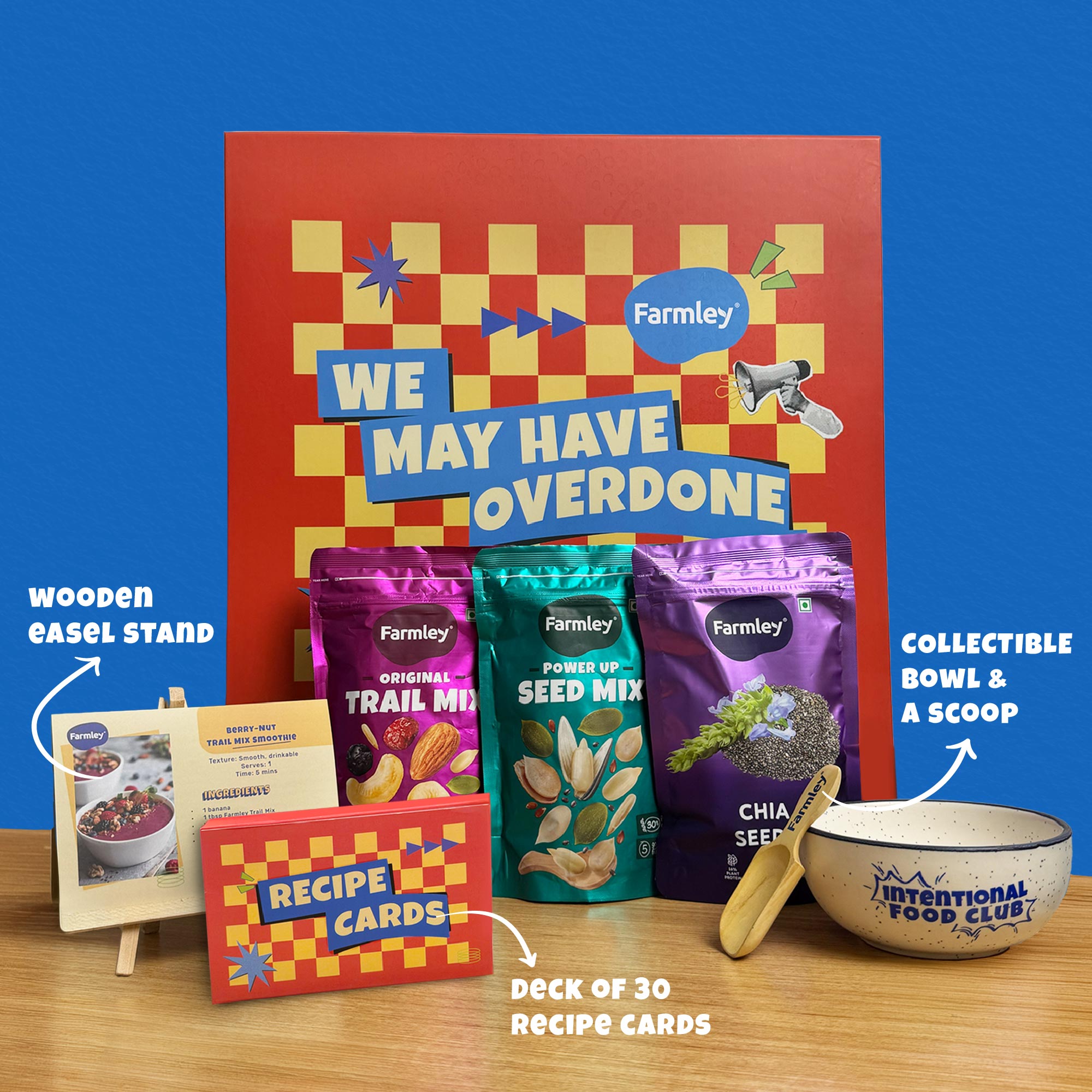
Structured as a month-long digital challenge, the initiative encouraged participants to create and share one recipe reel a day using products from the Daily Fuel Box. Participation ranged from everyday home cooks to creators with audiences exceeding 200,000. The limited-edition Daily Fuel Boxes were sold out during the campaign period, with over 500 boxes sold within a month.
At the centre of the campaign was a guided consumption model. The Daily Fuel Box combined curated products with recipe cards, a wooden easel, a ceramic bowl, a scoop, and a bingo-style tracker, simplifying how consumers could incorporate seeds and mixes into their daily routines and addressing a common category gap between purchase and sustained usage.
Designed around repeat engagement, the challenge introduced 30 recipe prompts and a visual progress format that encouraged consistency over a fixed cycle. Several participants completed all 30 days, reflecting sustained engagement beyond typical short-term digital campaigns.
As the challenge progressed, participants began interacting, exchanging ideas, and amplifying each other’s content, informally building a community often referred to as the ‘Intentional Food Club’. By linking consumption with content creation, the Daily Fuel Challenge reflects how healthy snacking brands are increasingly using participation-led formats to drive both engagement and sustained product usage.
7, May 2026
Salesforce – Industry Leaders Champion Agentic AI at Salesforce Trailblazing Women Summit
Bengaluru, May 7, 2026: Salesforce India, a leading AI CRM company, hosted the Trailblazing Women Summit in India, bringing together business leaders, technology experts, and industry professionals to discuss leadership, innovation, and organizational transformation in the age of Agentic AI.
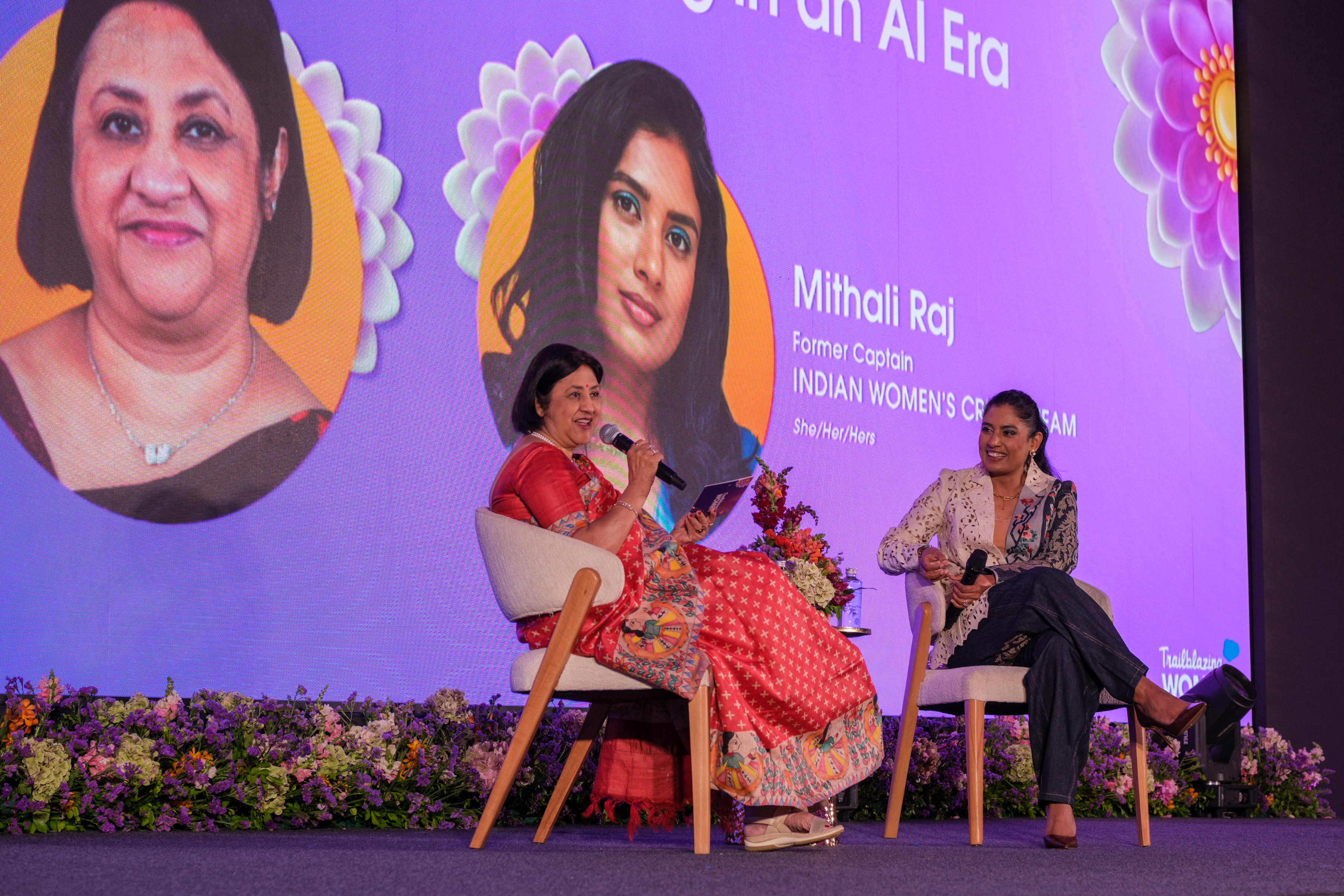
The summit, themed “Drive Success in the Agentic Era,” witnessed participation from more than 380 in-person attendees and over 3,700 live virtual participants across industries.
The event focused on how enterprises and leaders can move beyond AI adoption toward building AI agency — the strategic ability to leverage AI agents to enhance productivity, decision-making, and organizational growth.
Leadership lessons from sports and business
A key highlight of the summit was a fireside chat featuring Arundhati Bhattacharya and Mithali Raj.
Drawing from her 23-year cricketing career, Mithali Raj shared insights on adaptive leadership, resilience, and navigating transformation across evolving environments.
Speaking at the summit, she said:
“Every era brings new conditions and new rules. The leaders who thrive are not those who resist change, but those who build teams capable of turning it into a competitive advantage. That is as true in cricket as it is in any boardroom navigating Agentic AI today.”
Building leadership for the Agentic AI era
Commenting on the significance of the summit, Arundhati Bhattacharya said:
“We are at an inflection point — not just for technology, but for leadership itself. The Agentic Era gives us the ability to direct AI with intention, freeing people to lead with what matters most — judgment, empathy, and purpose. This summit is about having the conviction to build that future ourselves, not simply adapt to one being built elsewhere.”
Industry leaders discuss the future of AI-powered enterprises
The summit also featured executive panel discussions focused on leadership, workforce transformation, and future-ready careers.
Leading the agentic enterprise
Moderated by Aditi Sharma, the panel included:
- Piya Haldar
- Ashima Bhat
- Nathalie Scardino
The discussion explored how enterprises are redesigning teams and operating models where AI agents and human expertise work together.
Future-proofing careers in the AI era
Moderated by Geetha Chandrasekhar, the panel featured:
- Annapurna Vishwanathan
- Praneet Sidhu
- Sridevi Rao
The panel emphasized the growing importance of human judgment, adaptability, and leadership skills in an AI-driven workplace.
Advancing AI-native enterprises
Salesforce India stated that the summit reflects its broader focus on helping organizations evolve into AI-native enterprises by integrating humans, AI agents, applications, and data within unified and trusted platforms.
The event reinforced the importance of balancing technological advancement with human-centered leadership as enterprises prepare for the next phase of AI transformation.
7, May 2026
Royal Enfield Celebrates 125 Years Of Pure Motorcycling With Its Biggest Himalayan Odyssey Yet
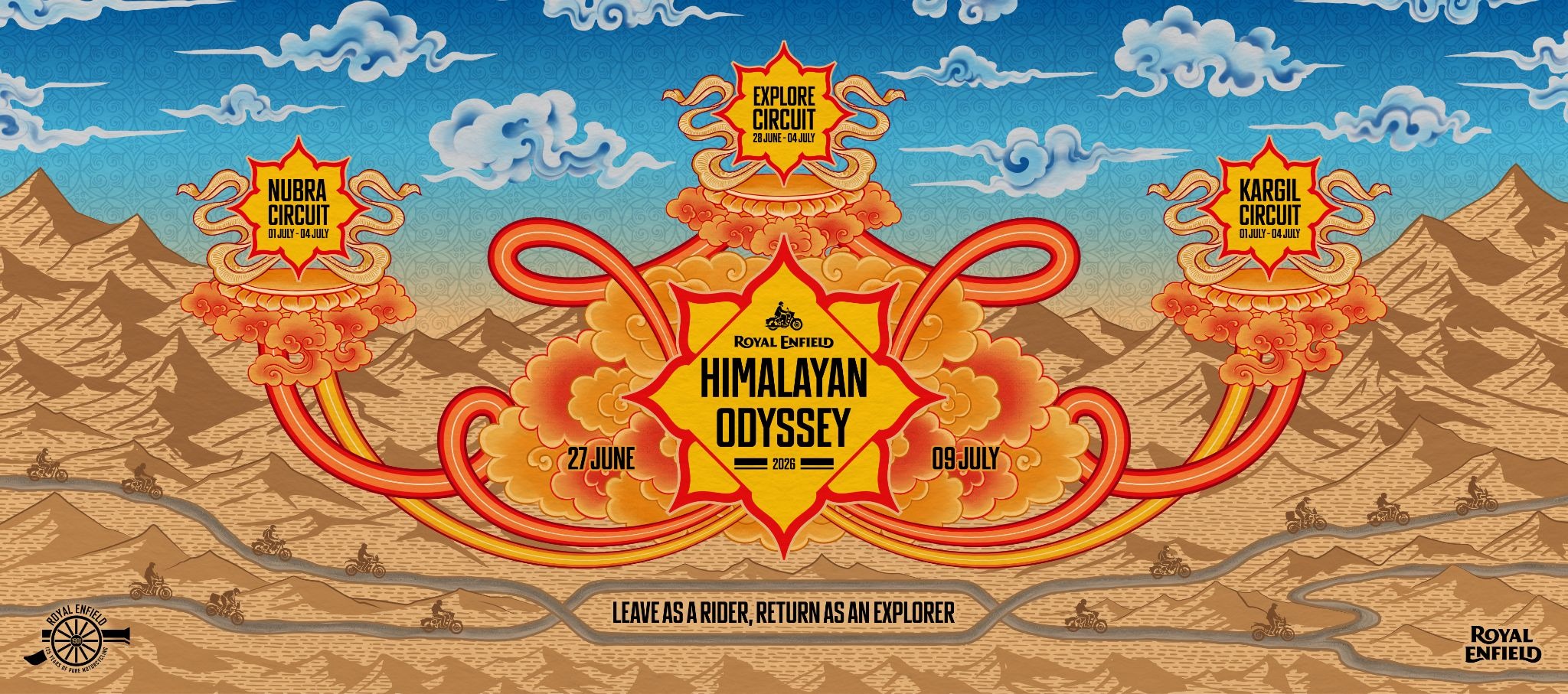
India, May 07: Celebrating its 125th year milestone, Royal Enfield, the global leader in the mid-sized motorcycle segment, announces the 22nd edition of its iconic Himalayan Odyssey. For over two decades, the Himalayan Odyssey has served as the ultimate proving ground for the spirit of ‘Pure Motorcycling‘—a gruelling, soul-stirring pilgrimage that transforms riders and defines legacies against the backdrop of the world’s highest peaks.
In 2026, the legend evolves and is now reimagined across four distinct formats. This evolution offers riders four unique gateways into the raw, unyielding landscapes of Ladakh, ensuring that while the paths may differ, the destination remains the same: a life-altering journey into the Himalayas.
What was once reserved for a handful of seasoned riders has become a shared aspiration across a new generation of explorers. And this year, the format reflects that shift. For the very first time, the Himalayan Odyssey will unfold across four routes—Himalayan Odyssey Original, Explore, Kargil Circuit, and Nubra Circuit—each designed to meet riders where they are, and take them further than they imagined.
Himalayan Odyssey Original – The Legendary Mile : June 25, 2026 – July 10, 2026
The original 16-day expedition remains the definitive expression of the Odyssey. Beginning and ending in Chandigarh, it is a fully supported journey through Himachal, Zanskar, and Ladakh, uniting long days in the saddle with the discipline and rhythm of riding in formation. For many, this is where the idea of the Himalayas becomes real.
Himalayan Odyssey Explore – Beyond the Edge of the Map : June 26, 2026 – July 5 2026
Built for those who seek more from the mountains, Explore strips the journey back to its essentials. With limited support and self-carried gear, riders navigate harsher terrain and make decisions that shape their own path. It is raw, demanding, and deeply rewarding, where every kilometre is earned, and every moment stays with you.
Himalayan Odyssey Kargil Circuit, and Nubra Circuit– The Soul of the Himalayas : June 29, 2026 – July 5, 2026
Built for those who want to feel the Himalayas as much as ride through them, these routes slow the pace and deepen the experience. Beginning in Leh, the Satellite edition unfolds across two distinct journeys—The Frontier & The Sands and History & Heritage—each offering a different window into the region. These routes go beyond the ride, into the lives, stories, and cultures that define the Himalayas. Here, the journey is as much about connection as it is about conquest.
Over the years, it has grown, not just in scale but in meaning. Spanning over 2,200 kilometres, it traverses some of the highest motorable passes in the world. From the stark, wind-carved heights of Khardung La to the remote reaches of Umling La, the Himalayan Odyssey has also always been about what unfolds along the way – moments of stillness, shared hardship and the quiet clarity that only these mammoth mountains can offer.
At its core, it has always been guided by the simple belief that the places we ride through must be left better than we found them. In 2026, Royal Enfield continues its commitment to responsible travel through its #LeaveEveryPlaceBetter initiative, focusing on conscious riding practices, reducing environmental impact, and supporting the communities that make these journeys possible.
Because in the end, the Himalayan Odyssey is not just about reaching the highest passes. It is about discovering what lies beyond them and within.
7, May 2026
Retail Inflation Seen Near 4pc in April as Food Costs and Global Pressures Intensify
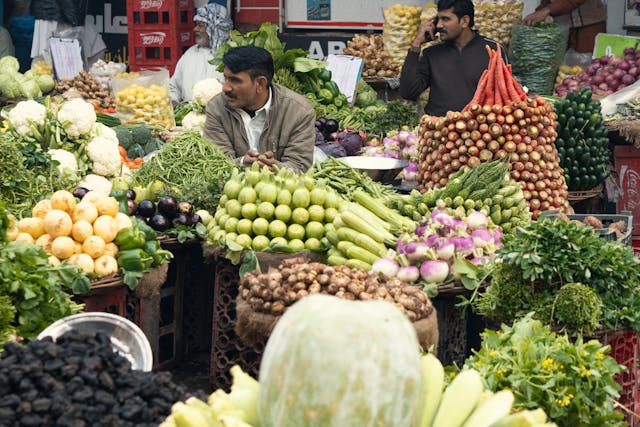
New Delhi, May 7 (BNP): India’s retail inflation is expected to inch closer to the 4 per cent mark in April 2026 amid mounting pressure from rising food prices and uncertain global commodity trends, according to a report by Bank of Baroda.
The report highlighted that price pressures across essential commodities have strengthened steadily over the past three months, signalling a gradual build-up in inflationary trends. The Bank of Baroda Essential Commodities Index (BOB ECI) increased 1.1 per cent year-on-year in April, while recording a 0.3 per cent rise on a monthly basis — the sharpest monthly increase since August 2025.
Analysts pointed to a noticeable rise in the prices of key kitchen staples such as tomatoes, onions, and edible oils, along with other household essentials. The report observed that inflationary pressure is no longer confined to isolated items and is becoming increasingly widespread across categories.
The bank warned that the inflation outlook remains vulnerable to global developments, especially as geopolitical tensions continue to keep international commodity markets volatile. Elevated prices of crude oil, metals, and food commodities in the global market could add to domestic inflationary pressures in the coming months.
It also noted that imported inflation risks are becoming more pronounced, particularly in segments like edible oils that are heavily dependent on global supply chains and overseas pricing trends.
While inflation is still expected to remain broadly within the Reserve Bank of India’s tolerance range, economists believe the balance of risks has shifted upward due to persistent food inflation and uncertain global conditions.
The report stressed the need for close monitoring of commodity prices and geopolitical developments, as any further spike in global costs could have a direct impact on household expenses and overall inflation trends in India.
7, May 2026
Indian Markets Rise on US-Iran Peace Hopes; Sensex Gains 380 Points in Early Trade
Mumbai, May 7 (BNP): Indian benchmark indices traded in positive territory on Thursday morning as investor sentiment improved amid expectations of a possible diplomatic breakthrough between the United States and Iran.

The BSE Sensex rose nearly 380 points, or 0.48 per cent, touching an intraday high of 78,339.24. The NSE Nifty also advanced by around 92 points, or 0.37 per cent, to trade near 24,423 in early deals.
Despite the broader gains, several heavyweight stocks witnessed selling pressure. Among the notable laggards on the Nifty were Tata Consumer Products, Power Grid Corporation, Hindustan Unilever, TCS, HDFC Bank, Titan, NTPC, and Sun Pharma.
Sector-wise, indices linked to real estate, FMCG, consumer durables, and private banks slipped up to 0.7 per cent. On the other hand, auto and metal stocks outperformed, with both sectors posting gains of nearly 0.8 per cent.
Analysts attributed the positive market mood to reports suggesting Iran is reviewing a peace proposal backed by the US. According to international reports, the proposed framework could help ease ongoing tensions in West Asia, although major concerns surrounding Iran’s nuclear programme and the Strait of Hormuz remain unresolved.
An Iranian foreign ministry spokesperson indicated that Tehran would soon share its response to the proposal, while US President Donald Trump expressed confidence that Iran is willing to negotiate.
Market experts, however, cautioned that volatility may continue due to geopolitical uncertainty and fluctuating crude oil prices. They noted that investor sentiment is currently swinging between optimism over diplomatic progress and fears linked to the broader regional conflict.
Analysts also flagged concerns over rising valuations in the artificial intelligence segment globally, warning that any sharp correction in AI-related stocks could impact foreign portfolio investment flows into emerging markets, including India.
On the earnings front, market participants said investors are rewarding companies that delivered strong March quarter results, while firms missing expectations are facing sharp reactions.
In the commodities market, Brent crude traded around $102.50 per barrel, up 1.2 per cent, while US West Texas Intermediate (WTI) crude gained nearly 1.5 per cent to trade close to $96.50 per barrel.
Asian markets mirrored the positive momentum, with indices such as the Nikkei, Hang Seng, and KOSPI trading firmly higher. Overnight, Wall Street also ended on a strong note, with the S&P 500 gaining 1.46 per cent and the Nasdaq rising 2 per cent.
7, May 2026
SK Telecom Announces Q1 2026 Results
Seoul, Korea, May 07–SK Telecom (NYSE:SKM, hereinafter referred to as “SKT”) today announced its consolidated earnings for the first quarter of 2026, based on Korean International Financial Reporting Standards (K-IFRS): revenue of KRW 4.3923 trillion, operating income of KRW 537.6 billion, and net income of KRW 316.4 billion.
Revenue increased 1.5% quarter over quarter (QoQ), driven by a recovery in the wireless business and growth in the AI Data Center (AIDC) business. Through company-wide productivity improvement efforts, operating income exceeded KRW 500 billion on a quarterly basis for the first time since the first quarter of last year.
Following a period of subdued performance last year, SKT posted a clear turnaround in the first quarter of 2026, driven by efforts to innovate customer value and restore trust. The company’s AI business, built on a strategy of focus and selectivity, also improved its profitability and delivered tangible results.
On a non-consolidated basis, the company reported revenue of KRW 3.1058 trillion, operating income of KRW 409.5 billion, and net income of KRW 332.7 billion. SKT also reinstated its quarterly dividend, with a dividend of KRW 830 per share for the first quarter.
■ Handset subscribers up 210,000 as trust restoration efforts bring customers back
SKT achieved net additions of approximately 210,000 handset subscribers in the first quarter of 2026. Mobile service revenue increased 1.7% QoQ. These results are attributable to the company’s commitment to placing customers at the core of its business and implementing a range of measures to strengthen fundamental competitiveness.
SKT recently revamped its membership program to expand customer benefits and improve ease of use. The company is also advancing a restructuring of its rate plans to further enhance customer choice.
SK Broadband, the company’s fixed-line subsidiary, recorded revenue of KRW 1.1498 trillion and operating income of KRW 116.6 billion, up 3.2% and 21.4% year over year (YoY), respectively, driven by growth in high-speed internet subscribers.
■ AI Data Center business accelerates, fuelling full-scale push into AI B2B market
SKT’s AI business is delivering tangible results through its strategy of focus and selectivity.
The AIDC business, a key growth engine, recorded revenue of KRW 131.4 billion in the first quarter, surging 89.3% YoY. Performance was driven by higher utilization rates at data centers including the Gasan (Seoul) data center, as well as increased revenue from GPUaaS (GPU-as-a-Service), adding further momentum to the business.
A service that provides GPU resources in a cloud-based model according to customer demand
As AI infrastructure demand from global Big Tech companies accelerates rapidly, SKT plans to reinforce its competitiveness across the full AIDC value chain and continuously expand its infrastructure footprint.
The company will also broaden its push into the AI Business-to-Business (B2B) market. As the only domestic provider with full-stack capabilities spanning AI infrastructure, models, and services, and drawing on its accumulated experience in the enterprise business, SKT plans to make a full-scale entry into the AI B2B market going forward. To this end, the company has recently established an integrated organization to drive enterprise business, reporting directly to the CEO.
In the AI Business-to-Consumer (B2C) space, SKT plans to enhance its fundamental competitiveness by creating synergies between the AI agent business and the telecommunications industry. In particular, its flagship AI service ‘A.’ (pronounced “A-dot”) is set to enhance its performance by leveraging a sovereign AI foundation model on par with leading global models, thereby strengthening its standalone competitiveness.
“The first quarter of 2026 was a meaningful period in which we delivered tangible results in line with this year’s goals — strengthening fundamental competitiveness centered on customer value and restoring profitability through a focused AI business,” said Park Jong-seok, CFO of SK Telecom. “Going forward, we will make every effort to restore our earnings by generating sustained results.”
※ The conference call in regard to SKT’s 1Q 2026 earnings results can be heard via SKT’s webpage on Thursday, May 7, from 16:00 Seoul Time.
※ Attachment 1. Summary of Consolidated Income Statement (Unit: KRW billion)
|
Type |
26.1Q |
25.1Q |
YoY |
25.4Q |
QoQ |
|
4,392.3 |
4,453.7 |
△1.4% |
4,328.7 |
1.5% |
|
|
Operating Income |
537.6 |
567.4 |
△5.3% |
119.1 |
351.3% |
|
Net Income |
316.4 |
361.6 |
△12.5% |
97.0 |
226.2% |
※ Attachment 2. Summary of Non-Consolidated Income Statement (Unit: KRW billion)
|
Type |
26.1Q |
25.1Q |
YoY |
25.4Q |
QoQ |
|
Revenue |
3,105.8 |
3,167.5 |
△1.9% |
3,083.7 |
0.7% |
|
Operating Income |
409.5 |
482.4 |
△15.1% |
130.8 |
213.2% |
|
Net Income |
332.7 |
474.6 |
△29.9% |
106.0 |
214.0% |
7, May 2026
Maishaa Unveils Thread Art Collection, Bringing French Country Romance to Modern Bedrooms
New Delhi, May 07: Redefining bedroom aesthetics with a blend of artistry and comfort, Maishaa has introduced its exquisite Thread Art Collection—a premium bed linen range inspired by the serene charm of the French countryside. Designed to transform everyday living spaces into elegant sanctuaries, the collection celebrates craftsmanship, intricate detailing, and refined luxury.

Crafted from 100% combed cotton, the Thread Art Collection stands out for its delicate crewel thread work that accentuates floral motifs with subtle golden highlights. The intricate embroidery—featuring flowing, nature-inspired patterns—creates a visually rich texture, lending both depth and sophistication to bedspreads. The interplay of vibrant threadwork against contrasting bases delivers a striking yet graceful aesthetic.
Available in thoughtfully curated colour combinations such as Black–Fluorescent Green, Black–White, and Black–Red with distinctive red motif embroidery, the collection offers versatility for both contemporary and classic interiors. Each set includes finely designed bed sheets, pillowcases, and duvet covers, allowing homeowners to create a cohesive and luxurious bedroom experience.
Drawing inspiration from nature’s quiet beauty, the collection has been conceptualised by international designers who have translated the romance and tranquillity of countryside living into textile form. Every piece reflects meticulous attention to detail, reinforcing Maishaa’s commitment to quality and design excellence.
“At Maishaa, we believe that the bedroom is more than just a space—it is a personal retreat that should evoke comfort, beauty, and emotional warmth,” said Arun Garg, Founder, Maishaa.
“With the Thread Art Collection, we have brought together global design sensibilities and traditional craftsmanship to create something truly timeless. The intricate thread work is not just decorative—it tells a story of elegance, heritage, and thoughtful design.”
Beyond aesthetics, the collection also prioritises well-being. The fabrics are anti-bacterial, anti-fungal, and free from formaldehyde, ensuring a safe and healthy environment for users. This makes the Thread Art Collection not only a design statement but also a conscious lifestyle choice for modern homes.
“The Thread Art Collection embodies this philosophy—it is where comfort meets craftsmanship in its purest form. We pledge to create textiles with love and passion. The amazing look, texture and finesse is all possible only because of breakthrough processes and techniques that make ordinary things like home linen and furnishing fabrics, the ultimate in luxury and good living.” added Arun Garg.
With this launch, Maishaa continues to strengthen its position as a curator of global luxury textiles, offering holistic design solutions that extend from bedrooms to complete living environments. The Thread Art Collection stands as a testament to the brand’s vision of transforming homes into spaces of enduring elegance and meaningful comfort.


