


4, May 2026
Altogether Experimental Launches ATE Omakase: A Coffee Experience Built on Mystery, Ritual & Trust
Altogether Experimental expands its footprint with the arrival of ATE Omakase in Gurugram, bringing its most loved coffee and food philosophy into a more intimate, immersive format. Known for its thoughtful approach to coffee and dining across spaces like ATE Greens and ATE Glasshouse, the brand now distills its offering into something more personal, intentional, and refined.
While ATE’s signature coffee program and curated food menu remain available for regular table dining, the space also introduces a more exclusive, reservation-led experience through its Omakase format, offering two distinct ways to engage with the brand.
In a city that thrives on fast coffee and faster conversations, ATE Omakase by Altogether Experimental shifts the narrative toward something more intentional and ritual-led. This is not just another café in Gurugram, but a calm, immersive space where coffee is designed to be felt as much as it is consumed.
Conceived as an intimate, thoughtfully paced environment, the space moves away from the typical café format, inviting guests into a more considered, inward-looking experience.
There are no long menus or rushed orders here. Instead, the experience unfolds at a central counter, where every cup is part of a thoughtfully paced sequence rather than a single choice.
The space reflects this philosophy through warm wood, stone textures, and soft, shadowed lighting, creating an atmosphere that feels calm and deeply intentional. Seating remains minimal and inward-facing, encouraging guests to stay present with the experience.
At its core is ATE’s signature coffee program, alongside its regular dining menu, now complemented by an exclusive Omakase experience. The first edition, titled “Textures,” builds on a format pioneered by Carrabi Coffee, ATE’s sister company, which has previously hosted curated Omakase-style coffee tables in Delhi. With ATE Omakase, this format now finds a permanent home in Gurugram.
The omakase experience is available by reservation only, offering a more immersive, guided journey for those looking to explore coffee beyond the familiar.
Guests opting for this experience do so without knowing exactly what they will be served. What follows is a multi-course progression of coffee, crafted live, with each cup revealed in the moment, making the experience feel both personal and unexpected.
There is no fixed menu within the Omakase. The sequence is host-led, with each course built around a distinct flavour story. Details are revealed only as the experience unfolds, allowing curiosity and anticipation to guide each step. Subtle pairings enhance the experience without distracting from the coffee itself.
The focus shifts from choice to trust, from variety to precision. It’s less about explaining coffee and more about experiencing it, quietly, attentively, and without distraction.
The concept is led by Chef Anukriti Anand and Vicky Mandal, who continue to shape Altogether Experimental’s evolving approach to hospitality. While ATE Greens and ATE Glasshouse celebrate openness and community, ATE Omakase explores intimacy, stillness, and a deeper connection with craft.
At its heart, the experience remains warm yet restrained, inviting guests to let go of control, embrace the unknown, and discover coffee in a way that feels both new and deeply considered.
With ATE Omakase, Altogether Experimental introduces a format where not knowing is the point, and the experience is all the richer for it.

- 0
- By Neel Achary

4, May 2026
BenQ Launches MOBIUZ EX271QZ in India –27″ QHD 500Hz QD-OLED Gaming Monitor Designed for Fluid Precision and Cinematic Immersion
Mumbai, May 04: BenQ India announced the launch of the MOBIUZ EX271QZ, a next-generation 27-inch QHD 500Hz QD-OLED gaming monitor, engineered to deliver ultra-fast responsiveness alongside creator-intended visual storytelling. Designed for immersive gamers, console players, and high-performance PC enthusiasts, the EX271QZ will be available across leading online and retail platforms at an MRP of ₹84,998.

“Today’s gamers want both fluid clarity and cinematic immersion. With the EX271QZ, we’ve reimagined what a gaming monitor can deliver not just speed, but emotion, depth, and realism exactly as creators intended,” said Rajeev Singh, Managing Director, BenQ India and South Asia
Built for the Next Generation of Gaming Experiences
The EX271QZ introduces BenQ’s proprietary Game Art Color Profiles, replacing traditional genre-based presets with Fantasy, Sci-Fi, and Realistic visual tuning modes. These profiles enhance textures, lighting, and atmosphere to match each game’s artistic DNA rather than applying generic color adjustments.
Complementing this approach is Spectral Color Refinement, it is BenQ’s advanced spectrum-based color tuning technology. Unlike conventional point-based adjustments that target isolated color values, Spectral Color Refinement analyzes the entire visible spectrum to create a more balanced and expressive color output.
By mapping the relationships between hues, saturation, and brightness across the full color range, it ensures that no single color is overemphasized or lost. This holistic approach delivers natural skin tones, richer midtones, and more nuanced highlights, staying true to the creator’s artistic vision.
Ultra-Smooth Motion with 500Hz Precision
Powered by a 500Hz refresh rate and 0.03ms response time, the EX271QZ delivers:
- Sharper motion clarity during high-speed gameplay
- Reduced motion blur for competitive FPS titles
- Improved tracking accuracy in fast camera movement scenarios
The higher temporal resolution also enhances cinematic gameplay sequences and open-world exploration by minimizing micro-stutter and improving visual continuity.
True QD-OLED Visual Fidelity with HDR Performance
The EX271QZ’s QD-OLED panel enables pixel-level lighting control for:
- True 0-nit blacks and effectively infinite contrast
- VESA DisplayHDR True Black 500 certification
- 99% DCI-P3 color coverage
- Peak HDR brightness up to 1000 nits
Together, these capabilities deliver deeper shadows, brighter highlights, and more lifelike scene depth for both gaming and cinematic content.
AI-Driven Contrast Enhancement with High Pixel Contrast
BenQ’s High Pixel Contrast technology dynamically adjusts local contrast in real time to reveal hidden shadow detail without sacrificing highlight brightness. This ensures optimal visibility in dark environments common in AAA titles while maintaining realistic image balance.
Smart Color Personalization with Color Shuttle
Color Shuttle is BenQ’s cross-platform color management and profile distribution platform, created specifically for gamers who deeply care about colors.
Designed for Complete Entertainment Setups
To support cinematic gaming environments, the EX271QZ includes:
- HDMI 2.1 connectivity with eARC support
- Lossless multi-channel audio compatibility (Dolby Atmos / DTS:X)
- Soundbar-friendly stand design for cleaner desktop integration
Advanced OLED Protection for Long-Term Reliability
BenQ integrates a comprehensive OLED protection suite including:
- Graphene thermal film cooling
- Pixel Refresh maintenance system
- Idle Dimmer brightness control
- Logo Dimming for static UI protection
- Pixel Shift burn-in prevention technology
These features operate automatically in the background to preserve panel performance over time.
4, May 2026
India Should Strengthen Monitoring of Economic Risks, Says EAC PM Chairman
New Delhi, May 4 (BNP): India needs to take a more prepared and forward-looking approach to managing economic risks, especially in key sectors such as energy, food, fertilisers, and critical minerals, according to S. Mahendra Dev, Chairman of the EAC-PM.
Highlighting lessons from ongoing global tensions, particularly in West Asia, Dev said such developments show how quickly supply chains and prices can be disrupted. He stressed the importance of identifying potential vulnerabilities early and keeping a close watch on them.
According to him, regular monitoring of essential sectors can help the country respond faster to sudden changes, ensuring stable supplies and controlling price fluctuations. He also underlined the need to diversify sources and strengthen preparedness to reduce dependence on any single region.
The statement reflects a growing focus on building a more resilient economy that can better handle global uncertainties and protect domestic stability.
4, May 2026
Hira Industries strengthens industrial presence in Ras Al Khaimah with 7,450 m² new production facility
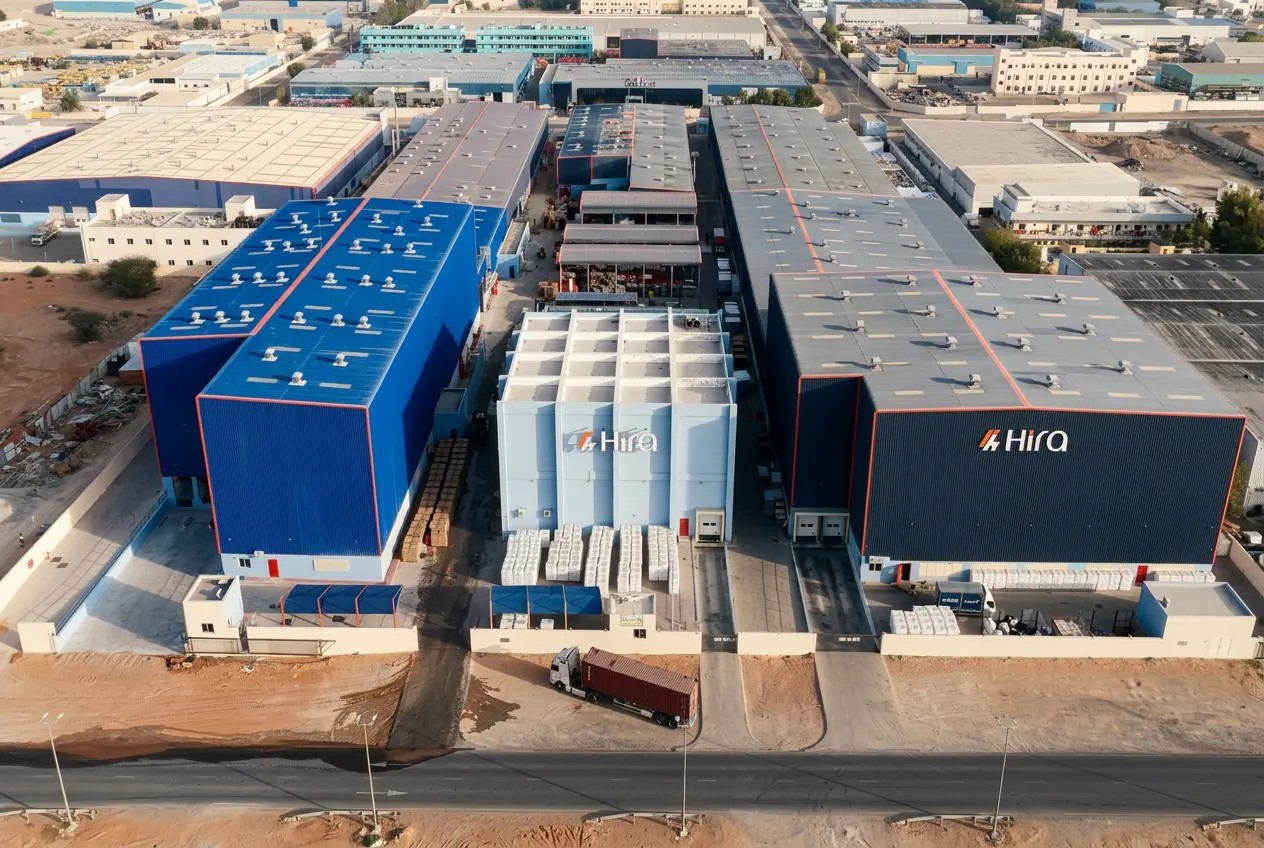
Ras Al Khaimah, May 04: Hira Industries, a global manufacturer and supplier serving the construction sector since 1980, has expanded its operations at Ras Al Khaimah Economic Zone (RAKEZ) with the addition of a new factory and warehouse facility at Al Ghail Industrial Zone.
Spanning approximately 7,450 m2, the new facility will support the increased production of thermal and acoustic insulation solutions under Hira’s Aerofoam and Aerosound divisions, adding a total production capacity of over 500,000 m2 per month. The expansion is also expected to create more than 100 jobs, reflecting Hira Industries’ continued contribution to Ras Al Khaimah’s industrial sector.
Hira Industries Operations Director – Middle East & Africa, Umesh Unni, said, “Our expansion in Ras Al Khaimah reflects sustained demand for high-performance insulation solutions and our confidence in the emirate as a strong base for industrial growth. RAKEZ has supported our journey with efficient processes and reliable coordination, enabling us to scale our operations smoothly. With this expansion, we are well-positioned to enhance our production capabilities and serve key markets with greater agility.”
RAKEZ Group CEO Ramy Jallad said, “Hira Industries’ continued investment reflects the confidence long-term partners place in Ras Al Khaimah as a base for sustainable growth. We are seeing businesses take a long-term view, choosing environments that give them the clarity and consistency needed to scale with confidence.”
Hira Industries has operated from RAKEZ since 2008, and its latest expansion highlights the continued momentum of industrial growth in Ras Al Khaimah, as more manufacturers strengthen their presence and deepen their operations within RAKEZ’s ecosystem.
4, May 2026
India’s Small Businesses Benefit as Digital Access Widens
New Delhi, May 4 (BNP): The rapid expansion of digital infrastructure and internet access is playing a key role in strengthening small business growth across India, enabling entrepreneurs to reach wider markets and improve operational efficiency.
Increased adoption of smartphones, digital payment systems, and online platforms has helped small and medium enterprises (SMEs) expand their customer base beyond local boundaries. This shift has also improved access to financial services, making it easier for businesses to manage transactions, secure credit, and scale operations.
Industry observers note that digital tools are helping reduce traditional barriers such as high distribution costs and limited market visibility. As a result, small businesses in both urban and rural areas are increasingly able to compete in a more connected economy.
The rise of e-commerce platforms and digital marketplaces has further supported this transition, allowing local sellers, artisans, and service providers to showcase their products to a national audience.
Experts believe that continued investment in digital infrastructure, along with digital literacy initiatives, will further accelerate small business growth and contribute significantly to employment generation and economic development across the country.
Overall, expanding digital access is emerging as a key driver of inclusive growth, empowering small businesses to become a stronger pillar of India’s economy.
4, May 2026
Gold Futures Decline to INR 1.50 Lakh on Global Cues
New Delhi, May 4 (BNP): Gold prices declined in futures trade on Monday, tracking weak global cues as a stronger US dollar and rising crude oil prices weighed on bullion demand.

On the Multi Commodity Exchange (MCX), gold futures for June delivery fell by ₹1,149, or 0.76 percent, to ₹1,50,203 per 10 grams, with a total trading volume of 9,510 lots.
The decline comes after a similar trend in the previous week, when gold prices dropped by about 1 percent, or ₹1,347, to settle at ₹1.51 lakh per 10 grams.
Market analysts said pressure on gold was largely driven by firmness in the dollar index, which reduces the appeal of the yellow metal, along with elevated crude oil prices that continue to influence global commodity markets.
Overall, bullion prices remain volatile, with investors closely tracking global economic indicators, currency movements, and geopolitical developments for further direction.
4, May 2026
India’s Remittances Remain Resilient Amid West Asia Tensions, Says Morgan Stanley
New Delhi, May 4 (BNP): India’s remittance inflows continue to remain strong despite ongoing geopolitical tensions in West Asia, although policymakers may need to focus on supporting the reintegration of returning workers into the domestic economy, according to a report by Morgan Stanley.
The report noted that inflows from overseas Indian workers have held up well even amid uncertainty in key Gulf economies, highlighting the resilience of remittance-driven household income in India.
However, it cautioned that if labour market conditions in the West Asia region weaken further, a portion of returning workers may require structured support to transition back into domestic employment opportunities.
Experts suggest that targeted skill development, job placement initiatives, and sector-specific absorption strategies could help ease reintegration challenges and maximise the productive use of returning labour.
Overall, while remittance flows remain stable for now, the report underscores the importance of proactive policy measures to manage potential labour market shifts and sustain income stability for affected households.
4, May 2026
Domestic Capital Fuels 37 pc Jump in India Real Estate Investments: Report
New Delhi, May 4 (BNP): India’s real estate sector recorded a strong uptick in investment activity during the January–March period, with total inflows rising 37 percent year-on-year, according to a report by JLL India.
The growth was primarily driven by robust participation from domestic investors, including institutions, family offices, and high-net-worth individuals, highlighting increasing confidence in India’s property market amid global economic uncertainties.
The report noted that domestic capital has emerged as a key pillar of support for the sector, helping offset fluctuations in foreign investment flows and ensuring steady funding across residential, commercial, and industrial real estate segments.
Market experts believe the trend reflects a structural shift in investment behaviour, with local investors taking a more active and long-term view of real estate assets such as office spaces, warehousing, and premium housing projects.
Despite global headwinds, India’s real estate sector continues to attract sustained capital inflows, underscoring strong investor sentiment and long-term growth prospects. The rising share of domestic funding is also seen as a stabilising factor for the industry’s expansion.
Overall, the report highlights a resilient investment environment, with domestic capital playing an increasingly central role in shaping India’s real estate growth story.
4, May 2026
Oriflame Appoints Orkun Gül as Chief Commercial Officer
New Delhi, May 04: Oriflame has announced the appointment of Orkun Gül as its new Chief Commercial Officer (CCO). In this role, Orkun will join the company’s Global Leadership Team and lead its commercial strategy across international markets, as Oriflame strengthens its global business and expands its social selling ecosystem.

Orkun Gül brings over two decades of leadership experience across FMCG, direct selling, and network marketing. He has previously held senior roles at Procter & Gamble and spent more than a decade in executive leadership at Avon. Throughout his career, he has driven growth across Europe, the Middle East, Africa, and Asia-Pacific by enhancing distributor engagement, improving market execution, and building consumer-centric business models.
In addition to his corporate experience, Orkun has been an advocate for ethical and sustainable direct selling practices, having served as President of the Turkey Direct Selling Association.
In his new role, Orkun will focus on strengthening Oriflame’s global social selling model, enhancing commercial capabilities across key markets, and improving productivity across its network of over three million Beauty Entrepreneurs worldwide.
Commenting on his appointment, Orkun Gül said,
“Oriflame has built a unique global community rooted in entrepreneurship and strong consumer relationships. I look forward to working closely with our teams and Beauty Entrepreneurs to accelerate growth and unlock new opportunities across markets.”
Edyta Kurek, Senior Vice President and Head of Oriflame India and Indonesia, welcomed the appointment, highlighting Orkun’s strong leadership in scaling people-centric commercial organisations and reinforcing the company’s commitment to empowering entrepreneurs, particularly in high-growth markets like India.
Founded in 1967, Oriflame operates in over 60 markets globally, offering a wide range of beauty and wellbeing products across skincare, cosmetics, fragrances, personal care, and nutrition. The company continues to promote micro-entrepreneurship through its social selling model while advancing sustainability and community impact initiatives.
4, May 2026
India Manufacturing Shows Resilience as PMI Edges Up to 54.7
New Delhi, May 4 (BNP): India’s manufacturing sector saw a slight improvement in activity during April, with the HSBC India Manufacturing Purchasing Managers’ Index (PMI) rising to 54.7 from 53.9 in March, according to a private survey.
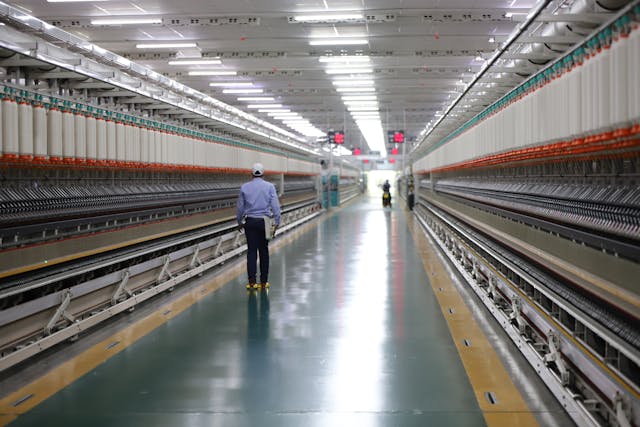
The reading indicates continued expansion in factory activity, though the pace of growth remains relatively subdued compared to previous years. A PMI above 50 reflects expansion in the sector.
The survey showed that both new orders and production increased during the month, supported by steady domestic demand and improving export performance. However, growth was partially restrained by competitive market conditions and global uncertainties.
Cost pressures remained elevated, with input prices rising at their fastest rate in over a year and a half. Higher costs of raw materials such as fuel, chemicals, aluminium, and petroleum products contributed to inflationary pressures, influenced in part by global geopolitical tensions.
Despite these challenges, employment conditions remained positive, with manufacturers increasing hiring at the fastest pace in ten months, reflecting continued business confidence.
Export demand also strengthened, with new overseas orders rising to a seven-month high, driven by improved demand from several international markets.
Economists noted that while the manufacturing sector continues to support India’s economic growth through output, jobs, and exports, rising costs and global headwinds may weigh on profitability in the coming months.
Overall, the data points to a steady but uneven recovery, with the sector remaining an important driver of India’s broader economic momentum.