


29, Apr 2026
India–Kenya Bilateral Trade Grows 25 pc, Reaches USD 4.31 Billion in 2025–26
New Delhi, Apr 29 (BNP): India and Kenya have recorded a strong rise in bilateral trade, reflecting deepening economic engagement between the two countries.
Total trade reached USD 4.31 billion in 2025–26, marking an increase of 24.91% compared to USD 3.45 billion in 2024–25.
The growth highlights strengthening commercial ties and expanding trade flows across key sectors. India continues to be one of Kenya’s important trading partners, with both sides witnessing steady momentum in economic cooperation.
Officials indicated that the upward trend points to increasing opportunities for further diversification and long-term partnership between the two economies.

- 0
- By Neel Achary

29, Apr 2026
Air India Supports Hub-and-Spoke Model, Plans International Flights from Varanasi
New Delhi, Apr 29 (BNP): Air India has welcomed the government’s “hub-and-spoke” aviation model aimed at transforming India into a global aviation hub, while also announcing plans to introduce international routes from Varanasi under the new framework.
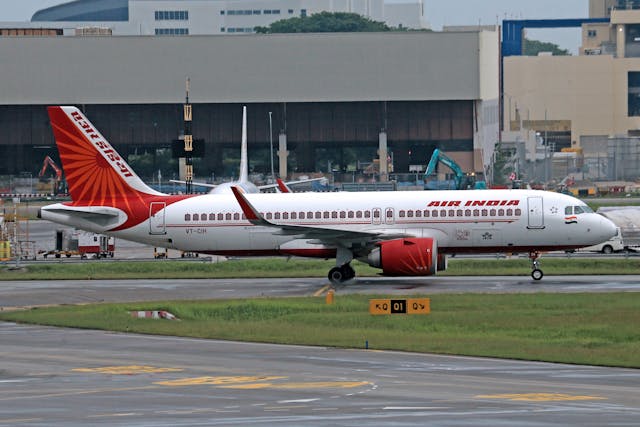
The airline said the initiative is a major step toward strengthening India’s aviation ecosystem, improving connectivity, and making better use of airport infrastructure across the country.
Air India’s CEO and Managing Director described the policy direction as a transformative move for the sector, crediting it with enhancing India’s position in global air travel and supporting long-term industry growth.
As part of its expansion strategy, the airline plans to connect Varanasi with international destinations, improving access for passengers from eastern Uttar Pradesh and nearby regions.
Officials associated with the airline said the model will help extend international connectivity beyond major metro cities, making global travel more accessible for passengers from smaller cities and emerging urban centres.
The hub-and-spoke approach is expected to shift India’s aviation landscape from a point-to-point system to a more integrated transit network, enabling smoother passenger movement between regional airports and international destinations.
Government officials have stated that the framework will also strengthen connectivity under regional aviation initiatives and reduce dependence on foreign transit hubs currently used by a large share of Indian international travellers.
The overall objective is to develop globally competitive aviation hubs within India and position the country as a major global air travel centre.
29, Apr 2026
India’s Global Role Expands in Peace, Economy and Technology: Experts
New Delhi, Apr 29 (BNP): India is increasingly being seen as an important force in shaping global peace, economic stability, and technological progress, according to global experts speaking at a recent international forum.
Experts noted that amid rising geopolitical tensions and global economic uncertainty, India is gaining prominence for its ability to support multilateral cooperation and contribute to global stability. They also highlighted the country’s growing influence in emerging technologies such as artificial intelligence.
An economics expert from a leading university in Singapore said that shifting global trade patterns, rising uncertainty, and weakening international trust are creating challenges for the world economy. In this context, India is viewed as a potential stabilising power capable of contributing to peace and cooperation at a global level.
He added that India’s role in international leadership will depend on how it chooses to engage with evolving global challenges.
A director from a leading science institution in London highlighted India’s positive approach toward artificial intelligence. He noted that while many Western populations remain cautious about AI, India is actively investing in building AI capacity and developing related infrastructure.
He also pointed out that India’s development model reflects a balance between economic growth and improving quality of life, even as the country manages challenges such as rising energy demand.
Experts further observed that India’s progress represents a broader shift in the Global South, where nations are increasingly focusing on innovation-led and inclusive development.
Overall, India’s growing engagement in technology, economy, and global cooperation is positioning it as a key contributor to future global stability.
29, Apr 2026
Indian Markets End Higher Despite Crude Oil-Driven Volatility
Mumbai, Apr 29 (BNP): Indian equity markets closed higher on Wednesday, though they gave up part of their intraday gains due to a sharp rise in global crude oil prices and weak global cues.
The Sensex rose 609.45 points to close at 77,496.36, while the Nifty gained 181.95 points to end at 24,177.65.
Market sentiment turned cautious after Brent crude surged over 3 per cent amid geopolitical concerns and supply uncertainty. Despite this, select heavyweights such as ITC, Tech Mahindra, and Maruti Suzuki supported the indices.
Broader markets showed mixed performance, with small-cap stocks outperforming while mid-caps ended slightly lower. Sectorally, FMCG and realty stocks led gains, while construction and media sectors underperformed.
Analysts said rising crude prices and global developments are likely to keep markets volatile in the near term, with investors also watching upcoming US Federal Reserve policy signals.
29, Apr 2026
US Fed Likely to Pause Rate Hikes as Inflation Risks Persist
New Delhi, Apr 29 (BNP): The US Federal Reserve is expected to keep its key interest rates unchanged in its upcoming policy decision, as it continues to assess inflation risks linked to ongoing global tensions and volatile energy prices.
According to market observers, although inflation has moderated in recent months, uncertainties driven by geopolitical developments and fluctuations in crude oil prices remain a concern. This is likely to prompt the central bank to adopt a wait-and-watch approach.
Experts believe that beyond the rate decision, the Federal Reserve’s policy outlook and commentary will be closely watched for signals on future monetary action.
The Fed’s stance is significant for global markets, as it influences capital flows, exchange rates, and overall investor confidence across economies.
A steady policy decision may provide short-term stability, but the central bank is expected to remain cautious as it balances the need to control inflation while supporting economic growth.
29, Apr 2026
Renault India Launches Upgraded Renault Triber 2026 with Enhanced Features and Comfort
Mumbai, April 29: Renault India, the wholly owned subsidiary of Renault, has launched the upgraded Renault Triber 2026, introducing a host of new features and technology upgrades aimed at delivering greater comfort, convenience, and value for Indian families.
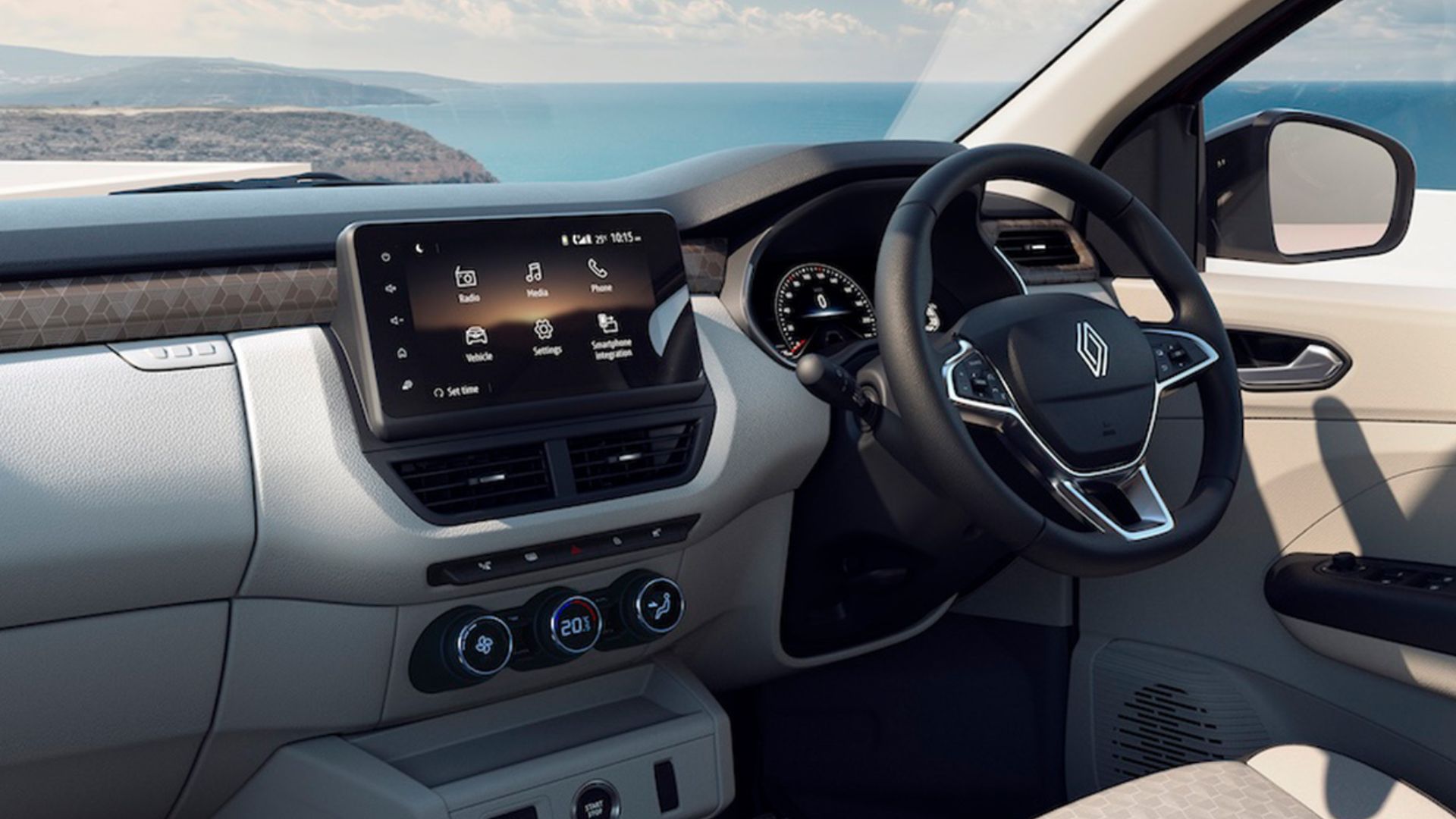
The updated Triber 2026 focuses on enhancing accessibility to premium features across entry and mid variants, reinforcing its position as a value-driven family vehicle in the segment.
Commenting on the launch, Francisco Hidalgo Marques said,
“The second-generation Renault Triber has been celebrated as the ultimate family car in the segment. With this upgrade, we’ve enhanced practicality and comfort through features like automatic air conditioning, full-fold second-row seats, and one-touch tumble function for easy third-row access.”
Key Highlights
Enhanced Comfort & Features
The Triber 2026 introduces automatic climate control (top variant), a modern dual-tone dashboard, and a 20.32 cm floating touchscreen with wireless Android Auto and Apple CarPlay. The second-row seats now fully fold, offering a best-in-class boot space of up to 1065 litres.
Enriched Variants
- Evolution: Steering-mounted controls, adjustable IRVM, rear room lamp
- Techno: Driver armrest, height adjuster, rear defogger, 3rd-row 12V socket, tweeters, foldable ORVMs
- Emotion: Adds automatic climate control for enhanced comfort
Unique Modular Design
The Renault Triber 2026 continues its flexible 5, 6, and 7-seater configurations, making it one of the most versatile MPVs in its segment.
Safety First
The vehicle comes equipped with 21 standard safety features, including 6 airbags, ABS with EBD, electronic stability control, and tyre pressure monitoring system.
Performance & Warranty
Powered by a petrol engine delivering 72 PS and 96 Nm torque, the Triber offers both 5-speed manual and AMT options. It also comes with a 3-year standard warranty, extendable up to 7 years under the Renault Secure program.
With over 2 lakh customers in India and a growing global footprint, the Triber continues to be a key pillar in Renault India’s strategy.
29, Apr 2026
Silver Futures Fall to INR 2.36 Lakh/kg Amid Dollar Strength and Oil Price Pressure
New Delhi, April 29: Silver prices declined in futures trade on Wednesday as investors reduced positions amid a stronger US dollar and rising crude oil prices, which weighed on overall bullion demand.
On the Multi Commodity Exchange (MCX), silver futures for May delivery fell by ₹1,137, or 0.48%, to ₹2,36,208 per kilogram, with a trading volume of 2,020 lots.
The July contract also weakened, dropping by ₹1,964, or 0.81%, to ₹2,40,799 per kilogram, in a business turnover of 6,868 lots.
Market analysts said pressure on precious metals increased as oil prices remained elevated and currency movements reduced investor appetite for safe-haven assets like silver.
29, Apr 2026
Ericsson tops Frost Radar 5G Network Infrastructure Market ranking for sixth year running
For the sixth consecutive year, Ericsson has been positioned as the clear leader in Growth and Innovation by Frost & Sullivan’s “Frost Radar™: 5G Network Infrastructure, 2026” report. This recognition underscores Ericsson’s position as a long-term partner for 5G evolution, setting the pace for AI-driven, open, and sustainable 5G networks.
The analysis places Ericsson at the forefront among the top 20 leading companies assessed in a field of more than 100 global industry participants.
The Frost Radar report identifies Ericsson as the leader in both the Growth axis and Innovation axis, highlighting the company’s comprehensive 5G network infrastructure portfolio spanning radio access networks (RAN), transport, and core and edge networks, including traditional RAN, open and virtual RAN, AI-enabled RAN, and private networks, as well as its proven ability to scale innovation globally. It also notes the company’s progress with network APIs as a road to new innovation around mobile networks and utilizing AI to automate its network offerings.
Ericsson’s sustained leadership in both the Growth Index and the Innovation Index demonstrates the company’s ongoing investment in a broad product portfolio, as well as its ability to turn innovation into large-scale, real-world solutions that customers can trust over time.
The report notes Ericsson’s strong and sustained investment in research and development, with almost 21 percent of revenue invested in R&D in 2025. Frost & Sullivan also highlights Ericsson’s role as a founding member of the AI RAN Alliance, and its continued focus on energy efficiency. Ericsson’s target is to reduce energy consumption at new typical radio base station sites by 40 percent by 2025 compared with a 2021 baseline has already been achieved, now extended to 50 percent by 2027.
Energy performance improvements are achieved through a combination of network evolution and innovation across Ericsson’s portfolio — from RAN modernization with high‑performing, energy‑efficient hardware to software innovations that embed intent‑driven and AI‑enabled energy‑saving features for intelligent network operation, and the continuous optimization of Ericsson’s dual-mode 5G Core and Cloud Native Infrastructure Solution for the market’s latest processors to reduce energy consumption, while improving performance.
“Being recognized once again by Frost & Sullivan as the leader for both growth and innovation reflect our continued investment in research and development and our focus on building technology that is scalable”, says Per Narvinger, Executive Vice President and Head of Business Area Networks at Ericsson. “We apply AI throughout our full portfolio — from Massive MIMO and Remote Radios, to network management, Transport, OSS/BSS, and Core — and we already see major AI gains, enabling more open, automated, and energy-efficient 5G networks, supporting our customers’ long–term network evolution.”
Troy Morley, Industry Principal analyst, Frost & Sullivan Information, Communications and Technologies, says: “Ericsson significantly stands out in the 2026 Frost Radar analysis for its ability to combine innovation leadership with strong growth execution. Ericsson’s strength lies in its ability to scale innovation globally across generations of mobile technology, supported by significant and sustained investment in R&D. The company’s comprehensive 5G portfolio, leadership in open and virtual RAN, and progress in energy efficiency position Ericsson strongly as the market continues to evolve.”
The Frost Radar measures growth rates in addition to absolute revenue and combines them with several other factors to measure companies’ performance on the Growth Index. The Frost Radar measures innovation for each company by assessing its product portfolio, the scalability of its innovations, the efficacy of its R&D strategy, and several other factors.
29, Apr 2026
Warehousing Demand Shifts Toward Western India as Delhi-NCR Slows
Mumbai, Apr 29 (BNP): India’s warehousing sector is witnessing a clear regional shift, with Mumbai and Pune emerging as key growth hubs, while Delhi-NCR has recorded a notable slowdown in activity, according to a recent report by Vestian.
The report highlights that western India continues to attract strong industrial and logistics investments, supported by better infrastructure connectivity, proximity to ports, and rising demand from e-commerce and manufacturing sectors.
Mumbai and Pune have seen increased warehousing absorption, driven by expanding supply chains and growing need for modern storage and distribution facilities. These cities are benefiting from strong industrial ecosystems and improved logistics networks.
In contrast, Delhi-NCR has witnessed a sharp decline in warehousing activity, reflecting slower leasing momentum and shifting investor preference toward western and southern corridors.
Industry experts note that India’s warehousing landscape is becoming more decentralised, with companies diversifying operations to improve efficiency and reduce logistics costs.
The trend also reflects the broader growth of India’s logistics and supply chain sector, which is being reshaped by e-commerce expansion, manufacturing growth, and infrastructure upgrades.
Overall, the report indicates a realignment in India’s warehousing demand, with western regions gaining prominence in the country’s evolving logistics map.
29, Apr 2026
Solar Adoption Rises as Countries Cut Dependence on Fossil Fuels
New Delhi, Apr 29 (BNP): The global transition toward renewable energy is gaining pace, with more countries increasingly adopting solar power as fossil fuel prices remain high and global energy supply chains face uncertainty, according to the Director General of the International Solar Alliance (ISA).
He noted that volatility in oil and gas markets, along with geopolitical disruptions, is prompting nations to look for cleaner, more stable, and cost-effective energy alternatives. Solar energy, in particular, is emerging as a key solution for strengthening long-term energy security.
The ISA highlighted that rapid improvements in solar technology, declining installation costs, and better storage systems are making solar power more accessible and viable across both developed and developing economies.
Experts say the global energy transition is also being driven by climate commitments and supportive government policies aimed at reducing carbon emissions and increasing the share of renewables in the energy mix.
The Alliance stressed that solar energy will play a central role in ensuring affordable and sustainable electricity access while reducing dependence on imported fossil fuels.


