


28, Apr 2026
India’s Engineering Exports to New Zealand Expected to Double After New FTA
Kolkata, Apr 28 (BNP): India’s engineering exports to New Zealand are projected to nearly double over the next five years, rising from about USD 140 million to nearly USD 280–300 million, supported by the recently signed Free Trade Agreement (FTA), officials said.
The agreement provides zero-duty access for Indian goods, significantly improving market competitiveness and easing trade barriers for exporters.
Industry representatives noted that the pact is expected to deliver strong benefits, especially for micro, small and medium enterprises (MSMEs), by expanding stable and predictable market access in a smaller but high-growth export destination.
Engineering exports to New Zealand have already shown steady growth, increasing to around USD 140.5 million in 2025–26, compared to USD 129.8 million in the previous year, indicating rising demand even before the full impact of the FTA takes effect.
Officials believe the agreement will further strengthen India’s engineering export footprint and support long-term trade diversification.

- 0
- By Neel Achary

28, Apr 2026
Indian Markets Slip on Crude Oil Spike and Geopolitical Tension
Mumbai, Apr 27 (BNP): Indian benchmark indices closed lower on Tuesday, pressured by a sharp rise in global crude oil prices and renewed geopolitical tensions in West Asia.
Investor sentiment remained cautious throughout the session amid uncertainty over developments involving the United States and Iran, which kept global energy markets volatile.
At the close, the Sensex declined 416.72 points (0.54%) to 76,886.91, while the Nifty fell 97 points (0.40%) to 23,995.70.
Broader Markets Show Relative Strength
Despite weakness in frontline indices, broader markets outperformed. The MidCap index rose 0.28%, while the SmallCap index gained 0.42%, indicating selective buying interest.
Sector Performance Mixed
Market action was uneven across sectors:
- Oil & Gas and Metal stocks gained on higher crude prices
- Banking stocks remained under pressure, with PSU Bank and Nifty Bank among top losers
On the Sensex, stocks like Adani Ports, ITC, Bharti Airtel, and Tech Mahindra ended in the green, while HCL Tech, Axis Bank, ICICI Bank, and Infosys were among the major laggards.
Oil Prices Drive Global Concern
Global crude oil prices surged nearly 3% to around $111 per barrel, driven by concerns over supply disruption and geopolitical uncertainty in West Asia, particularly around the Strait of Hormuz.
The rise in oil prices is seen as inflationary for import-dependent economies like India, adding pressure on equities and currency markets.
Rupee Weakens Against Dollar
The Indian rupee also came under pressure, trading near 94.54 per US dollar, impacted by rising crude prices and sustained foreign institutional investor (FII) outflows.
Outlook
Market experts expect volatility to persist in the near term, with global oil price movements and geopolitical developments likely to remain key drivers of investor sentiment.
28, Apr 2026
Finance Minister Smt. Nirmala Sitharaman Unveils IIGJ Udupi as a New Centre of Excellence for Gems & Jewellery Skills
Karnataka, Apr 28: Marking a significant milestone in India’s gem and jewellery skill development landscape, the Indian Institute of Gems & Jewellery (IIGJ), Udupi was unveiled today as a new centre of excellence by Finance Minister Smt. Nirmala Sitharaman, reaffirming the government’s continued focus on skilling, innovation and employment generation for the sector.
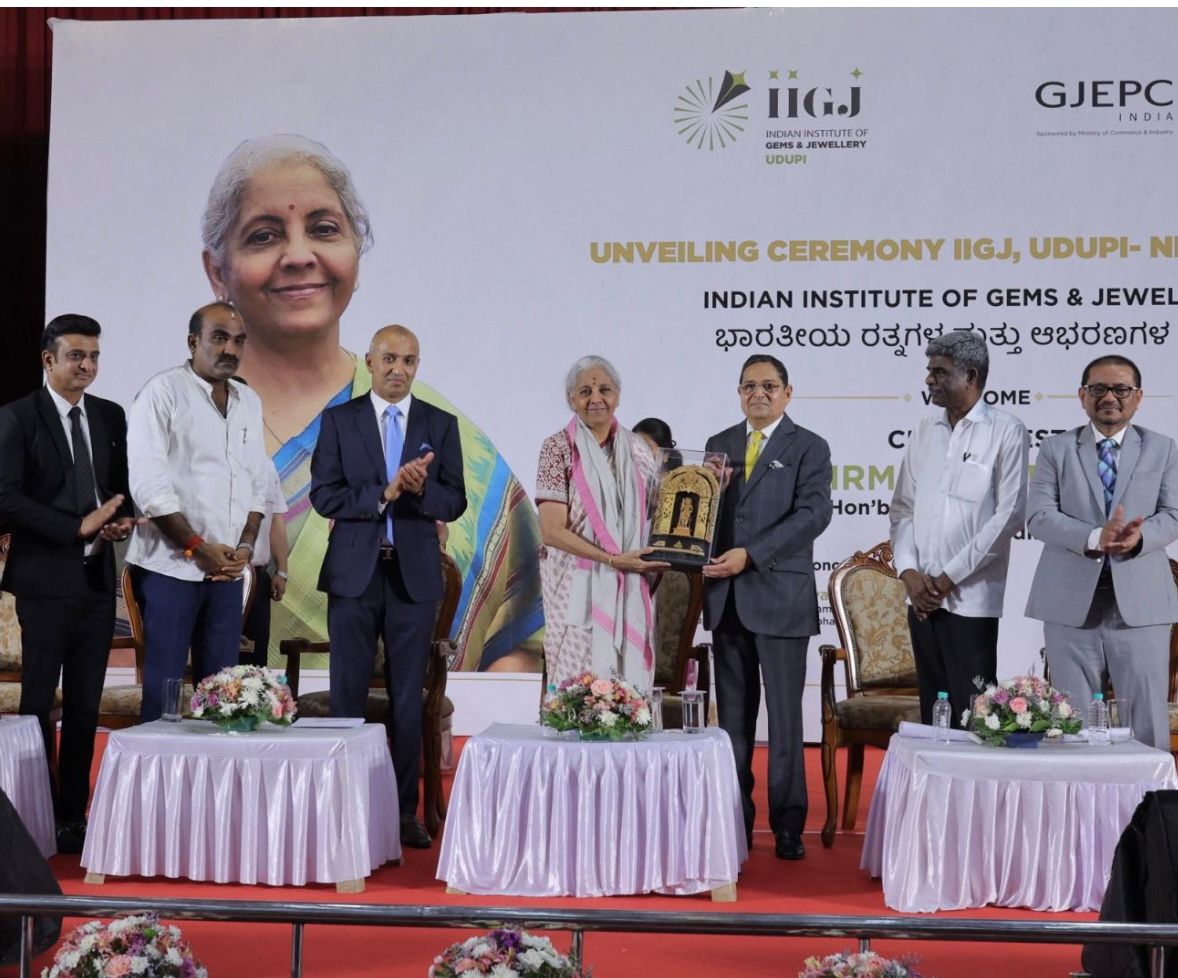
The ceremony was attended by Shri Kota Shrinivas Poojari, Member of Parliament; Shri Yashpal A. Suvarna, MLA, Udupi; Shri Gurme Suresh Shetty, MLA, Kaup (Kapu) Assembly Constituency, Karnataka; Shri Kirit Bhansali, Chairman, GJEPC; Shri Shaunak Parikh, Vice Chairman, GJEPC; Shri Mahender Tayal, Regional Chairman, Southern Region, GJEPC; and Shri Sabyasachi Ray, Executive Director, GJEPC, alongside industry members, students and stakeholders.
The new IIGJ Udupi centre is envisioned as a hub for nurturing talent, supporting artisanal excellence and equipping students with industry-relevant skills across jewellery design, manufacturing and emerging technologies. The inauguration further strengthens IIGJ’s growing national footprint and underscores the sector’s commitment to building a future-ready workforce.
Smt. Nirmala Sitharaman said,
“IIGJ Udupi stands as a strong example of how industry-led skilling can transform lives and create opportunities for youth across southern India. The institute is empowering students from Karnataka, Kerala, Tamil Nadu and beyond with employable skills, entrepreneurial opportunities and pathways to prosperity. Through the support of the Gem & Jewellery Export Promotion Council (GJEPC), the institute has aligned its training with global market needs and evolving industry standards. As demand for skilled talent grows and India strengthens its position in global jewellery exports, institutions like IIGJ Udupi will be instrumental in nurturing talent, expanding opportunities for our youth, and driving inclusive economic growth.”
Shri Kirit Bhansali, Chairman, Gem & Jewellery Export Promotion Council (GJEPC), said,
“The unveiling of IIGJ Udupi reflects our continued commitment to strengthening India’s skill ecosystem for the gem and jewellery sector. In the last four years alone, IIGJ centres across the country have trained over 7,000 students, building a strong talent pool for the industry. Today, the Indian gem and jewellery sector contributes nearly USD 28 billion in exports and supports over 5 million livelihoods. As the sector evolves into a more design-led, technology-driven and value-added ecosystem, the demand for skilled professionals will only grow. Institutions like IIGJ are central to sustaining India’s leadership and maintaining its position as the supplier of choice for the world. This effort also advances the vision of Viksit Bharat 2047 and supports our ambition of taking gem and jewellery exports to USD 100 billion.”
A key highlight of the event was the signing of a Memorandum of Understanding (MoU) between the Indian Institute of Gems & Jewellery (IIGJ) and IIT Madras (InCent-LGD). The partnership aims to launch a specialised certification programme in lab-grown diamond technologies, creating skilled and industry-ready professionals for this fast-growing sector. It will support value-added manufacturing and further strengthen India’s position in the global lab-grown diamond value chain, aligned with the vision of Make in India and Skill India.
Highlighting the sector’s transformation and emerging opportunities, Shri Shaunak Parikh, Vice Chairman, GJEPC, said
“With expanding global opportunities, strong domestic demand and growing focus on innovation, the industry is entering a new phase of growth. Investments in skilling and education through institutions like IIGJ will be critical to sustaining India’s leadership in the global gem and jewellery sector.”
Aligned with the government’s Skill India vision and initiatives such as the PM Vishwakarma Yojana, IIGJ has been expanding access to structured training for grassroots artisans and aspiring professionals. The IIGJ institute currently offers over 40 specialised programmes, including degree courses, diplomas and postgraduate programmes, with strong industry linkages and placement outcomes.
The new centre is expected to play a key role in supporting the next phase of growth while empowering youth, artisans and entrepreneurs from the region to participate in India’s expanding gem and jewellery opportunity.
28, Apr 2026
India Manufacturing Sector Strengthens with Jobs, Tech Adoption and Investment Growth
New Delhi, April 2026: India’s Manufacturing, Engineering, and Infrastructure (MEI) sector is witnessing steady expansion, driven by rising investments, stronger hiring activity, and rapid adoption of advanced industrial technologies.
The sector is entering a structured growth phase, supported by policy measures and growing confidence among industry players.
Hiring Momentum Builds Across Industries
Employment demand in the MEI sector is rising, with companies actively planning workforce expansion. Skilled talent is increasingly required in areas such as automation, engineering operations, project execution, and sustainable manufacturing, reflecting the sector’s transition toward modern production systems.
Semiconductors and Industrial Hubs Gain Strength
Investments in semiconductor and advanced manufacturing clusters are accelerating across states including Gujarat, Tamil Nadu, and Karnataka. These developments are expected to generate significant employment and strengthen India’s manufacturing ecosystem.
Industrial centres such as Chennai, Pune, and Bengaluru continue to attract strong investor interest due to infrastructure and talent availability.
Industrial Corridors Improve Efficiency
Large infrastructure networks such as the Delhi-Mumbai Industrial Corridor and Chennai-Bengaluru Industrial Corridor are enhancing logistics efficiency, reducing costs, and improving connectivity between manufacturing hubs.
Technology and Sustainability Driving Change
Manufacturing units are increasingly adopting Industry 4.0 practices, including automation, digital systems, and smart production technologies. Alongside this, there is a growing focus on energy-efficient and sustainable manufacturing processes.
Outlook
With strong investment flows, expanding industrial clusters, and rising demand for skilled talent, India’s MEI sector is positioned to remain a key contributor to long-term economic growth and industrial transformation.
28, Apr 2026
“Shwet Shyam” by Project Tantavyaa Celebrates India’s Skilled Artisans and Heritage Crafts
A Celebration of Textile Heritage, Devotion & Artisan Empowerment
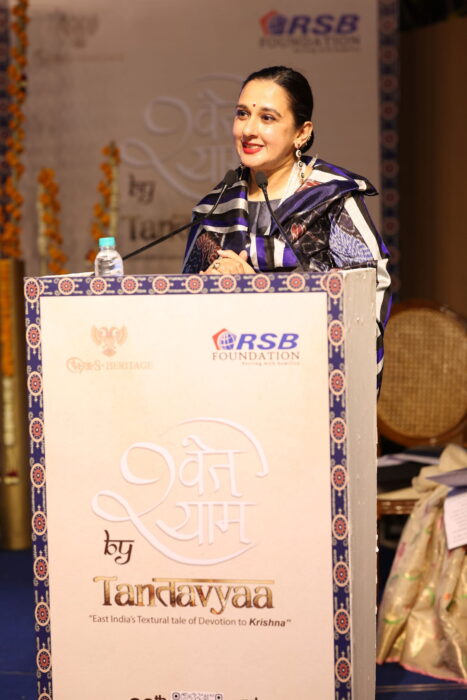
New Delhi, Apr 28: RSB Foundation, the CSR arm of the RSB Group, today unveiled Project Tantavyaa: Shwet Shyam at the National Crafts Museum & Hastkala Academy. The gathering brought together India’s textile legacy, cultural leadership, and artisan communities, with a clear focus on reviving and supporting traditional textiles through sustainable, community-led initiatives.
Rooted in the textile traditions of Odisha, Bengal, and Assam, Shwet Shyam is a craft-led cultural experience inspired by the values of Swabhiman (dignity), Shaktikaran (empowerment), and Sankirtan (devotion). The initiative places strong emphasis on bringing handloom traditions back into focus while creating sustainable livelihoods for artisan communities, particularly women. The showcase will continue until 2nd May 2026, offering an immersive journey into India’s textile heritage and cultural legacy.
The evening opened with a traditional Mangalacharan performance. The inauguration was graced by the Chief Guest, Union Minister Shri Dharmendra Pradhan, who spoke about the importance of preserving India’s craft heritage in line with the vision of Swadeshi 2.0 and the Five-F value chain.
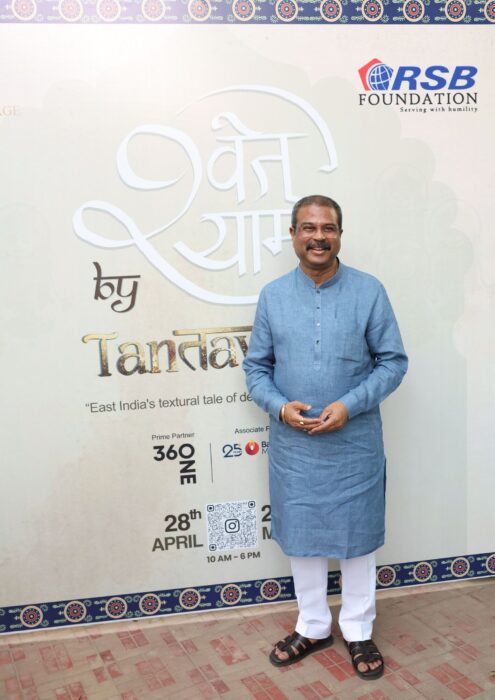
Dharmendra Pradhan, Minister of Education, Government of India said: “As we move towards a more self-reliant India, it is initiatives like these that reinforce the value of Swadeshi, ensuring our traditional crafts continue to thrive in a modern, global context.” This was followed by addresses by Ms. Priyanka Behera, Director – CSR, RSB Group, and Pankaj S. Chadha, outlining how sustainable, community-led approaches can help bring rare textile traditions back into practice.
A key highlight of the evening was the book launch and address by His Holiness Indradyumna Swami Ji, adding a spiritual dimension to the showcase. The event also witnessed the presence of eminent royals, including HH Maharani Radhika Raje Gaekwad of Baroda, Shriji Huzur Dr. Lakshyaraj Singh Ji of Udaipur, Maharani Nivriti Kumari of Udaipur, Yuvrani Meenal Kumari Singh Deo of Dhenkanal, Kunwarani Ritu Ajatshatru Singh and Celebrity Astrologer & Vastu Expert Dr. Jai Madaan , reinforcing the cultural significance of the initiative.

Speaking on the occasion, Priyanka Behera, Director – CSR, RSB Group, said: “Tantavyaa is about restoring pride to our artisans and ensuring that craft becomes a sustainable source of livelihood, especially for women. Shwet Shyam reflects our commitment to reviving traditional textiles through community-led efforts that create long-term impact.”
Curated under Project Tantavyaa, the showcase brings together over 100 handcrafted textile pieces, presenting India’s heritage crafts as living traditions supported by sustainable ecosystems. The evening concluded with a presentation of Dhenkanal’s culinary heritage from Odisha, extending the celebration beyond textiles.
28, Apr 2026
Enterprise Presales Gets Its First Structured Framework: Sathish Murthy Launches The Technical Yes
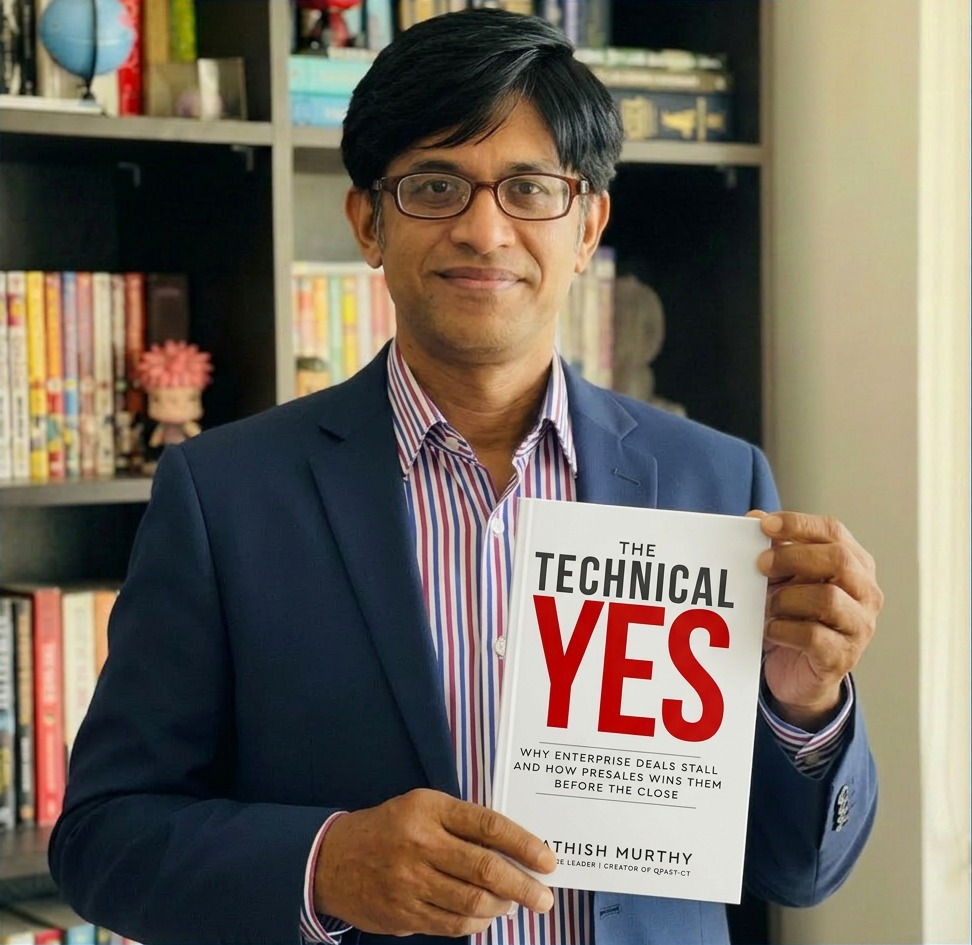
New Delhi, Apr 28: In today’s enterprise sales environment, winning a deal goes far beyond securing a signed contract. Recognising this critical gap, presales expert Sathish Murthy, founder of Presalesforce.ai, has launched his new book, “The Technical Yes” — a practical guide to building technical trust and confidence early in the sales process. The book has already gained early traction, ranking as an Amazon Bestseller in Sales Techniques.
The book is built on a simple yet powerful idea: every successful deal has two components – the sales win and the technical win. While traditional sales approaches focus on closing deals, “The Technical Yes” emphasises the importance of convincing the stakeholders who evaluate, implement, and use the solution. Without this technical validation, deals often stall, face resistance, or fail to sustain long-term success.
Drawing on over two decades of experience across 12 countries, Murthy introduces the QPAST- CT (Questions(Discovery-
Speaking about the book, Sathish Murthy notes that success in modern enterprise sales is less about delivering a compelling pitch and more about fostering genuine understanding. “The answer is not a better pitch. It is better questions, curiosity, and the patience to build trust,” he says.
Targeted at technology sales professionals, presales teams, and business leaders, the book serves as a practical handbook for both newcomers seeking structure and experienced professionals aiming for consistency. It also provides leaders with a common framework to align their teams and improve deal outcomes.
With “The Technical Yes,” Murthy brings real-world insights into a structured approach, offering a valuable perspective on how organizations can navigate increasingly complex buying environments and secure decisions that truly last.
The book is now available globally across leading platforms including Amazon, Flipkart, and WFP stores.
28, Apr 2026
Accountants and Financial Advisers Offer Monthly Fee Payments as Their Clients Struggle
Apr 28 – Accountants and financial advisers are increasingly switching to allowing monthly fee payments to help ease the financial pressure on clients and themselves, new research* from Premium Credit, a leading provider of finance for businesses, shows.
Nearly two out of five (37%) questioned said cashflow at their business suffered last year and almost all (95%) said clients struggling to pay fees was the main or a contributory factor in the squeeze on cashflow.
However more than four out of five (85%) expect cashflow to improve over the next 12 months including 15% expecting cashflow to improve significantly over the period. More than half (52%) say that their client base has expanded over the past three years. Just 4% say their client base has shrunk.
The improvements are against a backdrop of more accountants and financial advisers allowing clients to pay fees monthly. Almost all (97%) say they allow clients to pay fees monthly over an extended period of time. Research** last year found just 70% were doing so.
Almost all (96%) questioned say they would consider allowing clients to pay fees monthly if asked – that compares to 68% in last year’s survey. There was similar strong support (98%) for offering clients the option to spread the cost of tax bills through instalments.
The study found that accountants and financial advisers are seeing signs of financial strain among clients as the table below shows. More than 25% say that over five in 10 clients are in poor health or on the verge of failing.
|
Firm’s financial state of health |
Up to 10% accountants and advisers estimate SME clients are in this category |
10% to 24% accountants and advisers estimate SME clients are in this category |
25% to 49% accountants and advisers estimate SME clients are in this category |
50% to 74% accountants and advisers estimate SME clients are in this category |
75% to 100% accountants and advisers estimate SMEs clients are in this category |
|
Very healthy |
3% |
23% |
36% |
37% |
1% |
|
Quite healthy |
7% |
14% |
38% |
39% |
2% |
|
Average health |
6% |
15% |
62% |
14% |
3% |
|
Poor health |
23% |
47% |
22% |
6% |
2% |
|
On the verge of failing |
28% |
46% |
18% |
8% |
0% |
Nearly two out of three (66%) accountants and financial advisers surveyed say HMRC is getting tougher on tax arrears and debts. That is double the 33% who believe HMRC has become more understanding.
Recent tax rises affecting SMEs such as Employers’ National Insurance and increases in the minimum wage have hit SME businesses, the survey found. Around half of accountants and financial advisers surveyed (48%) say the Government changes have reduced staff and recruitment at firms they work with while 47% say it has cut profits.
Jennie Hill, Chief Commercial Officer, Premium Credit (Specialist Finance) said: “Accountants and financial advisers continue to show real flexibility and creativity in how they support clients, while also ensuring their own fees are paid on time.
“We’re seeing increasing use of monthly payment options being offered, and it’s clearly making a difference. More accountants and advisers are feeling optimistic about their cashflow for the year ahead. Enabling clients to spread the cost of fees through convenient monthly payments benefits everyone — it improves affordability for clients, supports timely payment, and reduces risk to both the business and the client relationship.”
28, Apr 2026
India Sees Sharp Rise in Women’s Employment to 39 pc in 2025
New Delhi, Apr 27 (BNP): India has witnessed a strong rise in women’s participation in the workforce, with the women’s employment rate increasing to 39% in 2025 from 22% in 2017, Labour and Employment Minister Mansukh Mandaviya said on Tuesday.
Speaking at an event in the capital, the Minister said the improvement reflects expanding job opportunities for women across sectors and growing inclusion in both formal and informal employment.
He said that under the leadership of Prime Minister Narendra Modi, several enabling reforms and initiatives have helped improve women’s access to employment and economic participation.
Steady Rise in Workforce Participation
Mandaviya also highlighted that the Female Labour Force Participation Rate (FLFPR) has increased from 23.3% in 2017–18 to 40% in 2025, indicating a steady improvement in women’s engagement in the labour market.
He said the trend reflects a broader structural shift in India’s economy, with more women entering diverse sectors, including services, digital platforms, and emerging industries.
Focus on Digital and Platform Economy
The Minister was speaking at the SwigStree event in New Delhi, which focused on women’s participation in the platform and gig economy.
Officials noted that increasing involvement of women in such sectors is contributing to financial independence and broader economic empowerment.
The government said continued focus on skill development, digital access, and employment-linked initiatives will further strengthen women’s participation in India’s workforce in the coming years.
28, Apr 2026
Bhumika Group’s Urban Square Mall Hands Over Jawa Bobber to Shopping Festival Winner
Udaipur, Apr 28: Bhumika Group’s Urban Square Mall, Udaipur marked a celebratory moment as it successfully handed over the grand prize of its much-anticipated shopping festival- a Jawa Bobber motorcycle to the lucky winner, Mr. Bheru Lal Salvi.
The shopping festival, held in January, invited shoppers who spent ₹5,000 and above to participate in an exclusive lucky draw. Mr. Bheru Lal Salvi, who shopped at Vishal Mega Mart, emerged as the fortunate winner of the grand prize.
The handover ceremony took place at the mall premises, where Mr. Bheru Lal was presented with the Jawa Bobber in the presence of his family. The occasion turned into a joyful celebration, with the winner’s family joining in to mark the memorable milestone. The shopping festival witnessed enthusiastic participation from shoppers across Udaipur, further strengthening Urban Square Mall’s position as a vibrant retail and lifestyle destination.
Nandini Taneja, CEO, Bhumika Enterprises, said,
“Our vision is to go beyond conventional retail by creating destinations that deliver memorable and rewarding experiences. The success of our shopping festival reflects the strong bond we share with our customers. We are delighted to see the joy this initiative has brought to Mr. Bheru Lal and his family, and remain committed to curating such engaging experiences for our patrons.”
With such initiatives, Bhumika Group continues to redefine customer engagement by blending shopping with excitement, rewards, and community experiences.
28, Apr 2026
India and Africa Ties Enter New Phase of Cooperation
New Delhi, Apr 28 (BNP): India–Africa relations are entering a new and more dynamic phase, with both sides focusing on expanding cooperation across key development areas, Minister of State for External Affairs Pabitra Margherita said on Tuesday.
Speaking at an event held at Bharat Mandapam, New Delhi, he said India and Africa share long-standing civilisational ties built over centuries through trade, cultural exchange, and people-to-people relations.
He noted that the partnership is now moving beyond traditional engagement to include wider collaboration in areas such as education, trade, capacity building, youth development, and innovation.
Focus on Youth and Development Cooperation
The remarks were made at the Yuva Bharat Global Forum, which was attended by diplomats from several African countries and representatives of organisations working on strengthening India–Africa ties.
Officials said the forum reflects India’s growing emphasis on youth-led global engagement and deeper cooperation with African nations in emerging sectors of development.
Building a Future-Oriented Partnership
Participants highlighted that India and Africa, as two fast-growing regions, are moving towards a more structured and future-focused partnership based on shared development priorities.
Discussions at the event focused on strengthening cooperation in skills development, innovation, trade facilitation, and people-to-people exchanges.
The Ministry of External Affairs said the expanding engagement reflects India’s commitment to Global South cooperation and building long-term, mutually beneficial international partnerships.


