


27, Apr 2026
South India’s Premier Jewellery Fair Returns with First-Ever Retail Symposium and High-Impact Show Features
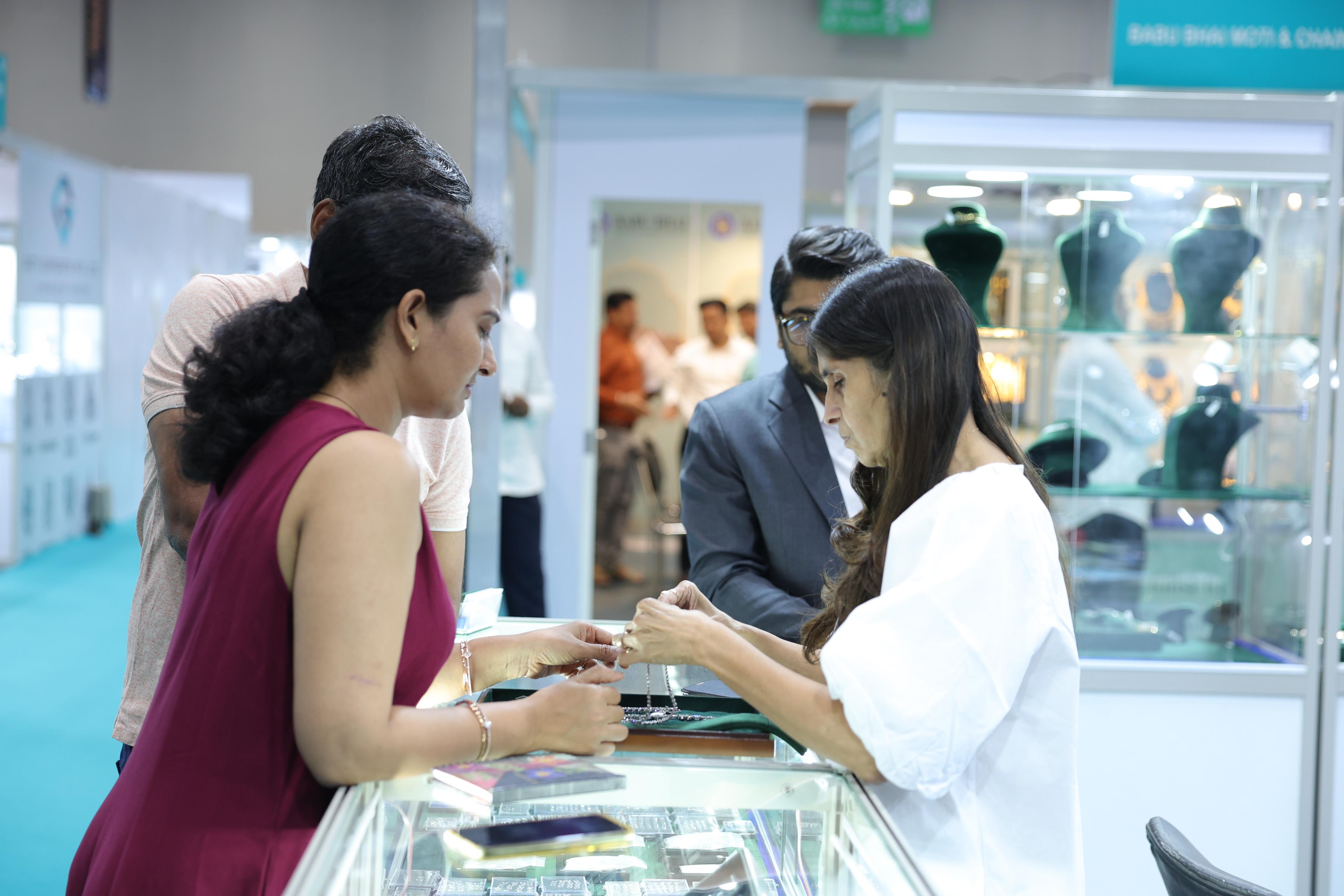
Hyderabad, Apr 27: Informa Markets in India will host the 18th edition of the Hyderabad Jewellery Pearl & Gem Fair (HJF 2026) in association with Hitech City Jewellery Manufacturers Association (HJMA) from May 8–10 at HITEX Exhibition Centre, Hyderabad. Recognised as South India’s leading B2B jewellery sourcing show, this edition introduces new knowledge-led initiatives and curated showcases designed to enhance both business discovery and industry dialogue.
Building on its 18-year legacy, HJF continues to bring together manufacturers, wholesalers, retailers, designers, and technology providers—creating a high-value environment for sourcing, networking, and insights.
What’s New in 2026: Industry-First Highlights
A key highlight this year is the Jewellery Retail Symposium, a first-of-its-kind, large-format conference dedicated to India’s jewellery retail community. Designed as a national thought leadership forum, it will feature 20 leading voices across 4 high impact panel discussions examining evolving consumer demand, retail transformation, and technology-led growth—placing sharper focus on future-ready retail practices. The symposium is supported by the Dubai Business Group for Gold & Jewellery Designers, bringing a global industry perspective to the platform.
Further strengthening the show is the launch of the Zaveri Bazaar Pavilion, bringing leading manufacturers from Mumbai’s iconic Zaveri Bazaar to Hyderabad for the first time—creating direct access for South Indian buyers to some of the country’s most established jewellery producers.
The Silver Pavilion will spotlight a fast-growing segment driven by affordability and design innovation, while the Machinery Pavilion will showcase advanced manufacturing and packaging solutions to improve efficiency and scale.
Enhancing the experience is ‘Samvad with Renu Chaudhary’, an on-site podcast series featuring candid conversations with industry voices on market trends, leadership, and the future of jewellery retail.
Adding further depth to the show experience, the Artisan Zone will spotlight the intricate legacy of silver filigree craftsmanship from Karimnagar, bringing master artisans to the forefront through live demonstrations and finely handcrafted creations that reflect India’s rich heritage. Complementing this is the CAD Design Pavilion, a dedicated showcase of cutting-edge jewellery innovation, where leading designers and technology experts will demonstrate advanced rendering, rapid prototyping, and customization capabilities—bridging traditional artistry with modern, scalable design solutions for today’s evolving market.
A Strategic Platform Ahead of the Festive Season
Timed ahead of the peak wedding and festive buying cycle, HJF 2026 offers retailers a valuable opportunity to source new collections, identify emerging trends, and strengthen supplier networks. Buyers from Telangana, Andhra Pradesh, Tamil Nadu, Karnataka, Kerala, and Maharashtra are expected, ensuring strong regional participation.
The show will feature leading brands such as M Sashi Badalia, Mukti Gold, Anja Jewellers, Shraddha Jewellers, Manepally Jewellers, Devansh Jewellers, Rishabh Jewellers, Ambica Silver and Many more, alongside a diverse mix of exhibitors spanning gold, diamond, silver, gemstones, pearls, and jewellery technology—reflecting the evolving needs of modern jewellery businesses. The expo is also supported by prominent industry associations including Hitech City Jewellery Manufacturers Association (HJMA), Telangana Bullion, Gem & Jewellery Federation, Telangana Pawn Broker Jewellers Association Pot Market Jewellers Association further reinforcing its credibility and reach within the trade ecosystem.
Speaking on the 18 Years of Legacy of HJF that has driven growth through insight, exhibition and Innovation, Mr Yogesh Mudras, Managing Director, Informa Markets in India said, “South India remains one of India’s most influential jewellery markets, contributing nearly 40% of the country’s gold consumption, led by strong wedding demand, cultural affinity, and a rapidly formalising retail landscape. Markets like Telangana, Tamil Nadu, and Karnataka continue to drive both volume and design innovation. As India’s gems and jewellery market moves towards the USD 130 billion mark, the focus is shifting beyond sourcing to smarter retail, stronger networks, and future-ready business models. With curated showcases like the Zaveri Bazaar Pavilion, fast-growing segments such as silver and technology, and the introduction of the Jewellery Retail Symposium to drive focused industry dialogue, HJF 2026 is designed to help businesses stay competitive and capture the next phase of growth.”
With over 18 years of credibility, HJF continues to foster meaningful trade relationships and support sector-wide progress through innovation-led initiatives.
Strengthening India’s Jewellery Ecosystem
India remains one of the world’s largest jewellery markets, shaped by deep cultural roots and a rapidly transforming retail environment. From national chains to independent retailers across tier 2 and tier 3 cities, growth continues to be driven by changing consumer preferences, digital adoption, and design-led innovation.
HJF 2026 aims to contribute to this momentum by connecting heritage craftsmanship with modern design and technology, enabling businesses to adapt, innovate, and scale.

- 0
- By Neel Achary

27, Apr 2026
Visa appoints Suresh Sethi as Group Country Manager for India and South Asia
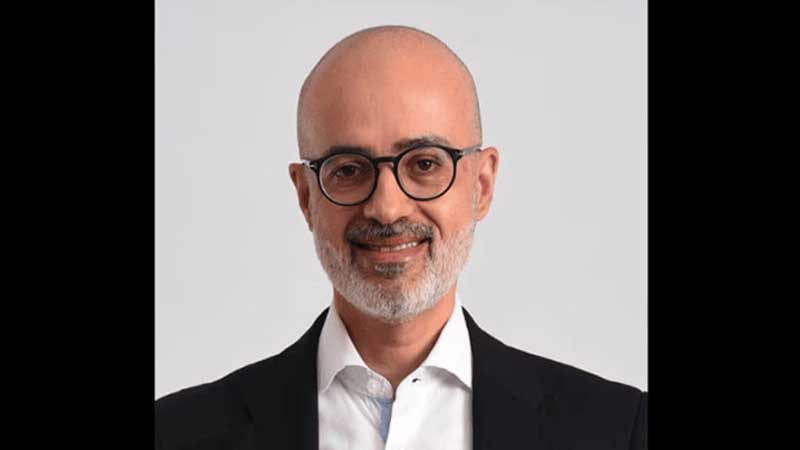
India, April 27, 2026: Visa (NYSE: V), a global leader in digital payments, today announced that Suresh Sethi has been appointed Group Country Manager for India and South Asia. In this role, Suresh will lead Visa’s strategy and operations across India, Bangladesh, Sri Lanka, Nepal, Maldives and Bhutan.
Suresh succeeds Sandeep Ghosh, who is leaving Visa for other opportunities. Based in Mumbai, Suresh will report to Stephen Karpin, Regional President, Asia Pacific, Visa.
Stephen Karpin, Regional President, Asia Pacific, Visa, said, “India and South Asia region continues to be among Visa’s most dynamic and strategically important markets. Suresh brings expertise and knowledge that will accelerate Visa’s aspiration to be the best way to pay and be paid. I am confident he will build on Visa’s strong foundations in the region, alongside clients, partners and policymakers to advance digital payments.”
He added, “I thank Sandeep for his leadership over the last four years, and for facilitating the smooth transition of the business to Suresh.”
Suresh Sethi, Group Country Manager, India and South Asia, Visa, stated, “I am pleased to join Visa at a defining moment for digital payments in India and South Asia. The next phase of growth will be driven by scale, trust, and innovation across an increasingly diverse payments ecosystem. Visa’s global capabilities, strong partnerships, and technology leadership provide a powerful platform to accelerate adoption, deepen acceptance, and deliver secure, inclusive, and high-impact payment solutions. I look forward to working closely with our clients, partners, and policymakers to drive sustainable growth and long-term value across the region.”
Over the course of his career, Suresh has held senior leadership roles driving innovation and ecosystem-led growth across the financial sector. His career spans India and key international markets, including Africa, Latin America, the US, and the UK.
Most recently, Suresh served as Managing Director and CEO of Protean e-Gov Technologies Ltd., where he led its transformation into an agile, product-led Digital Public Infrastructure (DPI) institution. Prior to this, Suresh was the Founder CEO of India Post Payments Bank, where he built one of the world’s largest financial inclusion models by leveraging the extensive network of India Post to deliver doorstep banking services across the country, significantly expanding access to formal banking, particularly in underserved and rural areas.
Earlier in his career, Suresh held senior leadership roles as Managing Director & CEO of Vodafone M‑Pesa India, Group President at YES Bank, and in multiple regional leadership positions at Citigroup, where he led transaction banking and payments businesses across several geographies.
27, Apr 2026
PM Modi Hails Indian Girls’ Strong Performance at European Mathematics Olympiad
New Delhi, Apr 27 (BNP): Prime Minister Narendra Modi has congratulated Indian schoolgirls for their strong performance at the European Girls’ Mathematical Olympiad (EGMO), praising their achievement on the global stage.
In a message shared on social media platform X, the Prime Minister said he was proud of the students, noting that they had performed exceptionally well and made the country proud through their success in the prestigious competition.
The European Girls’ Mathematical Olympiad is an international mathematics contest that brings together talented young female students from various countries to compete in problem-solving and analytical skills.
India’s participation and success in the event highlight the growing capabilities of young students in mathematics and STEM disciplines. The recognition from the Prime Minister further underscores the importance being given to nurturing academic talent and encouraging excellence among school students.
27, Apr 2026
Johnson Controls launches Balanced Cooling to resolve low Delta T performance and cut energy waste in mission critical UAE campuses
DUBAI, United Arab Emirates, April,27, 2026– Johnson Controls (NYSE: JCI), a global technology leader energy efficiency, decarbonization, thermal management and mission-critical performance, today in announced the launch of Balanced Cooling, a purpose-built solution forbuildings connected to centralized cooling systems in the UAE, designed to resolve low Delta Tand improve cooling performance through a more integrated, solution driven approach.
Delta Tis the difference between the temperature of chilled water entering and leaving a building cooling system. When that temperature difference falls below intended levels, the system can’t transfer heat as efficiently as it should. This can happen because of over-pumping, poor hydronic balance or valve misalignment. As a result, more water must be circulated to deliver the same cooling, which can increase pumping energy, affect system balance and expose building owners to surcharges. Balanced Cooling helps identify and correct this through smart valve retrofits, real-time monitoring, AI diagnostics and intelligent control.

Balanced Cooling addresses low Delta T at scale. Based on initial customer testing Balanced Cooling delivers outcomes including eliminating related surcharges by up to 100%, reducing pumping energy by up to 40%, and significantly lowering comfort complaints in continuously operating facilities.
“Low Delta T remains one of the most persistent and costly inefficiencies affecting buildings connected to centralized cooling systems in the UAE,” said Tarek Hassan, associate director, Sustainability, MEA, Johnson Controls. “Balanced Cooling was developed to move beyond isolated fixes by combining system visibility, intelligent diagnostics and targeted corrective action in one integrated solution. The result is a more effective way to reduce pumping energy, manage surcharges and improve cooling performance using existing building infrastructure.”
A timely solution for UAE buildings connected to centralized cooling systems
Low Delta T can create avoidable cost exposure, system inefficiencies and occupant discomfort for buildings connected to centralized cooling systems in the UAE. This is particularly relevant as the Dubai Supreme Council of Energy identifies district cooling retrofits as a key part of its Efficient Cooling programme, and DEWA expects district cooling penetration in Dubaito reach 40% by 2030.
Balanced Cooling is purpose-built to help building owners and operators address low Delta T more effectively while improving system balance, thermal management and overall operating performance.Its retrofit-friendly, plug-and-play design supports integration with existing HVAC and BMS systems, making it particularly relevant for occupied residential, hospitality and office buildings where cooling performance must be improved efficiently, precisely and with minimal disruption.
From point fixes to measurable correction
Balanced Cooling helps building owners move beyond reactive adjustments by providing better visibility into system performance and a more targeted path to correction. This supports more stable cooling performance, improved system balance and more efficient operation over time.
Balanced Cooling adds to Johnson Controls’ broader cooling portfolio in the UAE, complementing its advanced chiller solutions, Cooling as a Service (CaaS) offering and digital building controls. Together, these capabilities reinforce Johnson Controls’ leadership in cooling across the region and its ability to help customers improve efficiency, optimize performance and build more resilient, future-ready environments.
27, Apr 2026
Akshay Kumar Joins Crystal Crop Protection as Brand Ambassador
New Delhi, Apr 27 (BNP): Crystal Crop Protection Limited, a research-led agri-input company, has appointed actor Akshay Kumar as its brand ambassador. The company made the announcement on Sunday, highlighting its focus on strengthening engagement with India’s farming community.
Alongside the announcement, the company also launched its new national campaign titled “Desh Ka Kisan, Desh Ka Asli Hero”, aimed at recognising the contribution and resilience of Indian farmers.
The campaign seeks to highlight the role of farmers in nation-building while promoting awareness about modern agricultural solutions and improved farming practices.
Company representatives said the collaboration aligns with Crystal Crop Protection’s long-standing commitment of over three decades to supporting Indian agriculture and enhancing farm productivity.
The partnership is expected to further strengthen the company’s outreach among farmers and encourage the adoption of advanced agri-input solutions.
27, Apr 2026
India ITME Society Leads First Ever Textile Delegation to Indonesia
Jakarta/Bandung, Apr 27 (BNP): The India ITME Society has successfully concluded its first-ever Textile Engineering Industry Business Delegation to Indonesia, aimed at strengthening trade ties and fostering collaboration between Indian textile machinery manufacturers and the Indonesian textile industry.
The initiative was designed to create a structured platform for dialogue and partnership opportunities between stakeholders from both countries, focusing on technology exchange, trade expansion, and long-term industrial cooperation.
The delegation included representatives from key textile machinery segments such as spinning, weaving, processing, dyestuff and chemicals, as well as handling and packaging. In total, 18 companies and 23 delegates participated in the four-day visit, held from April 12 to 16, 2026.
During the visit, the team explored major industrial hubs in Bandung and Jakarta. The engagements focused on identifying business opportunities, understanding market requirements, and building stronger industry connections in Indonesia’s growing textile sector.
The initiative also provided a platform for interaction with industry leaders and stakeholders, paving the way for future collaborations between the two countries in textile engineering and manufacturing.
27, Apr 2026
Redefining Modern Indian Menswear: Where Craft Meets Restraint
Jaipur, Apr 27: Indian menswear today stands at a decisive intersection. Between legacy and evolution. Between ornamentation and intention.
For decades, the category has relied on a singular visual code. Craft was expressed through embellishment, often equated with density, intricacy, and scale. The more visible the effort, the greater the perceived value. But as the contemporary Indian man becomes more global in his exposure and more discerning in his choices, this equation is beginning to shift.
Pleyne enters this moment not as a reaction, but as a recalibration.
At the core of this shift is a fundamental rethinking of craft. Pleyne moves away from the idea of addition and toward the discipline of reduction. Instead of layering garments with surface embellishment, it builds depth through construction. Fabric is not treated as a base, but as the primary medium of expression.
Techniques such as pleating and controlled manipulation introduce dimension without excess. Structure is engineered with precision, allowing garments to hold their form while remaining fluid in movement. The result is a language of detail that is quieter, but far more exacting.
This approach demands a higher level of technical clarity. When ornamentation is reduced, there is little room to disguise inconsistency. Proportion, cut, and finish become critical. Every decision is visible in the way the garment sits, moves, and endures.
“Modern menswear requires a different kind of discipline. It is no longer about how much can be added, but how precisely something can be constructed. At Pleyne, we focus on creating garments where the craft is inherent, not applied. We create balance through silhouettes and visual harmony. We study each client’s body type – after all, India has diverse physiques – and craft designs that flatter, without adding bulk or slimming down unnaturally,” says Chirag Sogani.
This philosophy also reflects a broader shift in how luxury is understood. There is a growing preference for pieces that do not rely on immediate visual impact, but reveal their value over time. Garments that are experienced rather than displayed.
Within this context, restraint becomes a marker of confidence. It signals a move away from validation through excess, toward an assurance rooted in design integrity.
What distinguishes Pleyne is its ability to navigate this transition while remaining grounded in Indian sensibilities. The silhouettes retain their cultural relevance. The context of occasion remains intact. Yet, the expression feels aligned with a more contemporary, global outlook.
This is not a rejection of tradition, but an evolution of it.
By redefining how craft is perceived and executed, Pleyne contributes to a larger recalibration of Indian menswear. One that values clarity over complexity, precision over excess, and intention over convention.
In this emerging landscape, the future of menswear will not be defined by how much it can show, but by how well it is made.
27, Apr 2026
Drip Capital Crosses Dollar 9 Billion in Cross-Border Trade Finance for MSMEs in India

Mumbai, Apr 27: Drip Capital, a global financial technology company building infrastructure for trade finance and B2B commerce, has crossed $9 billion in cumulative MSME trade finance transactions since its founding in 2016. The milestone highlights the company’s expanding role in supporting small businesses as they navigate global trade complexities.
As per findings by the Small Industries Development Bank of India (SIDBI), India’s MSME sector faces a credit gap of nearly ₹30 lakh crore, limiting its ability to scale and participate effectively in global trade. At the same time, shifting global supply chains are adding to uncertainties around logistics, payments, and buyer reliability. Drip Capital is addressing these challenges by offering integrated trade support solutions that help MSMEs manage risks and access global markets with greater confidence.
The company has facilitated $2+ billion in trade transactions in FY25-26 alone and with MSMEs contributing a significant share of this volume, Drip Capital is now targeting $11+ billion in cumulative transactions by 2027.
Sharing views on the achievement, Pushkar Mukewar, Co-Founder and CEO, Drip Capital said “Global trade today demands more than just access to capital MSMEs need a reliable partner to navigate uncertainty, unlock the right opportunities, and manage risk effectively. At Drip Capital, we are focused on building solutions that simplify cross–border trade and enable businesses to grow sustainably despite external disruptions. Crossing the $9 billion milestone reflects the trust that MSMEs worldwide have placed in us. As India sharpens its focus on boosting exports, we remain committed to supporting their global ambitions.”
Technology has been central to Drip Capital‘s growth. Nearly a decade of cross–border trade data, built up across 100+ countries, now powers proprietary AI and machine learning models that underwrite risk, verify trade documents, and assess buyer and supplier reliability in real time. This has allowed the company to approve financing in as little as 24 to 48 hours, a process that typically takes weeks, and to scale transaction volume without a proportional increase in operational cost. The same data and AI infrastructure also powers buyer-supplier matching on its B2B commerce platform.
Beyond financing, Drip Capital also runs a B2B commerce platform that connects growing businesses with verified global buyers and suppliers. The platform helps businesses identify trade partners, manage cross–border transactions, and participate in international supply chains. Together with financing, this gives businesses a single entry point to both find and fund their trade, reflecting Drip Capital‘s broader role in building modern infrastructure for trade finance and B2B commerce.
27, Apr 2026
Escrow-Backed Commissions Signal Shift Toward a More Structured and Trust-Driven Real Estate Market
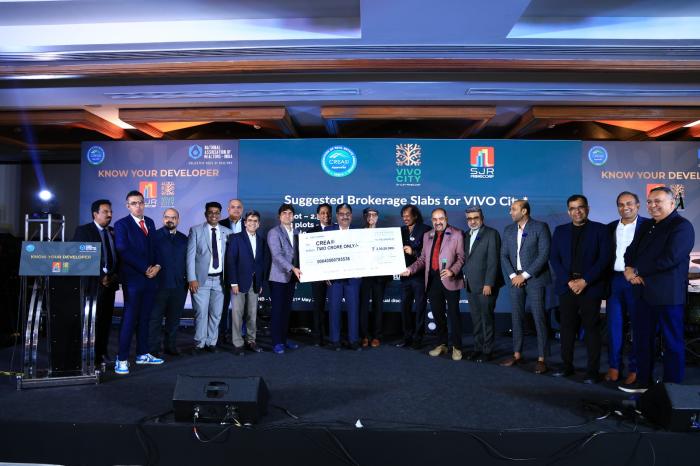
Bengaluru, April, 2026: In a move that could influence how brokerage transactions are structured in India’s real estate sector, Bengaluru-based developer SJR Primecorp has placed ₹2 crore in an escrow account to secure commission payouts for realtors associated with the Confederation of Real Estate Associates (India) (CREA (I)).The announcement was made on at an industry event held at Taj MG Road, Bengaluru, in the presence of senior leadership from CREA (I) and the National Association of Realtors India.
Under the arrangement, the escrow account will be jointly operated by SJR Primecorp and CREA (I). The funds are earmarked exclusively for brokerage payouts to CREA (I) members closing transactions on the developer’s projects. The amount will be replenished before depletion, ensuring continuity of payouts.
The development comes against the backdrop of a long-standing industry concern around delayed or uncertain broker commissions. By securing funds upfront, the model introduces a level of predictability and financial discipline that is not widely practiced in the sector.
Industry observers note that brokerage transactions in India have largely operated through informal arrangements, with limited safeguards. The use of escrow mechanisms—common in other financial transactions—could signal a shift toward more formal and auditable practices in real estate.
The initiative was formalised through an MoU signed between Samir Arora and Vijay Reddy, CMD of SJR Primecorp. The concept was initiated by Pradeep Joe, Chairman Emeritus, CREA (I).
More than 300 CREA (I) realtors were present at the event, along with senior NAR India leadership including Ravi Varma, Tarun Bhatia, Chandresh Vithalani, Ashish Mehta, Chetan Chopra, Ramkumar, Sivalingam, Rahul Koparwar and Ekta Jain.
“This initiative was conceived to address a long-standing gap in our industry. By securing commissions upfront, we are not just solving a payment issue — we are laying the foundation for a more disciplined, transparent, and future-ready real estate ecosystem,” said Mr. Pradeep Joe – Chairman Emeritus CREA (I).
Mr. Samir Arora, Chairman, CREA (I) and CEO, NAR India, said the move reflects evolving alignment between developers and organised realtor bodies. “When commissions are secured upfront under a jointly governed structure, it changes the nature of engagement. It moves from transactional to institutional.”
“This is a structural intervention, not a symbolic one,” said Mr. Sumanth Reddy, Chairman, NAR India. “For years, commission uncertainty has been a friction point. Locking funds in escrow brings accountability into the system and sets a benchmark others can evaluate.”
Mr. Chandresh Vithalani, President, NAR India, said the model could have wider implications if adopted more broadly. “The industry has been working toward greater transparency and professionalism. Mechanisms like escrow-backed commissions create a framework where trust is supported by process, not assumption.”
The Bengaluru market, which has seen increasing institutional participation in recent years, may provide a testing ground for such models. Whether this approach sees wider adoption across cities and developers remains to be seen.
For CREA (I), whose members are also part of NAR India, the development underscores growing institutional influence in shaping industry practices. For developers, it raises a strategic question: whether upfront financial commitments can improve channel partner confidence and sales velocity.
As the sector continues to evolve, the escrow-backed commission model may emerge as a reference point in discussions around standardising broker-developer relationships in India’s real estate market.
27, Apr 2026
Crompton Launches Ameo Pro 5.5L Air Fryer with Even Heating Technology for Consistent Cooking
Hyderabad, Apr 27: The promise of healthier, oil-free cooking has made air fryers a kitchen essential, yet achieving evenly cooked, consistent results often continues to remain a challenge. Recognising this gap, Crompton Greaves Consumer Electricals Ltd., India’s trusted name in home innovation, introduces the Ameo Pro 5.5L Air Fryer, designed to deliver a more consistent and reliable cooking experience for modern kitchens.

Air fryers have steadily found their way into Indian kitchens as a smarter, healthier alternative to traditional cooking but the experience hasn’t always matched the expectation. Uneven cooking remains the most common frustration, with users having to repeatedly pause mid-cook to check and rearrange food just to get consistent results. Add to that the noise during operation and the effort of cleaning up afterwards, and the convenience air fryers promise doesn’t always come through in practice.
The Ameo Pro 5.5L is built to change that. At its heart is Crompton’s Pro Heating Bowl – a uniquely designed structure with louvre-based airflow that enables optimised 360-degree heat circulation, ensuring food cooks evenly from all sides without the need for manual intervention. This not only enhances consistency but also reduces cooking time by up to 30%, while features such as low-noise operation and easy-to-clean components further simplify everyday use.
Key Features of the Crompton Ameo Pro 5.5L Air Fryer
The Ameo Pro 5.5L comes equipped with thoughtfully designed features that support a more convenient and consistent cooking experience:
- Even Heating with Pro Heating Bowl (Up to 30% Faster Cooking): A uniquely designed bowl structure enables optimised airflow for uniform heat distribution, ensuring consistent cooking results without the need to rearrange food
- Nutriguard Technology: Designed to support better nutrient retention while enabling low-oil cooking for everyday meals
- SilentPro Technology: Enables quieter operation at under 52 dB, making it suitable for use at any time of the day
- Instapeek Window with Integrated Lamp: Allows users to monitor the cooking process in real time without opening the appliance, helping maintain consistent results
- Easy Cleaning: Dishwasher-safe basket and tray enable hassle-free maintenance
- 11 Pre-Set Menus with Interactive Display: Offers ease of use through intuitive controls and preset cooking options
Speaking about the new launch, Ketan Chaudhari, Head – Small Domestic Appliances, Crompton Greaves Consumer Electricals Ltd., said,
“Air fryers have seen tremendous adoption in Indian homes over the past few years, but the category has largely moved on volume rather than solving the core experience gaps. At Crompton, we felt it was time to go deeper. The Ameo Pro isn’t just another air fryer — it’s our answer to what consumers have actually been asking for: food that cooks right the first time, without the constant monitoring. The Pro Heating Bowl is the result of that thinking. Beyond performance, we’ve also been deliberate about the details that matter in daily use — the noise levels, the cleaning, the ease of operation. These may seem like smaller considerations, but they’re what determine whether a product actually stays on the kitchen counter or gets pushed to the back of a cabinet. We’re confident the Ameo Pro earns its place.”
The Crompton Ameo Pro 5.5L Air Fryer will be available at all major retail outlets (MOR/GT). Designed for busy families and working professionals aged 25–40 who prioritise health, convenience, and consistent results, the appliance brings together efficient performance, ease of use, and dependable cooking, making it a valuable addition to modern kitchens.


