


15, Apr 2026
Sensex, Nifty Rally in Early Trade Amid Positive Global Sentiment
Apr 15 ( BNP): Indian stock markets started the trading session on a strong note on Wednesday, supported by positive global cues and easing crude oil prices.
The BSE Sensex rose sharply by 1,422.85 points to 78,270.42 in early trade, while the Nifty 50 advanced 438.25 points to 24,280.90.
The upward movement was driven by gains in global equities and a decline in oil prices, which slipped below the $100 per barrel level. Market sentiment also improved amid expectations of renewed diplomatic talks between the United States and Iran.
All Sensex constituents traded in positive territory during early deals, with strong buying seen in stocks such as InterGlobe Aviation, Infosys, Tata Consultancy Services, Eternal, Larsen & Toubro, and Bajaj Finance.
Overall, investors showed strong buying interest, reflecting improved risk appetite in global and domestic markets.

- 0
- By Neel Achary

15, Apr 2026
1Point1 Solutions lists on BSE, Strengthening Investor Reach and Market Visibility
Commenting on the development, Mr. Akshay Chhabra, Chairman and Managing Director, 1Point1 Solutions Limited, said: ‘Our listing on BSE is a strategic step towards strengthening our engagement with the capital markets and improving accessibility of our equity for a wider spectrum of investors. As we continue to scale our operations and invest in next-generation capabilities, including digital transformation and AI-led customer experience solutions, this milestone reinforces our commitment to sustainable growth and long-term value creation for all stakeholders.’Mr. Sunil Jha, Chief Financial Officer, 1Point1 Solutions Limited, further added: ‘The dual listing enhances accessibility and visibility for investors as we advance into our next phase of growth. With a strong operating foundation and a clear focus on technology enabled expansion, the BSE listing supports our objective of building a resilient, future-ready BPM organization.’
15, Apr 2026
NSE-Listed AAA Technologies Secures Home Ministry Cybersecurity Mandate, Wins NICSI Empanelment
NSE-listed AAA Technologies Secures Key Government Cybersecurity Mandates, Gains NICSI EmpanelmentORNSE-Listed AAA Technologies Secures Home Ministry Cybersecurity Mandate, Wins NICSI Empanelment
Mumbai, April 15: AAA Technologies Limited has secured three government cybersecurity mandates, including work orders for the Ministry of Home Affairs’ Inter-operable Criminal Justice System (ICJS) and the Municipal Corporation of Delhi, along with a nationwide empanelment from National Informatics Centre Services Incorporated (NICSI) valid through 2029, marking a strong start to the financial year.
The company has filed regulatory disclosures with stock exchanges outlining these developments, signalling early momentum in its government-focused cybersecurity business and the conversion of strategic qualifications into active mandates.
The mandates include application security audit engagements awarded through NICSI, covering ICJS, a national platform integrating courts, police, prisons, and forensic labs, and the Municipal Corporation of Delhi. Both are six-month projects involving senior audit teams.
In addition, the company has secured a multi-year empanelment from NICSI to conduct comprehensive security audits of critical applications across Central and State Government organisations, establishing it as an approved vendor for cybersecurity audits nationwide.
The empanelment spans a full audit spectrum, including vulnerability assessment, penetration testing, static code analysis, API security, and infrastructure reviews. With a defined pipeline of critical applications under this programme, it provides multi-year visibility into potential engagements. The early award of work orders alongside this empanelment indicates that execution has already commenced, strengthening the company’s foothold within a limited pool of CERT-In empanelled firms.
This development strengthens AAA Technologies’ standing within a tightly defined pool of CERT-In empanelled firms, at a time when regulatory frameworks such as the DPDP Act, expanded CERT-In compliance requirements, and global security standards are driving increased demand for cybersecurity audits across public infrastructure. With a multi-year qualification now in place and early execution underway, the company is positioned to scale its government-facing cybersecurity business in the coming years.
15, Apr 2026
IMF Sees Stable 6.5 pc Growth for India in FY27, Despite Global Headwinds
New Delhi, Apr 15 (BNP): The International Monetary Fund (IMF) has slightly upgraded India’s economic growth outlook, projecting the country’s GDP to expand by 6.5% in FY27. The revision marks a modest upward adjustment of 0.1 percentage point from its earlier forecast issued in January.
According to the IMF’s latest outlook, the improved projection reflects positive momentum carried over from a strong performance in 2025, along with the impact of reduced additional U.S. tariffs on Indian goods, which were lowered from 50% to 10%.
The fund noted that these supportive factors are expected to outweigh the negative effects arising from geopolitical tensions in the Middle East. However, it cautioned that escalating conflicts in the region could still pose risks to global economic stability and contribute to inflationary pressures.
The IMF also maintained that India’s growth is expected to remain steady at 6.5% in 2027, indicating continued resilience in the country’s economic outlook despite external uncertainties.
15, Apr 2026
Web3 Summit Returns to Berlin to Champion Digital Freedom
The Web3 Foundation’s flagship event will bring builders, artists, researchers and founders to Berlin on 18 and 19 June 2026 for a programme focused on privacy, self-sovereignty and usable decentralised technology.
Apr 15: BERLIN: The Web3 Summit will return to Funkhaus Berlin on 18 and 19 June 2026, bringing together the people building a different kind of internet: one where users, not platforms, hold the power. Organised by the Web 3.0 Technologies Foundation, the Summit will convene builders, artists, researchers, founders and thinkers to explore how privacy, participation and real control can move from principle to practice.
At a moment when public concern over centralised digital infrastructure, platform power and the erosion of privacy continues to grow, the Web3 Summit 2026 will argue that alternatives are no longer theoretical. Across two days in Berlin, the event will spotlight practical technologies and ideas that give people greater control over their data, identity and digital lives.
This year’s edition has been designed as something more immersive than a conventional conference. Across two days in Berlin, participants will move between talks, workshops, unconference sessions, live activations and open collaboration spaces intended to push Web3 beyond slogans and into experience. As part of Berlin Blockchain Week, the Summit will reflect Web3 values in form as well as content: openness, experimentation, contribution and user agency.
Thomas Fecker Boxler, Managing Director of the Web3 Foundation said: “Web3, at its best, is about protecting individual freedom in digital life. The Summit brings together the people committed to building that – choosing privacy over surveillance, participation over extraction, and agency over dependency – turning those principles into practice.”
The Summit will be organised around three concepts: privacy as a basic condition of digital life; self-sovereignty as meaningful control over identity, assets and data; and usability as the bridge between decentralised ideals and everyday adoption. That reflects the Web3 Foundation’s mission to nurture cutting-edge applications for decentralised web software protocols and help build an internet where users control their own data, identity and destiny.
Held at Berlin’s iconic Funkhaus at a time when digital life is increasingly shaped by centralised infrastructure, opaque platforms and extractive business models, the Summit will make the case for another path: systems that give users meaningful control over identity, data and value, and that are built for agency rather than dependency. The event will not simply talk about alternatives, but let people test, challenge and experience them first hand.
15, Apr 2026
Sensex, Nifty Rally Strongly on Optimism Over West Asia Stability
New Delhi, April 15 (BNP): Indian equity markets witnessed a sharp upswing, with the BSE Sensex surging over 1,100 points and the Nifty 50 crossing the 24,150 mark. The rally was largely driven by growing optimism around easing geopolitical tensions in West Asia, which lifted investor confidence.

The upbeat sentiment was reflected across major sectors, particularly banking, information technology, and energy stocks, which led the gains. Improved prospects of stability in West Asia are seen as a positive sign for global oil prices and supply chains—key factors influencing India’s economic outlook.
Global market trends also supported the rally, as international equities moved higher on similar hopes of de-escalation. This encouraged domestic investors to increase their exposure to equities, resulting in broad-based buying across the market.
Despite the strong performance, market analysts urge investors to stay cautious. They highlight that geopolitical developments remain uncertain and could trigger volatility if conditions change unexpectedly.
In essence, the rally underscores the sensitivity of Indian markets to global events, with investor sentiment closely tied to international stability and economic signals.
15, Apr 2026
indē wild Becomes First Homegrown Indian Brand To Sell-Out A Sephora US Pop-Up In Record Time

India, Apr 15: indē wild, the global beauty brand rooted in Ayurvedistry, has set a new benchmark in retail engagement with the world’s largest prestige beauty retailer, Sephora, hosting its biggest pop–up of 2026 and drawing over 5,000 consumers to the iconic Sephora 5th Avenue store.
The excitement began long before doors opened, with fans starting to line up as early as 7:00 AM for the 2:00 PM event. By the time the pop–up began, over 5,000 people had gathered, with queues stretching across multiple city blocks for a chance to experience indē wild and meet founder Diipa Büller-Khosla. The event marked a major milestone in indē wild’s U.S. expansion, and the overwhelming response reinforced both the brand’s rapidly growing global community and Khosla’s influence as a cultural and entrepreneurial force.
Diipa Büller-Khosla, Co-Founder, indē wild states, “Seeing this launch come to life at Sephora’s iconic Fifth Avenue store, and experiencing the response we did in New York, felt like a defining moment for us as a brand. The scale of the turnout and the energy from our community reinforced what we’ve always believed, that Indian beauty has a place on the global stage, and people are ready to embrace it.”
The scale of the turnout transformed the launch into a standout moment on Fifth Avenue, with passersby and tourists stopping to take in the crowds and energy surrounding the store. Within just two hours of opening, the Sephora 5th Avenue store completely sold out of indē wild’s product line, highlighting strong consumer demand for modern, ritual-led haircare rooted in traditional Indian practices. Leading the demand was indē wild’s cult-favourite Champi Hair Oil, which sold out within the first hour. Due to the scale of the turnout, the New York Police Department was brought in to manage crowds and ensure safety, underscoring the magnitude of the event. The lines, described by attendees as unlike anything seen before in the city for a beauty launch, signaled a cultural moment that extended far beyond retail.
Oleg Büller-Khosla, Co-Founder, indē wild states, “This launch at Sephora Fifth Avenue marks an important step for indē wild, but also reflects a wider shift in the industry. Indian beauty has long influenced global categories, what’s new is seeing homegrown brands begin to take their place within international retail at scale. It’s an early signal that the direction of influence in beauty is shifting, and we’re proud to be part of that shift.”
As global interest in Ayurveda-backed beauty continues to accelerate, with the category projected to reach $2.09 billion by the end of 2026, indē wild’s record-breaking turnout underscores the growing global appetite for heritage-led, science-backed formulations from India whilst reinforcing the brand’s position at the forefront of this movement. indē wild’s curated portfolio of ritual-forward skincare and haircare is now available to consumers across the United States, including the Champi Pre-Wash Treatment Hair Oil, Champi Bond Repair Shampoo, Champi Bond Repair Conditioner, Moonlight Scalp Serum, Sunset Restore Bakuchiol Serum, Sunrise Glow 15% Vitamin C Complex Serum, Luminary Eye Concentrate and Dewy Lip Treatment.
While Sephora has previously introduced consumers to South Asian–inspired brands such as Kulfi Beauty, Ranavat, and Fable & Mane, indē wild’s partnership marks a significant milestone as the first homegrown Indian beauty brand to debut at Sephora U.S. The U.S. expansion builds on the brand’s successful entry into Sephora UK, where indē wild launched in September 2024, delivering 677% quarter-on-quarter growth. The pop–up builds on indē wild’s successful U.S. debut with Sephora, following its launch on Sephora.com in March and rollout across 178 stores nationwide, and further solidifying the brand’s transition from a digitally native disruptor to a high-impact global retail player. Since launching direct-to-consumer in 2021, indē wild has built a rapidly expanding global community, with the company’s growth being supported by a $5 million strategic investment led by Unilever Ventures, alongside SoGal Ventures and True Global Ventures. With the Sephora U.S. rollout, indē wild is reinforcing its ambition to build one of the first globally scaled beauty brands rooted in modern Ayurvedic science.
15, Apr 2026
Govt Assures Fuel Supply Stability Amid West Asia Crisis
New Delhi, April 15 (BNP) – The government on Tuesday said fuel supplies remain stable despite disruptions linked to the evolving West Asia situation, urging citizens to avoid panic buying and rely on official updates.
According to the Ministry of Petroleum and Natural Gas, there is no shortage of petrol, diesel or LPG, with 100% supply being maintained for domestic LPG, PNG and CNG. Measures have been taken to prioritise essential sectors, including hospitals and agriculture, while ensuring continued availability for households.
To ease pressure on LPG demand, the government is promoting alternative fuels such as PNG, kerosene and electric cooking options. Since March 2026, about 4.40 lakh PNG connections have been activated, with another 4.88 lakh consumers registering for new connections.
The government has also stepped up enforcement against hoarding and black marketing. Over 2,950 raids were conducted across the country on April 13, with penalties imposed on erring distributors and several licences suspended.
Officials said more than 14.3 lakh 5-kg LPG cylinders have been sold since March 23 to support migrant workers and vulnerable groups, while commercial LPG supply has been increased to around 70% of pre-crisis levels.
States and Union Territories have been asked to closely monitor supply and take action under the Essential Commodities Act to prevent shortages and misinformation. Control rooms and district-level monitoring systems have been activated nationwide.
Meanwhile, the government said all refineries are operating at high capacity with adequate crude stocks, and retail fuel outlets are functioning normally. Port operations across India also remain unaffected, with no congestion reported.
The Centre added that it is closely monitoring developments in the region while coordinating with states and international partners to ensure energy security and the safety of Indian nationals abroad.
15, Apr 2026
India’s Fertiliser Dilemma: Self-Reliance Push Signals Policy Reset, but Execution Will Decide Outcomes
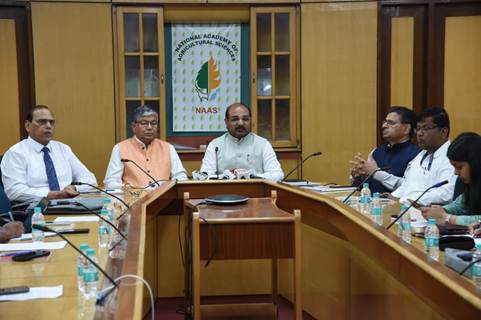
New Delhi, April 15 (BNP): India’s fertiliser policy rarely makes headlines, but the recent brainstorming session by the National Academy of Agricultural Sciences signals something more consequential than routine review. It points to a system under strain—and, more importantly, to a policy establishment that seems ready to rethink its foundations.
For decades, fertilisers have been central to India’s agricultural rise. The gains of the Green Revolution were built on assured access to chemical inputs, especially urea. That model delivered food security. But it also locked India into a structure that is now proving costly, inefficient and environmentally fragile.
At the heart of the problem is dependence. India consumes roughly 33 million tonnes of fertilisers annually, yet relies heavily on imports for key nutrients like phosphorus and potassium. Even urea, often seen as domestically secure, is tied to global markets through imported natural gas.
This leaves the country vulnerable to geopolitical shocks and price swings. Recent global disruptions have made that vulnerability hard to ignore. Fertiliser security is no longer a technical concern. It is a strategic one, sitting alongside food and energy security.
The fiscal burden reflects this reality. A subsidy bill of ₹1.71 lakh crore is not just a budgetary line item; it is the cost of sustaining an increasingly inefficient equilibrium.
The bigger issue is not just how much India imports, but how it uses what it imports.
Subsidy structures have long favoured nitrogen, particularly urea, leading to a skewed nutrient balance. Farmers, responding rationally to price signals, overapply nitrogen while underusing other essential nutrients. The result is declining soil health and diminishing productivity gains.
Low nutrient-use efficiency compounds the problem. A significant share of fertilisers never reaches the crop, lost instead to the air, water or soil processes. This raises costs for farmers and creates environmental damage that policy has historically overlooked.
In effect, India is spending more each year to get less out of its soils.
What makes the NAAS discussions noteworthy is not just the diagnosis, but the willingness to consider structural change.
Bringing urea under a nutrient-based subsidy regime would be a major departure from the current system. So would linking subsidies to soil health metrics or moving toward direct benefit transfers. These ideas have circulated before, but rarely with this level of institutional backing.
Together, they suggest a shift from input-centric policy to outcome-oriented policy—where the goal is not just to provide fertilisers, but to ensure they are used efficiently and sustainably.
The push for Integrated Nutrient Supply and Management (INSAM) reinforces this direction. Replacing a quarter of mineral fertilisers with organic alternatives within three years is an ambitious target. More importantly, it reflects a conceptual shift: from dependence on chemical inputs to a more balanced nutrient ecosystem.
Technology is expected to play a central role in this transition. Precision agriculture tools, AI-driven advisories and sensor-based systems could help farmers apply the right nutrients in the right quantities at the right time.
This matters because India’s agricultural extension system has historically emphasised increasing input use rather than optimising it. Digital platforms offer a chance to correct that imbalance by delivering tailored, real-time guidance at scale.
But technology is not a silver bullet. Adoption will depend on affordability, usability and trust—factors that have limited the impact of past innovations.
If the direction is becoming clearer, the path remains uncertain.
Fertiliser reform, particularly around urea, has long been politically sensitive. Any attempt to rationalise subsidies risks immediate resistance from farmers, even if the long-term benefits are clear.
Similarly, scaling organic inputs and bio-fertilisers requires more than policy targets. It demands reliable supply chains, quality assurance and behavioural change at the farm level. Farmers will shift practices only if they see consistent results.
This is where many well-intentioned reforms falter—not in design, but in execution.
What makes this moment different is the convergence of pressures. Fiscal constraints, environmental degradation and global supply risks are all pushing in the same direction. That alignment creates a window for reform that is both rare and time-bound.
The NAAS roadmap does not offer quick fixes. Instead, it outlines a transition—away from a subsidy-heavy, input-driven system toward one that prioritises efficiency, resilience and soil health.
Whether that transition succeeds will depend less on policy announcements and more on coordination: across ministries, between Centre and states, and most critically, with farmers themselves.
India’s next agricultural transformation will not be about producing more at any cost. It will be about producing better, with fewer resources and greater resilience. The fertiliser debate is where that shift is beginning to take shape.
14, Apr 2026
Epson to Emphasise ROIC and Seek Sustained Growth by Redesigning Its Business Portfolio and Focusing Resources on Growth Domains
Epson introduces the ENGINEERED FUTURE 2035 Long-Term Corporate Vision and Mid-Term Business Plan, Phase 1
SYDNEY, Apr 14 – Epson has unveiled ENGINEERED FUTURE 2035, a Long-Term Corporate Vision that maps out the company’s strategy to 2035, along with a new Mid-Term Business Plan (2026-2028) that represents the first phase of work under the vision. In line with this plan, Epson will use ROIC as a management metric to optimise capital allocation, redesign its business portfolio, and focus resources on strategic growth domains. By transforming the earnings base and leveraging its precision technologies to expand in growth domains, the company aims to sustain corporate value growth.
Long-Term Corporate Vision ENGINEERED FUTURE 2035
Refining our technologies, engineering the future and delivering real-world value
Epson sees the next decade as one in which volatility is the norm. Environmental and geopolitical risks will rapidly change, resources and energy will be increasingly constrained, and demographic changes will result in labour shortages worldwide. In developed economies, the labour pool continues to shrink. Meanwhile, emerging economies face critical challenges to develop foundational capabilities such as skills, education and infrastructure.
Under these conditions, the sustainability of society and industry will increasingly depend on how effectively Epson can use limited resources, energy, and human potential. It is not enough to evolve technology itself. Driving advances in the technology itself will not be enough. The ability to design and optimise technology so that it genuinely functions within society is becoming increasingly critical. It is precisely because of the many constraints that Epson believes the future should not be left to chance but must be methodically engineered, starting with technology that is conceived in the field and continuously refined and implemented in the real world.
That is why Epson seeks to leverage the efficient, compact, and precise technologies and philosophy it has developed over more than eight decades, building on the foundation of “Sho-Sho-Sei,” to create value that supports the transformation of society and industry through real-world implementation. The essence of Epson lies not in advancing technology for its own sake, but in translating advanced technology into things that are genuinely useful in the real world. Engineering is the force that connects the philosophy of efficient, compact and precise innovation to meaningful social implementation.
Epson will deliver new value to the world by combining its efficient, compact, and precise technologies with designs optimised for real-world uses. From industry and across learning, working, and living, Epson will enhance productivity and reliability and expand the world’s possibilities. So that people and the planet can continue to advance together, Epson will simultaneously raise both social value and corporate value. That is the future that Epson envisions in ENGINEERED FUTURE 2035.
Mid-Term Business Plan, Phase 1 (2026-2028)
Achieving both growth and capital efficiency by optimising capital allocation based on disciplined ROIC management
Epson’s Mid-Term Management Plan, Phase 1 (2026-2028), is the first stage of the company’s journey toward realising the ENGINEERED FUTURE 2035 long-term vision.
Until now, Epson’s business structure has been highly dependent on mature markets, presenting challenges in terms of resource allocation to growth areas, execution speed, and capital efficiency. In Phase 1, Epson will confront these challenges head-on, transforming the earnings base and focusing resource allocation on growth domains. Management will emphasise capital efficiency, using ROIC as the primary management metric. By exercising disciplined ROIC-based management, Epson will aim to achieve a ROIC of 8% by fiscal 2028 and to build a solid foundation for sustainable growth.
Specifically, Epson will review its fixed cost structure and asset efficiency, redesign global operations and the supply chain, and strengthen sales in emerging markets. It will simultaneously expand and enhance recurring business and solutions. These efforts will enable Epson to reduce invested capital while enhancing the earning power of its businesses. At the same time, the company will prioritise the allocation of the cash generated to future growth domains, accelerating the transformation of its business portfolio. Capital will be optimally allocated, with investment and business decisions made based on disciplined ROIC.
Cash created through this transformation of the earnings base will be actively deployed, under disciplined capital allocation, to projects that maximise long-term value creation. In addition to strategic investments in things such as mergers and acquisitions, Epson will invest a total of ¥280 billion over the three-year period in growth domains, including in the Precision Innovation segment as the primary growth engine and the Industrial & Robotics segment, which will be a key growth driver for the next phase.
Throughout the period of the mid-term business plan, Epson will reinforce its management discipline and execution capabilities to sustain growth and increase corporate value, while driving structural transformation toward 2035.


