


9, Apr 2026
Scoot Expands Network in Indonesia with New Flights to Belitung and Pontianak
Singapore, Apr 09: Scoot, the low-cost subsidiary of Singapore Airlines (SIA), today announced the launch of new flight services to Belitung and Pontianak in Indonesia. Operated by the Embraer E190-E2 aircraft, these flights will commence in May and June 2026 respectively, offering travellers greater accessibility and more options for travel.
Belitung is a tropical gem tucked away in the eastern coast of Sumatra, and known for its unique geological formations, rich biodiversity, and pristine coastlines. The island is also home to the Belitung Tarsier, a nocturnal primate subspecies unique to the island. From 3 May 2026, Scoot will launch two times weekly flights to Belitung.
Pontianak, the capital of West Kalimantan, sits directly on the equator and is home to the Equator Monument, where visitors can stand between the northern and southern hemispheres. This culturally rich riverside city, set along Indonesia’s longest river, the Kapuas River, also enjoys a reputation as a food haven with its wide variety of local specialities. From 29 June 2026, Scoot will operate three times weekly flights to Pontianak.
With the launch of services to Belitung and Pontianak, Scoot’s network will increase to 85 destinations across 18 countries and territories.
In addition to the new destinations, Scoot will also be increasing flight frequencies within its network to support the demand for air travel, especially during the upcoming school holiday season.
From April 2026, flights to Phuket will increase from 17 to 21 times weekly and flights to Sibu will increase from three to four times weekly. From June 2026, flights to Bali and Jakarta will increase from 28 to 35 times weekly. In the same month, services to Labuan Bajo will increase from two to three times weekly, services to Lombok will increase from four to 10 times weekly and services to Manado will increase from six times weekly to daily flights.
In North Asia, frequencies to Okinawa will increase from three to four times weekly from April 2026. Similarly, frequencies to Changsha will increase from four to five times weekly. In Europe, frequencies to Vienna will increase from three to four times weekly from June 2026.
Mr Leslie Thng, Chief Executive Officer of Scoot, said, “The addition of new routes to Belitung and Pontianak not only enhances Scoot’s footprint in Indonesia, but also strengthens the SIA Group’s network connectivity through Singapore. The increase in flight frequencies to many popular destinations will also support demand for travel as we head into the school holiday season. We remain committed to providing our customers with more travel options and enjoyable journeys with Scoot.”
Flight schedules are subject to government and regulatory approvals or changes. For more information on flight schedules.

- 0
- By Neel Achary

9, Apr 2026
PFRDA and Industry Partners Introduce “NPS Swasthya” to Integrate Retirement Savings and Healthcare Accessibility
Bengaluru, India Apr 09: The Pension Fund Regulatory and Development Authority (PFRDA) launched the second POC(under regulatory sandbox) of NPS Swasthya, an initiative intended to provide for healthcare funding alongwith retirement planning. NPS Swasthya is a multi-partner initiative structured to provide comprehensive financial and health security. The Pension Fund Regulatory and Development Authority (PFRDA) serves as the regulatory authority. Medi Assist Healthcare Services acts as the core technology partner, providing digital infrastructure. CAMS KRA supports subscriber onboarding and KYC enablement. Tata Pension Fund and Axis Pension Fund serve as the designated pension fund managers. Aditya Birla Health Insurance provides the integrated top-up insurance cover, and Medi Assist TPA manages claims administration.
The initiative addresses a growing gap in India’s retirement landscape, where healthcare costs are projected to rise by 11.5%–14% in 2026, significantly outpacing inflation and putting long-term financial security under pressure for millions. This comes at a time when the pension ecosystem is rapidly scaling, with National Pension System (NPS) and Atal Pension Yojana (APY) having a cumulative subscriber base of 9.64 crore and combined assets under management pegged at INR 16,55,655 crore (as of 29 March 2026).
National Pension System (NPS) funds have traditionally remained locked until the subscriber reaches retirement age. NPS Swasthya is designed to provide subscribers access to a “Net Eligible Balance” up to 25% of their contributions. Subscribers can access these retirement units for immediate medical expenses through the MAven App, developed by Medi Assist Healthcare Services, which features direct integration with the CAMS Central Recordkeeping Agency (CRA) API.
Key Highlights
● NPS Swasthya funds managed by Tata Pension Fund and Axis Pension Fund. NPS Swasthya is being launched under the Multiple Scheme Framework (MSF) of the National Pension System, which enables subscribers to allocate their investments across multiple schemes offered by different pension fund managers. This framework enhances flexibility and choice, allowing investors to tailor their retirement portfolio to their evolving needs while seamlessly integrating features such as healthcare preparedness within the broader NPS structure.
● Health Coverage Integration: The program combines NPS savings, standard health benefits, and a Group Health Super Top-Up insurance plan from Aditya Birla Health Insurance.
● Integrated Technology Platform: The technology architecture powering NPS Swasthya combines the strengths of CAMS and Medi Assist to deliver a seamless subscriber experience. The CAMS platform will enable subscribers to easily select suitable schemes, complete enrolment, and make informed decisions on the level of health coverage and sum insured required, including options for top-up policies. Complementing this, the Maven platform by Medi Assist Healthcare Services will facilitate instant verification through CRA-authenticated secure OTPs and enable fully digital withdrawals for healthcare expenses. The platform will also enable automatic registration and processing of claims in the top-up policies.
● Network Access: Medi Assist offers access to a network of more than 15,500 hospitals across 1,264 cities to process cashless payments for inpatient (IPD) and facilitates outpatient (OPD) services as a technology aggregator.
● Investment Continuity: Unused contributions continue to accumulate market-linked returns while remaining accessible for medical emergencies.
Speaking at the occasion, here’s what the leaders had to add : “Currently 10% of Indian Population falls in the category of senior citizens and this demographic is expected to climb to over 20% by the year 2045-50. The fact of the matter is that several elderly remain outside the medical insurance net, making them extremely vulnerable to expenses beyond their reach. The idea of retiring with dignity cannot be alienated from a strong sense of medical security for the elderly. It is not often that we find two regulatory systems coming together to create something for the customers’ benefit. The entire premise of NPS Swasthya Pension Scheme rests on the feasibility of integrating health-related benefit mechanisms with the existing NPS architecture and to assess the associated operational, technological and regulatory aspects. While the first proof of concept launched in January 2026 was for outpatient services, the second proof of concept launched today is about inpatient and hospitalization bills. When put together, we can actually appreciate the consolidated service from the Swasthya Account. NPS Swasthya Pension Scheme not only grows the subscriber’s corpus at a rate that is comparable to other popular instruments available in the market, but also provides financial support for out-patient and inpatient medical expenses in case of medical emergencies. – Shri Sivasubramanian Ramann, Chairperson, Pension Fund Regulatory and Development Authority It is gratifying to see the potential fusion between a pension account and the concept of a top-up medical insurance clubbed for the larger good of the elderly who otherwise remained outside the ambit of medical insurance in the sunset phase of their life.””NPS Swasthya reflects our commitment to evolving retirement solutions that address the realities of longer life and rising healthcare costs. It enables investors to build a robust retirement corpus while staying financially prepared for medical needs, bringing greater balance and resilience to long-term financial planning.”
– Kurian Jose, CEO, Tata Pension Fund Management.
Subrat Mohanty, Executive Director, Axis Bank, said: “India is witnessing a steady rise in awareness around healthcare and financial planning. As awareness and long‑ term financial planning continue to grow, customers are increasingly looking for solutions that deliver flexibility alongside protection. Axis NPS Swasthya Top Up Plus Fund addresses this need by seamlessly integrating healthcare coverage with retirement planning, ensuring investments remain market‑ linked and continue to generate returns if not utilised for medical expenses without compromising long‑ term retirement goals.”
Sumit Shukla, MD & CEO, Axis Pension Fund, said: “NPS Swasthya is unique since it offers a very different health and hospital proposition. A hospitalisation cover of up to ₹30 lakh at a cost of under ₹10 per day, making healthcare preparedness more accessible within the NPS framework. With this launch, we are strengthening the relevance and adaptability of long-term savings and appreciate PFRDA’s progressive approach in enabling health-linked solutions with NPS.”
Satish Gidugu, CEO, Medi Assist Healthcare Services, said, “At Medi Assist, we believe that technology is the ultimate equaliser in healthcare. By powering the NPS Swasthya ecosystem through our MAven platform, we are transforming a long-term retirement asset into a real-time health resource. We are proud to work alongside PFRDA to ensure that as India’s pension assets grow, so does the health security of every individual contributing to that growth.”
The NPS Swasthya Scheme is available to Indian citizens aged 18–85. Enrollment is subject to a “Good Health Declaration,” ensuring a streamlined onboarding process for members without major pre-existing conditions like heart disease or diabetes.
Through this partnership, PFRDA and industry partners are setting a new standard for social security in India – where technology enables not just a healthier, more secure retirement, but also advances the vision of Viksit Bharat 2047 and health insurance for all.
9, Apr 2026
Haworth Strengthens Distribution and Market Presence to Capitalise on Rising Demand for Workspaces in India
Haworth, a leading provider of design-led workplace solutions, is strengthening its growth strategy with a focus on expanding its distribution network and strengthening local supply chain capabilities, as demand for high-performance workplaces continues to rise across India.
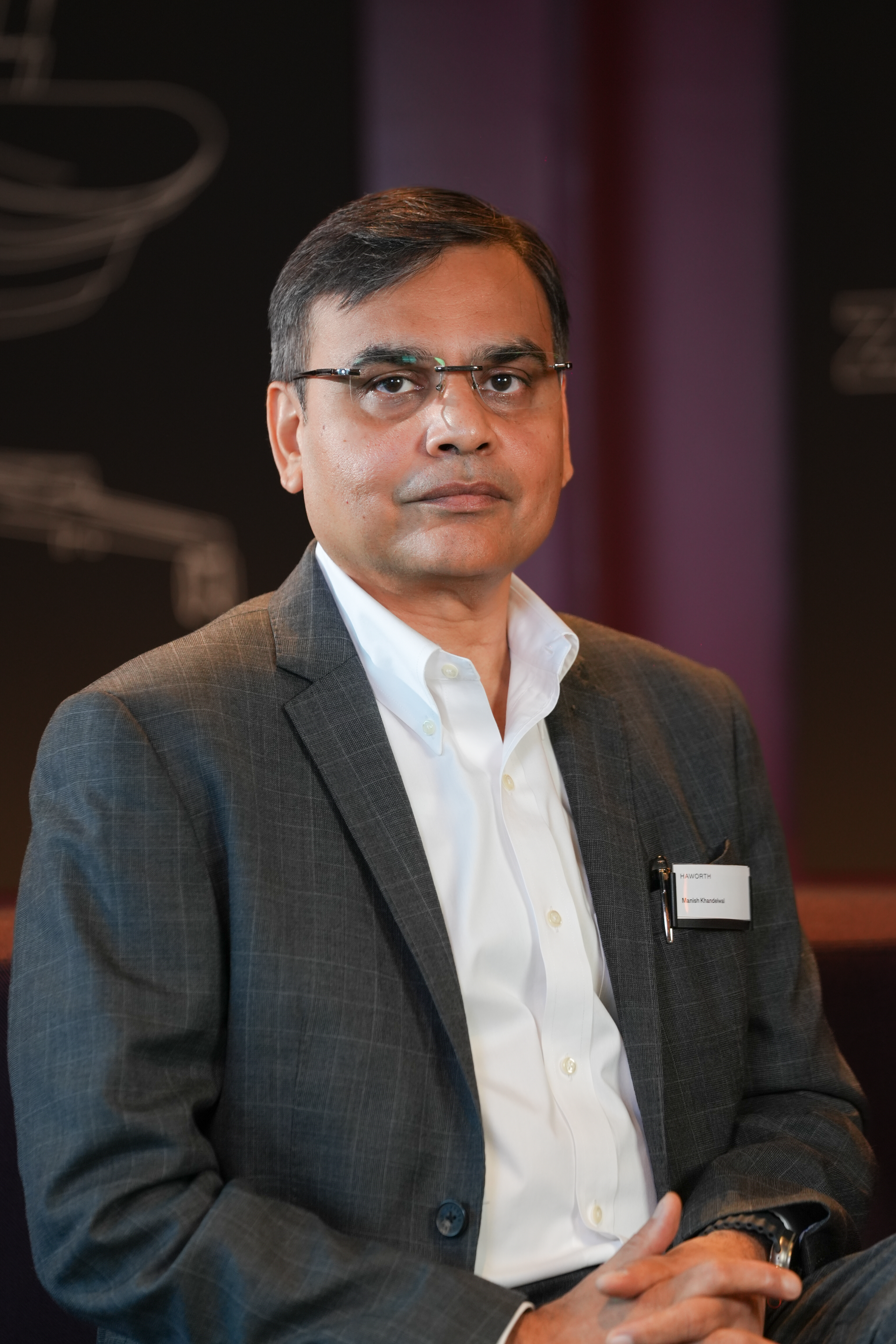
The company has built a strong presence through its experience and design centres in Bengaluru, Mumbai, Delhi/NCR, Chennai and Hyderabad, supported by a robust manufacturing facility in Chennai. This setup enables faster delivery, greater customization, and improved responsiveness to client requirements. India’s importance in Haworth’s global strategy is reinforced by the expansion of Global Capability Centres and multinational operations, which are driving demand for sophisticated, experience-led work environments aligned with global standards.
“India is no longer an emerging market for us; it is a strategic growth engine. The scale of opportunity, combined with evolving workplace expectations, is reshaping how organisations design and use office spaces. Our focus is on building local capabilities, expanding our reach, and partnering with clients to deliver integrated workplace solutions that enhance productivity, collaboration, and employee well-being. For Haworth, India also plays a dual role by driving Asia Pacific growth while supporting global accounts with consistency, scale, and innovation. It is a market where we are not just participating, but actively shaping the future of work,” said Manish Khandelwal, Managing Director, Haworth India.
As part of its next phase of growth, Haworth is expanding into emerging cities through a stronger dealership network, improving access to emerging business hubs. At the same time, Haworth continues to strengthen its local operating model, improving agility, delivery timelines, and the ability to deliver customised solutions across markets. Government initiatives such as ‘Make in India’ and ongoing infrastructure expansion are further strengthening the manufacturing ecosystem, improving ease of doing business and enabling greater localisation. This is helping companies like Haworth align more closely with customer expectations for faster delivery and local sourcing, while also supporting expansion into new and emerging business hubs.
This expansion comes at a time when the office furniture market in India is witnessing steady growth, driven by sectors such as IT and ITES, BFSI, consulting, multinational corporations, and the expanding Global Capability Centre (GCC) ecosystem, with education and large Indian enterprises emerging as longer-term opportunities.
Hybrid work is accelerating the shift toward collaborative, flexible, and ergonomic workplaces, increasing demand for integrated, design-led solutions. At the same time, organisations are placing greater emphasis on sustainability, material innovation, and long-term space efficiency, prompting solution providers to rethink design, sourcing, and lifecycle management across workplace environments.
Haworth is responding to this shift through a solution-led approach that combines global design expertise with insights into workplace behaviour. This reflects Haworth’s solution led approach, where design, research, and behavioural insights come together to create meaningful workplace experiences. Its portfolio spans seating, collaborative spaces, workstations & systems and acoustic solutions, enabling organisations to create adaptable, future-ready environments. The company is also sharpening its focus on key solution areas, including ergonomic seating to support employee well-being and performance, collaborative pods and flexible spaces to enable team-based work, and advanced acoustic solutions tailored for hybrid environments. Backed by global design collaborations and research driven insights, Haworth’s integrated ecosystem integrates furniture, design, and workplace intelligence, positioning the company as a solution led workplace partner.
Looking ahead, Haworth will expand its presence in emerging markets, deepen its leadership in the GCC segment, and strengthen engagement with enterprise clients and the design community. The company is also accelerating its shift toward solution-led engagement, working more closely with clients to deliver integrated, high-performance workplaces while shaping conversations around workplace transformation, sustainability, and employee experience in India.
8, Apr 2026
Middle East disruption could cut global oil demand 20 percent and gas 10 percent by 2050 as energy security drives shift to independence
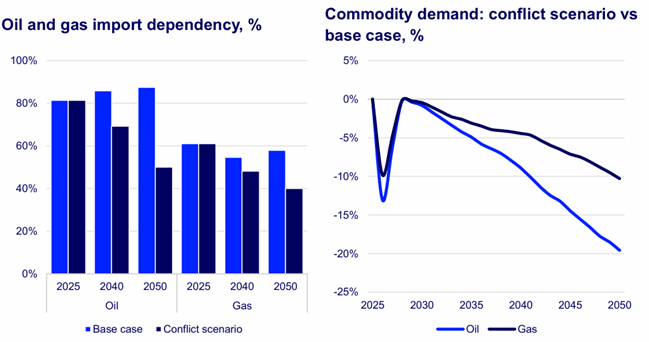
LONDON/HOUSTON/SINGAPORE, April 8, 2026 – Prolonged disruption to Middle East energy supplies could accelerate a structural shift in global energy systems, halving oil and gas import dependence by 2050 and reducing oil demand by 20% and gas demand by 10% relative to the base case. As countries prioritise energy security, demand is increasingly met through electrification, renewables, coal and nuclear, while reliance on globally traded fuels declines, according to Wood Mackenzie.
However, this shift comes with trade-offs. Energy systems become more domestic and diversified, but also more costly, while near-term emissions rise due to increased coal use before converging with the base case over the longer term. These findings are based on a new conflict scenario from Wood Mackenzie, part of its Lens Energy Transition Scenarios, which explores how sustained geopolitical instability could reshape global energy demand, supply and investment through 2050.
Crisis-driven disruption, long-term transformation
The scenario assumes a major geopolitical escalation beginning in early 2026, disrupting 15–20% of global oil and LNG supply. In the near term, oil demand falls by around 9% due to supply outages before recovering to pre-crisis levels by 2030, Wood Mackenzie noted.
Beyond 2030, structural shifts take hold as countries accelerate efforts to reduce reliance on imported fuels. Oil and gas demand declines more rapidly than in the base case, as governments prioritise domestic and diversified energy systems.
“Geopolitical crises can act as powerful catalysts for long-term system change,” said Prakash Sharma, Vice President, Scenarios & Technologies at Wood Mackenzie. “In this scenario, the world moves decisively towards energy independence, with lasting implications for global fuel demand and trade.”
Source: Wood Mackenzie Lens ETS
Electrification and efficiency at the core
Electrification and efficiency emerge as the primary pathways to energy independence. Overall power demand remains broadly in line with the base case, as lower demand from electrolytic hydrogen production is offset by wider electrification across transport, buildings and industry.
This shift reduces reliance on imported fuels while maintaining overall energy service demand.
A rebalanced energy mix
By 2050, the global energy mix shifts significantly under the conflict scenario:
- Oil demand falls 20% and gas 10%, while coal rises 20% as countries diversify supply and prioritise domestic resources
- Nuclear generation increases 40% above the base case, with both conventional and next-generation technologies scaling from the 2030s
- Renewables continue rapid expansion, forming the backbone of domestic power systems
- Hydrogen and carbon capture adoption declines, as policymakers favour more efficient and secure energy pathways
“Energy systems become more local, more diversified and less reliant on complex international trade,” said Jom Madan, Principal Analyst, Scenarios & Technologies. “Electrification and nuclear take priority, while hydrogen and carbon capture are deprioritised due to cost, efficiency and security considerations.”
Near-term coal, long-term nuclear
Coal plays a larger role in the near term as countries respond to supply shocks by maximising domestic energy sources and delaying plant retirements. Over the longer term, nuclear expands significantly, providing stable, fuel-secure baseload power as new capacity comes online from the 2030s.
Gas-fired power and hydrogen-based abatement pathways are scaled back as energy systems favour more secure and proven alternatives.
Security comes at a cost
The shift towards energy independence comes with higher system costs, as countries move away from globally optimised supply chains towards domestic production and diversified sourcing.
“Energy independence reduces exposure to external shocks, but it comes at a structural cost premium,” said Lindsey Entwistle, Principal Analyst, Scenarios & Technologies. “This creates new competitiveness challenges for energy-intensive industries, while advantaging more self-sufficient regions.”
Climate outcomes converge
Despite diverging pathways, cumulative emissions under the conflict scenario remain broadly aligned with Wood Mackenzie’s base case, tracking a 2.6°C warming trajectory. While emissions rise in the near term due to increased coal use, these are offset over time by stronger electrification and nuclear deployment.
“The scenario reaches a similar emissions outcome through a different route,” Sharma concluded. “It reflects a trade-off between near-term energy security and long-term decarbonisation, with countries ultimately relying on proven, domestically controlled technologies.”
8, Apr 2026
Global Citizen Solutions launches Global Atlas of Risk and Readiness 2026
London — 8 April 2026 — Global Citizen Solutions (“GCS”), a leading residency and citizenship planning advisory firm, through its Global Intelligence Unit, has released the Global Atlas of Risk and Readiness 2026 (GARR), a new benchmarking framework assessing how effectively countries combine structural stability with long-term growth capacity across 85 jurisdictions.
The report evaluates countries through a dual lens — structural risk and forward-looking readiness — to provide investors, globally mobile individuals, and policymakers with a clearer picture of where capital is most likely to remain protected while compounding over the long term. In an environment shaped by geopolitical fragmentation, regulatory shifts, and technological disruption, the findings point to a decisive shift: resilience, not size, is what defines investment attractiveness in 2026.
Top 5: Institutional strength defines global leadership
- Switzerland
- Germany
- Singapore
- Ireland
- Finland
Europe leads — but not all European economies equally
Seven of the top ten countries in the GARR rankings are European, with Switzerland (1st), Germany (2nd), Ireland (4th), Finland (5th), Denmark (6th), the Netherlands (7th), and Austria (8th) all placing within the global elite. Europe’s dominance reflects the structural premium now placed on regulatory predictability, institutional depth, and regional integration — characteristics deeply embedded across the continent and reinforced through coordinated policy frameworks.
Switzerland leads the overall ranking with a score of 93.73, combining financial sophistication, innovation capacity, and near-universal strength across governance and human capital indicators. Germany ranks 2nd overall but leads the entire dataset on readiness at 91.87 — the highest readiness score of any country assessed — reflecting industrial depth, economic diversification, and a human capital base unmatched in the region.
The UK at 21st: strong foundations, a widening readiness gap
The United Kingdom ranks 21st globally with an overall score of 88.68, classified by the GARR as ‘Advanced and Stable’. The UK retains genuine structural strengths: deep and liquid capital markets and institutional foundations that continue to attract long-term investment. Its low risk score reflects a country where the fundamentals remain sound.
The GARR measures countries across two equally weighted pillars: structural risk and forward-looking readiness. The UK’s risk score of 63.61 places it among the lower-risk economies globally — a genuine strength. But its readiness score of 80.96 ranks it only 28th, well below its overall position of 21st. It is the strength of the UK’s risk profile that lifts its overall ranking; on readiness alone, the picture is more complex.
Ireland makes the point with force. Ranking 4th overall with a score of 92.45 — seventeen places and nearly four points above the UK — Ireland places 9th globally on readiness, demonstrating what deep regional integration, regulatory alignment, and governance consistency can deliver at scale. For a country of 5.4 million people to outperform the UK by this margin across both pillars is analytically significant. The GARR framework attributes Ireland’s strength to precisely the structural advantages the UK has moved further from since 2016: frictionless access to European capital, talent, and regulatory frameworks, and the institutional confidence that comes with full membership of a coordinated economic bloc.
“In today’s global economy, capital flows to resilience, and the data shows that institutional strength, not size, is the defining factor behind sustainable investment performance. Europe’s dominance in this year’s rankings is no accident — it reflects decades of investment in the institutional foundations that capital increasingly demands. And the performance of economies like Switzerland or Singapore, prove that in a fragmented world, agility and governance depth matter far more than scale,” said Patricia Casaburi, CEO of Global Citizen Solutions.
Singapore: further proof that biggest isn’t best
Singapore ranks 3rd overall with a score of 92.60 — above the United States, and the only Asian economy to break into the global top tier. It records the lowest risk score of any country in the dataset while ranking 11th globally on readiness, with exceptional digital infrastructure, AI capability, and human capital. The report classifies Singapore as a global node of capital, innovation, and connectivity, demonstrating how strategic positioning and institutional coherence can more than compensate for limited geographic or demographic scale.
A world pulling apart – Mind the gap
Across the 85 jurisdictions assessed, the GARR finds a global system that is fragmenting rather than converging. A compact group of highly resilient economies — concentrated in Europe and anchored by strategic hubs in Asia and the Gulf — is pulling further ahead. Below them, a broader set of countries, including several major economies, faces the challenge of converting existing strengths into the kind of structural readiness that long-term capital increasingly demands.
For investors, the implication is clear: the question is no longer where risks are lowest, but where they are most effectively managed.
The full GARR report is available at globalcitizensolutions.com.
8, Apr 2026
Abu Dhabi Maritime Academy and Minexx to Deploy AI-Enabled Mineral Processing in DRC
Abu Dhabi, UAE – 08 April 2026: Abu Dhabi Maritime Academy (ADMA), the region’s leading academic institution for maritime training, and an integral part of AD Ports Group (ADX: ADPORTS), has signed a research, development, and operational deployment agreement with Minexx, a technology-enabled mining and mineral processing company operating in the Democratic Republic of Congo (DRC).
The agreement covers the design and deployment of an advanced, AI-enabled ore sorting machine, engineered to upgrade low-grade mineral material into export-ready products.
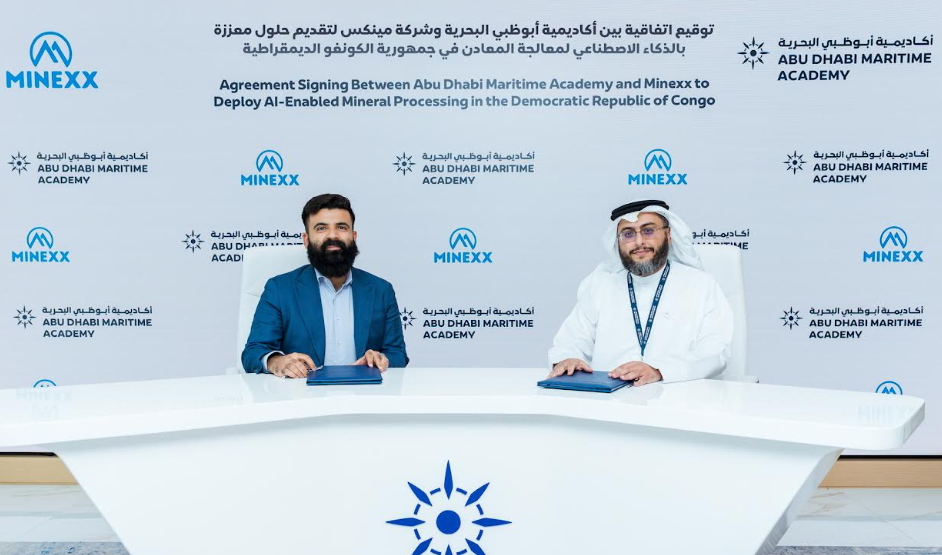
Under the terms of the agreement, ADMA will develop and commission the AI-driven mineral pre-processing unit, featuring proprietary machine-learning models and specialised hardware. Once deployed at Minexx’s operations, the solution will be integrated into live mineral processing workflows to improve recovery rates, enhance operational efficiency, and unlock value from previously uneconomic raw mineral material. This collaboration synergises ADMA’s applied research and artificial intelligence capabilities with Minexx’s established operational footprint in the DRC.
Dr. Yasser Al Wahedi, President of Abu Dhabi Maritime Academy, said: “Deploying applied research and artificial intelligence into live operating environments enables innovation to deliver measurable industrial impact. This collaboration demonstrates how advanced engineering and AI can enhance efficiency, performance, and sustainability in mineral processing, reflecting AD Ports Group’s commitment to technological leadership and value creation.”
Mansoor Hamayun, Co-Founder and Chairman of Minexx, said: “Across the DRC, one of the key challenges in tin, tungsten, and tantalum supply chains is the ability to economically upgrade low-grade material to export standards. This partnership brings together applied AI, long-term capital commitment, and operational execution to address that challenge at scale.”
This initiative aligns with AD Ports Group’s broader strategic engagement in the DRC, following the recent signing of Heads of Terms (HoT) for the development and operation of a multipurpose terminal at Matadi Port. The synergy between port infrastructure and upstream, AI-enabled value addition reinforces the Group’s role as an integrated trade and industrial enabler. In addition, this collaboration highlights AD Ports Group’s growing contribution to African markets, extending its impact beyond port infrastructure and logistics to leverage advanced digital technologies that unlock value across industrial sectors.
Strategically located in Central Africa, the DRC serves as a vital regional trade gateway. These initiatives reflect a shared commitment to strengthening the country’s global connectivity and supporting long-term economic development.
8, Apr 2026
Indian Steel Industry Posts Strong 10.7Pc Growth in 2025–26
India’s steel sector achieved a remarkable 10.7% growth in the financial year 2025–26, reinforcing its role as a key driver of the nation’s industrial and infrastructure development. The growth was fueled by strong domestic demand, ongoing infrastructure projects, and a rise in steel exports.
Both public and private steel producers ramped up production, helping meet rising market needs. Exports surged to new markets, while imports declined, strengthening India’s position in the global steel trade. Leading companies reported record or near-record production, reflecting increased capacity and efficiency improvements across the sector.
Industry experts say this robust performance demonstrates the resilience of India’s manufacturing base. Continued investments in technology, diversification of export markets, and better logistics will be critical to sustaining growth in the years ahead.
8, Apr 2026
PMMY Fuels Micro Enterprise Growth, Empowers Women Entrepreneurs Across India
New Delhi, April 8: The Pradhan Mantri Mudra Yojana (PMMY) continues to play a transformative role in India’s economic landscape, driving the growth of micro enterprises and significantly empowering women entrepreneurs across the country.
Launched in 2015, the scheme was designed with a simple yet powerful vision—to fund the unfunded. Over the years, it has opened doors for millions of small business owners who previously struggled to access formal credit. By offering collateral-free loans, PMMY has enabled individuals to start and expand small businesses, creating livelihoods and strengthening local economies.
One of the most remarkable outcomes of the scheme has been its impact on women. Today, a substantial share of Mudra loans are availed by women entrepreneurs, helping them achieve financial independence and build sustainable businesses. From running small retail shops and tailoring units to launching service-based enterprises, women across urban and rural India are using these loans to turn their ideas into reality.
The scheme operates through different categories—Shishu, Kishor, and Tarun—catering to businesses at various stages of growth. This flexible structure allows first-time entrepreneurs to take their first step while also supporting existing businesses in scaling up operations.
Beyond financial support, PMMY has contributed to a broader cultural shift by encouraging self-employment and entrepreneurship. It has particularly benefited youth and individuals from underserved communities, giving them the confidence to participate in the formal economy.
Economists note that micro enterprises form the backbone of India’s economy, and initiatives like PMMY are crucial for sustaining inclusive growth. By improving access to credit and promoting entrepreneurship at the grassroots level, the scheme is helping generate employment and reduce dependence on traditional job markets.
As India moves toward its long-term development goals, PMMY is expected to remain a key driver of economic empowerment—supporting small businesses, strengthening communities, and ensuring that growth reaches every corner of the country.
8, Apr 2026
RBI Repo Rate 2026: Stability Signals Confidence for Real Estate
The RBI’s decision to keep the repo rate unchanged at 5.25% with a neutral stance has drawn measured optimism from the real estate sector. Industry leaders believe this move ensures stability in borrowing costs, supports buyer sentiment, and enables developers to plan with greater certainty. While global uncertainties and inflationary pressures persist, a steady rate environment provides much-needed confidence for both end-users and investors. From affordable housing to luxury segments and commercial real estate, stakeholders view this policy pause as an opportunity to sustain demand, strengthen fundamentals, and focus on long-term growth strategies across emerging and established markets.
Rajani Kant Mishra, Founder and Chairman, Amrawati Group
The RBI’s decision to keep the repo rate unchanged is a positive signal for the real estate sector, as it ensures stability in borrowing costs and sustains buyer confidence. For a growing market where infrastructure and planned developments are gaining momentum, steady interest rates play a crucial role in maintaining demand. Homebuyers continue to benefit from predictable EMIs, while developers can focus on timely delivery and expansion plans. Although a rate cut could have accelerated growth further, the current stance supports a stable and healthy market environment driven by long-term fundamentals and rising end-user interest.
Mohit Mittal, CEO – MORES
The rate pause reflects the RBI’s caution, but for the real estate sector, monetary policy is only one piece of the puzzle. The bigger issue is affordability across mid and affordable housing segments, which remain squeezed between stagnant wage growth and rising construction costs. The industry should use this period of policy stability to push for streamlined approvals, RERA enforcement, and better infrastructure investment in Tier 2 cities — that’s where India’s next real estate growth story is being written. Interest rates will eventually move; what the sector builds in the interim will determine who leads the next cycle.
Vishal Datt Wadhwa, Founder & CEO- CoWorkZen
Holding rates was the right call. The environment doesn’t allow anything else — oil above a hundred dollars, the rupee under pressure, inflation building in the pipeline from sources monetary policy simply cannot address. For enterprises evaluating workspace decisions — GCC buildouts, regional expansion, flex footprint across IT-ITES corridors — what matters is not the rate itself but the signal. A disciplined central bank that refuses to overreact to a supply shock is one that corporates can plan around. Lease decisions in structured commercial spaces are made on 3–5-year conviction, not monthly rate movements. Today’s policy does nothing to disrupt the conviction.
Prakhar Agrawal, Director, Rama Group
RBI’s decision to maintain the repo rate at 5.25% reflects a balanced and prudent approach amid evolving global uncertainties. This stability in interest rates is a positive for the real estate sector, as it sustains buyer sentiment and keeps home loan EMIs predictable for end-users. In an environment where inflation risks persist and global headwinds remain; a steady rate regime provides developers and homebuyers the confidence to plan long-term investments. We believe this move will continue to support housing demand, particularly in the mid-income and premium segments, while reinforcing overall market stability.
E. Lakshminarayana Reddy, Founder and CEO EARA Group
The RBI’s decision to keep the repo rate unchanged at 5.25% with a neutral stance is a positive signal for the luxury real estate segment. Stable interest rates reinforce confidence among HNIs and NRIs, enabling strategic investment decisions in premium and high-value assets. While this segment is less rate-sensitive, policy stability enhances sentiment and encourages portfolio diversification into luxury residences that offer exclusivity, long-term value appreciation, and an elevated lifestyle across prime micro-markets.
Ravi Kant, CEO & Co-founder, Elegance Enterprises
An unchanged repo rate provides much-needed stability to the real estate industry. It allows developers to plan projects with greater certainty while keeping home loan rates steady for buyers. This balanced approach by the RBI will help maintain momentum in housing sales and overall sector growth
8, Apr 2026
Rensselaer Polytechnic Institute Announces Catalyst Fund Apex Awards Supported by Ajit Prabhu, Co-founder and CEO, Quest Global
Bangalore, Apr 08: Rensselaer Polytechnic Institute (RPI), the oldest technological university in the U.S, has announced the inaugural winners of the Ajit Prabhu ’98 Catalyst Fund Apex Awards. The awards were established through the Catalyst Fund, supported by Ajit Prabhu, Co–founder and CEO, Quest Global, the world’s largest independent pure-play engineering services company, and an alumnus of RPI. The Catalyst Fund, part of the $10 million gift by Ajit Prabhu last year, supports a range of innovation and entrepreneurship activities at RPI, with the Apex Awards representing its highest honors.
The Apex Awards recognize breakthrough student- and faculty-led innovations with strong potential for real-world impact. With a total grant of $75,000, the awards celebrate excellence across key categories and support innovations aimed at addressing complex, real-world challenges.
Ajit Prabhu’s continued association with RPI reflects a long-term commitment to strengthening education and innovation ecosystems globally. Through sustained institutional support, he has backed initiatives that promote research, encourage entrepreneurial thinking, and enable students to translate ideas into scalable solutions. This engagement is part of a broader, ongoing effort to support education globally, rather than a one-time initiative.
This initiative reflects a broader focus on fostering purpose-driven innovation, where engineering excellence is applied to solve real-world challenges and create meaningful impact across communities.
Ajit Prabhu, Co–founder and CEO, Quest Global, said, “RPI opened my eyes to what might be possible, and it’s deeply meaningful to see these honorees carrying forward that same curiosity and drive to tackle real challenges in the world. Whatever success I’ve had is rooted in the mentors, institutions, and communities that supported me along the way. I’m grateful for the chance to give back and encourage the next generation of innovators at RPI.”
“Ajit Prabhu’s enduring relationship with RPI reflects his deep belief in the power of education to shape innovators and problem-solvers for the world. His continued commitment to our students and faculty through initiatives like the Catalyst Fund Apex Awards strengthens RPI’s mission to translate bold ideas into real-world impact”, said Eric Ledet, Director of RPI’s Severino Center for Technological Entrepreneurship.
The Apex Awards span areas such as advanced manufacturing, artificial intelligence, robotics, and life sciences domains that are critical to solving complex challenges across industries. The initiative also reflects a broader approach of combining engineering excellence with community development. By supporting platforms such as the Severino Center for Technological Entrepreneurship at RPI, it contributes to building innovation-driven ecosystems that enable collaboration, experimentation, and purpose-led engineering.